





For Fullsize
Chevys …
Custom Hinges
& Rearend
Upgrades
Clutch
Install













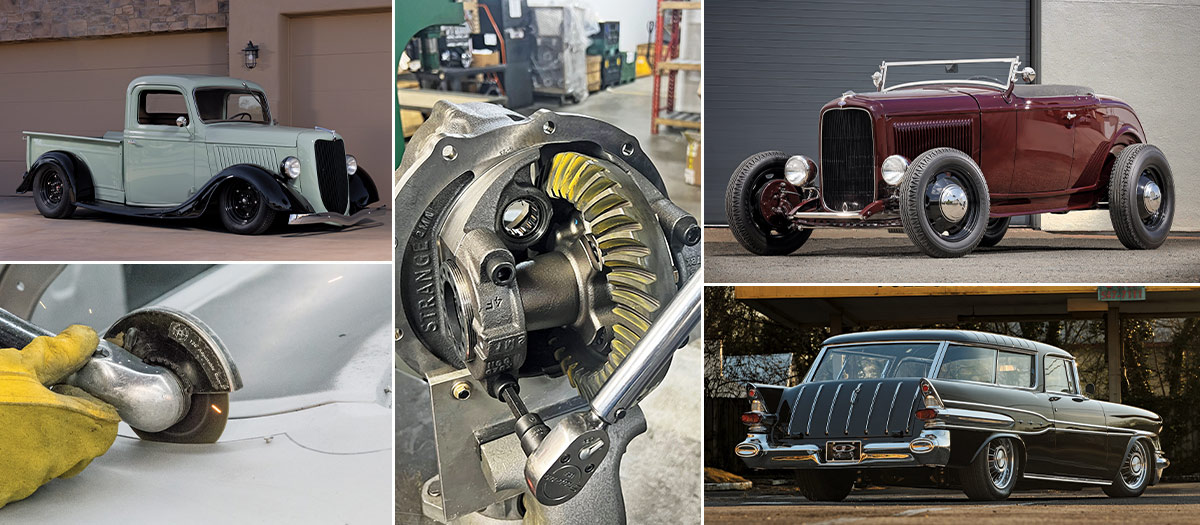
By Brian Brennan, Photography by Josh Mishler
By Brian Brennan, Photography by Michael Christensen
By Brian Brennan, Photography by NotStock Photography
By Brian Brennan, Photography by Tommy Koppinger
By Chuck Vranas, Photography by the Author
By Mark Ehlen, Photography by the Author
By Ron Ceridono, Photography by Jessica Roach
By Barry Kluczyk, Photography by Taylor Kempkes
By Ron Covell, Photography by Taylor Kempkes
By Ron Ceridono, Photography by Jason Scudellari
By Gerry Burger, Photography by Jessica Roach










BRIAN BRENNAN
bbrennan@inthegaragemedia.com
TIM FOSS
tfoss@inthegaragemedia.com
YASMIN FAJATIN
yfajatin@inthegaragemedia.com
SARAH GONZALES
sgonzales@inthegaragemedia.com
ROB MUNOZ
rmunoz@inthegaragemedia.com
PATRICIA LUDI
pludi@inthegaragemedia.com
Wes Allison, Rodney Bauman, Gerry Burger, Tommy Lee Byrd, Ron Ceridono, Michael Christensen, Ron Covell, Grant Cox, John Drummond, Eric Geisert, John Gilbert, Joe Greeves, Ken Gross, John Jackson, Chadly Johnson, Barry Kluczyk, Scotty Lachenauer, Don Lindfors, Ryan Manson, Josh Mishler, Dale Moreau, Don Prieto, Todd Ryden, Jason Scudellari, Chris Shelton, Tim Sutton, Chuck Vranas, John Winter — Writers and Photographers
Travis Weeks Advertising Sales Manager
Mark Dewey National Sales Manager
Patrick Walsh Sales Representative
ads@inthegaragemedia.com
ModernRodding.com
AllChevyPerformance.com
ClassicTruckPerformance.com
InTheGarageMedia.com
subscription@inthegaragemedia.com
(714) 985-9171
InTheGarageMedia.com “Online Store”
For bulk back issues of 10 copies or more, contact store@inthegaragemedia.com


Copyright (c) 2025 In The Garage Media Inc.
Printed in the USA.
The Modern Rodding trademark is a registered trademark of In The Garage Media Inc.


 by Brian Brennan
s hot rodders, we embrace our passion for current and future projects, yet our hobby faces significant economic and regulatory challenges. Tariffs, inflation, supply shortages, and stricter government regulations are reshaping the landscape of our beloved pastime. The ways and places we drive our hot rods are becoming more significant to those in positions of power. Understanding the potential impacts of these factors is essential for us and our suppliers, advertisers, event organizers, and builders.
If you’ve been following SEMA updates, you might feel we are on the brink of destruction—but only time will tell if this perception holds true.
Tariffs have dramatically affected the automotive hobby, particularly for enthusiasts focused on hot rods and parts. Over the last decade, U.S. tariffs on foreign businesses have notably increased manufacturing costs and disrupted supply chains. While these tariffs aim to protect domestic industries, their unintended consequences often spotlight the interconnectedness of the global automotive market. Notably, tariffs on steel and aluminum have significantly impacted our hot rod hobby.
 BY BRIAN BRENNAN
 Legacy
Twenty years ago, Alex’s grandfather, Frank Gigantelli, a Vietnam veteran and lifelong Ford enthusiast, discovered a 1940 Chevy Special DeLuxe. Coated in white primer and needing restoration, Frank had found a gem he would nurture over the next decade. He scoured the country for parts while working on a shoestring budget to build his perfect hot rod.
At 19, Alex dove into the classic car scene, even though he found few peers who shared his enthusiasm for engines and chrome. When his grandfather passed the torch and handed him the Chevy, Alex felt a deep purpose: to honor Frank’s legacy. Over two years he transformed the car, which soon glimmered under the spotlight at the Muscle Car and Corvette Nationals (MCACN), winning a red ribbon for Custom and Modified. Just weeks later, it was named Chevs of the 40’s Car of the Month, standing out among many impressive vehicles.
The Chevy became well-known across the tri-state area, leading to an invitation to a prestigious auto show in Florida. For Alex, this journey was about sharing the passion for hot rods that spanned generations. He was determined to keep his grandfather’s spirit alive.
Alex’s 1940 Chevy embodies craftsmanship and innovation, boasting a stock frame with a Mustang II IFS, powered by a 1989 GMC 5.7L V-8, and equipped with a Chevy 12-bolt rearend. The car rolls on Cragar mags with BFGoodrich rubber, making it a force on the street. The all-steel body, chopped 3-1/2 inches, features 1974 Pontiac Firebird headlights and 1952 Buick taillights, while shaved door handles and a frenched antenna mount enhance its appearance. Finished in a striking mid-1990s GM bright Aqua Metallic, the car turns heads from blocks away.
Frank Gigantelli grew up surrounded by the sights, sounds, and aromas of the hot rod era. Over the years, he owned various Fords—Mavericks, Mustangs, Fairlanes—but his quest culminated in the late 1980s when he found the 1940 Chevy, a neglected basket case. Restoration began in 1990 and stretched over a decade, fulfilling his long-held dream. He lost his best friend in 2015, leaving the Chevy untouched for five years.
With every turn of the key, Alex felt a deeper connection to his grandfather. He explored the car’s history, decoded VIN tags, and located its parts, with each detail pulling him closer to his family legacy.
In 2024, Alex reached out to Bob Ashton, the owner of MCACN, about bringing the Chevy to the show. Bob invited Alex to join the Future Generations panel, allowing young enthusiasts to share their passion with veterans, symbolizing that the classic car hobby would endure. The experience in Chicago was unforgettable, and Alex returned home with an unexpected award.
However, as in all great stories, tragedy struck once more when Grandpa Gigantelli died, leaving his cherished car to Alex’s family, a lasting symbol of unwavering love for hot rods that would echo through generations.


Featuring five sizes—450/475R16, 600R16, 650R16, 700R16, and 750R16—the Excelsior Roadster caters to various applications, including 1935-48 Ford passenger cars and light-duty trucks. Its design allows for staggered fitments, which is ideal for hot rods.
Both wide whitewall and traditional black sidewall options are available, perfect for hot rods or classic trucks. The tire’s narrow tread, tall sidewall, piecrust shoulder, and vintage-style lettering authentically mimic the look of original tires.
The Excelsior Roadster’s zigzag tread, enhanced with subtle siping, effectively channels water while maintaining vintage aesthetics. Constructed with modern materials, these tires offer superior ride quality and tread life compared to bias-ply alternatives.
 Photography by Josh Mishler
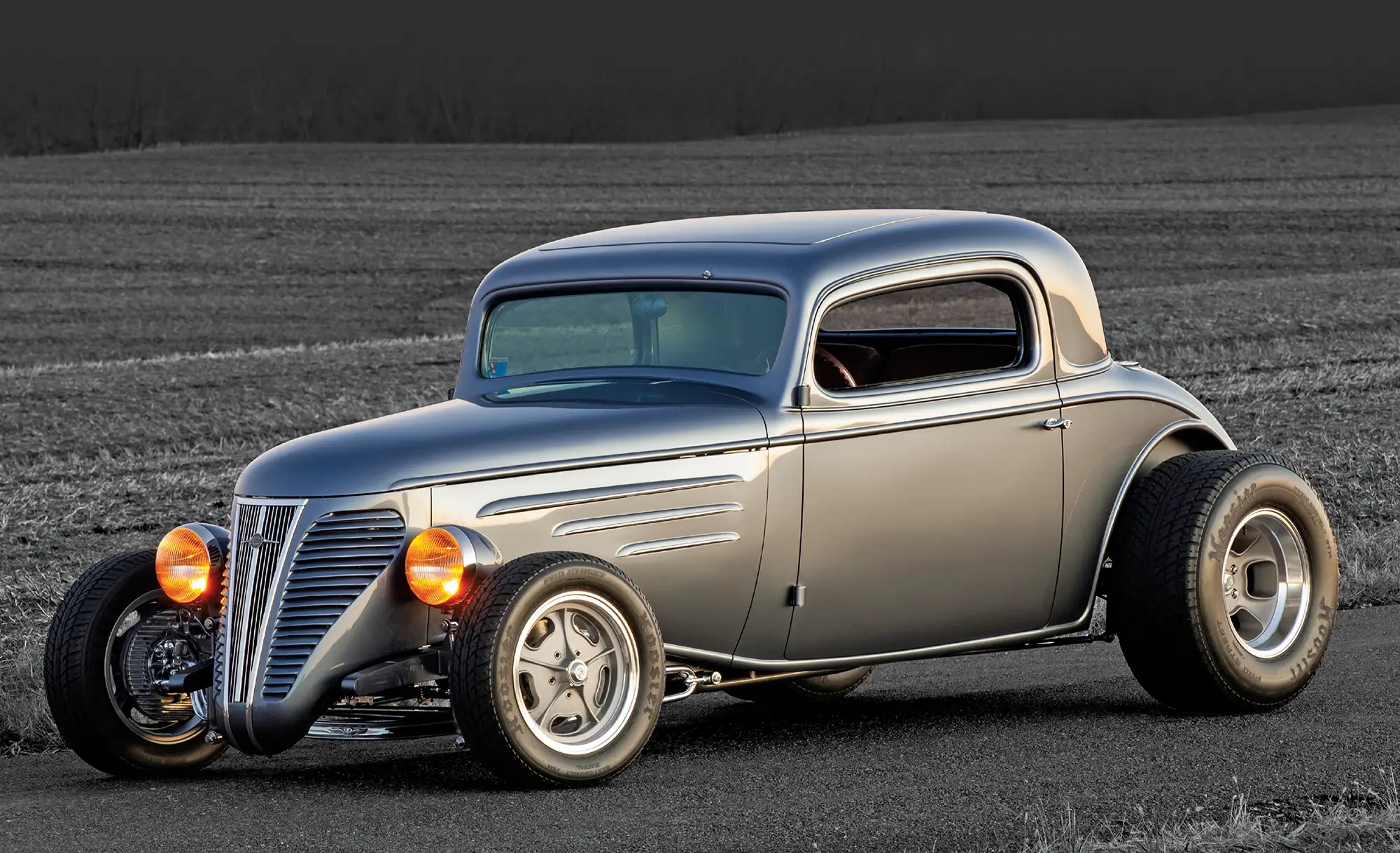
hen we talk about hot rods from the 1930s, we often think of Fords. There’s little doubt that mid-’30s Fords are more popular as hot rod material compared to Chevrolets. However, when he built his 1935 Chevy Standard three-window coupe, Dale Brown hit the proverbial mark.
Sometimes, we all need a “push” to get started or to finish our hot rod project. Dale was no different, and thanks to his wife, Kathy, he received the necessary nudge. We assume it was one winter night when it was cold outside and they were sitting around talking when Kathy asked, “What’s holding you back?” That was the jumpstart Dale needed to pursue his 40-year-long dream of building a 1935 Chevy Standard three-window coupe. He tells us that he had designed the hot rod at least 100 times in his head but never “pulled the trigger,” so to speak. Yet here he was in his retirement years when it all came together. With help from his hot rod friends, Bobby Schumacher of Vintage Fabrication (VF), and crew, they brought the Chevy coupe to life. Listening to Dale gives us a chuckle as he explains, “The Vintage Fabrication team took my ideas, and in some cases added to them, and in some cases threw them out.” No doubt, Dale, along with Schumacher and his crew, were on a roll, the same page, and could laugh about how it all came about.
 Photography by the Author & Courtesy of Muscle Car Restorations
estorations are paused for many reasons, but the most common is a lack of time or money. Many resume when those resources become available again; this often happens multiple times during the project’s life. For some, though, their restoration project turns out to be far more involved than they ever imagined, and they realize they have bitten off more than they can chew. Too many of those end up as basket cases at a swap meet.
However, not all of them do. The pause button was hit on this 1973 ’Cuda more than 20 years ago, but the owner never gave up on it. Instead, it was properly stored away, waiting for the right conditions to move forward again.
It arrived at Muscle Car Restorations (MCR) as a bare shell, with most of the metalwork done but not finished. New quarters had been welded on but the welds had not yet been ground flush. However, the owner eventually decided he preferred the look of the 1971s over his 1973, so the quarters needed to be replaced with the 1971 versions anyway. Since all 1970-74 ’Cudas share the same body, the new panels were a relatively straightforward swap. Auto Metal Direct (AMD) provided not just the rear quarters but also everything else needed to complete the change. For anyone wondering about this legality, the car remains titled as a 1973, so the changes are purely cosmetic.


 Photography by Michael Christensen
hen discussing the concept of having or building an “early hot rod,” we often refer to the “appearance” of our envisioned history and translate it into our contemporary builds. Barron Guss of Hawaii is a hot rodder passionate about early hot rods and believes in constructing them using period-correct parts. In his quest to own a genuine early hot rod, he sought the expertise of Roy Brizio of Roy Brizio Street Rods, resulting in a valuable recreation of what an early hot rod might have looked like.


How to Build an Award-Winning 1932 Ford Chassis

1. Johnson’s Hot Rod Shop (JHRS) completed the chassis for MeKenzie Murphy’s 1932 Ford roadster in a vibrant shade of magenta. For contrast, many of the suspension components were painted black rather than chromed.
Photography by Jessica Roachhere’s an old saying that beauty is only skin deep—but nothing could be further from the truth when it comes to hot rods. For those who appreciate the meticulous mechanical execution of a hot rod chassis, that is beauty, too. To prove the point, we look at what’s under the skin of MeKenzie Murphy’s 1932 Ford roadster, built by Alan Johnson and the crew at Johnson’s Hot Rod Shop (JHRS) in Gadsden, Alabama.
Johnson created the equivalent of a seismic event that rocked the hot rod world in 1993 when he rolled on the scene in a remarkable 1937 Ford cabriolet. The craftsmanship and attention to detail caught the attention of everyone who saw it in person or on the pages of the many magazines it appeared in. The buzz that car created helped give rise to JHRS opening its doors in 1994.
Since its inception, JHRS creations have won the Ridler award, Goodguys Street Machine of the Year, too many to count Pro’s Picks, along with others. While the cars turned out by Johnson and crew have included traditional hot rods, muscle cars, trucks, and even Bonneville racers, they all had one thing in common: scrupulous attention to detail and execution. A perfect example of the shop’s capabilities is the 1932 Ford highboy built for Murphy that won Best Street Rod at the 2024 Triple Crown of Rodding and was featured in the Dec. ’24 issue of Modern Rodding.
 Photography by NotStock Photography
oug and Debbie Kenny from Florida own a 1957 Pontiac Safari wagon, the perfect hot rod that transportation enthusiasts could desire. To bring this project to life, they enlisted the help of Alan Johnson and his team at Johnson’s Hot Rod Shop (JHRS).
In 1957, the Pontiac Safari stood out as the most expensive model in Pontiac’s lineup, yet it also held the unfortunate distinction of being the least popular. It has been reported that the 1957 Pontiac Star Chief Custom Safari was a true rarity, with only 1,292 units produced during that year. Its appeal lay in a powerful 347ci V-8 engine, offering either 270 or an impressive 290 hp. The standard model produced 270 hp with a single four-barrel carburetor and a smooth Hydramatic transmission. Meanwhile, the optional tri-power version unleashed its full potential with three two-barrel carburetors. This two-door version earned the endearing nickname “two-door Custom Safari,” setting it apart from its peers.


 Photography by Taylor Kempkes & Courtesy of Strange Engineering
ver the past year, we’ve regularly visited Old Anvil Speed Shop in Orange, California, to keep tabs on a truly unique 1962 Chevrolet Impala SS convertible. Its exterior looks deceptively subtle, but it houses an impressive amount of fabrication and powertrain technology beneath its vintage exterior. Paul Bosserman, Old Anvil’s owner and founder, designed a completely new perimeter chassis for the car, replacing the original X-frame. Moreover, the chassis is welded to the convertible body, effectively creating a unitized structure that is significantly stronger than the factory foundation.
In addition, Bosserman and his team of fabricators created their own suspension setups, featuring a rear four-link (with a Panhard bar) and custom upper and lower A-arms in the front—all while incorporating 22-inch front and 24-inch rear custom wheels from Schott. The car also includes the first hot rod application of King off-road shocks, as well as front and rear airbags from Air Lift, allowing for 7 inches of suspension travel while keeping the chassis just above the pavement at rest.

 Photography by Tommy Koppinger
ickup trucks and hot rods are synonymous with the “horse and buggy.” It’s hard to imagine enjoying one without the other. Such is the case for Steve Caudle of Arizona, who grew up with this 1936 Ford Model 68 pickup truck before transforming it into his hot rod. Every hot rodder who has built a hot rod also owns a pickup truck—or wishes he had one.


 Photography by Taylor Kempkes
e have previously examined this remarkable 1962 Chevy Impala and now we’ll concentrate on the exceptionally clean installation of aftermarket hinges for the hood and decklid. Old Anvil Speed Shop is handling the build, which continues to evolve with their innovative building style.
A decision was made to use black anodized billet aluminum hinges from Eddie Motorsports. These hinges were designed as a bolt-on item for a stock 1962 Chevrolet, but the extensive modifications made to this car required some creative adjustments. The wide wheels and tires required widening the rear wheelwells, which prevents the decklid hinges from mounting in their original location. Moving the hinges 2-1/2 inches inboard solved the problem but it required making new mounts. Great care was taken to ensure that the geometry of the installation was accurate to prevent binding of the hinges.

 Photography by THE AUTHOR
he early ’60s saw intense competition for automobile sales among the Big Three manufacturers as they marketed their offerings to the public. One notable focus was the “personal luxury” segment where Ford held a strong lead with its four-passenger Thunderbird line. In response, General Motors’ design vice president, Bill Mitchell, examined several European models. He aimed to create a vehicle that combined the edginess of a Ferrari with the elegance of a Rolls-Royce. The result was the Buick Riviera, a name chosen to evoke the sophistication of the Italian and French coastlines. It was crafted to attract discerning buyers who could appreciate the striking new design, artfully paired with its low stance and specially tuned suspension. It delivered a high-level performance akin to that of a Grand Turismo racer. The 1963 Riviera stretched across our pages, owned by Jeff (late) and Dee Dee Luttrell of Maryland, showcases the car’s exquisite lines expertly matched with the latest in cutting-edge technology.


 Photography by Jason Scudellari
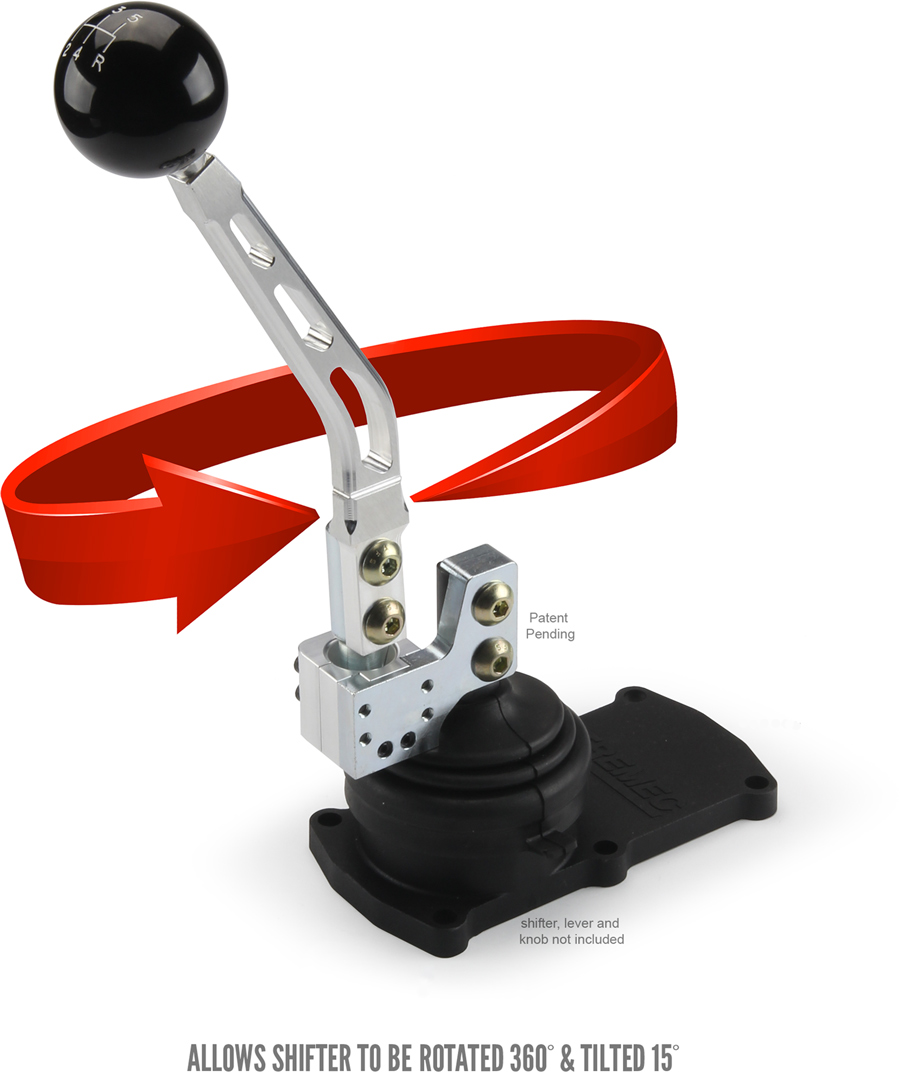
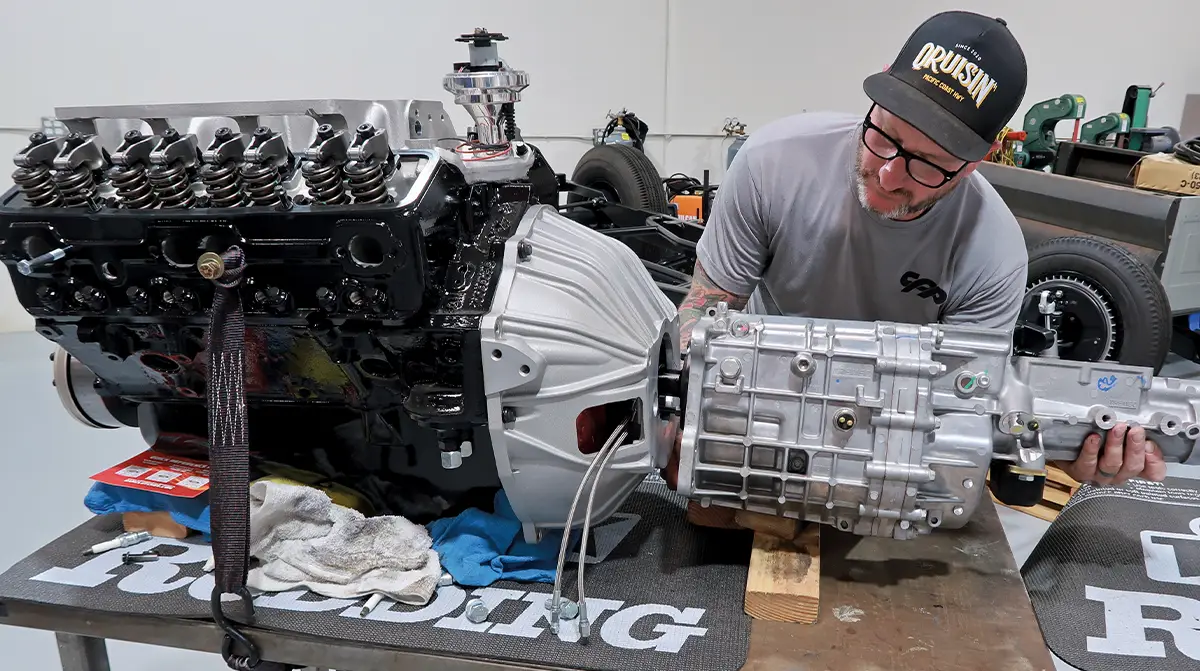
o paraphrase Eli Wallach’s character, Tuco Benedicto Pacífico Juan María Ramírez, in the movie The Good, the Bad, and the Ugly, two types of hot rodders exist in this world: those who love shifting gears and those who don’t. For those who do, TREMEC offers a variety of options, including the exceptional TKX five-speed transmission and Summit Racing Equipment has everything you need for the installation. Recently, we hung out with Jason Scudellari of HB Hot Rod to demonstrate how it’s done.
TREMEC offers the TKX five-speed manual transmission for GM and Ford applications (the difference is in the length of the input shaft). The slimmest five-speed on the market, the TKX will fit most transmission tunnels without floor modifications, and three locations are available to optimize the shifter location. From a strength standpoint, the TKX is rated as 600 lb-ft of torque, can handle engine speeds of 8,000 rpm, and shifts at 7,500 rpm. All gears and shafts are made from special grade steel (ASTM 4615), and smooth shifting is due to the multi-cone synchronizers with hybrid synchronizer rings made of sintered bronze and carbon. The input shaft diameter is 1.125 with 26 splines; the output shaft has 31 splines and accepts a GM slip yoke.





 Photography by Jessica Roach
t’s one thing to stroll through the aisles of the Grand National Roadster Show or wander among the rows of outrageous hot rods competing for some gold at Triple Crown. The level of craftsmanship is stunning, revealing thought, design, and creativity, but wouldn’t you love to have X-ray vision to see through those panels to the structures beneath? (Be careful what you wish for; Apple might be working on something! —B.B.)
One standout example is MeKenzie Murphy’s stunning, pink-flamed roadster. A breathtaking hot rod inside and out, we thought it would be intriguing to reveal what lies beneath that custom leather upholstery and the fabulously finished exterior panels. Convertibles, in general, and early roadsters, in particular, aren’t exactly known for their flex-resistant body styles due to the absence of a roof. Toss in 500 wild ponies underhood and the roadster body’s structural integrity is truly tested. Since this isn’t Alan Johnson’s first rodeo, he includes interior bracing in his Deuce roadster builds. This provides the stability necessary to maintain super-close panel gaps and prevent stress cracks (like the original bodies did) while offering a mounting structure for utilitarian items like batteries and interior panels. While it isn’t advertised as such, it could also enhance the structure’s safety. Like every facet of a Johnson’s hot rod, the design and craftsmanship are top-notch.


 The Brizio C-Cab was in surprisingly good condition, given its age and travel schedule! Roy Brizio had to do some “tune-up,” but the original paint (with some touch-ups) and interior are still in great shape. Photography by the Author & the Roy Brizio Collection
hile attending this year’s Grand National Roadster Show, we made our obligatory walk-bys of the manufacturers’ booths to see what was new and interesting. As always, we were not disappointed and saw all sorts of projects, but one from the past immediately caught our attention.
As we passed the Roy Brizio Street Rods booth, we spotted a hot rod from yesteryear that stirred up many wonderful memories. Andy Brizio’s, the original builder and owner, 1915 Ford Model T C-Cab (affectionately known as the Instant-T) in all its remarkable glory, adorned with a stunning ribbon paintjob by Art Himsl. This truck was initially built for the Rod & Custom Street Rod Nationals in Memphis in August 1971 where it won the “Best Appearing Car” award among a competitive field of 1,600 vehicles. In 1972, Andy drove the C-Cab across the country again, this time to the Hot Rod Street Rod Nationals in Detroit. (Remember that the first three Street Rod Nationals had not yet carried the National Street Rod Association banner; that was soon to come.) During that trip, riding shotgun and sharing driving duties was a young Roy Brizio, just 15-1/2 years old, clutching a freshly minted “learner’s permit.” In Detroit, the C-Cab earned the People’s Choice award. Afterward, with Andy behind the wheel, the C-Cab graced the cover of the Dec. ’71 issue of Street Rod magazine, published by Bruce Miller.
View Index
- AFFORDABLE STREET RODS
- AMERICAN AUTOWIRE
- AMSOIL
- ART MORRISON ENTERPRISES
- AUTO METAL DIRECT
- AUTOMETER PRODUCTS
- AUTOMOTIVE RACING PRODUCTS
- BALL’S VINTAGE GLASS
- BOWLER PERFORMANCE TRANSMISSIONS
- CLASSIC INSTRUMENTS
- CLASSIC PERFORMANCE PRODUCTS
- CLASSIC PERFORMANCE PRODUCTS
- CLEANTOOLS
- CRUISIN THE COAST
- CUSTOM AUTOSOUND
- DAKOTA DIGITAL
- DETROIT SPEED
- EATON DETROIT SPRING, INC.
- FITECH EFI
- FLAMING RIVER INDUSTRIES
- FLAMING RIVER INDUSTRIES
- GOODGUYS ROD & CUSTOM ASSOCIATION
- HEINZMAN STREET ROD SHOP
- HOT HEADS RESEARCH
- IDIDIT
- LOKAR
- LOKAR
- NATIONAL STREET ROD ASSOCIATION
- NEW PORT ENGINEERING
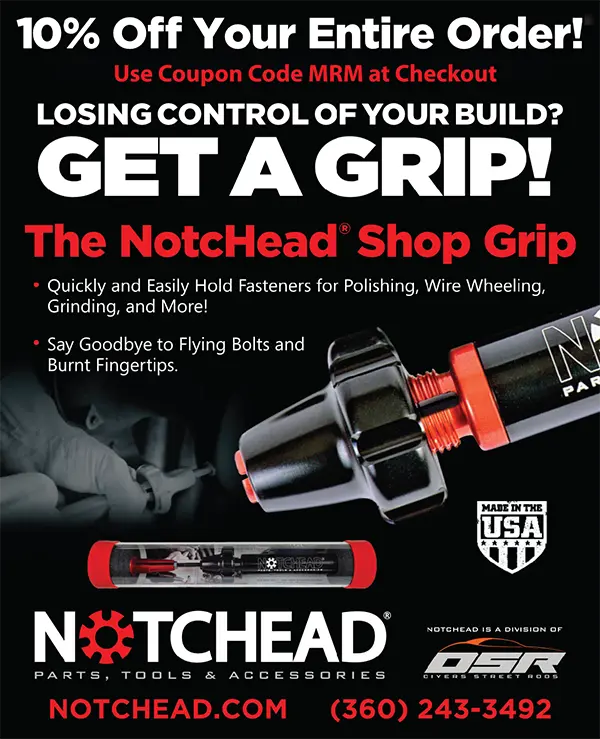
- NOTCHEAD FASTENERS
- PAINT OVER RUST PRODUCTS
- PHOENIX MACHINE PRODUCTS
- POWERMASTER PERFORMANCE
- RJAYS SPEED SHOP
- SCOTT’S HOTRODS
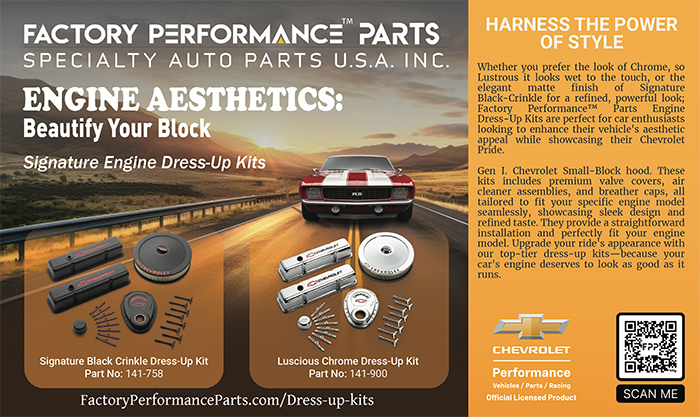
- SPECIALTY AUTO PARTS USA, INC.
- THAT’S GREAT NEWS
- TRIPLE CROWN OF RODDING, LLC
- VINTAGE AIR
- WHEEL SMITH
- WILWOOD ENGINEERING