


 Photography by Jessica Roach
t’s one thing to stroll through the aisles of the Grand National Roadster Show or wander among the rows of outrageous hot rods competing for some gold at Triple Crown. The level of craftsmanship is stunning, revealing thought, design, and creativity, but wouldn’t you love to have X-ray vision to see through those panels to the structures beneath? (Be careful what you wish for; Apple might be working on something! —B.B.)
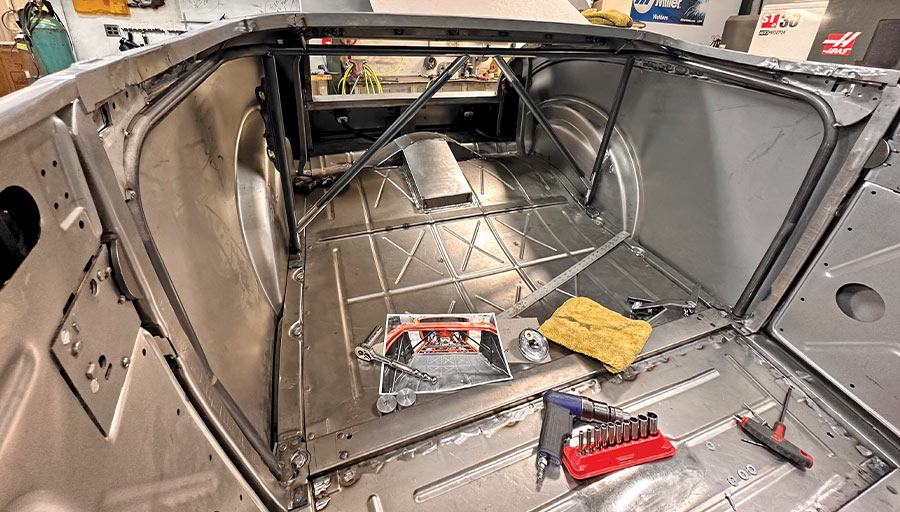
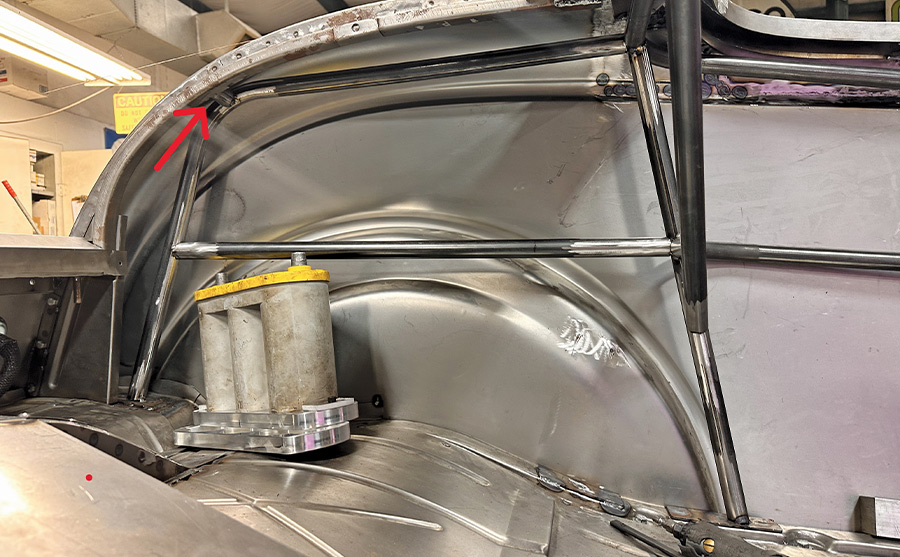
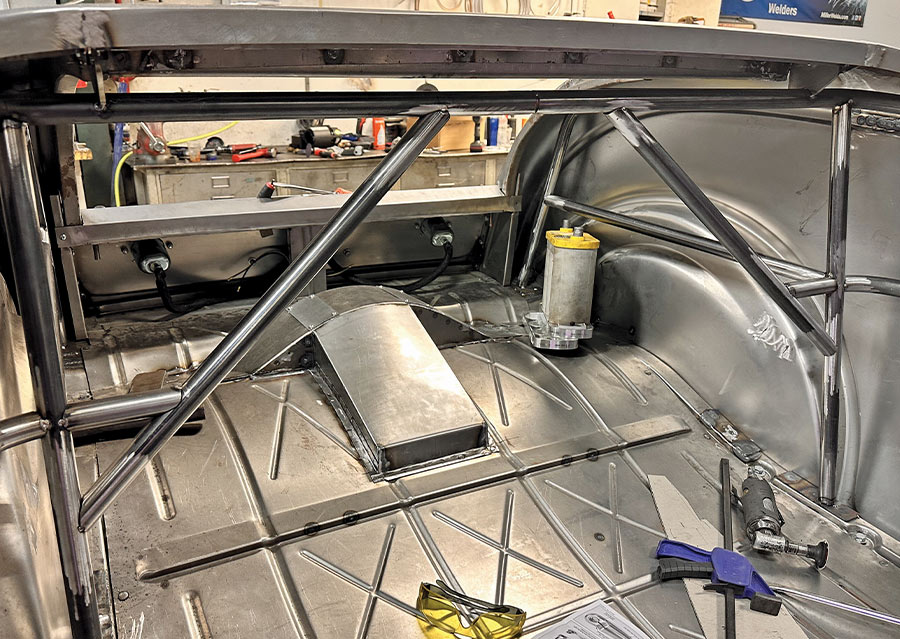
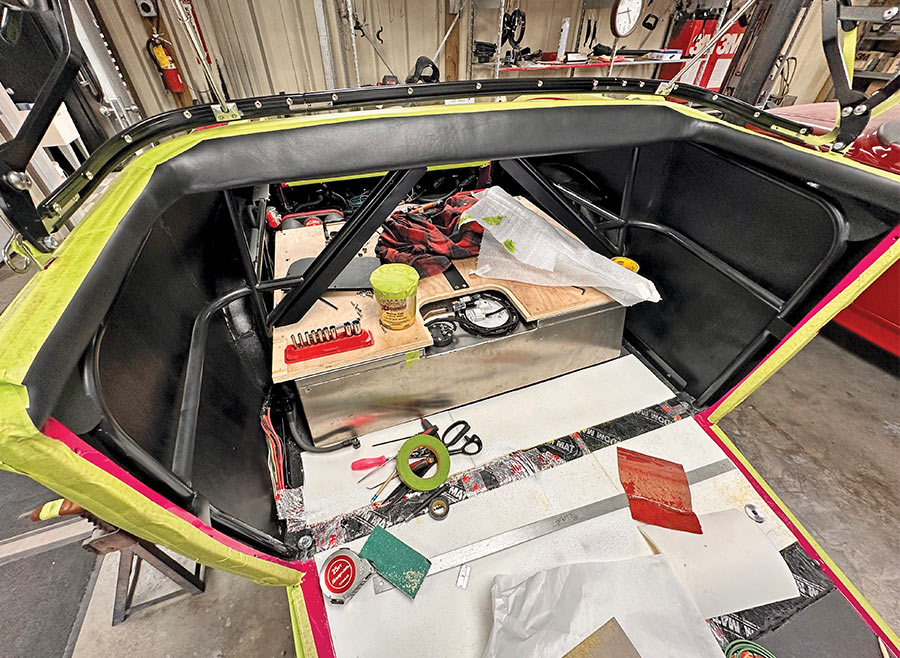
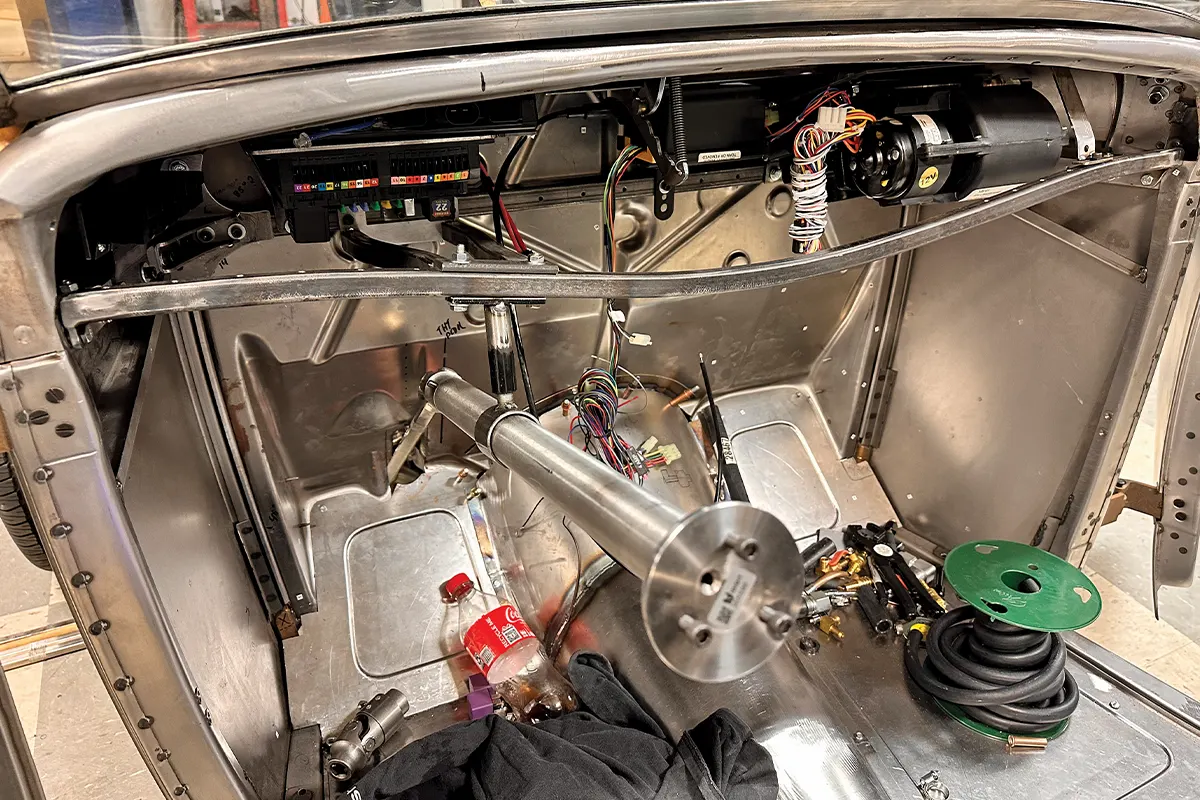
One standout example is MeKenzie Murphy’s stunning, pink-flamed roadster. A breathtaking hot rod inside and out, we thought it would be intriguing to reveal what lies beneath that custom leather upholstery and the fabulously finished exterior panels. Convertibles, in general, and early roadsters, in particular, aren’t exactly known for their flex-resistant body styles due to the absence of a roof. Toss in 500 wild ponies underhood and the roadster body’s structural integrity is truly tested. Since this isn’t Alan Johnson’s first rodeo, he includes interior bracing in his Deuce roadster builds. This provides the stability necessary to maintain super-close panel gaps and prevent stress cracks (like the original bodies did) while offering a mounting structure for utilitarian items like batteries and interior panels. While it isn’t advertised as such, it could also enhance the structure’s safety. Like every facet of a Johnson’s hot rod, the design and craftsmanship are top-notch.
This structure consists of a 1-inch-diameter, 0.125-inch wall, mild steel tubing welded to the lower sills of the body, connected to the upper panels at key points. While this provides maximum stability to the body, it also requires that all panels be perfectly pre-fitted before this structure is finalized and welded in place, as the body may not respond to shimming after this bracing. Since we here at Modern Rodding like to share pro-building methods with an eye toward that backyard shop, let’s take a quick look at how to build a similar structure.
First, there are two types of tubing to consider: round or square. Undoubtedly, round tubing has an advantage in appearance; it is very strong. Did we mention how great it looks? However, bending it requires special tools, making fish-mouth cuts for joints. Experience plays a significant role in making round tubing effective. But remember, the only way to gain that experience is by starting to work, and tools for tubing tasks have become more affordable. Alternatively, you can pay a shop to do the bending; universal bends are also available online.
The second option is square tubing. Square tubing is strong and easier to cut and fit but difficult to bend, and it simply isn’t as visually appealing as round tubes. Due to its flat surfaces, adding components like brackets and mounting tabs is simpler on square tubing. Remember, quality fabrication looks good regardless of shape; in the end, all of this will be concealed.
Regarding strength, round tubing handles high pressure and stress exceptionally well. Just look inside any race car to see that tubes reign supreme. In contrast, square tubing, with its shape, provides excellent rigidity and load-bearing capacity, making it ideal for constructing this type of automotive framework. In this context, either tube will work well, ultimately due to aesthetics, skill, and the tools available. If you’re bracing a roadster body, you might consider using these Johnson tubes as inspiration.
With that in mind, let’s delve into the Murphy roadster to uncover more hidden aspects contributing to its quality.







 SOURCES