

 Photography by NotStock Photography
oug and Debbie Kenny from Florida own a 1957 Pontiac Safari wagon, the perfect hot rod that transportation enthusiasts could desire. To bring this project to life, they enlisted the help of Alan Johnson and his team at Johnson’s Hot Rod Shop (JHRS).
In 1957, the Pontiac Safari stood out as the most expensive model in Pontiac’s lineup, yet it also held the unfortunate distinction of being the least popular. It has been reported that the 1957 Pontiac Star Chief Custom Safari was a true rarity, with only 1,292 units produced during that year. Its appeal lay in a powerful 347ci V-8 engine, offering either 270 or an impressive 290 hp. The standard model produced 270 hp with a single four-barrel carburetor and a smooth Hydramatic transmission. Meanwhile, the optional tri-power version unleashed its full potential with three two-barrel carburetors. This two-door version earned the endearing nickname “two-door Custom Safari,” setting it apart from its peers.


Enhancing the unique character of the Kennys’ Safari, the wheels were custom crafted at JHRS. These three-piece, eight-lug billet wheels measure 17 inches in the front and 18 inches in the back and are wrapped in Michelin tires, 215/60R17 in the front and 245/60R18 in the rear. The modern brakes are machined by JHRS, which conveniently hides Wilwood 13-inch drilled-and-slotted rotors paired with four-piston calipers in the front. Additional Wilwood components are located at the rear, featuring 12.19-inch drilled-and-slotted rotors, also with matched four-piston calipers. The brake system utilizes a GM-style master cylinder and brake booster.
Their design reflected the classic eight-lug wheels (approximately a $120 option) provided by Pontiac from 1960-68, recognized for their aluminum hubs that combined the wheel and brake drum. Initially introduced to address brake fade issues tied to conventional drum brakes, the Kelsey-Hayes eight-lug option, crafted by Clayton Leach, showcased finned aluminum brake drums with cast-iron liners. This groundbreaking open-wheel design enabled better airflow and heat dissipation, which minimized brake fade and enhanced both functionality and aesthetics, making these wheels a celebrated element of automotive design history.

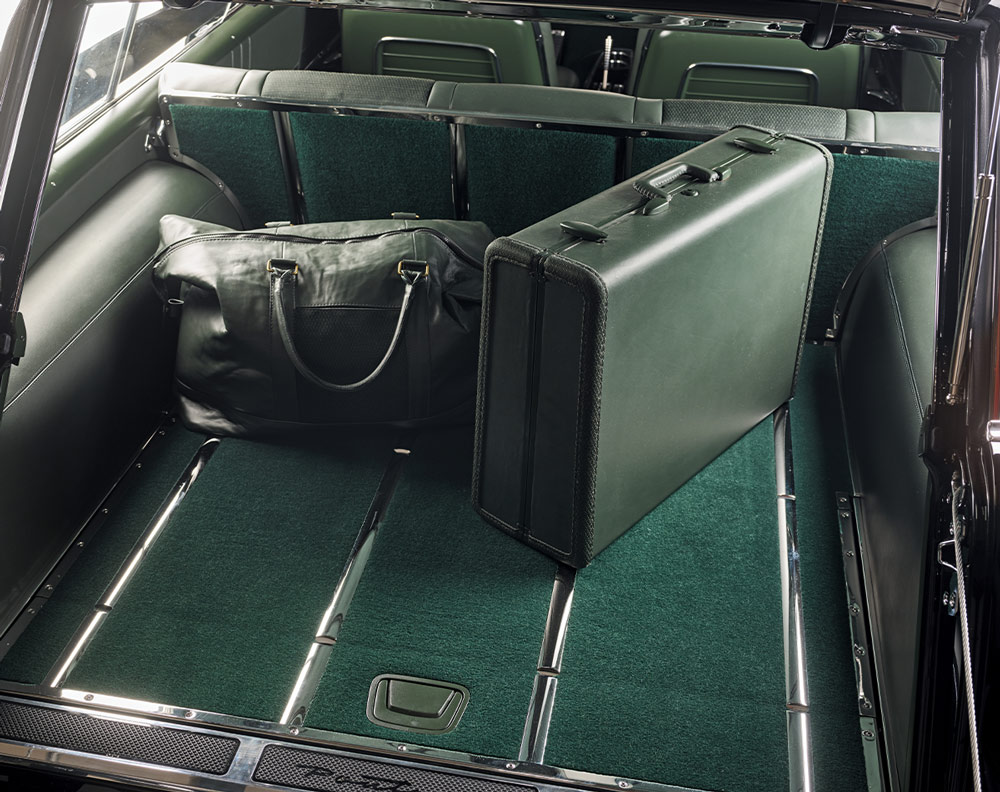
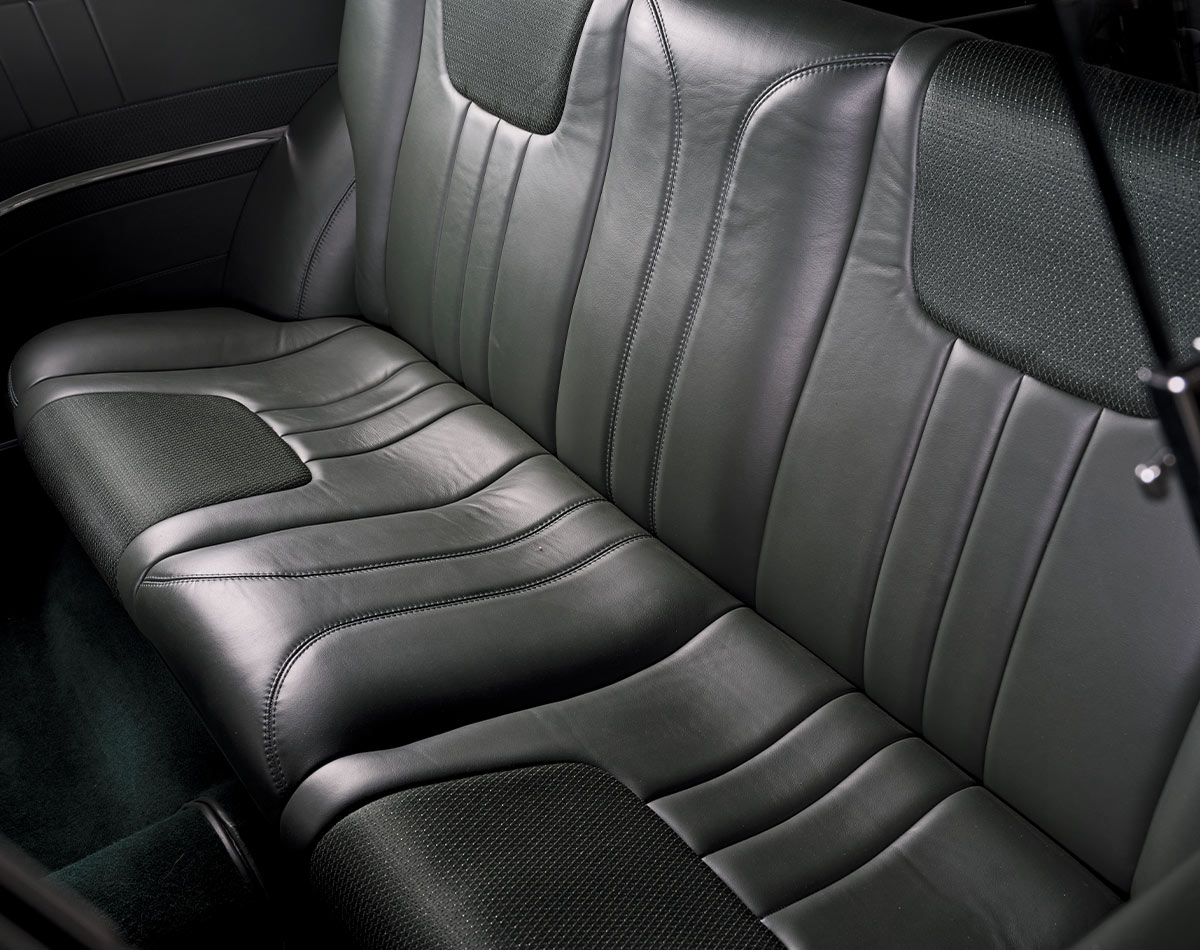
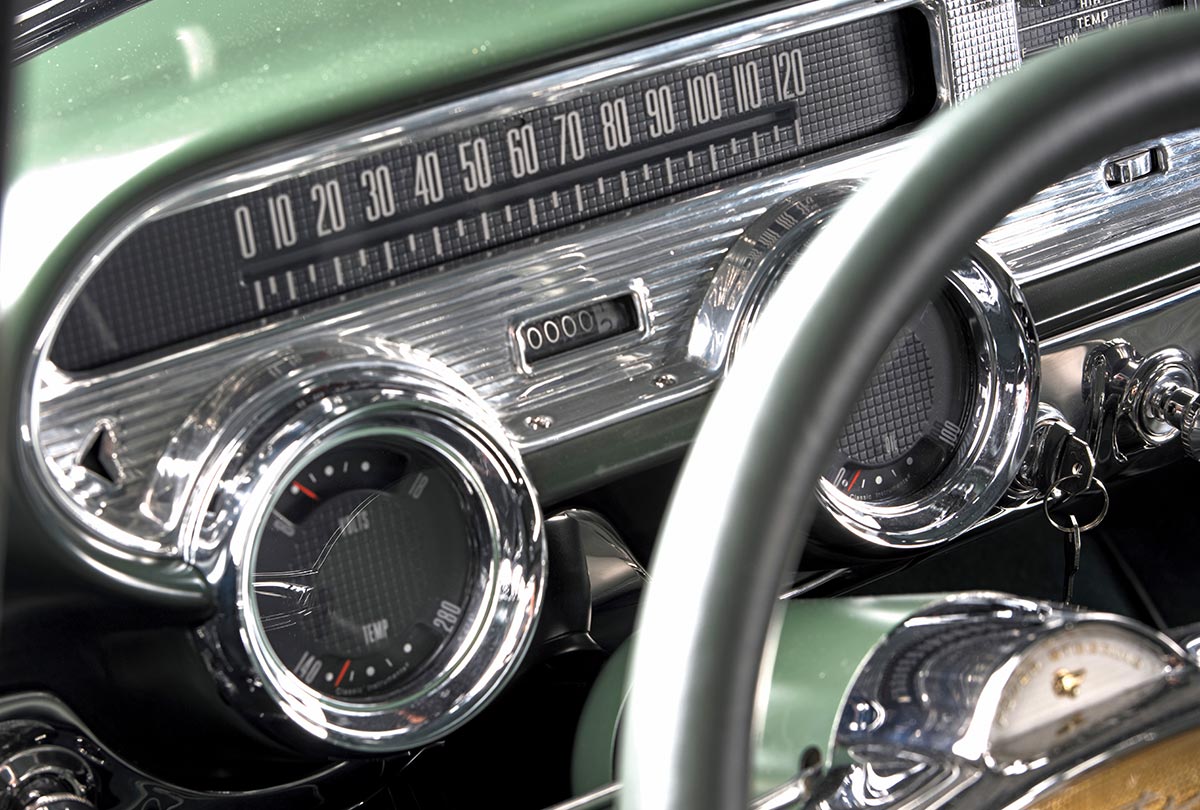
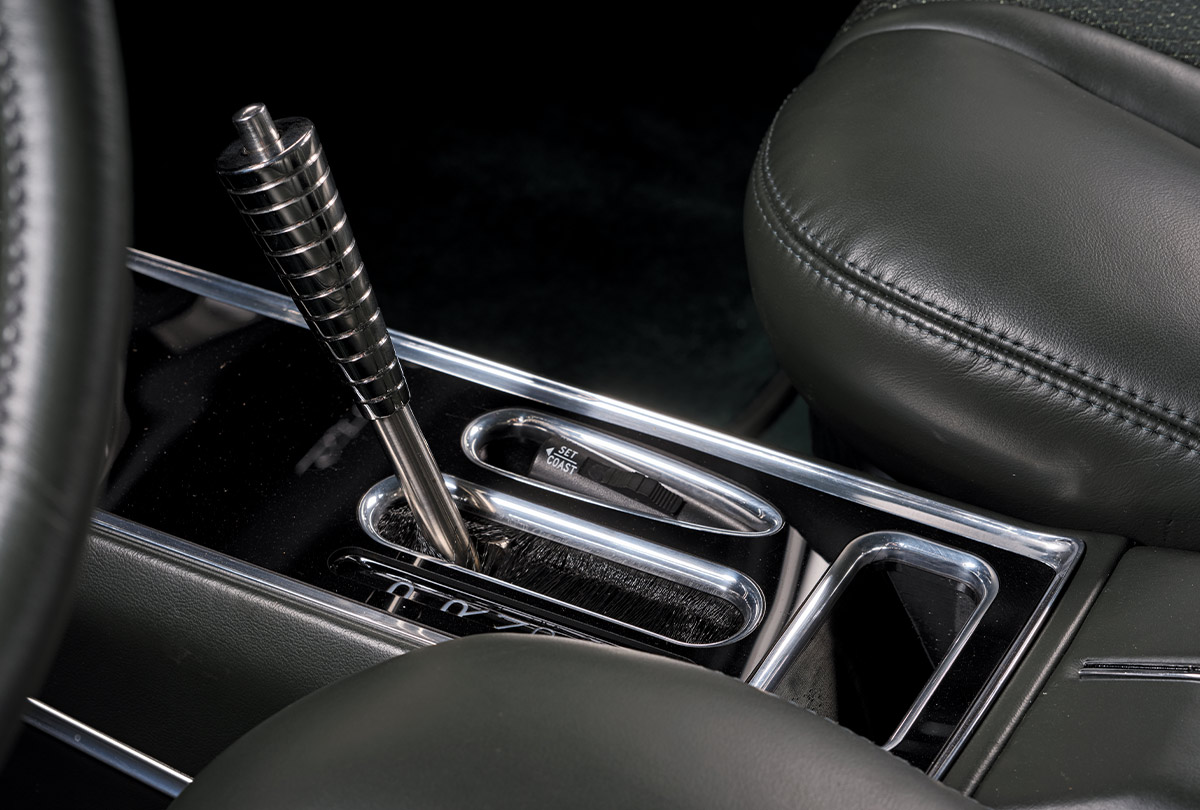
Beneath the glossy black paint lies a spacious interior that showcases extensive custom upholstery work completed at JHRS under the skilled guidance of Maria Garcia. The rear features custom seating crafted at JHRS, while the front is equipped with a pair of 1950s GM hardback buckets that frame a 1970 Chevelle center console, which was also modified at JHRS. All the upholstery is stitched in green Garrett leather and complemented by dark green carpeting and an ultra-suede headliner. Additionally, a custom rear floor hatch in the storage area conceals extra storage space. The dashboard of the 1957 Safari wagon is original. Yet, it is outfitted with Classic Instruments gauges, a Vintage Air A/C Gen 5 system, and wired through an American Autowire harness, with all the installation done at JHRS. The dash also features an Ididit tilt column with a JHRS-modified factory wheel.

If you were out and about at rodding events last summer, there’s a good chance you spotted this Safari wagon, as it made the rounds at numerous events from coast to coast. Along the way, it also managed to take home a “storage area” filled with accolades—2024 GM Iron Builder of the Year, Builders Choice at Goodguys, 2024 Most Bitchin Finalist, and an Elite 10 at the Triple Crown of Rodding. It’s good looking and a great hauler.