







Metal
Fitment
Before
… Bodywork
& Paint
SHOT:
409 Wagon
… Factory
Ordered

Preview Issue







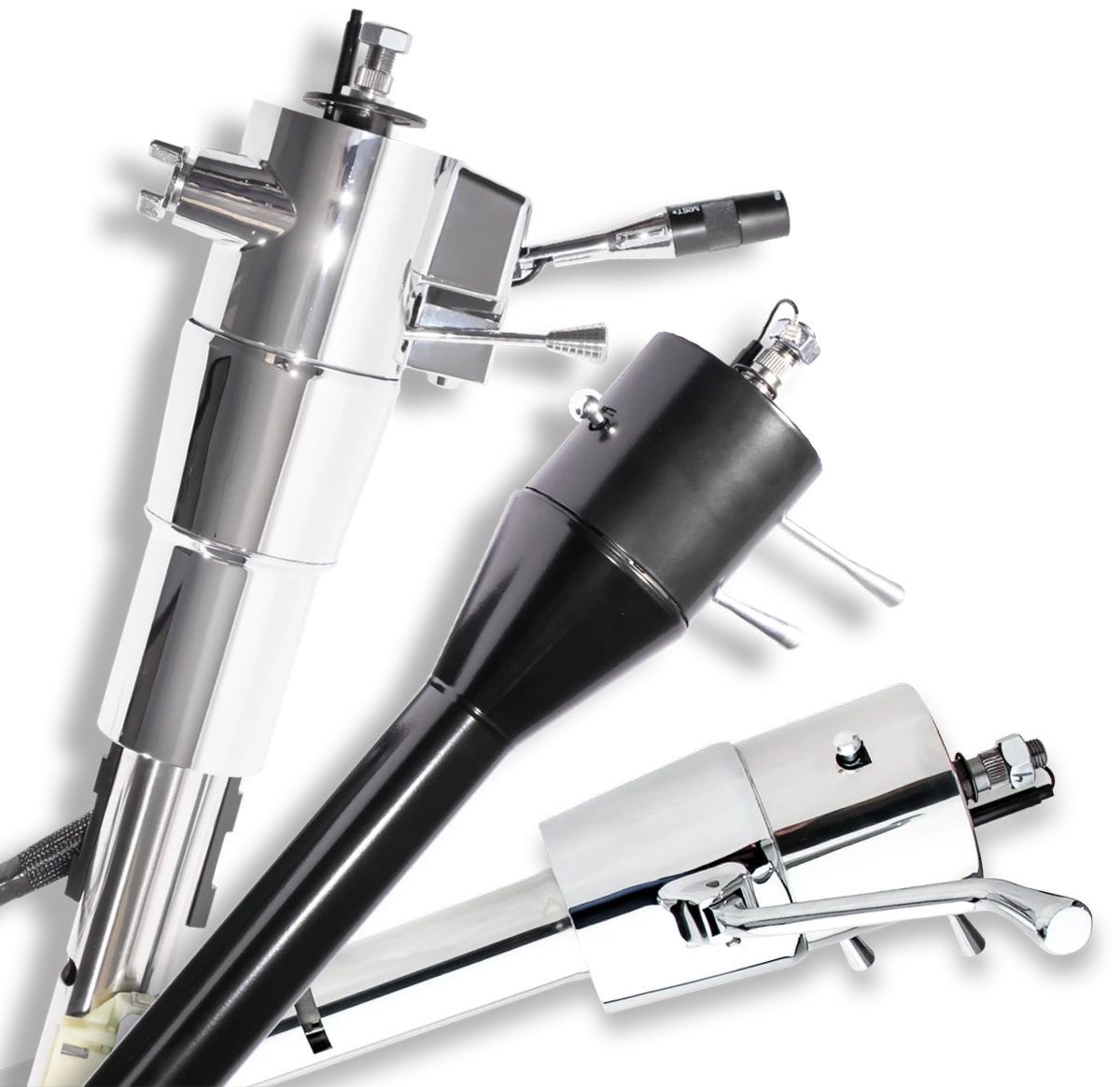
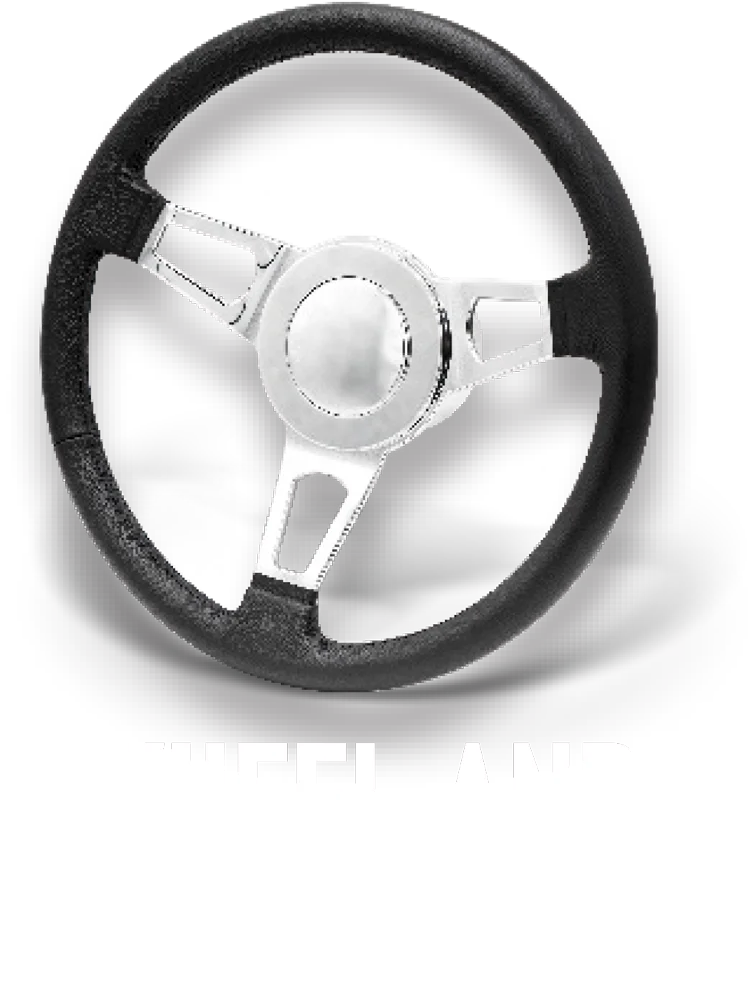
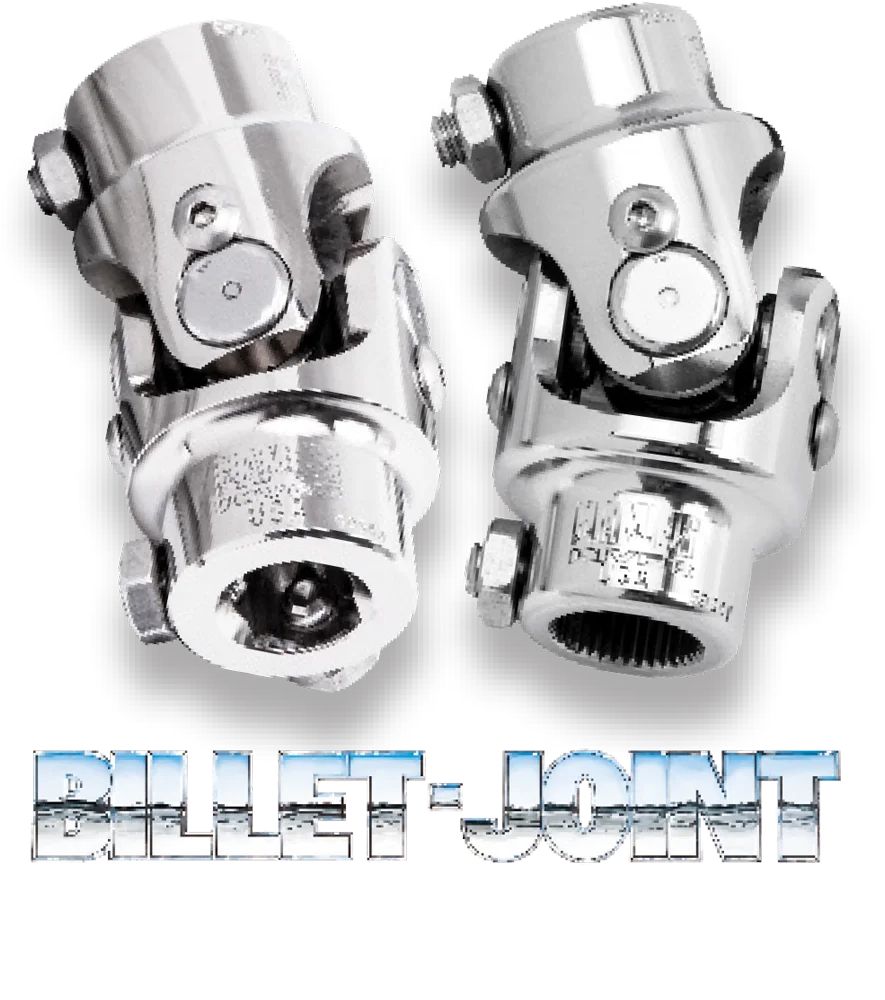
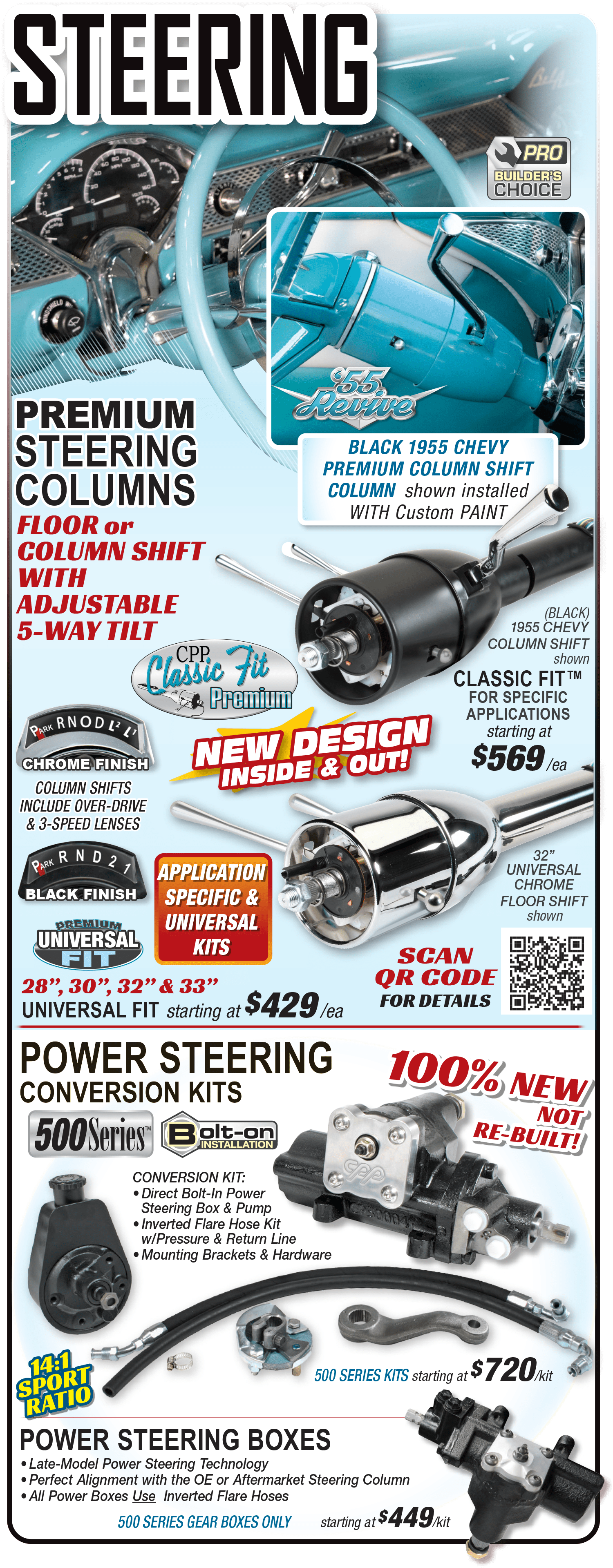
Experience precision and style with Flaming River steering columns. Elevate your driving experience with our cutting-edge technology and uncompromising quality. Transform your vehicle into a masterpiece of control and comfort. Check out Flaming River steering columns and steer your journey with confidence. Made in the USA!

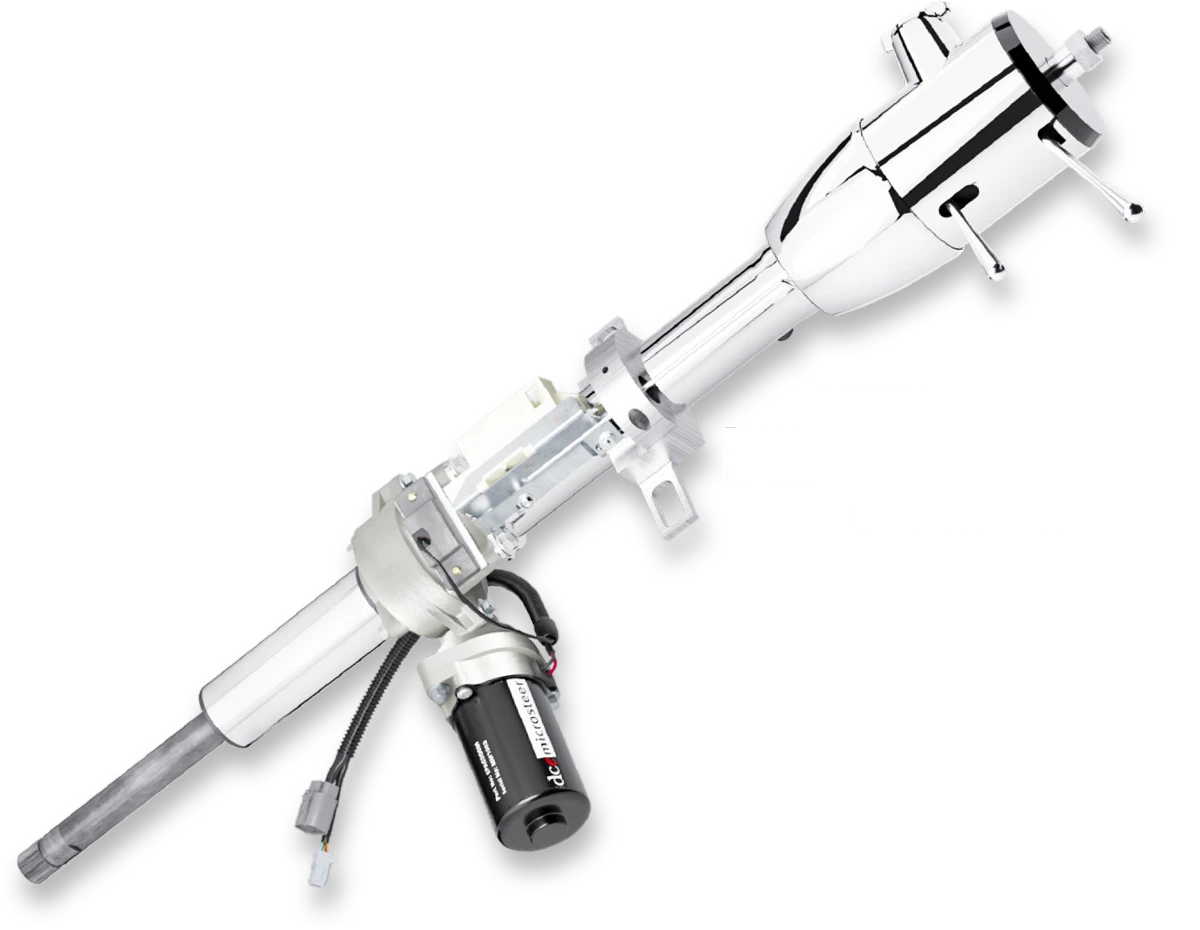
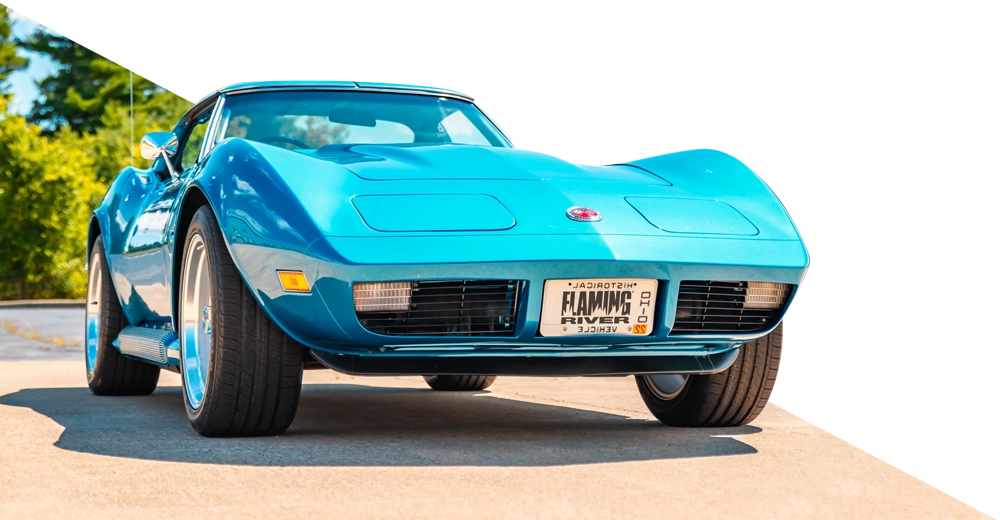
The Microsteer Electric Power Assisted Steering system is integrated into our Flaming River Tilt Column and can be used with the original 68-82 Corvette manual steering box. It’s a Direct Fit!

Experience precision and style with Flaming River steering columns. Elevate your driving experience with our cutting-edge technology and uncompromising quality. Transform your vehicle into a masterpiece of control and comfort. Check out Flaming River steering columns and steer your journey with confidence. Made in the USA!

The Microsteer Electric Power Assisted Steering system is integrated into our Flaming River Tilt Column and can be used with the original 68-82 Corvette manual steering box. It’s a Direct Fit!
The Microsteer Electric Power Assisted Steering system is integrated into our Flaming River Tilt Column and can be used with the original 68-82 Corvette manual steering box. It’s a Direct Fit!




Brian Brennan
Industry News
New Products
Those Supporting Our Industry
Brian Brennan
Danny Santoro’s 1955 Chevy Gasser
By Johnny Hunkins, Photography by the Author
Brian DuBoise’s 1930 Ford Model A
By Johnny Hunkins, Photography by the Author

Steve Nettleingham’s 1970 Dodge Challenger
By Brian Brennan, Photography by NotStock Photography
Lon Clouse’s 1941 Willys
By Brian Brennan, Photography by NotStock Photography
The Carlisle Ford Nationals
By Evan J. Smith, Photography by the Author
Free Food and La-Z-Boy Chairs for All Entrants
By John Gilbert, Photography by the Author
Dakota Digital’s RTX Direct-Fit Gauge Pack Gives the 1965 Chevy Impala Factory-Style Visuals With Contemporary Accuracy and Stability
By Johnny Hunkins, Photography by Jason Scudellari
What You Need to Know About Ignition Systems
By Ron Ceridono, Photography by the Author, Brian Brennan & Todd Ryden
Making Sheet Metal Fit Before Body- and Paintwork
By Ron Covell, Photography by Camren Beatie & Shawn Holloway










BRIAN BRENNAN
bbrennan@inthegaragemedia.com
TIM FOSS
tfoss@inthegaragemedia.com
YASMIN FAJATIN
yfajatin@inthegaragemedia.com
SARAH GONZALES
sgonzales@inthegaragemedia.com
ROB MUNOZ
rmunoz@inthegaragemedia.com
PATRICIA LUDI
pludi@inthegaragemedia.com
Gerry Burger, Tommy Lee Byrd, Ron Ceridono, Michael Christensen, Ron Covell, Grant Cox, Kev Elliott, John Gilbert, Ken Gross, John Jackson, Chadly Johnson, Barry Kluczyk, Scotty Lachenauer, Ryan Manson, Josh Mishler, Dale Moreau, Todd Ryden, Jason Scudellari, Chris Shelton, Tim Sutton, Chuck Vranas — Writers & Photographers
Travis Weeks Advertising Sales Manager
Patrick Walsh Sales Representative
ads@inthegaragemedia.com
ModernRodding.com
AllChevyPerformance.com
ClassicTruckPerformance.com
InTheGarageMedia.com
subscription@inthegaragemedia.com
(714) 985-9171
InTheGarageMedia.com “Online Store”
For bulk back issues of 10 copies or more, contact store@inthegaragemedia.com


Copyright (c) 2026 In The Garage Media, Inc.
Printed in the USA.
The Modern Rodding trademark is a registered trademark of In The Garage Media, Inc.

Cleveland, OH
(216) 281-8777


 By Brian Brennan
here was a time when a driver’s license was more than a laminated card stuffed into a wallet. It was a rite of passage, the first honest taste of freedom, and for many of us, the green flag to a lifelong affair with cars. The garage became a classroom, the local cruise spot became the social network, and every tired project car sitting behind a fence looked like a possibility.
For me, it started in a 1949 Studebaker—you know, the one that looked like it was coming and going—followed by a hand-me-down 1956 Chevy that carried me through the back half of high school and midway through college. Then came the first real garage projects: a 1957 Corvette, a 1962 Pontiac Grand Prix, and then back to Chevy again, this time a 1957 with a big-block underhood. I’m confident my story isn’t all that different from a lot of yours.
Today, that story reads differently. Young people drive less, get licensed later, and often view the automobile as optional rather than essential. I see it in my own neighborhood and in my own habits. I’d rather summon concierge-style transportation than stand at a rental counter. The bigger forces are economic, cultural, and technological, and they have changed how the next generation sees the automobile.
Fewer potential young car people are getting licensed early, and fewer see car ownership as the automatic next step into adulthood. AAA Foundation research shows young people are waiting longer to get licensed than previous generations. In 2019, only about 60 percent of those ages 18 to 24 had been licensed before turning 18—a long way from when turning 16 meant counting the hours until you could drive legally. That was how it happened for me and just about every buddy I had, male and female.
 BY BRIAN BRENNAN
 Well, there can be no doubt it gets out of its own way.
 Goodguys Rod & Custom Announces Their 2026 Street Rod Of The Year & Street Machine Of The Year
Well, there can be no doubt it gets out of its own way.
Goodguys Rod & Custom Announces Their 2026 Street Rod Of The Year & Street Machine Of The Year
Well, there can be no doubt it gets out of its own way.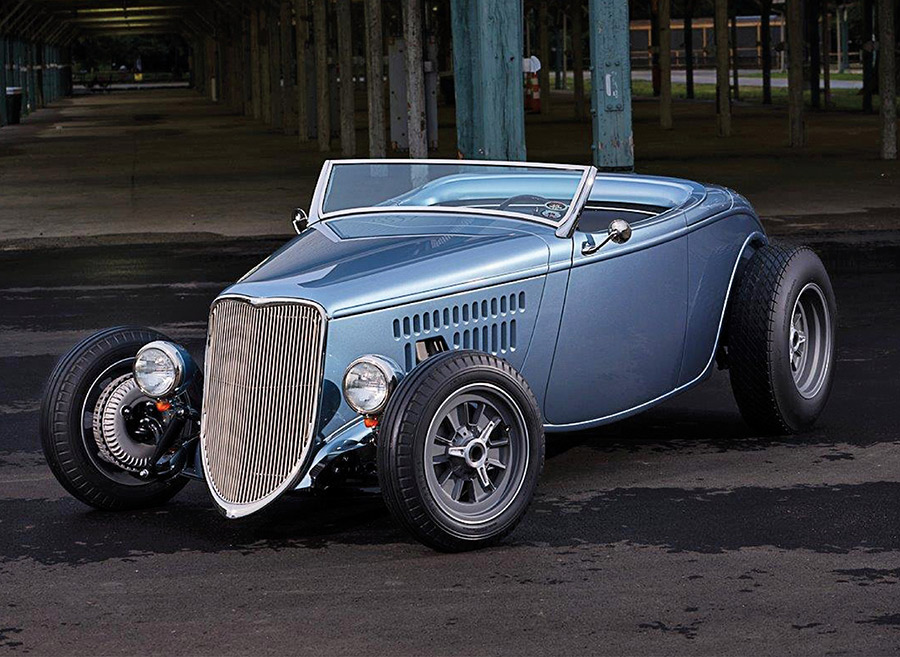 Roadsters need to have the correct stance, otherwise, the entire build misses the point. Point taken!
Let’s start with recognition for John and Jennifer Fairleigh and their 1933 Ford roadster, named Goodguys’ 2026 Classic Instruments Street Rod of the Year. If their names and their roadster look familiar, they should. Earlier in the year, this roadster was in competition at the Grand National Roadster Show for the America’s Most Beautiful Roadster award. It took home three very impressive awards: Blackie Gejeian Memorial Award, as well as the AMBR Outstanding Interior. The roadster is based on a Speed33 body by American Speed Company, with an impressive powertrain comprising a Kaase Boss 520 and a Bowler 4L80E.





 Photography by THE AUTHOR
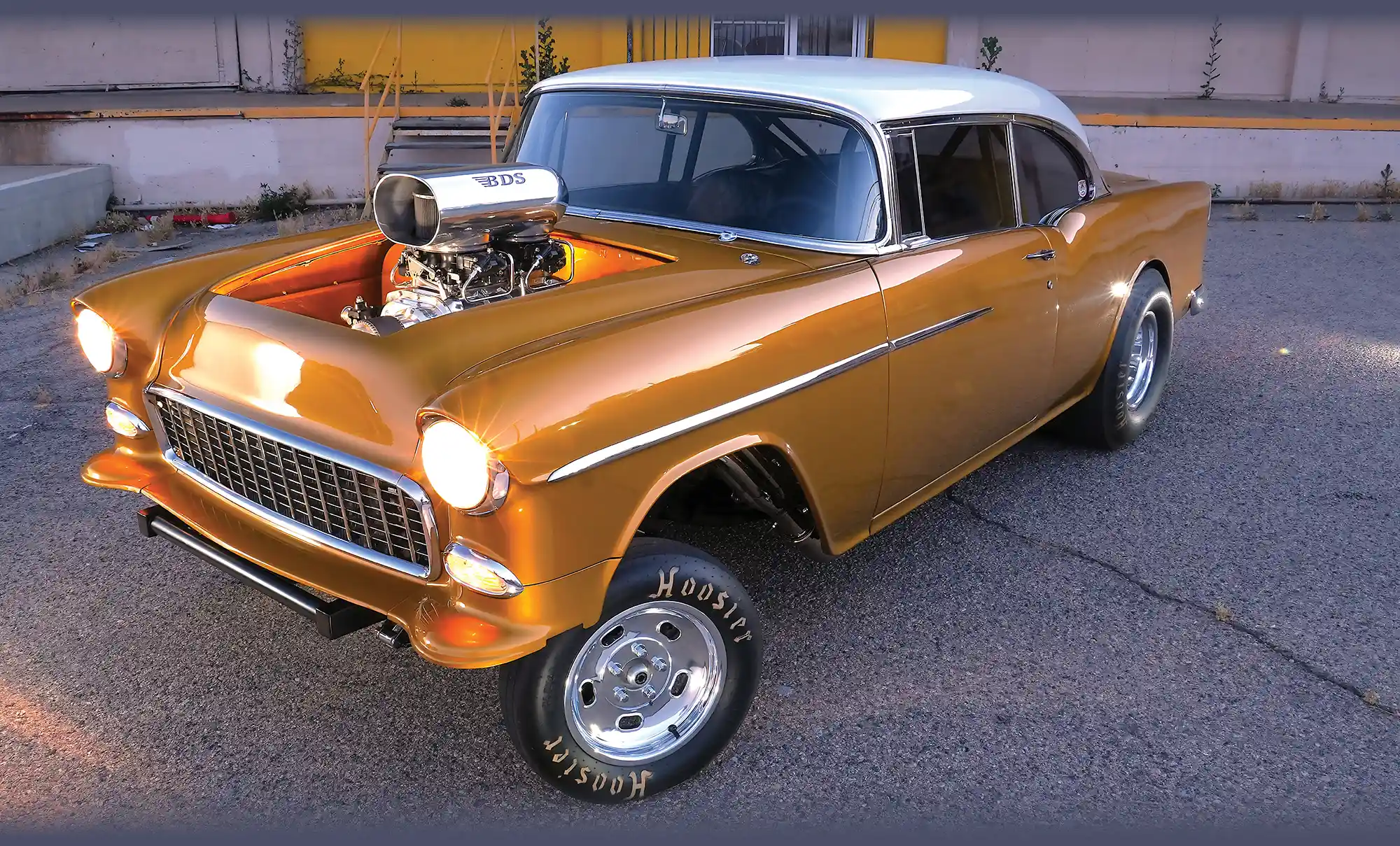
anny Santoro doesn’t talk much—not because he’s hiding anything but because he’s like many men his age in these times. You spend decades defending your decisions, opinions, work, and reputation, and eventually the words dry up. The silence becomes its own armor. He sits back on the leather couch in his Upland shop, arms folded, eyes somewhere between the floor and the gold 1955 Chevy parked 10 feet away. Pulling taffy is easy by comparison, but eventually we get the story out of him.
 PHOTOGRAPHY BY JASON SCUDELLARI
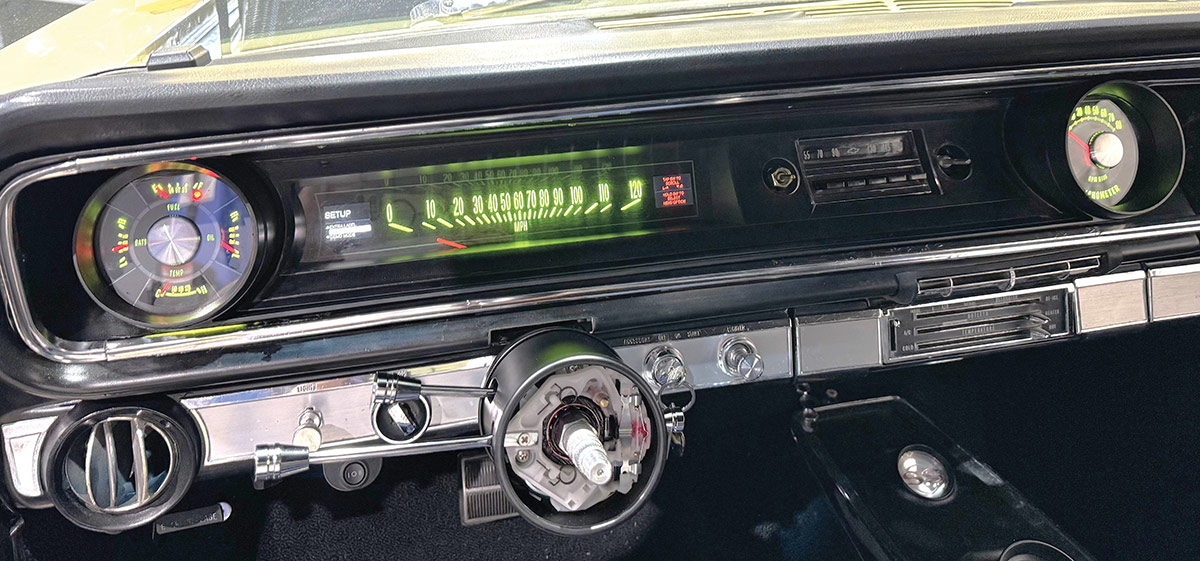
ot rodders have long embraced risk, pushing the limits with untested hardware. The death-defying feats of early hot rodders have been enshrined in the lore of the land but so have the defeats. These days, hot rodding is much safer, and the risk, while significantly reduced, has morphed into a stickier set of inconveniences. Overheating, dead batteries, strange noises, stalling—these are things old cars do when you are planning to do other things. Driving an old car should be an adventure, not a boondoggle with gremlins hiding around every corner. That brings us to the Dakota Digital Chevy installation of their latest RTX gauges in our 1965 Impala.
A fun hot rod adventure starts with cockpit instruments that are readable, attractive, and, most of all, reliable. Aviation learned long ago that wiring and avionics age faster than the machines they serve. Military EWIS studies routinely show that while airframes can run for decades, wiring often fails in half that time due to heat cycling, vibration, and insulation breakdown. The same physics apply to cars, and a 1965 Impala’s original instrumentation is long past its dependable lifespan. The Dakota Digital Chevy installation of their latest RTX Series isn’t just a cosmetic upgrade—it brings improved accuracy and newfound reliability to a vintage dashboard.

 PHOTOGRAPHY BY THE AUTHOR
rian DuBoise’s 1930 Ford Model A coupe is the kind of hot rod that stops you cold—the stance, the chop, the color, the restraint. Built by Derick Prior and his crew at Old Skool Speed Shop in Bakersfield, California, it’s a modern interpretation of a traditional highboy sitting on a Pete and Jakes 1932 Ford frame with a 4-inch chop and a gunmetal gray finish that looks like it was born a street fighter. Brian, 57, owns a trucking company in Bakersfield, and his story with this car began decades before the build even started. “We had a neighbor when I was little who did drag racing with a 1968 Camaro. I was probably 10 or 12,” he recalls. “I never got into it real heavy until I was able to save up some money and get my own hot rod.”

 Over 3,500 cars on display, including every year Mach 1. PHOTOGRAPHY BY THE AUTHOR
he sun hadn’t yet burned off the morning haze from Pennsylvania’s rolling hills when the first rumble echoed across the Carlisle Fairgrounds and the Carlisle Ford Nationals. It began as a distant growl—low, mechanical, unmistakable—then multiplied. One engine became 10, then a hundred, until the air itself seemed to pulse with horsepower.
It happens every June, when Blue Oval fanatics make the pilgrimage from every corner of North America and beyond, from quiet garages to loud city streets, converging on the quaint hamlet of Carlisle, Pennsylvania, for the Carlisle Ford Nationals, which fill the show fields with incredible cars, trucks, parts, and people.
They are lifelong collectors, first-time dreamers, industry and TV stars, and everyone in-between. They bring every FoMoCo make and model—Mustangs and Broncos, F-150s and Fairlanes, Crown Victorias and Cobras, Econolines and Edsels—in all, more than 3,500 vehicles strong.



PHOTOGRAPHY BY THE AUTHOR, BRIAN BRENNAN & TODD RYDEN
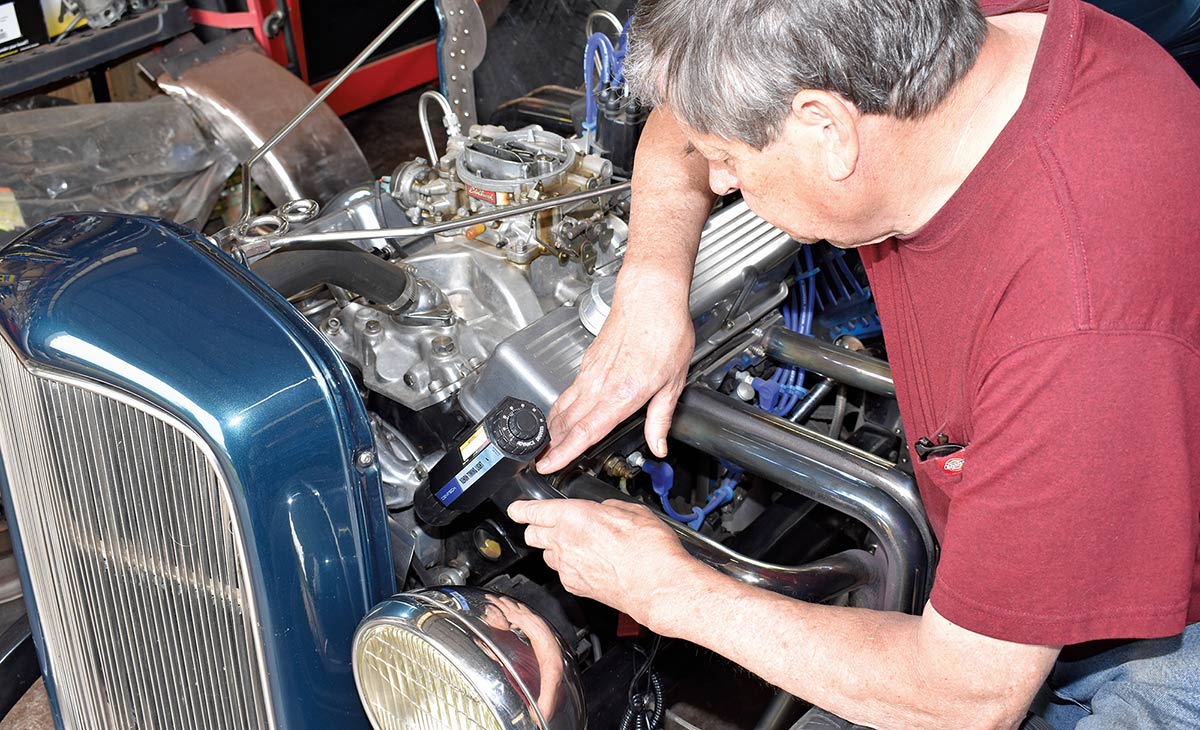
t’s been said that the secret to success in life is really a matter of timing—being in the right place at the right time. While it may be a stretch as metaphors go, the same thing can be said about the basic ignition and timing in your hot rod. Delivering the spark that ignites combustion at the right time is the key to performance. The problem is that the right time for it to occur changes with a variety of factors.
Before delving into basic ignition and timing, let’s look at the basic operation of the ignition system. If you’ve ever wondered who figured out how to take battery voltage and bump it up to 25,000 V or more to fire the spark plugs, the credit goes to a guy named Charles F. Kettering. He developed the inductive ignition system first used on the 1912 Cadillac; that basic system is still in use today. In operation, the original Kettering system used a coil (a step-up transformer) to increase battery voltage. Current from the ignition switch passed through a set of points (a mechanical switch) in the distributor, then through the coil’s primary windings, creating a magnetic field. When the points opened, the magnetic field collapsed, inducing voltage in the secondary windings of the coil, which had many more turns of wire than the primary (there was also a condenser in the system to keep the points from arcing). The high voltage from the coil’s secondary windings was delivered to the distributor cap. The rotor sent spark to the appropriate cylinder, and the process repeated as the rotor turned to align with the next spark plug terminal. The amazing thing about Kettering’s ignition system is that the basic concept remains in use today. The one major change has been the elimination of mechanical points that required periodic maintenance. Today electronics do what the points once did, but the function of the basic ignition and timing system remains the same.


PHOTOGRAPHY BY NOTSTOCK PHOTOGRAPHY
ILLUSTRATION BY GARY RAGLE OF RAGLE DESIGN
VIDEOGRAPHY BY RYAN FOSS PRODUCTIONS
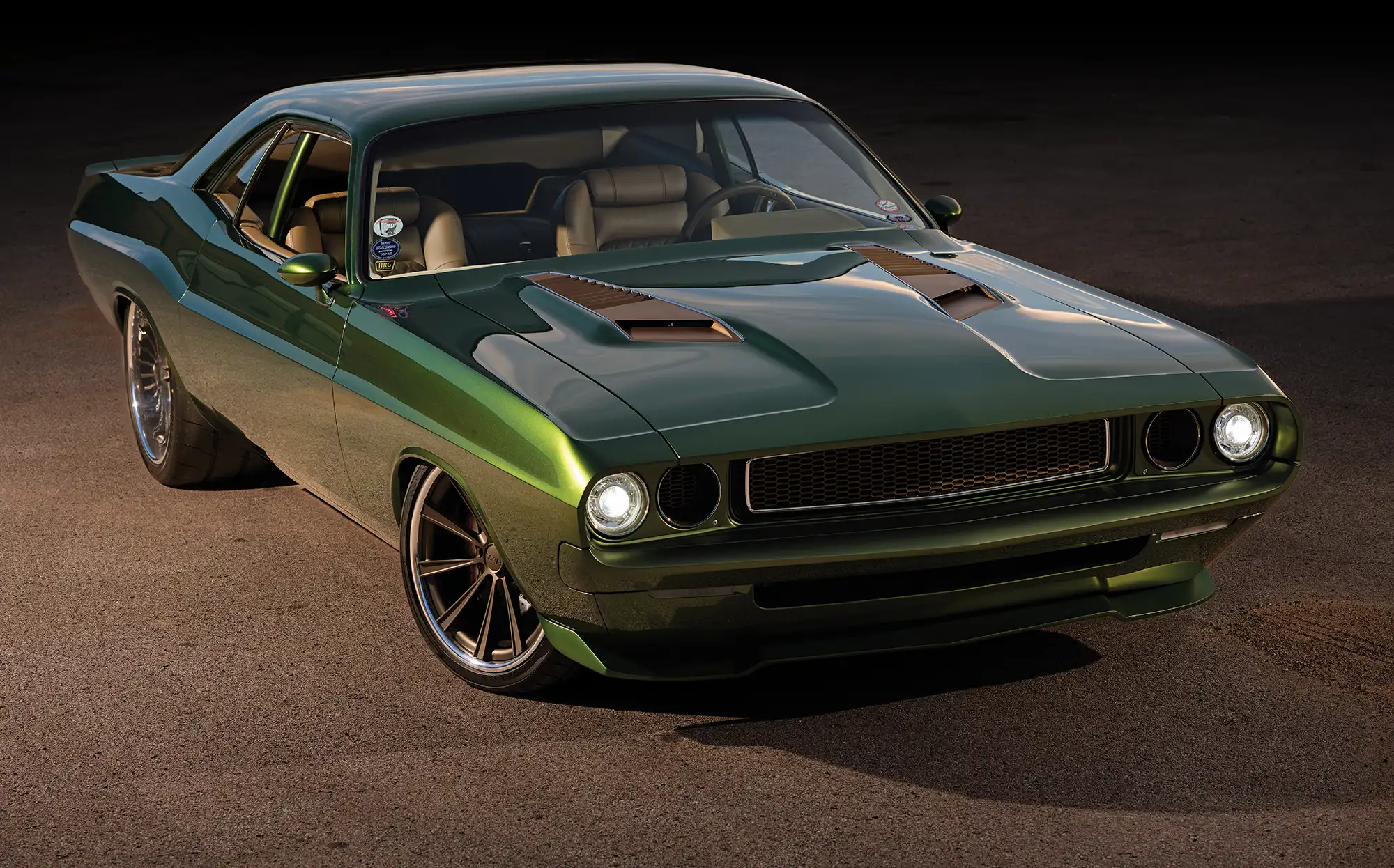
n the world of Mopars, the ’60s and ’70s Dodge Chargers and Challengers don’t merely occupy space in the muscle car conversation—they help define it. These were the cars with attitude baked into the Challenger’s E-body stance, wide hips, and ponycar proportions. They arrived in an era when Detroit horsepower was measured by cubic inches, bold colors, pistol-grip shifters, and the kind of curb presence that could stop traffic before the camshaft ever came on the lobe. That is especially true of Steve Nettleingham’s 1970 Dodge Challenger. With a broad engine bay, long-hood/short-deck silhouette, and unmistakable E-body architecture, it offers the perfect canvas for serious modification. Mopar power can live comfortably beneath that aggressive skin, while aftermarket chassis systems, coilovers, rack-and-pinion steering, big brakes, and massive wheel-and-tire packages transform the original muscle car attitude into real-world handling. This 1970 Dodge Challenger provided builder Jason Smith of Hot Rod Garage (HRG) the best of both worlds: vintage Mopar presence with modern power, precision, comfort, and reliability.

 PHOTOGRAPHY BY CAMREN BEATIE & SHAWN HOLLOWAY
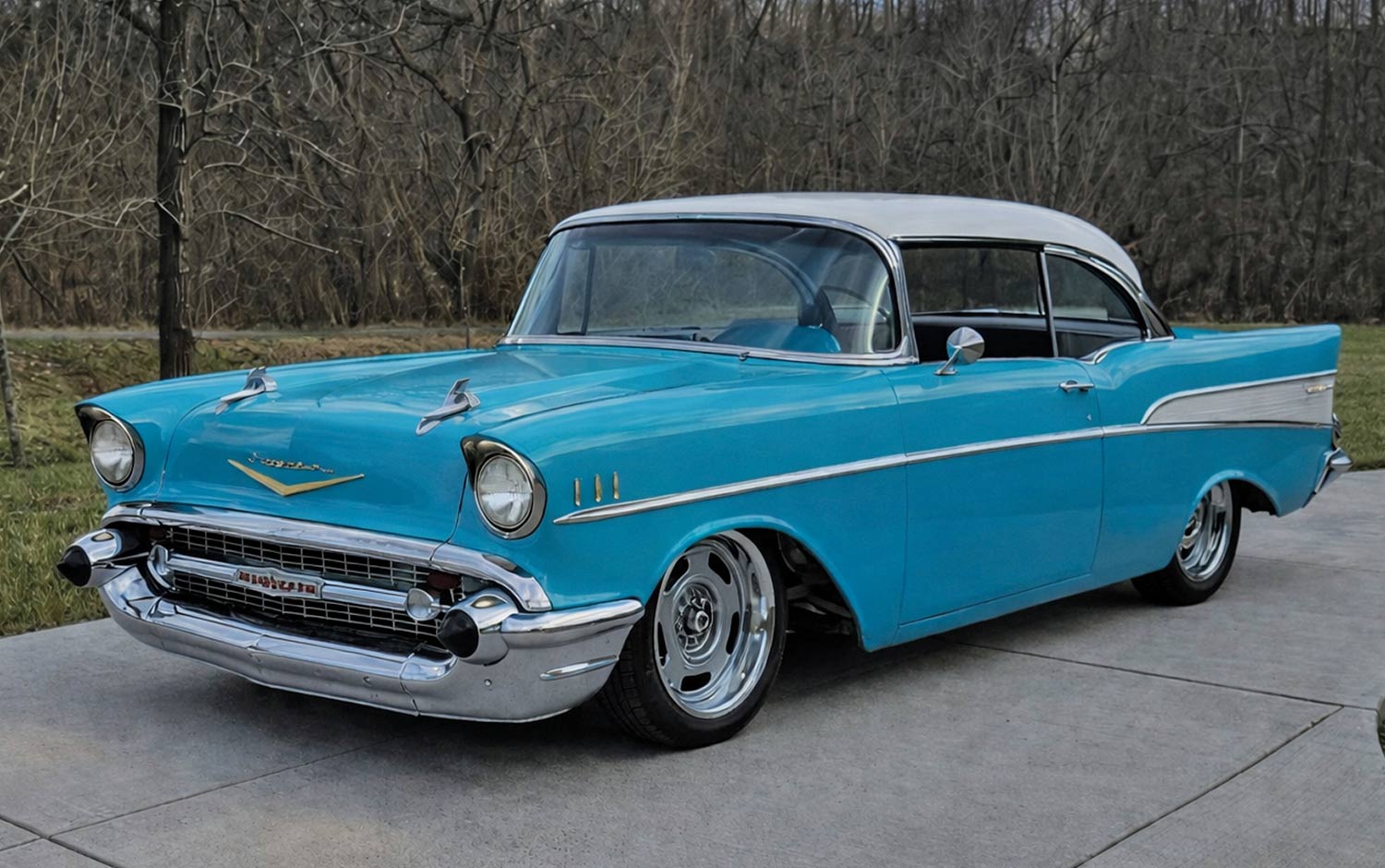
heet metal work and fitting of body panels are integral to the metalwork process. Time and patience here lead to superior paintwork and gap consistency. A tremendous amount of work goes into building a car at the highest level, and we’re going to take a deep dive into the recent build of a 1957 Chevrolet Bel Air at Scott’s Hotrods ’N Customs. As with many cars approaching 70 years of service, a few gremlins lurked beneath the surface of what appeared to be a solid car. Fortunately, the team at Scott’s thrives on challenges like this, so they rolled up their sleeves, dug in, and did what had to be done.
The rocker panels on both sides showed signs of rust, so all compromised metal was cut away and replaced with new steel. One key detail that separates a top-level build from an average one is the fitting of body panels, ensuring uniform panel gaps around the hood, fenders, doors, and decklid. Each of these areas was carefully reworked until the gaps were perfectly straight and consistent, and any other minor panel imperfections were corrected at this stage. Once the bodywork appeared complete, the body was media-blasted inside and out in preparation for paint.



 PHOTOGRAPHY BY NOTSTOCK PHOTOGRAPHY
he Willys has been a staple in our hot rod world, both on and off the dragstrip. Lon Clouse’s 1941 Willys coupe is a sight to behold in the street rod world, but don’t underestimate the power underhood. To achieve this perfection, he enlisted the help of Eddie Pettus of Eddie’s Rod & Custom (ER&C).

 PHOTOGRAPHY BY THE AUTHOR
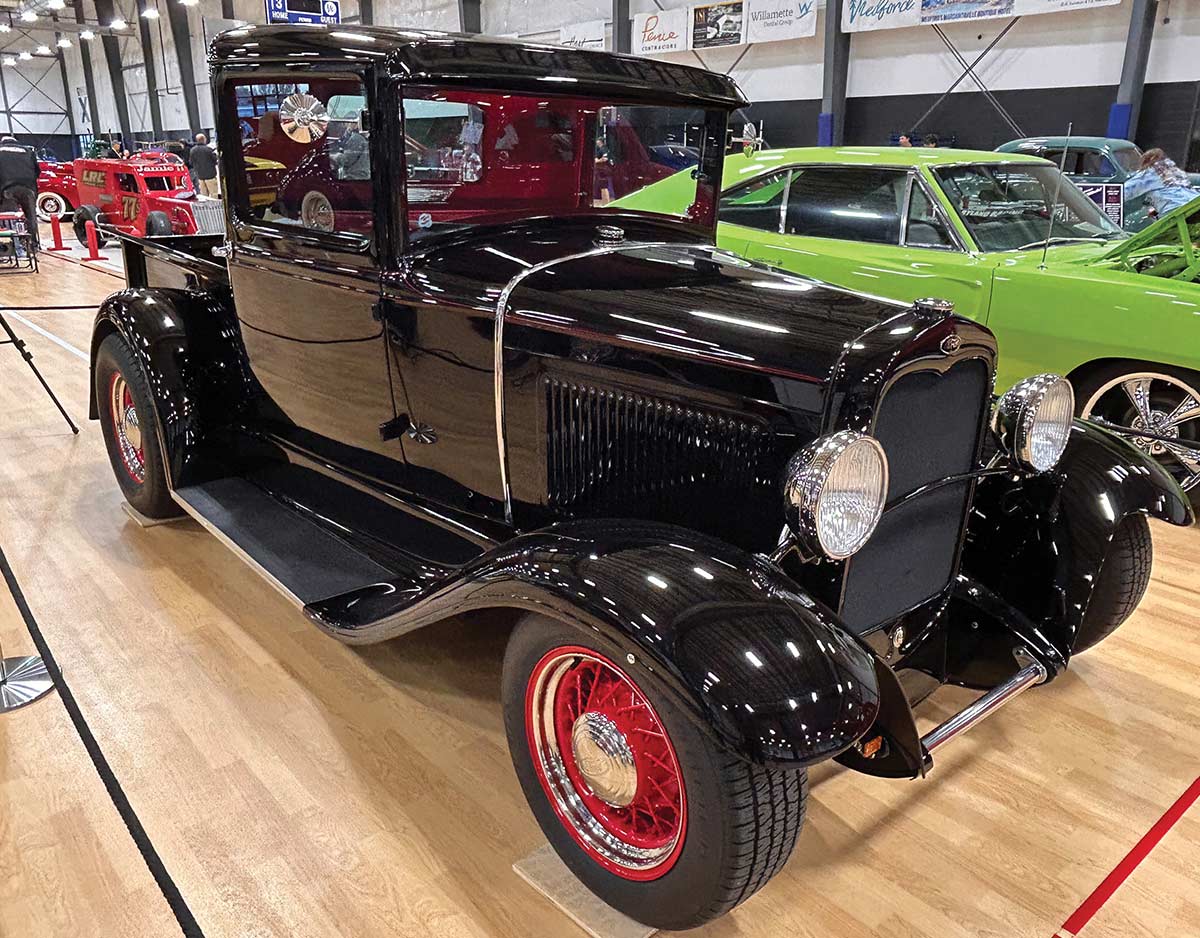 John and Beverly Carrion’s 1931 Ford Model A pickup finished in PPG single-stage Raven Black, rides on a TCI chassis, is powered by a 350ci SBC with TH350 and 9-inch Ford on a TCI four-link. Chrome by Sherm’s.
he 2026 Medford Rod & Custom Show is just one year away from a momentous occasion, celebrating its illustrious 50th anniversary, and it wasn’t an easy path to get there. Rich Wilson took over producing the Medford Rod & Custom Show in 2015, and I started covering it for Street Rodder magazine and broadcasting Street Rodder’s Facebook Live feeds from there in 2016. It’s been 10 years since live streaming came of age in 2016, and MotorTrend was the only automotive media company included in Facebook’s $50 million campaign to launch Facebook Live. Street Rodder was part of the MotorTrend Group, and all MotorTrend Group editors were enlisted to do live feeds.
In 2019, the Medford Rod & Custom Show joined the nation’s top custom car shows by becoming a Street Rodder Top 100 show. The last year the show was held at the Jackson County Expo Fairgrounds was 2019. The Expo’s main building has a dirt floor covered with canvas. Despite the dust and dirt floating in the air and landing on show cars, the special treatment Rich Wilson gave entrants offset the inconvenience of having to constantly keep a car dusted.
The 42nd Annual Medford Rod & Custom Show, landing on Easter in 2019 for a second time drove Wilson and the show out of Medford in search of an Oregon city more hospitable. As fate would have it, after testing the waters at various venues in neighboring cities for a few years, nothing panned out. And then the big break came. Moving back to Medford, this time without having to be on a dirt floor, the 47th Annual Medford Rod & Custom Show in 2024 became one of the first events to exhibit inside the new 140,000-square-foot, $76 million Rogue Credit Union Community Complex (Rogue X) recreational facility. The following year, the 48th Annual Medford Rod & Custom Show joined forces with the ARP West Coast Challenge Series (WCCS).


View Index
- AEROMOTIVE, INC.
- AFFORDABLE STREET RODS
- AMERICAN AUTOWIRE
- ART MORRISON ENTERPRISES
- AUTO METAL DIRECT
- AUTOMOTIVE RACING PRODUCTS
- BOWLER PERFORMANCE TRANSMISSIONS
- CLASSIC INSTRUMENTS
- CLASSIC PERFORMANCE PRODUCTS
- CLASSIC PERFORMANCE PRODUCTS
- CLEANTOOLS
- DAKOTA DIGITAL
- EATON DETROIT SPRING, INC.
- FITECH EFI
- FLAMING RIVER INDUSTRIES
- FLAMING RIVER INDUSTRIES
- GOLDEN STAR CLASSIC AUTO PARTS
- GOODGUYS ROD & CUSTOM ASSOCIATION
- HEINZMAN STREET ROD SHOP
- HOT HEADS RESEARCH
- JEGS HIGH PERFORMANCE
- KOUL TOOLS
- LOKAR
- LOKAR
- NATIONAL STREET ROD ASSOCIATION
- PHOENIX MACHINE PRODUCTS
- POWERMASTER PERFORMANCE
- PURE CHOICE MOTORSPORTS
- RARE PARTS
- ROADSTER SHOP
- SALTWORKS
- SCOTT’S HOTRODS
- STEVE’S AUTO RESTORATIONS
- SUMMIT RACING EQUIPMENT
- VINTAGE AIR
- WHEEL SMITH
- WILWOOD ENGINEERING
- WINTERS PERFORMANCE


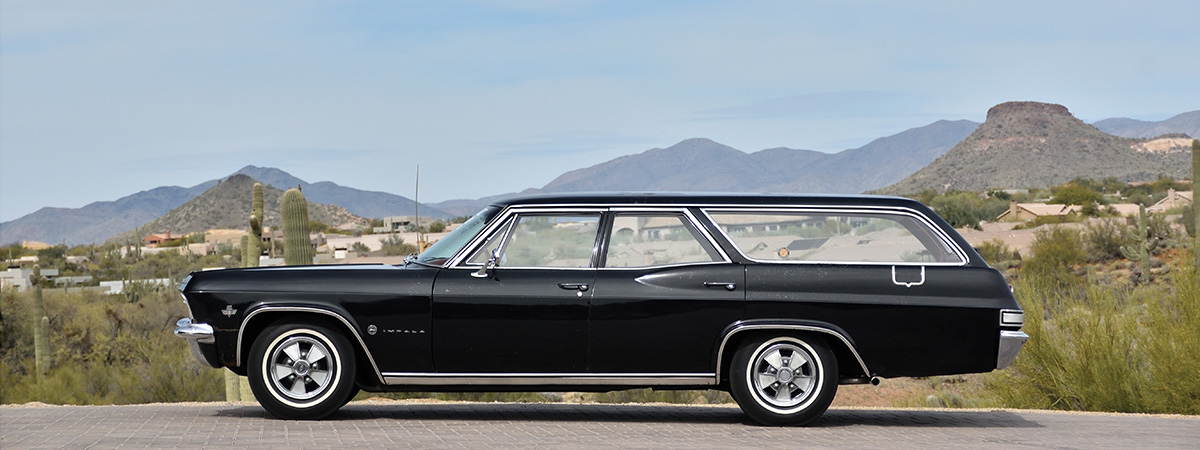 This 1965 Chevy Impala wagon was the last year this was offered, but you can also find 409 wagons back in 1963. PHOTOGRAPHY COURTESY OF MECUM AUCTIONS
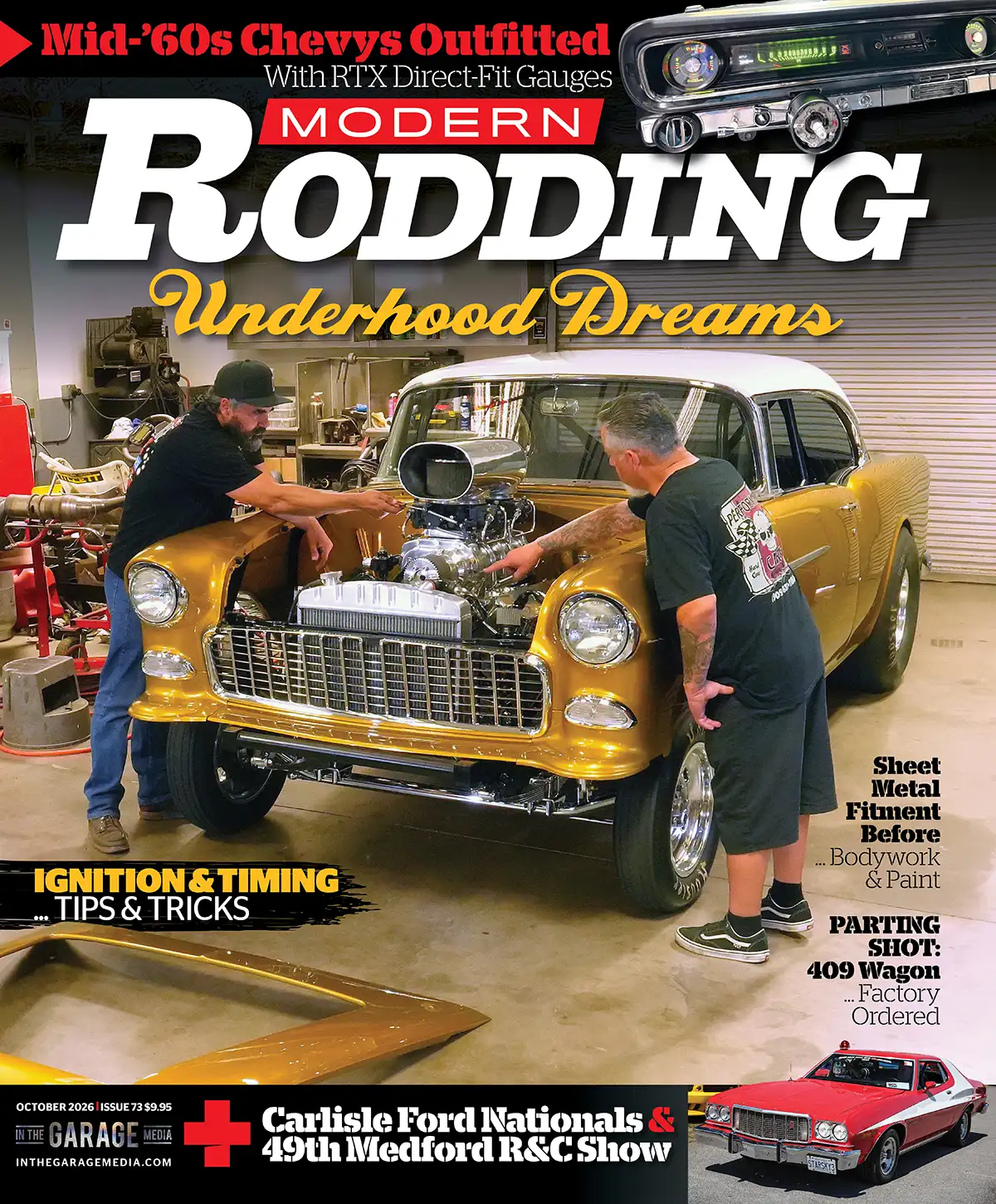
uctions can be sensory overload for a hot rodder: rows of sheet metal, chrome, V-8 power, and possibilities stacked as far as you can walk. Every once in a while, if you slow down and really look the right car stops you cold. This 1965 Chevy Impala wagon was that kind of find. This is a muscle car in a “station wagon’s clothing.” When you get the chance, it pays to walk the aisles of one of the many Mecum Auctions.
At first glance, it is easy to see the appeal: fullsize Chevrolet longroof, an ideal project for a road car with room to haul family or your hot rod buddies, swap meet scores, or a weekend worth of T-shirts, tools, starters, and rags. Look closer, and the story gets even better. Under the hood of our 1965 Chevy Impala wagon is the born-with 409/340hp V-8, backed by a Powerglide and a 12-bolt 3.31 Positraction rearend. For Chevy fans, that combination puts this wagon in rare company. This wagon sold for just over $31,000 … think about it. A running project car with vintage looks and power. What a great spot to begin.
Only 82 409-powered 1965 Chevy Impala wagons were built for 1965, the final year for Chevrolet’s legendary W-series big-block. This one is an unrestored, numbers-matching example with the kind of documentation rodders dream about: five original build sheets, the Protect-O-Plate, protection plan booklet, owner’s manual, accessory booklet, AM/FM radio guide, and insurance records and registrations that run through 1983. This is the kind of find that hot rodders get all giddy over as it makes great garage talk with a beer in hand and a slice of pizza in the other (or burger, fries, chocolate shake, you get the picture).
