






… Affordable Way To Create Custom Sheetmetal?
… Custom Front Inner Wheelwells For Big Wheels & Tires
… Replacing Core Support & Fender Aprons
… Affordable Way To Create Custom Sheetmetal?
… Custom Front Inner Wheelwells For Big Wheels & Tires
… Replacing Core Support & Fender Aprons





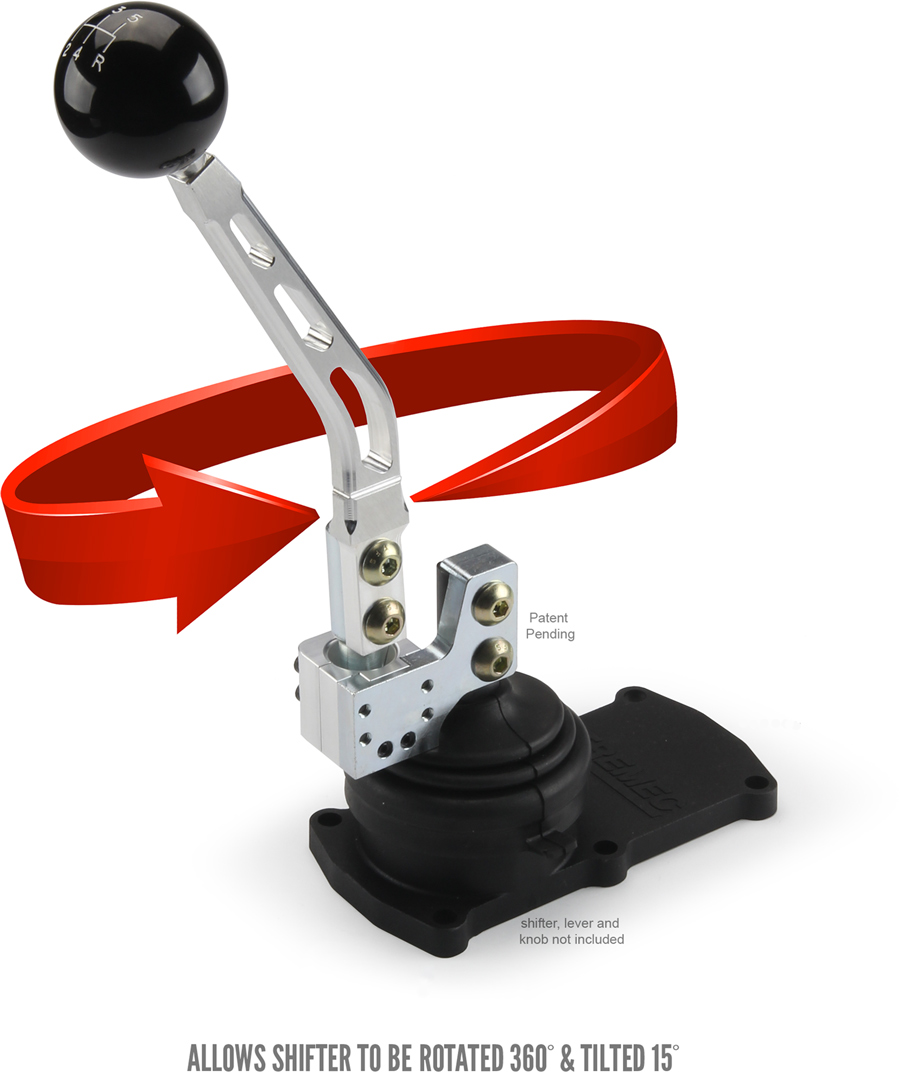
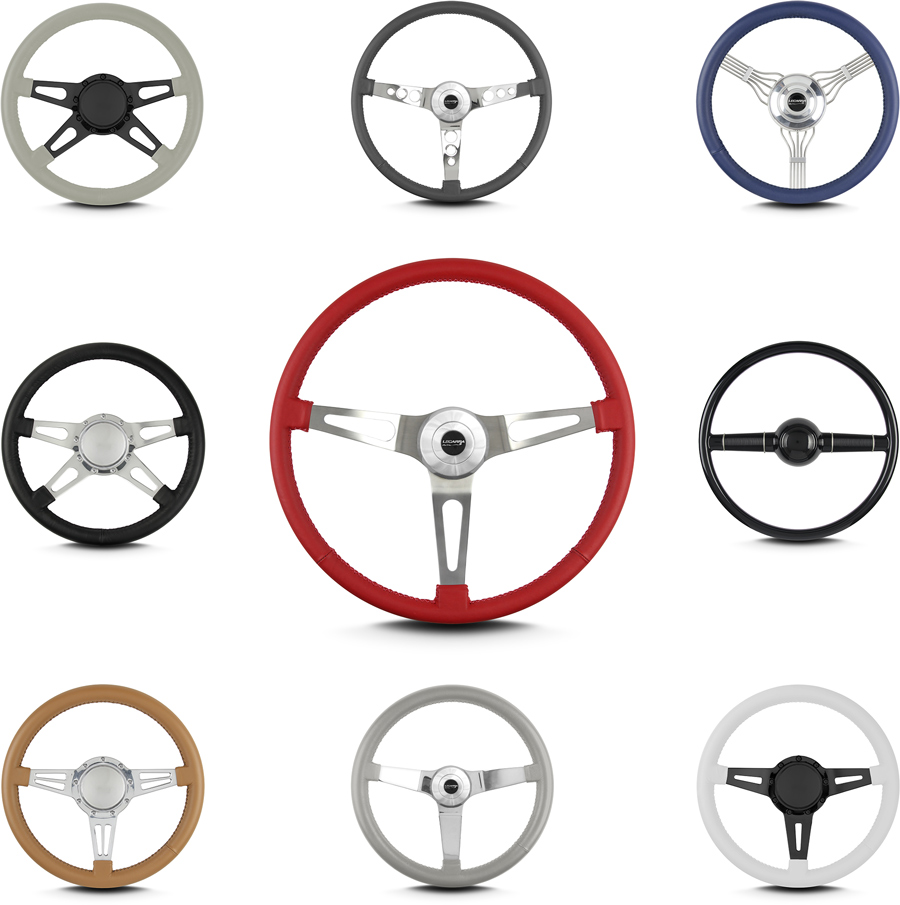






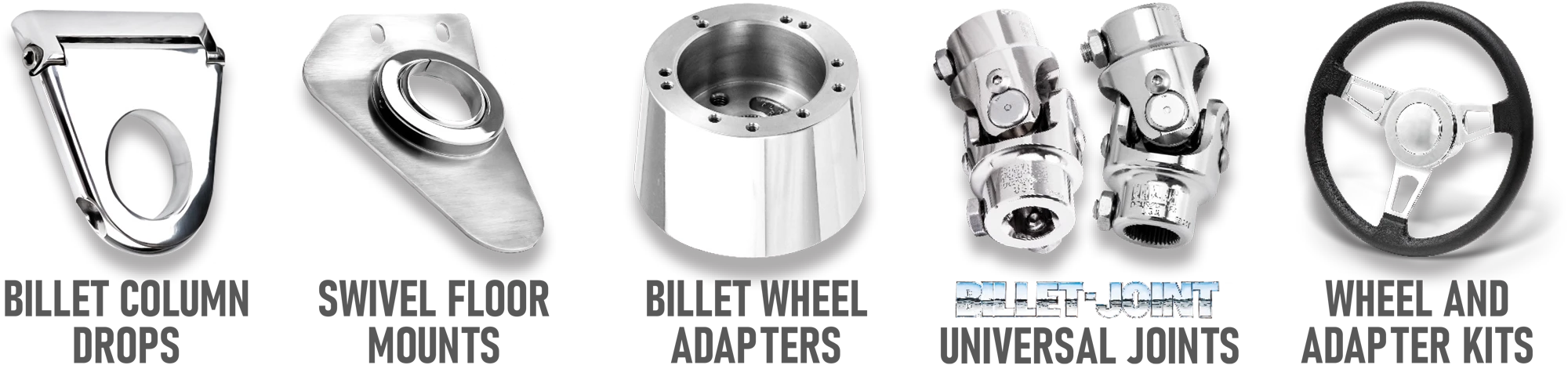
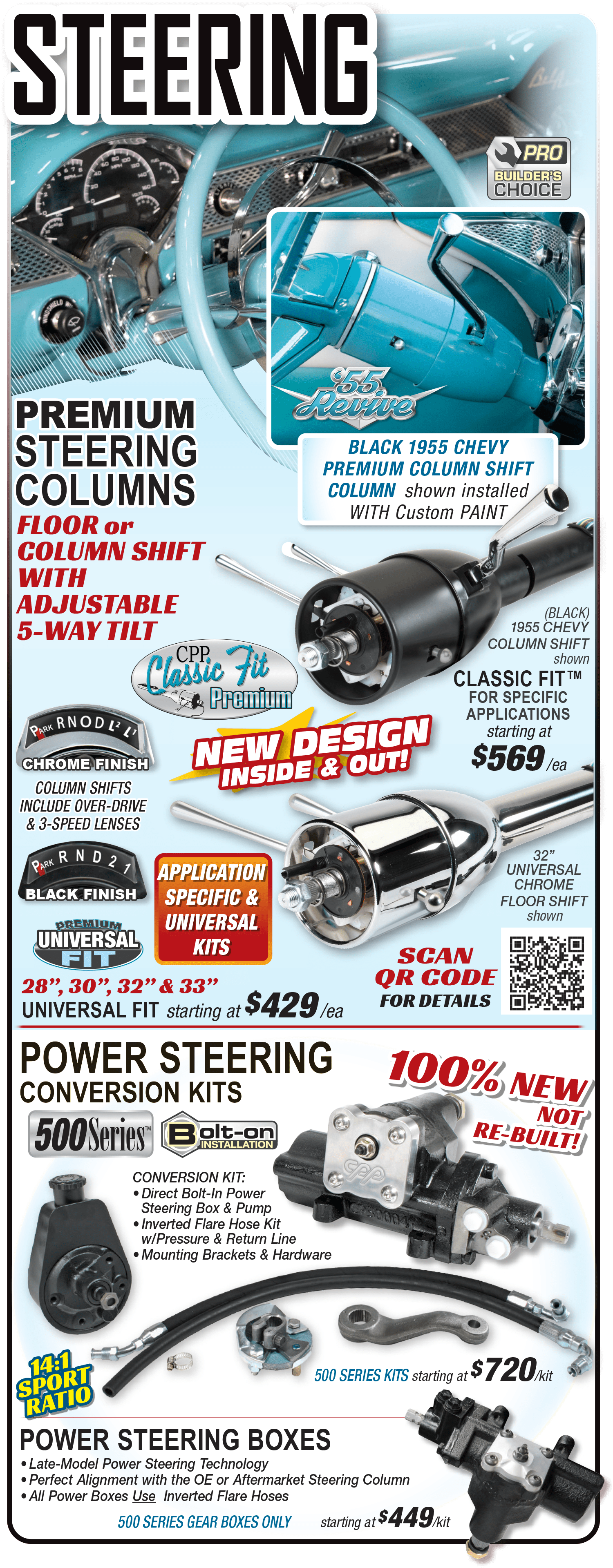
- Fully customizable and built to your measurements!
- Available in both Floor Shift or Column Shift
- Paintable Mill, Polished, or Black Powdercoat finishes.
- Microswitch located under the tilt arm provides low and high beam activation.
- Features an integrated turn signal arm with wiper, delay, and cruise control options.
- Direct Fit Applications for G-Body, Cutlass, Jeep YJ, C1500, and more.




By Brian Brennan, Photography by NotStock Photography
By Brian Brennan, Photography by Chris Shelton
By Brian Brennan, Photography by NotStock Photography
By Brian Brennan, Photography by Michael Christensen
By Brian Brennan, Photography by NotStock Photography
By Ron Covell
By Ron Ceridono, Photography by Tate Radford
By Barry Kluczyk, Photography by the Author
By Ron Covell, Photography by Jay Doerfler
By Gerry Burger, Photography by the Author & Modern Rodding Archives









BRIAN BRENNAN
bbrennan@inthegaragemedia.com
TIM FOSS
tfoss@inthegaragemedia.com
YASMIN FAJATIN
yfajatin@inthegaragemedia.com
SARAH GONZALES
sgonzales@inthegaragemedia.com
ROB MUNOZ
rmunoz@inthegaragemedia.com
PATRICIA LUDI
pludi@inthegaragemedia.com
Wes Allison, Rodney Bauman, Gerry Burger, Tommy Lee Byrd, Ron Ceridono, Michael Christensen, Ron Covell, Grant Cox, John Drummond, Eric Geisert, John Gilbert, Joe Greeves, Ken Gross, John Jackson, Chadly Johnson, Barry Kluczyk, Scotty Lachenauer, Don Lindfors, Ryan Manson, Josh Mishler, Dale Moreau, Don Prieto, Todd Ryden, Jason Scudellari, Chris Shelton, Tim Sutton, Chuck Vranas, John Winter — Writers and Photographers
Travis Weeks Advertising Sales Manager
Mark Dewey National Sales Manager
Patrick Walsh Sales Representative
ads@inthegaragemedia.com
ModernRodding.com
AllChevyPerformance.com
ClassicTruckPerformance.com
InTheGarageMedia.com
subscription@inthegaragemedia.com
(714) 985-9171
InTheGarageMedia.com “Online Store”
For bulk back issues of 10 copies or more, contact store@inthegaragemedia.com


Copyright (c) 2025 In The Garage Media Inc.
Printed in the USA.
The Modern Rodding trademark is a registered trademark of In The Garage Media Inc.

Cleveland, OH
(216) 281-8777



 by Brian Brennan
’ve measured my yearly success by my summer driving experiences for a long time. Driving has always meant hopping into one of my 1929 Ford highboy roadsters and reminiscing about that unforgettable summer spent in my 1927 Ford lowboy roadster, crisscrossing the country. Each journey has been an adventure filled with great stories and just enough hiccups to affirm my status as a hot rodder capable of finding my way home. Unfortunately, there have been fewer and fewer of these drives. Please tell me this is merely an anomaly and that there are more trips ahead in the future.
While all these drives were enjoyable—some more than others—the cross-country trip in my 1927 Ford stands out as the least comfortable. Yet, when you’re in your late twenties or early thirties, comfort becomes a relative concept with plenty of room for flexibility. Ultimately, the fact that I made it to the Nats and returned home safe and sound felt like a significant victory.
Today, I find myself pondering whether to embark on another cross-country journey. There are numerous reasons supporting this idea and compelling arguments against it. As summer approaches, the dynamics of summer driving are affected by various factors, including current economic conditions, fuel prices, driving conditions, and changing travel preferences. While gasoline prices are high on the West Coast, they don’t pose as much concern for destinations in the South, such as the NSRA Nats in Louisville, Kentucky, possibly the Goodguys Columbus, Ohio, event, or Nashville for the Triple Crown of Rodding.
 BY BRIAN BRENNAN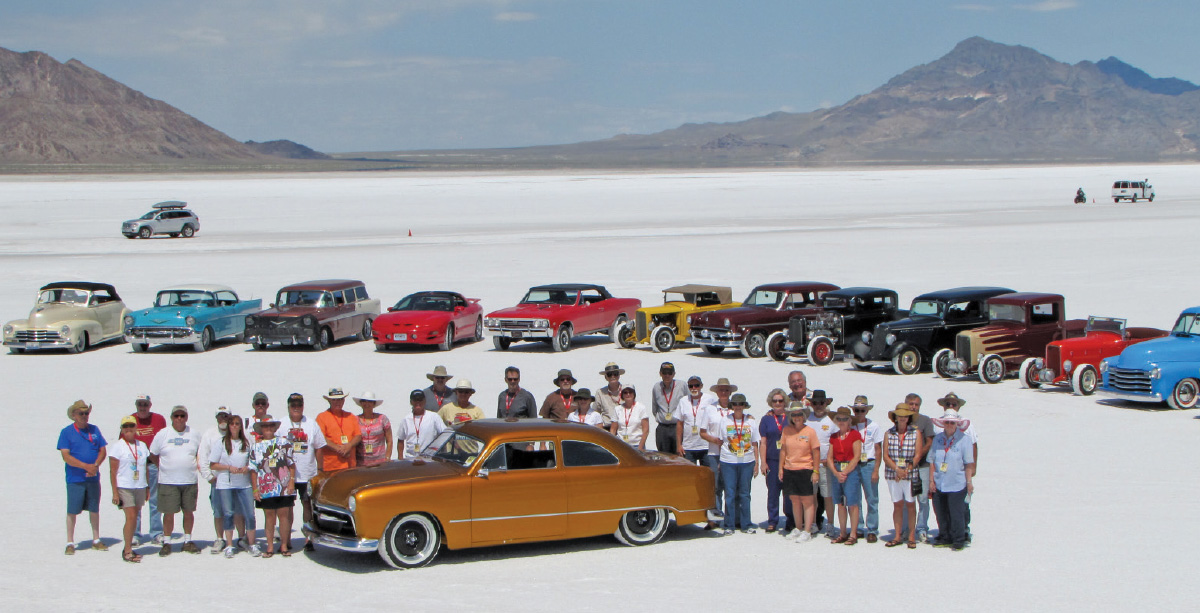
 Bonneville Road Tour
Not one to slow down, Jerry Dixey has planned another bus adventure this summer. Travelers will gather in Lincoln, Nebraska, at the Speedway Motors Museum of American Speed on Tuesday, July 29, 2025. The group will dive into the museum’s captivating exhibits all day Wednesday. On Thursday, participants will board the bus and journey west, with Cheyenne, Wyoming, as their first overnight stop. Here, they will explore authentic cowboy and western attractions.
On Friday afternoon, the tour will arrive in Salt Lake City, where headquarters will be set up for the weekend. During Saturday and Sunday, attendees will go on a 90-minute excursion to Wendover and the Bonneville Salt Flats to witness the thrilling track, pits, and the start of time trials. Additionally, Saturday’s agenda includes visiting the hot rod activities surrounding the Wendover Nugget, a lively hub during Speed Week.

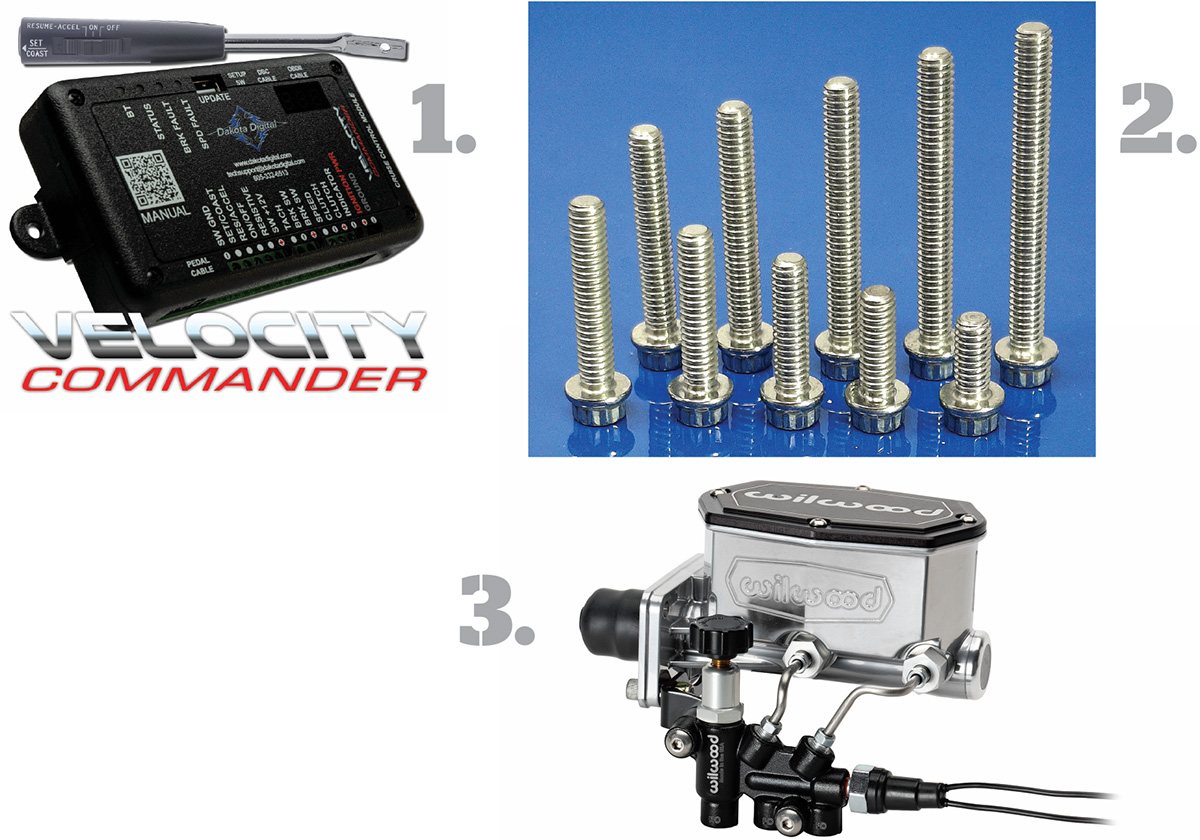
Dakota Digital’s proprietary setup wizard is at the heart of the VCM-100 Series. This intuitive feature guides users through the installation and configuration process, ensuring that setting up and operating the cruise control is smooth and straightforward.
The VCM-100 Series offers features, including compatibility with drive-by-wire throttle bodies and pedals. For those who appreciate real-time diagnostics, onboard monitoring is provided through built-in seven-segment and LED indicators. The Velocity Commander further enhances functionality by monitoring speedometer and tachometer information via OBD-II, aftermarket EFI CAN data, or direct connections, ensuring that drivers have accurate information at their fingertips.
Additional conveniences include an activation output wire to drive a dash-mounted cruise control indicator light. The VCM-100 Series is also plug-and-play compatible with LED taillights, eliminating the need for a separate relay, and features a clutch switch input for simple connectivity with manual transmissions.
Safety is a top priority, and the VCM-100 Series is equipped with redundant safety features. Moreover, the Velocity Commander can learn many OEM and aftermarket resistive or non-resistive cruise control handles, allowing for a seamless and integrated installation. Dakota Digital also offers a wide range of aftermarket handles that fit various OEM and aftermarket steering columns.
For more info, check out Dakota Digital at (800) 852-3228 or visit dakotadigital.com.
Manufactured in-house at ARP’s California facilities, the new #8-32 bolts feature 12-point heads and come in 10 0.125-inch incremental sizes, ranging from 0.375- to 1.500-inch underhead lengths. They are designed for various tasks in a vehicle’s engine compartment, interior, and other areas.
All of ARP’s accessory fasteners, whether polished stainless steel or black oxide-finished 8740 chromoly, are nominally rated at 180,000-psi tensile strength—fully 20 percent stronger than Grade 8 hardware. Additionally, the stainless steel bolts are virtually impervious to the elements.
For more info, check out ARP at (800) 826-3035 or visit arp-bolts.com.
Mopar-specific four-bolt master cylinders are constructed from lightweight, high-strength die-cast aluminum and come in three bore sizes: 15/16, 1.00, and 1-1/8 inch. They can be purchased individually or with lefthand or righthand proportioning valve kits. Additional options include a push rod model for manual brake systems, and show-quality finishes in gloss black E-coat or chrome powdercoat.
For more information, contact Wilwood Engineering at (805) 388-1188 or visit wilwood.com.
 Photography by NotStock Photography
e all want to unearth our next project tucked away in a museum just waiting for us to bring it back into the open and start fresh. Even though Bill Hill from Jackson, Tennessee, didn’t purchase this 1959 Chevy Impala directly from the Chevyland USA Museum in Nebraska, where it was from 1973 until 2018, it originated from that collection. The museum was previously owned by Monte Hollertz, a local farmer with a deep passion for his cars.
According to the story, the car was given to Hollertz’s daughter, who later decided to sell it. Although the immaculate machine was ready to hit the road, it wasn’t suited for the demands of hot rodding. That’s where Riveting Rides Hot Rod Shop, under the careful direction of Madison Alexander, comes into play. Bill is a longtime rodder who has owned a variety of hot rods over the years, but deep down he has always desired the “baddest” looking and performing 1959 Chevy Impala on the road. He may have it with his latest ride.

 Photography Courtesy of Saltworks 3D Solutions
here is a new process for forming sheetmetal panels that we believe will soon gain traction in the specialty car market. This process, known as Digital Sheet Forming, utilizes a powerful computerized machine that presses a moving stylus against a sheet of metal backed by a urethane pad. The stylus starts by pushing against the outermost profile of the part and progressively moves inward with each pass, spiraling toward the center of the panel.
The digital file needed to operate the machine can be created using CAD software, or it’s possible to scan an existing part and either make an exact duplicate or modify the file as necessary for the specific application.

 Photography by Chris Shelton
e wanted to have some fun with our Canadian hot rod friends and their accents, so we playfully called the “Model A” the “Model Eh.” We’re pretty sure J.F. Launier, the owner of JF Kustoms in Canada, wouldn’t mind if we refer to his 1929 Ford highboy roadster as a Model Eh.
Before you is his ride, a Model Eh roadster brought here a few years ago to the Grand National Roadster Show to compete for America’s Most Beautiful Roadster (AMBR) award. Known as “JF,” he is no stranger to building incredible hot rods and winning prestigious awards. While his 1929 highboy roadster didn’t win the AMBR award, he built a Ridler-winning car in the past, solidifying his reputation as a top builder.
The backstory of this highboy roadster is a “family affair,” featuring contributions from JF’s mentor, Ken Helm, as well as JF’s son, Clavin, and his cousin, David. The roadster was found in a barn at Helm’s home where he guided JF throughout the build.


Part 3: A New Nose for an Old Pony
Photography by Tate Radfordor at least one of Modern Rodding’s senior staff members (we won’t mention the editor by name) the memory of Ford introducing the Mustang fastback 61 years ago is vivid. Unfortunately, over the past six decades, many of those ponycars that were once the desire of many young enthusiasts have suffered from use and abuse. But thanks to Golden Star Classic Auto Parts, just about every piece of sheetmetal necessary to make any early Mustang as pristine as it once was is readily available.
As we’ve noted before, Mustangs were introduced in April 1964, initially as hardtops and convertibles, with the fastback appearing a few months later, in August that same year. While these early cars were often called 1964-1/2 models, Ford classified all 1964 and 1965 Mustangs as 1965 models, which is why when it comes to ordering parts, 1965 is usually the earliest year listed.




Photography by NotStock Photography
Illustration by E. Black Design Co.
t’s often repeated: Corvettes are factory hot rods and will forever hold a place in automotive history. This is remarkably accurate for the 1963 Corvette coupe, famously known as the “split-window.” Casey Shires, from Texas, and his father have been longtime Corvette enthusiasts, with a special fondness for the 1963 split-window, a unique, one-year-only design. However, while maintaining its classic aesthetics, the split-window needed to incorporate modern performance and personal features to fulfill Casey’s dreams.


 Photography by THE AUTHOR
hen it comes to the vintage homologation specials for SCCA’s Trans Am racing series, the Mustang Boss 302 and Camaro Z/28 typically get all the attention—but Chrysler had its own dogs in the fight.
The Dodge Challenger T/A and Plymouth ’Cuda AAR were strong competitors on and off the track, with the street-going versions featuring a unique, Six-Barrel version of the 340 small-block—although the racing cars used destroked engines displacing 305 ci.
Significantly, the “T/A” engine was more than a 340 with a trio of two-barrel carbs. It was comprehensively engineered for high-rpm performance and featured a unique, strengthened block casting and unique cylinder heads with offset intake rocker arms that made room for larger intake runners.



 Photography by Michael Christensen
ure nostalgia and a tribute to Scott Simpson’s dad, Rob, are more than enough reasons to make this 1965 Ford Ranchero a lifelong passion. What can a young car enthusiast growing up in Southern California, immersed in the car culture of the 1950s and ’60s, expect? Scott shares that he often imagined how thrilling it must have been to cruise American Graffiti style in hot rods or take family cars to the drive-in.
Like many of us who inherited the “car gene” from our dads, Scott is no different. His father was a Ford enthusiast, so Mustangs were always parked in the driveway. When Scott turned 15, his dad helped him buy his first car, the 1965 Ford Falcon Ranchero that you see before you, from a family friend in Long Beach, California.

 Photography by Jay Doerfler
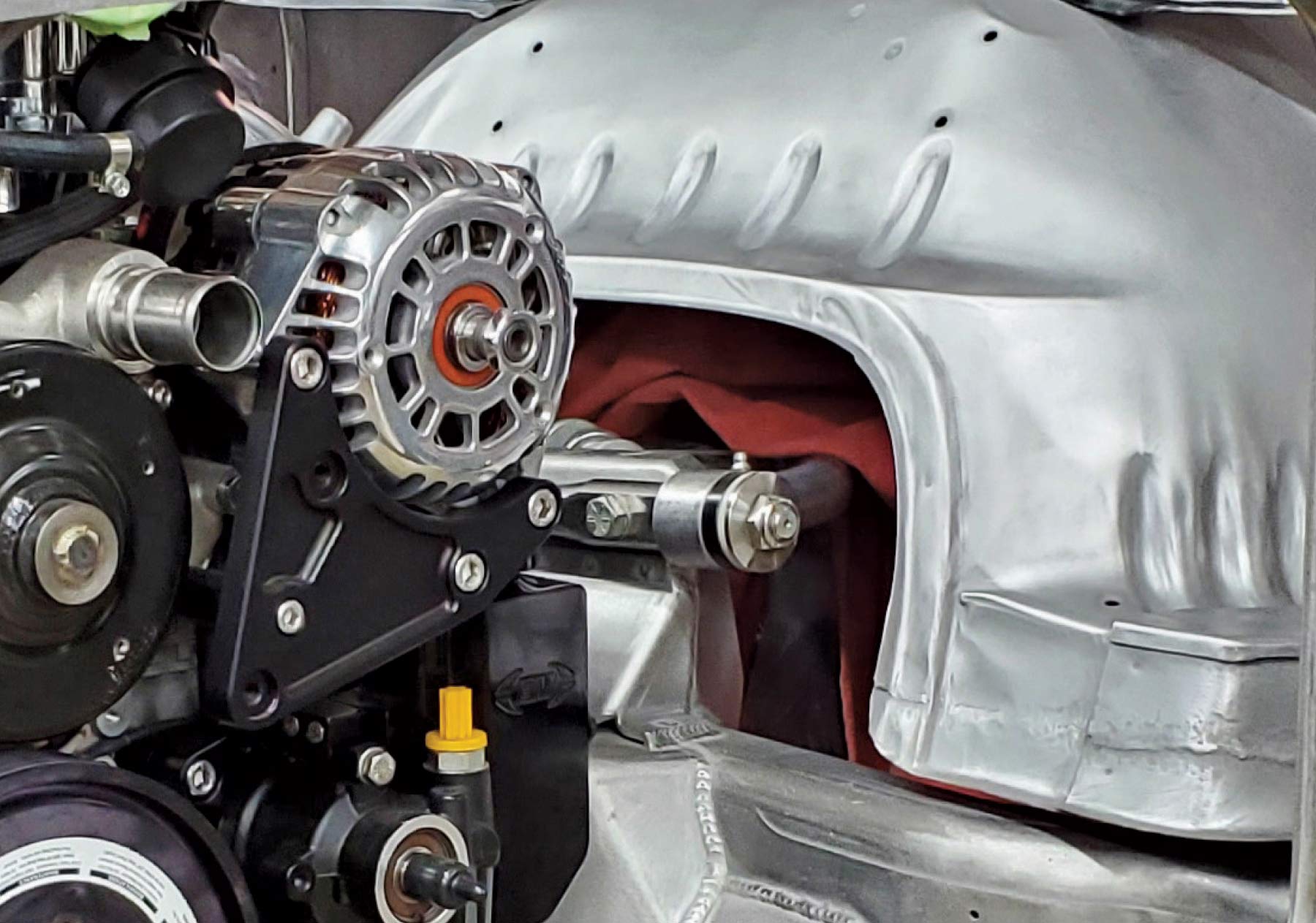
uto Body Specialists in Manchester, New Hampshire, has a long history of beautifully crafted Pro Touring builds. The owner, Jay Doerfler, aims to make each project a bit nicer than the last. We will follow the build of Pat Floyd’s 1969 Camaro, which showcases remarkable detail work at every glance.
This time, we’ll focus on the exceptional work done on the core support and front wheelwells. While these may seem like simple components, the effort devoted to perfecting the shape, fit, and finish is truly unmatched—as you’ll see in the photos.


 Photography by NotStock Photography
he 1963 Buick Riviera, owned by Thomas Duty and his wife, Eileen Papas, holds sentimental value as it was the first car Eileen learned to drive. Friends Cale Kern (of Cale Kern Hot Rods), Bryan Barlow, and Jack Davis also contributed to the construction of this car. It’s important to note that Eileen selected the wheel and tire combination, as well as the body color and interior details, and she expressed a wish to retain the original Nailhead engine.


 Photography by THE AUTHOR & Modern Rodding Archives
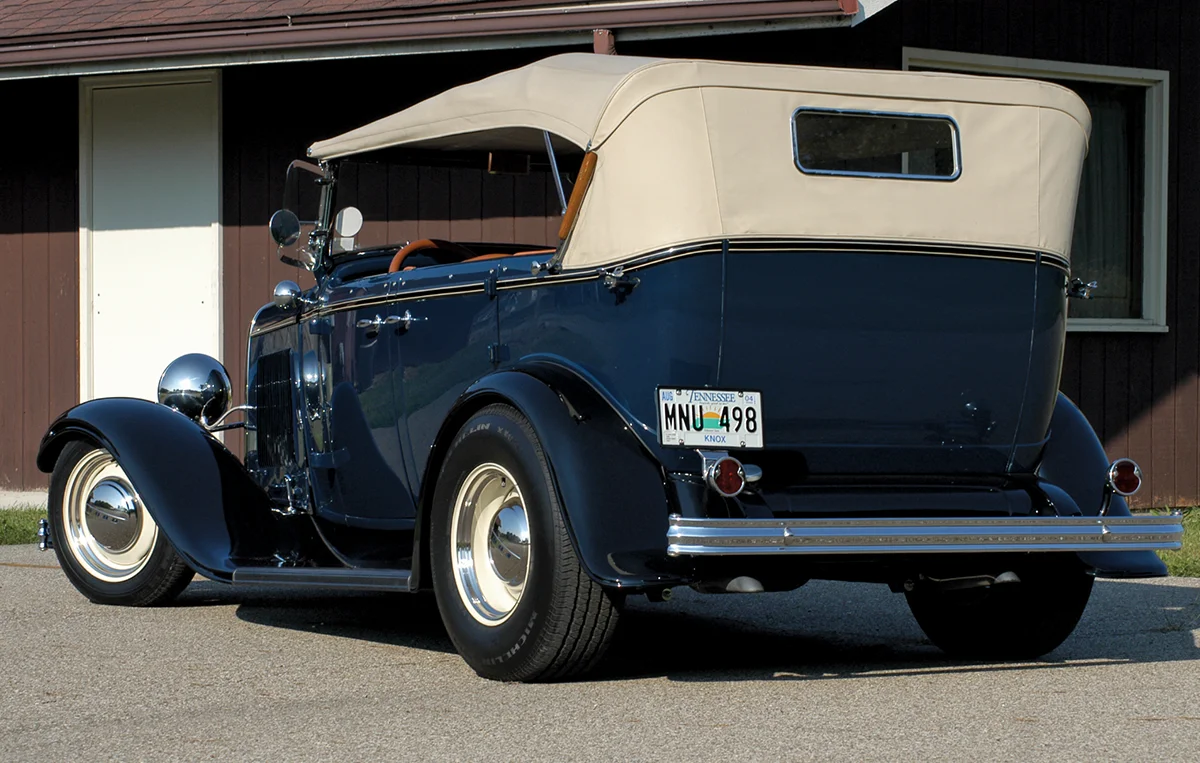
his is high on our list of indisputable facts: roadsters and phaetons look great without a top. Riding fully exposed to the elements can be enjoyable or torturous, depending on the conditions, and if your journey is long enough, you will undoubtedly experience hefty doses of both. Taking on that long-distance trip without a top is something almost every roadster owner does at least once. It’s a rite of passage, an initiation into the coveted “real roadster guy” club. Heck, some hardcore roadster and phaeton tours even prohibit tops.
While some hot rodders opt to go topless multiple times or don’t have a top at all, for others, it seems reasonable to seek shelter. If possible, the decision to have a top on your roadster or phaeton should be made early in the building process as structural considerations are best addressed prior to bodywork and paint. Possibly the biggest challenge is to make your hot rod look at least as good with a top on it as it does topless. We have seen many roadsters where the top enhances the hot rod’s overall look and attitude.


View Index
- AFFORDABLE STREET RODS
- AMERICAN AUTOWIRE
- ART MORRISON ENTERPRISES
- AUTO METAL DIRECT
- AUTOMETER PRODUCTS
- AUTOMOTIVE RACING PRODUCTS
- BOWLER PERFORMANCE TRANSMISSIONS
- CLASSIC INSTRUMENTS
- CLASSIC PERFORMANCE PRODUCTS
- CLASSIC PERFORMANCE PRODUCTS
- CLEANTOOLS
- CRUISIN THE COAST
- DAKOTA DIGITAL
- EATON DETROIT SPRING, INC.
- FITECH EFI
- FLAMING RIVER INDUSTRIES
- FLAMING RIVER INDUSTRIES
- GOLDEN STAR CLASSIC AUTO PARTS
- GOODGUYS ROD & CUSTOM ASSOCIATION
- GRANATELLI MOTOR SPORTS, INC.
- HAYWIRE
- HEINZMAN STREET ROD SHOP
- HEMMINGS
- HOT HEADS RESEARCH
- LOKAR
- LOKAR
- NATIONAL STREET ROD ASSOCIATION
- POWERMASTER PERFORMANCE
- RARE PARTS
- RJAYS SPEED SHOP
- ROADSTER SHOP
- SCHWARTZ PERFORMANCE
- SCOTT’S HOTRODS
- STEELE RUBBER PRODUCTS
- STEVE’S AUTO RESTORATIONS
- SUMMIT RACING EQUIPMENT
- THERMO-TEC AUTOMOTIVE
- TRIPLE CROWN OF RODDING, LLC
- VINTAGE AIR
- WHEEL SMITH
- WILWOOD ENGINEERING
- WINTERS PERFORMANCE


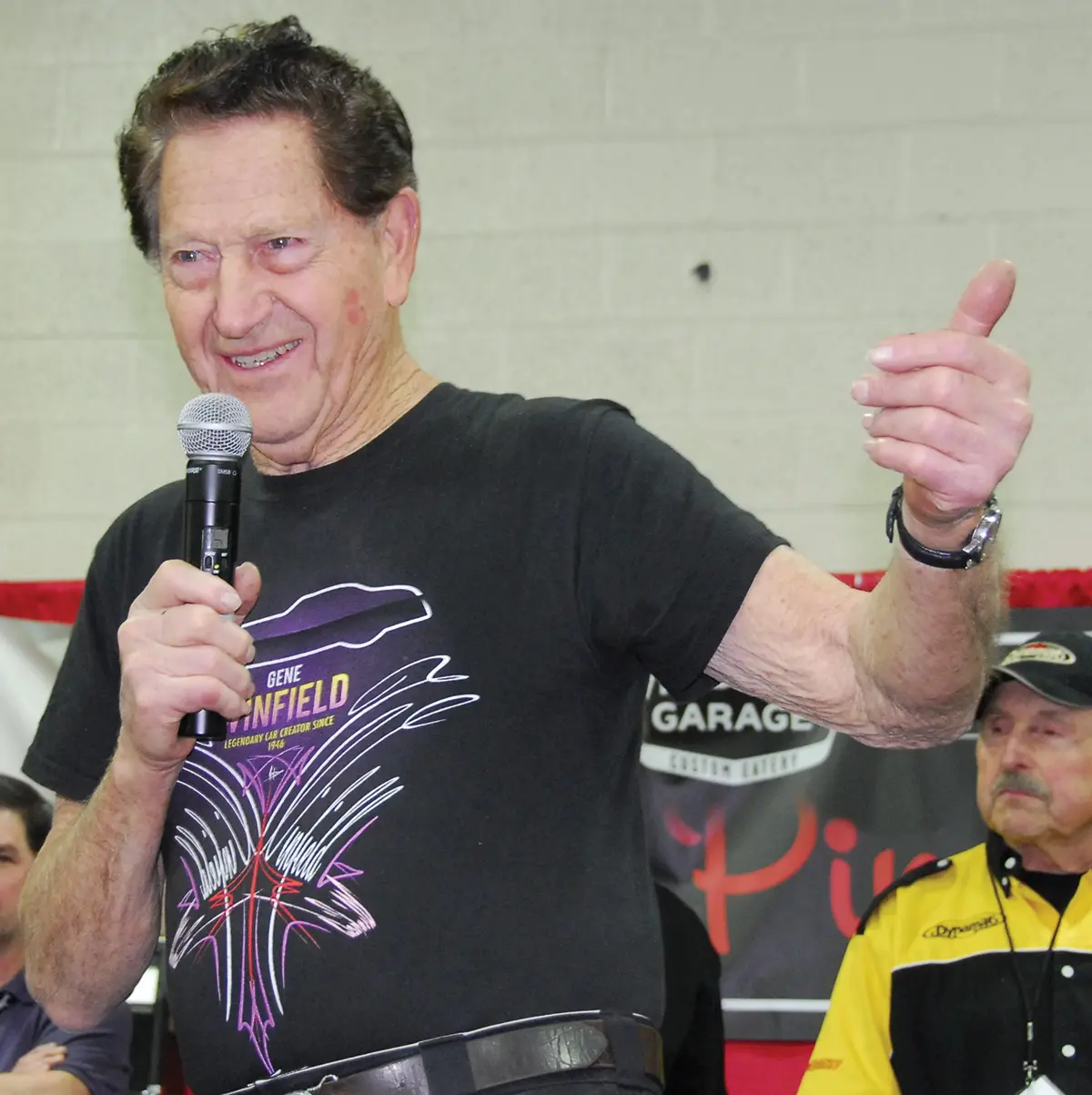
 Giving a talk at the 2008 Detroit Autorama, the year he was honored as the Builder of the Year.
 By BRIAN BRENNAN
he death of Gene Winfield (June 16, 1927-March 4, 2025), a true icon in the world of hot rodding, marks a day of great significance. Gene embodied the spirit of hot rodding like no one else. While his heart belonged to custom cars, his passion for racing at the Dry Lakes and Bonneville was a strong second. For those who experienced Gene “after hours,” he had a deep love for dancing. He never turned down a good party and always enjoyed himself with his fellow hot rodders.
But beyond his remarkable contributions to automotive culture, Gene was a beloved friend. He had a unique way of connecting with everyone he encountered, always sharing a smile, offering a handshake, and forging new friendships at every event he attended. His life was filled with achievements and good deeds, but his friendship truly stood out to me. Talking with Gene felt like receiving a priceless gift—a living history that no book or article could ever express. He was sincere and approachable, a genuine extrovert who thrived on the camaraderie of fellow hot rodders. As a founding member and the first president of the Modesto Century Toppers Auto Club, his dedication to the community was evident.
