
Modern Rodding Tech
InTheGarageMedia.com
1932 Ford Phaeton in dark blue with cream top and steel wheels, a classic touring configuration
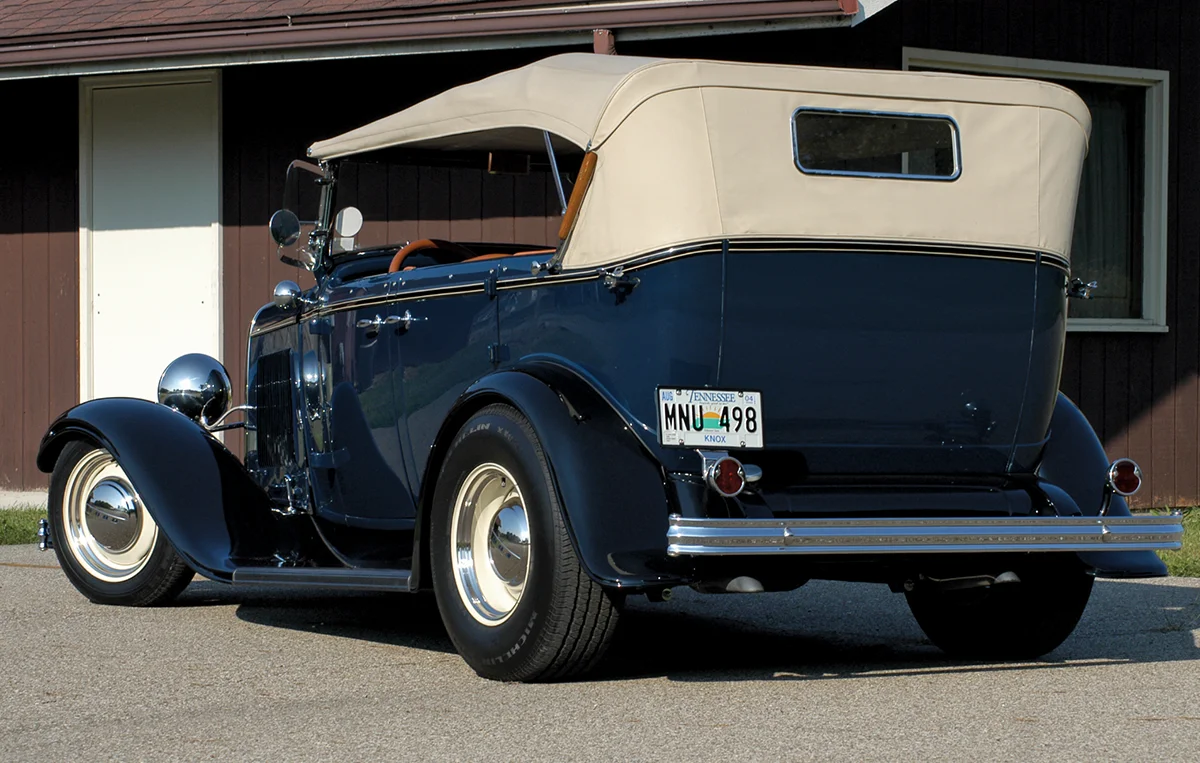
1. Since we will begin with several 1932 Ford tops, let’s look at Skip and Debbie Walls’ timeless time machine (aka the Lokar phaeton). There are times when change is not needed. Stunning in Washington Blue over black fenders, the stock top perfectly matches the rest of this hot rod. Note that the stock rear window is not centered vertically in the rear panel, which is an important detail.
Top Secret typography
Seeking Shelter in Style
By Gerry Burger Photography by THE AUTHOR & Modern Rodding Archives
T

his is high on our list of indisputable facts: roadsters and phaetons look great without a top. Riding fully exposed to the elements can be enjoyable or torturous, depending on the conditions, and if your journey is long enough, you will undoubtedly experience hefty doses of both. Taking on that long-distance trip without a top is something almost every roadster owner does at least once. It’s a rite of passage, an initiation into the coveted “real roadster guy” club. Heck, some hardcore roadster and phaeton tours even prohibit tops.

While some hot rodders opt to go topless multiple times or don’t have a top at all, for others, it seems reasonable to seek shelter. If possible, the decision to have a top on your roadster or phaeton should be made early in the building process as structural considerations are best addressed prior to bodywork and paint. Possibly the biggest challenge is to make your hot rod look at least as good with a top on it as it does topless. We have seen many roadsters where the top enhances the hot rod’s overall look and attitude.

There are numerous options for hot rod tops. If you’re working with an original car, there’s a good chance you have the original top bows. In this world of hammered lids, the stock irons can be modified to create a new profile. Aftermarket universal top bows are also available for 1928-34 Fords, offered in both chopped and stock heights. Work carefully and both can be modified while maintaining the fold-down feature.

The other option is to build your own top bows. While this may seem daunting, using tubing and the proper bending tools can bring this within the reach of many talented home builders. Steel, aluminum, or stainless steel tubing is suitable for the bows, and practicing using electrical conduit is an affordable way to get a feel for the job. If you want to build your own top profile and incorporate a fold-down feature, beginning the design with a universal top kit will help with the proper engineering.

The final choice is a lift-off top. These one-piece units can be purchased in fiberglass, and, generally, most fiberglass body manufacturers offer a fiberglass top. When dealing with cars from 1937 and later, the custom-built lift-off top is often referred to as a “Carson Top” and is generally padded and covered with appropriate top material and often incorporates a headliner. This style top adds a period-correct custom style to the car. The one universal problem with lifting tops is this: What do you do with the top after you lift it off? No problem at home; leave it in the garage. But assuming the job of the top was to provide shelter for long drives, you have to leave it in a motel for the day, and carrying a large one-piece top can be a challenge.

The problem with a folding top is similar. A vintage car folding top is often not particularly attractive in the down position. They tend to hang out the back of the car in a style similar to a horse and buggy. One solution is to build a convertible top well into the body, much like late-model cars. That panel lifts up and the top folds down into it and disappears. The Dearborn Deuce 1932 Ford body incorporates this system, but we have also seen it fabricated into fiberglass roadsters. This is not an option on phaetons as there is no body behind the top.

Whether it’s a folding or removable hardtop, the top’s most important aspect is style. Even before providing shelter, the top must have the right profile to match your car’s style. This profile begins at the front with the windshield height and angle and concludes the same way with the appropriate height and angle of the rear window. In between, the shape of the side view opening is crucial. Remember that the top design can make your car appear fast even while stationary or slow, even when it’s in motion.

Generally, the top should start at the front, with an overhang extending over the windshield frame. This setup achieves three things: 1. It looks very cool, 2. It offers some sunvisor effect, and 3. It creates a seal between the top and the windshield. This overhang should be relatively small; remember that it will catch the wind, so ensure your forward fasteners are substantial.

The distance between the windshield post and the first top bow is important as it affects the top proportions. Generally, this is the largest panel of the roof, with the distance between the rear bow and the center bow somewhat shorter. It’s a nebulous term for sure, but finding the proper proportion ultimately comes down to a keen eye. Don’t be afraid to ask for opinions and suggestions and ignore some of them.

The final major decision is the angle of the rear valance panel. This is just as important as the windshield angle. These angles range from vertical fuddy-duddy (is that a word?) to rakish bad boy hot rod. Choose the angle that matches the car’s design. The idea is to design a top that’s in perfect harmony with the overall style of the car.

With the angle of the rear panel established, it is time to choose the rear window. Numerous chrome window frames are available from companies like Speedway Motors, among others. Once again, a small “mail-slot” window looks cool, but it’s also important to consider rear visibility. In a more contemporary build, you can integrate the size and shape of the window into the top without a frame. Having the rear valance panel that holds the window zip out is a great option for enjoying a free-flowing breeze while still being sheltered from the sun.

The final decision is about the top material and color. Traditional cloth is always a good choice, and honestly, in our humble opinion, there are only two color options: black and anything in the white-to-tan family. Have we seen other colors that work well? Yes, but getting that unusual color to look right is more difficult than making it look wrong. Looking at a 3×3-inch piece of lavender cloth might seem OK but take that same fabric in a 3×3-foot swatch and things can get bright quickly.

So that’s our styling tips for convertible tops. This story doesn’t provide all the answers, but it includes many of the questions and simply reminds you to think. While you are perusing our selection of great-looking lids, we will leave you with one final thought. If you think this top will keep you dry, you must have never driven a roadster in the rain.
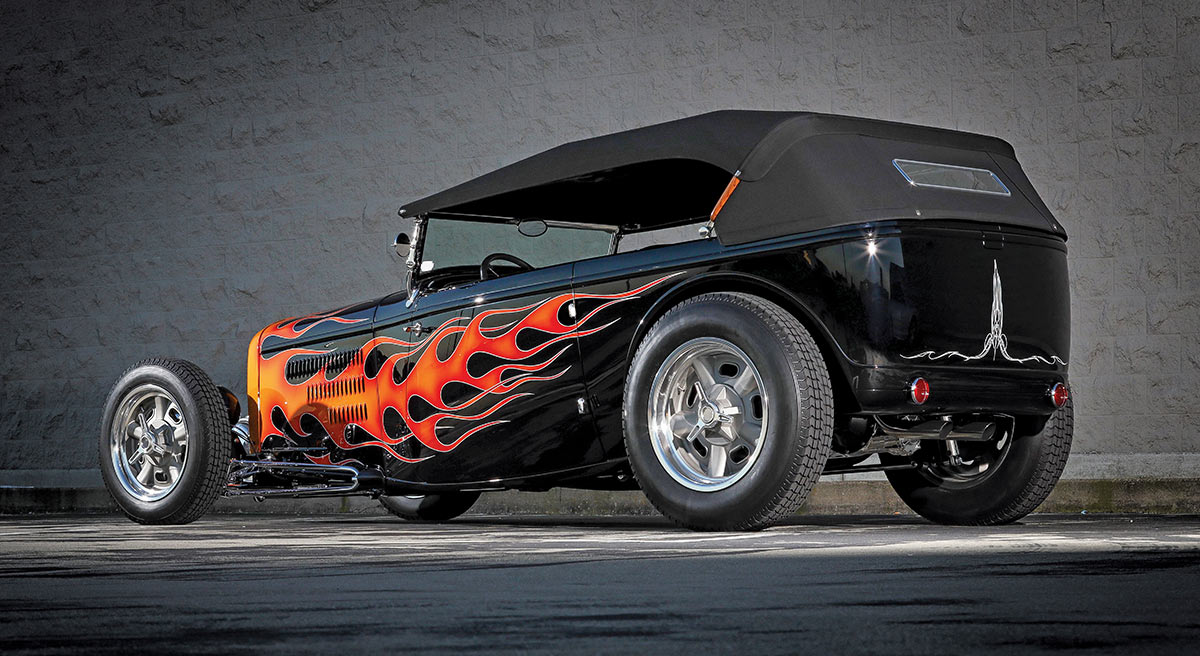
1932 Ford Highboy Roadster with black soft top and flamed bodywork in traditional hot rod style
2. The Brizio-built Beth Meyers 1932 phaeton illustrates what 3 inches less windshield and a lower rear bow can do to a phaeton. The perfectly raked rear valance panel leans into a lower, reshaped rear bow. The wood side bows are a nod to the past and no longer mount outside the body but mount to a tab like a Deuce roadster. Sid Chavers crafted the top.
1932 Ford Phaeton showcasing vintage wood top frame with clamp and bracket adjustments
3. We found the Sonny Koneru Deuce phaeton top-building process interesting. It began up front with a moderately chopped windshield. The original wood top bows have been modified and repositioned to a pleasing profile.
1932 Ford Phaeton with bare wooden top bows and cross supports fitted for patterning
4. The wood portion of the rear bow was repositioned (arrow) by sliding it down on the metal portion of the top mechanism. This gives a lower profile but does not disturb the top mechanism geometry, thereby preserving the fold-down feature of the top.
1932 Ford Phaeton with wrapped wooden bows and rear curtain profile masked for mock-up
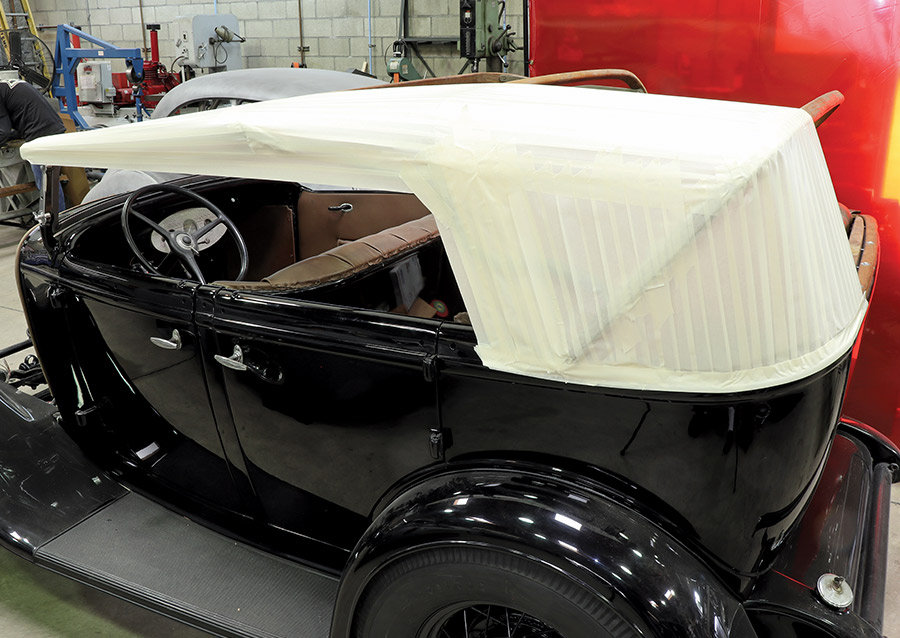
5. Likewise, the side window opening has been reshaped, and the rear valance panel now employs a moderate rake without losing the original style of the top. The faux top is formed with masking tape so the Veazie Brothers can visually check the roof shape.
1932 Ford Phaeton with paper mock-up top, showcasing traditional tub-style body and dual cowl doors
6. The top fabric (now in tape mockup) covers the rear bow and extends forward, much closer to the rear door hinge. Henry Ford’s original top opening is angled rearward (see photo 1), while this modified top now angles the side panel opening forward for a new shape.
1932 Ford Phaeton displayed at indoor show with tan canvas custom top and snap detailing
7. The Veazie Brothers understand that building a fine hot rod is a fluid process of decisions and shapes. Sometime between the masking tape mockup and the final stitchwork this phaeton top achieved a stunning shape. A new sweeping side radius and a forward lower attaching point on the quarter-panel perfectly harmonize with the car. The use of exposed fasteners completes the vintage flavor.
1932 Ford Roadster body in bare metal with low-slung custom taped convertible top shape
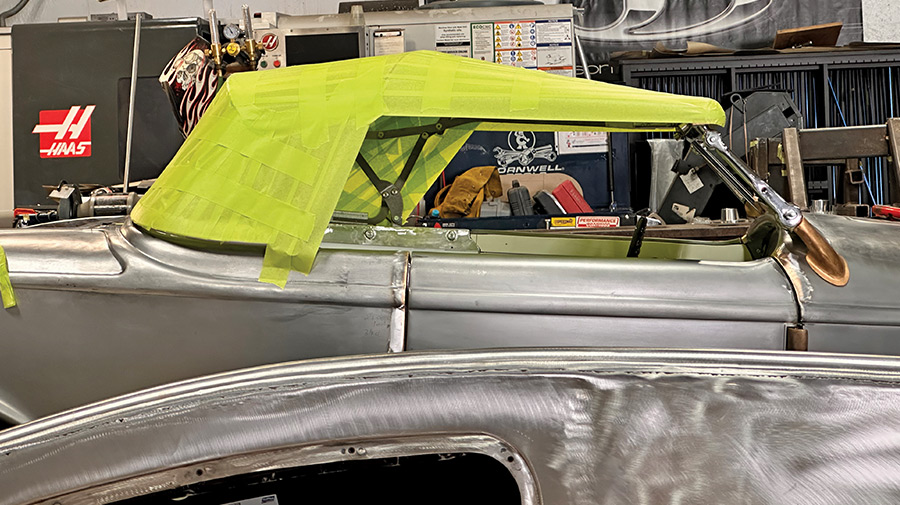
8. We mentioned that finding a pleasing profile for a hot rod top begins up front. Alan Johnson cast custom stanchions to lay the 2-inch chopped, flat windshield back on a 25-degree angle. Mekenzie Murphy’s Deuce also has a 4-1/2-inch extended cockpit with stock doors, which makes fitting a top challenging.
1932 Ford Phaeton with full masking tape mock-up for top design and rear window layout
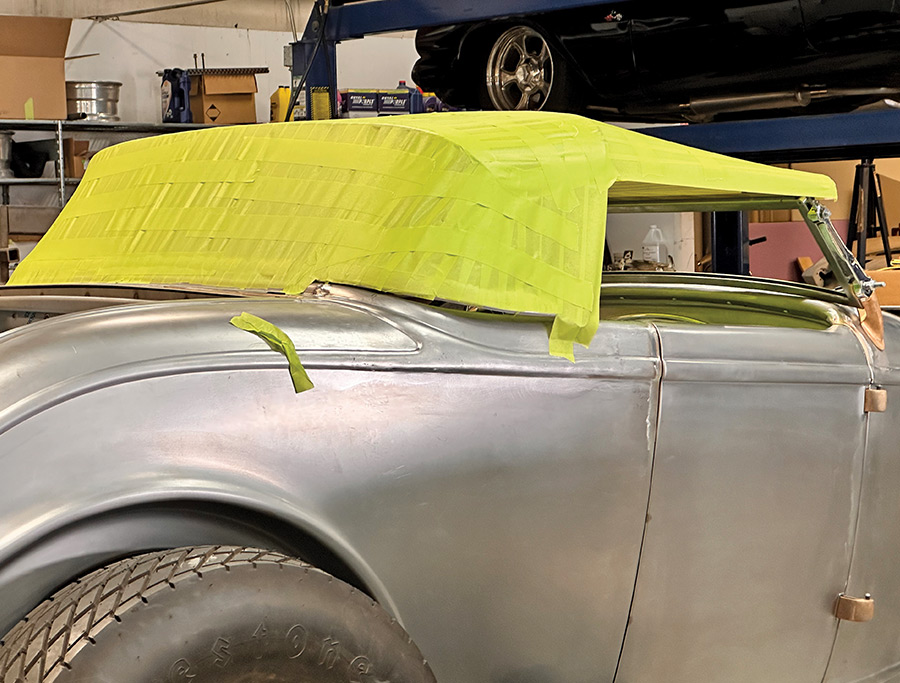
9. Beginning with a Rod Tops assembly, the bows were modified for a proper profile. You might think the side opening would be noticeably longer with the extended interior. That is not the case, as the 25-degree rake on the windshield moves the top of the posts rearward enough that the top is similar in size to an original Deuce roadster.
1932 Ford Roadster with chopped windshield and green tape mock-up for custom convertible top
10. The rear panel has a pronounced forward rake that works well with the angle of the windshield. There is no magic formula for this rear angle; you just have to know “when it’s right”—or, more importantly, you must know when it’s not. This top is a “no touch” design that hovers just above the body to ensure the top does not contact the paint.
Custom black roadster with cloth top on raw steel body, showcasing finished stitching and fitment
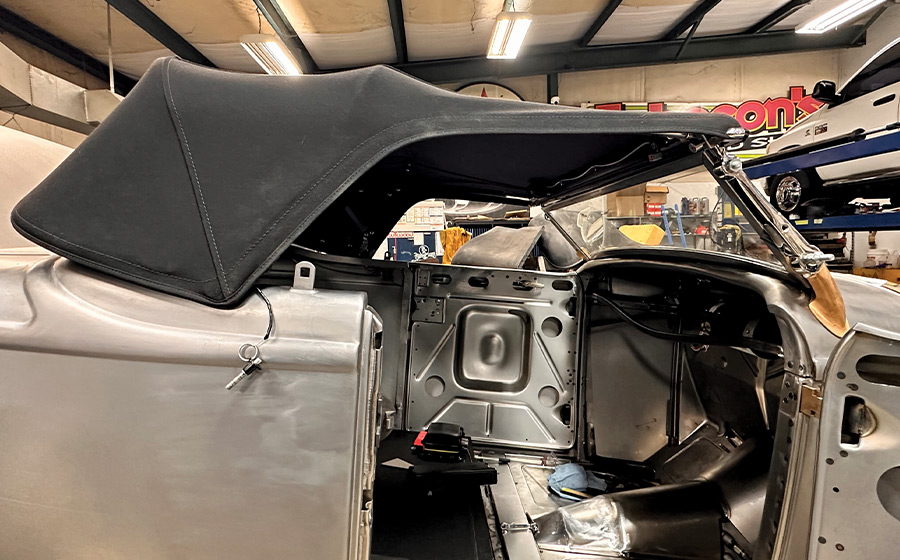
11. Johnson’s Hot Rod Shop handled the stitchwork in-house; the subtle contrasting stitchwork is a nice touch. One other decision is how pronounced the top bows should be. This is determined by padding on the bows. The Rod Tops geometry was maintained, so once again we have a folding top.
1932 Ford Highboy Roadster with black soft top and magenta flame job, cruising a scenic rural highway
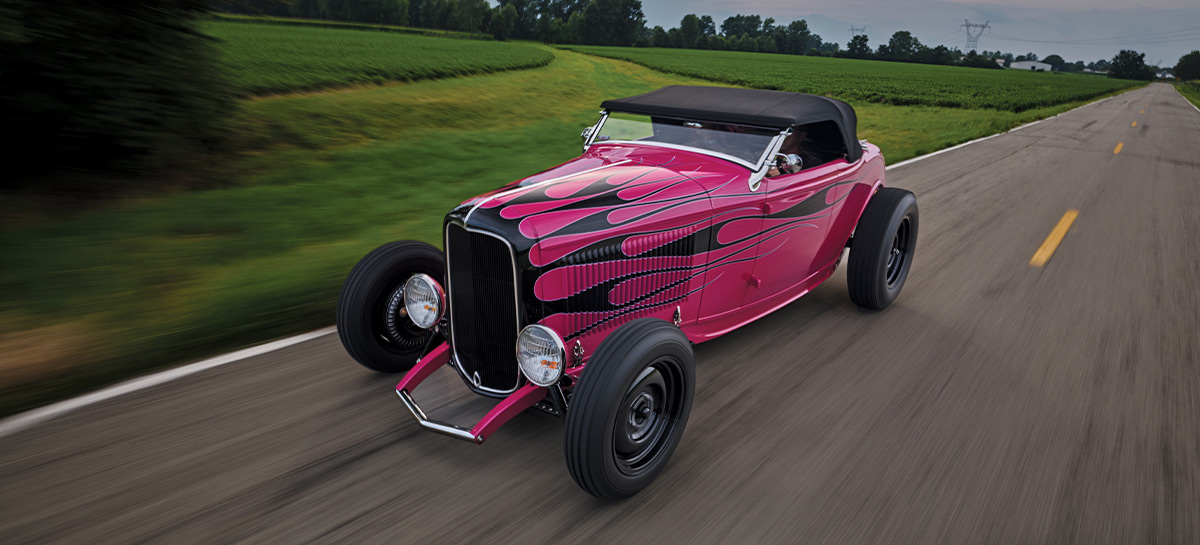
12. The test of any good top comes at speed. On this cotton candy roadster, the proportions are perfect, driver-side vision is good, and the pronounced top bows add vintage flavor to the car. The top material remains taut at speed, thereby minimizing any potential flapping.
Early Ford roadster body with chrome frame and wood header, starting mock-up for convertible top fabrication
13. Our next stop was Precision Hot Rods to follow along as they crafted the top on Greenlee’s Model A roadster. The 1928-29 Model A proportions are dramatically different from a Deuce. The shorter doors and cockpit make for a short roof, and the seating is not as deep, so you generally need a bit more windshield space to provide headroom.
Metal rod framework fitted to early Ford body, forming the structural skeleton for custom top bows
14. A universal top bow kit from Mac’s was the basis for the top. Custom-fabricated tubular bows provide the profile and attach to the modest 2-inch chopped windshield. Simple clevis ends in the tubing bows allow the top to pivot when folding.
Rear framework view of roadster top in progress, highlighting reinforcement and tube bracing
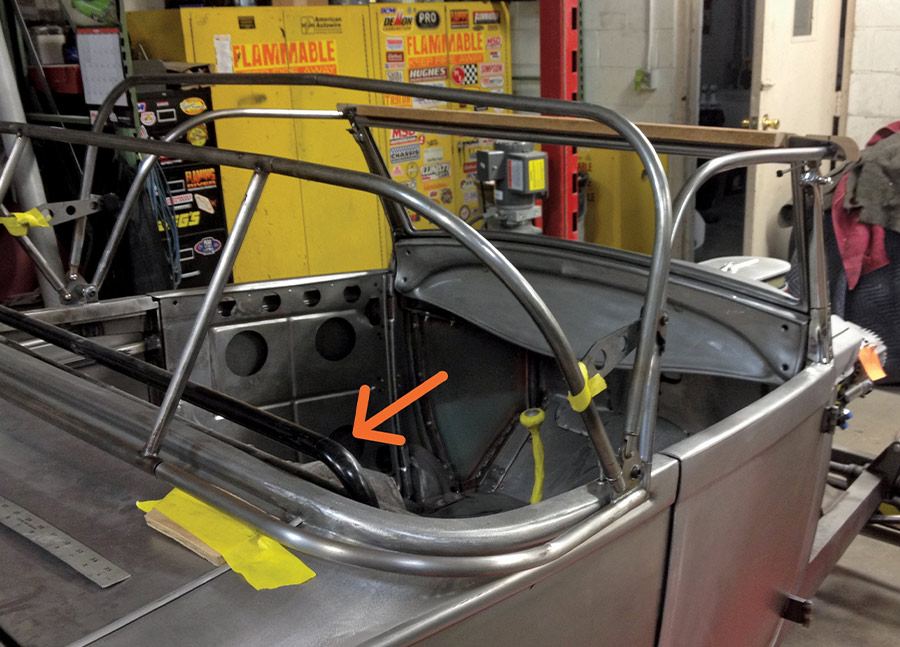
15. The angle of the rear panel is considerably more vertical on the Model A, which is necessary to allow ample passenger headroom. Note that the seat frame (arrow) extends above the body all the way to the rear of the cockpit. This is also a “no-touch” top, as the rear of the top does not contact the body.
Yellow vinyl mock-up on highboy roadster, taped down for shaping custom top profile
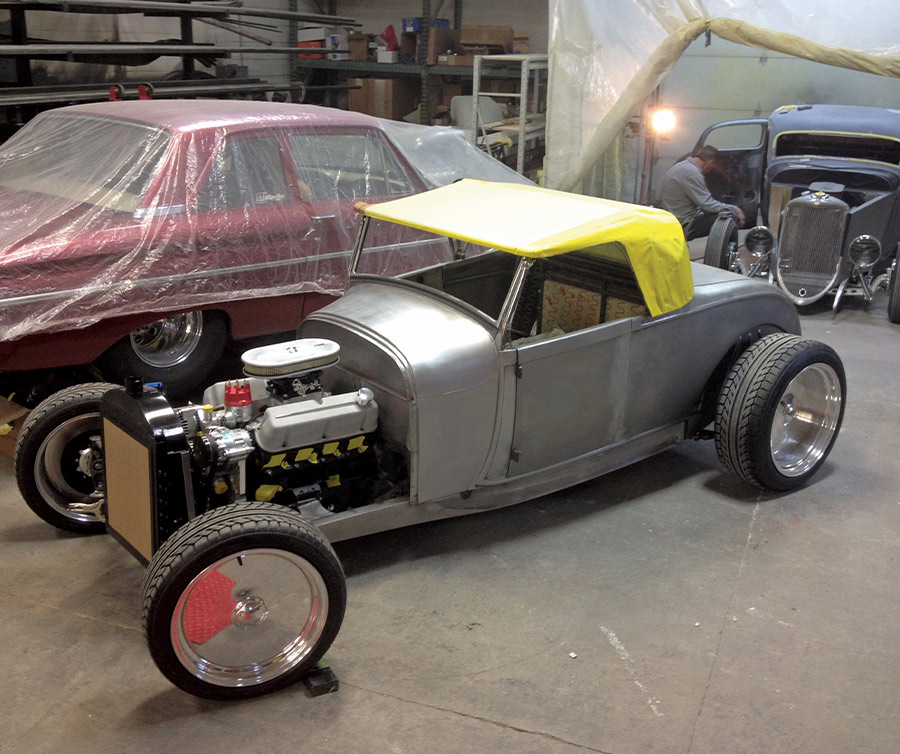
16. Painters’ masking tape and paper serve as faux top materials. The simple and somewhat square top and side openings flow well with the square and simple shape of the Model A body. The 2-inch lower windshield preserves headroom and provides a clear view of the road ahead.
1934 Ford Cabriolet mock-up with fitted top in masking material, color-matched body in traditional red
17. We spied Scott Grzelewski’s roadster while at Precision Hot Rods. The 1934 is a true vintage 1960s hot rod that illustrates how a stock-height windshield can work just fine. By massaging just the wood portion of the top bows, the roofline was gently altered to a more aggressive shape.
Finished 1934 Ford Cabriolet with black cloth top, steel wheels, and period-correct rear end proportions
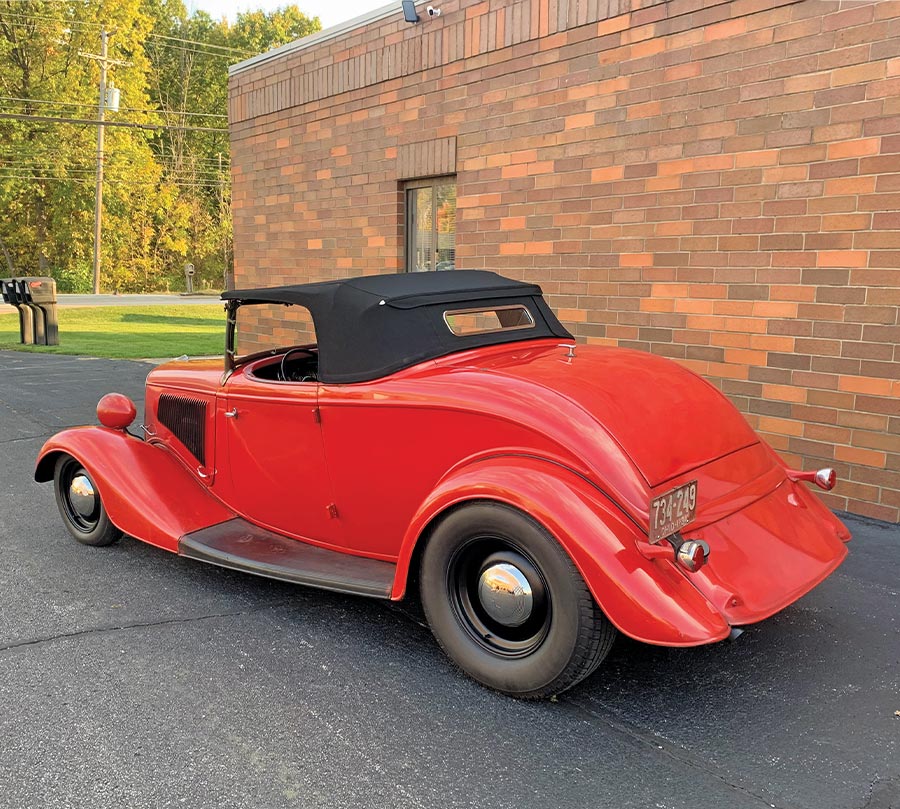
18. The roadster’s aggressive stance is pure hot rod, and the use of a long, thin rear window contributes to the illusion of a chopped top, while it is, in fact, a stock-height top. Rear window shape and size are critical decisions in the top-building process.
1937 Ford Roadster with modernized black soft top, billet wheels, and smoothed body panels in vibrant green
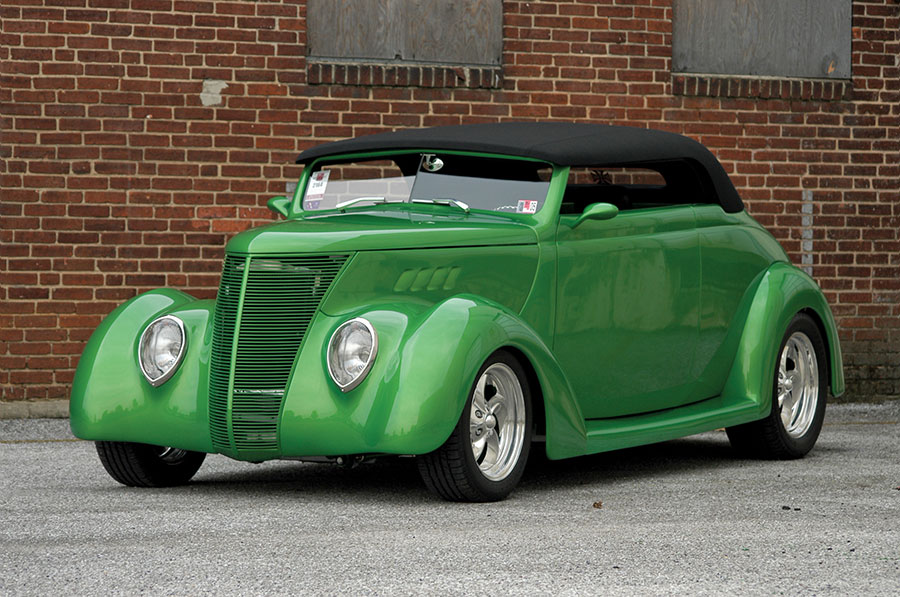
19. The top must coordinate with the overall style of the car. This monochromatic 1937 Cabriolet defines the word slick, so a low, long, and smooth top was perfect. A slight windshield overhang accents the chopped windshield.
1937 Ford Roadster with black cloth top, frenched rear pan, and billet five-spokes in candy green
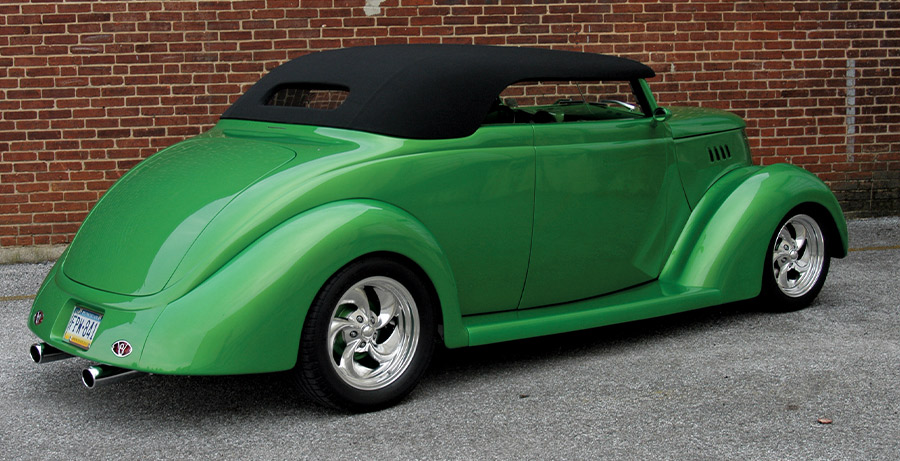
20. From the rear, the top flows perfectly forward, and the side opening is large enough to make the rear corners of the top appear smaller and smooth. Using a frameless rear window completes the perfect profile on this fat-fendered hot rod.
1933 Ford Roadster with tan top, polished five-spokes, and punched louvers on the hood sides
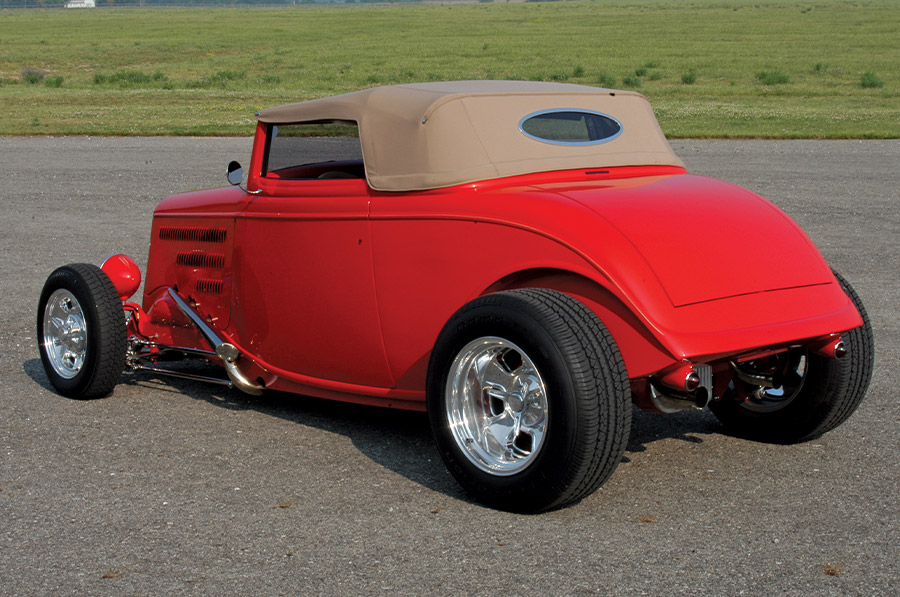
21. Early cabriolets present unique challenges and special opportunities. The windshield posts are integral to the body so that a skilled bodyman can fabricate a lowered and tapered windshield post. However, since the cabriolet has side windows, the doors and windshield posts must work harmoniously to raise and lower the side windows. This 1933 did a great job of handling a chopped top and a pleasing side profile.
Rear view of 1933 Ford Roadster with chopped tan top, oval rear window, and smooth tail panel
22. Altering the angle of the rear panel will remove the square look from the cabriolet roofline. The oval rear window also contributes to rounding things out.
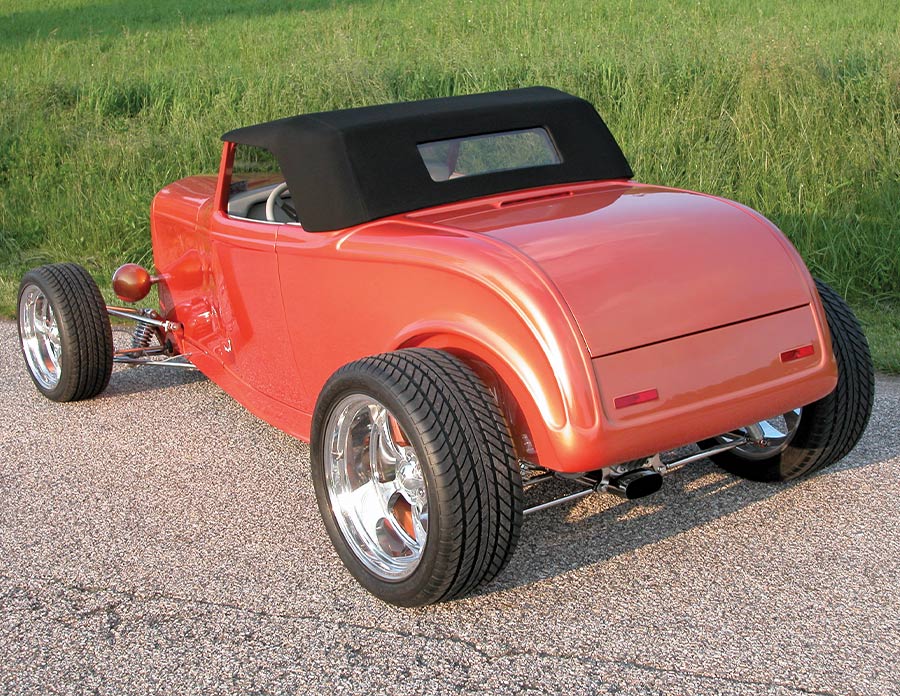
1932 Ford Highboy Roadster in copper pearl with black cloth top and billet wheels, parked roadside
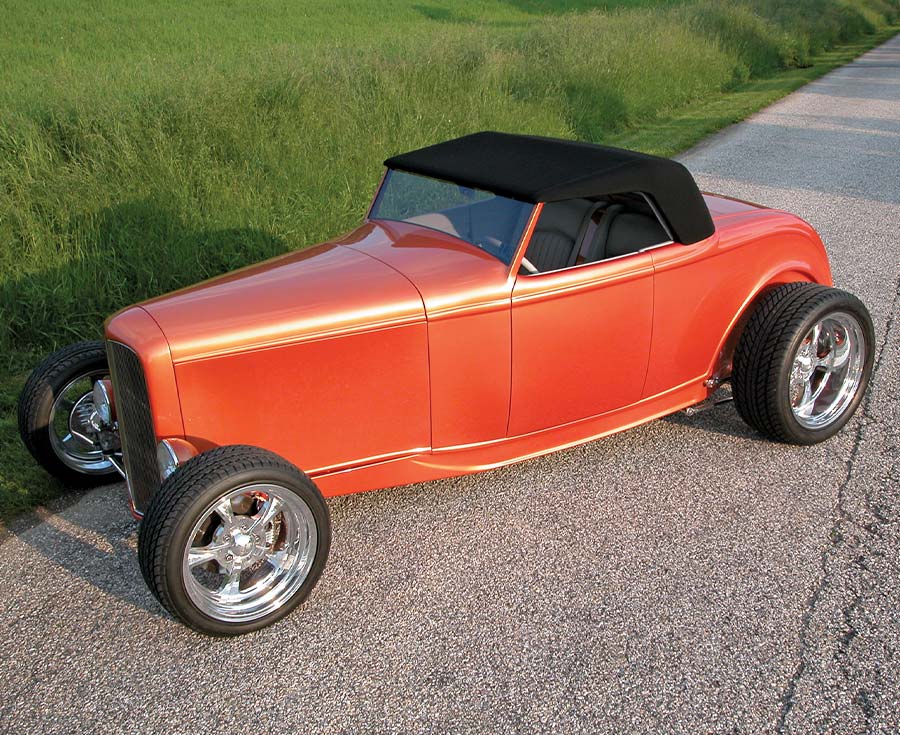
23. We mentioned that the top design begins with the windshield. This Deuce roadster employs a frameless windshield set in a pair of custom-fabricated windshield posts. The result is a modest laidback angle, and while the roof profile is low, the glass area gives this roadster an open feel.
1932 Roadster, showcasing clean tail section and black canvas top
24. The large glass area theme continues in the rear panel, and once again, it gives the car an open, airy feel. The top bows built into this lift-off top provide the perfect amount of vintage flavor.
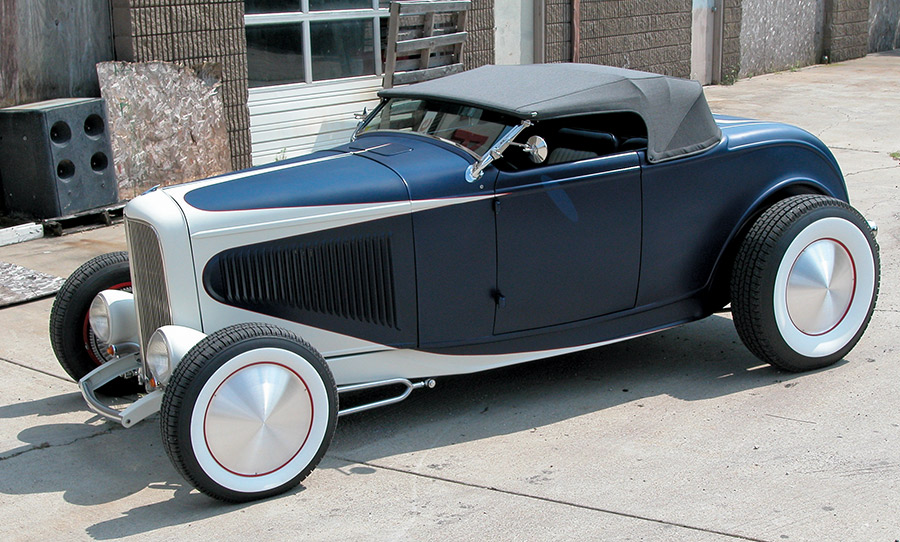
1932 Ford Roadster in two-tone navy and pearl with custom hubcaps and gray convertible top
25. When Dave Thomas rolled into the NSRA Nats East 20 years ago with this radically traditional roadster, the laidback, chopped windshield was a stunner. The top is wrapped around the side to envelop the driver, while simply exposed snaps connect the top to the body.
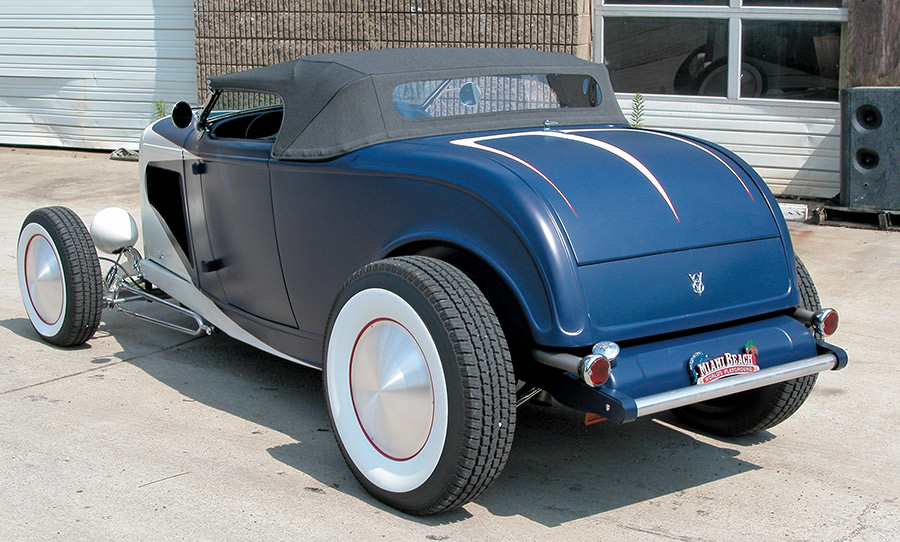
Rear shot of the same 1932 Roadster, highlighting pinstriped decklid and whitewall wheel covers
26. Possibly, an even bigger surprise came in the form of the rear window. Larger than you might expect and frameless in design, not only is the big viewing area perfectly practical, but it still has a very traditional, 1950s feel. Like everything in this Deuce, it’s a daring idea that worked wonders.
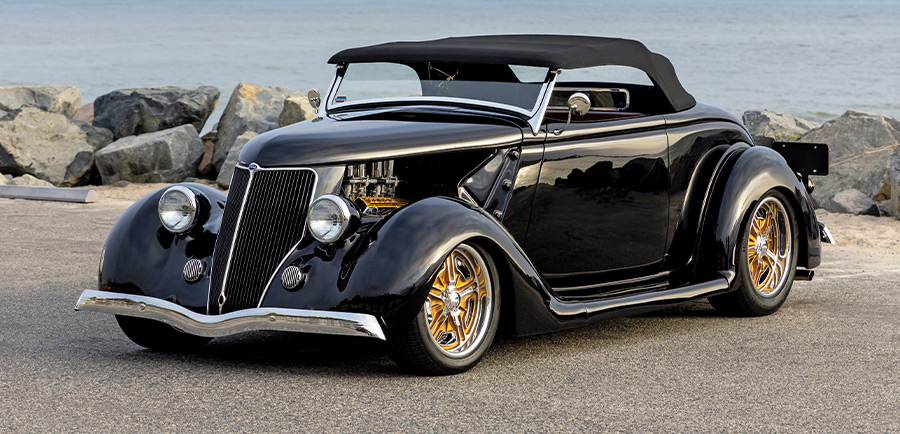
1936 Ford Cabriolet with black soft top, gold billet wheels, and lakeside backdrop
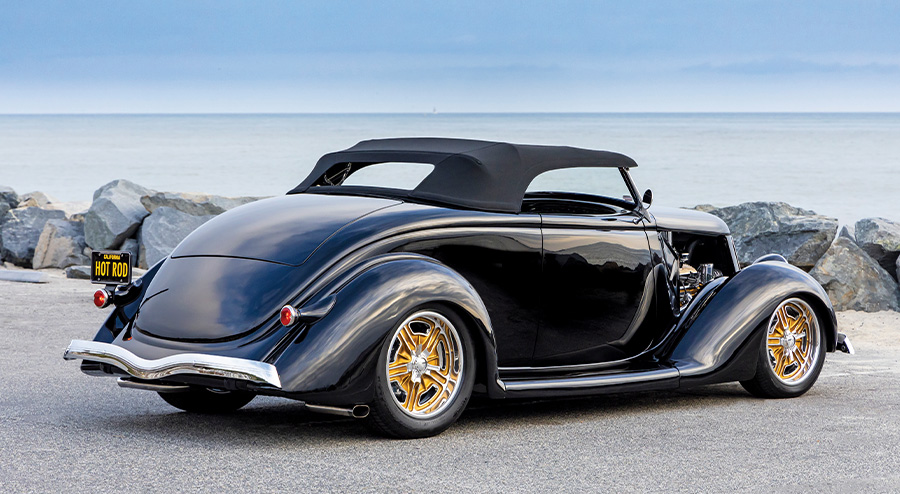
27. Danny Hyde’s coupe-turned-roadster has changed every panel dimension, so it is no surprise that the top was custom fabricated. The windshield is 3-1/2 inches lower than a stock windshield, and stanchions ride on an angle Henry Ford never dreamed of. The top incorporated a perfect front overhang/visor, and the side opening is low and lean, adding to the car’s streamlined look.
'36 Cabriolet showing sculpted fenders and raked stance by the coast
28. From the rear, we love the zip-out back window panel. This perfectly combines flow-through ventilation and protection from the wind and the sun. With that rear panel zipped back into place, a traditional, chrome-frame rear window looks right at home.
1930 Ford Roadster with tan top, wire wheels, and black fenders in a traditional street rod style
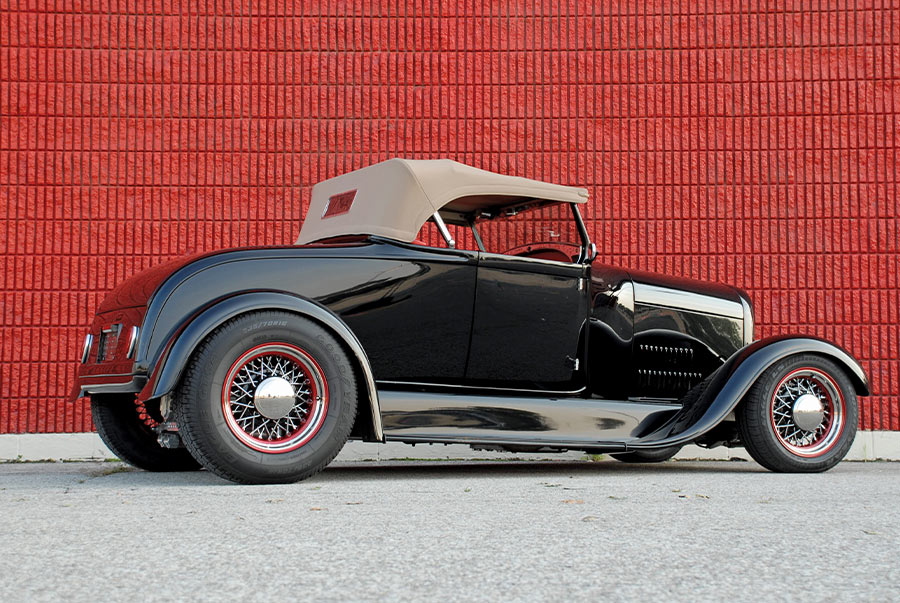
29. Krist Kustoms built this very cool 1928 Ford roadster top. While chopped, the stock top mounting points remain. However, the roofline has changed dramatically with modified bows. We like the overhang and the sweeping radius of the side opening.
1930 Ford Roadster with tan top, red accents, and wire wheels against a textured red brick backdrop
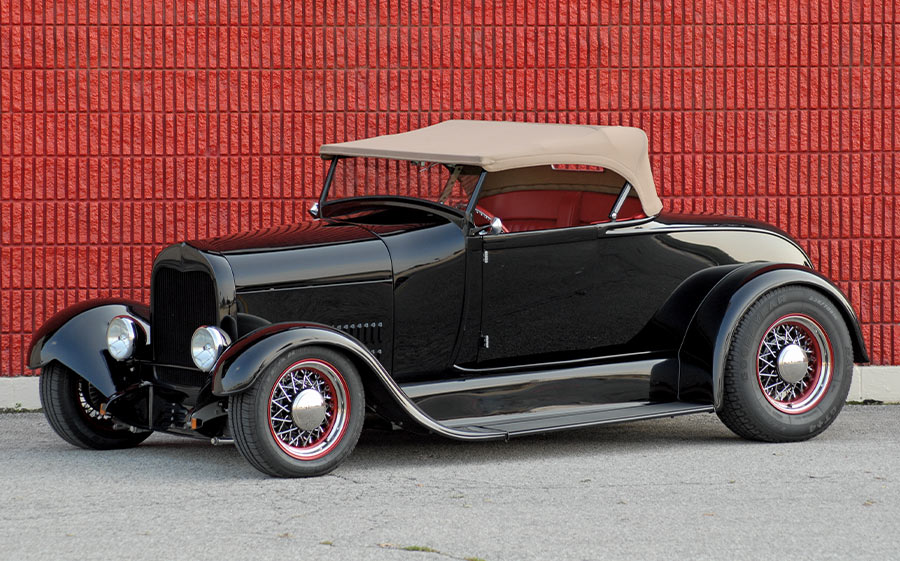
30. From the front, that same sweeping side radius looks traditional while eliminating the boxy shape of the original top. This opening also provides good side vision by minimizing the blind spot.
SOURCES
Modern Rodding
VOLUME 6 • ISSUE 57 • 2025