


 Photography by NotStock Photography
ntroducing America’s Most Beautiful Roadster, presented to Ross and Beth Myers at the 2025 Grand National Roadster Show, a stunning 1936 Ford highboy roadster expertly crafted at Rad Rides by Troy (RRT). This one-of-a-kind hot rod epitomizes automotive craftsmanship, creativity, and personal expression. Hot rods, by their very nature, embody the owner’s unique vision and style, unlike mass-produced vehicles designed to elicit a mere “vanilla” happiness. Every detail, from the engine to the paint, is meticulously crafted, turning aspirations into a masterpiece.
This honor reflects the extraordinary effort of Troy Trepanier and his talented crew at RRT, with special recognition for Adam Banks, who worked tirelessly day in and day out on this project. Banks also supplied Modern Rodding with hundreds of build photos and data, allowing us to prepare the six build articles that have preceded this one (see links to these stories here). There is also the “all-metal feature” before bodywork, paint, and upholstery, which provides a close-up view through the lens of the workmanship, courtesy of John Jackson of NotStock Photography.
Power for this 1936 Ford highboy roadster is nothing out of the ordinary. At a time when all-aluminum engines are common in the world of hot rodding, the all-iron block and cylinder heads were retained and underwent a myriad of changes—we might all agree, for the better. The craftsmanship of the build and the details that follow are what stories are made of. At the heart of this roadster’s V-8 is a 312-inch 1957 Ford Y-block. The Y-block served as a mainstay for Ford Motor Company from 1954 when it replaced the venerable Flathead through 1964. As Ford’s premier performance engine from 1954-57, the Y-block delivered two consecutive NASCAR Manufacturer’s Championships (1955-56), scored significant victories at the Daytona Speed Weeks, and set a new stock car record at Pikes Peak, being the original V-8 for the early T-bird. FX Engines built the working V-8 (as they have done with nearly all the RRT builds), ensuring that all internal machined surfaces feature O-ring design, except for the cylinder heads and exhaust manifolds.
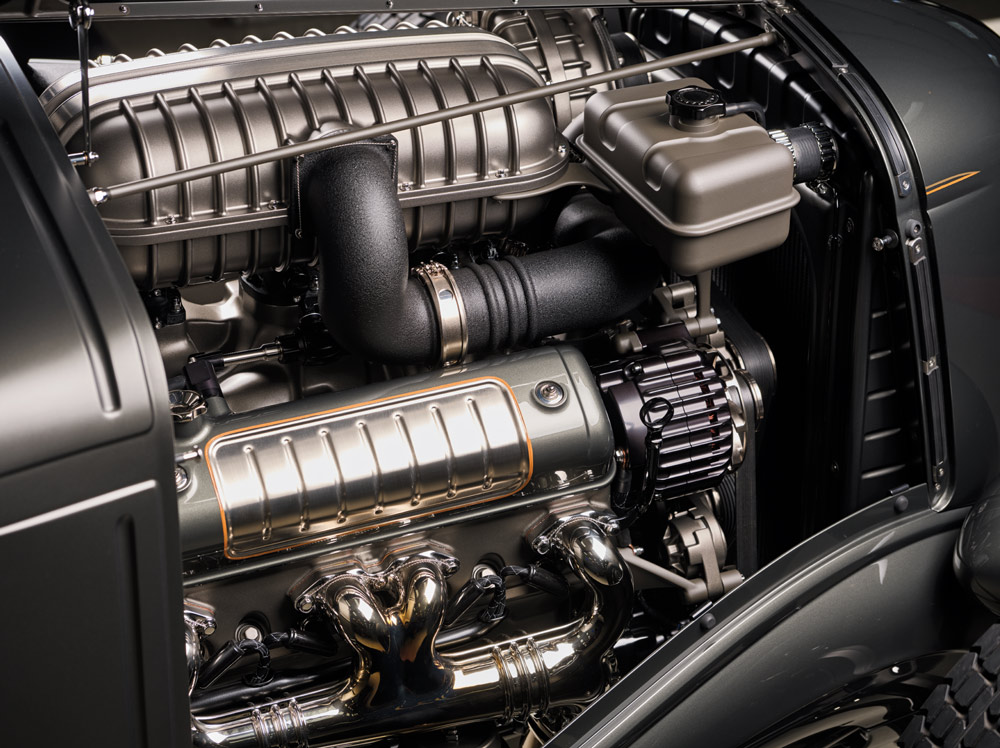







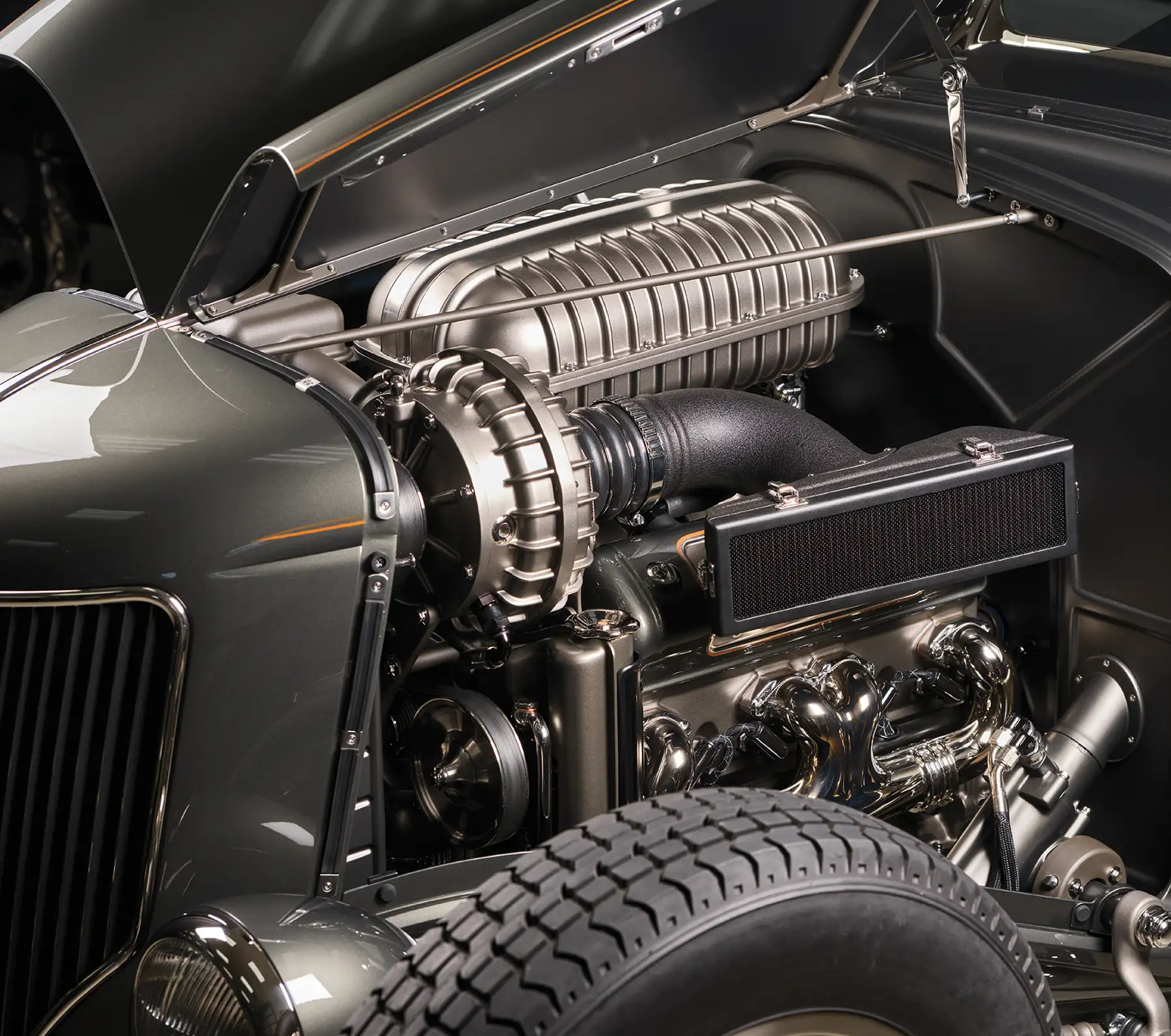
There is no doubt that the roadster is a 1936 Ford highboy roadster. However, while it resembles a highly stylized 1936 Ford roadster, the reality is that Ross sent a completely stock 1936 roadster for the staff at RRT to take all the necessary measurements from and then returned the factory-stock 1936. Indeed, all the body panels are bent and shaped to create a one-off 1936 Ford highboy roadster that showcases the designed style changes. The hood and top are made from an alloy material. Banks aimed to make the roadster body look proportionally correct without fenders and running boards. He carefully massaged the sheetmetal, which eventually yielded the body, while Modert handled the floor and firewall.


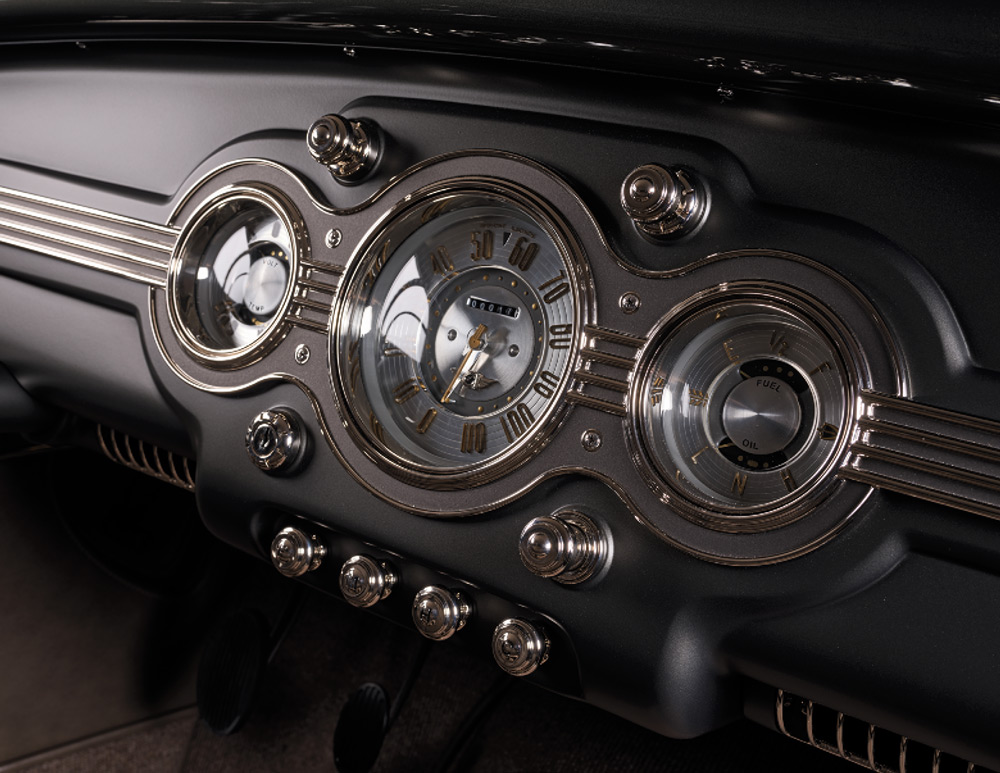
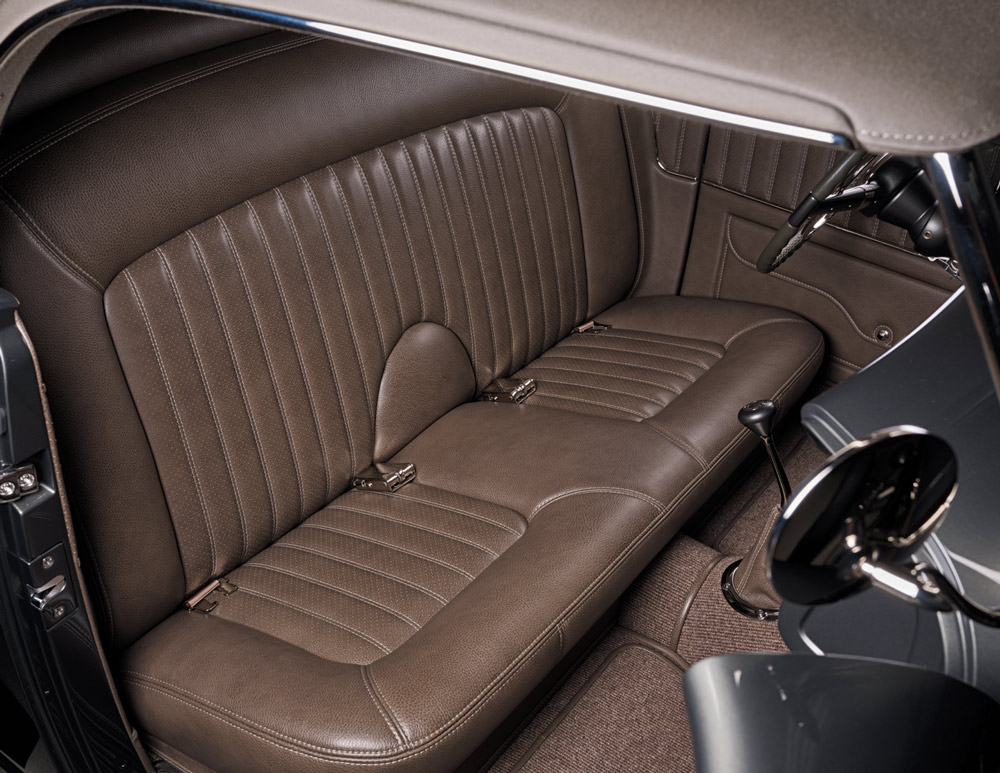
The interior featured more craftsmanship by Banks, showcasing a custom dash garnished with a unique presentation of Classic Instruments’ reworked 1950 Buick instruments. RRT’s own Lawrence Laughlin machined the instrument bezel. He also did the modeling for the exhaust manifolds as well as the steering wheel. Sherm’s Custom Plating handled the brightwork here on the dash and throughout the hot rod. The interior’s electrics, including the gauges, A/C system by Vintage Air, and the demands of the remaining hot rod electrics are managed by a Painless wiring system installed in-house at RRT by Injection Connection’s Dale Cherry. The steering column is among RRT’s products marketed under the name Rad Rides Performance Parts, featuring a custom-machined RRT steering wheel. The horn button showcases added enamel artistry from Maxwell. The bench seat presentation is tailored; frames, foam, and cover are all provided by RRT’s own Banks. The material used is Spinneybeck North America leather, “hand-tipped” in a medium brown shade. This is paired with a medium-brown square-weave carpet, both of which are expertly stitched by Banks.

For more on the top, stay tuned as MR will have a complete behind-the-scenes look at how this unique top was achieved.
A distinctive hot rod sets a benchmark for others in the rodding community, sparking innovation and healthy competition among builders. (Editor’s note: While competitive, it should be noted that the hot rod builder’s community is tight-knit, and each is often willing to help one another whenever they can.) This surge of creativity, driven by advanced tools and materials, continually pushes the boundaries of rod building. Furthermore, the process of creating a unique hot rod fosters a deep sense of pride and accomplishment, serving as a testament to dedication, hard work, and passion. In an age dominated by mass production, these vehicles remind us of the artistry and individuality that can be achieved through personal effort, inspiring future generations to dream big and strive for their extraordinary legacies in automotive history.
While it’s true that very few hot rodders will ever have a ride based on this level of imagination, craftsmanship, and overall budget, the fact remains that this year’s AMBR-winning 1936 Ford highboy roadster offers countless creative ideas, allowing other hot rodders to build their versions.