





Preview Issue




COLUMNS

SYSTEMS


SELECTION ONLINE
800-648-8022

Brian Brennan
Industry News
New Products
Those Supporting Our Industry
Brian Brennan

Ross Myers’ 1936 Ford Highboy Roadster
By Brian Brennan, Photography by NotStock Photography
Videography by Ryan Foss Productions
Mike Hauncho’s 1959 Pontiac Catalina
By Grant Cox, Photography by the Author
David Nilsen’s 1962 Chevy Impala
By Brian Brennan, Photography by Jason Matthew
John Anderson’s 1929 Ford Channeled Sedan
By Brian Brennan, Photography by Luke Munnell
One More Time in the SoCal Sun
By Brian Brennan, Photography by the Author
Fabricating New Floor and Wheelwells for a 1962 Chevy Impala
By Ron Covell, Photography by Taylor Kempkes
Part 2: Updating a Vintage Electrical System—Even Mopars
By Ron Ceridono, Photography by the Author
Edelbrock Rethinks the Performance Carburetor With its VRS-4150 Carburetor
By Ryan Manson, Photography & Videography by Ryan Foss Productions
Pat Floyd’s Positively Wicked Bare Metal 1969 Camaro
By Chuck Vranas, Photography by the Author
Photo by NotStock Photography









BRIAN BRENNAN
bbrennan@inthegaragemedia.com
TIM FOSS
tfoss@inthegaragemedia.com
YASMIN FAJATIN
yfajatin@inthegaragemedia.com
SARAH GONZALES
sgonzales@inthegaragemedia.com
ROB MUNOZ
rmunoz@inthegaragemedia.com
PATRICIA LUDI
pludi@inthegaragemedia.com
Gerry Burger, Tommy Lee Byrd, Ron Ceridono, Michael Christensen, Ron Covell, Grant Cox, John Gilbert, Ken Gross, John Jackson, Chadly Johnson, Barry Kluczyk, Scotty Lachenauer, Ryan Manson, Josh Mishler, Todd Ryden, Jason Scudellari, Chris Shelton, Tim Sutton, Chuck Vranas — Writers and Photographers
Travis Weeks Advertising Sales Manager
Patrick Walsh Sales Representative
ads@inthegaragemedia.com
ModernRodding.com
AllChevyPerformance.com
ClassicTruckPerformance.com
InTheGarageMedia.com
subscription@inthegaragemedia.com
(714) 985-9171
InTheGarageMedia.com “Online Store”
For bulk back issues of 10 copies or more, contact store@inthegaragemedia.com


Copyright (c) 2025 In The Garage Media Inc.
Printed in the USA.
The Modern Rodding trademark is a registered trademark of In The Garage Media Inc.
 by Brian Brennan
igh school automotive trade classes are becoming vital to vocational education, equipping students with a strong foundation to gain practical skills and pursue future career opportunities in a rapidly evolving hot rod industry. As society increasingly values hands-on education and skill development, these classes excel at teaching students the mechanical skills needed for their hot rod maintenance and the advanced technologies that define modern cars. This comprehensive approach prepares young individuals for various career paths while enhancing their daily lives and hobbies. This practical training gives students the confidence to handle everyday mechanical tasks correctly, disassemble and assemble, and troubleshoot hot rods or the family stocker. Managing their vehicles independently nurtures a sense of personal responsibility and self-reliance that is invaluable in adulthood. There is much to be said for basic mechanical knowledge, even in these days of highly sophisticated and more complicated cars, including our hot rods, compared to cars of bygone days.
Today, understanding computer programming and diagnostics is as crucial as being familiar with hand tools. While it’s true modern vehicles are equipped with technology that monitors performance and identifies issues, making a solid grasp of these computerized systems essential, how about our hot rods? They, too, have more computers, and the ability to plug in and read computer software is critical to tuning and finding issues with your hot rod. One example is tuning an EFI; throttle bodies are ubiquitous, and computer-driven transmissions, among other things, all require some computer knowledge. Automotive trade classes introduce students to diagnostic software and tools, teaching them to read error codes and understand a vehicle’s electronic systems. This knowledge goes beyond basic mechanics; it prepares students for roles that demand technical expertise in software, data analysis, and electronics management, which are increasingly relevant across various sectors of the economy.
 BY BRIAN BRENNAN
 Triple Crown of Rodding … the Votes are In
Open to all cars from 1972 and American-made trucks up to 1998, Nashville Superspeedway will once again be bustling on September 5 and 6, the weekend after Labor Day, with nonstop activities. Over 190 of the industry’s top aftermarket companies will gather in a large manufacturers’ midway. Some say this alone resembles a mini SEMA Show.
There will also be meet-and-greet autograph sessions with 15 stars and celebrities from the automotive industry. To benefit Speedway Children’s Charities, you can place your bid for cool custom-striped and painted memorabilia at the 1 Shot by Krazy Paint auction, with 50 of the best pinstripers donating their talented artwork. Get up close, take in the smell of nitromethane, and feel the rumble as ground-pounding vintage nitro dragsters fire off. How about riding shotgun in a full-blown race truck through a twisting road course for the “ultimate” adrenaline rush … FREE. Be part of the Show & Shine or witness top cars and trucks compete on pit row for the coveted Triple Crown awards, including Street Machine of the Year, Street Rod of the Year, Street Cruiser of the Year, and Truck of the Year for pre-1972, 1973-1987, and 1989-1998. The Triple Crown winners will receive an invitation to Barrett-Jackson in Scottsdale to compete for the cup and $20,000, plus 15 additional celebrity pick awards custom built by each celebrity!


 Photography by NotStock Photography
ntroducing America’s Most Beautiful Roadster, presented to Ross and Beth Myers at the 2025 Grand National Roadster Show, a stunning 1936 Ford highboy roadster expertly crafted at Rad Rides by Troy (RRT). This one-of-a-kind hot rod epitomizes automotive craftsmanship, creativity, and personal expression. Hot rods, by their very nature, embody the owner’s unique vision and style, unlike mass-produced vehicles designed to elicit a mere “vanilla” happiness. Every detail, from the engine to the paint, is meticulously crafted, turning aspirations into a masterpiece.
This honor reflects the extraordinary effort of Troy Trepanier and his talented crew at RRT, with special recognition for Adam Banks, who worked tirelessly day in and day out on this project. Banks also supplied Modern Rodding with hundreds of build photos and data, allowing us to prepare the six build articles that have preceded this one (see links to these stories here). There is also the “all-metal feature” before bodywork, paint, and upholstery, which provides a close-up view through the lens of the workmanship, courtesy of John Jackson of NotStock Photography.

 Photography by Taylor Kempkes
ld Anvil Speed Shop is renowned for its exceptional builds. For this project, they began with a pristine 1962 Chevrolet Impala convertible. They designed and constructed a stout full-perimeter chassis, incorporating air suspension and a 1,200hp Nelson Racing Engines powerplant. We will have several articles about this build; this one focuses on the construction of the floor and the wheelwells for the massive 24-inch rear wheels.
Old Anvil designed and built a very robust chassis in-house for this project, which will have the body welded to it, creating a unibody structure. They wisely decided to start constructing the floor before the body was joined to the chassis, allowing unrestricted access for fitting the largest panels. The forward section of the floor is flat, featuring footwells for the rear seat passengers. The floor follows the framerails behind the rear seat, where they rise over the rear suspension. Behind the rise, the trunk floor is completely flat.




 Photography by The Author
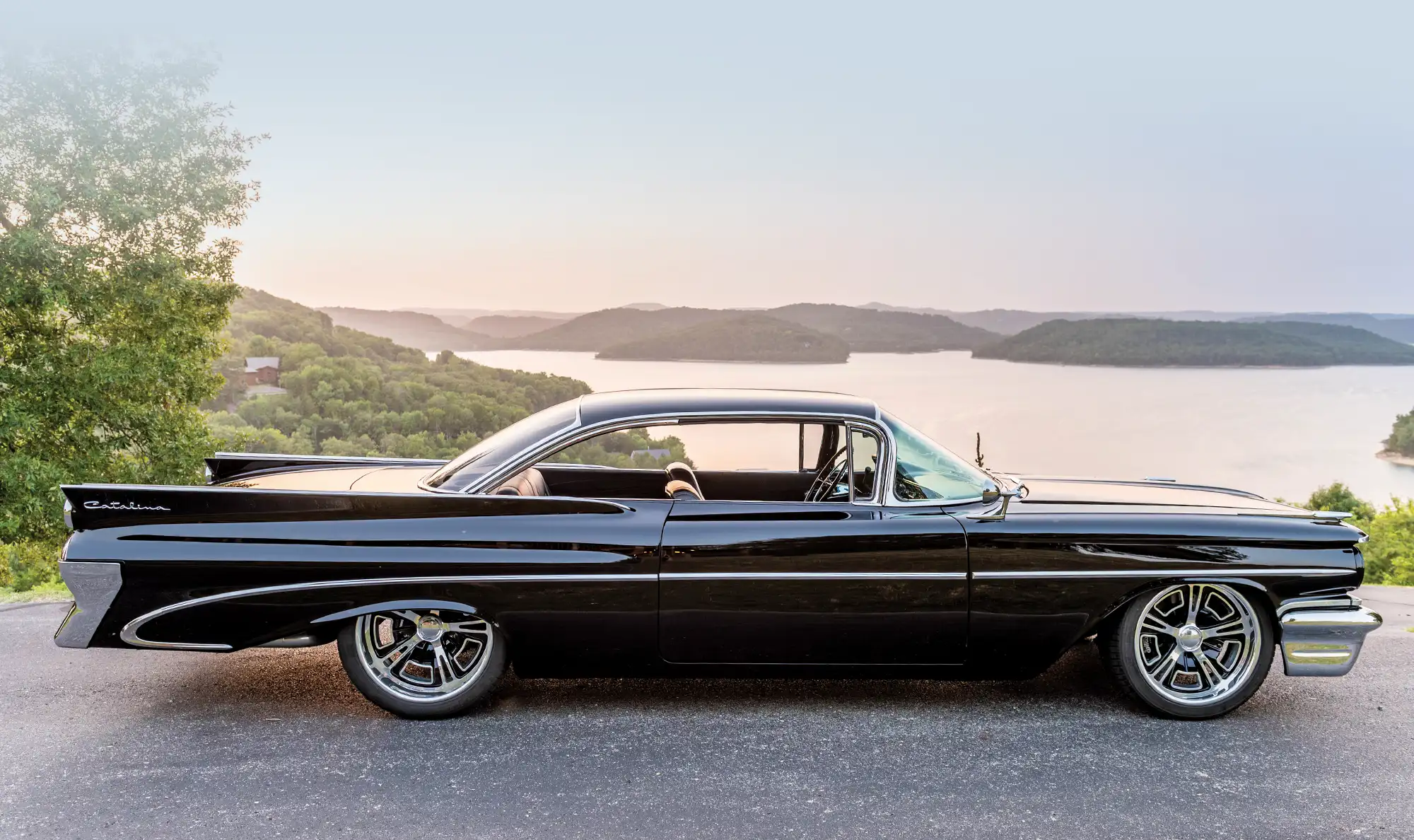
ike Hancho’s father got a 1959 Pontiac Catalina in Candy Apple Red when he was 16. Like many teenagers, he soon wrecked it. He dreamed of owning another one ever since, but it never worked out. That is, until one day when Mike was about 8 or 9. Mike vividly remembers the day his dad pulled in with a trailer and sat a copper-colored 1959 Pontiac Catalina on it. His dad shared the story behind it and promised that one day he would fix it like the one he had when he was 16. Mike didn’t know much about cars back then, but he loved the sound and feel of rumbling down the road in that Catalina.
Gettin’ Connected
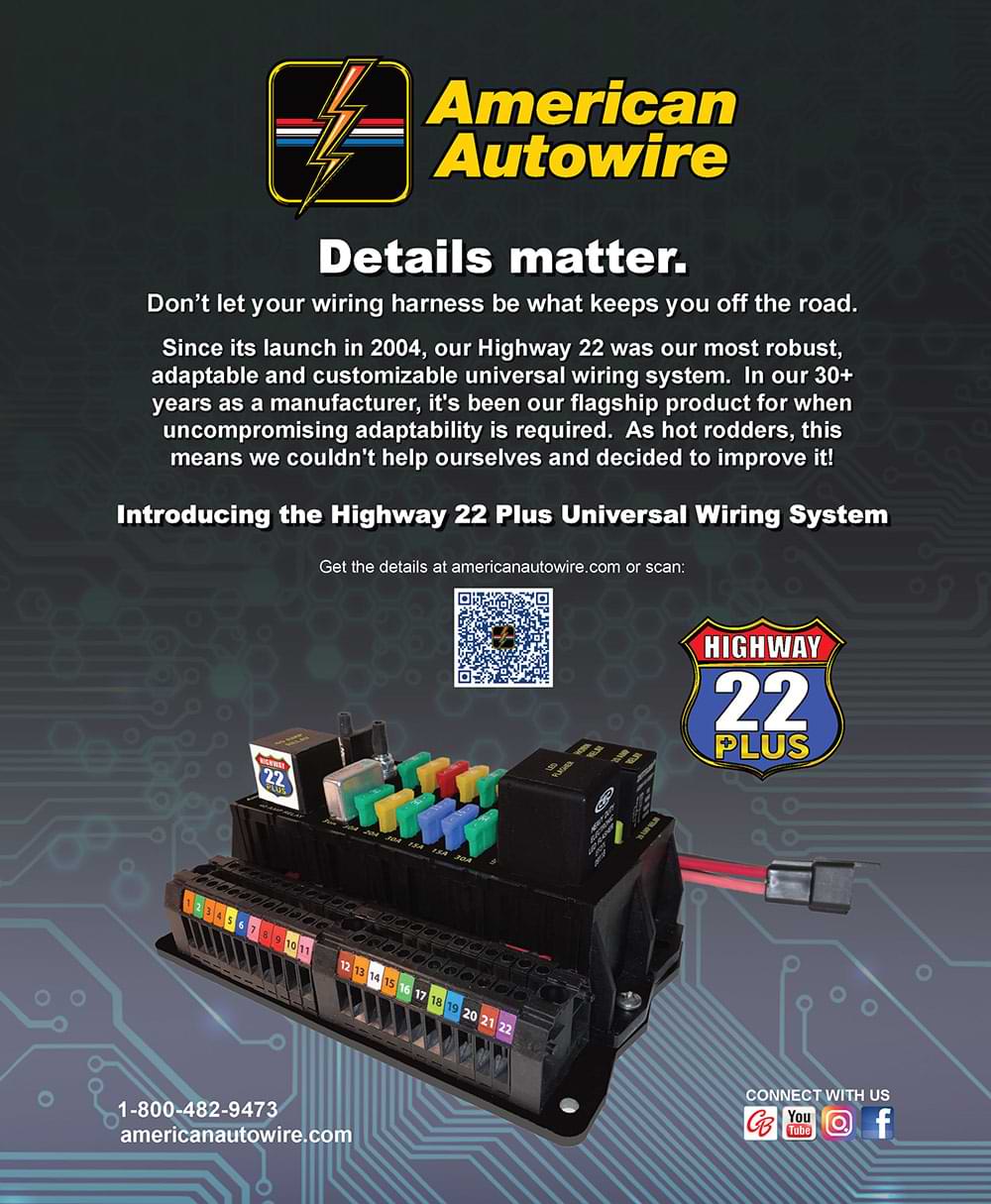
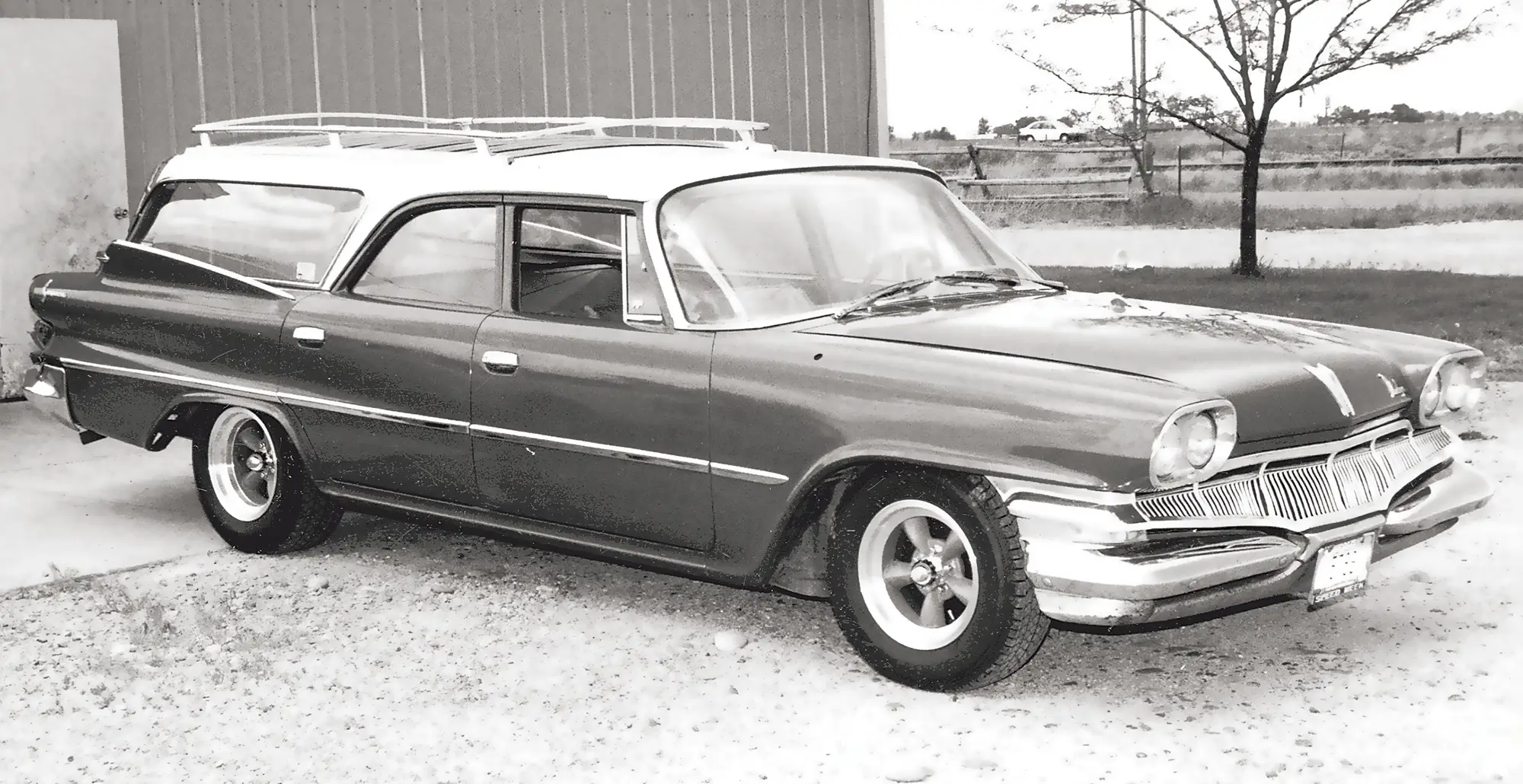
Photography by THE AUTHORidden in a dark corner of Modern Rodding’s super-secret Northwest Research and Development center (also known as the storage building where languishing project cars collect dust) is our 1960 Dodge Dart station wagon. Editor Brennan has dubbed it the magazine’s version of the Wagon Queen Family Truckster seen in National Lampoon’s Family Vacation, and after years of his verbal abuse about the lack of progress, we’ve decided to drag it into the sunlight and take the necessary steps to make it roadworthy once more. That first step is replacing the dilapidated wiring with a new American Autowire Highway 22 Plus kit.
Chrysler Corporation had a unique method of protecting the electrical system of its cars of this era. Rather than one central fuse block, there was a main circuit breaker and a number of inline fuse holders—all cleverly hidden to make finding them a challenge. By contrast, the replacement American Autowire has a 22-circuit panel with 16 fuse locations, one of which has a circuit breaker for the headlights. The hazard and turn relays are also fused with 20-amp micro fuses next to the micro relays.


 Photography by Jason Matthew
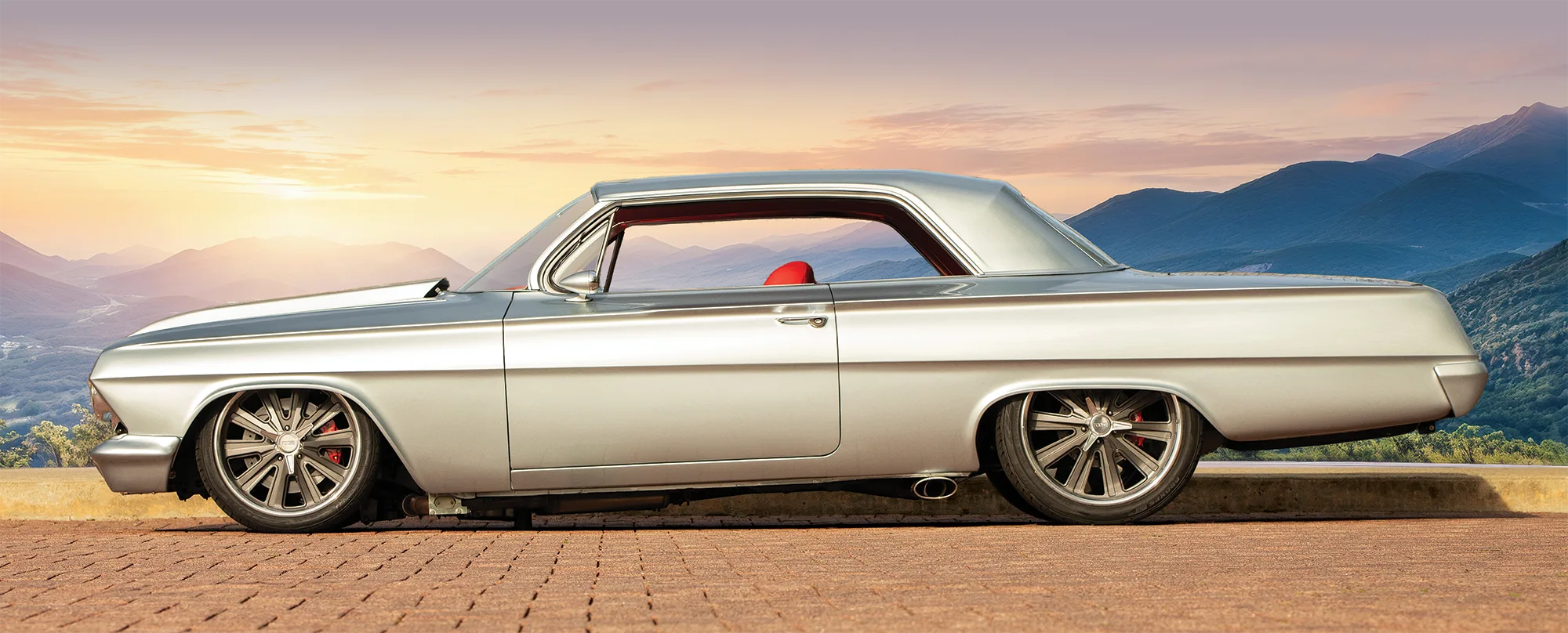
n the loud and stylish world of hot rods, the differences among manufacturers shape a unique culture of automotive enthusiasts. Before 1949, Ford reigned as the king of hot rods, captivating enthusiasts with its vintage styling and availability. However, by the time 1948 arrived, the tide had turned and Chevrolet emerged as the preferred choice for those building “modern” hot rods. This shift vividly illustrates the ebb and flow of automotive trends over the years. David Nilsen epitomizes the Chevy spirit, proudly owning a striking 1962 Chevy Impala hardtop, a stunning example of the era. But that brings us to the “war of words” on what’s more popular or better looking—the hardtop or the bubbletop. Well, that’s for each hot rodder to decide, but you’ll agree that David hit the mark with his 1962 Chevy Impala hardtop.
The primary distinction between the 1962 Chevrolet Bel Air bubbletop and hardtop models lies in the roofline. The bubbletop features a slim A-pillar, a thin C-pillar, and lacks a B-pillar, resulting in a rounded, greenhouse-like roof. In contrast, hardtops showcase a more traditional roofline with a thicker C-pillar and a formal roof that resembles a convertible top. This “convertible” top appearance endears the hardtop to its owners, as it is distinctive.



Edelbrock Rethinks the Performance Carburetor With its VRS-4150 Carburetor
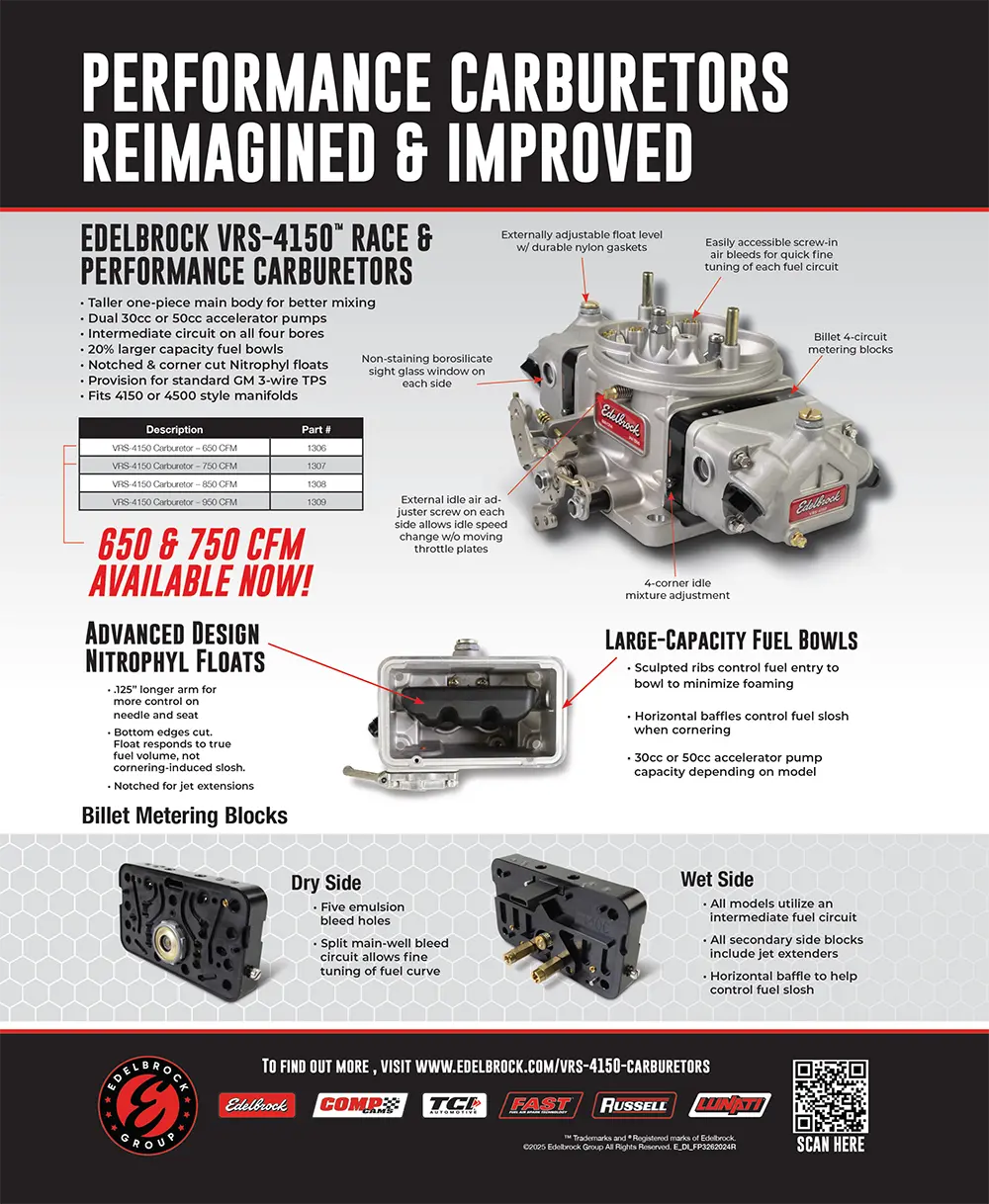
Photography & Videography By Ryan Foss Productionshile the popularity of EFI has grown exponentially in recent years as kits became more affordable, technology more advanced, and tuning abilities more user-friendly, it’s hard to imagine that a company with such a pedigree as Edelbrock would turn its attention back to the past with a completely redesigned four-barrel carburetor. But that’s exactly what they did with their new line of VRS-4150 race and performance carburetors. The argument for upgrading to EFI has been beaten to death, and there’s no denying its value in today’s hobby, but for all-out performance and ease of tunability, it’s hard to argue against the tried-and-true traditional carb. And for those of us who might be racing in a class where one is required, a better carburetor will always be well received.
Edelbrock’s experience with carburetors dates back to the very first Flathead that Vic Sr. and his team tuned on the company’s dyno. By the early 1970s Edelbrock not only sold Holley carburetors but also offered an on-site tuning service. From this experience Edelbrock created Holley upgrade kits and fully calibrated carburetors. When Colt Industries bought Holley, there was a parting of the ways and Edelbrock started working with Carter AFB carburetors. As a result, Holley started making intake manifolds and the competition was on. Eventually Edelbrock developed its own AFB-style carburetor with Magneti Marelli. This simple carb design has been installed on thousands of hot rods, muscle cars, street machines, and classic trucks over the years, filling a significant gap in ready-to-run carburetors. However, Edelbrock realized that while the Performer carb served that niche, there was another group still looking for a solution—the race and street performance enthusiasts. That’s where the VRS-4150 comes in.


 Photography by Luke Munnell
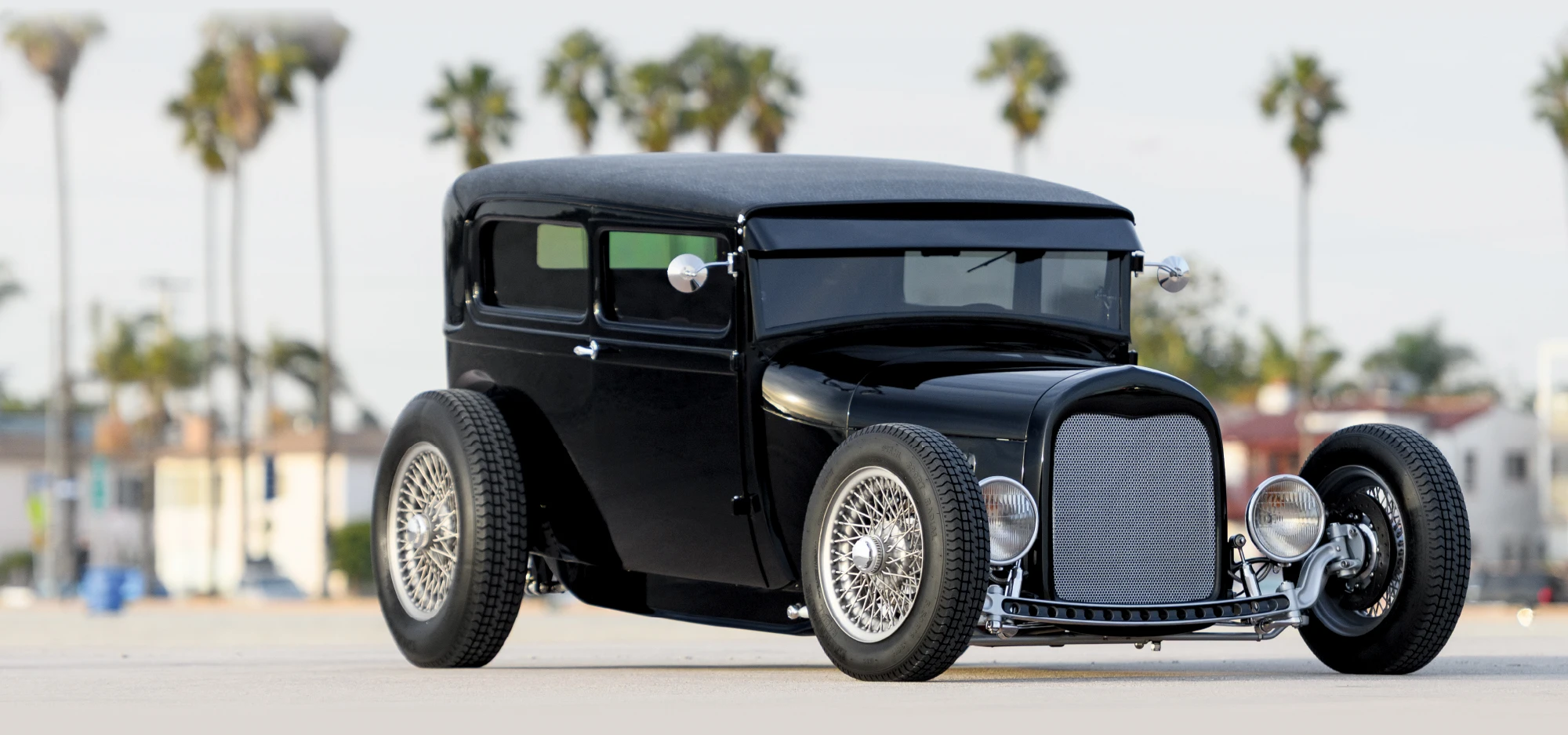
ord created the Model A many years ago, so when you hear that a hot rodder is the third owner of one of “Henry’s Ladies,” it’s significant. John Anderson of SoCal was introduced to his 1929 Ford highboy sedan, which you see here, by his wife. John was in search of a new project, something a bit different. His wife, Kim, discovered the sedan for sale in Northern California.
The Andersons are the third owners, having purchased the Model A from the second owner, who acquired it from the original owner’s children. The sedan was also restored in the ’70s by the original owner’s family for their dad. It had been stored for many years, with the odometer showing 52,000 original miles. In fact, the vinyl top was in such excellent condition that John left it intact, replacing only the two vinyl end strips.


 The middle of June in SoCal is reserved for the L.A. Roadsters Father’s Day Show & Swap Meet, where hot rodders can gather and talk or hunt for that missing set of cowl lights.Photography by THE AUTHOR
t’s Father’s Day weekend, and in Southern California that means you can count on spending some time at the Pomona Fairplex for the L.A. Roadsters Show & Swap. As if on cue, the weather was sunny and pleasantly warm, prompting the crowd to wear plenty of sunscreen and large-brimmed hats alongside event T-shirts, a tradition that dates back nearly 50 years.
Thursday is a setup day, but as usual, swappers were present, and a lot of selling and trading was taking place. Friday marked the first official day of the 59th L.A. Roadsters Father’s Day Show & Swap Meet, featuring nearly 600 swap exhibitors in full force and a flurry of activity. There were about 300 roadsters and over 500 specialty cars (pre-1985) on display, making for an enjoyable sightseeing tour through countless hot rods. As always, Saturday serves as the second day of the two-day show. The activity in the swap spaces slowed down, but a majority of the roadsters and specialty cars arrived, drawing a good crowd of spectators.




 Photography by THE AUTHOR
hile on the road recently for Modern Rodding, our journey took us to ABS Classic Muscle Car Restorations in Manchester, New Hampshire, to explore one of their latest project builds being finalized for the new season. Not every day do you get to witness a completed bare metal masterpiece, the 1969 Chevrolet Camaro featured in our pages, and you appreciate all the intricate details infused into it. Thanks to longtime client Pat Floyd of Chester, New Hampshire, ABS had the opportunity to elevate one of GM’s most iconic muscle cars. Shop owner Jay Doerfler masterfully incorporated the right style and innovation into the mix. Collaborating directly with team member Nicole Boisvert, the duo achieved a flawless balance of subtle design modifications and performance, ensuring the car stands out when it hits the scene.
When undertaking a build of this magnitude, true dedication to custom fabrication is essential when deciding to refine the lines of such a revered model. Let’s delve deeper into what makes this 1969 Camaro so special. Once the car was completely disassembled, it was cleaned thoroughly to prepare the bare shell for its new front and rear suspension.


View Index
- AFFORDABLE STREET RODS
- AMERICAN AUTOWIRE
- AMSOIL
- ART MORRISON ENTERPRISES
- AUTO METAL DIRECT
- AUTOMETER PRODUCTS
- AUTOMOTIVE RACING PRODUCTS
- BALL’S VINTAGE GLASS
- BOWLER PERFORMANCE TRANSMISSIONS
- CLASSIC INSTRUMENTS
- CLASSIC PERFORMANCE PRODUCTS
- CLASSIC PERFORMANCE PRODUCTS
- COKER TIRE
- CUSTOM AUTOSOUND
- DAKOTA DIGITAL
- EATON DETROIT SPRING, INC.
- EDELBROCK
- FITECH EFI
- FLAMING RIVER INDUSTRIES
- FLAMING RIVER INDUSTRIES
- GOODGUYS ROD & CUSTOM ASSOCIATION
- HEINZMAN STREET ROD SHOP
- HEMMINGS
- HOT HEADS RESEARCH
- IDIDIT
- LOKAR
- LOKAR
- NATIONAL STREET ROD ASSOCIATION
- NOTCHEAD FASTENERS
- PAINT OVER RUST PRODUCTS
- POWERMASTER PERFORMANCE
- PURE CHOICE MOTORSPORTS
- RJAYS SPEED SHOP
- SALTWORKS
- SCHWARTZ PERFORMANCE
- SCOTT’S HOTRODS
- SPECIALTY AUTO PARTS USA, INC.
- STEELE RUBBER PRODUCTS
- THAT’S GREAT NEWS
- TRIPLE CROWN OF RODDING, LLC
- VINTAGE AIR
- WHEEL SMITH
- WILWOOD ENGINEERING


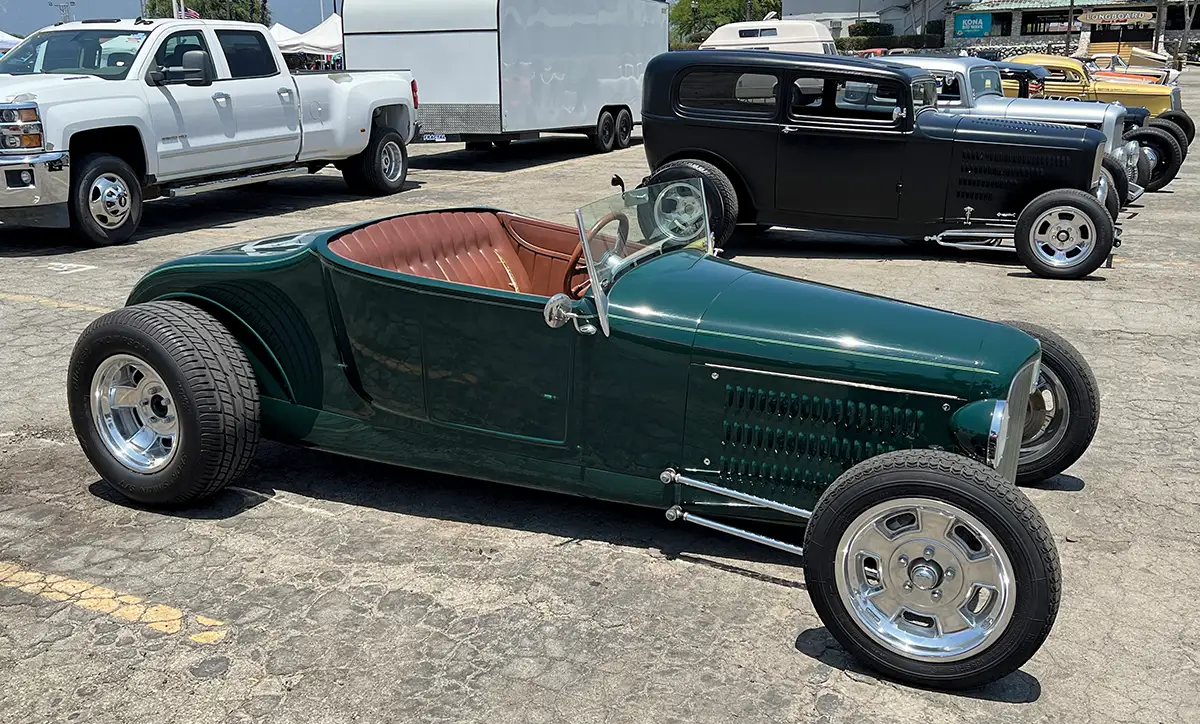 The track roadster retains many original parts, with two notable changes being the wheels and tires. The Apple Green–painted early Ford steelies, outfitted with caps and rings, have been replaced with Halibrands (Holley). The rubber that was once Pirelli in the front and Firestone in the rear is now modern rubber (PN 135SR15) in front and Mickey Thompson Sportsman S/T (PN P275/60R15) in the rear.
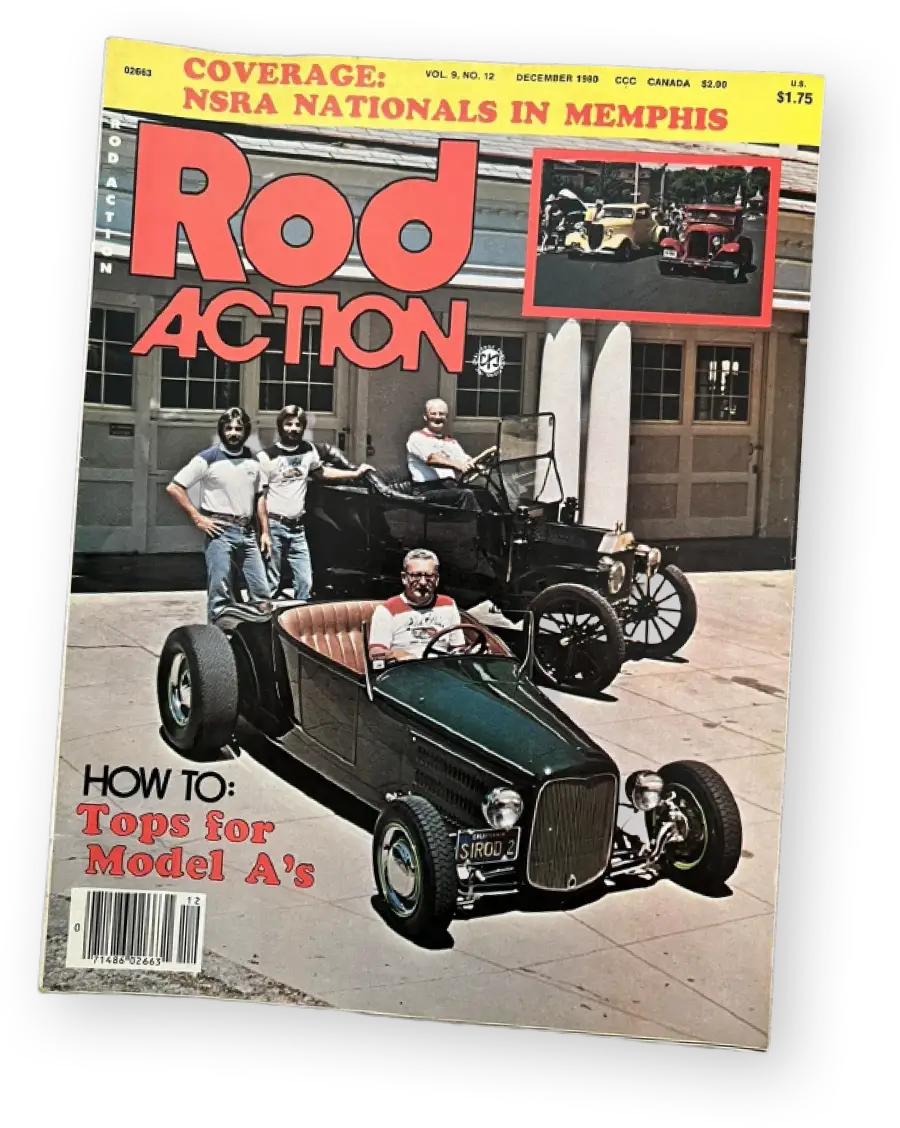 The Dec. ’80 Rod Action cover showcases the Model T and the 1927 track roadster. Jim “Jake” Jacobs restored the Model T for his father, Jake, who is seated in the T, alongside the 1927 Ford track roadster crafted by Pete and Pete, a father-and-son duo, with the dad seated.By Brian brennan
found myself wandering the Pomona Fairplex just as the 59th Los Angeles Roadsters Father’s Day Show & Swap Meet was about to begin, when I ran into an old friend. The first time I met “SIROD 2,” the 1927 Ford track roadster originally built by Pete Chapouris II and Pete Chapouris III in 1978, was early in my career as a magazine editor. Pete III, who is now well known for Pete & Jake’s Hot Rod Parts and SO-CAL Speed Shop, called me and asked me to come over because he had a nifty little roadster to show me. The track roadster emerged from a conversation of a father-and-son noontime bench-racing session. I had heard about the car from its appearance in Hot Rod, but now I had my chance.
I remember photographing SIROD 2 for the Dec. ’80 cover of Rod Action. Our paths would intersect one more time in 2004 when the car was featured as a “Milestones” story in the Mar. ’04 issue of Street Rodder. The track roadster made its debut in the Jan. ’79 issue of Hot Rod with words by the one and only Gray Baskerville (“Yer Ole Dad”).
