






Where Hardware
Meets Horsepower
Custom Stereo
Installation
Exhaust & Engine Compartment
Where Hardware Meets Horsepower
Exhaust & Engine Compartment
Custom Stereo Installation

Preview Issue







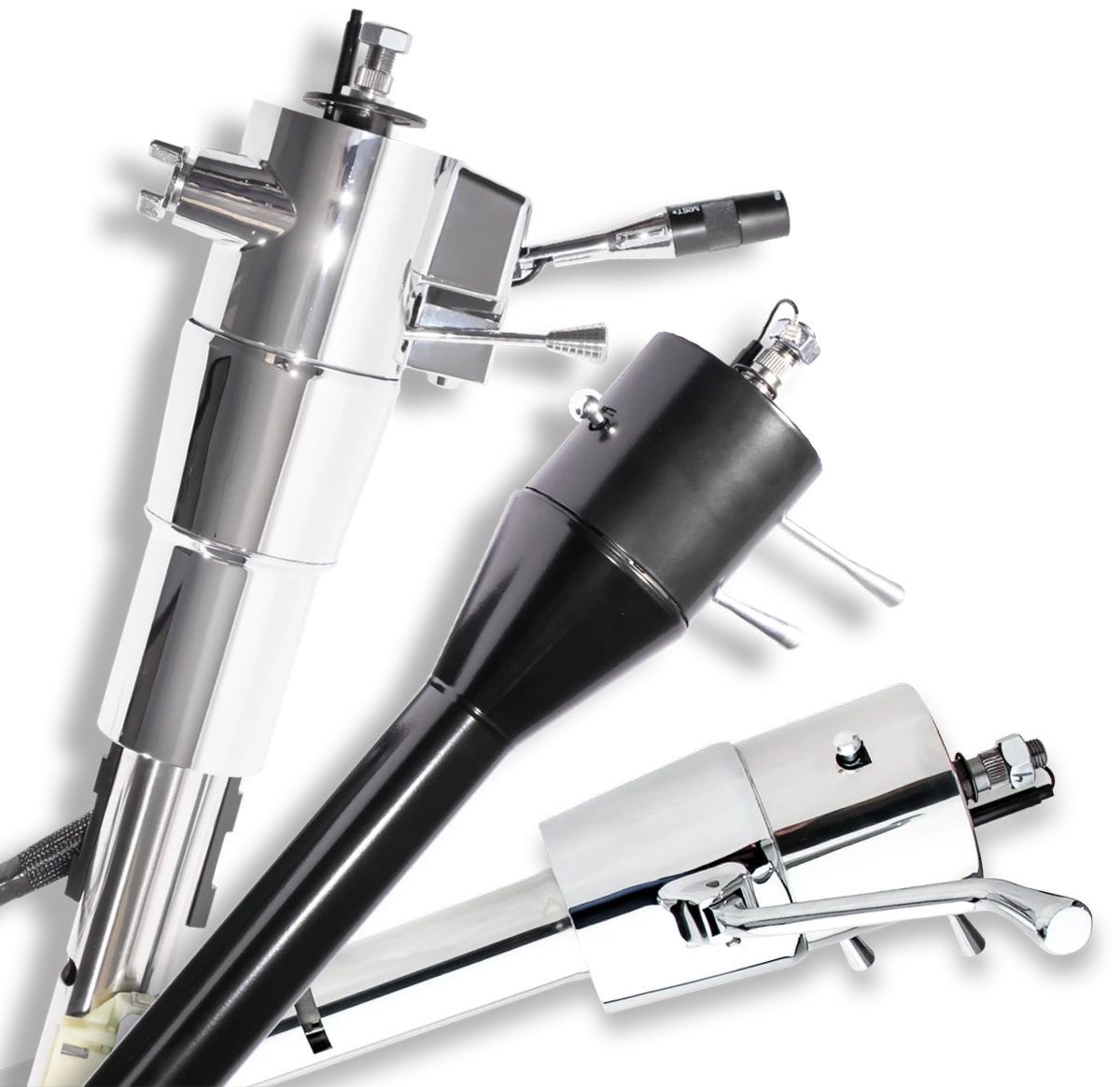
Experience precision and style with Flaming River steering columns. Elevate your driving experience with our cutting-edge technology and uncompromising quality. Transform your vehicle into a masterpiece of control and comfort. Check out Flaming River steering columns and steer your journey with confidence. Made in the USA!

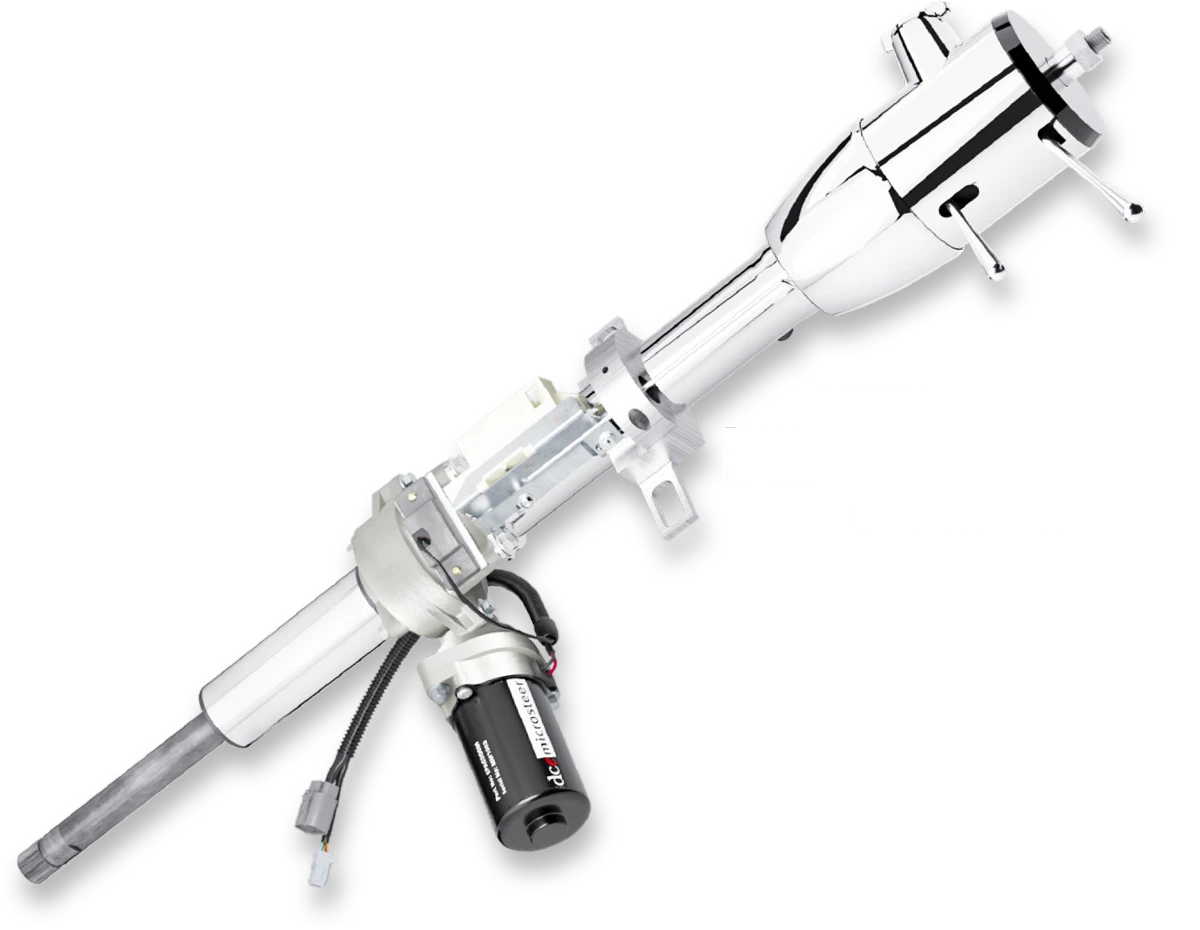
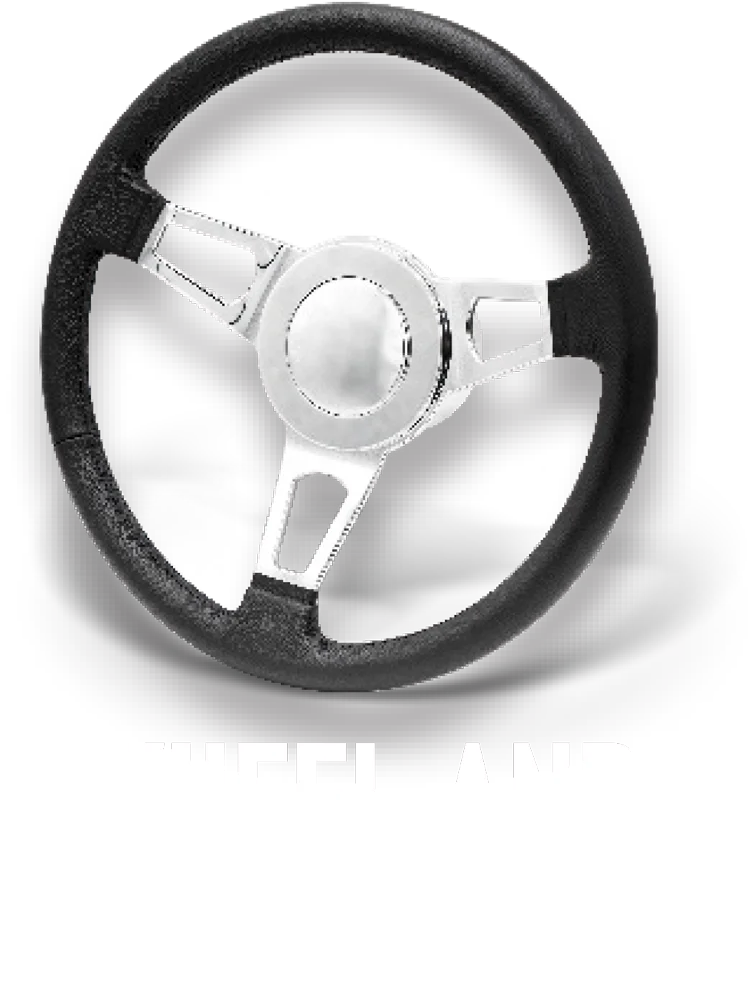
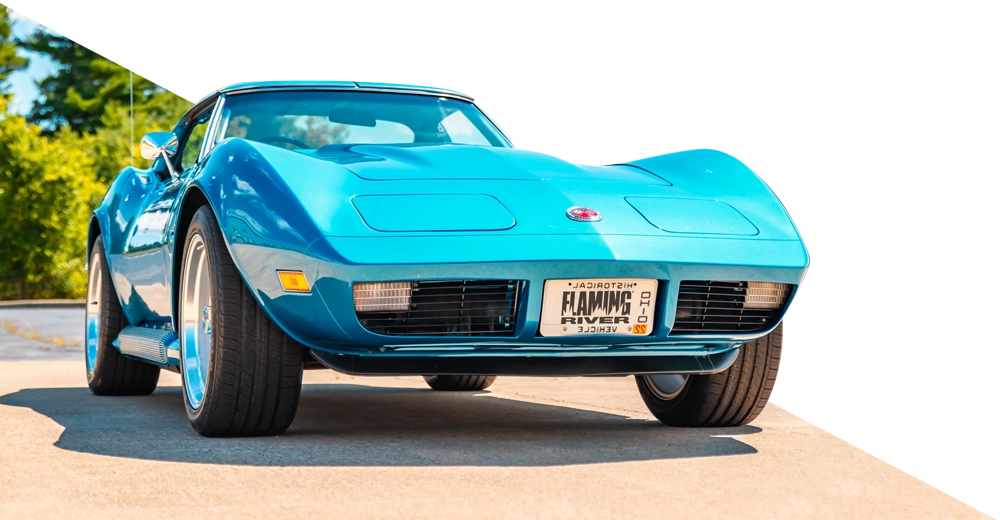
The Microsteer Electric Power Assisted Steering system is integrated into our Flaming River Tilt Column and can be used with the original 68-82 Corvette manual steering box. It’s a Direct Fit!

Experience precision and style with Flaming River steering columns. Elevate your driving experience with our cutting-edge technology and uncompromising quality. Transform your vehicle into a masterpiece of control and comfort. Check out Flaming River steering columns and steer your journey with confidence. Made in the USA!

The Microsteer Electric Power Assisted Steering system is integrated into our Flaming River Tilt Column and can be used with the original 68-82 Corvette manual steering box. It’s a Direct Fit!
The Microsteer Electric Power Assisted Steering system is integrated into our Flaming River Tilt Column and can be used with the original 68-82 Corvette manual steering box. It’s a Direct Fit!





Brian Brennan
Industry News
New Products
Brian Brennan
Those Supporting Our Industry
Brian Lutz’s 1955 Chevy
By Scotty Lachenauer, Photography by the Author
Paul Tusini’s 1967 GTO
By Scotty Lachenauer, Photography by the Author
Chuck Savoca’s 1933 Ford Coupe
By Brian Brennan, Photography by NotStock Photography
Jake McKiddie’s 1961 Coupe De Ville
By Grant Cox, Photography by the Author

By Brian Brennan, Photography by the Author
Videography by Ryan Foss Productions
By John Gilbert, Photography by the Author & Brian Brennan
Our 1965 Mustang Fastback Gets a Silver Sport Transmissions Swap Assist
By Evan J. Smith, Photography by Ryan Foss, Videography by Ryan Foss Productions
The Nuts and Bolts of Holding Things Together
By Ron Ceridono, Photography by the Author and Brian Brennan
Project 1970 Chevelle Exhaust Wrapup & a Few Other Tidbits
By Ron Covell
Giving a Hot Rod a Tune-Up
By Ron Ceridono, Photography by Brian Brennan
Photo by Scotty Lachenauer








BRIAN BRENNAN
bbrennan@inthegaragemedia.com
TIM FOSS
tfoss@inthegaragemedia.com
YASMIN FAJATIN
yfajatin@inthegaragemedia.com
SARAH GONZALES
sgonzales@inthegaragemedia.com
ROB MUNOZ
rmunoz@inthegaragemedia.com
PATRICIA LUDI
pludi@inthegaragemedia.com
Gerry Burger, Tommy Lee Byrd, Ron Ceridono, Michael Christensen, Ron Covell, Grant Cox, Kev Elliot, John Gilbert, Ken Gross, John Jackson, Chadly Johnson, Barry Kluczyk, Scotty Lachenauer, Ryan Manson, Josh Mishler, Dale Moreau, Todd Ryden, Jason Scudellari, Chris Shelton, Tim Sutton, Chuck Vranas — Writers & Photographers
Travis Weeks Advertising Sales Manager
Patrick Walsh Sales Representative
ads@inthegaragemedia.com
ModernRodding.com
AllChevyPerformance.com
ClassicTruckPerformance.com
InTheGarageMedia.com
subscription@inthegaragemedia.com
(714) 985-9171
InTheGarageMedia.com “Online Store”
For bulk back issues of 10 copies or more, contact store@inthegaragemedia.com


Copyright (c) 2026 In The Garage Media, Inc.
Printed in the USA.
The Modern Rodding trademark is a registered trademark of In The Garage Media, Inc.


 By Brian Brennan
o, if you’re reading this editorial (thank you), then you are a hot rodder, car enthusiast, gearhead, or known among family and friends by some other car-related moniker. Being a car fan deeply enamored with cars is a sacred duty not to be taken lightly.
And, if you’re reading this, you’re probably stalling because you have an unfinished project in front of you. If you are sitting in your garage, reading a car magazine, and refusing to throw it away, then you have a deep-seated aversion to discarding anything and possess hoarding issues, especially with car “stuff.” Fortunately, that’s OK; it’s even considered a virtue in “our” world. Welcome to my world.
Did you know that on November 11, 2026, Route 66, affectionately called the Mother Road, will celebrate its 100th anniversary? It was built to connect the east (Chicago) with the west (Santa Monica), along with many cities in between, enabling faster, broader growth in both population and commerce. I remember driving on it in my roadster or a friend’s coupe several times. Back in the 1970s, much of Route 66 was still intact. The original two-lane highway was a lot of fun to drive and gave you the chance to enjoy many small towns, with great tourist attractions like the “largest ball of string” or other quirky sights, as well as some of the best local food you’ll ever taste. Traveling alone was peaceful and a perfect time for reflection. Add a buddy and it becomes even more fun. When two or three hot rodders team up and “hit the road,” well, life just doesn’t get any better. June 27, 1985, marked the end of an era, as Route 66 officially stopped being a U.S. highway. The Eisenhower Highway System, officially called the Interstate Highway System, was created in 1956 to replace unsafe roads and was finished in 1992. Interestingly, it’s those “unsafe” roads that many hot rodders enjoy driving on. Oh well!
 BY BRIAN BRENNAN
 2026 TMI TRIM Road Tour GNRS Winner
The winning vehicle was judged and personally selected by Jason Mulligan and Marcel Venable of Auto Revolution, who reviewed a top-tier lineup of builds before choosing the winning Bel Air for its flawless execution, innovative interior design, and undeniable presence on the show floor.
The Bel Air was prominently showcased at the BluePrint Engines booth, quickly becoming a highlight for enthusiasts, builders, and industry pros alike. While the exterior set the vibe under the SoCal sun, it was the outstanding interior craftsmanship from TMI Products that secured its place as the Road Tour’s first winner.
The interior was finished in premium red Apex leather, blending modern performance style with timeless elegance. TMI Pro-Classic Bucket Seats in a sleek Sport design anchor the cabin, offering a simple yet refined look that flows seamlessly throughout the entire interior. The subdued design emphasizes precision, balance, and attention to detail rather than excess—an intentional choice that resonated strongly with the judges.

The mount accommodates multiple Group 48 batteries and features an integrated bolt-on spot for a battery shutoff switch, reducing clutter and removing the need for custom brackets. To verify its real-world performance, Bowler tested the mount through repeated high-load cycles with a fully weighted Group 48 AGM battery, simulating extreme lateral forces often encountered in aggressive track and autocross situations—all without showing signs of fatigue, cracking, or deformation.

By SCOTTY LACHENAUER Photography by THE AUTHOR

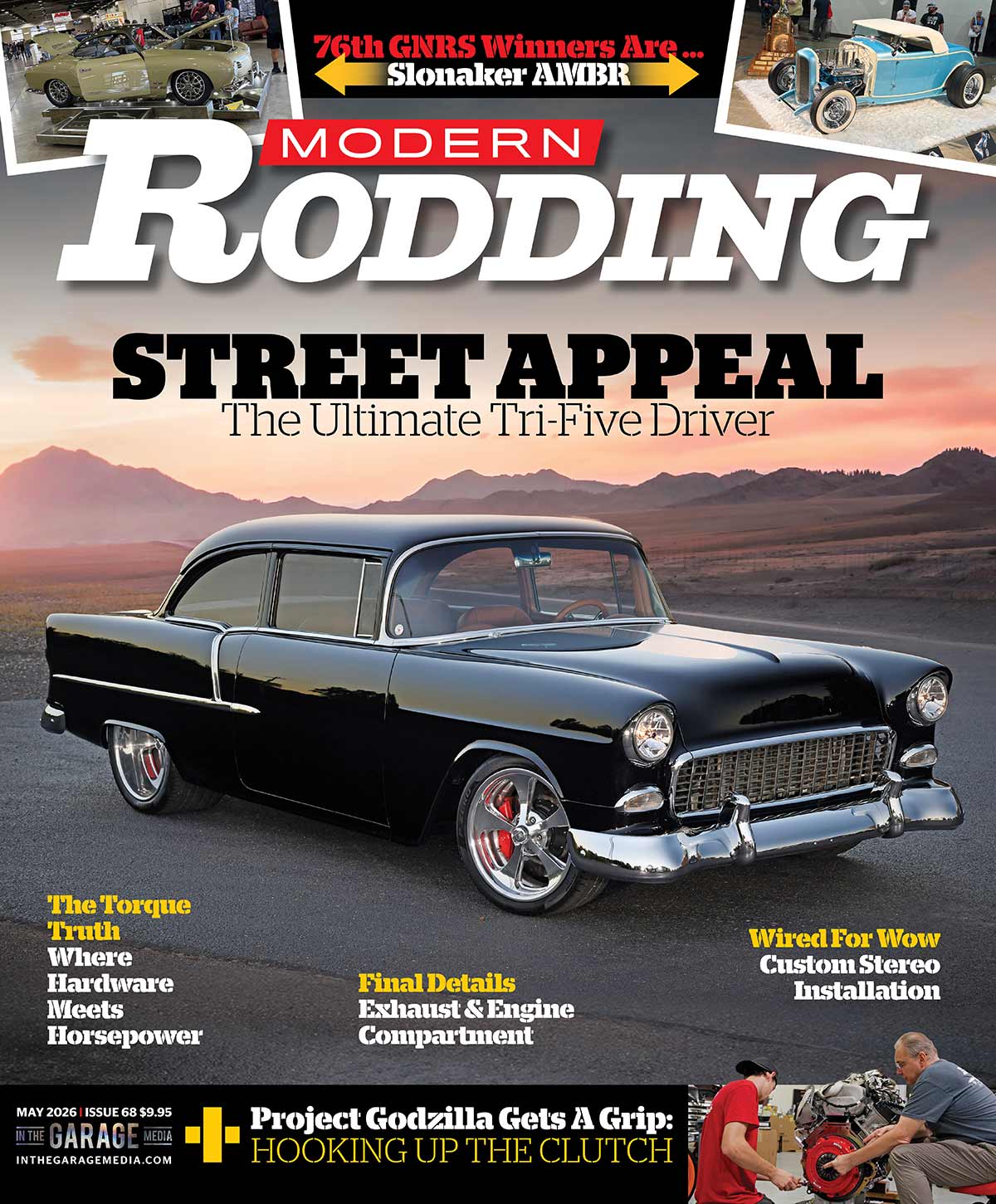
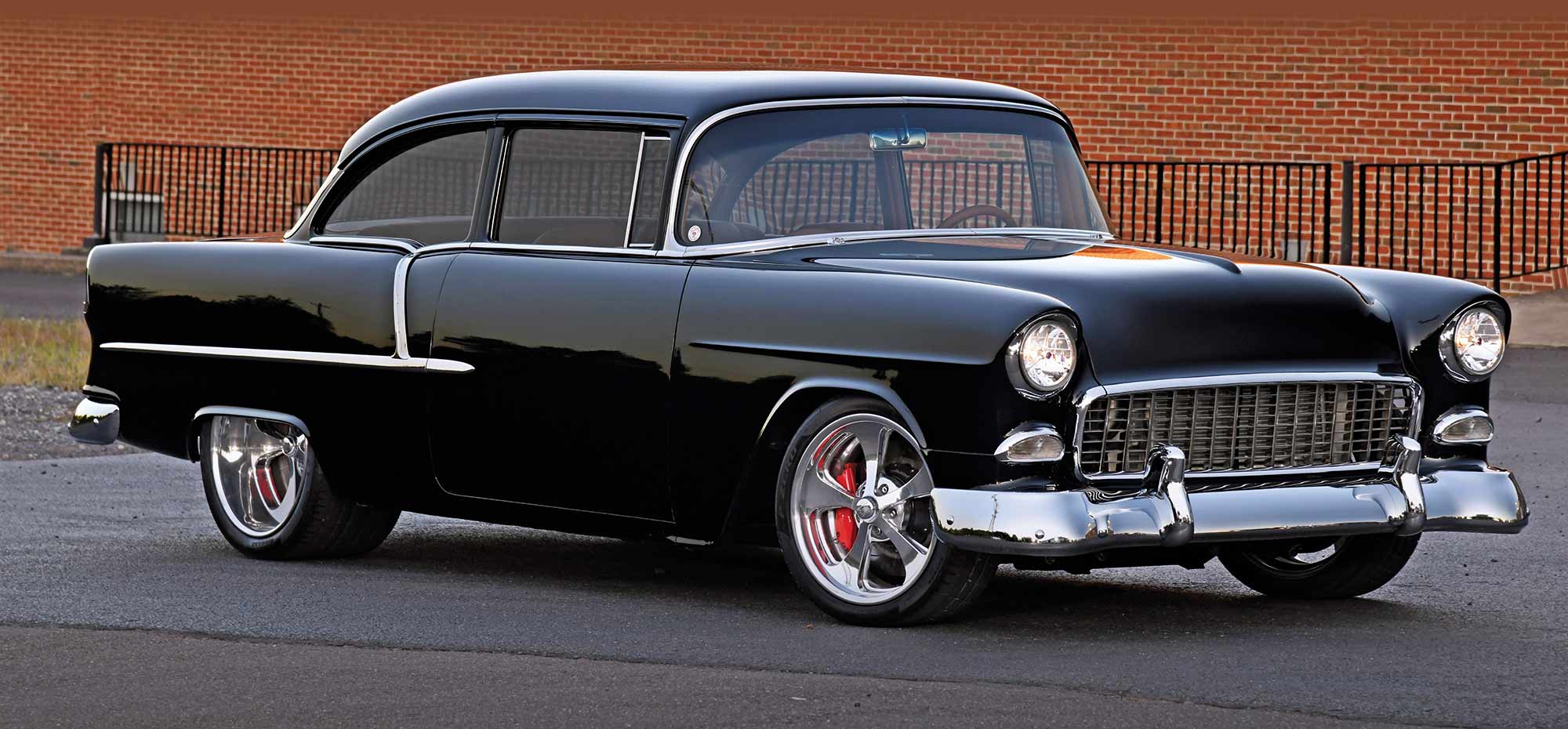
here’s something about the color black that draws the eye into its depths. Hot rods painted in that hue naturally have a menacing appearance, tending to radiate an ominous aura of both death and evil. On the other end of the spectrum, black can symbolize elegance and power, which definitely boosts its popularity in automotive culture and ultimately in modern street rod design and fabrication. When a designer is unsure what color to coat their ride in, black is that one true option that always seems to work in the rodder’s favor, consistently engaging the public’s senses on every level.

 Photography by RYAN FOSS VIDEOOGRAPHY by RYAN FOSS PRODUCTIONS
ot rod engine swaps are nothing new, and if you’ve tried one, you’ll agree that there’s no such thing as easy. There’s an art to fitting engines and drivelines into cars and trucks that never came with them from the factory. These projects will undoubtedly challenge your skills as a mechanic, engineer, and fabricator. Each one brings its own set of challenges, but once you finish, there’s no better feeling of accomplishment.
In the case of our Modern Rodding 1965 Mustang Fastback, we’re taking it a step further by adding a Roadster Shop chassis along with the 7.3L Ford Godzilla and the Silver Sport Transmissions (SST) TREMEC TKX swap kit. The Godzilla should significantly motivate our lightweight, manual transmission–equipped 1965 Fastback, and we’ll pair that with the fun only a manual transmission can deliver. The First-Generation Mustang has eye-catching lines, and with a modern powertrain, suspension, and brakes, we expect it to grip and rip.





By SCOTTY LACHENAUER Photography by THE AUTHOR

hen Paul Tusini learned his health was worsening and he needed medical treatment for the third time, the Boxford, Massachusetts, resident decided it was finally time to stop delaying and truly work toward fulfilling a childhood dream. “When I was 11, I saw a 1967 GTO for the first time and fell in love with its design. I immediately wanted one for myself. Since that moment, it’s been one of my lifelong dreams,” Paul states.
However, like many of us, life can sometimes get in the way of youthful dreams. First came school, then a career, and raising a family; these always took priority in Paul’s life. After paying off the house and helping the kids start their own lives, Paul finally found time to do something for himself. He never forgot about that Poncho fantasy ride that lingered in the back of his mind. Now Paul was ready to move forward and get that GTO convertible he always wanted.
 Photography by THE AUTHOR, BRIAN BRENNAN & COURTESY OF ARP
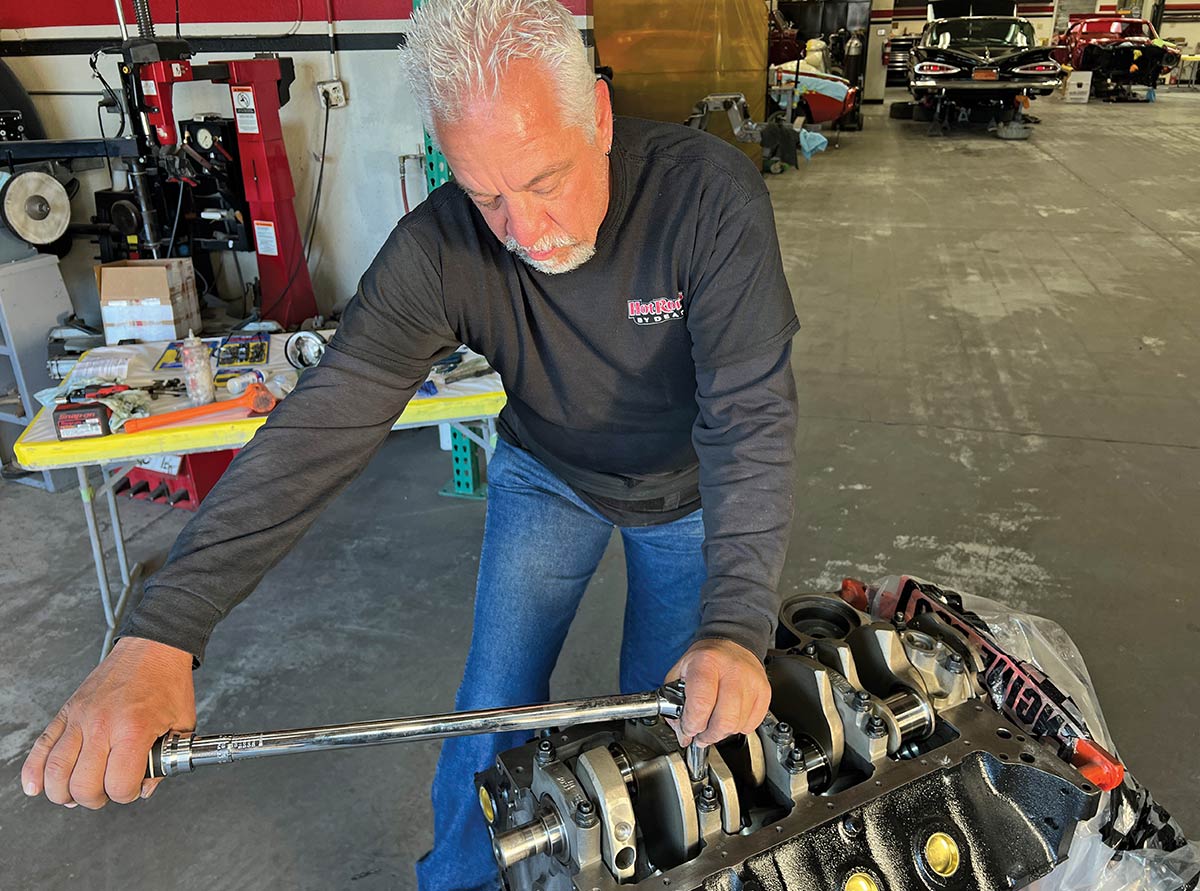
or those who have been playing with hot rods as long as the editorial staff of Modern Rodding, there are countless tales of woes resulting from youthful ignorance. Take the time a buddy of an unnamed impressionable lad used all-thread to replace two missing main bearing bolts in a Flathead Ford. The results were not pretty. Gary Holzapfel also bore witness to fastener failure; seeing catastrophic failures in various race engines, albeit for far less ridiculous causes than what a clueless kid created. Holzapfel saw a need for quality fasteners and used his aerospace background to create Automotive Racing Products (ARP). Today, ARP’s line of products includes virtually all the fasteners found in an engine or driveline, ranging from high-quality OEM replacement parts to specialty fasteners used in every form of racing on land or water.
One of the reasons for ARP’s success is the complete control of the manufacturing process and the use of the best materials. ARP notes, “The alloys employed in manufacturing fasteners come in various grades; ARP uses only the purest grades, which are superior to commercial and aircraft-quality material. All heat-treating is done in-house (as are all manufacturing operations) to ensure reaching the proper strength level, with special racks used to guarantee precise, even penetration. Threads are rolled (not cut) after the heat-treating process for superior (up to 20 times better) fatigue life.”


 Photography by NOTSTOCK PHOTOGRAPHY
here are chopped-top hot rods, and there are “CHOPPED” top hot rods. Chuck Savoca of North Carolina has most assuredly built the latter. To truly experience the radical 7-inch top chop, you must walk up beside this fenderless coupe, also fully channeled over the stock framerails.
Chuck built this hot rod; although he acquired the body from Studleys Independent Rods, the top was already “cut” (top chop) a full 7 inches. As for “chopping a top,” it is neither for the faint of heart nor for those lacking skills. For those of us who have chopped a top or two (though I am not in that esteemed fraternity), there are different styles: the “square top traditional cut” (like on a Model A, where the roof is brought straight down) or the “turret top traditional cut” (seen on 1933-40s Fords). Then, there’s the aggressive “competition” cut that slants the windshield. And, my hot rod friends, that is what we have here. (Apologies to my mentor Tex Smith, who taught me about chops, although he quickly realized I was better suited to taking pictures than wielding a hacksaw or—look out!—a cutting torch. Tex always told me it was, “… best to understand your limitations.”)
 PHOTOGRAPHY COURTESY OF ROADSTER SHOP
n previous articles, we’ve covered many details of this exceptional 1970 Chevelle built by Roadster Shop. This time, we’ll focus on some of the finishing touches that add just the right amount of sparkle. Many exhaust systems end with a polished round tip or a commercially available rectangular profile. These can look good, but the goal was to elevate this detail in a unique way. The team decided to machine custom exhaust tips from solid stainless steel—no small feat.
The exhaust tips were designed in CAD, and a test piece was 3-D–printed in polymer to verify size, shape, and fit. After passing all tests, the final parts were produced in metal. The design’s complexity required that each tip be machined in two parts, allowing the inner section to be hollowed. Holding these thin-wall parts during machining is challenging, so bosses were added on the sides of each piece to securely attach them to a machining fixture. After the shapes were fully machined, the bosses were removed and smoothed.
The parts were welded along the centerline and, after smoothing the joints, they appear as a single solid piece of metal. Once the tips were positioned and mounted, the valence panel under the bumper was scalloped to match the shape, with the edge of the opening flared and radiused. As shown in the photos, this creates a very sleek look for the ends of the exhaust pipes that blends smoothly with the valence panel.


 “Build it and they will come.” This isn’t a baseball field in Dyersville, IA, but it is a hot rodder’s “Field of Dreams” in Pomona, CA. Photography By THE AUTHOR Videography By Ryan Foss Productions
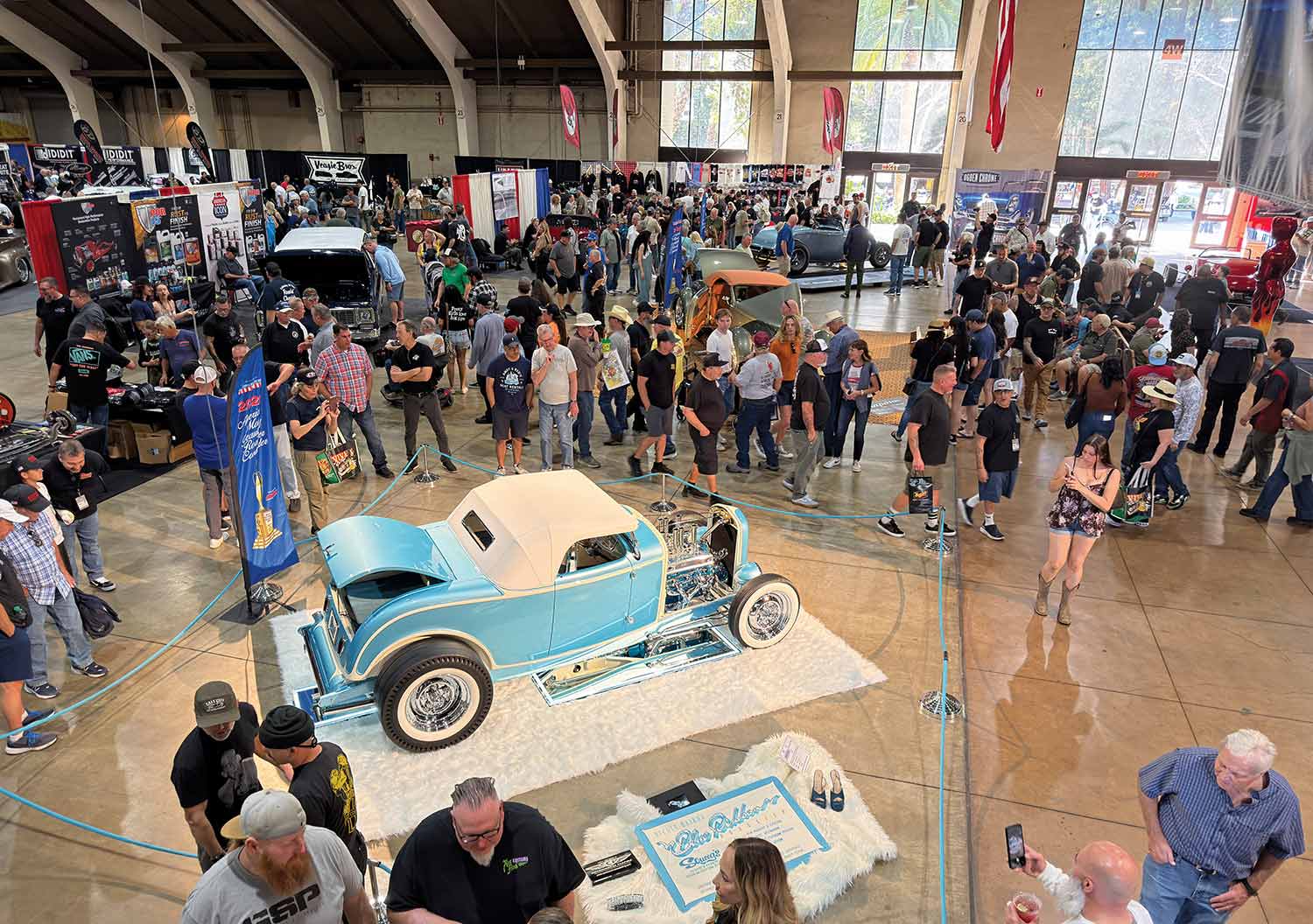
ot rodders “bench race” every year around this time. During winter or indoor car show season, any hot rod fan would love to go to sunny Southern California where they should spend three days at the Fairplex in Pomona, home of the Grand National Roadster Show (GNRS). Known as the “Grand Daddy of Them All,” this indoor car show is not only impressive but also features a large outdoor event that attracts Southern California’s best hot rods in all makes, models, colors, and styles. Besides being one of the largest indoor car shows worldwide, the event also hosts the Grand Daddy Drive-In. Over 900 additional cars will be displayed inside the buildings and around the event. Many of these cars are award winners from previous years.


By GRANT COX Photography by THE AUTHOR

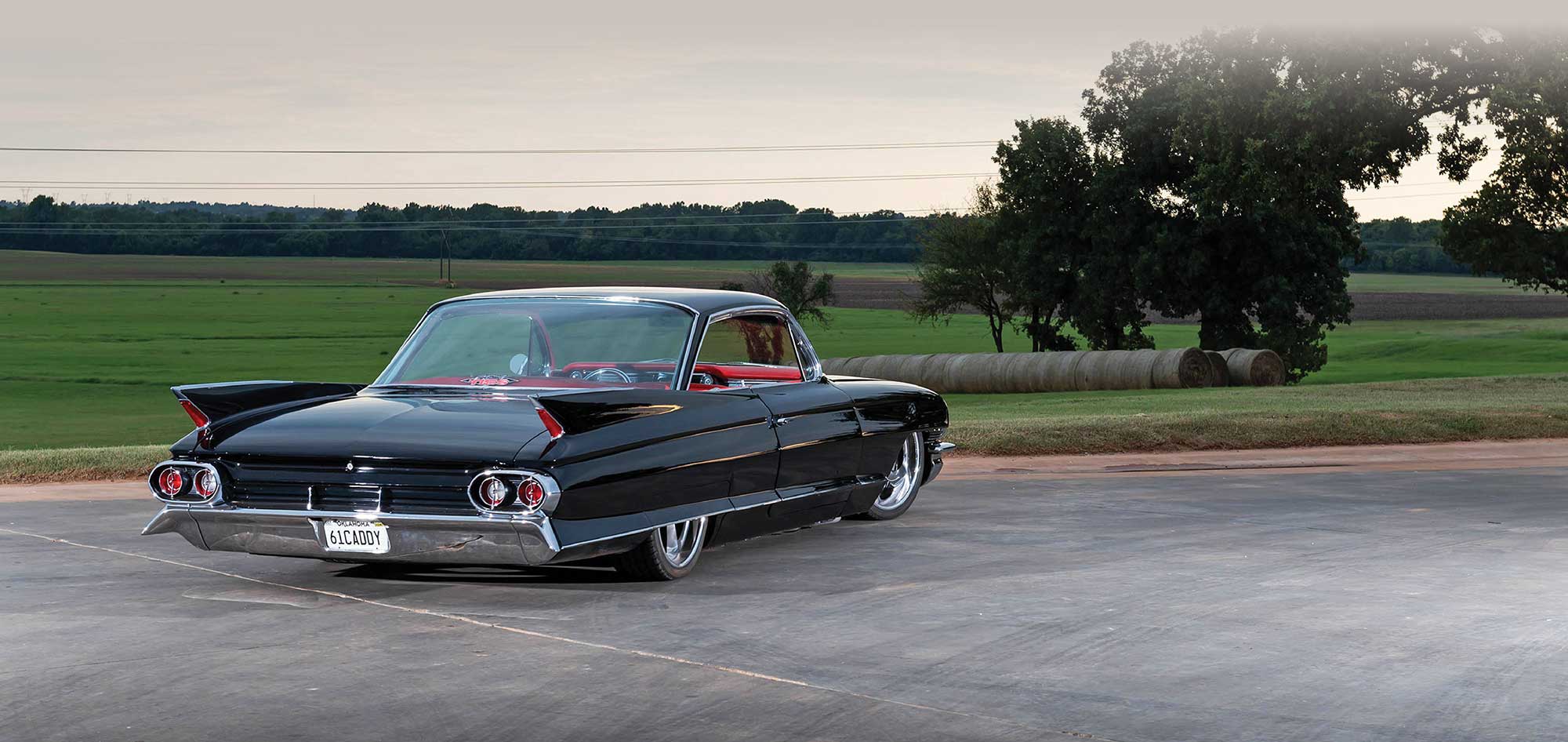
ack in 2002, 22-year-old Jake McKiddie was working on custom projects in his parents’ garage. Among those early builds was a 1961 Cadillac Coupe De Ville, a symbol of American luxury and style. It wasn’t Jake’s car at the time, but he spent so many hours working on it that he fell completely for it. Before the car left his life, Jake told the owner, “If you ever sell it, I want first shot.” For a young builder, it was more of a dream than a plan. But the seed was planted.
Fast-forward over 20 years and out of nowhere Jake receives a message from the same owner. He was moving to San Antonio and was finally ready to sell the Cadillac. Without hesitation, Jake hooked his body-dropped 2021 Silverado dually, fresh off the SEMA floor and sitting on 30-inch Forgiatos, to a trailer and made the 20-mile trip to seal the deal. After 22 years, the Caddy was finally his.


 Photography by Brian Brennan
ince its inception, hot rodding has been about performance. We modify our cars for various reasons, installing components to make them go faster, stop quicker, or corner more confidently—all to make driving more enjoyable. Of course, another way to achieve that goal is by listening to your favorite tunes on the road. That’s why hot rodders from across the country turn to Alan Hickman at the Audio Shoppe for a custom sound system.
Like any professional engine or chassis builder, Hickman selects the best components for the application when installing stereo components. In the newly built 1932 Ford roadster shown here, the speakers and amplifier are from ARC Audio.
Up front, Hickman installed a pair of ARC Audio coaxial speakers in the highboy’s kick panels. The term coaxial is common in audio terminology for what is essentially two speakers in one unit. This design features a woofer cone with a separate tweeter, providing full-range sound quality and better frequency coverage than single-cone speakers.


 Competing for the Slonaker plus West Coast Challenge Series, Peter Andersen’s, of Adelaide, Australia, righthand drive converted 1958 Corvette by Fast Eddie’s Race Cars and Hot Rods.
 Andersen’s 1958 Corvette rides on a Morrison chassis with chrome by Advanced Plating. It took home the Slonaker Achievement Award.
ARP West Coast Challenge Series
Photography by The Author & Brian Brennan
he Grand National Roadster Show is a huge indoor event, complemented by an outdoor show, making it one of the largest car shows in the country, possibly the world. And if that’s not enough for the diehard hot rod enthusiast, there’s another component called the ARP West Coast Challenge Series (WCCS), creating a show within a show. ARP is also the proud sponsor of America’s Most Beautiful Roadster competition as well as the Slonaker Award.
ARP’s WCCS competitors at the 2026 Grand National Roadster Show (GNRS) included six vehicles. In future issues, we’ll share coverage from the next four venues of ARP’s WCCS. Quoting Bob Florine of ARP, “The idea for the WCCS began as a conversation he had with John Buck of Rod Shows in 2022, with the concept debuting at the 2023 GNRS.” The WCCS offers an attractive cash prize for those who compete and do well: $12,500 for First Place, $6,500 for Second, and $3,500 for a Third Place finish.
The three Northwest states welcome all types of modified or restored cars and trucks. To qualify for 2026, participants must attend at least four of the five ARP WCCS events. Starting in Pomona, the field for ARP’s WCCS is limited to 12 competitors. The finale for ARP’s WCCS will be held at the 75th Annual Sacramento Autorama, May 1-3, 2026.

There isn’t a hot rodder alive who hasn’t felt the “ear-to-ear” smile when behind the wheel, especially a roadster. Isky was no different, but he might have been the “first” to experience the pure joy of driving a hot rod.
 His desk didn’t change much in appearance over the years, nor did the cigar—always in his hand and ready to enjoy life—which was made up of Isky Racing Cams, the business, and a good cigar.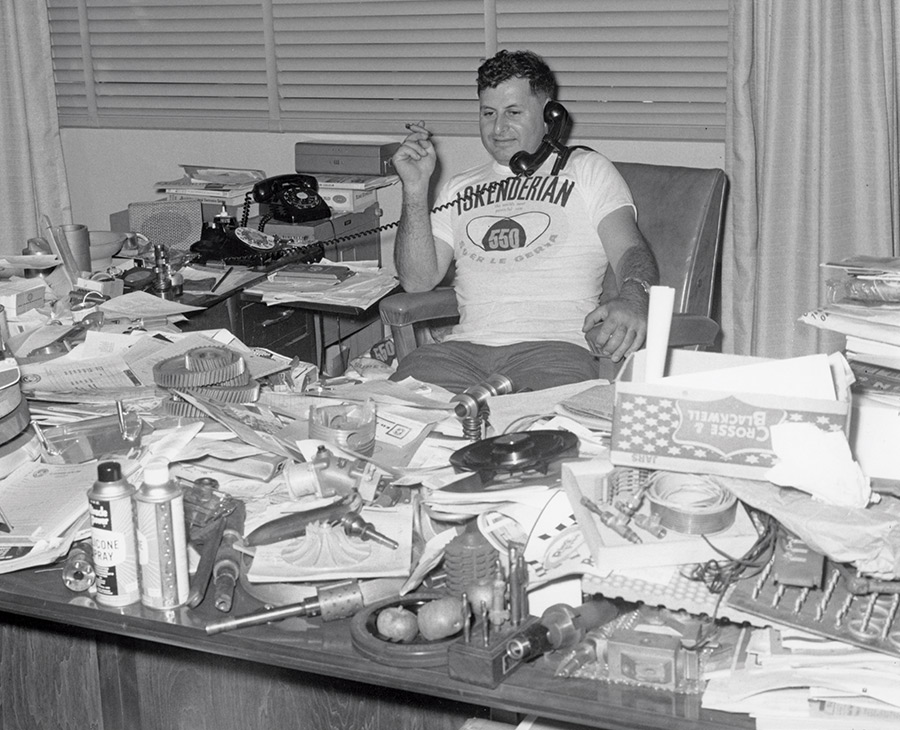
His desk didn’t change much in appearance over the years, nor did the cigar—always in his hand and ready to enjoy life—which was made up of Isky Racing Cams, the business, and a good cigar.
He was Ed Iskenderian, but Everyone Called Him “Isky”
Photography by the Author, Matt Stone & Courtesy of the Ed Iskenderian Collection“Isky” Iskenderian, who died on February 3, 2026, at the age 104, was a true hot rod pioneer known for speed, craftsmanship, and endless curiosity. Born in 1921, Isky grew up in Southern California during the early, hungry days after the Depression, when ambitious young people repurposed whatever they could to chase the thrill of speed. He once recalled that Model Ts and As—cheap, plentiful, and slow—started as raw material for ambitious kids who wanted more but had little money. “We were kids in the postwar era,” he said, “and we bought used cars for $5 or $10 and tried to figure out how to make them go faster without spending what we didn’t have.”
If Isky’s legend is anchored in a single car, it is the roadster that bears his name—the Isky roadster. Its evolution began with a car owned by his lifelong friend John Athan, but the real transformation came from Isky’s hands and mind. Built on late 1920s Essex framerails, the car combined a 1923 Model T body with a Ford B Flathead engine, initially tuned and modified in ways that reflected a teenager’s relentless experimentation. The chassis was upgraded with a 1932 Ford front axle and brakes, and the driving experience was electrified by a then-cutting-edge mix of components from around the automotive world. A distinctive Auburn instrument panel and a two-piece Pontiac grille shell—sourced from junkyards and rebuilt into a unique, aerodynamic front end—gave the car its unmistakable look.


View Index
- AFFORDABLE STREET RODS
- AMERICAN AUTOWIRE
- ART MORRISON ENTERPRISES
- AUTO METAL DIRECT
- AUTOMETER PRODUCTS
- AUTOMOTIVE RACING PRODUCTS
- BALL’S VINTAGE GLASS
- BOWLER PERFORMANCE TRANSMISSIONS
- CLASSIC INSTRUMENTS
- CLASSIC PERFORMANCE PRODUCTS
- CLASSIC PERFORMANCE PRODUCTS
- CLEANTOOLS
- CRUISIN THE COAST
- CUSTOM AUTOSOUND
- DAKOTA DIGITAL
- EATON DETROIT SPRING, INC.
- FITECH EFI
- FLAMING RIVER INDUSTRIES
- FLAMING RIVER INDUSTRIES
- GOODGUYS ROD & CUSTOM ASSOCIATION
- HEINZMAN STREET ROD SHOP
- HOT HEADS RESEARCH
- IDIDIT
- LOKAR
- LOKAR
- NATIONAL STREET ROD ASSOCIATION
- NEW PORT ENGINEERING
- NOTCHEAD FASTENERS
- PAINT OVER RUST PRODUCTS
- PHOENIX MACHINE PRODUCTS
- POWERMASTER PERFORMANCE
- PURE CHOICE MOTORSPORTS
- SALTWORKS
- SCOTT’S HOTRODS
- SPECIALTY AUTO PARTS USA, INC.
- SUMMIT RACING EQUIPMENT
- TRIPLE CROWN OF RODDING, LLC
- VINTAGE AIR
- WHEEL SMITH
- WILWOOD ENGINEERING
