

 PHOTOGRAPHY BY NOTSTOCK PHOTOGRAPHY
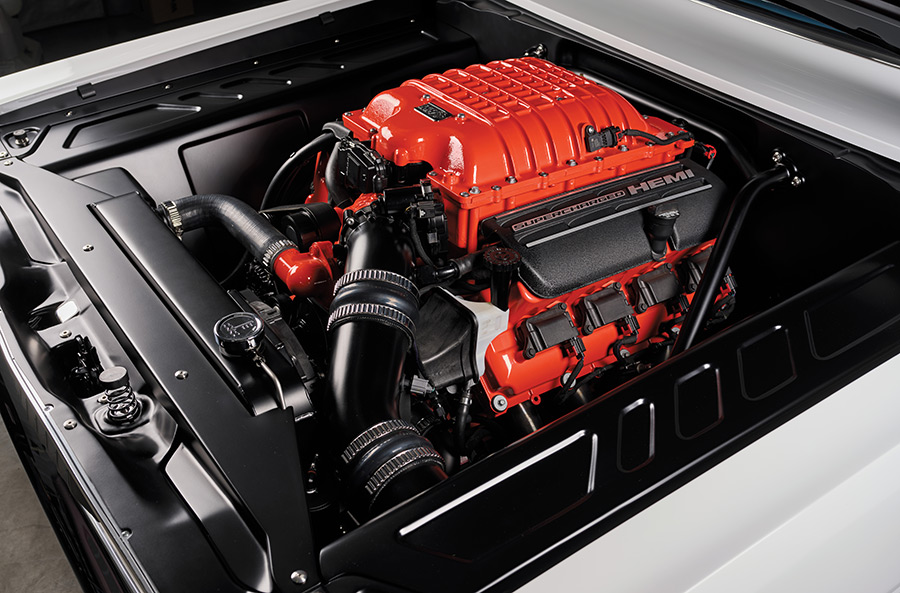
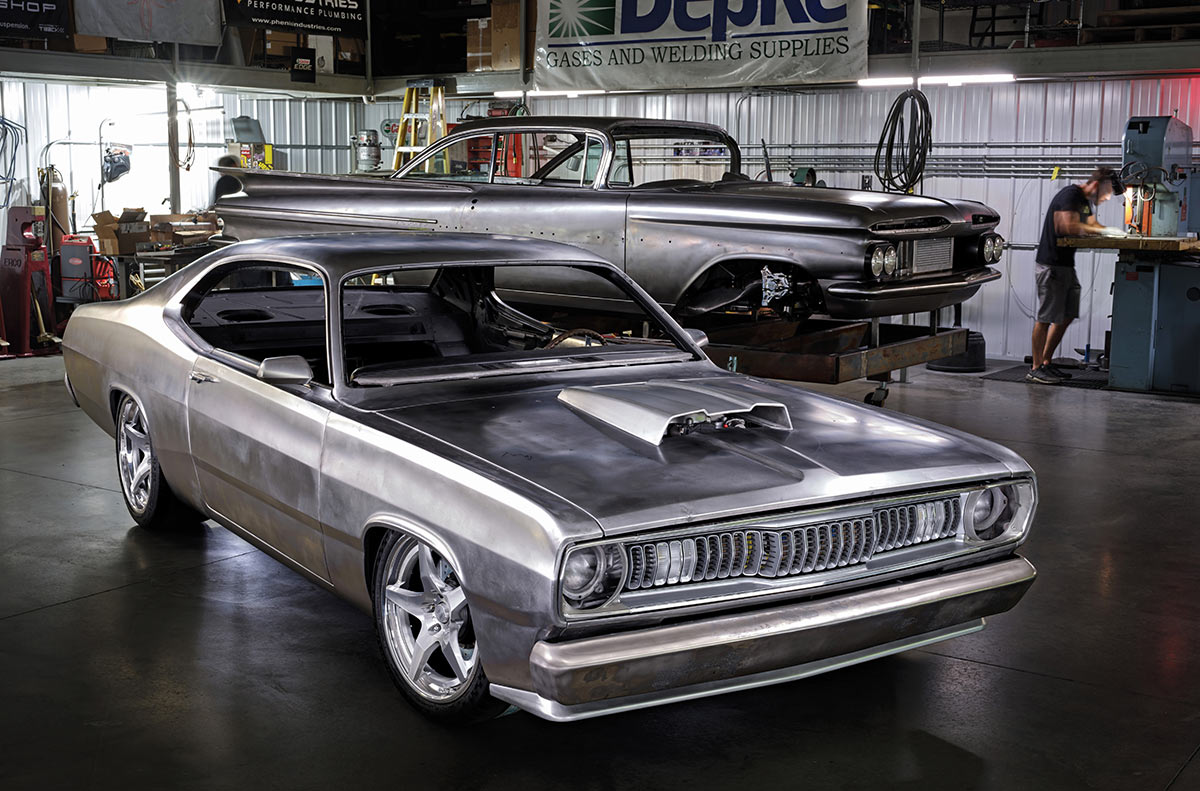
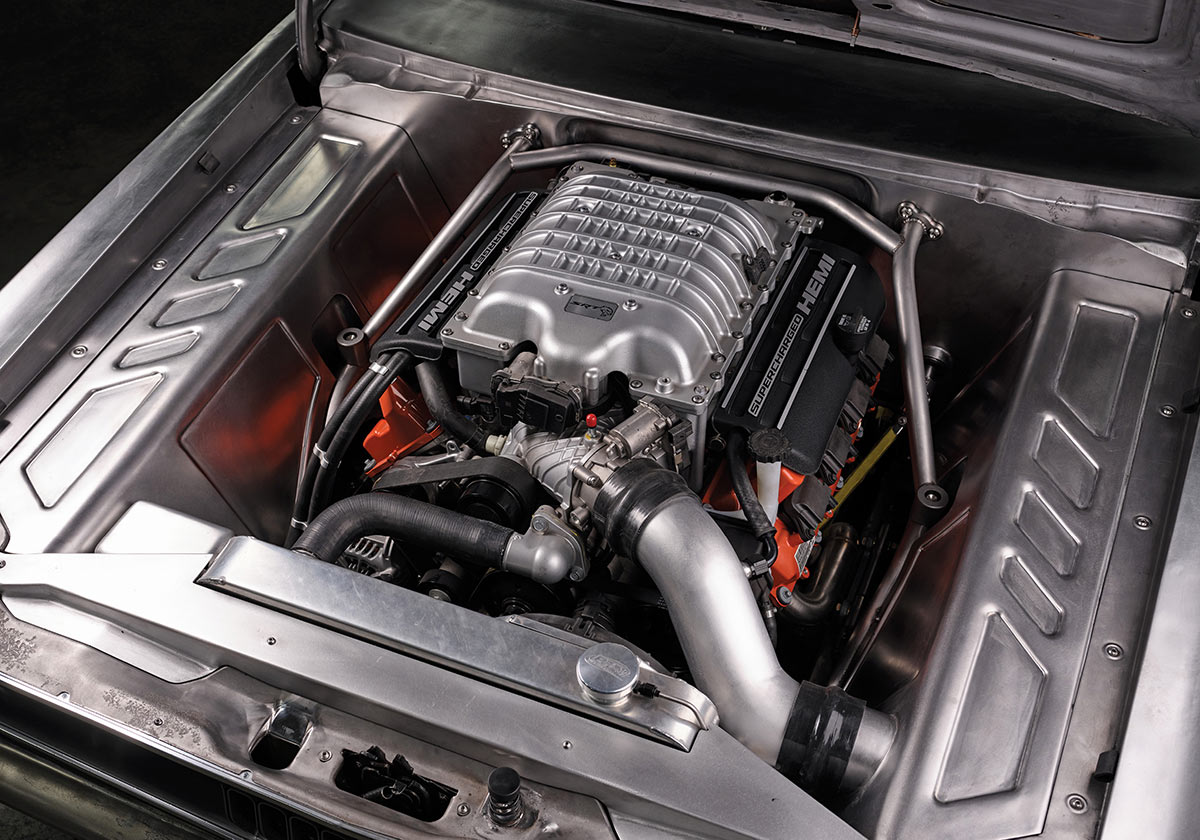
f you love a car that wears its power and precision on its sleeve, you will want to keep an eye on Jordan Costello’s 1971 Plymouth Duster. The Duster took shape at BBT Fabrications under the “care and feeding” of Troy Gudgel and his team of craftsmen. This 1971 Duster is redefining what a modern muscle car can be: brutal horsepower (it’s Hellcat powered!) wrapped in clean, classic lines and a chassis that brings all the subtleties of a manageable and comfortable ride cruising highways and back roads, coupled with the demands of “get down” driving.
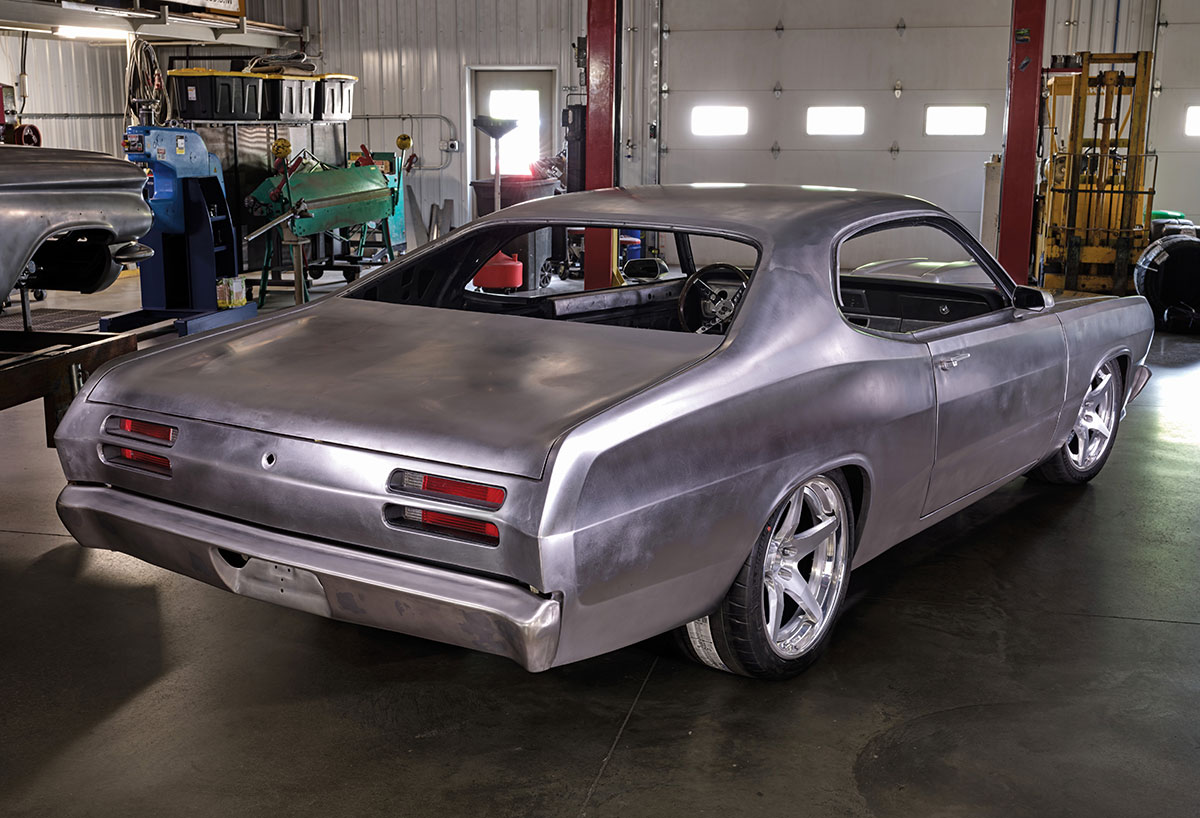
This Duster should be familiar to readers of Modern Rodding, as it has appeared three times during its construction phase (links to the Web-based stories appear at the end of the article). The Duster you see before you is the final “packaging” of what can be done with what might not normally be thought of as a performance-based, modern-day muscle car. But it is. The following pages reveal a full transformation that fuses vintage charm with contemporary engineering.


The Duster’s chassis is a work of modern engineering as well. A Schwartz Performance G-Machine chassis forms the backbone, delivering a platform that can harness the Hellcat’s 700-plus horsepower and keep it planted through the twists and whoops of a backcountry road or “hard at it” accelerating down a quarter-mile. Stopping power comes from Baer brakes, a pairing that’s essential when you’re flirting with those kinds of numbers. All around you will find drilled-and-slotted 14-inch rotors with six-piston calipers. You don’t want to be messin’ around when stopping 700-plus horsepower and nearly 700 pounds of torque. (This proves the adage, “You should never go faster than you can stop.”) The rear suspension is based on a Moser full-floating 9-inch centersection, a Detroit Truetrac differential with helical-gear-type limited-slip 3.55 gears, packed inside a nodular-iron case, and 31-spline axles. Ridetech coilover shocks are used at the corners.
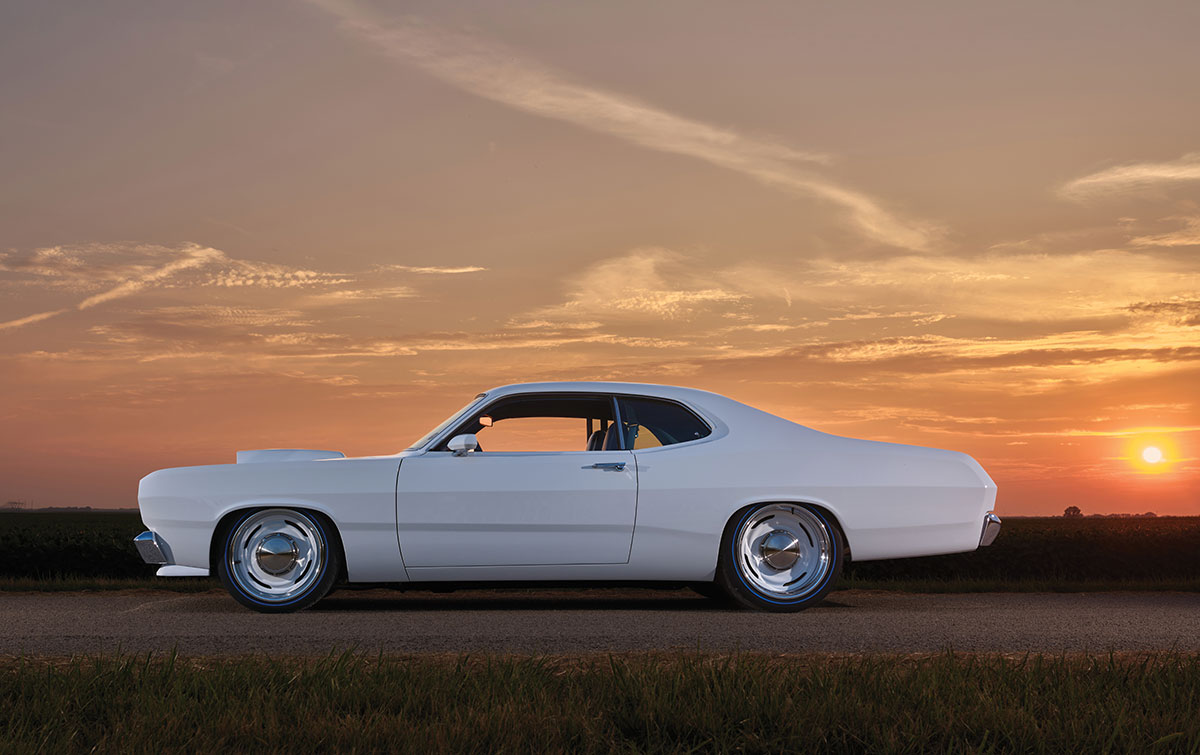
Anytime you have crazy amounts of power and a chassis to use it, the weak link can be where the rubber meets the road. Not so with the Duster, as that wide rear is more than for show—it’s tuned to house 12 inches of tire width, per side, a deliberate choice to corral the Hellcat’s power and deliver it to the pavement with confidence. The Michelin Pilot Cup 2 rubber measures 265/35R18 in front and 345/30R19 in the rear. Since Jordan wanted a hot rod he could enjoy driving on the streets but also wanted to take it out to the track and “leg-it-out,” it is no wonder the Michelin rubber was selected. Jordan is chasing high performance and precision on track days, making the Michelin Pilot Sport Cup 2 an ideal choice. It is a summer tire designed for track-ready handling and razor-sharp steering response on road surfaces as well. In short, it’s a track-focused summer tire that respects the road and your stopwatch. But what is that wheel the Cup 2 tires are attached to? The rubber is mounted to Forgeline OE1 wheels, a three-piece forged wheel from the Heritage Series that nods to the car’s vintage DNA while supporting today’s performance demands. The wheels are finished with a classic white center and polished outers (with Plymouth “poverty hubcaps”) and measure 18×9.5 in front, while the rear doubles down with 19×12.5 wheels.


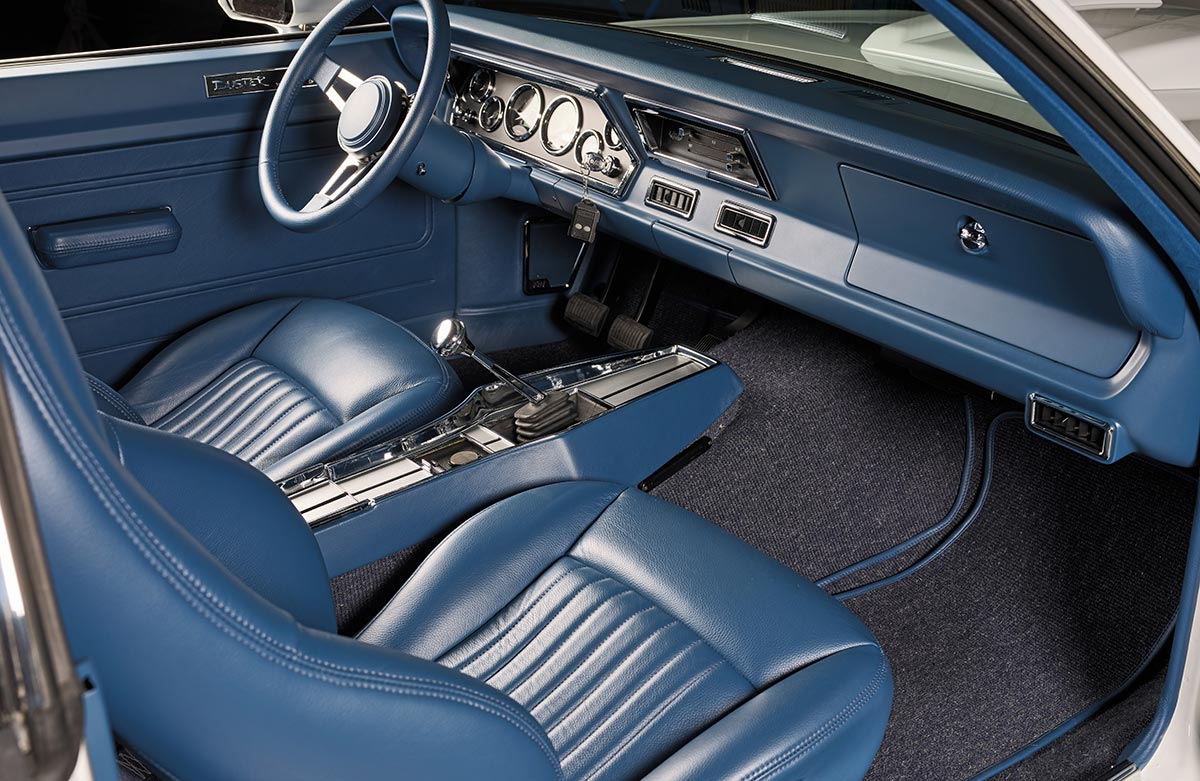
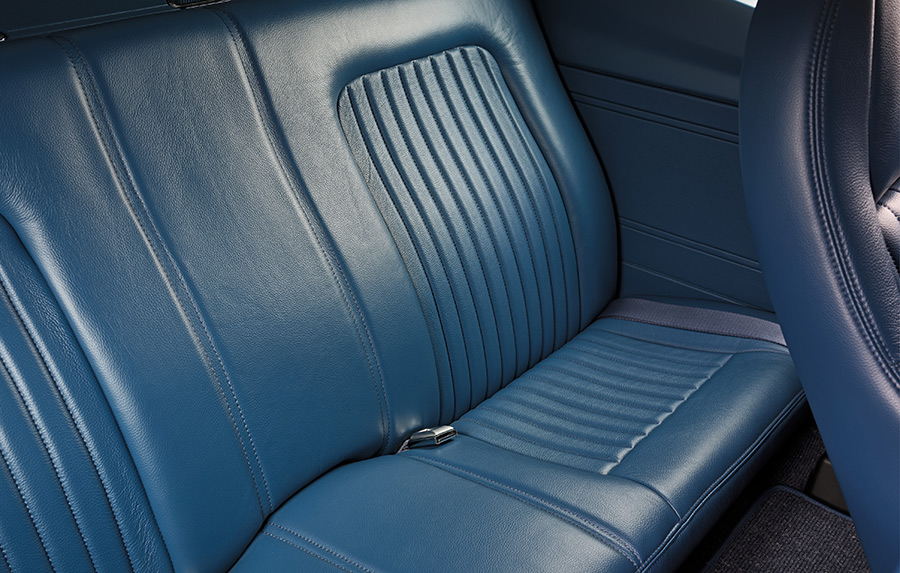
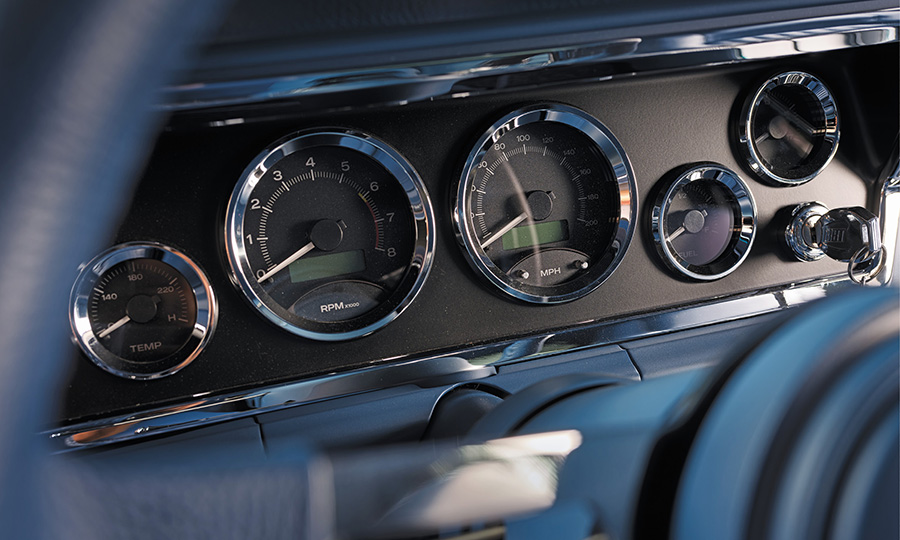
A look inside shows that the factory dash is now covered in Moore and Giles light blue leather, color-coded to match the interior satin finish applied to the metal portion of the dashboard. The newly mounted instrument panel is now filled with Dakota Digital HDX gauges and has an Ididit steering column with a factory-style Duster leather-wrapped wheel. The Vintage Air A/C controls and registers are dash-mounted, and all the essential wiring comes from a Mopar factory harness that was aligned into service at BBT. The front buckets are C6 Corvette Z06 buckets, while the rear split bench was fabricated at BBT. BBT took responsibility for the upholstery effort on all the seating in the Moore and Giles blue leather. The carpeting is also a coordinated blue cut-pile material, while the headliner is in a suede Alcantara (Italian made). It is a soft, durable, and easy-to-care-for material—ideal for the rigors of hot rodding.
On deck for a luxurious makeover, the inside plan is equally ambitious. Seats from a C6 Corvette will be stripped, recontoured, and fitted to the Duster’s cabin, paired with a custom-built rear seat to match. The interior will feature dark blue leather, providing a rich contrast to the ultra-white exterior. The result should feel as refined on the inside as the car appears from the outside.
Jordan’s 1971 Plymouth Duster is a deliberate mix of clean, ultra-white bodywork, refinished hardware, and meticulous preparation that keeps the Duster looking sharp from every angle. In 2025, at the Goodguys Summit Racing Nationals in Columbus, Ohio, this Duster earned a Top 5 Street Machine of the Year finalist nod. It’s a clear statement that a clean, vintage body paired with modern engineering can deliver the best of both worlds: timeless beauty and ruthless performance.