

 PHOTOGRAPHY BY THE AUTHOR
here’s something special about a car that carries more than just sheet metal and horsepower—it carries history. For Buddy Moore, this 1955 Chevy Bel Air means more than a classic Tri-Five; it’s a rolling timeline of family, patience, and a second chance at a dream that began over 30 years ago.
Back in 1993, Buddy aimed to find the perfect first car for his oldest son’s 15th birthday. What he discovered was a well-used but honest 1955 Bel Air owned by a high school principal in Choctaw, Oklahoma, who had faithfully driven the car daily for over 20 years. As expected from a vehicle exposed to Oklahoma’s seasonal extremes, it showed signs of rust, weathering, and the scars of time, but beneath it all was a solid foundation and undeniable potential.


By the time his son turned 16, priorities shifted. A 1988 GMC Jimmy became his new daily driver and the Bel Air was sidelined, eventually finding a long-term home in the family barn. Years later, when a Sea-Doo caught his son’s interest, the only way to get it was to sell the ’55. Not quite ready to part with the car and the memories attached to it, Buddy stepped in and bought it himself, keeping the Bel Air in the family. For decades, the car remained hidden, waiting. It wasn’t until late 2021 that Buddy decided it was finally time to bring the 1955 back to life with a clear goal: create a show-quality car he could drive, enjoy, and proudly display.
To make that vision a reality, Buddy reached out to his friend Rick Steinberg at R.S. Restorations. The goal was ambitious but clear: debut the car at the Darryl Starbird Car Show and win a Top 5 trophy. What happened next far exceeded those expectations.
The build started with a complete teardown to the bare frame, laying the foundation for a thoroughly modernized base. A custom chassis by Ken Jano at Hardcore Customs replaced the original frame, updating the car to contemporary performance standards. Up front, a Mustang II crossmember with modern spindles, QA1 coilovers, and a 1-inch QA1 sway bar improved handling. In the rear, a four-link setup with QA1 coilovers ensured the suspension could keep pace, offering ride quality and control far better than the car’s 1950s origins. The stance was dialed in with Schott Accelerator wheels, 18×8 up front and 18×10 in the rear. The wheels were then wrapped in General G-Force rubber (235/45R18 and 265/40R18), giving the Bel Air a perfect blend of classic proportions and modern aggression. Braking was upgraded with authority by Classic Performance Products (CPP), featuring 14-inch discs up front and 13-inch units in the rear. A CPP HydraStop booster system not only improved stopping power but also cleaned up the engine bay while providing a confident, responsive pedal feel.


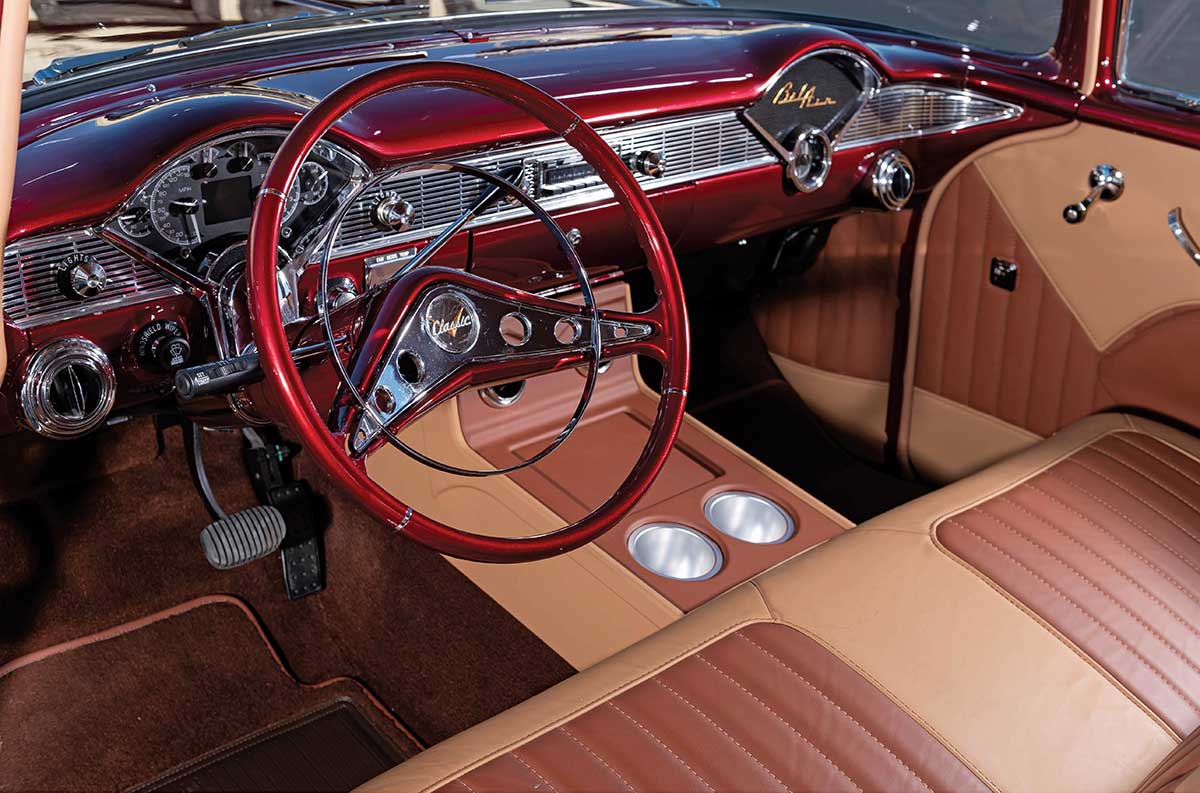
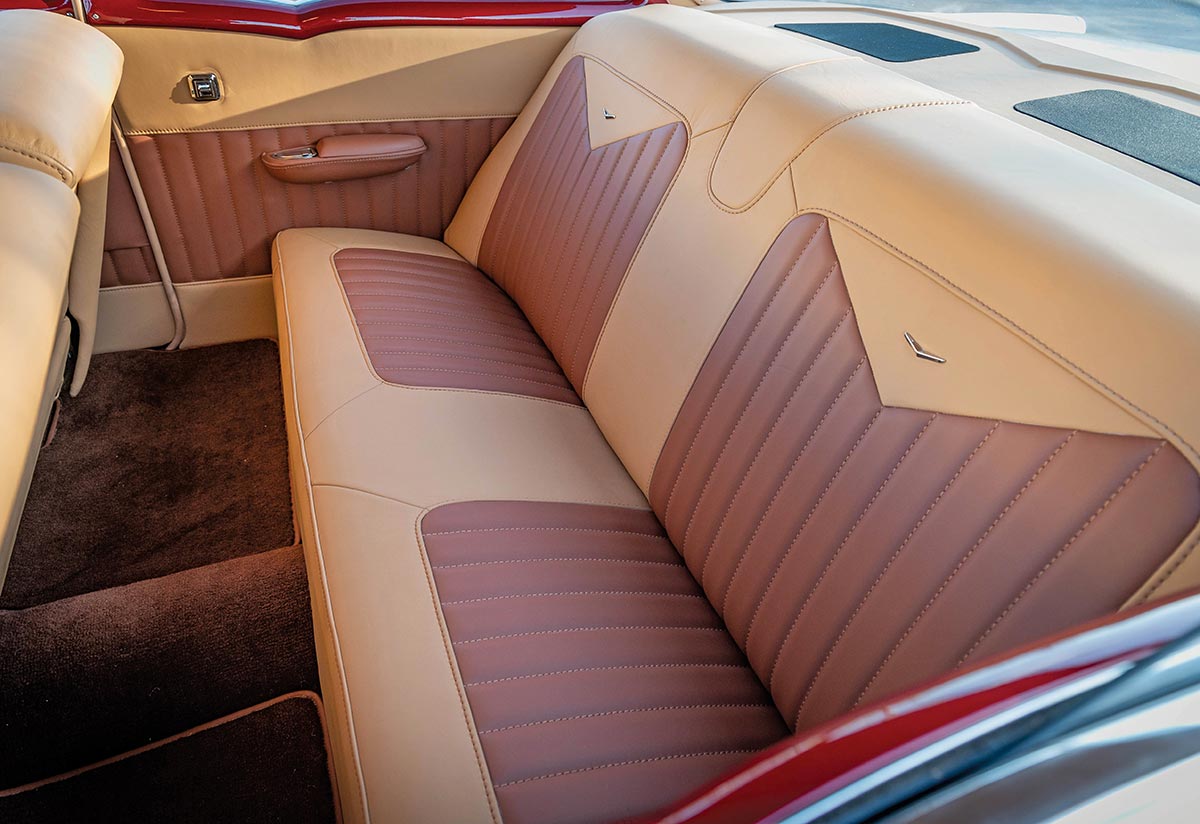
Inside, the Bel Air received full custom treatment without losing its vintage charm. Gas-Cat Upholstery in Tulsa, Oklahoma, reworked the seats in rich Mercedes brown-and-tan leather, creating a refined yet period-respectful interior. Dakota Digital gauges replaced the originals, offering modern precision behind a classic look. A Vintage Air system ensures comfort in Oklahoma’s heat, while a hidden RetroSound Bluetooth head unit feeds audio to speakers discreetly mounted in factory locations. A custom console, crafted by Cody at Code Zero Customs, ties the interior together with a functional and stylish centerpiece.

When the car finally made its debut at the Darryl Starbird Car Show, it didn’t just meet expectations; it exceeded them, taking home Best 1955-57 Modified Class honors right out of the gate. For Buddy, the win was more than a trophy. It was the culmination of a journey that began with a father-son project, paused for decades, and returned stronger with time, experience, and vision. Today, the 1955 Bel Air isn’t just a showpiece, it’s a driver, a memory machine, and a testament to what can happen when you refuse to let go of something that matters.
Buddy is quick to credit Steinberg and the entire team who helped bring the car to life, acknowledging that builds like this are never a one-man effort. And now, instead of sitting in a barn, this Bel Air is exactly where it belongs—on the road, under the lights, and surrounded by people who appreciate the story behind it.
