
Modern Rodding Tech
Dean Livermore installing Flatline Barriers insulation in a Chevelle.
1. One of those “can’t see” upgrades that’s worth every penny is Flatline Barriers’ acoustic and thermal insulation. Dean Livermore of Hot Rods by Dean shows us how easy it is to install, making driving your machine a whole lot more fun.
Comfortable Climate
Flatline Barriers’ Acoustic and Thermal Insulation is a Must
BY BRIAN BRENNAN PHOTOGRAPHY & VIDEOGRAPHY by the AUTHOR
A

ll of us want to be comfortable in our hot rod—it doesn’t matter the time of year or how much horsepower we have (or don’t). When cruising, comfort is king. That brings us to Flatline Barriers, an ultra-lightweight, easy-to-install material that blocks unwanted heat and noise. The two main sources of discomfort when driving are excessive noise and excessive heat inside where we are trying to keep our “cool.”

To help us achieve this level of comfort, there are a few things we can do. However, the one that is unseen and possibly the most important is the use of acoustic and thermal insulation. We thought we would give this product a try, so we stopped by Classic Industries and picked up a precut kit with some additional material for extra coverage for our 1969 Chevelle. This is a big-block–powered Chevy with a thundering exhaust, so heat and sound can be an issue. (Experience has taught us that!)

We stopped by Hot Rods by Dean and installed the Flatline Barriers product on a 1969 Chevelle we have and will continue to showcase stories here in Modern Rodding. We were able to nail down Dean Livermore and get a couple of hours of his time to try out the installation for ourselves. Everything went as advertised. Keep in mind that you will want your flooring, door panels, and headliner area to be well cleaned and ready to accept the adhesive-backed acoustic and thermal insulation. It is adhesive backed. The material, once laid down and pressed into position, is there. Make sure you are ready before installing.

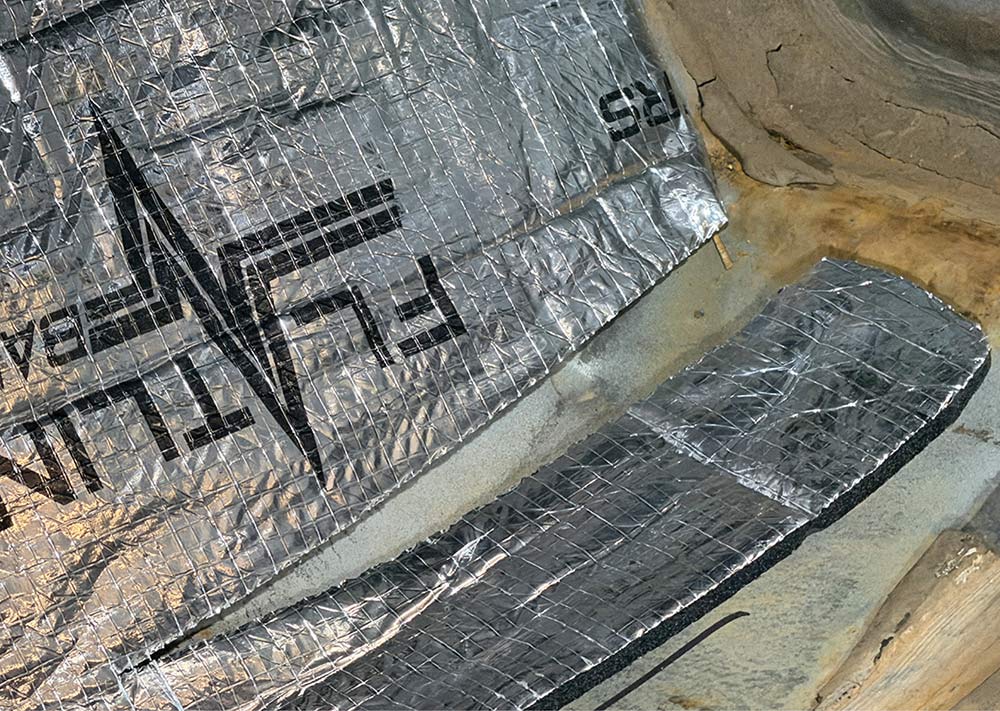
Flatline Barriers was designed to deliver high-quality, direct-fit material that minimizes noise and heat transfer. It is based on synthetic rubber that forms a foam with a peel-and-stick backing to silence unwanted noise, vibration, and resonance. It is then combined with an aluminum thermal barrier that eliminates radiant heat. Our kit, as mentioned, was precut and, because of this and its lightweight, very-compliant construction, is ideally suited for at-home use by everyday hot rodders.

Two immediate benefits are its weight and cost. We’ve mentioned the lightweight characteristic. Flatline Barriers weigh about one-fifth as much as other products in our hobby. The immediate benefit is the absence of unnecessary added weight; it is easy to handle, making it easy to install. We should also mention that the cost of the Flatline acoustic and thermal material is lower, an added and always-appreciated benefit. Another benefit that we probably never even gave a second thought to but it’s good to have, is that it’s a no-odor characteristic, thereby producing no odor from “off-gassing.” And, just in case, it meets the Federal Motor Vehicle Safety Standard 302 for flammability. Like we said, good to know, good to have.

Well, there you have it. Follow along with the photos and see for yourself just how easy it is to install Flatline Barriers’ acoustic and thermal insulation.
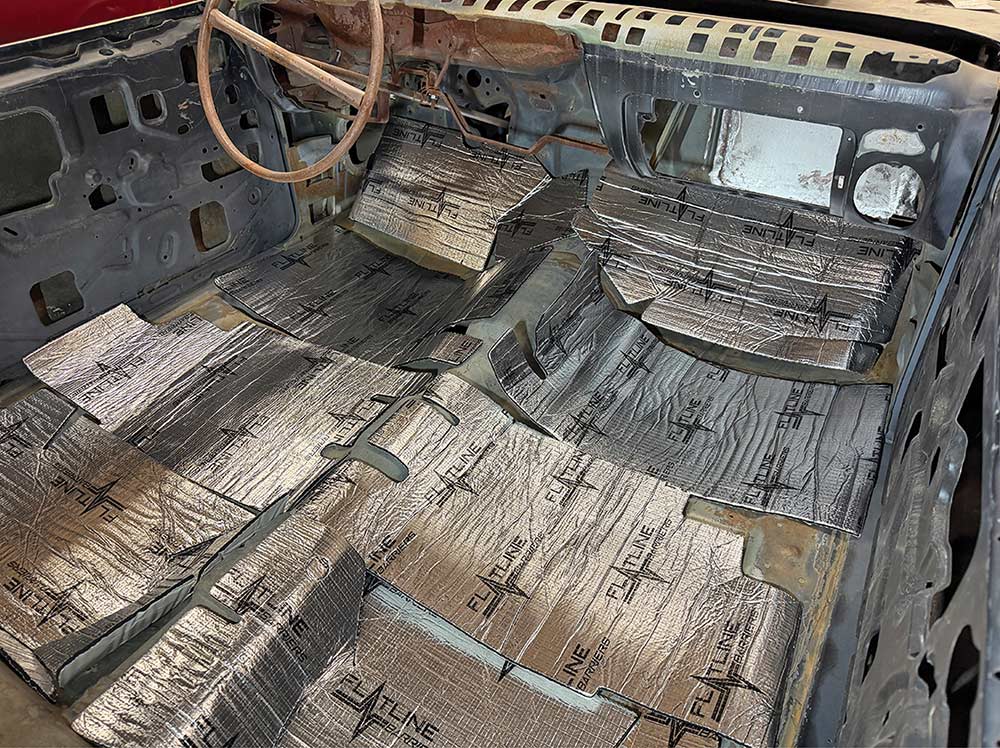
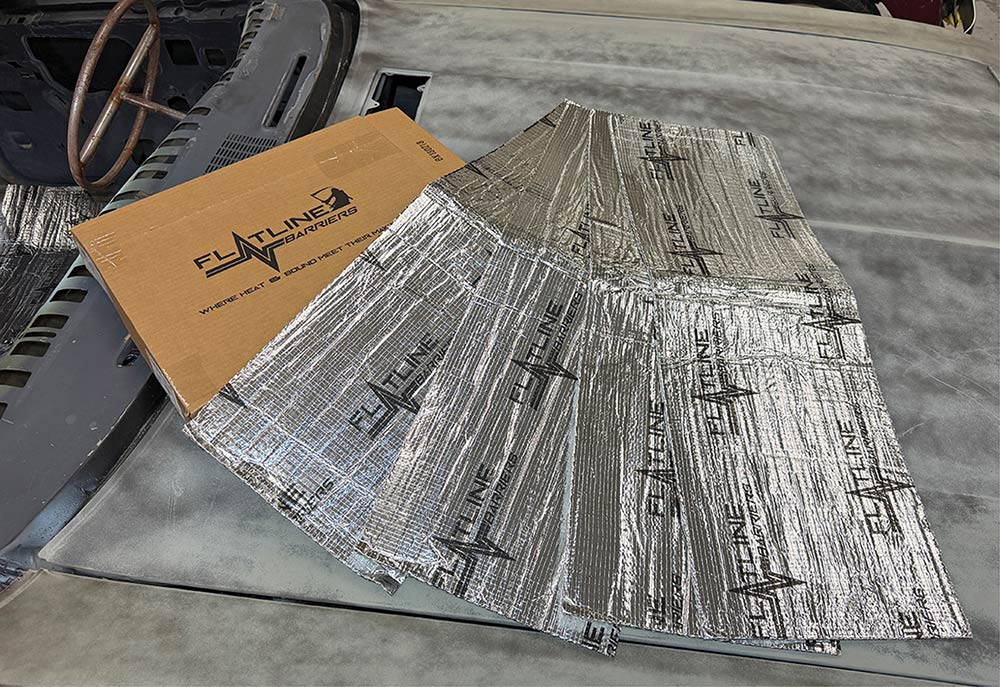
Flatline Barriers insulation laid out on a garage floor.
2. For our Project 1969 Chevelle, we opted for one of the Flatline Barriers “precut” kits designed for our specific hot rod.
Precut insulation pieces positioned inside a car interior.
3. Our first step was to lay out the precut kit for three reasons: one, to make sure you have all the pieces; two, to make sure the pieces fit the floor (or doors or roof); and three, to make sure the factory precut holes you will need are there. Our kit was as “advertised.”
Box of Flatline Barriers bulk material and sheets.
4. Flatline Barriers is also available in bulk packaging. We picked up the precut kit as well as a bulk material box to ensure we could add material where we thought we might need it. (And, let’s face it, you may screw up a panel during your initial installation.)
Hand pressing precut insulation piece into car floor pan.
5. After we positioned all the pieces, we then went over how each piece fit. Right off, you will note that the Flatline Barriers material is easy and lightweight, making it “no effort” to use.
Peeling back the white protective paper from insulation sheet.
6. There is a protective backing material (the white “waxy” paper) that protects the sticky surface, allowing you to manipulate the sound and insulation material during installation.
Close-up of hands peeling backing from insulation material.
7. It will peel off easily but be patient and avoid trying to rip off the entire sheet too quickly.
Holding a black adhesive backed insulation panel.
8. Here, Livermore is comfortable with the initial piece and how it fits, so off comes the waxy backing sheet, exposing the sticky surface area. Carefully keep dirt and “tools” off the surface.
Applying insulation sheet to the rear floor section.
9. Wherever you choose to start (top, bottom, left, or right), first make sure the surface is prepared, meaning it’s clean, any holes are unobstructed, and there is nothing in your way.
Pressing insulation into the corner of the interior footwell.
10. Livermore chose to start in the upper-left corner and lightly pressed the material into position. Remember, it’s lightweight and precut, making it easy to use.
Smoothing out insulation material over car flooring contours.
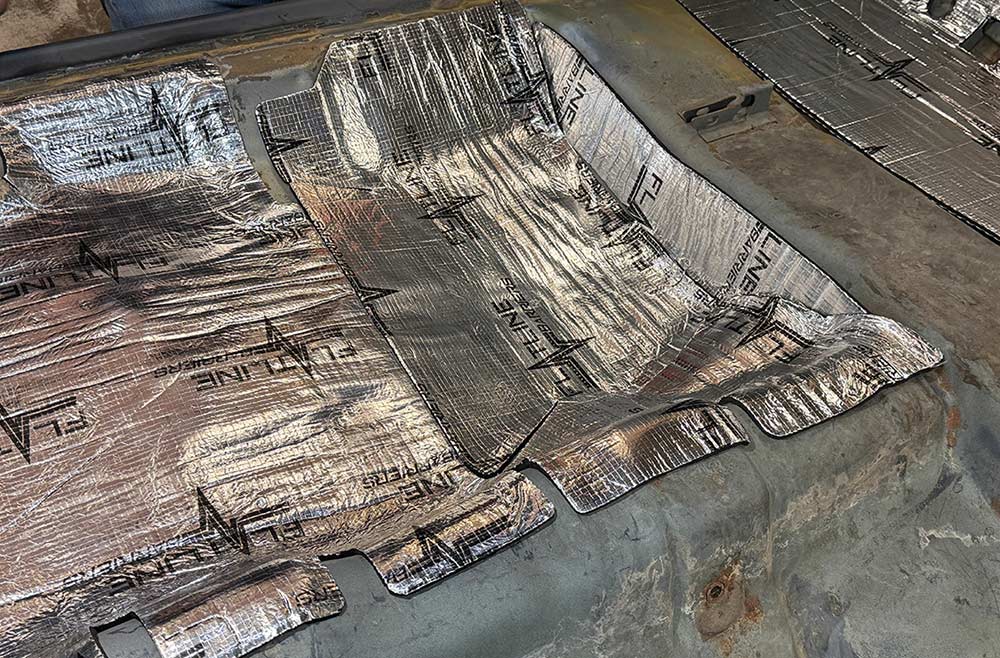
11. Once positioned, the “compressing” of the Flatline material begins. Because of its lightweight construction, it is easily “molded” into shape over the flooring.
Close-up of insulation molded over floor pan hills and valleys.
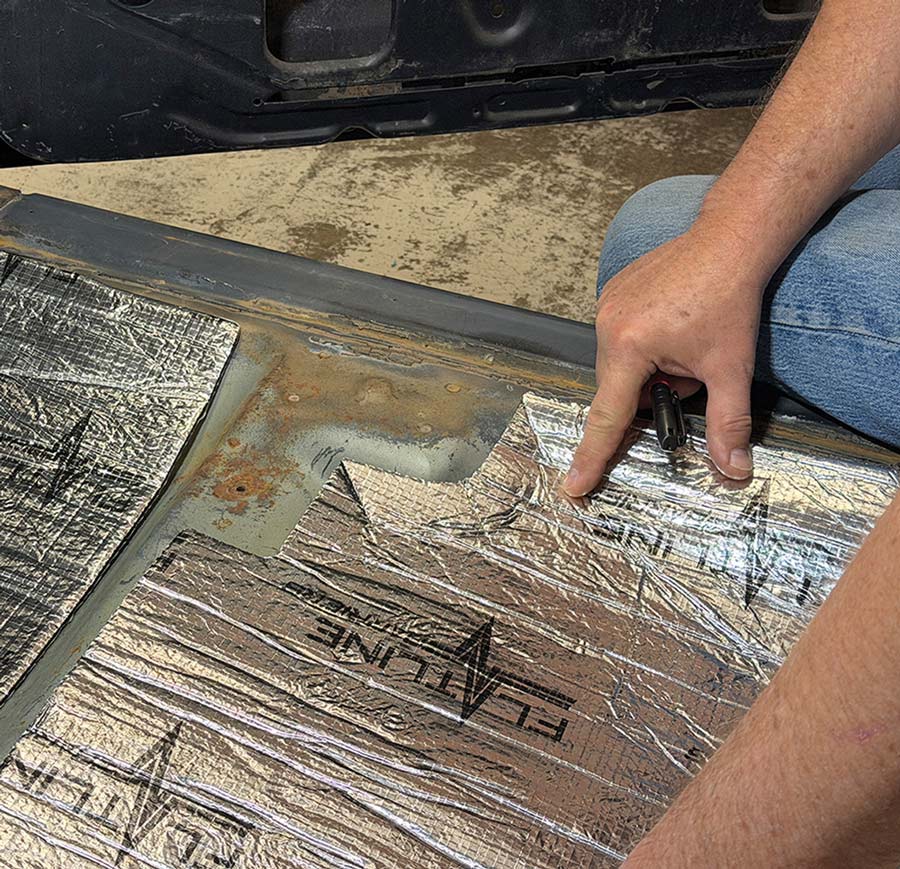
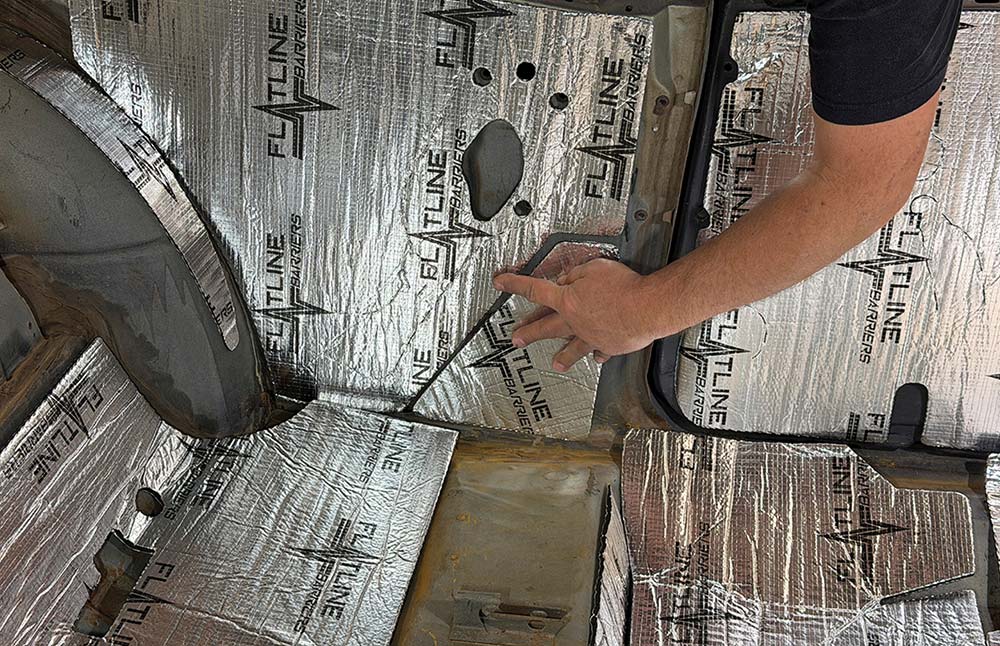
12. Note that the relief (cut/gap) in this panel allows for a “wrinkle-free” fit between the firewall/toeboard area and the footwell.
Insulation panel with precut reliefs for interior mounting points.
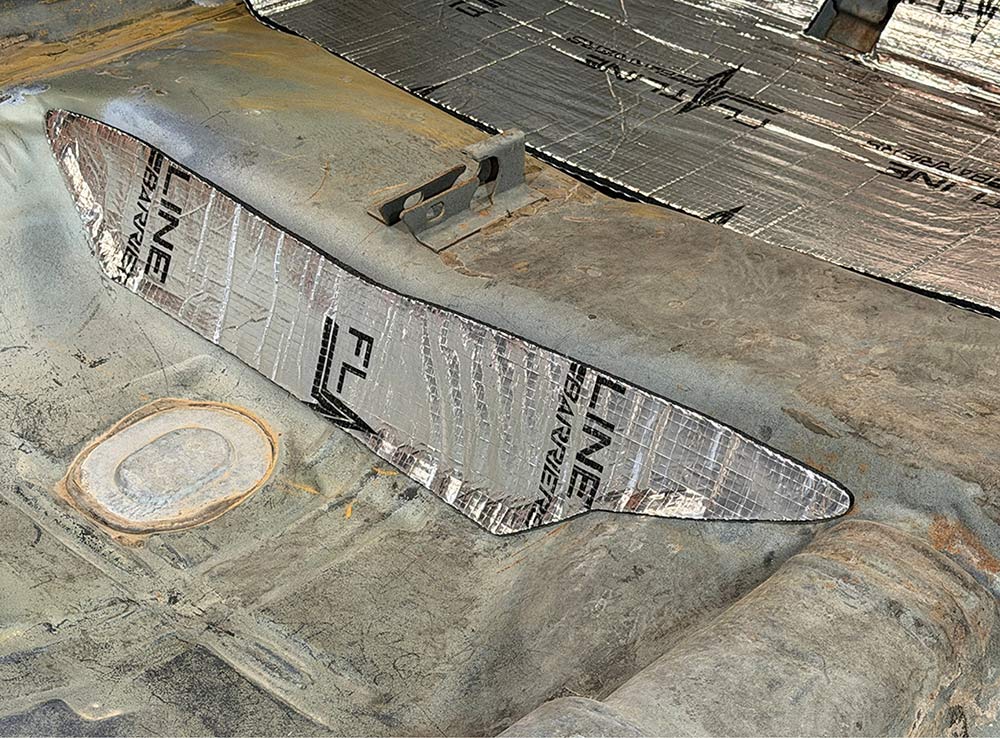
13. You will see that this panel has precut reliefs that account for such access holes as the seatbelt and seat bracket anchor points.
Fitting insulation around various floor pan irregularities.
14. Remember to be careful when placing the material on the floor, especially when working with “hills and valleys” found on the flooring.
Precut circular hole in insulation for seatbelt anchor.
15. Note that this panel has a precut circular hole. This one was for a front seatbelt anchor point.
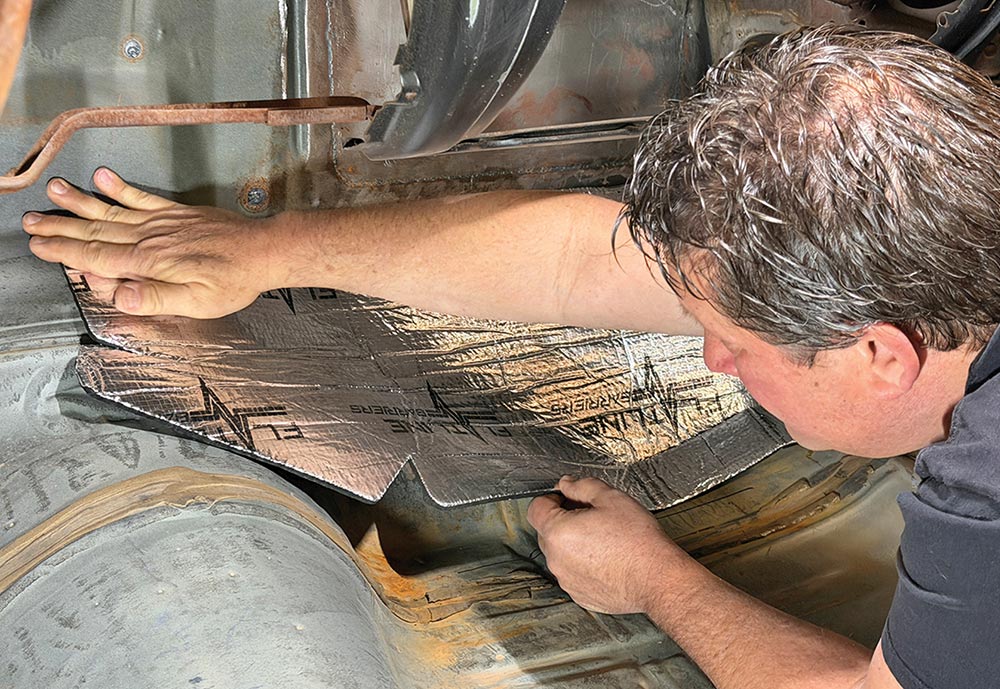
Installing insulation on the rear seat footwell kick panel.
16. Even the small pieces serve a function, so be sure to note where they go and install, such as this rear seat footwell kick panel.
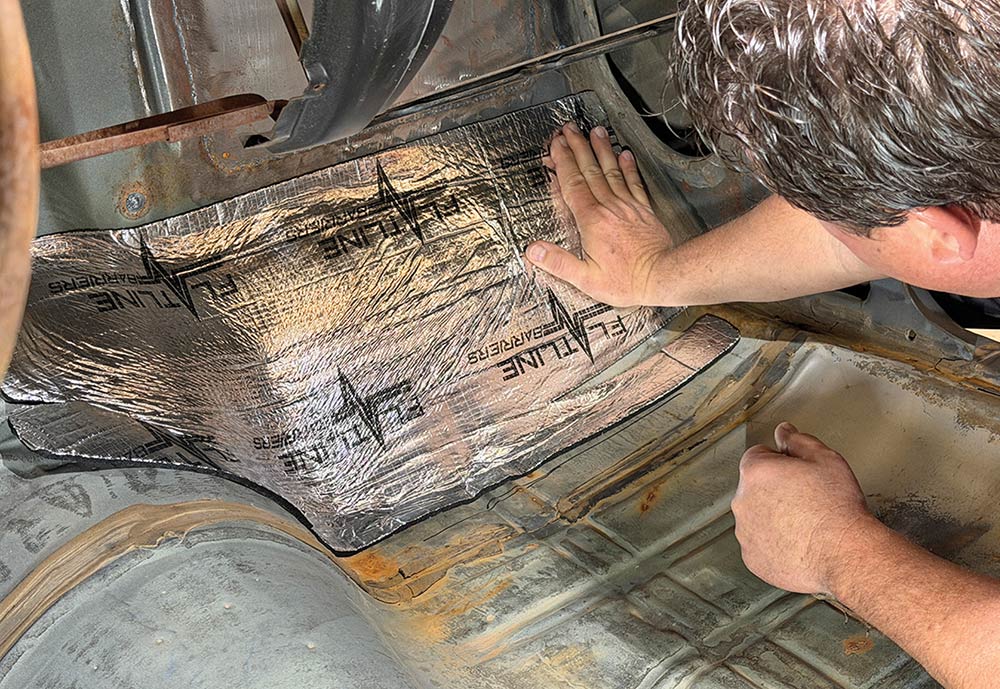
View of completed insulation coverage on rear car floor.
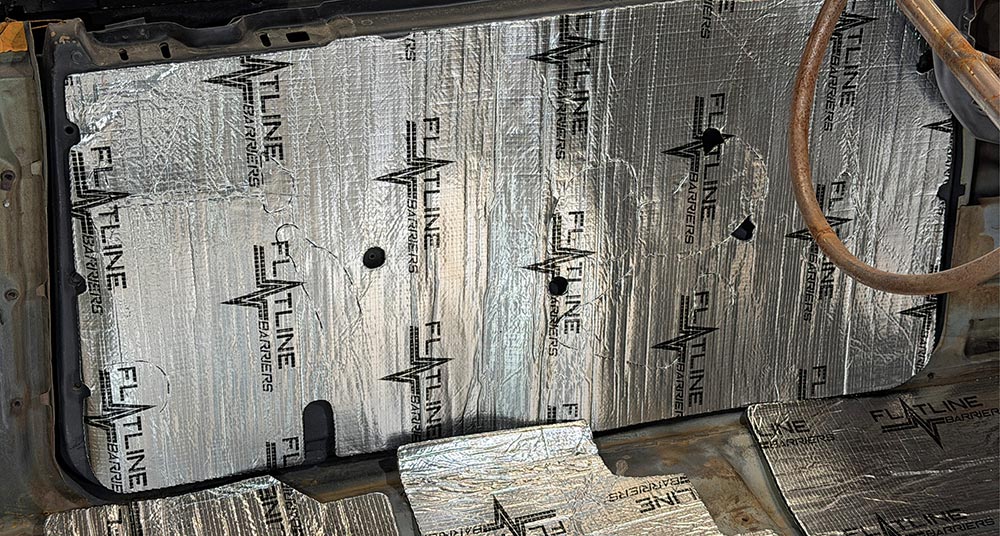
17. Here is a view of the passenger/rear floor area, which is covered with Flatline Barriers acoustic and thermal insulation. Note the reliefs for seatbelt anchors.
Aligning insulation panel on an interior door skin.
Close-up of door insulation with various relief holes.
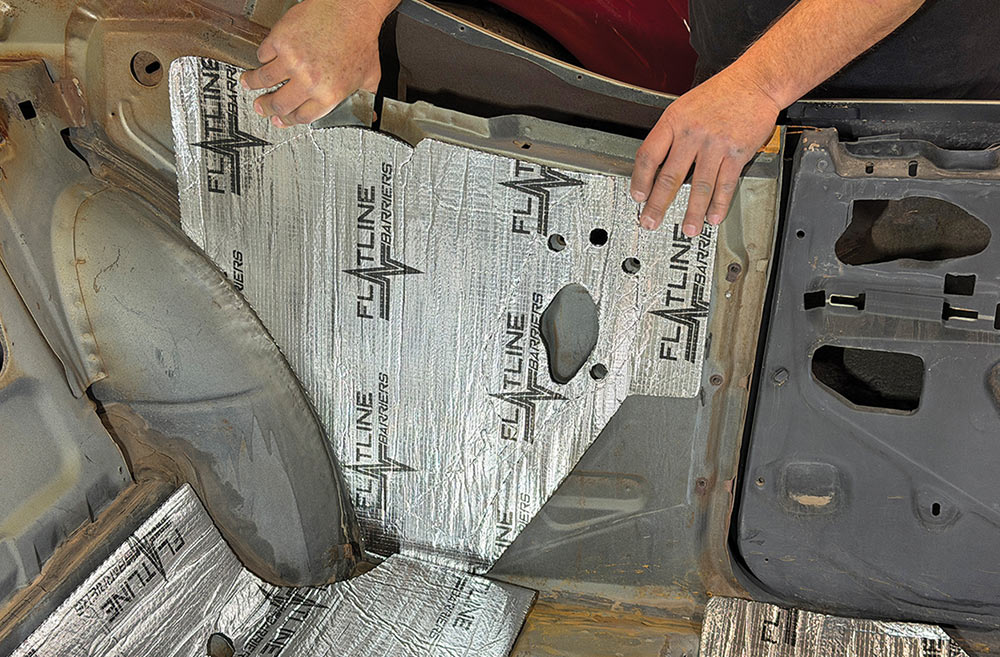
18-19. The driver-side rear passenger panel is a great example of what a precut piece should look like. The reliefs are for the window crank and for access to the boltholes for the window regulator. This is a power-window car, so there is no crank, but the hole is there just in case.
Final adjustment of a rear passenger side insulation panel.
20. There is one last panel to place on the driver rear passenger panel. This is done so that the larger panel can be “adjusted” with small shifts without the lower corner failing to fit properly.
Full insulation coverage on a driver's side car door.
21. The driver side door panel is one piece with all the appropriate holes for the window crank, armrest, and other necessities.
Detail of a square and round precut insulation hole.
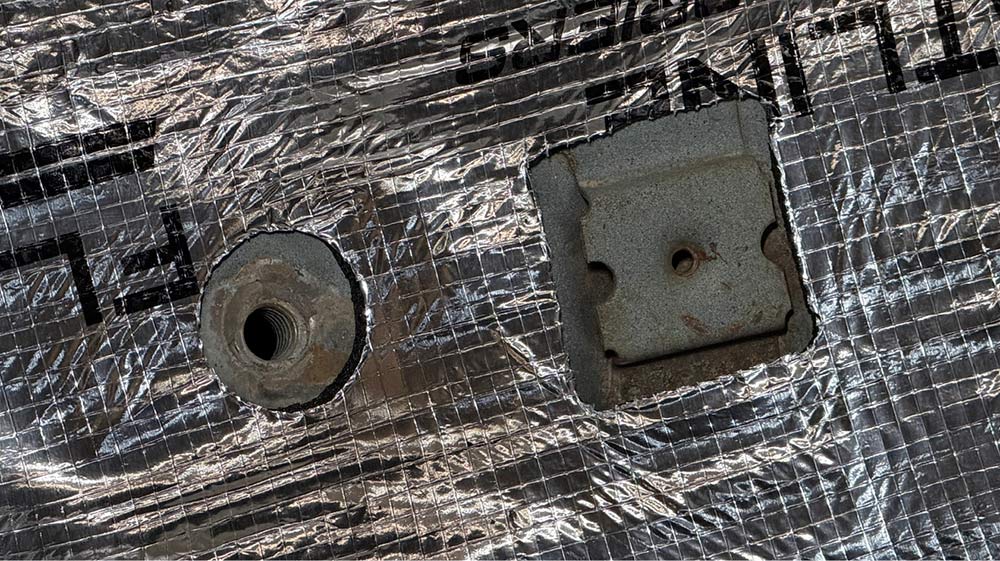
22. Whether the hole in the Flatline Barriers material is round or square, the appropriate shape and size hole is cut—a convenient touch.
In The Garage Media
Classic Industries logo

(800) 854-1280
classicindustries.com
Hot Rods by Dean

Modern Rodding
VOLUME 7 • ISSUE 70 • 2026