






Time
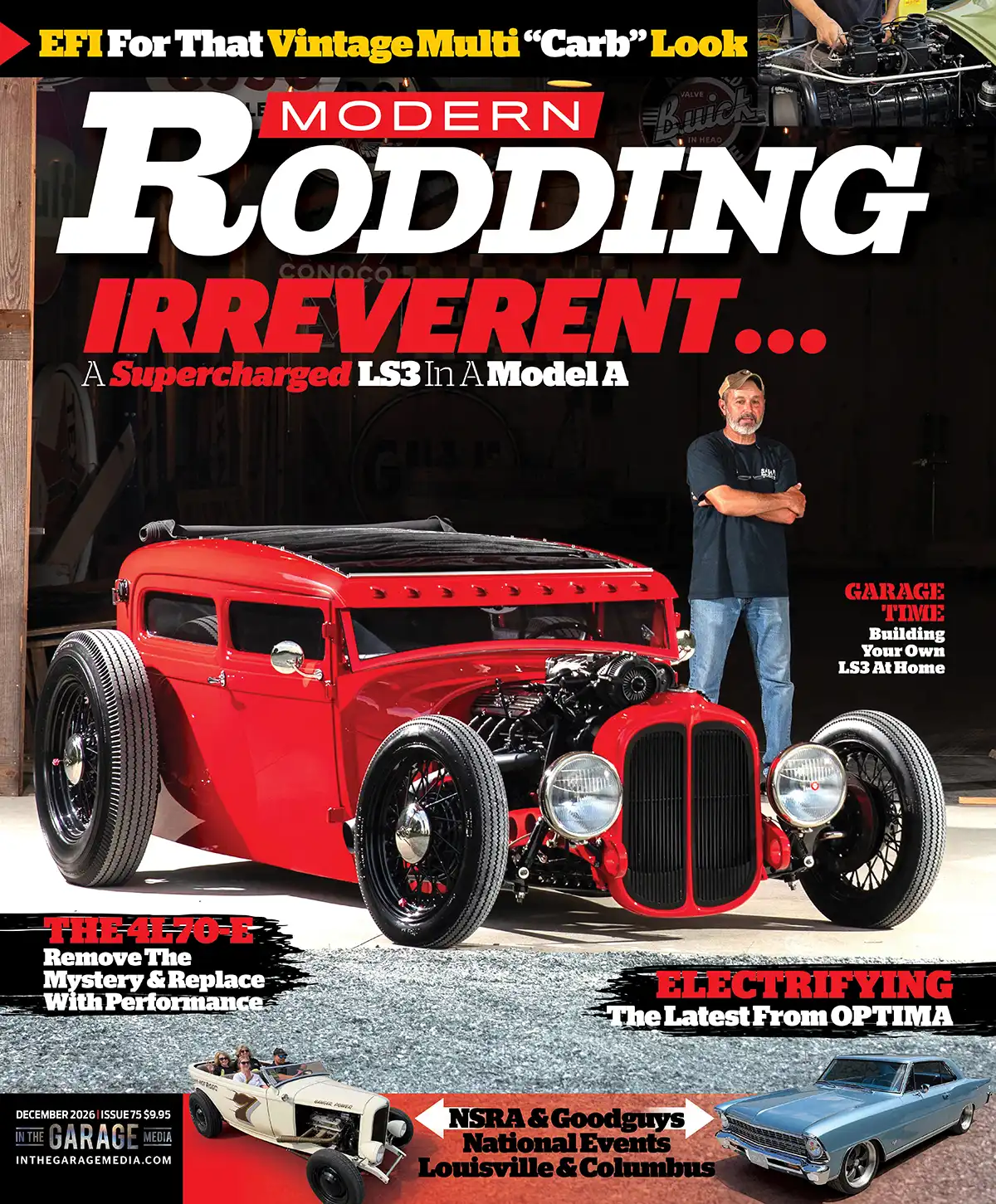
Building
Your Own
LS3 At Home

Building Your Own LS3 At Home

Preview Issue




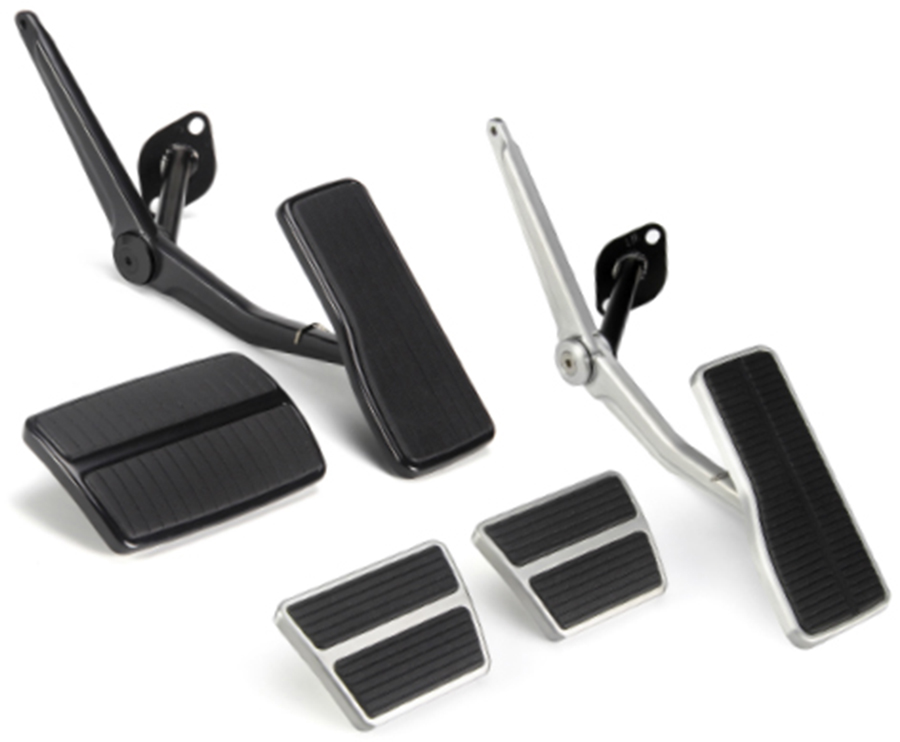





 BILLET COLUMN DROPS
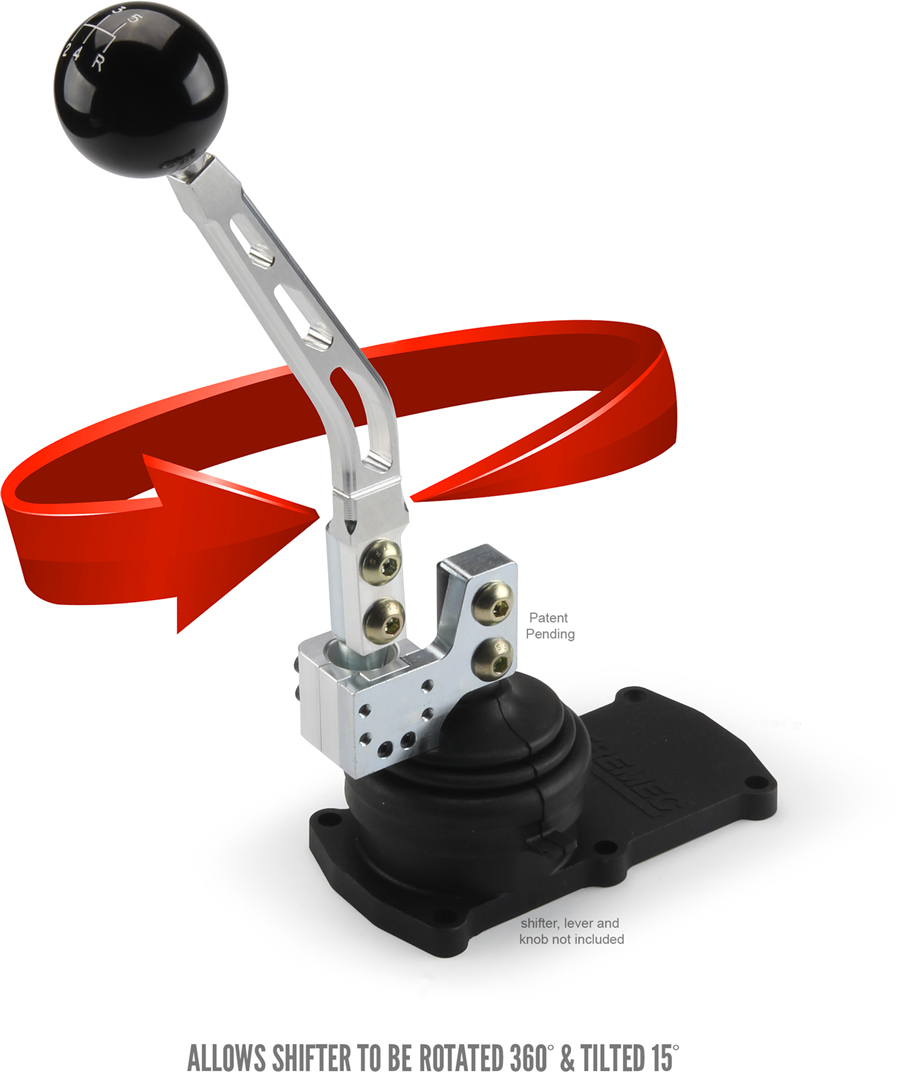
 SWIVEL FLOOR MOUNTS
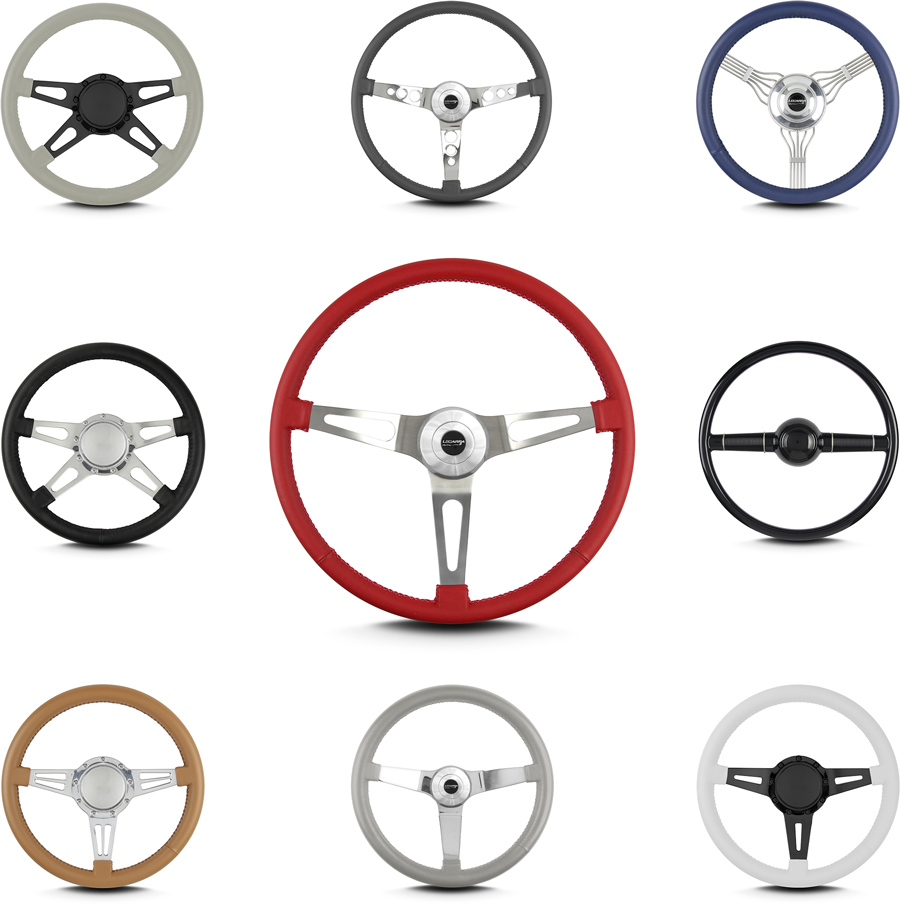
 ITALIAN STEERING WHEELS
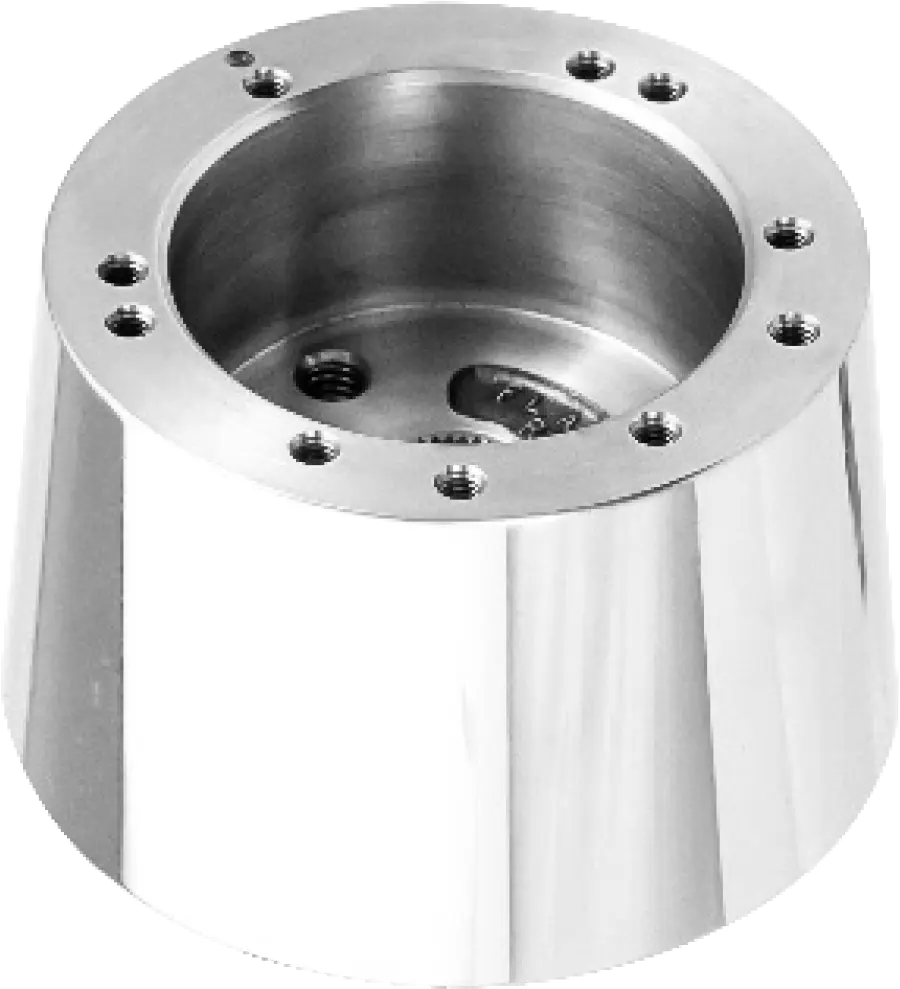 BILLET WHEEL ADAPTERS
 WHEEL AND ADAPTER KITS

 UNIVERSAL JOINTS

Brian Brennan
Industry News
New Products
Brian Brennan
Those Supporting Our Industry
Stacy Brackett’s 1929 Ford
By Jesse Kiser, Photography by the Author
Lynn Lamb’s 1955 Chevy Sedan Delivery
By Grant Cox, Photography by the Author
Gary Popolizio’s 1935 Ford Pickup
By Scotty Lachenauer, Photography by the Author
Steve Henry’s 1940 Ford Sedan
By Brian Brennan, Photography by NotStock Photography
By Brian Brennan, Photography by the Author
By Brian Brennan, Photography by the Author
The Latest From the Drawing Board to the Driveway
By Tony Thacker, Photography by the Author, Illustrations by Chip & Brock Foose
What You Need to Know About Batteries for Modern Rods
By Ron Ceridono

Bowler’s Tru-Street Transmission
By Ron Ceridono, Photography & Videography by Ryan Foss Productions
FiTech Vintage 97 System Brings Modern Driveability & Tuning Control to Traditional Multi Two-Barrel Induction
By Johnny Hunkins,. Photography by the Author & Jason Scudellari

Photography by Jesse Kiser.










BRIAN BRENNAN
bbrennan@inthegaragemedia.com
TIM FOSS
tfoss@inthegaragemedia.com
YASMIN FAJATIN
yfajatin@inthegaragemedia.com
SARAH GONZALES
sgonzales@inthegaragemedia.com
ROB MUNOZ
rmunoz@inthegaragemedia.com
PATRICIA LUDI
pludi@inthegaragemedia.com
MEKENZIE MURPHY
mmurphy@inthegaragemedia.com
Gerry Burger, Tommy Lee Byrd, Ron Ceridono, Michael Christensen, Ron Covell, Grant Cox, Kev Elliott, John Gilbert, Ken Gross, Johnny Hunkins, John Jackson, Chadly Johnson, Barry Kluczyk, Scotty Lachenauer, Ryan Manson, Josh Mishler, Dale Moreau, Todd Ryden, Jason Scudellari, Chris Shelton, Tim Sutton, Chuck Vranas
Travis Weeks Advertising Sales Manager
Patrick Walsh Sales Representative
ads@inthegaragemedia.com
ModernRodding.com
AllChevyPerformance.com
ClassicTruckPerformance.com
InTheGarageMedia.com
subscription@inthegaragemedia.com
(714) 985-9171
InTheGarageMedia.com “Online Store”
store@inthegaragemedia.com


Copyright (c) 2026 In The Garage Media, Inc.
Printed in the USA.
The Modern Rodding trademark is a registered trademark of In The Garage Media, Inc.
 By Brian Brennan
’ve come to the conclusion that there are two kinds of people in this world: those who understand the science behind a great chocolate chip cookie, and the rest of us who know enough to eat one when it comes out of the oven. I’m definitely in the second group.
Fortunately, I married into the first. My wife, Kimi, makes some remarkable cookies. Actually, “remarkable” doesn’t do them justice. She makes the kind of cookies that disappear from the kitchen counter at a rate that would concern the local authorities if they weren’t so darn good. She even sells them, and other hot rodders spend their hot rod allowance to have them shipped to their garage!
I photograph hot rods. In our household, we have a rather interesting division of labor. Kimi researches flour, butter, chocolate, baking temperatures, humidity, and every other variable that apparently determines whether a cookie is merely good or worthy of a repeat performance.
I research horsepower, wheel and tire combinations, stance, paint, lighting, and whether I can get a camera angle that makes a 60-plus-year-old car look even better than it does sitting in front of me.
Come to think of it, we’re doing the same thing. We’re both chasing perfection and neither of us is likely to catch it. Kimi can explain how changing the flour, the temperature, or even the humidity can alter a cookie’s size, texture, and consistency. And that hasn’t even gotten us to the taste—the final objective of measuring perfection.
 BY BRIAN BRENNAN


Montie Hurd, 1969 Chevy Camaro Z/28
The All Chevy Performance selection went to Montie Hurd and his 1969 Chevy Camaro Z/28. That badge still means something, and in a field packed with Chevrolet sheet metal it takes the right car to stand above the noise. Hurd’s first-generation Z/28 carried the Trans Am–era flavor, small-block credibility, and street-machine presence that land squarely in the ACP wheelhouse. It was a Camaro with the kind of identity that does not need much introduction; you see it, you know it, and you give it the respect it has earned.
Photography Courtesy of Goodguys Rod & Custom Associationome shows are just shows, but Pleasanton is different. The Goodguys 39th West Coast Nationals returned to the Alameda County Fairgrounds in Pleasanton, California, August 21-23, 2026, carrying its well-earned Crown Jewel reputation. Goodguys billed the weekend as part of its show season and brought together more than 3,000 of the country’s finest 1999-and-older hot rods, trucks, and customs. In The Garage Media (Modern Rodding, Classic Truck Performance, and All Chevy Performance) also holds this event in high regard, handing out three magazine-driven awards. This event has long been a favorite among the car magazine staffers, and nothing adverse happened this weekend to disrupt this tradition.
If you have been around this hobby for very long, you already know the West Coast Nationals is one of those weekends when you plan to see everything and still miss something. The show field, indoor displays, swap meet, Cars 4 Sale Corral, vendor midway, live music, Pinstriper’s Brush Bash, and Nitro Thunderfest gave the faithful plenty to chase. On the cones, the Goodguys Autocross racing series featured the Wilwood Disc Brakes West Coast Shootout, while Sunday opened the gates wider for Meguiar’s All American Sunday, welcoming American-made or American-powered specialty vehicles of all years.


 At the Goodguys Columbus event, American Autowire took home the Interior Components award for its Track20 Modular Wiring System. This system replaces traditional wiring with a scalable, serviceable configuration. Designed for easy expansion, it uses professional-grade connectors for cleaner, faster installation. Ideal for competition, custom, or restomod builds. americanautowire.com
 Once again from Goodguys, this time in the Body and Glass Components category, is the Eddie’s Rod & Custom Universal Electric Door Handles. This set includes custom electric door handles. They offer a sleek, modern take on a classic door handle and are compatible with a wide variety of makes and models. While they fit a wide variety of cars and trucks, you’ll likely need minor modifications to ensure a proper fit. They use a “normally open” micro switch in the handle that can be wired to relays or door actuators. eddiesrodandcustom.com
 PHOTOGRAPHY BY THE AUTHOR
his past summer, we attended both the NSRA Nationals in Louisville, Kentucky, and the Goodguys Nationals in Columbus, Ohio. While both events have a lot in common, they take a different approach. In doing so, we noted that the new products section of both events offered the latest on tap for hot rodders of all years, makes, models, and build styles. So, here you go: the best new products from both events.
Each has a committee and allows for public input. The NSRA has four categories, with the first three broken into dollar cutoff points and a safety category. Goodguys has a committee and a public vote, with eight product categories, plus two booth categories, and a People’s Choice. We opted not to cover the best booths, but we stayed with those categories that represent products you will use in your current or next product.




 PHOTOGRAPHY BY THE AUTHOR
he term hot rod emerged in the late 1930s to describe cars “souped up” for racing. Along with that drive toward performance came style and artistry. Hot rodding is inherently traditional. So, when we look at “new” hot rods, what are the rules for mixing traditional elements with modern goodies? We’ve certainly photographed plenty of LS-swapped Camaros and Tri-Fives, as well as Coyote-powered Fairlanes, but this one is a little more in-your-face: a traditionally chopped and channeled Model A with wire wheels matched with an LS3, 6L80E electronic transmission, and huge Wilwood brakes.


 ILLUSTRATIONS BY CHIP & BROCK FOOSE
f you were the star of the hit TV show Overhaulin’ and had all the hot rod talent anyone could ask for, including the ability to draw upside down as well as right side up, what would you build for yourself? Well, if your name is Chip Foose you’d build yourself a Model B Ford banger-powered 1927-bodied T for some casual eighth-mile strip action at events such as the RPM Barona Drags where I bumped into him.
Foose and I shared his studio at Boyd Coddington’s Hot Rods by Boyd in the mid ’90s until the shop went belly up, but we have remained friends. As an avid RPM fan, I was surprised to see him there, but he was there to help his friend Seth Hammond race his DOHC Hal-headed Model B–powered time-trial car, modeled after an early Sprint Car. Longtime hot rodder Seth, a member of the Bonneville 300 MPH Club, as are his wife Tanis, stunt-driver daughter Tegan, and engineer son Channing, went on to win the RPM Four-Cylinder Race class.
As we caught up, Foose pulls out his phone and says, “This is what I’m building for myself.” I’ve always loved 1927 Ts, but on the screen was a typical Foose, an exquisitely rendered 1927-bodied Modified. “I’m building it right now,” Foose says. “Come by the shop and take a look—John West is working on it with me.”


 This Ford highboy two-door phaeton can be seen nearly every year at the Nats, and it’s always doing the same thing—having fun driving around, as it should be.
 PHOTOGRAPHY BY THE AUTHOR
ifty-seven editions in, the NSRA Street Rod Nationals remains one of those red-circle dates on every hot rodder’s calendar. The first Nats rolled into Peoria in 1970, and aside from the COVID-19 cancellation, the event has never stopped gathering momentum. Come the first full week of August, Louisville, Kentucky, becomes hot rodding’s temporary capital as the Kentucky Exposition Center fills with street rods, customs, classic pickups, manufacturers, builders, and enough like-minded enthusiasts to make the fairgrounds feel like one sprawling family reunion—with horsepower. The Nats traveled through Memphis, Detroit, St. Paul, Oklahoma City, Syracuse (New York), Columbus (Ohio), and other milestone cities before settling in Louisville in 1997. Traveling to a different host city was part of the fun in the early years, but Louisville supplies everything an event this large requires: hotels, restaurants, local attractions, and easy access to and from the fairgrounds throughout the four-day run. Nearly three decades later, the pairing still works: a landmark event, a proven venue, and thousands of reasons to keep coming back.


 PHOTOGRAPHY BY THE AUTHOR
ome projects come together in a matter of months; others need decades to hit their stride. For Lynn Lamb, this 1955 Chevy Sedan Delivery has been part of the family for more than 50 years, evolving through multiple rebuilds while remaining a constant fixture in the Lamb garage.
Originally purchased from a friend in 1974 for just $150, the 1955 Chevy Sedan Delivery was destined to become a tow rig for Lynn’s race car. Like so many hot rod dreams, however, life had other plans. Money was tight, priorities shifted, and the Chevy spent the next 15 years parked in the garage, waiting for its turn.


 PHOTOGRAPHY BY THE AUTHOR
t may be hard to believe, but there was a time when a car’s electrical system did little more than meet the engine’s needs and run a few lights. Windows had to be rolled up and down with a crank, turning on the “air” meant opening a cowl vent, the only entertainment system available was an A.M. radio, and a 6V battery underhood provided the little electrical power required. But things have changed dramatically over the years. Today’s cars have sophisticated electrical systems that include everything from start-stop technology and advanced infotainment systems to a long list of safety and convenience features. All those electron-gobbling devices require the battery to deliver far more output, far more often than ever before. To meet those demands, OPTIMA introduced its new REDTOP battery with hAGM+ technology.
OPTIMA’S hAGM+ technology is unique in that it allows the battery to recover more quickly between electrical demands and to withstand the substantial demands of a complex electrical system. These batteries not only charge faster than standard AGM (absorbent glass mat) batteries, but they also last up to three times longer than standard flooded batteries and are 15 times more vibration-resistant. These high-tech batteries are available in RH6 and RH7 sizes, which are found in many new cars.

 PHOTOGRAPHY BY THE AUTHOR
irst impressions can sting a bit, but it’s the second ones that sometimes tell a more truthful tale. When Gary Popolizio laid eyes on his future project, a 1935 Ford pickup sitting in a dusty New Jersey garage, he was concerned but slightly optimistic about turning it around and quickly building a top-notch street rod. “However, once we uncovered it and pulled it out of its lair, I realized it looked better when it was completely smothered with items in the dark garage. This one definitely needed a lot of work,” Gary says.
Nevertheless, the needy truck still had a few good things going for it. First, it was the right era truck Gary was after, and second, it had all the bones needed to be a good starting point for the build. The final important detail was that it had a title, which was a big plus for the prospective buyer.


 PHOTOGRAPHY & VIDEOGRAPHY BY RYAN FOSS PRODUCTIONS
ver the years, Bowler Performance Transmissions has established a reputation for supplying top-quality automatics for the performance aftermarket. Like most high-end components, these transmissions carry a hefty price tag, but not everyone needs a race-based, high-end transmission that can handle gobs of horsepower and constant thrashing, nor can they afford one. To that end, Bowler Performance Transmissions has developed a line of transmissions called the Tru-Street series. These are high-quality, remanufactured transmissions that are also more cost-focused to be in line with a GM Connect and Cruise, but as a tailored transmission package. As Bowler describes them, “The Tru-Street line of overdrive-equipped automatic transmissions is aimed at the builder who is using a stock to slightly modified engine and doesn’t need all the bells and whistles that a highly modified transmission contains.”
The Bowler Performance Tru-Street lineup includes the GM 4L60-E, 4L70-E, 4L80E, 10L90E, Ford 4R70W, and now the popular 8HP70. All these transmissions are dyno-tested and come with a 24-month, limited-conditional warranty from the date of use. Those using GM Gen III, IV, V LS/LT powerplants will appreciate the modifications made to the 4L60-E and 4L80E transmissions to handle the power those engines produce. The 4L60-E is built to handle up to 400 lb-ft of engine torque, the 4L70-E is built to handle up to 480 lb-ft, and the 4L80-E is capable of handling a whopping 650 lb-ft of torque—more than enough capacity for most “street” applications. Of course, if more capacity is required, Bowler can accommodate that as well.


 PHOTOGRAPHY BY NOTSTOCK PHOTOGRAPHY
ny hot rodder knows that to make your mark and have your hot rod stand out, it starts with the sheet metal. Steve Henry wasn’t about to let this 1940 Ford sedan miss the mark. The top came down 2-1/4 inches, with Steve handling the metalwork himself. During the chop, he kept the rear window and trunk in place, then removed 2-1/2 inches from the pan below the trunk to align the proportions.


 PHOTOGRAPHY BY THE AUTHOR & JASON SCUDELLARI
raditional hot rods have always had their own visual vocabulary, and few parts speak that language better than a row of two-barrel carburetors lined up on a vintage intake. Whether it’s a Flathead Ford with a pair of 97-style carbs, a small-block Chevy wearing a classic Tri-power, or a Buick Nailhead or Chrysler 392 carrying a period multi-carb look, that layout has instant credibility. The challenge is that the same parts that look right on an open-hooded roadster or traditional coupe can also ask a lot of the person trying to make the car start cleanly, idle consistently, tolerate changing weather, and behave in modern traffic. FiTech cofounder and lead engineer Jeremy Schmidt describes the Go EFI Vintage 97 as “a Stromberg lookalike fuel-injection throttle body,” but the point goes beyond appearance. The system aims to preserve the traditional visual language while adding cold-start behavior, self-learning fuel control, and the tuning flexibility expected from modern EFI.


 Goodguys Columbus brings out the drivers and the horsepower, and both are invested in this BDS-blown Mustang Fastback that had that distinctive “rump, rump” sound wild-blown motors with high-overlap cams are known for.
 PHOTOGRAPHY BY THE AUTHOR
or three days each July, the hot rodding compass points your cell phone’s GPS straight to Columbus, Ohio. That’s when the Goodguys Rod & Custom Association rolls out its biggest gathering—the 28th Summit Racing Nationals presented by Grundy Insurance—at the Ohio Expo Center. Held in July, the event once again brought together thousands of rods, customs, classics, muscle cars, imports, trucks, and autocross muscle for the weekend Goodguys regulars simply call “The Big One.” With everything through the 1999 model year welcome, the fairgrounds offered a rolling snapshot of the hobby, from traditional early Fords and period-style customs to Pro Touring muscle and carefully engineered late-model builds.


 BY BRIAN BRENNAN
oyle Gammell is a longtime hot rodder; anyone who knows of the L.A. Roadsters will know his name. There was a time when Doyle was “Doyle” and not the “Doyle” we know today; he did have his “run-in” with fame at an early age.
 It’s the only time I can remember that a hot rod appeared on the cover of Sports Illustrated, a weekly magazine that I literally grew up with as much as any car magazine. That’s Bill Snodgrass to the left and Doyle Gammell to the right.
But before we get to that, how about more on Doyle from a little earlier? From 1956-59, his dad, Roy, owned three woodies—a 1946 Ford, a 1947 Mercury, and a 1950 Ford purchased from Helms Bakery after the delivery fleet had pretty much driven them into the ground. Each weekend, Doyle would tag along with his dad or one of the other employees to the local dragstrips, working the pits and spectator areas while hawking Drag News for a dime a copy to some of the greatest racers of all time. It made for pretty good pocket change. During that same period, signs on the side of Woody Roy’s Drag Wagon advertised nitro at $3.75 a gallon. As Doyle remembers it, those woodies were rolling bombs—if they’d ever had an accident, a third of Los Angeles might have been leveled.
It’s the only time I can remember that a hot rod appeared on the cover of Sports Illustrated, a weekly magazine that I literally grew up with as much as any car magazine. That’s Bill Snodgrass to the left and Doyle Gammell to the right. BY BRIAN BRENNANoyle Gammell is a longtime hot rodder; anyone who knows of the L.A. Roadsters will know his name. There was a time when Doyle was “Doyle” and not the “Doyle” we know today; he did have his “run-in” with fame at an early age.
This parting shot is about a Sports Illustrated cover (yes, that SI that many of us grew up reading and learning all things “sport” and later all things “swimsuits”). Doyle and his childhood (and later years) best friend Bill Snodgrass happened to be in the right place at the right time and ended up on the cover of SI with Doyle’s first hot rod. That cover shot later became a record album cover titled Wax ’Em Down!, which had surf songs all of us West Coast future hot rodders would identify with—Sandy Nelson of “Mr. Teen Beat” fame, Frank Sinatra Jr. (yep, Ol’ Blue Eyes’ son!) had a song titled “The Beach Girls and the Monster” (two versions were on this album), and The Enchanters with their heavy-on-the-reverb guitar song “Surf Blast.”
But before we get to that, how about more on Doyle from a little earlier? From 1956-59, his dad, Roy, owned three woodies—a 1946 Ford, a 1947 Mercury, and a 1950 Ford purchased from Helms Bakery after the delivery fleet had pretty much driven them into the ground. Each weekend, Doyle would tag along with his dad or one of the other employees to the local dragstrips, working the pits and spectator areas while hawking Drag News for a dime a copy to some of the greatest racers of all time. It made for pretty good pocket change. During that same period, signs on the side of Woody Roy’s Drag Wagon advertised nitro at $3.75 a gallon. As Doyle remembers it, those woodies were rolling bombs—if they’d ever had an accident, a third of Los Angeles might have been leveled.
View Index
- AEROMOTIVE, INC.
- AFFORDABLE STREET RODS
- AMERICAN AUTOWIRE
- ART MORRISON ENTERPRISES
- AUTO METAL DIRECT
- AUTOMOTIVE RACING PRODUCTS
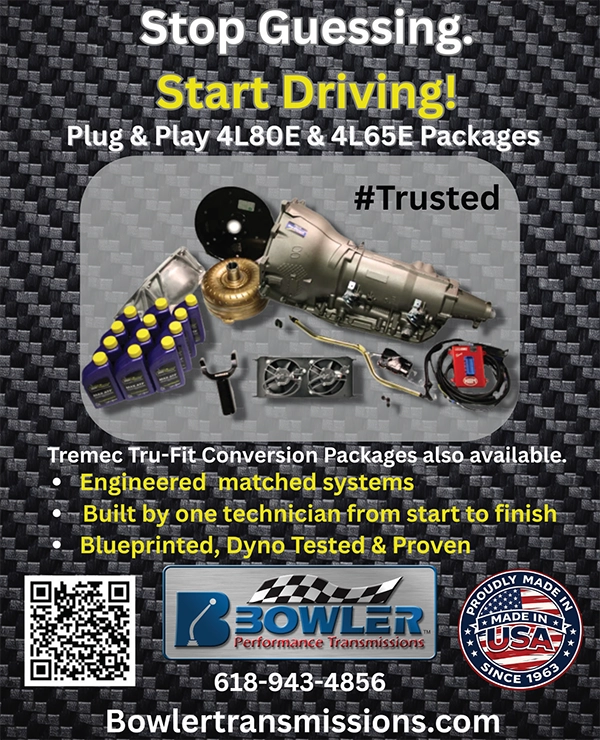
- BOWLER PERFORMANCE TRANSMISSIONS
- CLASSIC INSTRUMENTS
- CLASSIC PERFORMANCE PRODUCTS
- CLASSIC PERFORMANCE PRODUCTS
- CLEANTOOLS
- DAKOTA DIGITAL
- EATON DETROIT SPRING, INC.
- FITECH EFI
- FLAMING RIVER INDUSTRIES
- FLAMING RIVER INDUSTRIES
- GOLDEN STAR CLASSIC AUTO PARTS
- GOODGUYS ROD & CUSTOM ASSOCIATION
- GUARDIAN LIFTS
- HEINZMAN STREET ROD SHOP
- HEMMINGS
- HOT HEADS RESEARCH
- JEGS HIGH PERFORMANCE
- KOUL TOOLS
- LOKAR
- LOKAR
- NATIONAL STREET ROD ASSOCIATION
- OPTIMA BATTERIES
- PHOENIX MACHINE PRODUCTS
- POWERMASTER PERFORMANCE
- PURE CHOICE MOTORSPORTS
- RARE PARTS
- ROADSTER SHOP
- SALTWORKS
- SCHWARTZ PERFORMANCE
- SCOTT’S HOTRODS
- STEELE RUBBER PRODUCTS
- STEVE’S AUTO RESTORATIONS
- THAT’S GREAT NEWS
- WHEEL SMITH
- WILWOOD ENGINEERING
- WINTERS PERFORMANCE