

 PHOTOGRAPHY BY MICHAEL CHRISTENSEN
he story behind this 1955 Chevy Nomad wagon is worth revisiting because it feels familiar. Most of us have heard some version of it, and many have lived it. That is what makes Bryn Williams’ long journey so relatable—and what makes this Nomad such a compelling reminder that true craftsmanship never goes out of style.
To understand how this Nomad became the machine you see here, go back to 1972 when Bryn bought the 1955 Chevy wagon with plans to restore it to Chevrolet assembly-line condition. He drove it for about three years, but then life intervened—as it often does—and the Nomad sat for the next 45 years, stalled out as little more than a large garage paperweight. Eventually, Bryn teamed up with Bill Ganahl of South City Rod & Custom (SCR&C) and chose a new direction: instead of restoring the wagon to stock form, they would build it to reflect modern hot rodding rather than what GM originally intended.
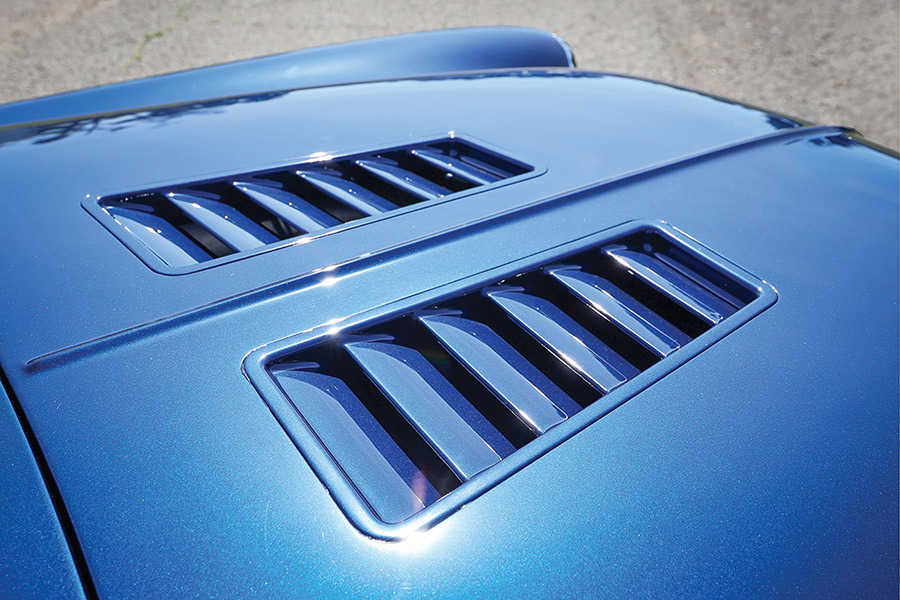

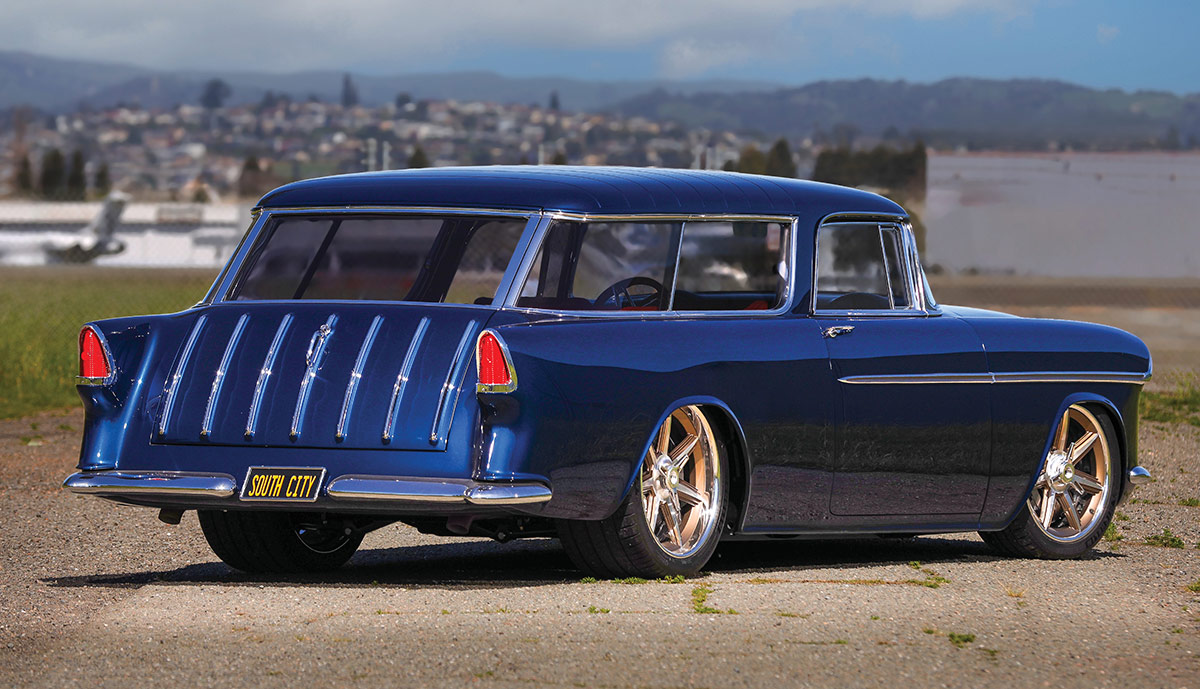
Custom hood scoops were designed and machined to sit flush with the hood surface, balancing function with form. They hint at forced induction while preserving the nose’s clean, uninterrupted lines. The grille is another focal point: a custom, peaked, all-aluminum piece paired with a purpose-built surround that gives the front end a cohesive, high-end look. That surrounding trim was precisely machined and fabricated to blend seamlessly with the body, hood, and fenders, reinforcing the build’s bespoke character. Joe Compani of Compani Color handled the body- and paintwork, finishing the car in a custom-mixed Indigo Blue based on PPG paint and topping it with RCC.4000 Glamour Clearcoat LV from Rogue Custom Finishes.
The front and rear bumpers are unique to this Nomad. Both began as Buick Riviera units, then were reshaped and reworked to better match the car’s proportions. Handmade bumper valances complete the integration, preserving vintage cues while moving the overall look toward a cleaner, more modern silhouette. The headlight treatment also received special attention, with the eyebrow trim flush-mounted into the fenders to maintain a sleek surface and emphasize the car’s low, aggressive stance.
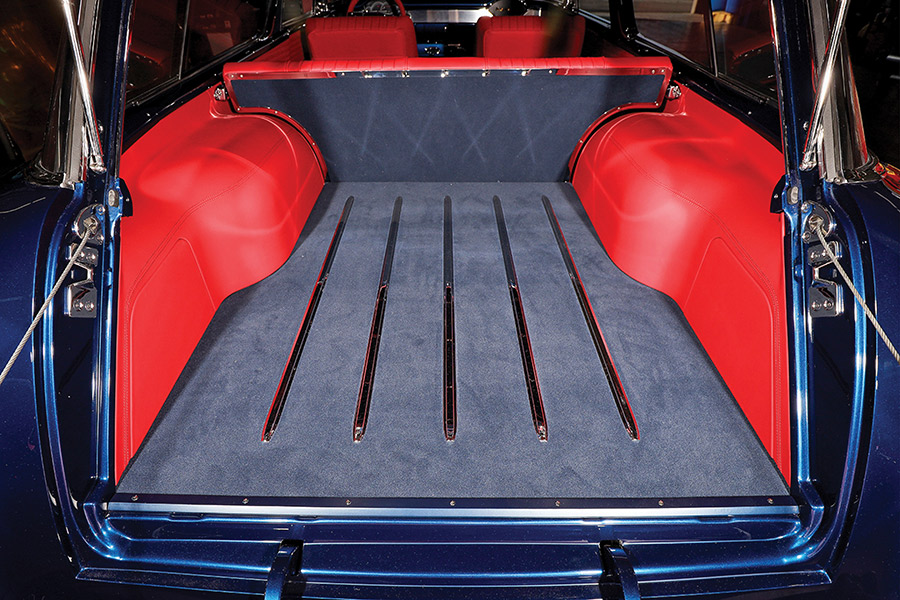
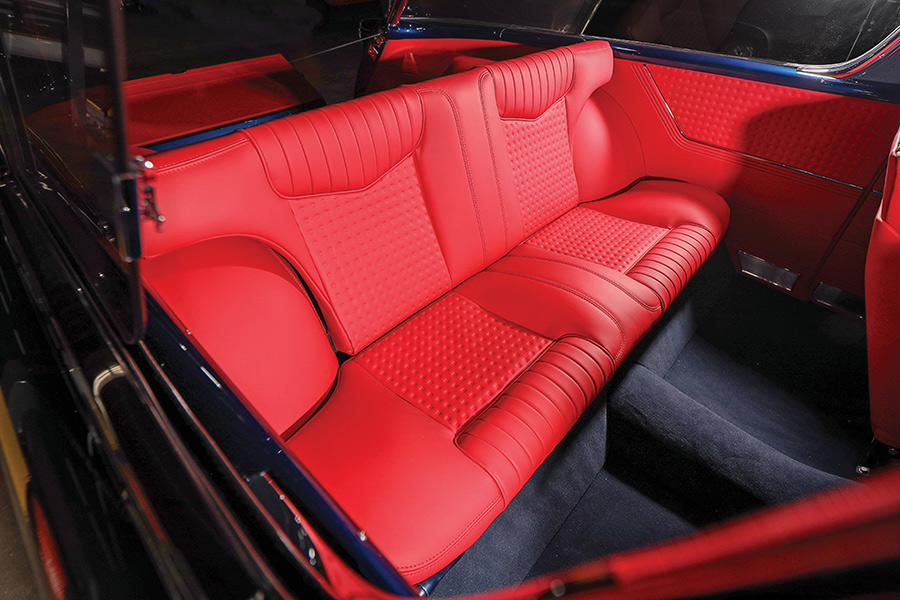
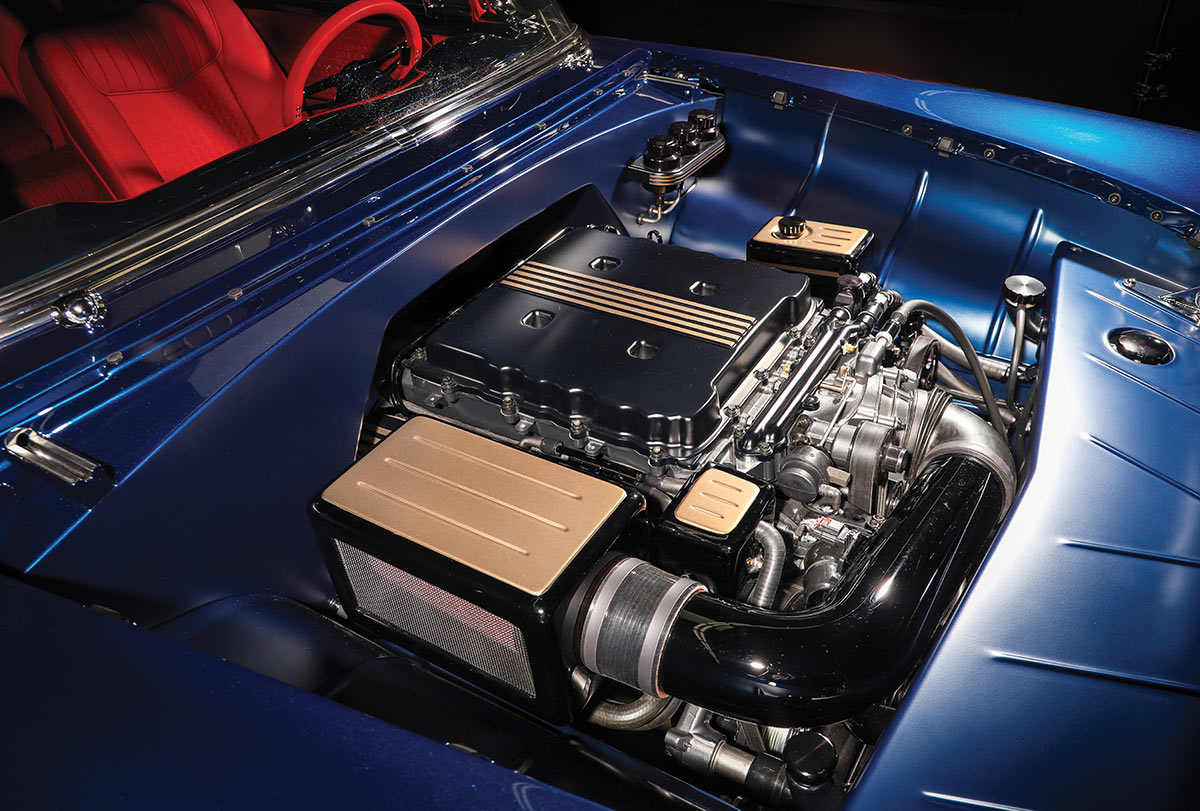
Inside the engine bay, the Nomad has the look of a purpose-built machine. The hood opens forward on a mechanism designed and built from scratch to suit the new configuration while preserving the car’s clean exterior lines. SCR&C also reworked the Nomad’s distinctive headlight eyebrow trim, flush-mounting it into the fenders, and removed the stock cowl grille to clean up the lines at the base of the windshield. Additional front end metalwork included reshaping the wheel openings. The engine compartment panels and firewall were all handmade, so every edge would align precisely with the Roadster Shop chassis beneath. At the rear, the tailgate was subtly refined, with the hinges shaved and relocated inside the body for a cleaner profile. SCR&C also removed the stock fuel filler door from the driver-side rear quarter-panel and relocated it behind the driver-side taillight in the style of a 1956-57 Chevy. The entire floor assembly was redesigned and handmade to mount securely to the RS chassis, improving rigidity and preserving the car’s proportions. Even the rear seat was modified to recreate the original folding action, allowing the Nomad to retain one of its hallmark features while accommodating its modern underpinnings.
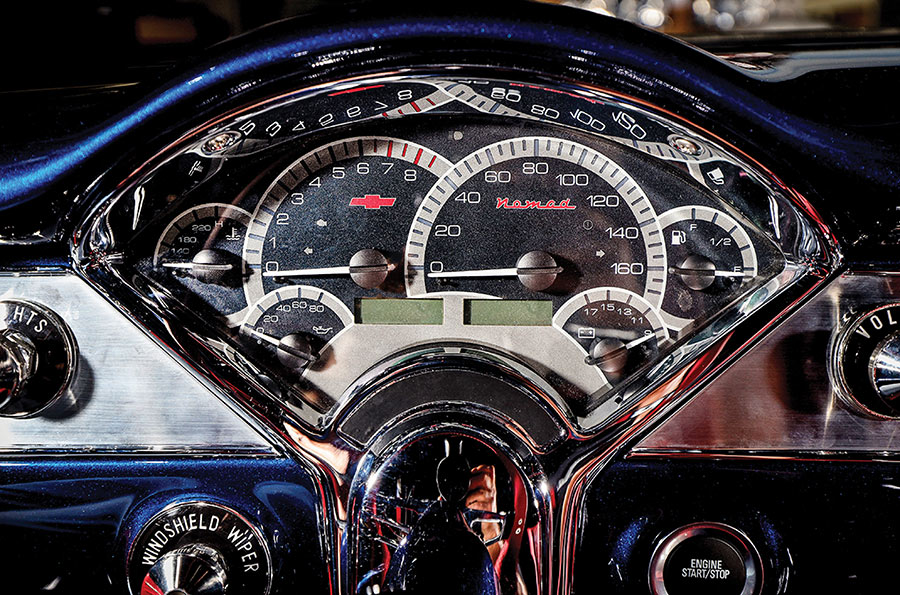
The interior retains its original layout but has been thoroughly modernized without losing the Nomad’s factory feel. The stock dash now houses Dakota Digital VHX instrumentation, with the wiring harness connected via a significant undertaking by Current Fab. Other dash upgrades include a Flaming River steering column and a leather-wrapped, D-shaped, three-spoke wheel from SPARC’s Driver’s Series. The center console houses the Hurst shifter, Vintage Air A/C controls, and power-window switches. Additional A/C vents are built into a custom SCR&C lower dash panel. The clutch and brake pedals are from Wilwood, while the throttle pedal is Lokar. Dark blue carpet and a blue pool-table-felt headliner add contrast to the red leather upholstery by DJ Designs. Up front, the bucket-seat frames are from TMI; in the rear, the second row is the custom folding bench that would have existed in the original. Roxie from SCR&C placed pen to paper and drew the seats and center console, and then Tavis Highlander followed with the final rendering, from which DJ Designs built and, where appropriate, covered the center console and seats.
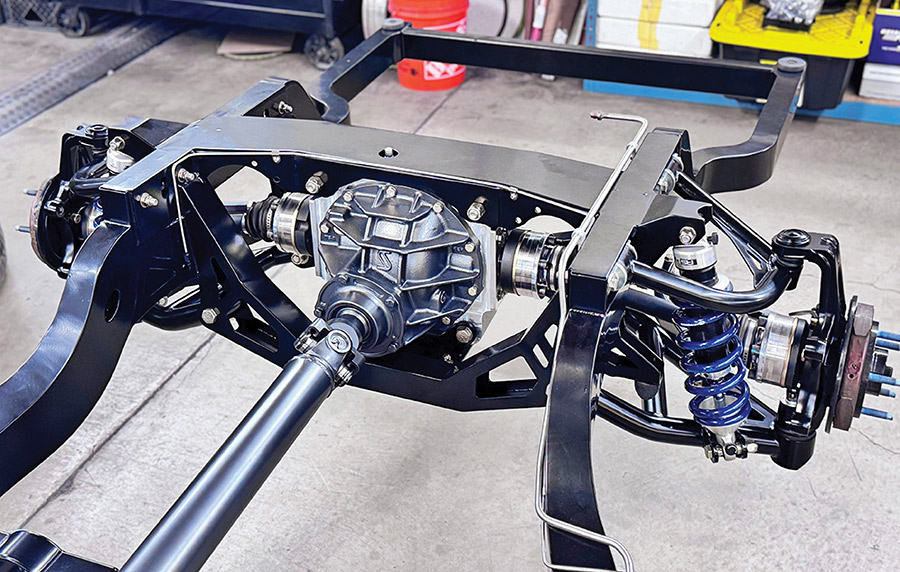
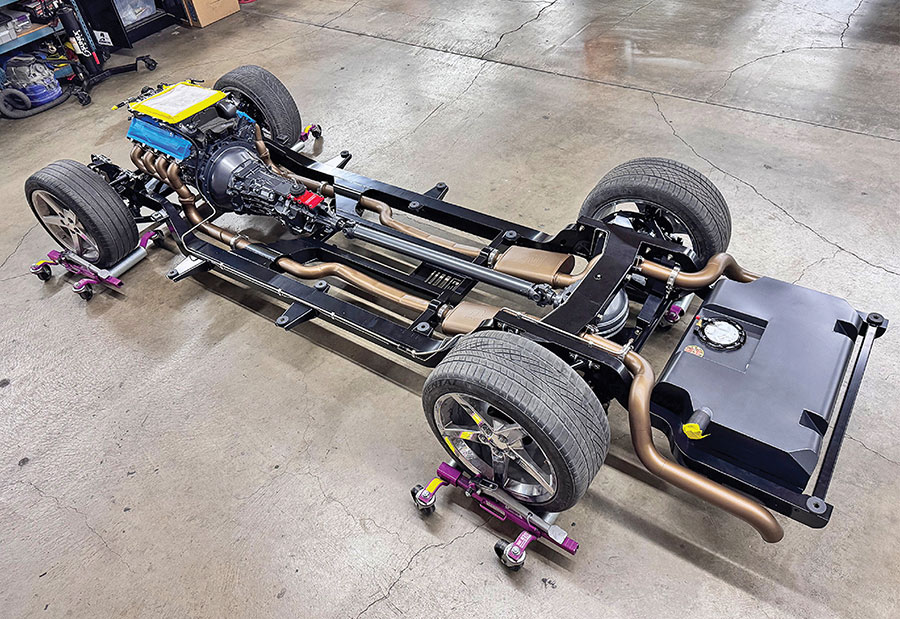
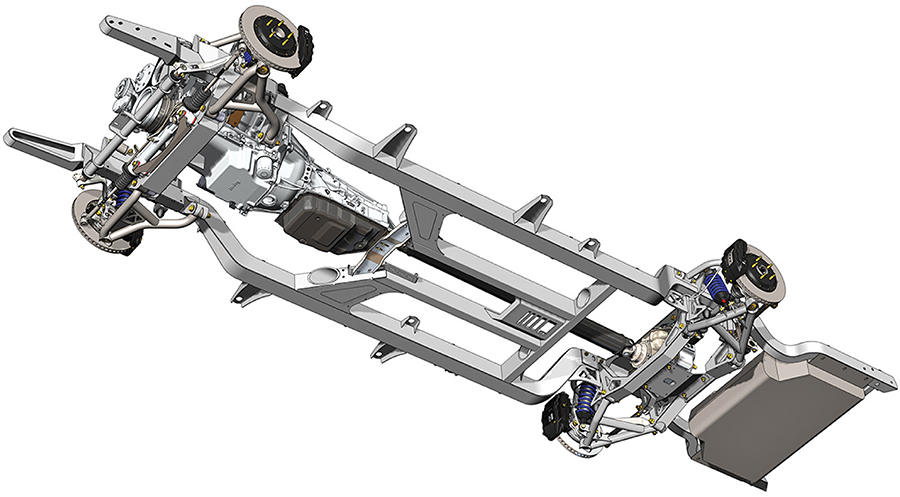
Underneath, the chassis is a Roadster Shop (RS) Fast Track built with hand-fabricated, fully boxed, 10-gauge, 4×4-inch framerails. Fabricated exhaust ports in the mid-brace allow clearance for up to 3-inch exhaust tubing. The front suspension is based on C6 Corvette architecture and uses an RS rack-and-pinion, Penske coilover shocks, and Brembo ER1 carbon-ceramic drilled-and-slotted rotors with matching calipers. Out back, the RS independent rear suspension delivers the expected handling benefits and is anchored by a Strange 9-inch centersection with a 3.73 performance gear ratio. Brembo brakes are used at the rear as well, along with an RS Panhard bar and sway bar. A Wilwood master cylinder ties the brake system together.
Power comes from a 6.2L (376ci) LT4 with an aluminum block and heads, topped by a 1.7L Eaton R1740 TVS supercharger. The combination delivers 650 hp and 650 lb-ft of torque with more than 9 psi of boost. While the V-8 retains a strong factory-style appearance, several details set it apart. The valve covers come from Scott’s Hotrods, and the plenum box was designed to match the valve covers, airbox, and power steering reservoir. Numerous -AN fittings and custom hoses complete the engine-bay detailing. Exhaust begins with Summit Racing cast-iron manifolds, then flows through a custom SCR&C-built stainless system and a pair of mufflers.
If you attended this year’s Grand National Roadster Show, you may have seen this 1955 Chevy Nomad wagon in SCR&C’s booth. From there, the wagon went on to earn First Place in the Full Custom Wagon class, proving once again that a well-executed build is always a winning formula.