
Modern Rodding Tech
InTheGarageMedia.com
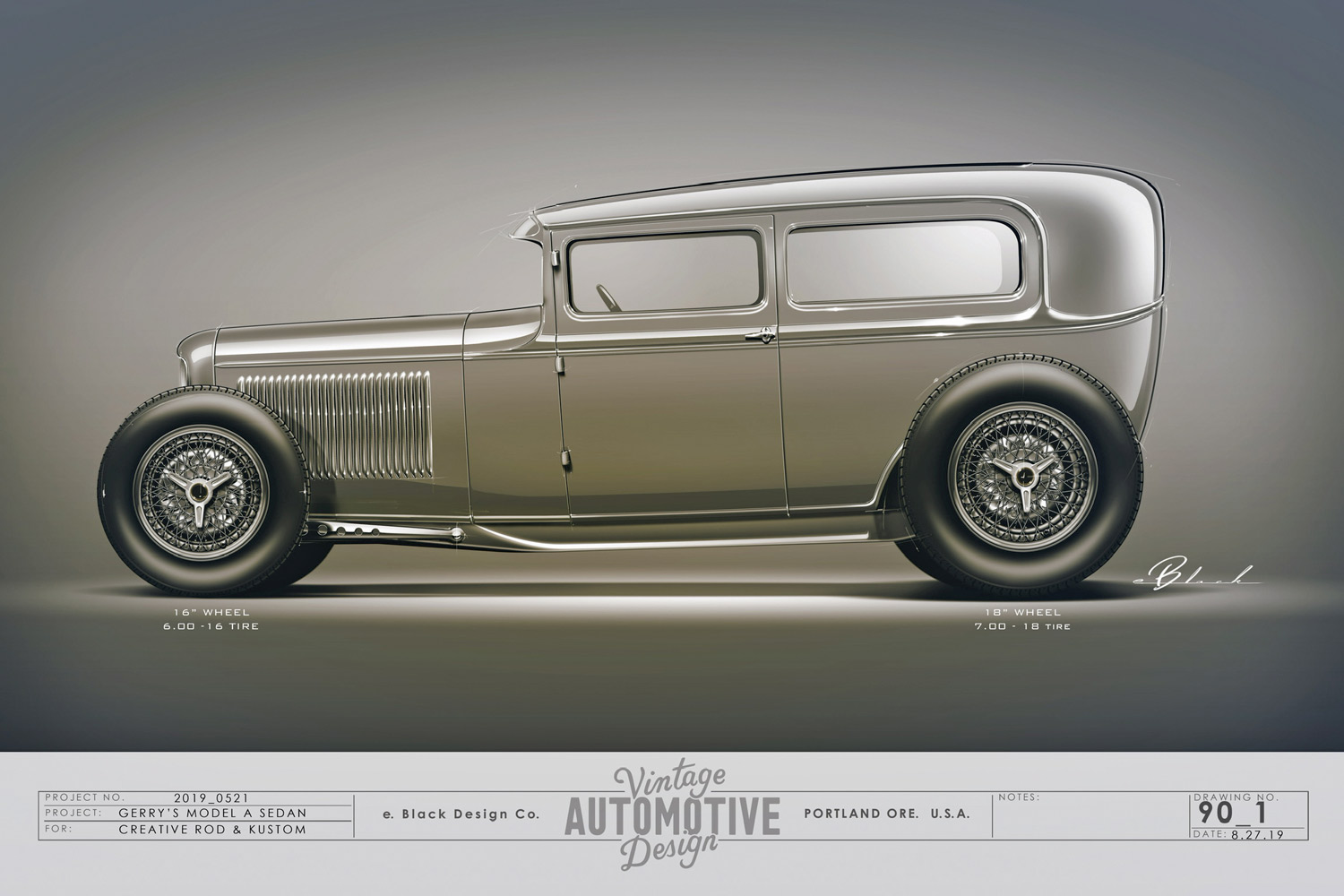
1930 Ford Channeled Sedan drawing by Eric Black
1. Eric Black’s drawings laid the foundation for building this top-level Model A sedan.
Building a 1930 Ford Channeled Sedan
Part 3: Attention to the Details
By RON COVELL Photography by Chris Gray
I

In past issues of Modern Rodding we looked at the outstanding chassis on Gerry Kerna’s Rebel A Sedan, built by Roadster Shop, and the initial body modifications. This time, we’ll dive into the ton of special details work that was done at Creative Rod & Kustom in Womelsdorf, Pennsylvania. They brought the car to completion with its superior level of fit and finish.

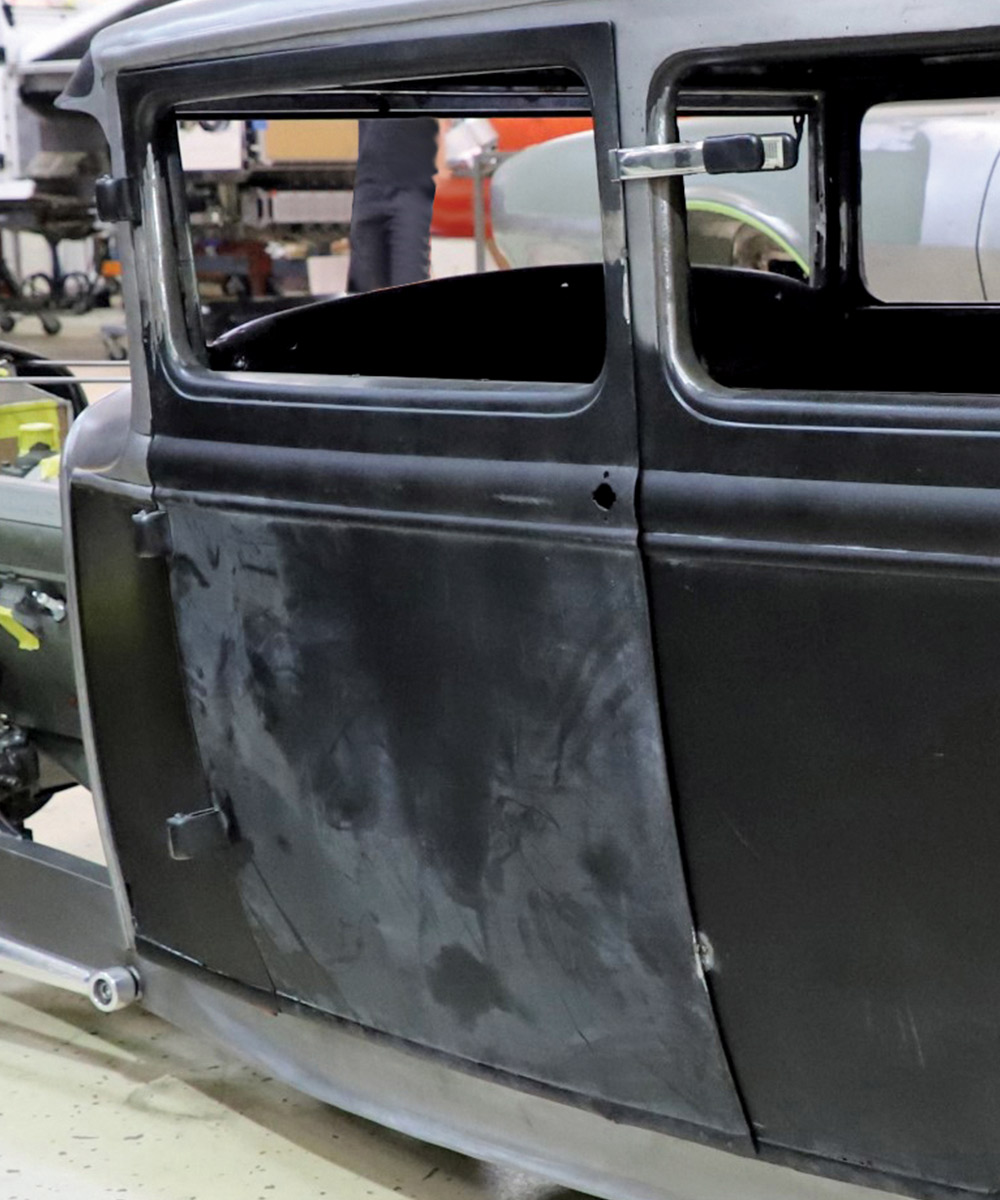
Model As have their own appeal, but some elements can certainly be improved. The sedan doors fit flush on the front edge, but the back edge overlaps the quarter-panel, creating a “hiccup” that would be out of place on a smooth car like this one. It takes a lot of work to fabricate an accurately sized recess in the quarter-panel, allowing the door to fit flush, but the crew at Creative Rod & Kustom did an admirable job. They also extended the door tops to meet the new reveal that replaced the original driprail.

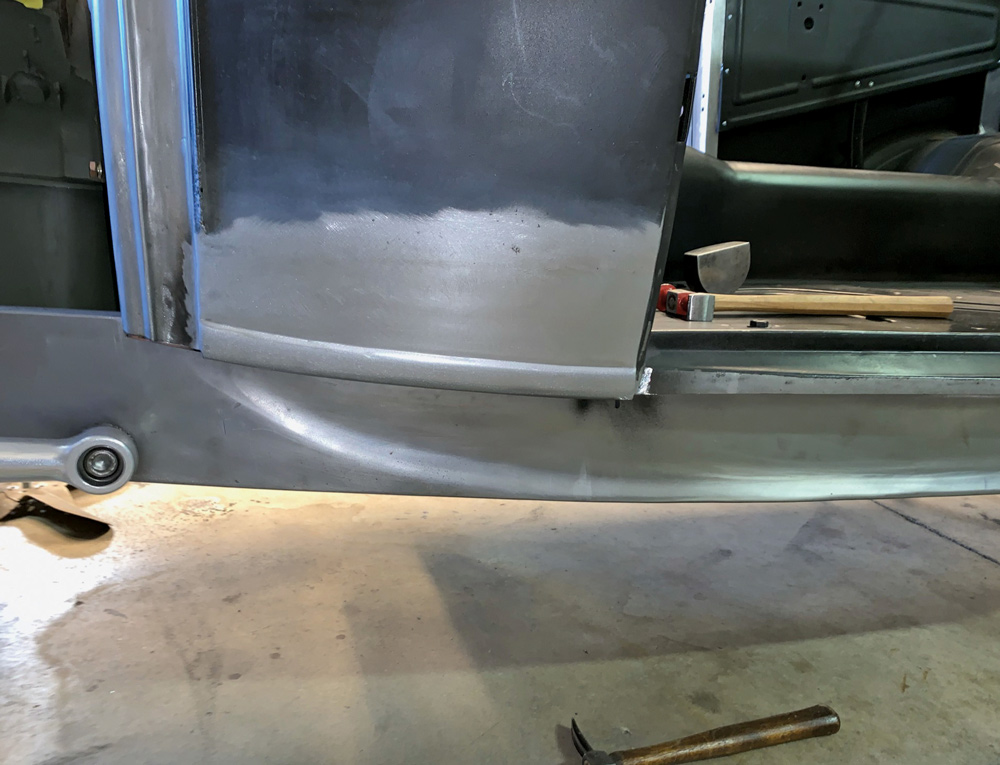
Model A bodies are flat on the bottom, but since this body is slightly channeled on a 1932-style frame, the bottom reveal in front of the door was curved up about 1 inch to blend more smoothly with the ’32-style hood.

Lots of work went into the hood. The sides feature 25 louvers, and special reveals were added to match those on the bottom of the body. The top edges were configured to house combination hinge-latch modules, which allow the hood to hinge from either side or be easily removed. The hood top has a robust inner structure, ensuring it holds its shape on or off the car. This structure is removable and rubber cushions keep it from chafing the skin.

An intricate fan shroud was made to fit snugly between the fan, radiator, hood sides, and radiator support bars. It’s a masterpiece of design and execution!

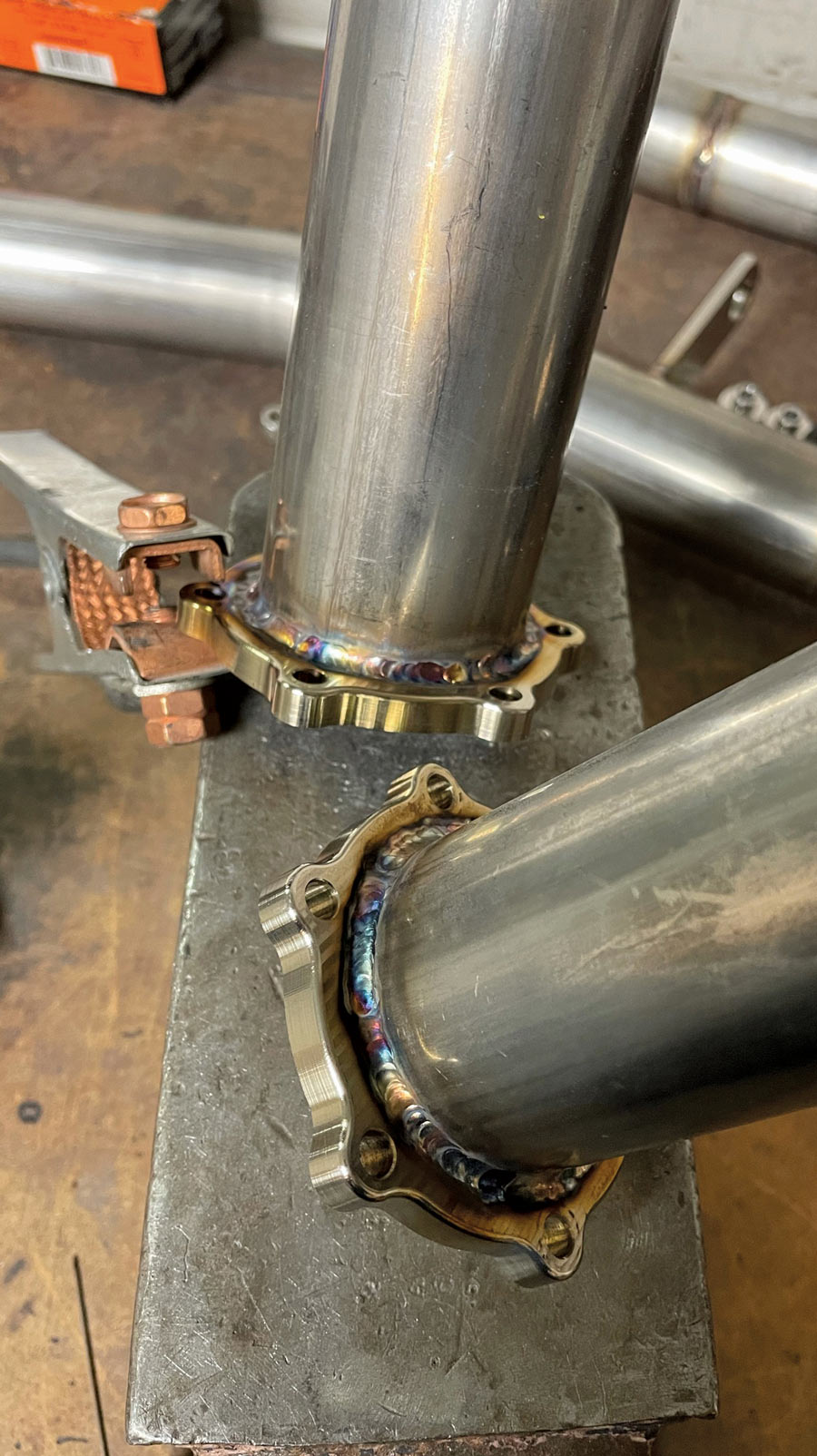
The Creative Rod & Kustom crew built a custom stainless exhaust system utilizing custom-made stainless flanges to hug the Caddy heads and gracefully join the stainless mufflers to the head and tailpipes.

We think you’ll love savoring the detail work lavished on this traditional yet modern A sedan. We’ll cover even more special features in the final installment, which is coming soon.
Model A doors
2. Model A doors originally had an overlapping fit on the back edge, and the bottom of the body was completely flat. Note the gap between the top of the door and the reveal above it.
closeup of curve on body of car
3. The lower reveal on the slightly channeled body was curved toward the front, making a nice transition to the bottom edge of the hood.
back edge of door after being flush-fitted
4. Note how the back edge of the door has been flush-fitted, and the top of the door now meets the reveal. A lot of careful work goes into refining details like this.
new inner panels installed on wheelwells
5. The wheelwells were rusted and damaged so new inner panels were made, incorporating some nice beadwork to add strength and style.
closeup of refurbished wheelwell
6. Here’s the refurbished wheelwell after welding and smoothing.
view of side hoods made from 25-louver 1932 Ford hood blanks
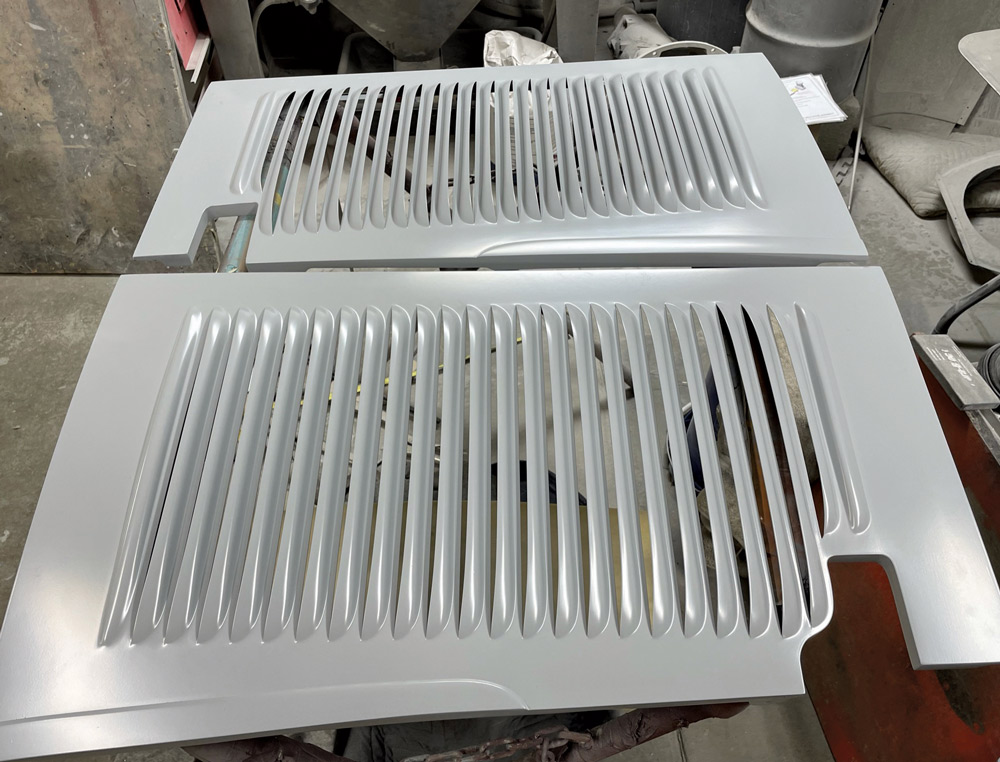
7. New hood sides were made from 25-louver 1932 Ford hood blanks. These were cut to size and custom-fitted for this application.
closeup of resized louvers
8. Notches on the hood side were needed to clear the steering tie rod and a few louvers had to be resized to match.
hood sides coated in primer
9. Here are the finished hood sides freshly coated in primer.
custom hood top made from sheetmetal
10. A custom hood top was made from steel. Here, the removable inner structure is made from sheetmetal angles and hat sections. The taper of the hood makes this part tricky to fabricate.
inner brace of hood with small pieces of yellow tape marking different parts
11. Here is the inner brace attached to the hood. The hinges and latches allow the hood to open from either side or be easily removed.
view of inner brace after car is painted
12. This photo was taken after the car was painted, showing how beautifully the inner brace integrates with the hood top. Strips of rubber cushion the parts, keeping them from chafing.
plywood fan shroud guide with indentations being added
13. The car’s fan shroud is an elaborate construction. Here, a plywood guide is used on a Pullmax machine to form the indentations in the main panel.
panel fitted against radiator
14. A few steps later, the panel is fitted against the radiator. Making these components fit together so neatly takes a lot of planning.
fan shroud after ring is tack-welded into place
15. Next, a ring was tack-welded into place, which extended back to encircle the fan.
completed welding work on fan shroud
16. The welding was completed on the workbench and all the joints were smoothed.
fan shroud after painting
17. After painting, you can appreciate this complex part’s great fit and finish.
header flanges
18. The car received a custom stainless exhaust system and special header flanges, which were 3-D printed from plastic to test their size and fit.
flange after going through cnc machine
19. Once the fit was verified, the flanges were CNC machined from billet stainless steel. Note how well the flange’s shape matches the cylinder head’s mounting surface.
man installing stainless tubes
20. With the flanges attached to the heads, the headers can be fabricated using stainless tubing and U-bends.
finished headers installed with specially made stepped studs
21. These headers have a simple but elegant design. Specially made stepped studs were used for the header flanges, using a 3/8-inch 12-point nut, allowing a socket to fit without dimpling the header tubes.
stack of stainless flanges
22. Special stainless flanges were made for the 2-1/4-inch tubing feeding the mufflers and the tailpipes.
closeup of flanges joined to exhaust tube
23. Here, the flanges are joined to the exhaust tubes. Six 1/4-inch bolts allow for a very low-profile connection.
chassis with mufflers attached
24. Both stainless mufflers were mounted on the passenger side of the chassis. Note how gracefully the exhaust system flows through the openings in the X-member.
two men detailing the chassis of the 1930 Ford Channeled Sedan
25. One of the reasons this car is so outstanding is because of the labor lavished on the details. Every nook and cranny on the chassis and the underside of the body was detailed just as nicely as the top surfaces.
SOURCE
Modern Rodding
VOLUME 5 • ISSUE 48 • 2024