

 Photography by Josh Mishler
n the world of hot rods, it is rare to have a project built “on time” or in a timely manner. It’s not for lack of trying; it’s just a matter of life being life and slowing down our best intentions from sprinting to shuffling. Such was the case for Irvin Henry of Grain Valley, Missouri. It was back in 1999 that Irvin got the “bug” to build, and this 1939 Buick Special came into his life, and that’s when life took over.
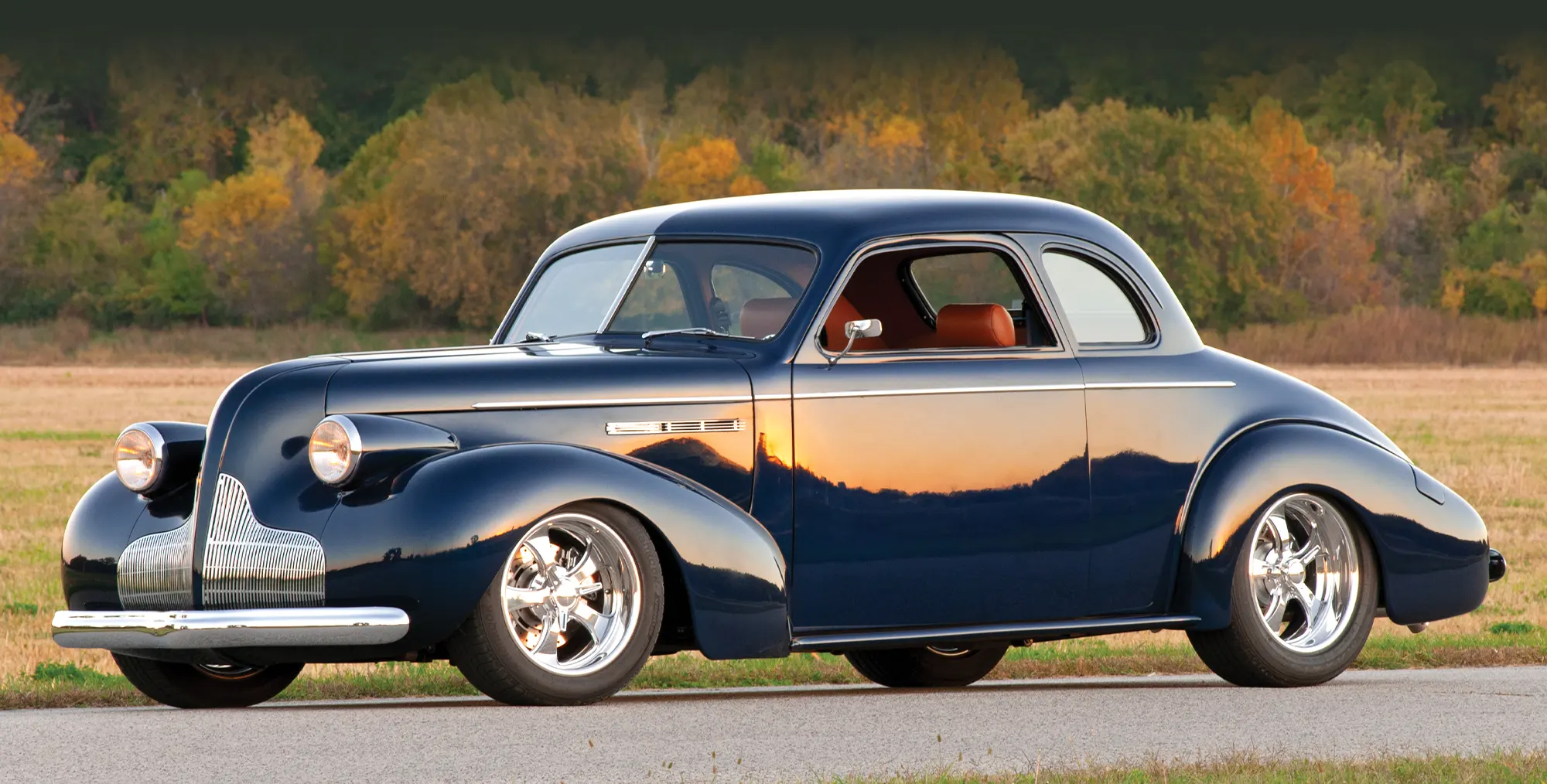
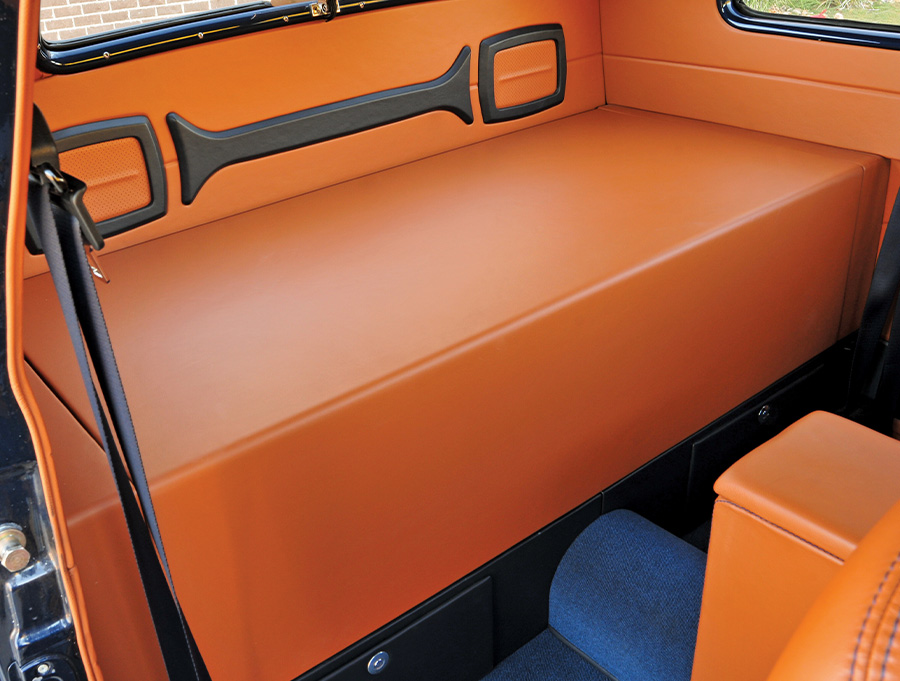
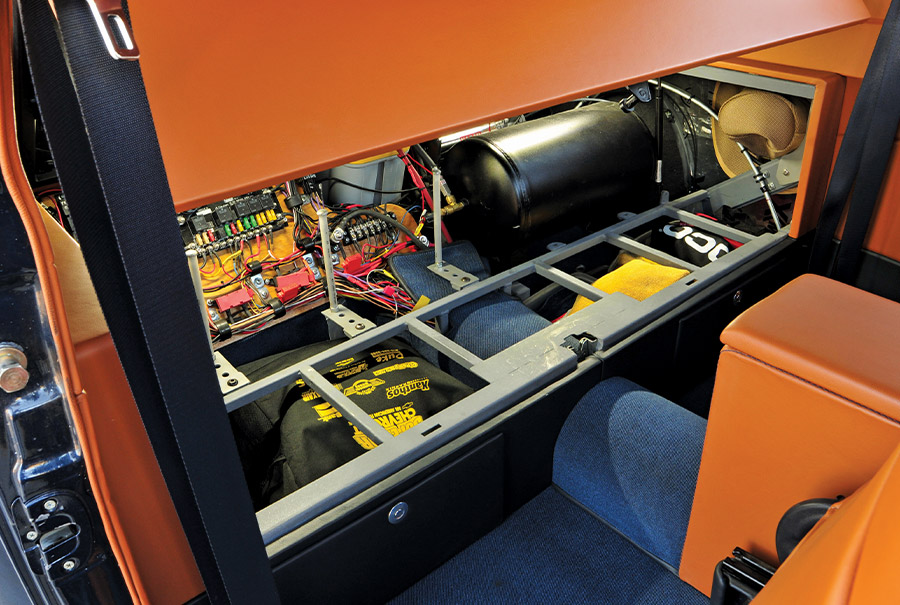
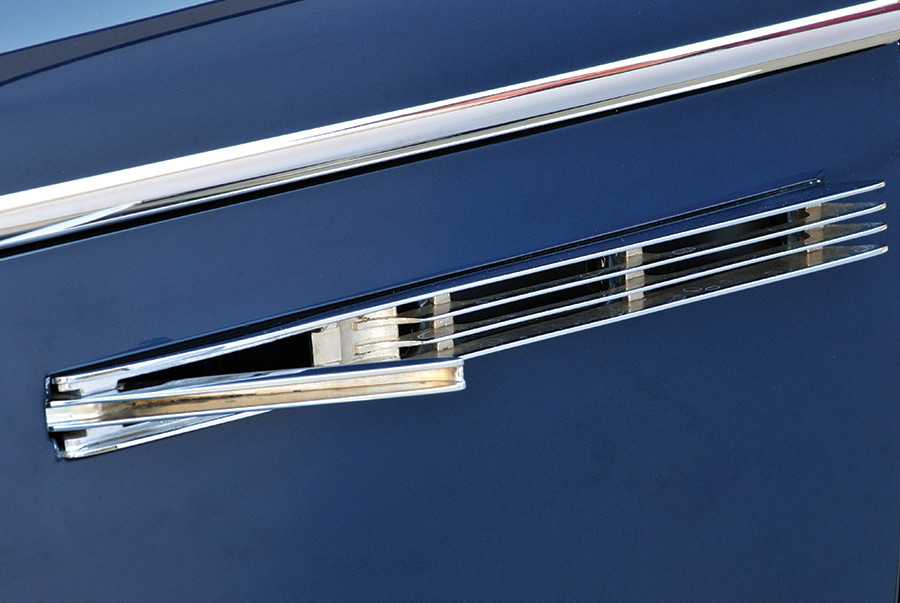
The body began life as a 1939 Buick Special, and as it evolved into a street rod, additional effort was made to repair all the body panels that showed rust. Extensive rust forced Irvin to make new rockers, floor, and refit the bottom 4 inches of the trunklid, which required fresh sheetmetal, as did the gutters and fender patch panels. From here, the body was channeled 2 inches in front and 1 inch in the rear. The top was chopped with 1-1/2 inches removed from the front A-pillar to 0 inches at the rear of the C-pillars while the driprails were removed and then replaced with a “character line” using 1/4-inch rod. The running boards were shaped from a 1-1/4-inch EMT conduit (electric metallic tube). Note the area where the vent windows once resided, which have now been removed, giving the side glass a “clean” appearance. Aiding in this appearance, all handles were also removed. The front and rear bumpers were shortened 6 inches and tucked into the body. Regarding the rear bumper, the surround of a 1950 Chevy license plate was reshaped to fit the Buick bumper contour. The front bumper also required “cutting” and was reshaped to follow the contour of the fenders and grille. He also made a new core support, scraping the original, to accommodate the crossflow Griffin Radiator cooler and a Derale electric fan to fit the available space. The stock Buick hood was reused, but its center trim and trim down the sides are made of stainless steel by McMillan Rod & Custom. The next stop was at Advanced Plating, which handled all the brightwork on this ’39 Buick.
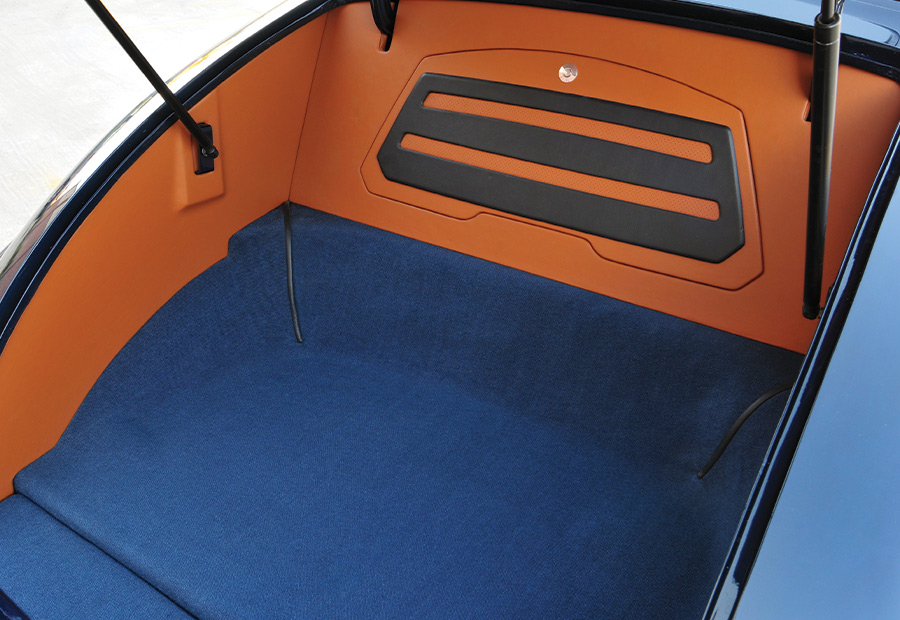
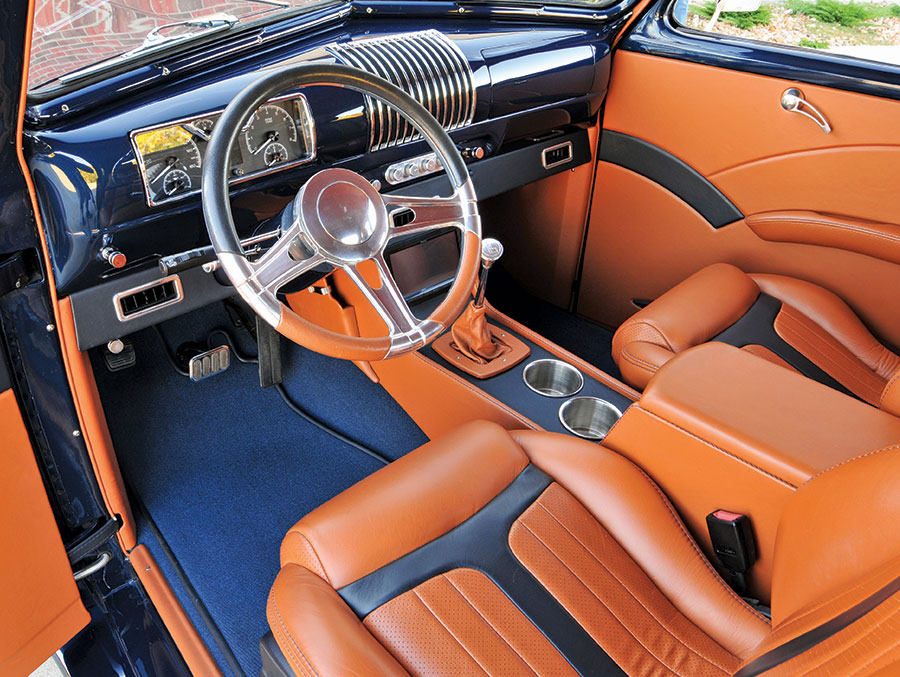

The stock 1939 Buick Special frame was retained, and a Fatman front clip was grafted to it, plus Fatman spindles, along with Ridetech ShockWave air shocks, a Thunderbird rack-and-pinion, and an Ididit steering column, Wilwood drilled-and-slotted rotors, and polished Dynalite calipers. Moving the power rearward, the next stop is a Lincoln rearend massaged by John’s Industries and filled with their custom 28-spline axles and 3.25 gears equipped with Wilwood braking. All the braking is operated by a Wilwood 7/8-inch bore master cylinder and an underfloor homemade pedal assembly. A Ridetech four-bar holds the rearend in place along with more Ridetech shocks. Also in the back is a Tanks 16-gallon unit. Found at the corners are polished Schott Americana wheels with three-spinner knockoffs: 17s in front and 18s in the rear. The rubber is made up of a combination of Hankook and Maxxis, with 225/50R17 fronts and 245/55R18 rears.

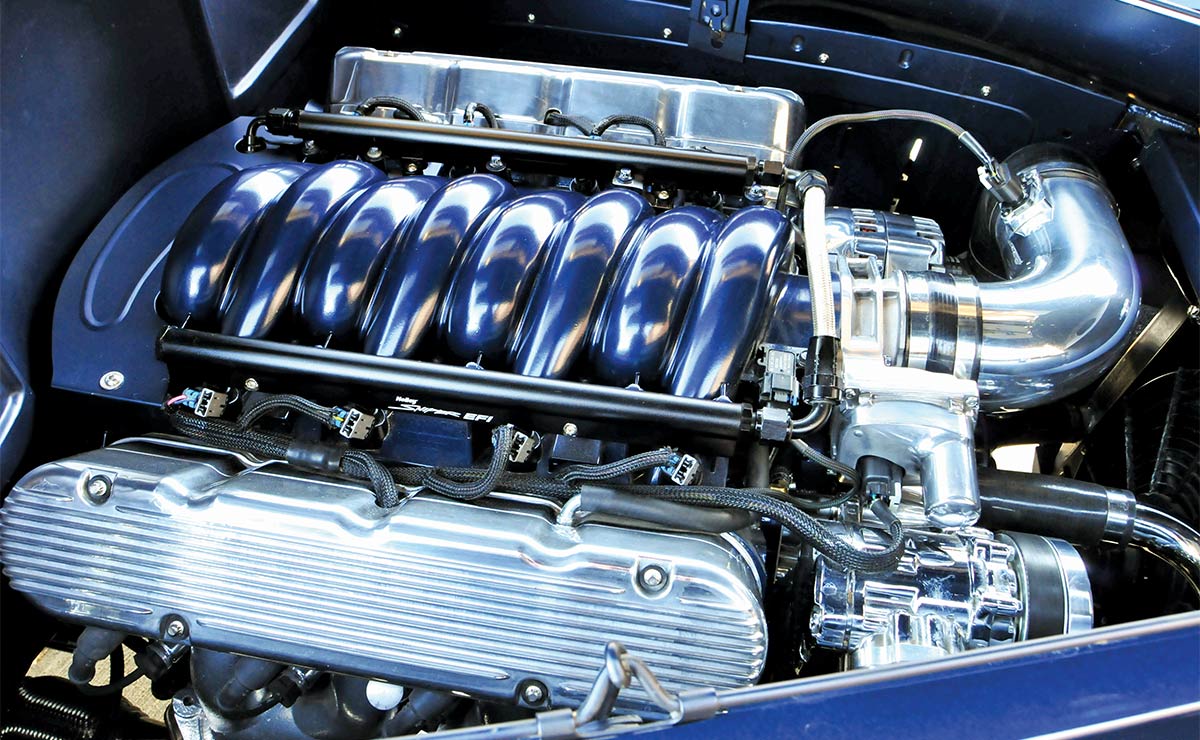
Having survived the initial engine disaster, it was back to driving. Major changes like this often lead to other changes. In this case, a few modifications had to be made to the frame, exhaust, and cooling system, as well as some serious rewiring. Yep, this isn’t a quick fix, and it took about a year to complete. Once the A/C was recharged and the LS tuned, it was back on the road, enjoying the freshly minted street rod.