
Modern Rodding TECH

InTheGarageMedia.com

1. Old Anvil Speed Shop has an interesting “twist” on the traditional frame modifications for the A/V-8 chassis.
A ’29 Roadster on Deuce ’Rails is a Time-Honored Tradition
Old Anvil Helps Put the A in A/V-8
By Ryan Manson Photography by Brian Brennan
W

hen it comes to building a traditional A/V-8 highboy roadster, one of the most challenging aspects can be modifying the ’32 Ford’s framerails to fit the body of the ’28-29 Model A. Where the flat Model A frame left a lot to be desired, the Deuce chassis has much more shape, carefully following the bottom of the body with sweeping kickups at both ends. This shape that makes the ’32 frame much more attractive, also contributes to the difficulties one faces when adapting to an early body. Not only does the rear kickup interfere with the flat floor of the Model A, but the shape of the two bodies is quite different in the passenger compartment and cowl area, requiring a rework of the shape of the perimeter framerails in the form of a pinch or two. But this work is not all for naught, for the resulting modified Deuce chassis makes for a more solid foundation and a much more attractive chassis when compared to the spindly Model A ladder frame.

With a handful of classic truck and muscle car builds under his belt, Jason Scudellari decided it was high time to build himself a legit hot rod. And by that we mean the only car truly deserving of the term: an open-wheeled, highboy roadster. Not wanting to spend half his remaining adult life repairing an original Henry Ford body, Scudellari rang the good folks at Brookville Roadster and ordered one of their all-steel ’29 Ford roadster bodies. Following that call, Speedway Motors was given a bell, resulting in a parts list that would include a pair of their ’32 Ford framerails, full-length boxing plates, dropped front crossmember, and tubular crossmember kit. This provided a solid foundation upon which Scudellari could start his hot rod build, but after some quick mock-up work he soon realized that it might make more sense to take his chassis components to a shop better equipped to build frames from scratch. Enter the gang at Old Anvil Speed Shop.

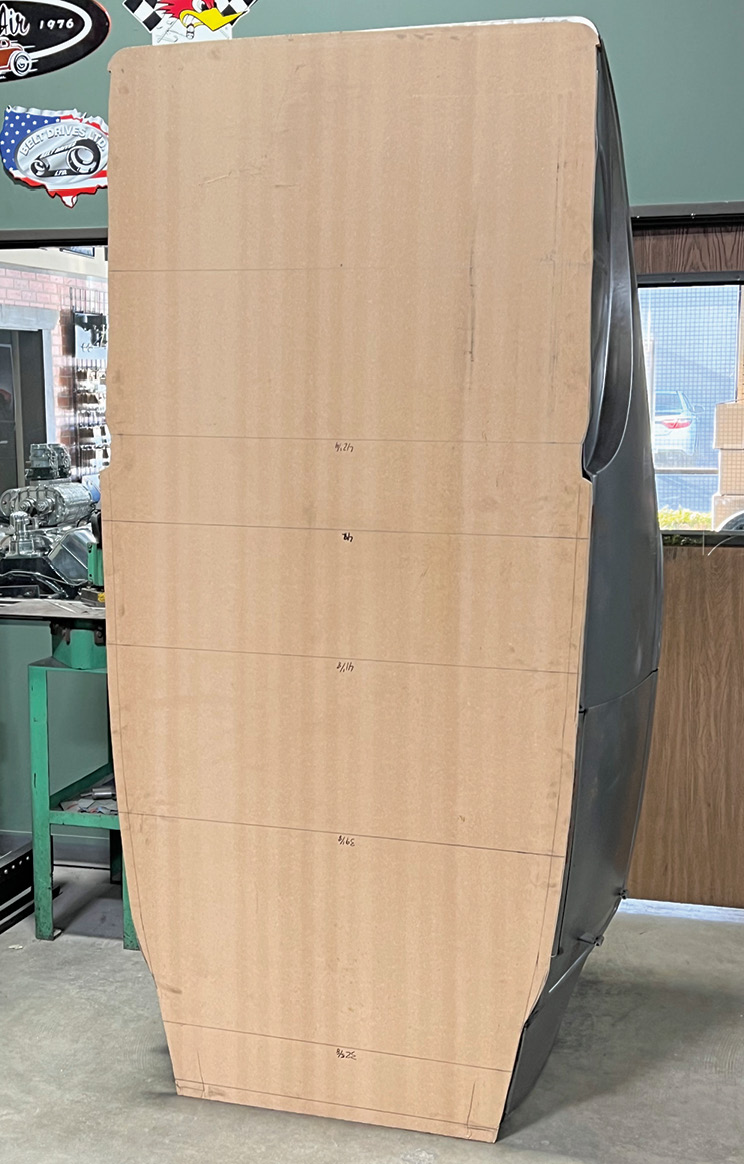
Having the ability to fabricate a chassis in a precise manner requires a specific combination of skill and equipment, something Old Anvil has in spades. The guys know what it takes to put together a hot rod, so they immediately set their sights on Scudellari’s roadster body so that it could be dimensioned, the overall shape noted, and the body mount locations plotted out. These specs were then transferred to a sheet of 1-inch plywood, which will act as a template as the framerails are modified. Armed with this information, the Old Anvil crew started fabricating not only the chassis, but a new chassis jig that will serve to locate future A/V-8 builds as well. As each section was heated, tweaked, and modified to better fit the confines of the ’29 body, uprights were added to the chassis table to keep things locked in place. The result is a chassis that has literally been built to suit Scudellari’s roadster in an extremely accurate manner.
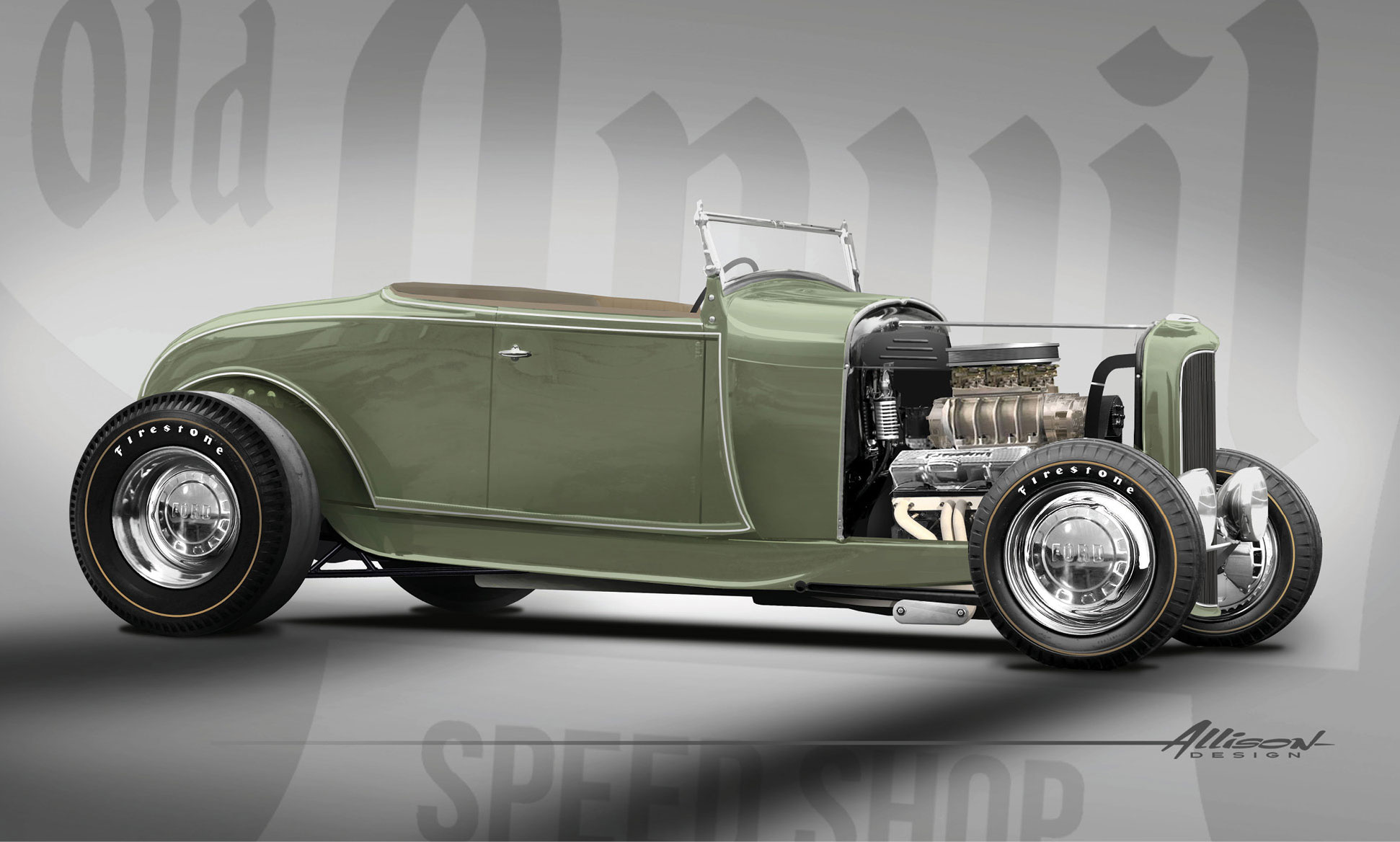
Jeff Allison took the time-honored Model A on a Deuce frame and gives us another great-looking traditional hot rod. Here we will be using a Speedway Motors frame and chassis along with a Brookville Roadster body and we will enlist the help of Old Anvil Speed Shop to put the chassis together.
2. Jeff Allison took the time-honored Model A on a Deuce frame and gives us another great-looking traditional hot rod. Here we will be using a Speedway Motors frame and chassis along with a Brookville Roadster body and we will enlist the help of Old Anvil Speed Shop to put the chassis together.
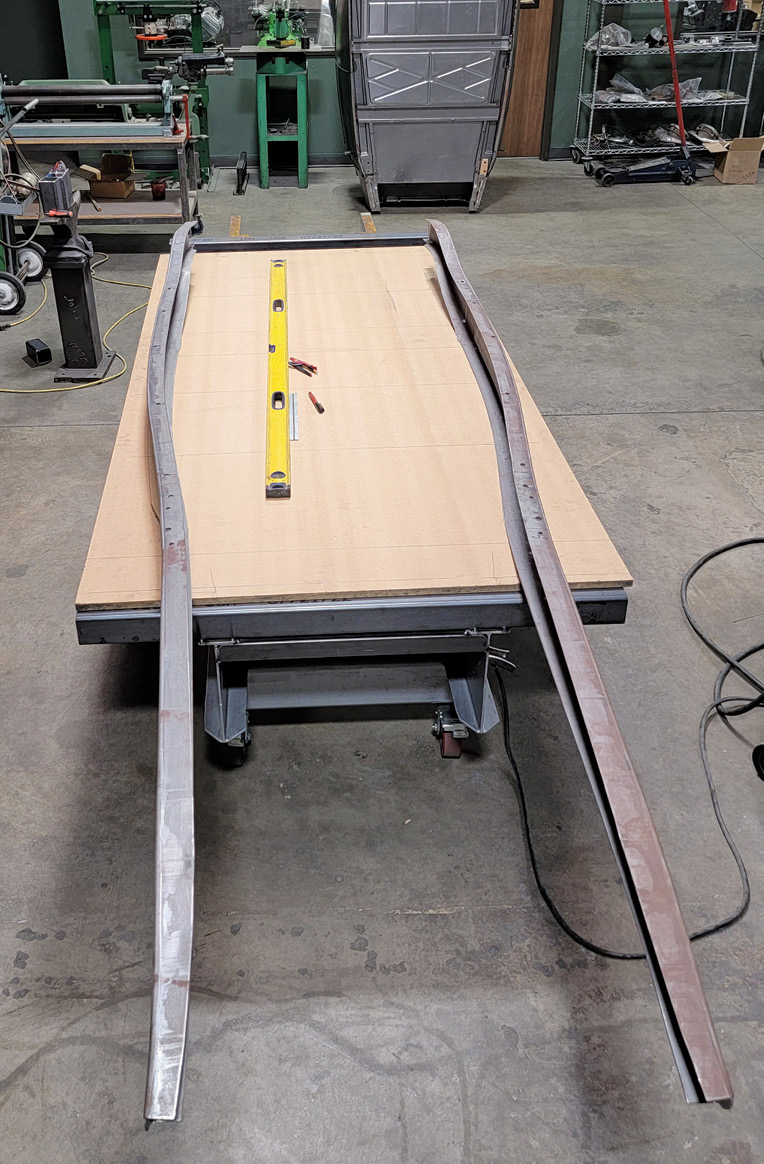
The first thing the Old Anvil crew did was create this plywood template with the dimensions of the Brookville Roadster body noted. This will allow the guys to carefully modify the ’32 framerails to follow the contours of the ’29 roadster.
3. The first thing the Old Anvil crew did was create this plywood template with the dimensions of the Brookville Roadster body noted. This will allow the guys to carefully modify the ’32 framerails to follow the contours of the ’29 roadster.
Stock Model A frames are trapezoidal in shape, being wider at the rear, tapering toward the front with a pair of straight framerails, while the ’32 frame is much curvier in nature. While the Model A frame doesn’t follow the shape of the body whatsoever, the ’32 frame, once fully modified, will. This results in a much-improved look over stock, something hot rodders realized nearly a century ago.
4. Stock Model A frames are trapezoidal in shape, being wider at the rear, tapering toward the front with a pair of straight framerails, while the ’32 frame is much curvier in nature. While the Model A frame doesn’t follow the shape of the body whatsoever, the ’32 frame, once fully modified, will. This results in a much-improved look over stock, something hot rodders realized nearly a century ago.
Here, the curvature of Speedway Motors’ Deuce framerails (PN 91657007) are compared to the Model A template and the required modifications noted.
5. Here, the curvature of Speedway Motors’ Deuce framerails (PN 91657007) are compared to the Model A template and the required modifications noted.
The trapezoid shaped of the Model A body/frame means the centersection of the new frame can be set to spec and locked down in the new chassis jig first since this section will not require any modification.
6. The trapezoid shaped of the Model A body/frame means the centersection of the new frame can be set to spec and locked down in the new chassis jig first since this section will not require any modification.
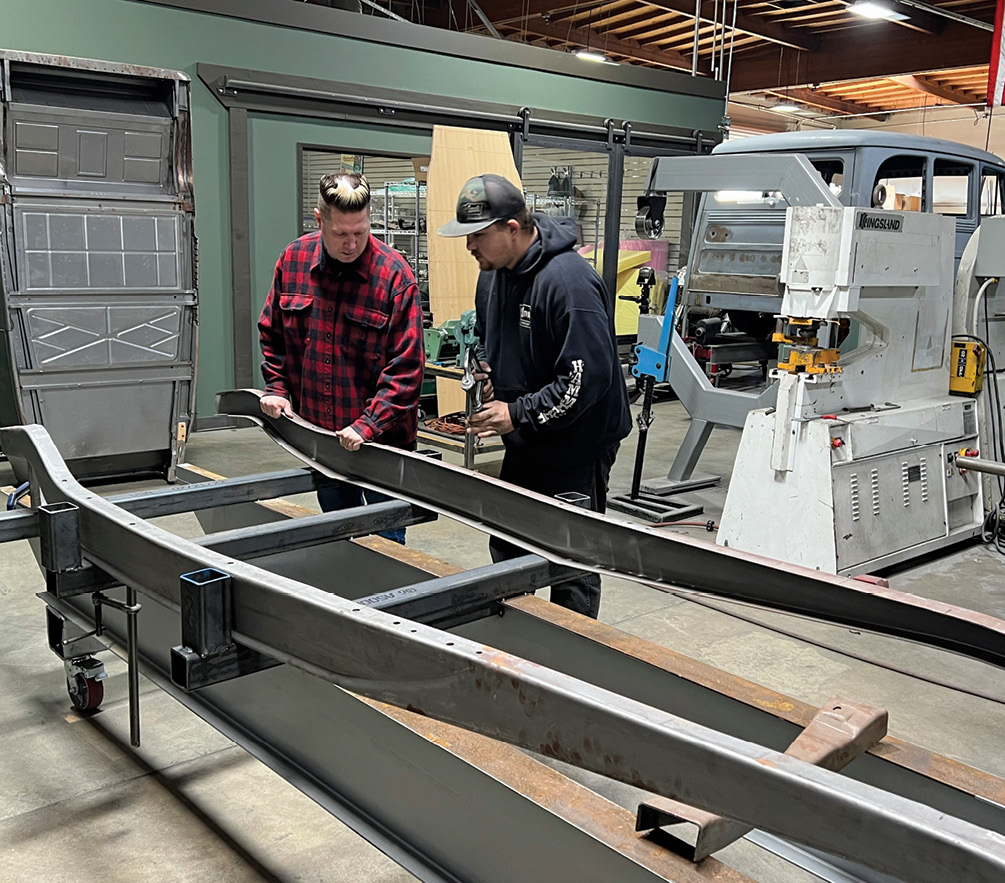
The Old Anvil crew carefully discuss how to address the rear kickup on the ’32 framerails. If this configuration is to be retained, the rear floor in the Model A will need to be modified to suit.
7. The Old Anvil crew carefully discuss how to address the rear kickup on the ’32 framerails. If this configuration is to be retained, the rear floor in the Model A will need to be modified to suit.
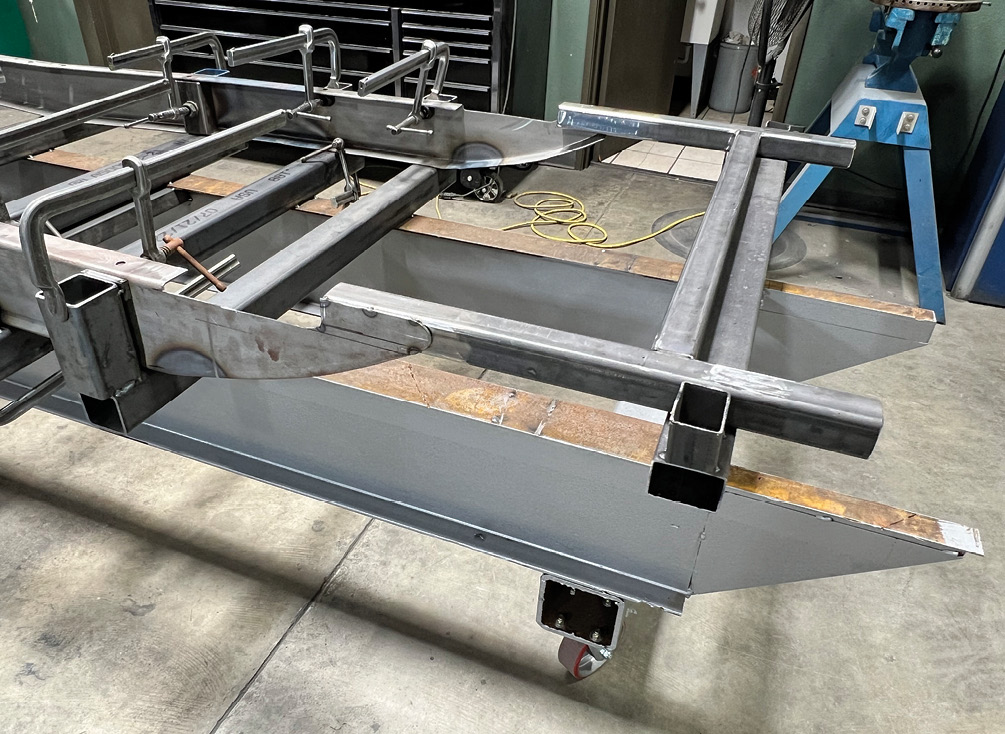
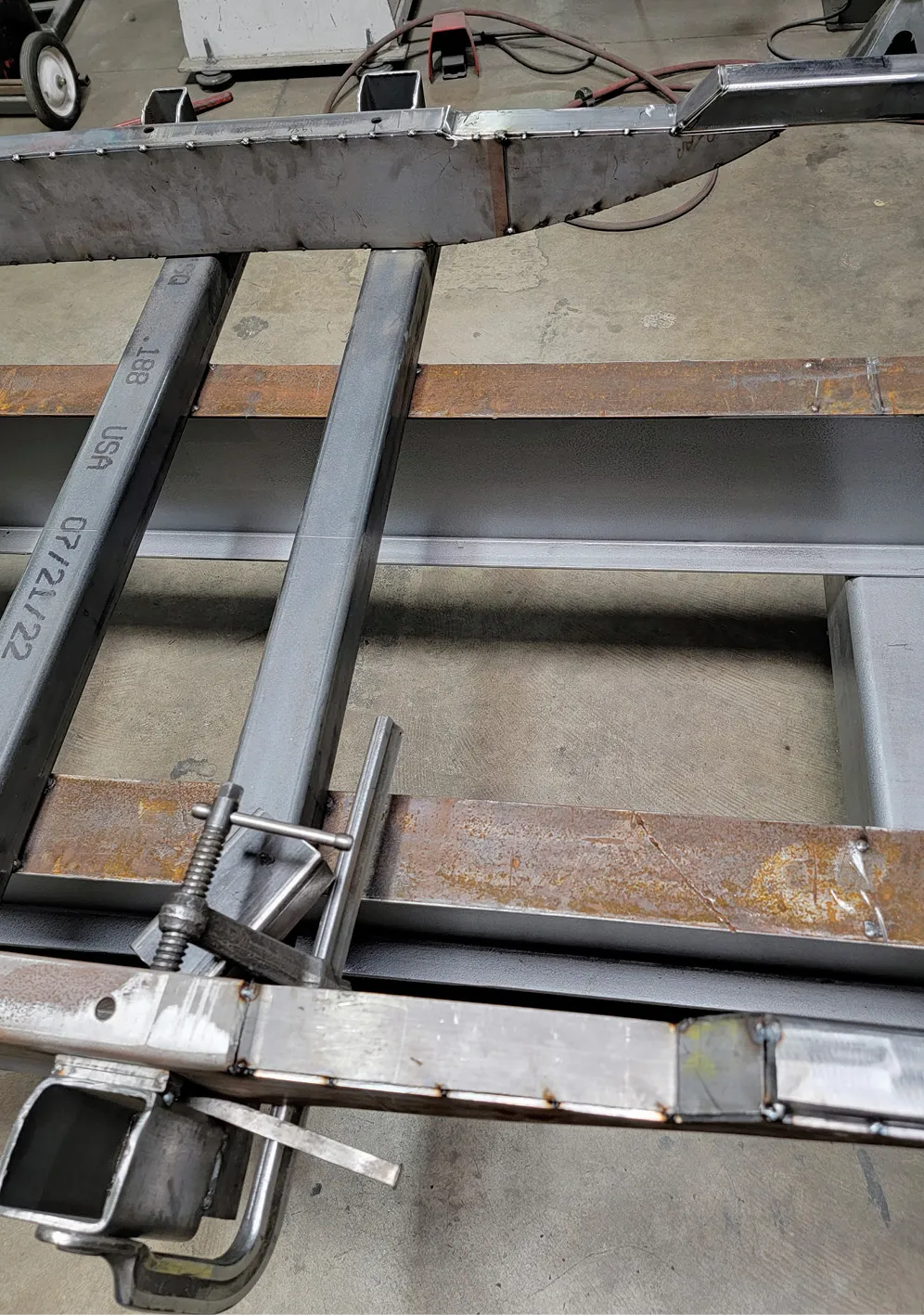
Instead of modifying the perfectly good sheetmetal, it was decided to trim the back half of the framerails and to fabricate a flattened rear section using square tubing, fully boxed and grafted to the existing framerails.
This section will constitute not only the rearmost body mounting locations, but also function as the rear spring crossmember.
8-9. Instead of modifying the perfectly good sheetmetal, it was decided to trim the back half of the framerails and to fabricate a flattened rear section using square tubing, fully boxed and grafted to the existing framerails. This section will constitute not only the rearmost body mounting locations, but also function as the rear spring crossmember.
Moving forward, it’s time to start forming the framerails to better follow the Model A’s cowl section. Jake Caballero and Brandon Gerringer use a torch to heat short sections of the framerail, with slight pressure applied. Work is slow but made with purpose as the specifications are met.
10. Moving forward, it’s time to start forming the framerails to better follow the Model A’s cowl section. Jake Caballero and Brandon Gerringer use a torch to heat short sections of the framerail, with slight pressure applied. Work is slow but made with purpose as the specifications are met.
Once a section is shaped, an upright is welded to the frame jig to ensure nothing moves and the framerail is securely clamped in place.
upright is welded to the frame jig to ensure nothing moves and the framerail is securely clamped in place
11-12. Once a section is shaped, an upright is welded to the frame jig to ensure nothing moves and the framerail is securely clamped in place.
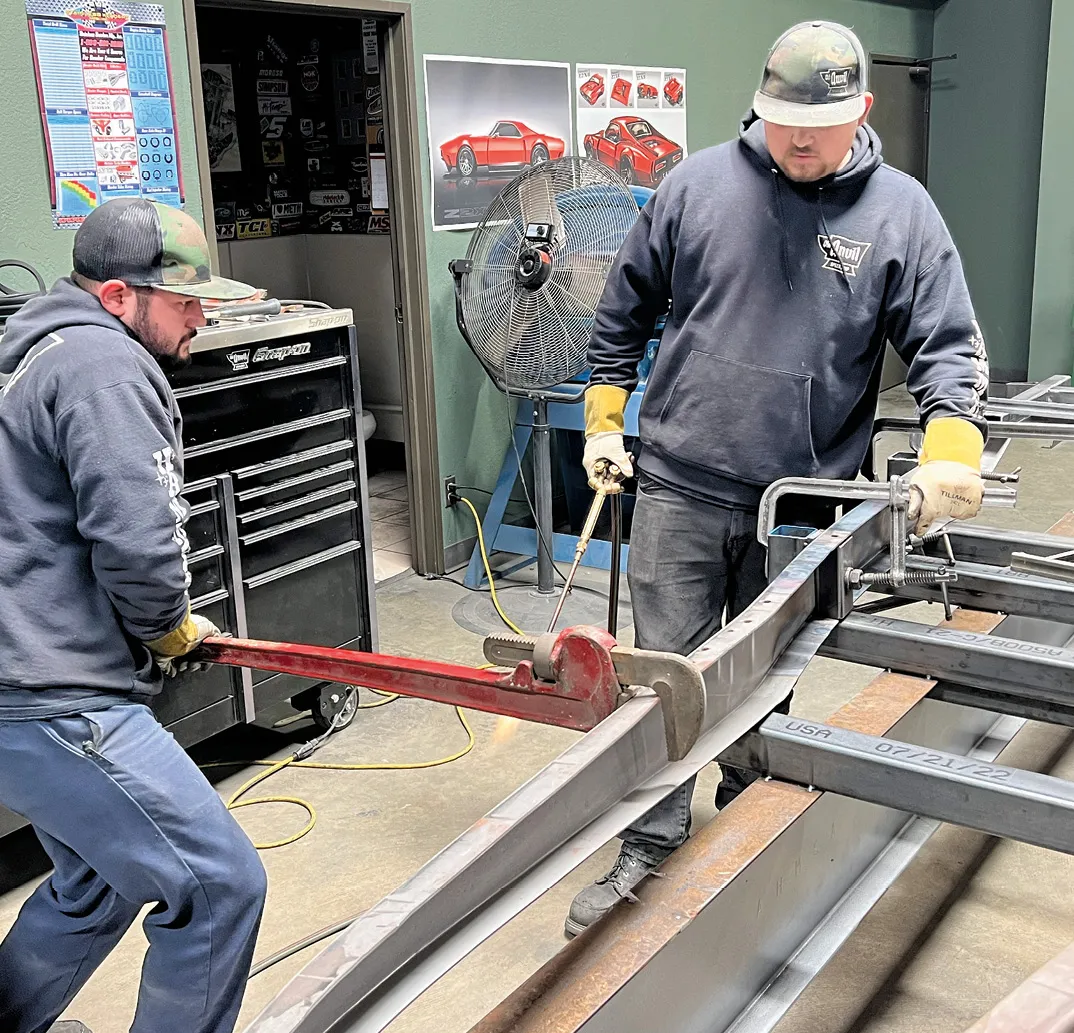
The teamwork of Caballero and Gerringer makes the dream work, but sometimes what’s required is a bigger hammer—in this case, a bigger wrench. While the frame is heated and pinched it can tend to twist. A big wrench helps reverse that tendency.
13. The teamwork of Caballero and Gerringer makes the dream work, but sometimes what’s required is a bigger hammer—in this case, a bigger wrench. While the frame is heated and pinched it can tend to twist. A big wrench helps reverse that tendency.
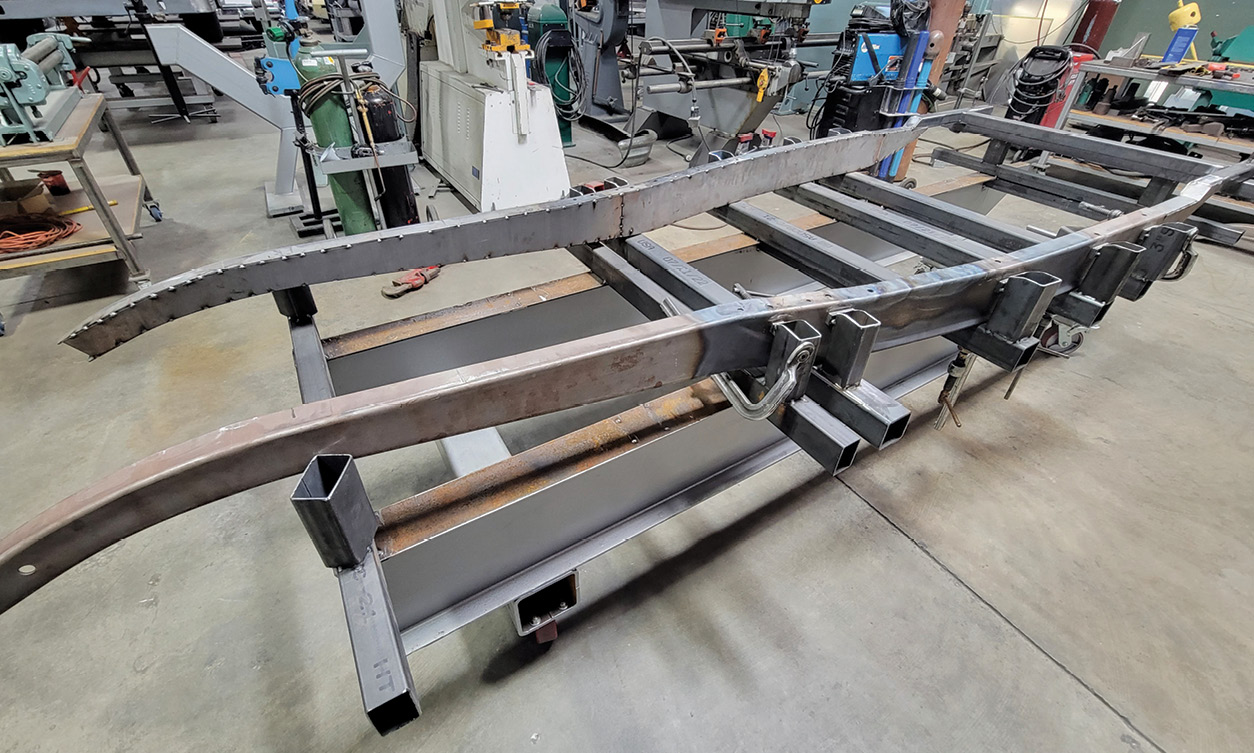
At this point, the basic shape of Scudellari’s’32 frame is starting to take shape and more closely follows the shape of his Model A body.
14. At this point, the basic shape of Scudellari’s’32 frame is starting to take shape and more closely follows the shape of his Model A body.
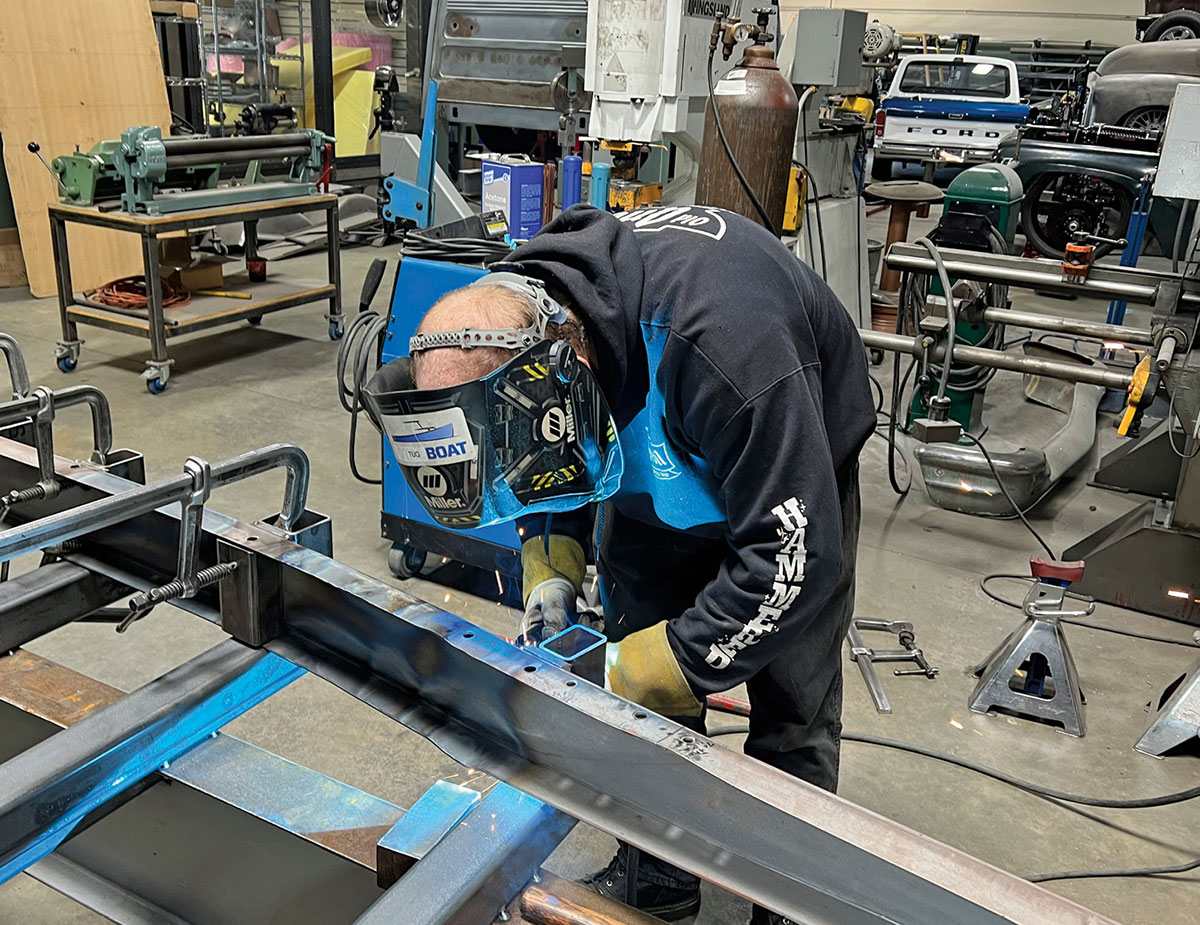
Next, the Old Anvil crew set their sights on installing the Speedway Motors boxing plates (PN 9108969). Scudellari’s chassis will be boxed its entire length from the bobbed framehorns ...
15. Next, the Old Anvil crew set their sights on installing the Speedway Motors boxing plates (PN 9108969). Scudellari’s chassis will be boxed its entire length from the bobbed framehorns …
... to the rear square tube section.
16. … to the rear square tube section.
Here, the amount of curvature that has been put into the framerails is pretty evident.
17. Here, the amount of curvature that has been put into the framerails is pretty evident.
A Speedway Motors tubular crossmember kit (PN 91657029) has been trimmed and dropped in place next. This will serve to further strengthen the chassis and act as a mounting point for the transmission. Note that the boxing plates have been fully welded and ground smooth.
18. A Speedway Motors tubular crossmember kit (PN 91657029) has been trimmed and dropped in place next. This will serve to further strengthen the chassis and act as a mounting point for the transmission. Note that the boxing plates have been fully welded and ground smooth.
This 1-inch dropped front crossmember, another Speedway Motors item (PN 91657012), will help place the frontend of Scudellari’s roadster that much closer to Mother Earth.
19. This 1-inch dropped front crossmember, another Speedway Motors item (PN 91657012), will help place the frontend of Scudellari’s roadster that much closer to Mother Earth.
With the fabrication complete, the guys at Old Anvil are ready to pull the chassis out of their frame jig and send it off to the In The Garage Media Tech Center where Scudellari will take over the build.
20. With the fabrication complete, the guys at Old Anvil are ready to pull the chassis out of their frame jig and send it off to the In The Garage Media Tech Center where Scudellari will take over the build.
SOURCES
Brookville Roadster
(937) 833-4605
brookvilleroadster.com
Old Anvil Speed Shop
(657) 223-9889
oldanvilspeedshop.com
Speedway Motors
(800) 979-0122
speedwaymotors.com
In the Garade Media - Tech Center - Frontier shop supplies
Modern Rodding

VOLUME 4 • ISSUE 36 • 2023