

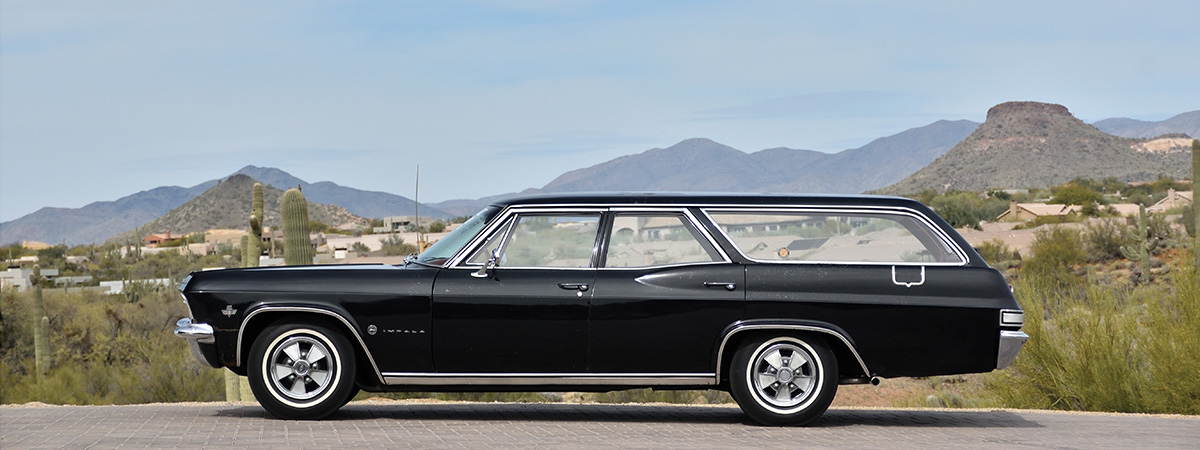
 This 1965 Chevy Impala wagon was the last year this was offered, but you can also find 409 wagons back in 1963.
  PHOTOGRAPHY COURTESY OF MECUM AUCTIONS
uctions can be sensory overload for a hot rodder: rows of sheet metal, chrome, V-8 power, and possibilities stacked as far as you can walk. Every once in a while, if you slow down and really look the right car stops you cold. This 1965 Chevy Impala wagon was that kind of find. This is a muscle car in a “station wagon’s clothing.” When you get the chance, it pays to walk the aisles of one of the many Mecum Auctions.
At first glance, it is easy to see the appeal: fullsize Chevrolet longroof, an ideal project for a road car with room to haul family or your hot rod buddies, swap meet scores, or a weekend worth of T-shirts, tools, starters, and rags. Look closer, and the story gets even better. Under the hood of our 1965 Chevy Impala wagon is the born-with 409/340hp V-8, backed by a Powerglide and a 12-bolt 3.31 Positraction rearend. For Chevy fans, that combination puts this wagon in rare company. This wagon sold for just over $31,000 … think about it. A running project car with vintage looks and power. What a great spot to begin.
Only 82 409-powered 1965 Chevy Impala wagons were built for 1965, the final year for Chevrolet’s legendary W-series big-block. This one is an unrestored, numbers-matching example with the kind of documentation rodders dream about: five original build sheets, the Protect-O-Plate, protection plan booklet, owner’s manual, accessory booklet, AM/FM radio guide, and insurance records and registrations that run through 1983. This is the kind of find that hot rodders get all giddy over as it makes great garage talk with a beer in hand and a slice of pizza in the other (or burger, fries, chocolate shake, you get the picture).
 You gotta love those long lines—imagine it lowered onto an after-market chassis, with nice wheels and tires, and you have a great ride.
Better yet, the important pieces are still with it. The carburetor, distributor, alternator, air conditioning compressor, water pump, Harrison radiator, clutch fan, brake booster, and power steering assembly are original to the car. The carb has been rebuilt, and the wagon has received the right recommissioning work—fuel pump, master cylinder, gas tank, battery, exhaust, brakes, and rubber lines—before being driven about 300 miles after its long sleep.
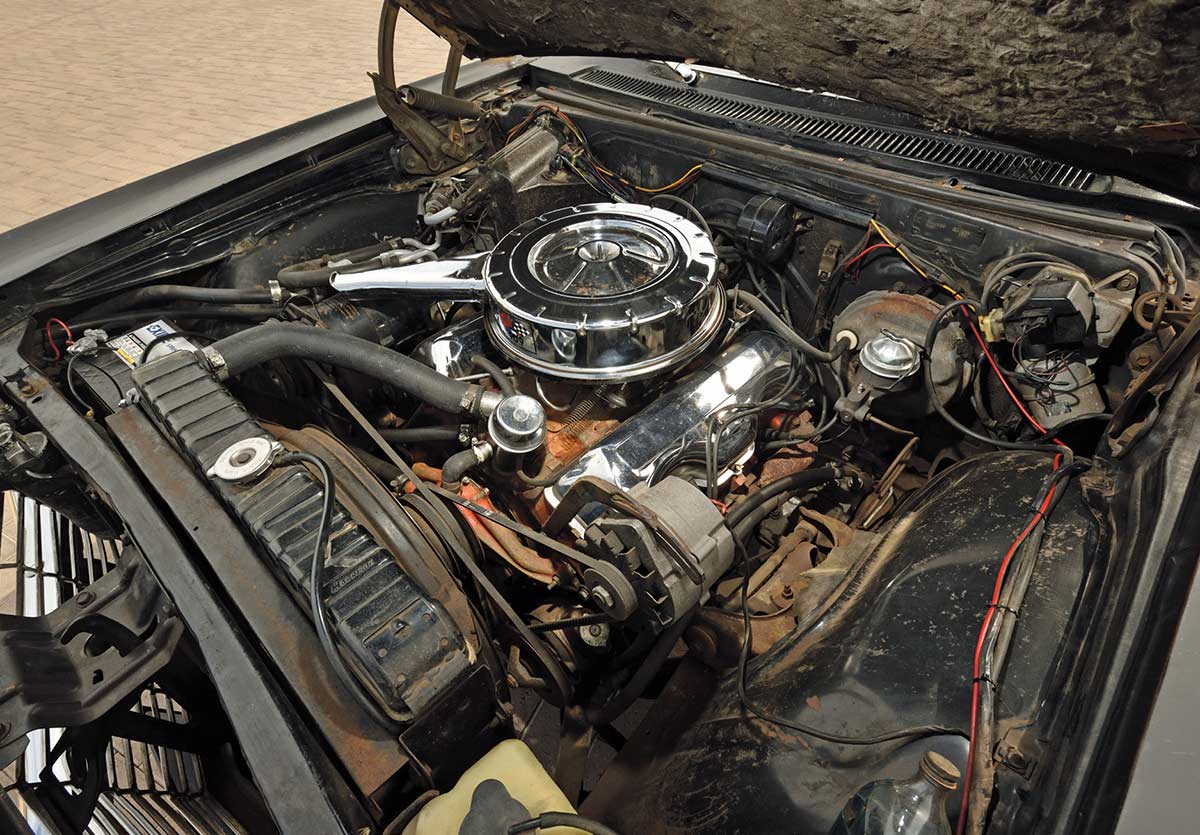 The last year of the 409 was 1965, and it was a 340hp/single four-barrel, with a single-reservoir master cylinder and an externally regulated alternator.