


 PHOTOGRAPHY BY THE AUTHOR
rian DuBoise’s 1930 Ford Model A coupe is the kind of hot rod that stops you cold—the stance, the chop, the color, the restraint. Built by Derick Prior and his crew at Old Skool Speed Shop in Bakersfield, California, it’s a modern interpretation of a traditional highboy sitting on a Pete and Jakes 1932 Ford frame with a 4-inch chop and a gunmetal gray finish that looks like it was born a street fighter. Brian, 57, owns a trucking company in Bakersfield, and his story with this car began decades before the build even started. “We had a neighbor when I was little who did drag racing with a 1968 Camaro. I was probably 10 or 12,” he recalls. “I never got into it real heavy until I was able to save up some money and get my own hot rod.”
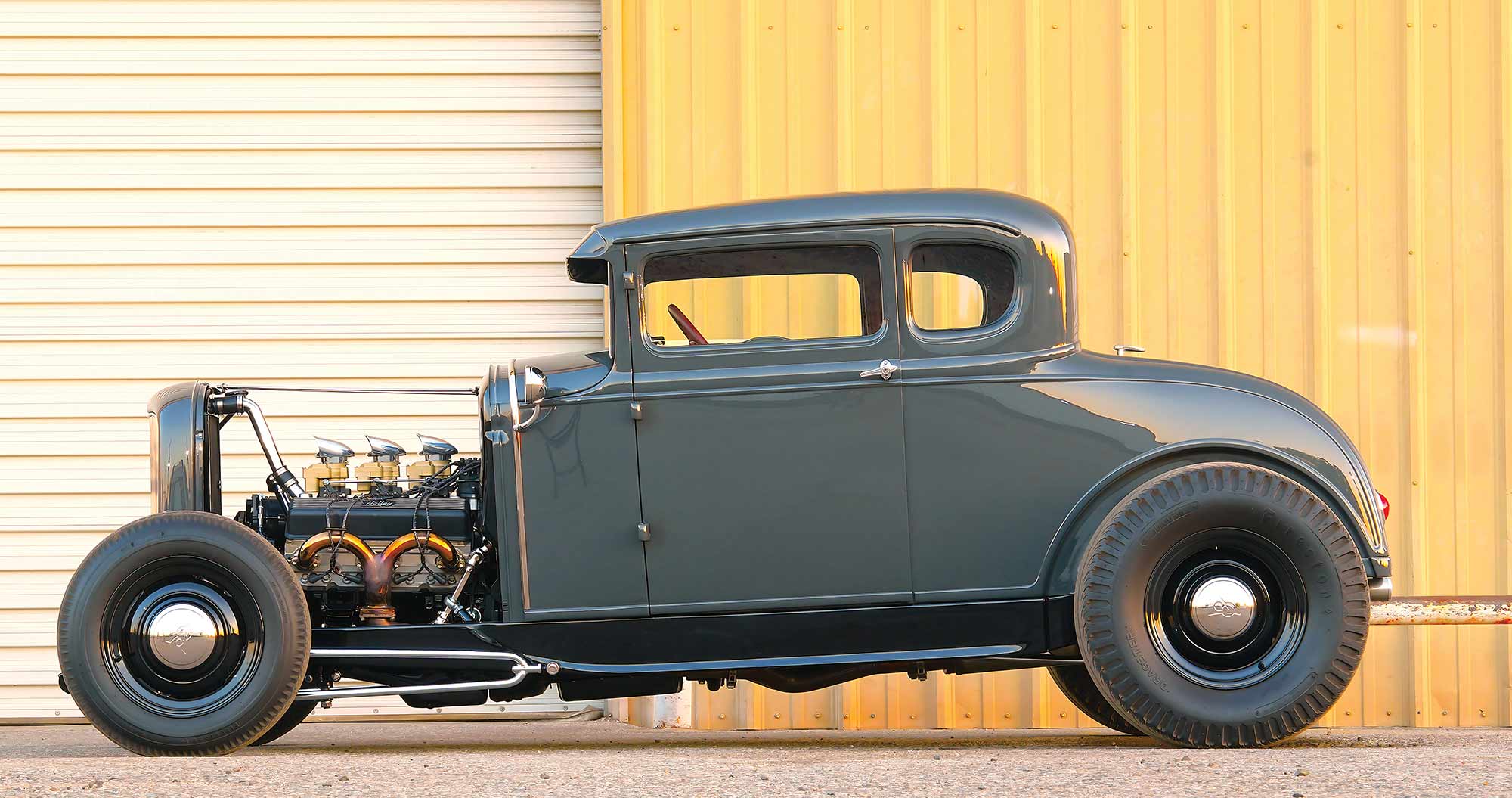
When the coupe arrived at Old Skool Speed Shop, Prior saw potential. “They drove it off the trailer; a four-cylinder,” he says. “It was a little too tall and needed to be chopped down a little bit. But it was all there, which is nice. Most of the time somebody’s already started taking it apart themselves or had a buddy working on it and it went south.” The plan was clear: put the 1930 Ford highboy coupe body on a 1932 frame, chop the top, and nail the stance. “It’s all about the stance on those things,” Prior says. “I feel like we nailed it.”
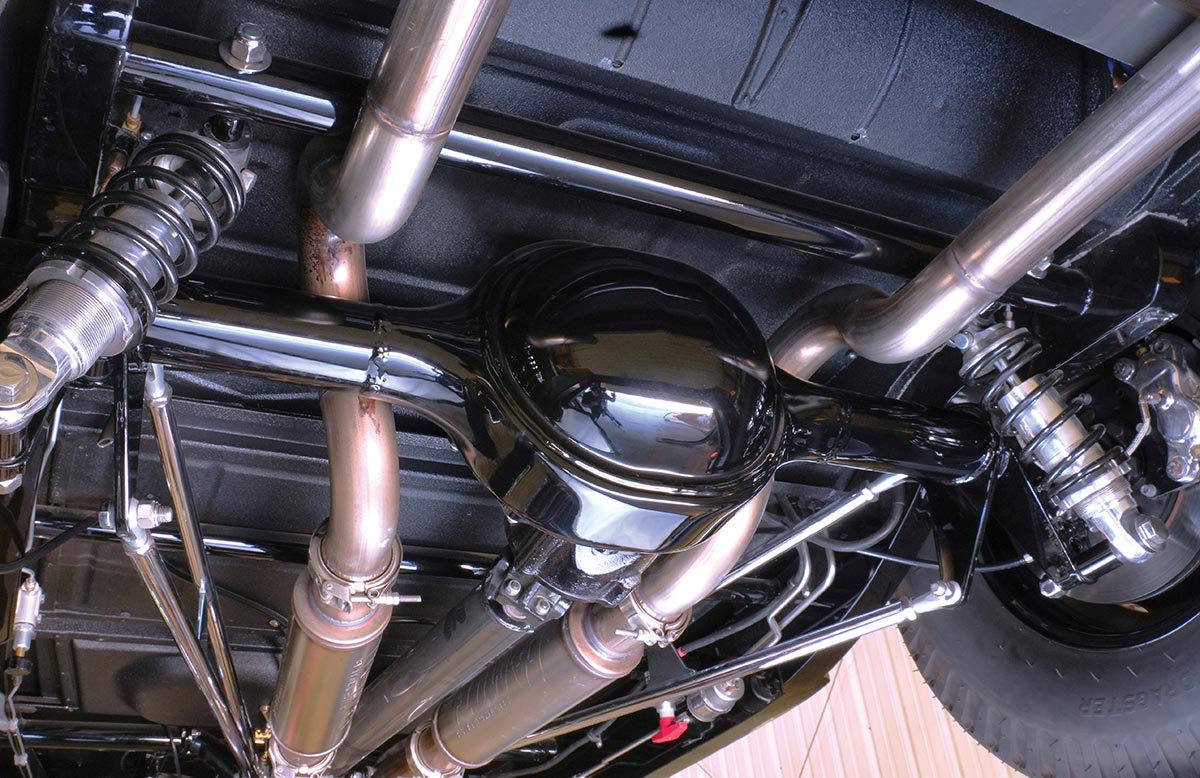
The Pete and Jakes chassis was notched and pinched in the rear for fitment, with a classic frontend hairpin suspension kit and a Super Bell drilled I-beam drop axle. Out back, Pete and Jakes ladder bars and Aldan American coilovers handle the load. Wilwood discs hide behind Speedway Motors finned “drum-look” covers, and the car rolls on Wheelsmith 1940 Ford steelies—4.5×15 front, 10×15 rear—wrapped in Coker Firestone rubber, 5.60×15 up front and 10.5×15 cheater slicks out back.
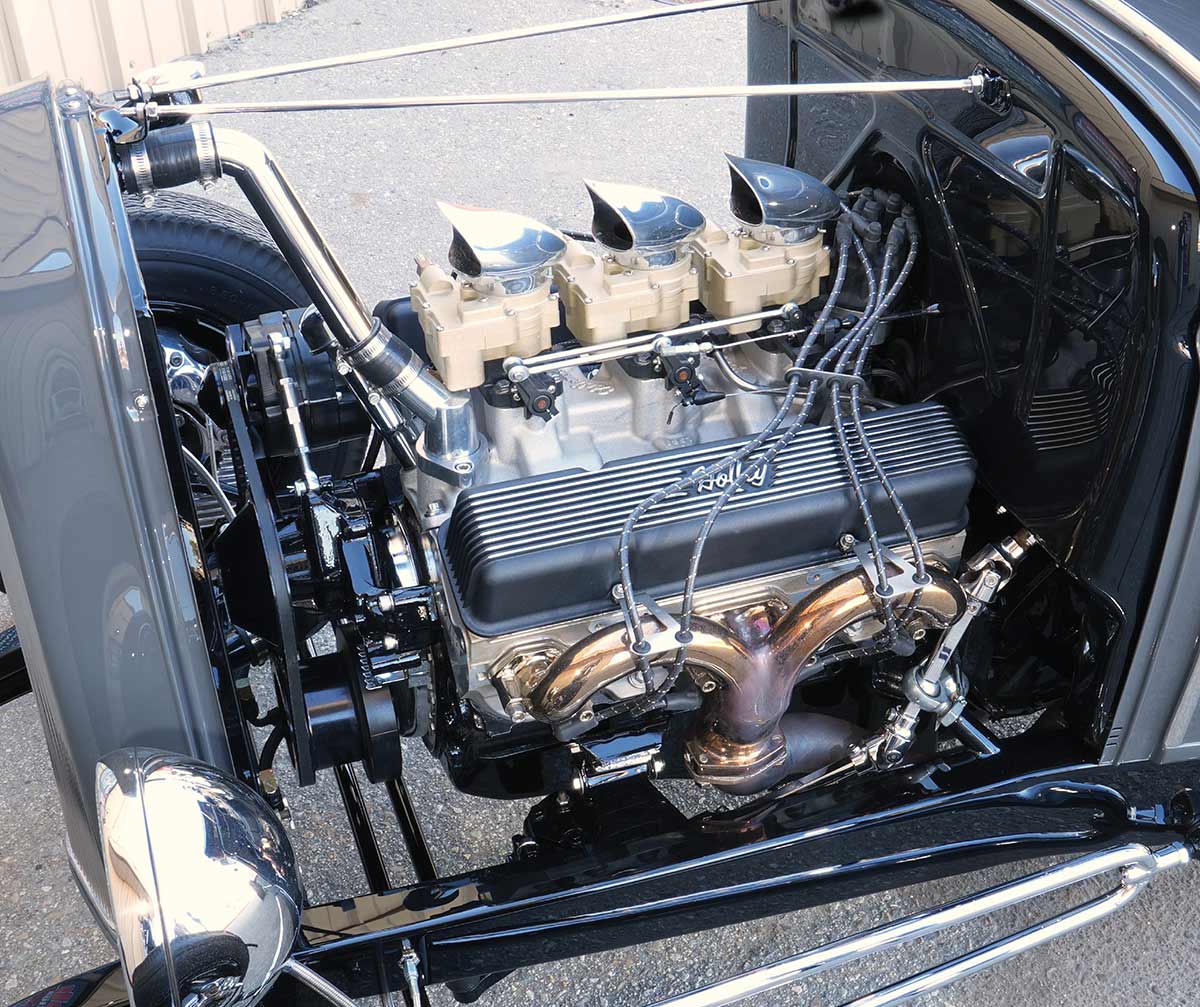
Brian originally considered a Flathead, but Prior steered him toward a BluePrint 383 stroker small-block Chevy crate engine. “He goes, ‘What about a 383?’ I wanted three deuces on the top,” Brian says. “He got on the computer and showed me the electronic deuces that are on it now. It’s all throttle-body electronic. He goes, ‘We can’t get it on the Flathead, but we can do it on the 383 stroker.’ That’s the way it went.”
Prior had been waiting for a chance to use AutoTrend EFI’s Tri-Power setup. “I’ve been wanting to use this fuel injection for a long time,” he says. “People always ask, ‘What are the wires coming out of the carburetors?’ It looks so much like a regular carburetor. Dave at AutoTrend does such a good job with those things.”
The BluePrint 383 produces 445 hp, breathing through an Edelbrock C-357-B three-deuce intake topped with Lucky’s Speed Shop air scoops. MSD ignition, Noble Speed wires and separators, and a Holley Terminator ECM tie it all together.

Power runs through a built 700-R4 overdrive from Brandon’s Transmission, a friend of Prior’s. “He specializes in performance,” Prior says. “His dad was a racer, a quarter-mile guy. He’s been building transmissions since he was 14.” The converter stalls at 2,200 rpm, and the rearend is a Pete & Jakes Ford 9-inch with 4.10:1 limited-slip gears. “It gets down the freeway just fine,” Brian says. “It just sucks up the gas, you know, but it gets down the freeway pretty good. It’s a small car, so it’s a little squirrely, but it’s great.”
Bodywork was extensive. “All the sheet metal is original,” Brian says. “It’s a Pete and Jakes frame. Everything underneath is different, but the body itself is all original. The floorboard was completely gone. The top with the wood had all rotted out.” Prior and his team cut the floor completely out and rebuilt it to look stock. “We used what we could out of the stock floor so when you look in there, it looks stock, but it’s all modified to fit,” he says.
The roof was filled with a Walden insert, and the visor—normally nailed to wood—was re-engineered in metal. “Once we chopped it, we wanted to make it all metal,” Prior says. “We dissected it and figured out what we were gonna get rid of first, trying to make the visor look like it was just made to be there. That was one of the most challenging things.” Some 1950 Pontiac taillights and a modified Brookville Deuce grille shell also get the nod.
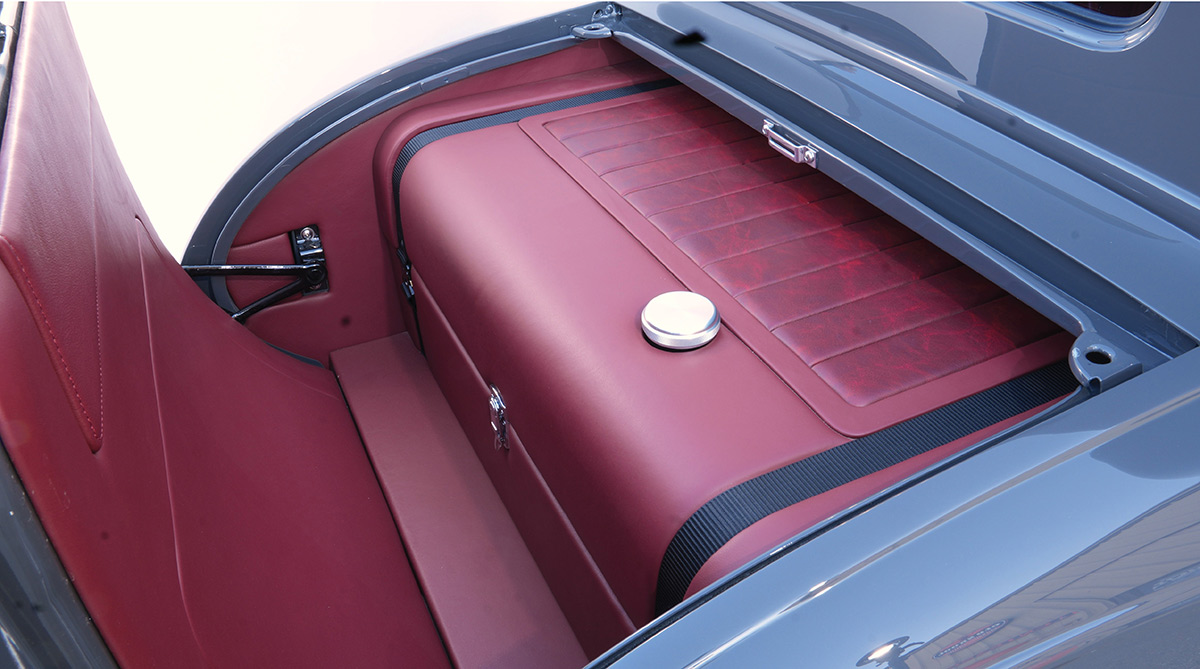
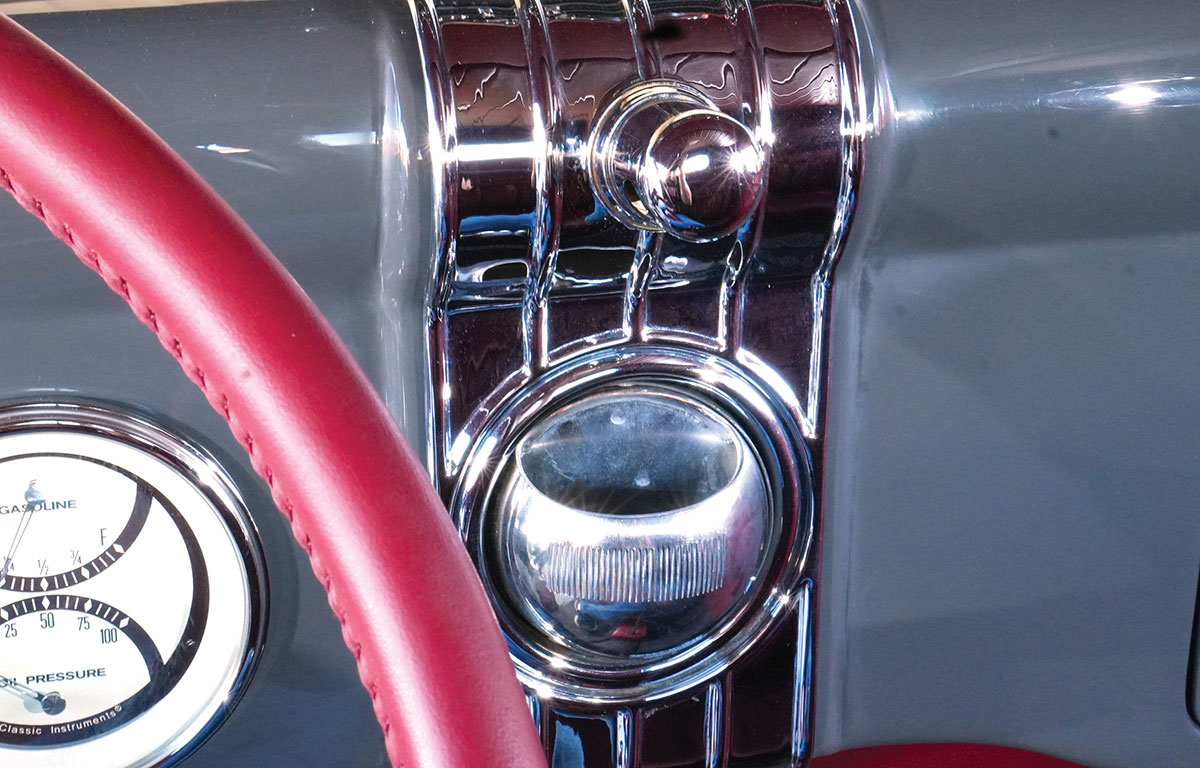
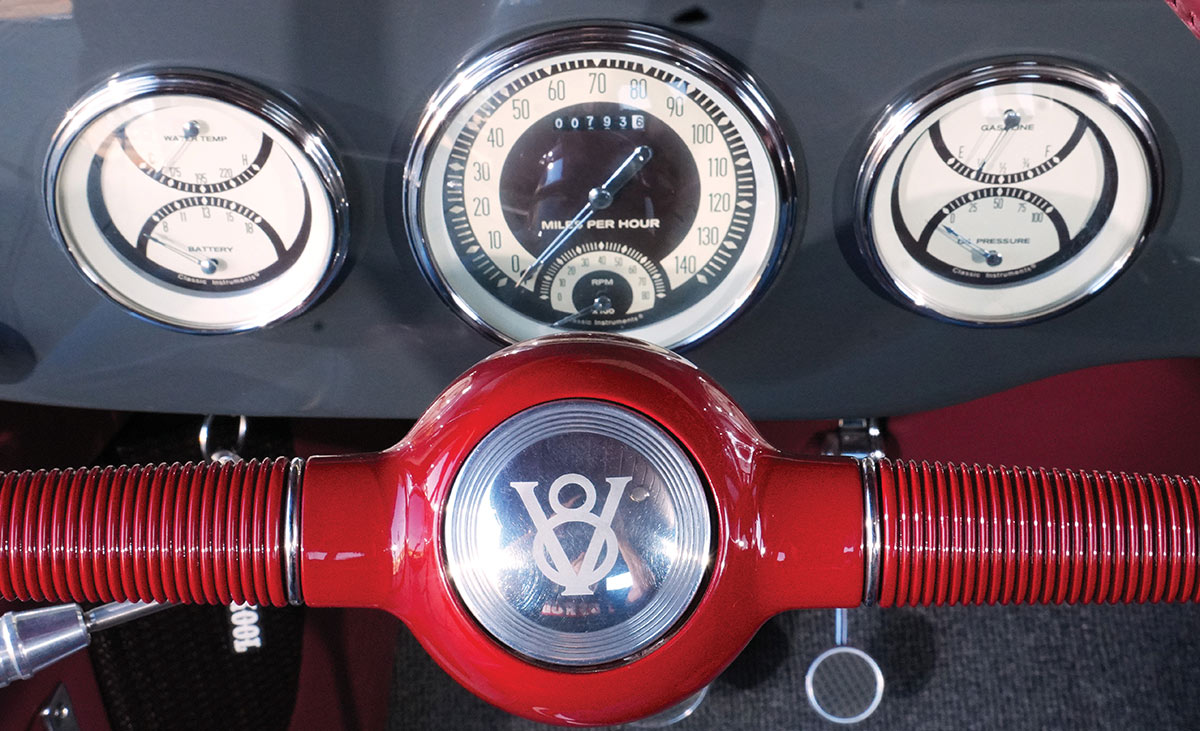
Inside, Ron Mangus Interiors handled the leather upholstery and added a clever twist: the fuel tank in the rumble seat was wrapped to look like luggage. “That’s one of my favorite parts,” Prior says. “Until you point it out, people don’t really know what’s going on. You can see the cap sticking out, but everything pulls out with magnets. It’s super cool.” The interior also features a 1935 Ford dashboard, Classic Instruments gauges, a LimeWorks steering wheel and column drop, and an Ididit 1940 Ford column.
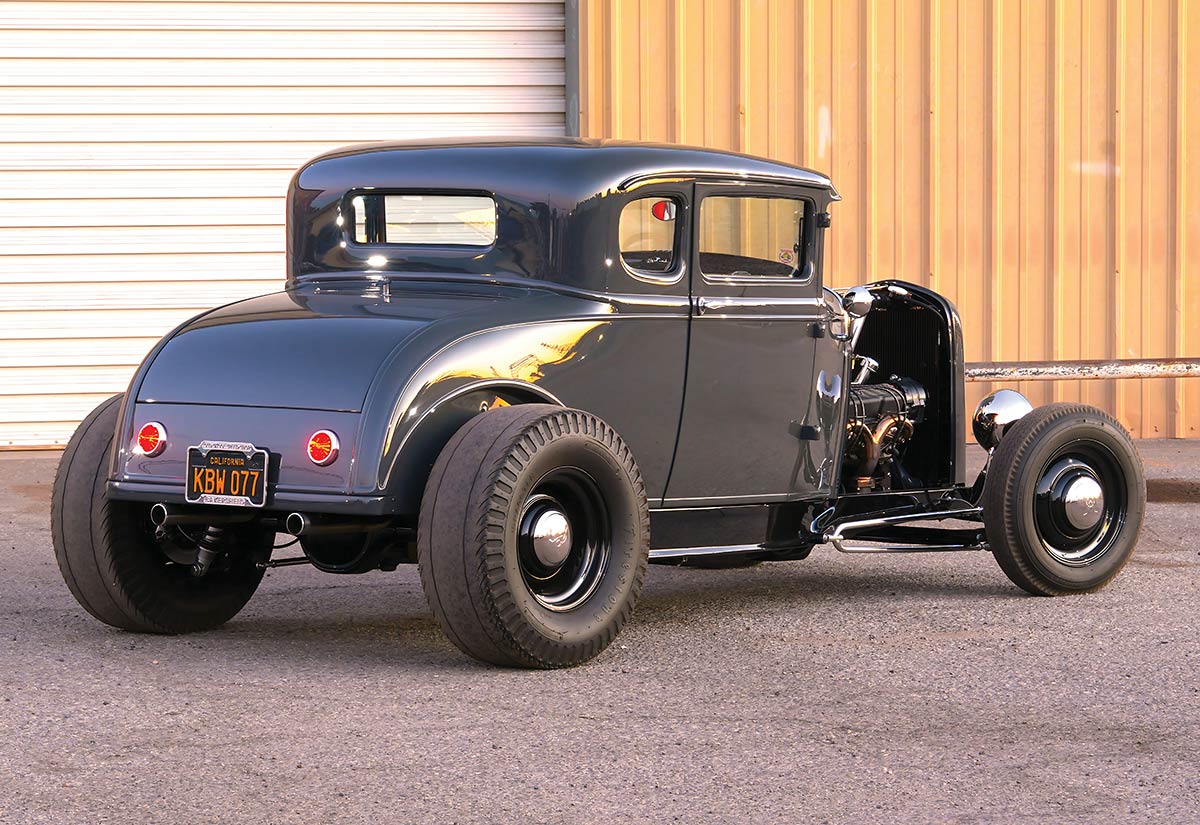

The finished coupe debuted at the 56th Annual NSRA Show but had earlier earned a Builder’s Choice award at Goodguys Pleasanton. “The man put his soul in the car,” Brian says. “He listened to what I asked for. I wanted a chop, disc brakes, and a whole new undercarriage. I had a budget and I knew we were gonna go over it. But it is what it is. The car turned out beautiful.”
Prior credits his team—David Nunes, Brian Hosty, Jimmy Chavez, Billy Carroll, Bailey Rankin, Dylan Fiori, and his wife, Corina—for making it happen. “It takes a whole team to make everything go around,” he says.
Brian drives the coupe whenever he can, though his trucking business keeps him on the road. “Anytime I can, I’ll take it to a show,” he says. “[Prior] has even taken it to several shows by himself. It’s kind of the shop hot rod. They’re so proud of it, and they should be. It turned out beautiful.” When he’s away, the car keeps winning. “I’ll be in a completely different state with my business,” Brian says, “and he sends me a picture—‘Hey, look! You got another award!’”