
Modern Rodding Tech
InTheGarageMedia.com
1936 Roadster Removable Top
1936 Ford Roadster AMBR winner olive green paint Hallock windshield Halibrand wheels show-quality build

1. This photo was taken when the finished roadster debuted at the 2025 Grand National Roadster Show, where it won the prestigious award for America’s Most Beautiful Roadster.

By Ron Covell
Photography by Brian Brennan & Adam Banks
W

e have covered the construction of Ross Myers’ fenderless 1936 roadster, built at Rad Rides by Troy, in eight previous issues. The finished roadster debuted at the 2025 Grand National Roadster Show where it won the America’s Most Beautiful Roadster award. The car is stunning in every way, and this time we’ll take an in-depth look at the construction of the immaculately designed and fitted removable top.

Adam Banks hand built the body for this project with some help from other team members, and he also constructed the removable top. He completed the trim work for both the top and the interior of the car. There aren’t many people who excel at both metal and trim work, but Adam is one who does.

The top was framed with an aluminum plate and bar, and then an aluminum buck was created to guide the shaping of the sheetmetal skin. Great care was taken at each step to ensure the fabric fit perfectly, with no sags or wrinkles present, and special trim pieces were crafted to cover the raw edges of the headliner and top covering. Although the top is solid, it was designed to resemble a folding top, with gentle peaks simulating where the frame of a folding top would show through the fabric.

Great care was taken to ensure the contours of the top are just right, allowing it to hug the body’s contours without actually touching, which could chafe the paint over time. A special header piece was fabricated to snugly fit the windshield frame and is almost entirely hidden when the top is in place.

We think you’ll enjoy seeing how this one-of-a-kind masterpiece was designed and constructed.
1936 Ford Roadster bare metal dash classic Stewart-Warner gauges custom hot rod interior mockup
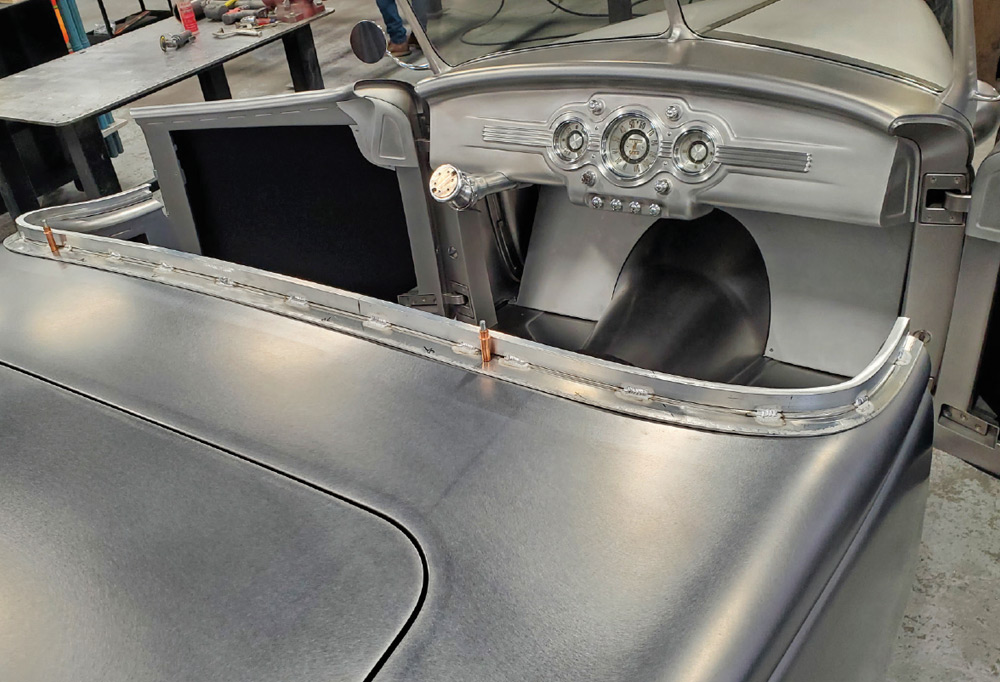
2. One of the first steps in making the lift-off top was to build a cap strip for the rear cockpit opening. This was designed to follow the contours of the body closely and was constructed from aluminum to minimize weight.
1936 Ford Roadster hand-formed windshield frame aluminum shaping traditional coachbuilt fabrication
3. An aluminum header plate was fabricated from aluminum plate and bar, ensuring a perfect fit with the top of the windshield frame. The sheetmetal top skin will be secured in place with screws. Making it removable will facilitate the assembly process when the fabric is stretched over the frame.
1936 Ford Roadster aluminum top frame buck custom-fabbed hot rod roof structure mockup
4. A temporary buck is crafted from a 1/8-inch aluminum plate. This forms all the edges of the top, as well as the contours across the center.
1936 Ford Roadster raw aluminum roof skin fitted with clecos coachbuilt metal shaping process
5. A 1/16-inch aluminum sheet is cut to fit snugly against the buck, and the individual pieces are welded together and smoothed. The top features peaks that mimic the appearance of the frame within a folding cloth top.
1936 Ford Roadster hand-formed aluminum roof skin rear window panel one-off metalwork
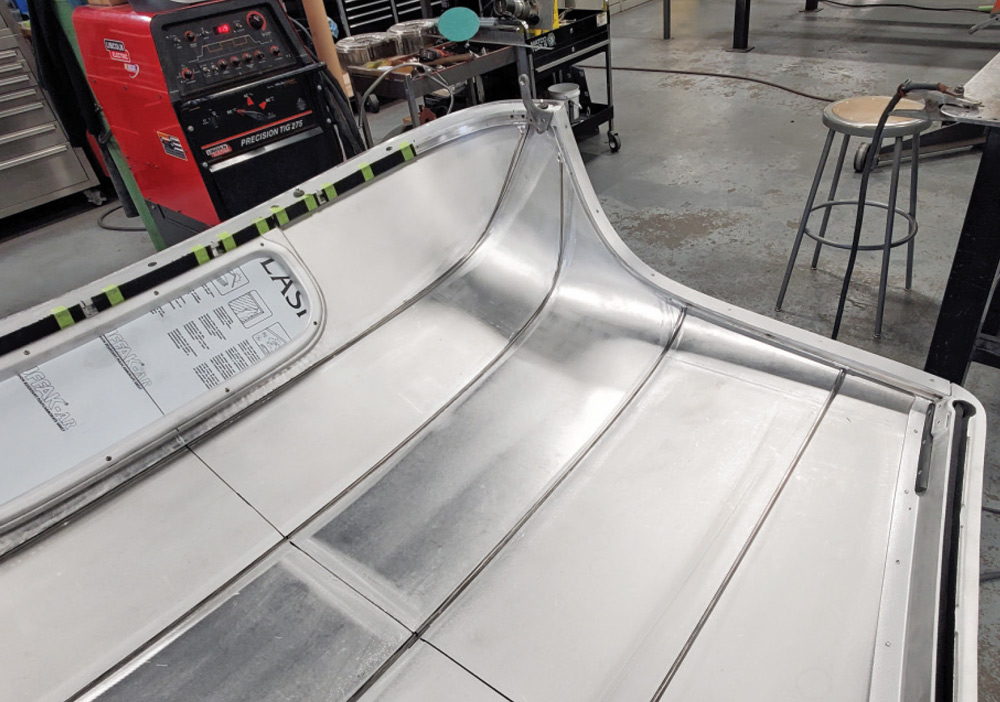
6. Once the sheetmetal panels are welded together, the top skin is self-supporting, allowing it to be removed from the buck. All welded joints are smoothed on both the inside and outside.
1936 Ford Roadster roof hinge mount bracket detail custom top fitment traditional craftsmanship
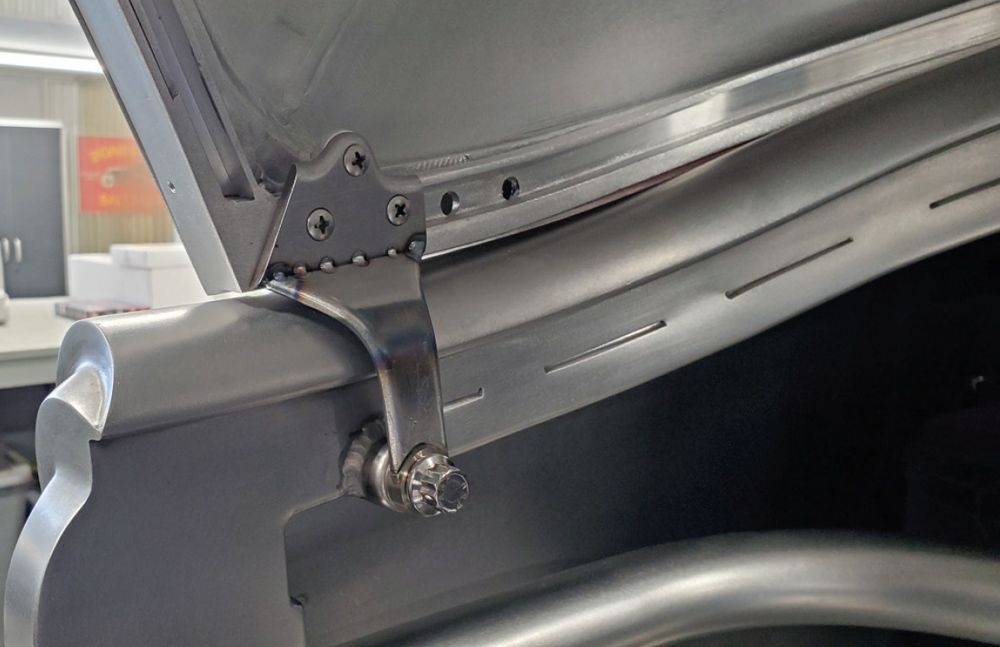
7. A bracket is constructed from heavy steel plate to support the rear section of the top. The top closely follows the shape of the body, but a small gap is provided to prevent the top from chafing the paint on the body.
1936 Ford Roadster raw body with fitted roof panel metal shaping in progress custom top fabrication
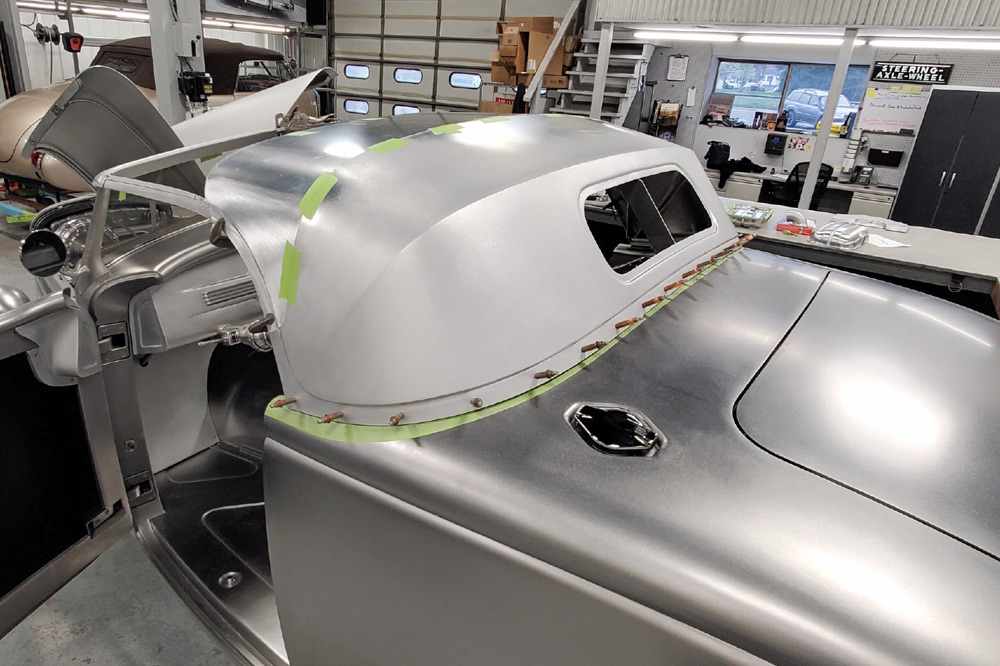
8. With all the skin panels assembled, you can appreciate just how perfectly the shape of the top complements the body’s lines. Note the relief along the sides and rear of the top, which will accommodate a clever trim strip to keep all the fabric seams smooth and low-profile.
1936 Ford Roadster polished aluminum roof edge trim hand-formed detail for custom top
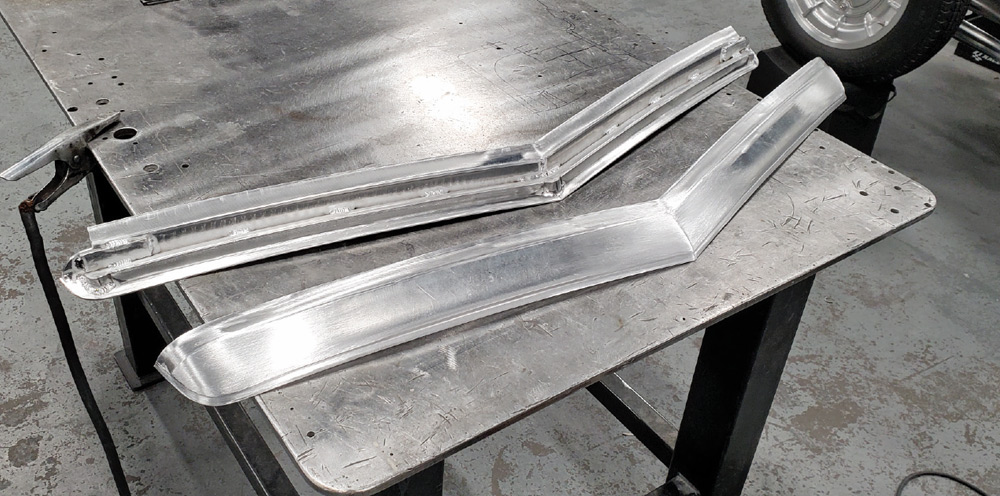
9. This is the trim strip for the side of the top, meticulously crafted from aluminum plate.
1936 Ford Roadster custom roof finished in bare metal smooth curvature handmade hot rod roof
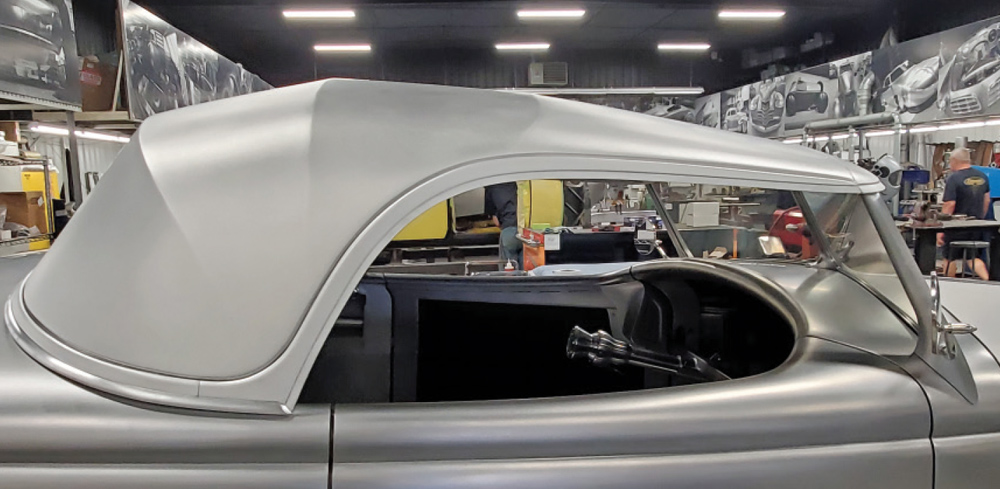
10. With the trim piece temporarily fastened in place, you can see how it completes the edges of the top.
1936 Ford Roadster bare metal body Hallock windshield Halibrand wheels custom removable top in fabrication
11. The metal fabrication is now complete, and it’s time to start fitting the fabric to the top.
1936 Ford Roadster raw aluminum top structure windshield mount bracket detail and perimeter seal channel
12. Here, you can observe the beautiful and intricate assembly of metal pieces for the windshield header, the metal trim that covers the edges of the fabric, and the threaded plate for the screws that secure the sheetmetal header skin in place.
1936 Ford Roadster removable top inside view custom aluminum panels TIG welded structure interior shaping
13. Several 1/4-inch round steel bars are being fitted to the top, which will serve as the bows to hold the headliner snugly in place.
1936 Ford Roadster roof skeleton with formed cross braces and sail panel curvature in bare metal
14. Each bow is detachable, secured by small machine screws that hold the ends to the frame of the top.
1936 Ford Roadster cardboard roof templates hand-cut panel layout for top upholstery prep
15. Chipboard is used to create patterns for the headliner pieces.
1936 Ford Roadster convertible top fabric pre-stitched tan canvas with panel seams laid out
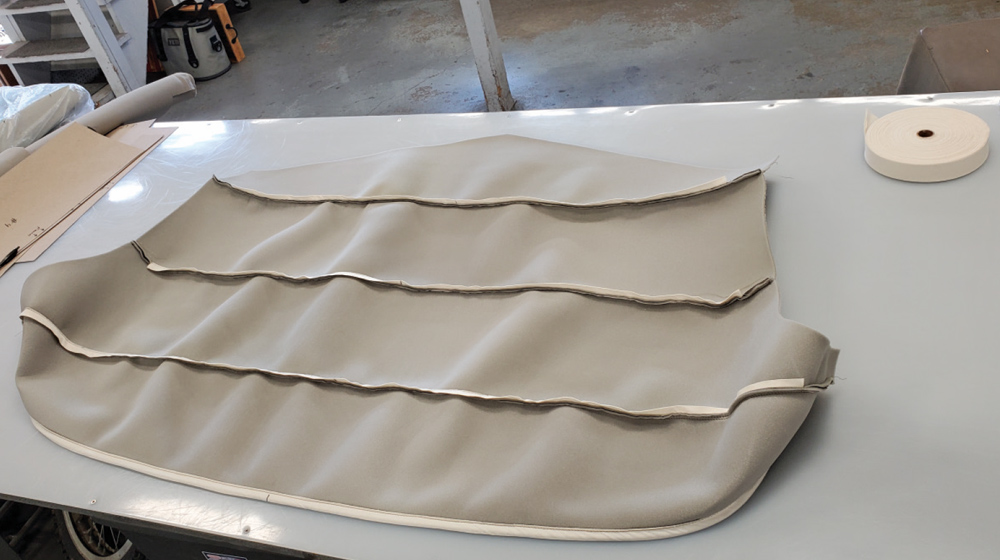
16. Here, the fabric pieces are stitched together on the hidden side. Note the fabric channels provided for the top bows to slide into.
1936 Ford Roadster convertible top stretched canvas final fitment with rear window opening
17. The finished side of the headliner is shown here. Great care must be taken at each step to ensure there are no wrinkles when the headliner is installed.
1936 Ford Roadster corner detail of removable top black edge wrap and precision trim fit
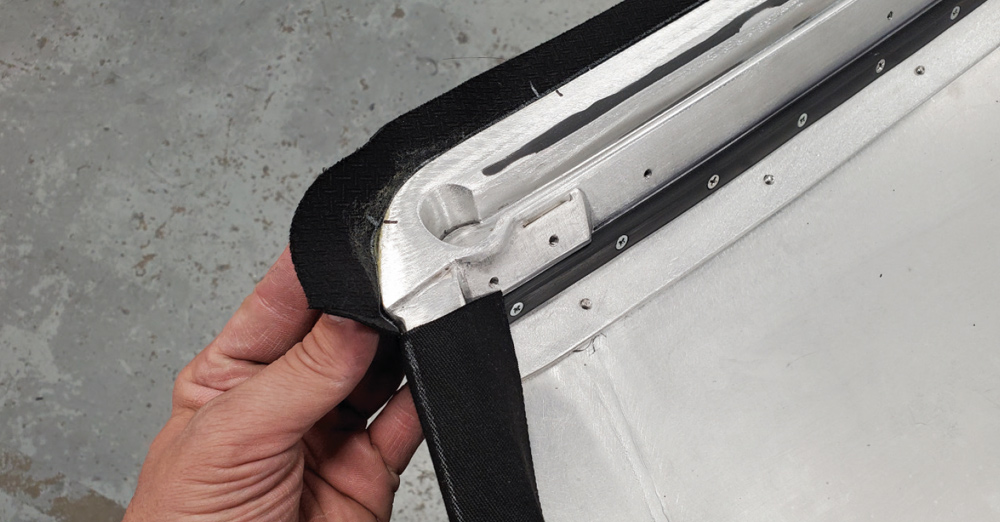
18. A piece of scrap fabric is being used to create a pattern that shows how the top will wrap around the corner of the header.
1936 Ford Roadster removable top half-wrapped with tan canvas tight radius edge and French seams
19. Here, the top covering is being fitted to the metal frame. Pieces of channel have been bonded to the metal top, providing a recess for the folded-over seams to rest in. The gray material is an epoxy panel bond used to feather in the channel and accentuate the slight peaks on the top.
1936 Ford Roadster finished canvas-wrapped top fitted over bare aluminum structure in workshop setting
20. The first three pieces of fabric for the top covering have been stitched together and are test-fitted against the top frame.
1936 Ford Roadster custom top bows raw aluminum shaped perimeter trim for canvas wrapping
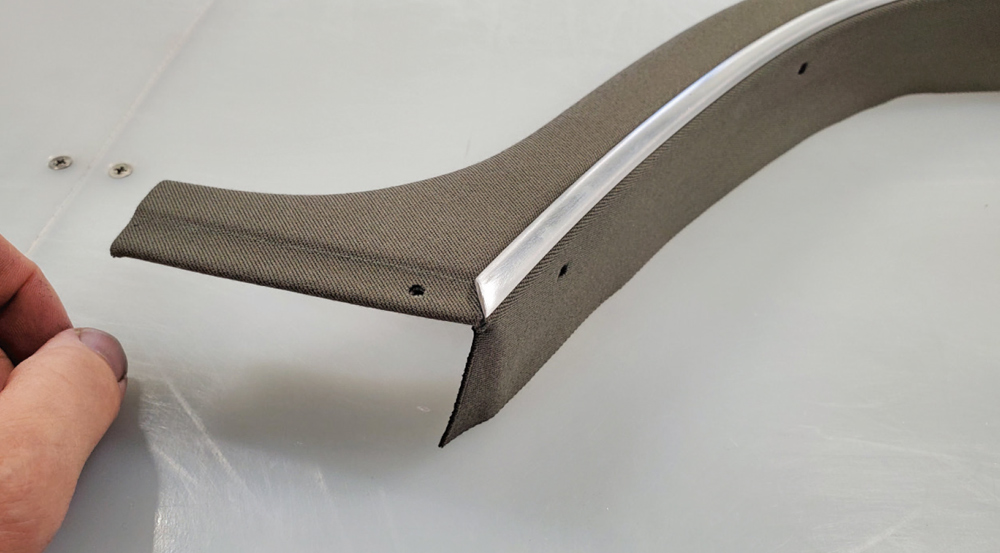
21. Aluminum strips have been created to finish the edges of the trim pieces on each side. These will be nickel-plated for the final assembly.
1936 Ford Roadster header bow wrapped in canvas with polished trim edge for finished convertible top
22. This close-up shot illustrates the intricate fitting of the metal trim pieces and the fabric covering it. It requires great attention to detail to prevent wrinkles in shapes like these.
1936 Ford Roadster rear corner of top wrapped and stitched canvas with formed structure and defined seams
23. Observe how the trim pieces conceal the edges of the fabric for both the top covering and the headliner.
1936 Ford Roadster completed top with stretched canvas and polished trim edge, installed on finished show car
24. With the top installed on the car, you can appreciate the superb fit and finish of every detail.
SOURCE
Modern Rodding
VOLUME 6 • ISSUE 61 • 2025