


 Photography by Tate Radford
ummit Racing Equipment has long been a leading supplier of automotive performance products. They also offer a comprehensive line of premium automotive refinishing products at affordable prices. So, when it came time to paint a long-neglected project, I turned to Summit for what I needed.
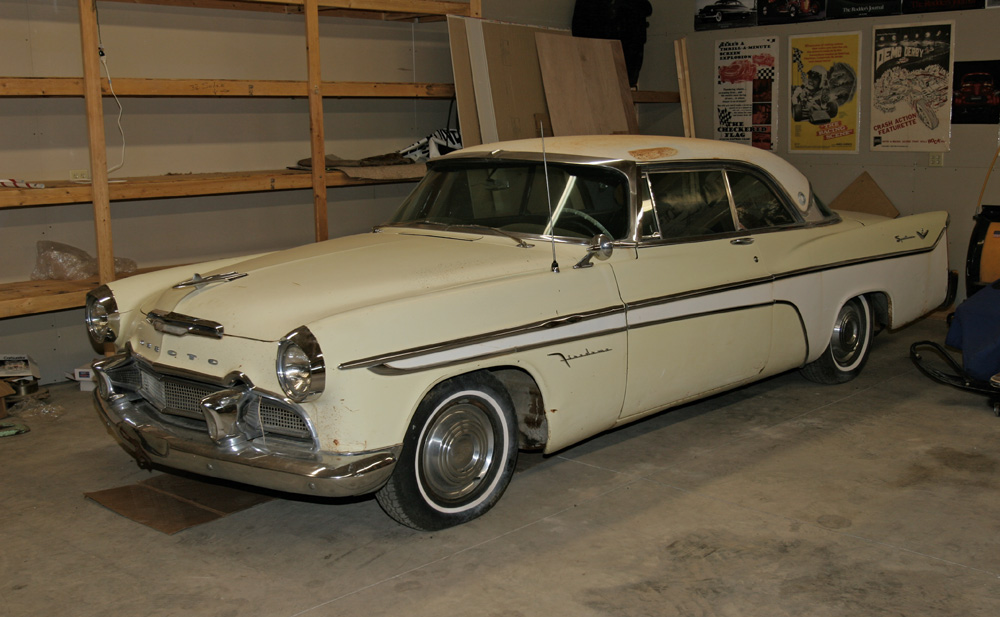
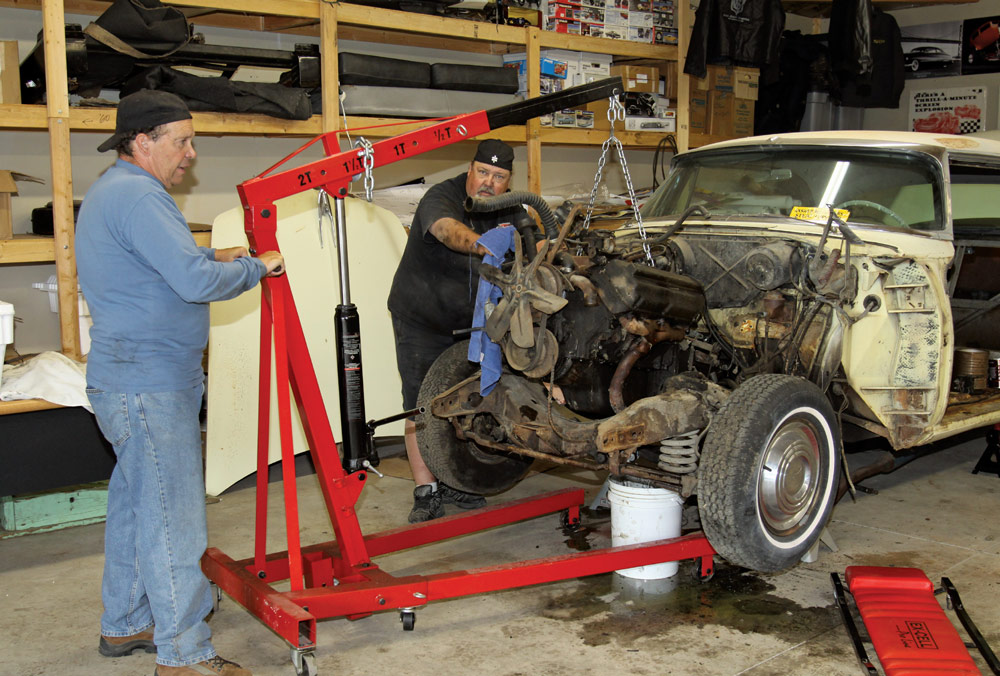
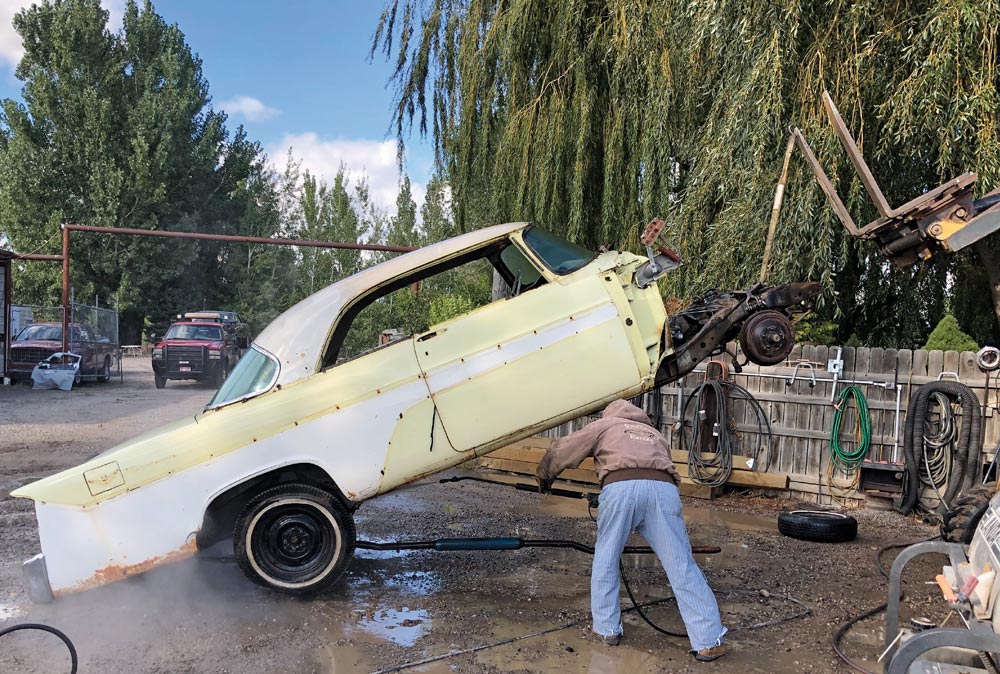
For years I’ve had a 1956 DeSoto two-door hardtop that has repeatedly been put on the back burner as project cars go. Initially owned by my father, it came to me after his death in 1978. Truth be told, it was a little rough around the edges, but regardless, it was used for daily transportation until 1996. That’s when the Firedome Hemi made it clear with audible internal distress signals that it had gone as far as it would go. Ultimately, the DeSoto was stashed away in the corner of Brian Brennan’s barn in Idaho around 2012.
The reasons for the hardtop’s hiatus were many: other projects took priority, and time was always short, but one of the significant factors was financial—we all know the cost of a first-class paintjob can be staggering, and the budget for what we wanted didn’t exist—or so we thought. The DeSoto was two-toned from the factory in what was described as white (factory color code 356) and Sunny Yellow (factory color code 355). Still, we wanted something a little more vibrant; specifically, the vision was the mild custom look of basecoat/clearcoat pearl white and pearl yellow.
While the refinishing materials we lusted after are usually costly, we found exactly what we needed in Summit’s very affordable line of paint products. Produced by a major manufacturer, Summit offers a wide range of paints from matte to gloss. Single- and two-stage systems are available in solid colors, metallics, color-shifting, and pearls. Summit offers traditional and low-VOC automotive paint formulations to ensure compliance with local laws and regulations. Several primer options are also available, including primer sealer, 2K, and high-build primer.
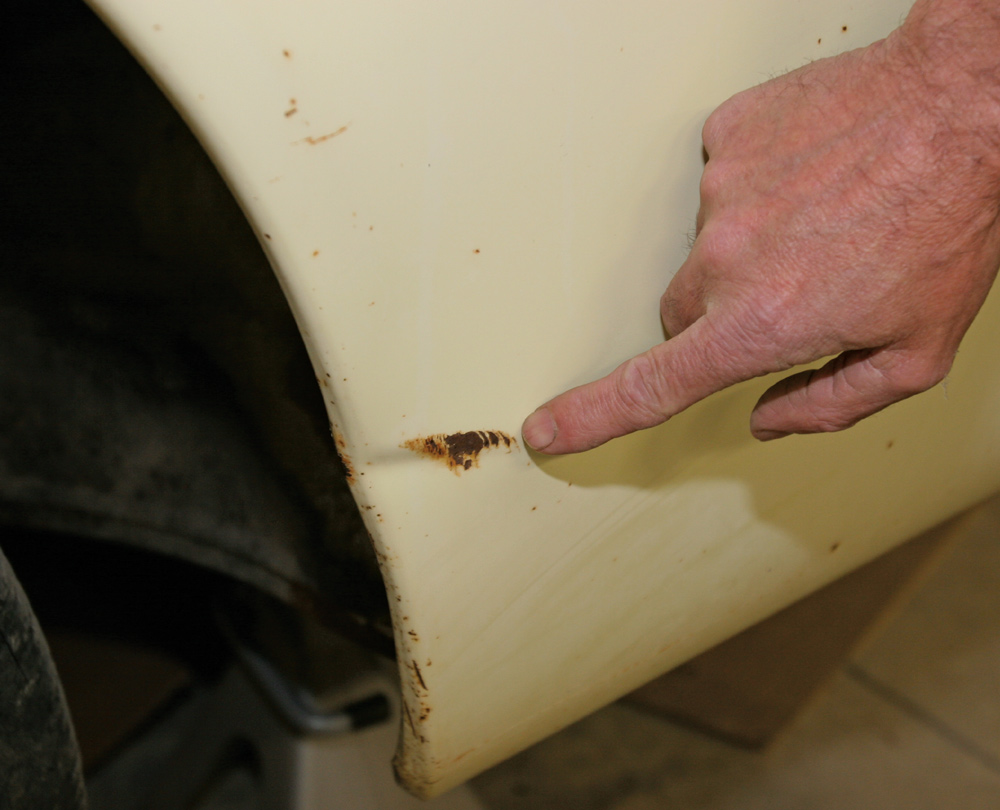
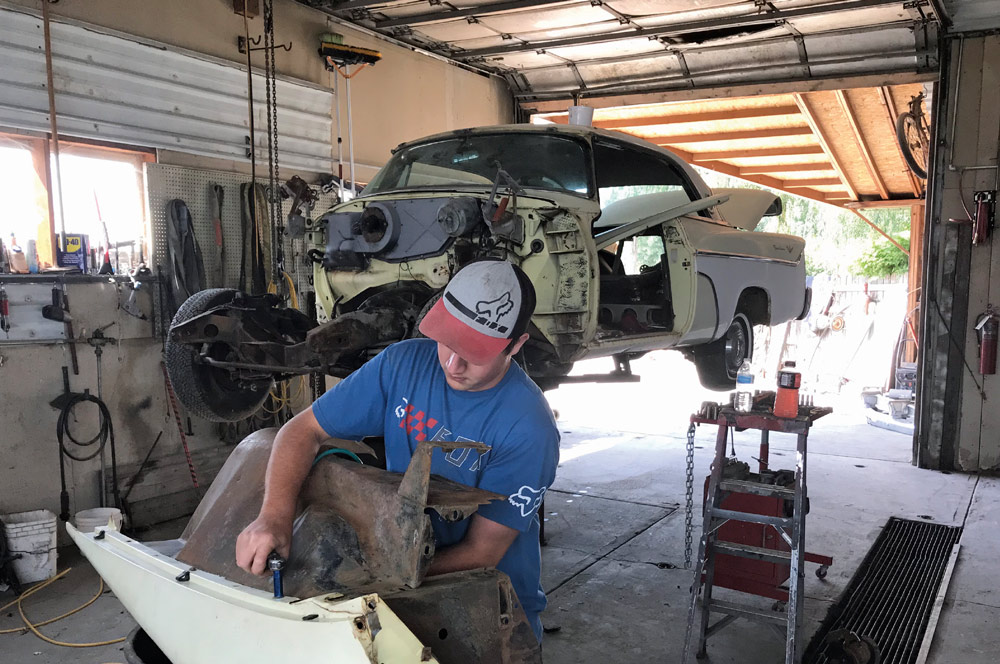
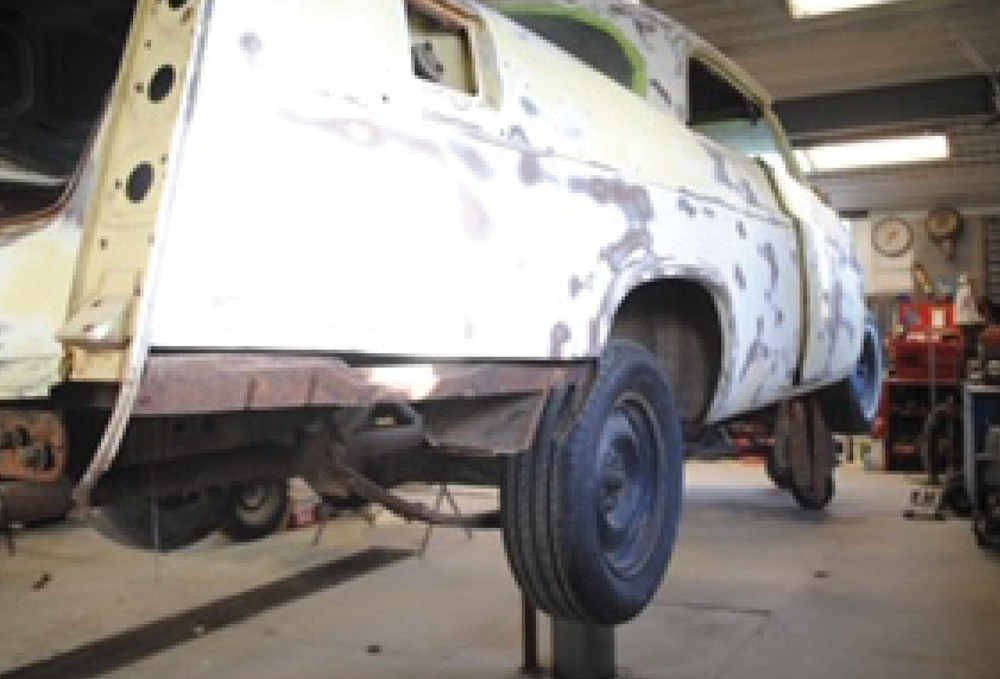
With renewed enthusiasm, we hauled the DeSoto to Radford Automotive, our good friends Colin and Sue Radford in Rigby, Idaho. The car had all the lights and trim removed, and then Tate Radford made the necessary rust and dent repairs while sanding the body with 80-grit sandpaper to give the primer a good grip on the metal. The first coat of primer was block sanded with 180-grit paper, a second coat of primer was blocked with 240-grit paper, followed by one more coat of primer, and a final wet block sanding with 400-grit paper.
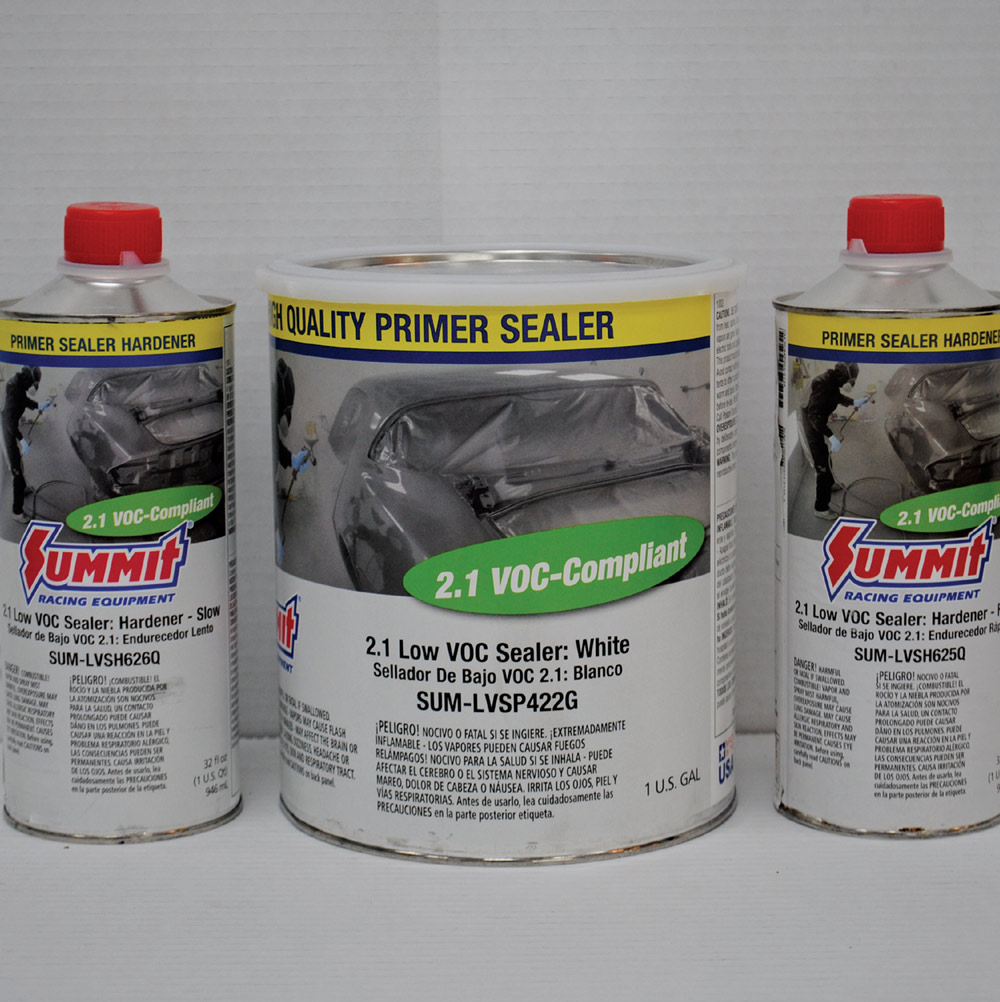
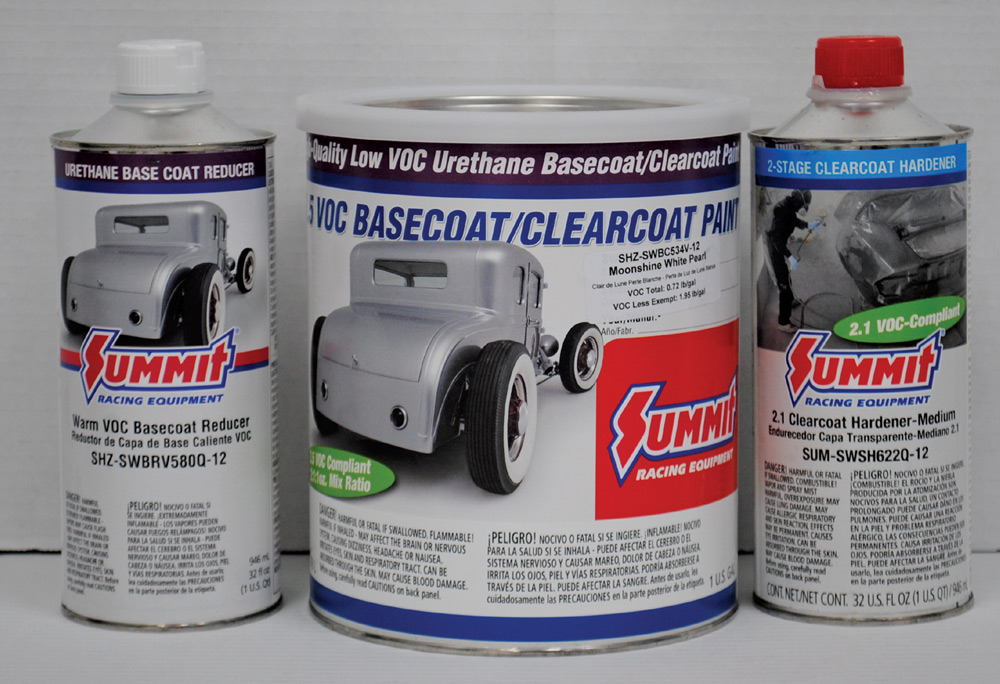
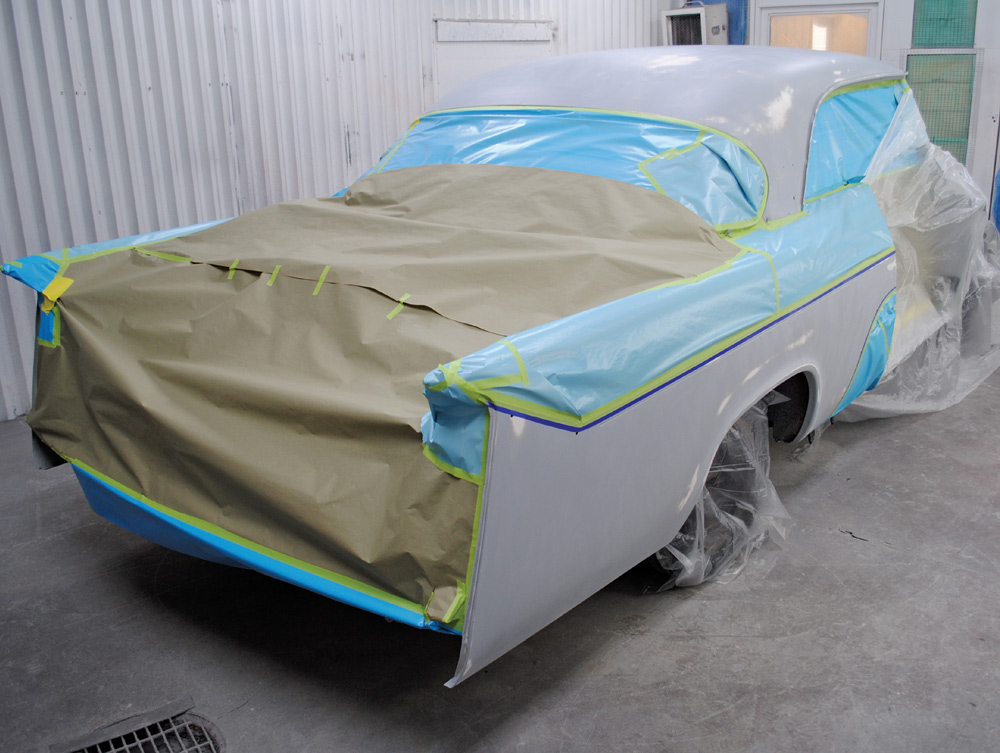
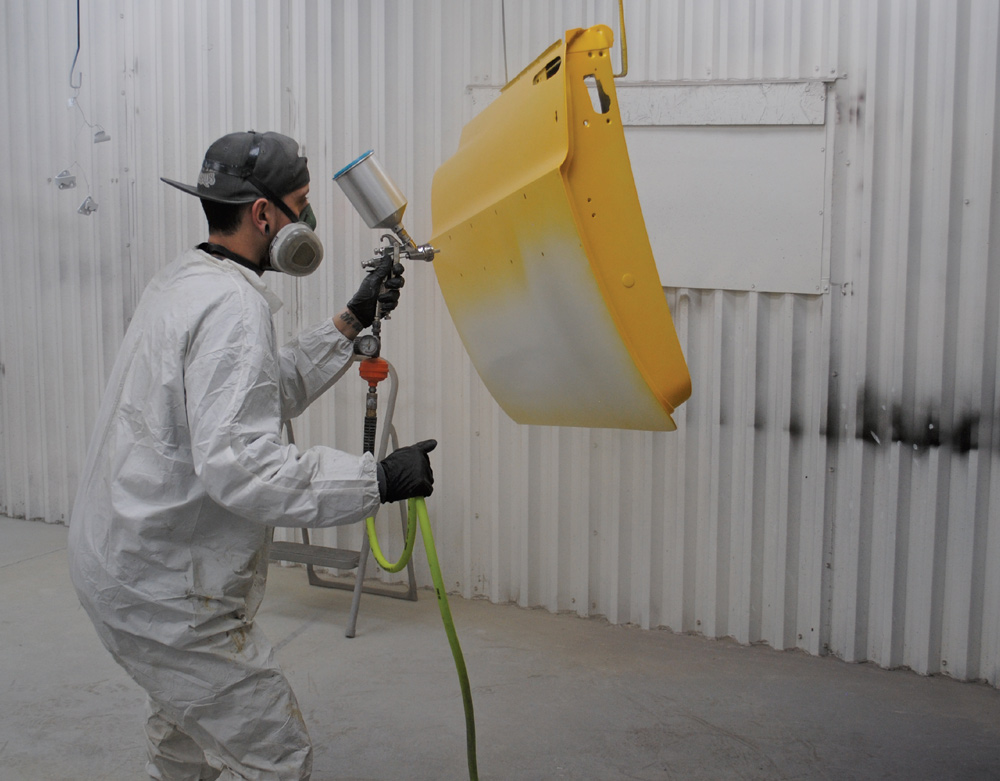
Satisfied the body was straight, it was covered entirely in Summit’s primer/sealer. The first of three coats of Moonshine White Pearl was applied once the primer/sealer was dried “hand slick” (touching a taped area with a glove; when it doesn’t stick, color can be applied). Subsequent coats were applied 5 minutes apart. While painters have varying techniques, Tate Radford prefers to shoot from the top down to watch for gloss. For color coats, he uses an Anest-Iwata LPH400 gravity feed spray gun with a 1.4mm needle and nozzle with air pressure at the gun of 18 psi. After the white portions of the body dried, those areas were covered and the same procedure was used to apply the Mango Madness Pearl.
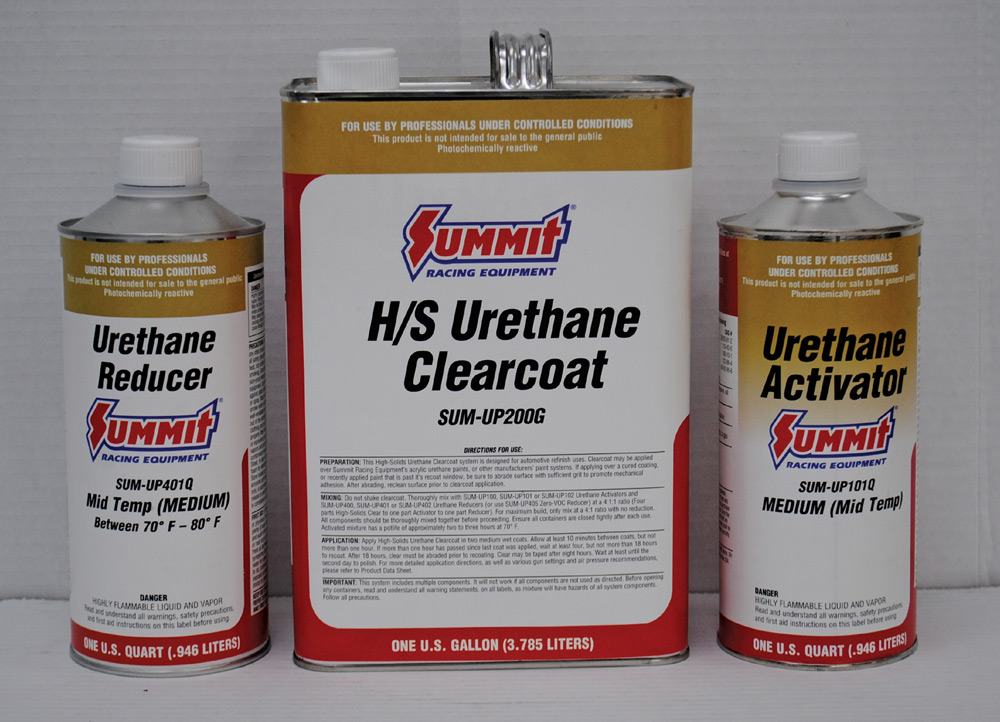
Once all the color coats were finished, three coats of Summit’s high solids urethane clearcoat were applied. Tate again used an Anest-Iwata spray gun, this time with air pressure set slightly higher at 20 psi. As Summit’s clearcoat was laid down so flat and smooth, only light wet sanding with 2,500- and 3,000-grit sandpaper was required. That was followed by polishing with the #35 compound with a wool pad, then the #10 compound on a foam pad, and, finally, an excellent #5 compound on a gray foam pad.
The results are spectacular and exceeded our expectations. Radford’s bodywork made the Mopar straighter than it was from the factory, and Summit’s paint products gave it a high-dollar mild custom look without the high-dollar price tag.











 SOURCES