
Modern Rodding Feature
InTheGarageMedia.com
Now That's a Hot Rod
Bill Currie’s 1932 Ford Highboy Roadster With Ed Pink V-8 Fits the Bill
By BRIAN BRENNANPhotography by MICHAEL CHRISTENSEN
T

he 1932 Ford highboy roadster is considered an iconic hot rod in the automotive world. It is known for its sleek design and powerful performance. Such an example is the ’32 Ford highboy roadster belonging to Bill Currie of Massachusetts, who had Dave Lane of Fastlane Rod Shop build such an iconic look. The “holy cow that’s bright red” complemented by an “in your face” set of bigs ’n’ littles all powered by an injected Ed Pink Racing Engines V-8 gives this hot rod all it needs to “possess the look.” Throw in the drop axle and quick-change and you have a timeless appearance—the quintessential hot rod stance.

Initially produced by Ford Motor Company in 1932, the highboy roadster quickly gained popularity in the old days because of the new Ford Flathead V-8. For the hot rodder turned weekend racer, they chose to strip the car down to its essentials, creating a minimalist, no-frills design that emphasized speed and style. Now, moving ahead, modern-day rodders and builders gravitated to the Deuce highboy because of its stunning one-year-only body style and the most beautiful car frame ever made.
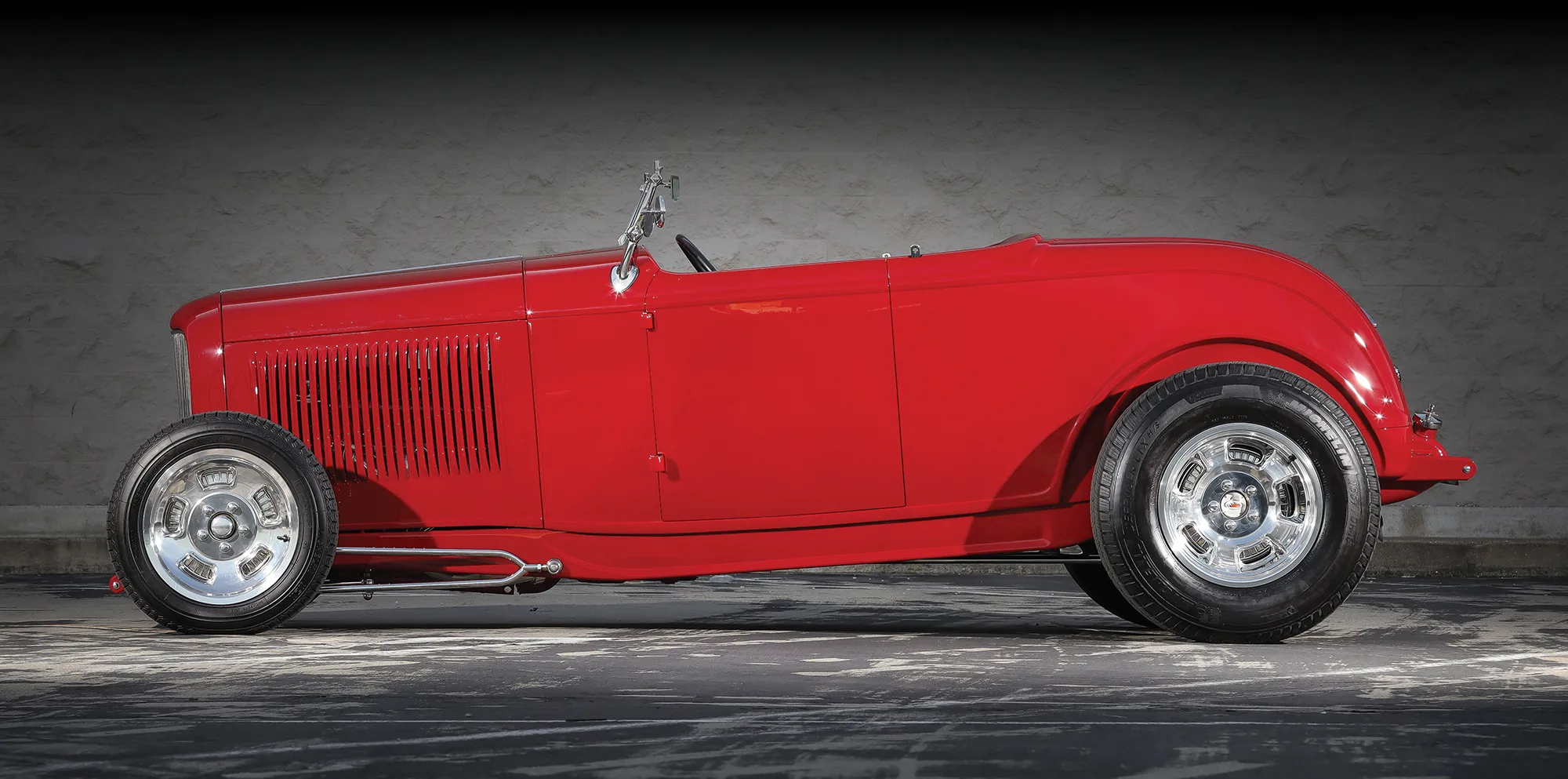
1932 Ford Roadster with a sleek red body and polished chrome wheels
For Bill, it started when he was 13. He saw a Deuce roadster zooming down the street, and with the sun glistening off the paint and while peering through leaves he was burning in the street gutter he was hooked. It didn’t take long before he found out who the magical neighbor was who owned the 1932 Ford highboy roadster and at that moment he began subscribing to Hot Rod. Still, it wasn’t time to own one; but he kept his enthusiasm going, and while in the Army Special Forces he kept the “flame” burning as his mom would mail his magazine subscription to him. Once out of the service it became time to get married and start a family—I bet several hot rodders can identify with that! Once the family had begun, there was time to cultivate a career in the automotive industry. Bill is no stranger to some pretty cool hot rods, having had a Deuce coupe once designed by Thom Taylor and later built by Boyd Coddington in 1990. From there, he had a 1929 Ford Track roadster built by Jeff Eischen, another highly talented builder.

Later, when the kids were grown and the bills paid, he did have the time to keep reading Street Rodder where he would begin to take an interest in the cars that Dave Lane of Fastlane Hot Rod Shop was building. It wasn’t long before he just had to meet Lane, and between them, the 1932 Ford roadster you see here was in the works.
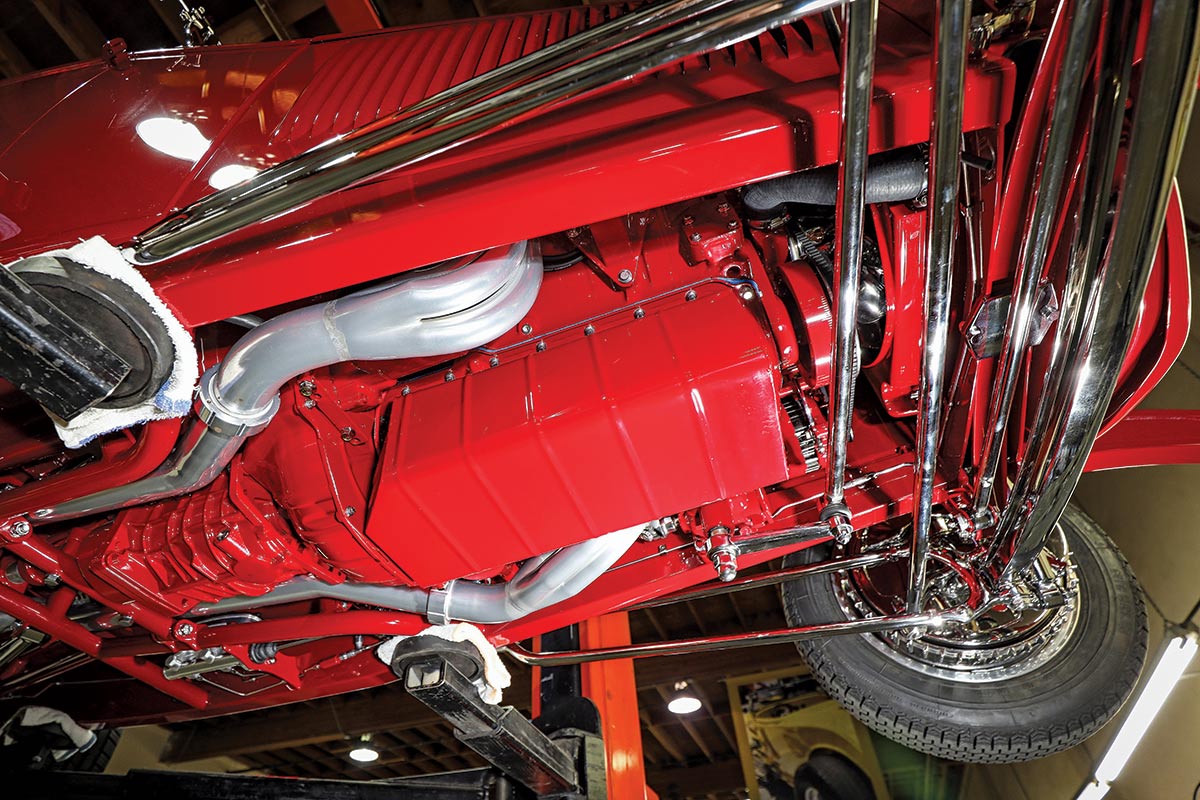
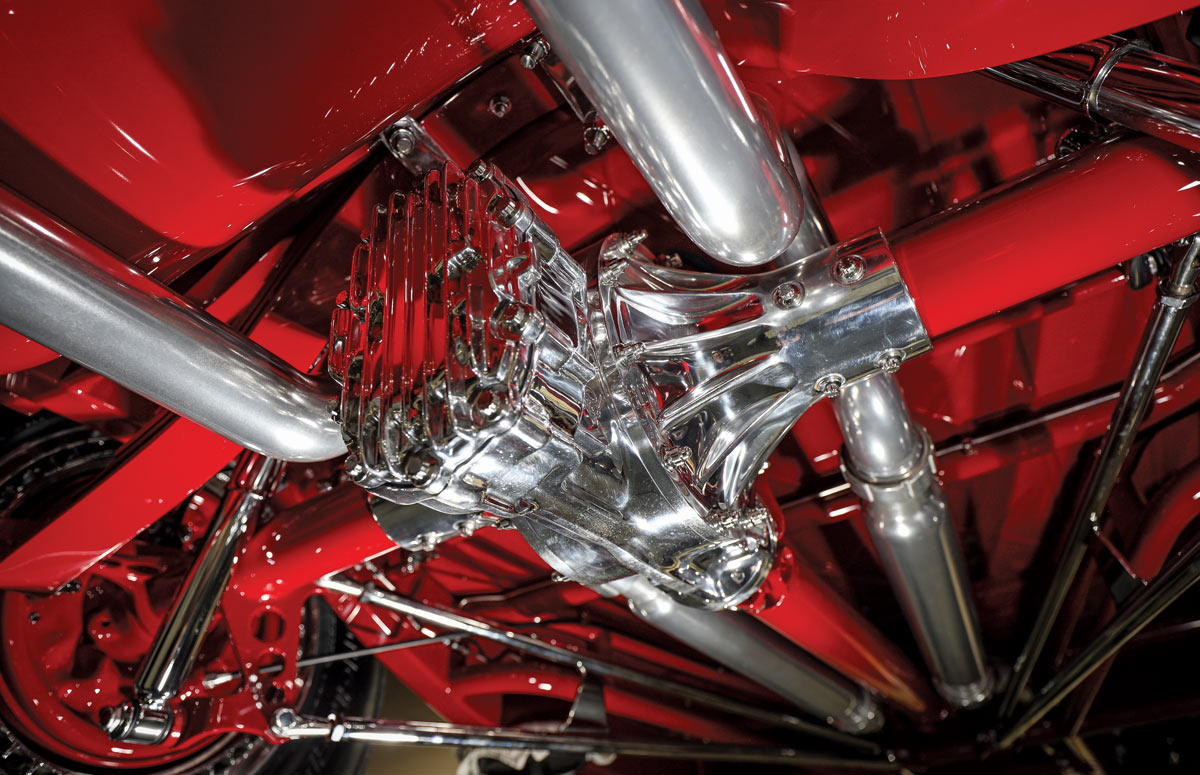
Underbody view of the 1932 Ford Roadster showcasing the meticulously painted and chromed chassis components
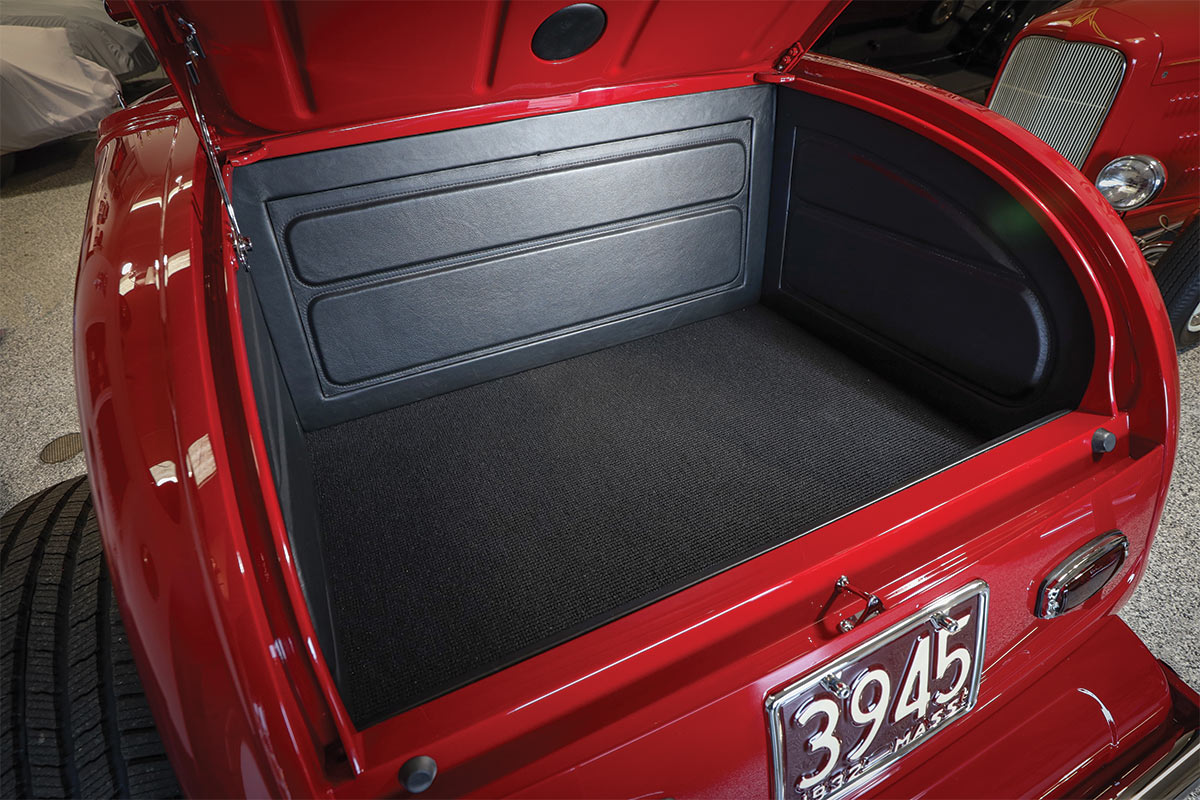
Clean trunk space in the 1932 Ford Roadster with custom interior paneling
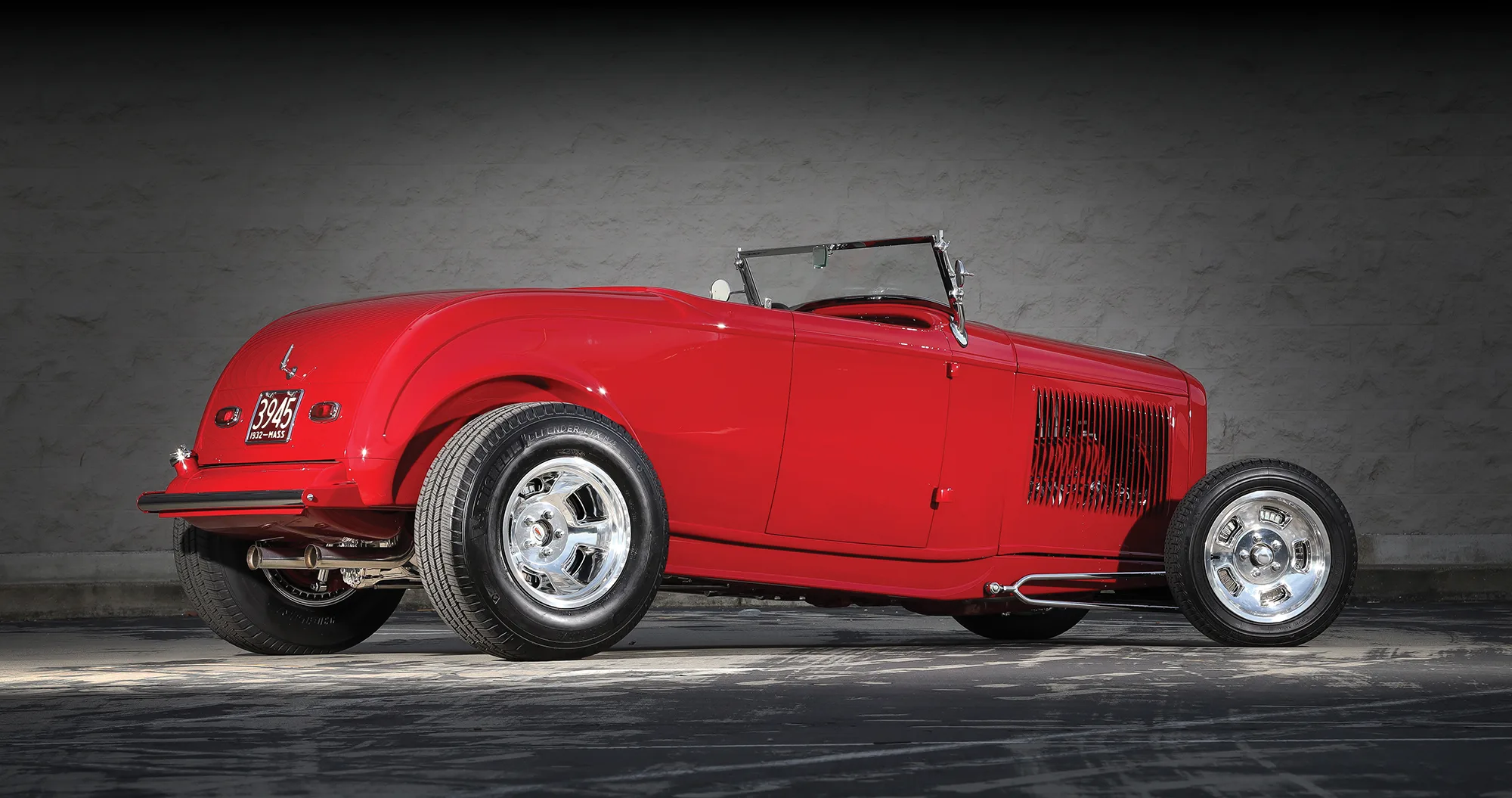
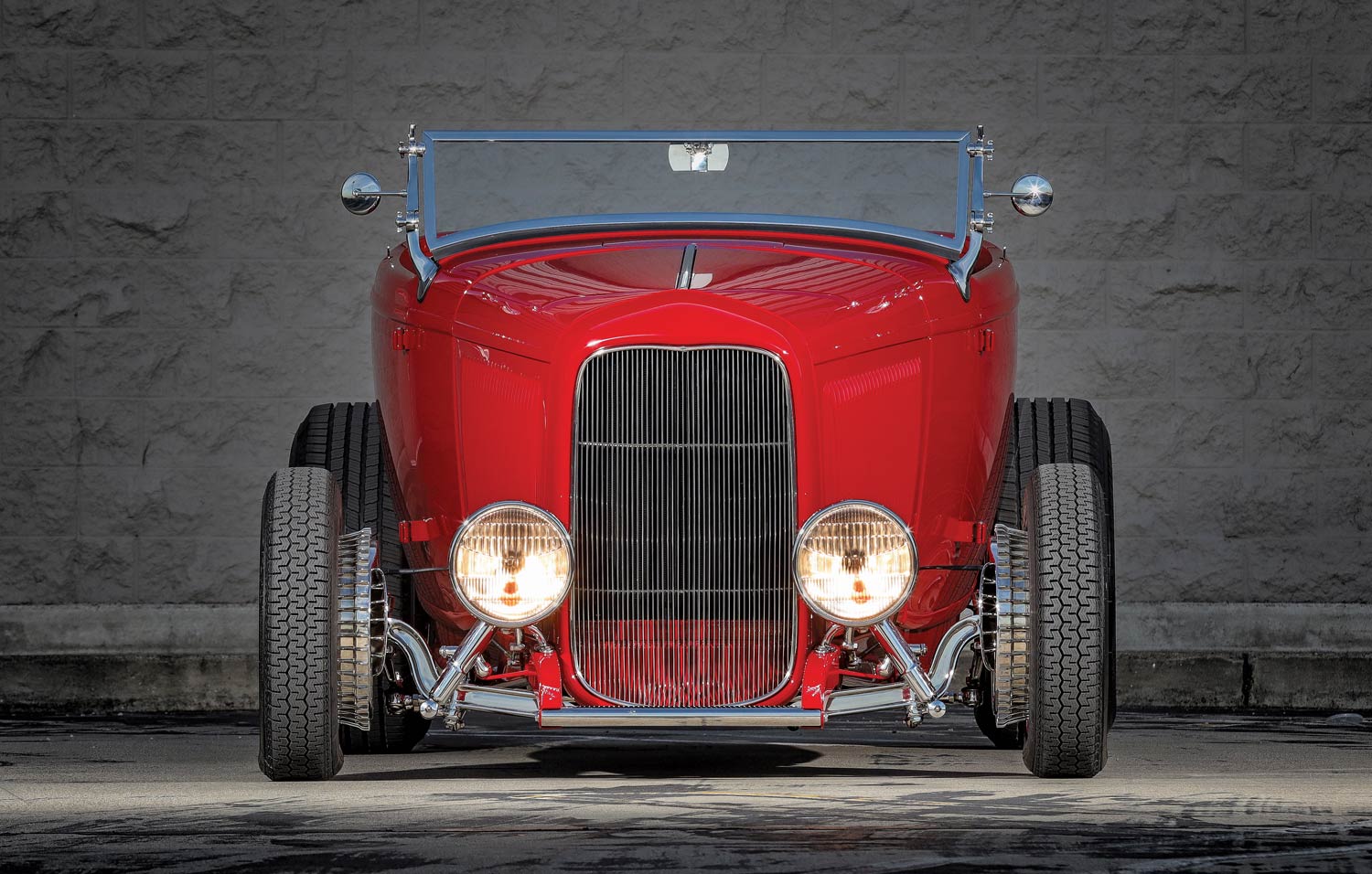
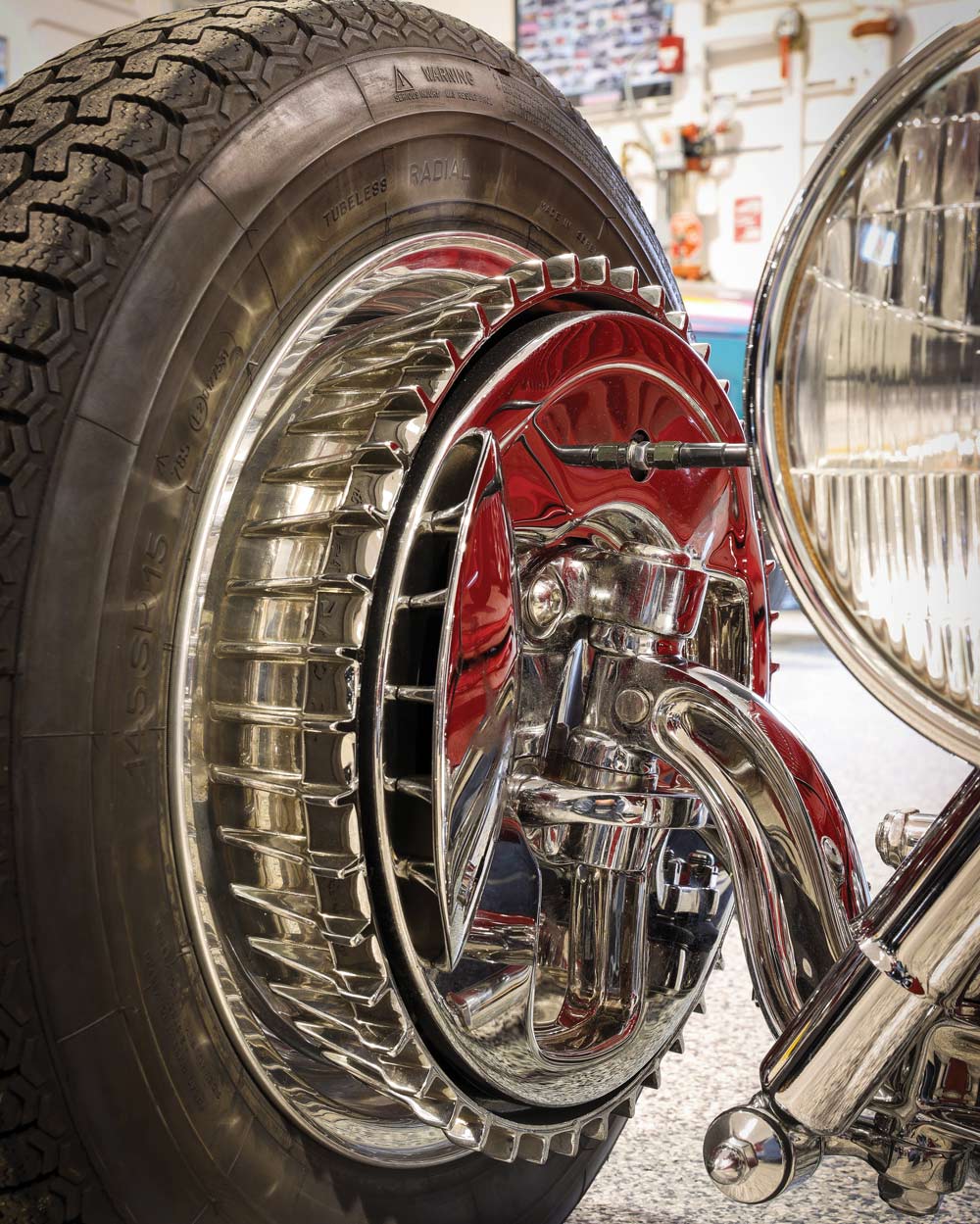
The body is based on a Brookville Roadster sheetmetal with a Rootlieb hood that features custom (pie cut) hood tops by Fastlane. All required bodywork and paint were also handled at Fastlane, and Lane sprayed on the Axalta Hot Hues Fastlane Red basecoat/clearcoat. The brilliant red 1932 roadster rests on a pair of Jim Weimer, of JW Rod Garage, framerails. From here, Lane pitched in with a few modifications of his own with pinched front ’rails, a Model A rear crossmember, and a kick-up at the rear. A Super Bell chrome 4-inch drop I-beam, spindles, and chrome Bilstein shocks are used, along with a painted transverse spring and chrome hairpins … all from Pete & Jakes Hot Rod Parts. The steering is a Mullins-Vega box coupled with a custom-made LimeWorks column, while the brakes are pushed into service via a Wilwood master cylinder. More from Pete & Jakes is the front braking, a polished and plated SO-CAL Speed Shop Hot Rod Brake kit that looks like vintage finned drum brakes but conveniently hides Wilwood polished calipers and rotors. More of the vintage-appearing brake package and the obligatory polished quick-change are featured in the rear. This time from Winters Performance their nostalgia-appearing V-8 quickie sporting 3.78 helical cut gears along with Winters axles, a Sadler Powertrain driveshaft, a painted transverse leaf spring, and one more pair of chrome Bilstein tube shocks. At the corners are a set of Real Rodders Halibrand-style five-window polished wheels measuring 16×10 in the back, beginning with 15×5.5 in front. The fronts were sent out to Eric Vaughn, who performed his magic, narrowing them to 4.5 inches, keeping the appealing dish look. The bigs ’n’ littles rubber combines Michelin XZX 145SR15 radials in front and Michelin Defender LTX 265/70R16 in the rear. Mounted in front are Greening Auto Company headlights with screw-on bezels, while the taillights are something early rodders would have found on a 1941 Chevy.
Rear view of a 1932 Ford Roadster, highlighting its vintage license plate and polished exhaust system
Chrome differential and suspension setup on the 1932 Ford Roadster’s undercarriage
Snuggled between the Deuce framerails is a Chevrolet Performance iron block ready to rock 383 inches before Ed Pink Racing Engines performed copious work to achieve V-8 perfection. Lane took the block and performed the external grind work to make it smooth to the touch. The internals comprise CP billet 10:1 pistons, Carrillo rods, Competition Cams ’shaft selected by the masters at Ed Pink’s, and a Lunati Pro Series crankshaft. The Edelbrock E-CNC 185 aluminum cylinder heads are held in position via ARP hardware, which is also used throughout the engine, and they are covered with a pair of custom billet valve covers made by C. Cook Enterprises to replicate the 1960s Chevrolet V-8 painted valve covers. They are necessary to give the added clearance required for the roller-tipped rockers. Lane also had an “Ed Pink Racing Engines” decal placed in the cover’s original center cavity. Up top is the “icing on the cake,” which comes in the form of a Hilborn small-block Chevy #814 aluminum intake topped with Hilborn EFI fuel injection. Is there anything more extraordinary than those tall eight-stacks telling the world it’s the mid 1960s and it’s match race time? Hot rods must have a cool motor and an SBC with Hilborns is, by definition, way cool. The stacks are capped off with custom air cleaners by Steve Moal Coachworks. Lighting the fire begins with a Holley EFI Dominator controller, a Joe Hunt lookalike electronic magneto with electronics by Steve Sbelgio of Eclipse Engineering, an MSD Blaster coil, a set of custom plug wires by Lane, and an electric fuel pump located within the Tanks’ gas tank mounted out back between the framerails. Additional engine accessories include the Edelbrock short aluminum water pump, a Powermaster alternator and starter, and an Optima trunk-mounted battery. The Jet Hot–coated headers, exhaust, Stainless Works mufflers, and bell tips were all fabricated through the meticulous workmanship of Lane at Fastlane. Attached to the SBC is a TREMEC TKO600 five-speed with a 0.82 Fifth gear, a Centerforce flywheel and clutch package, and a Hurst shifter.
Engine bay of a 1932 Ford Roadster with a high-performance V8 by Ed Pink Racing Engines
It is this one if there was a “hot rod” interior. The dash is a Brookville 1932 Ford recreation with a smooth finish. It is outfitted with vintage Stewart-Warner gauges and modern electronics by Chris Schlaff, The Gauge Guy. The needles, bezels, and curved glass are from older Stewart-Warner Survey gauges (can you say very rare). The gauges and other required wiring are all brought together by an American Autowire Highway 15 kit installed by Lane. Attached to the dash by a column drop is a LimeWorks custom steering column. Next up is a Bell-style four-spoke 15-inch steering wheel featuring Jesse Greening of Greening Auto Company overlay machinework. The custom bucket seats are reminiscent of the Boeing B-17 Flying Fortress bomber seat recreated by a longtime hot rodder of many talents and a good friend at Modern Rodding, Frank Wallic. He also handled the custom seatbelts. A little touch of creature comfort comes from seat heaters installed by Ron Mangus. The stitchwork was done in Wollsdorf-supplied black leather, while the carpeting is a German square-weave by Tracy Weaver of the Recovery Room Hot Rod Interiors. The Hurst shifter, e-brake handle, and the proper number of three pedals are popping up through the floorboards. The black Bop Top comes from Sid Chavers in Twillfast Sonnendeck, covering the chrome top bows. (Twillfast is a line of three-ply toppings with polyester and/or polyester/cotton backings.)
Front view of a 1932 Ford Roadster with bright headlights and a chrome grille
Close-up of a highly polished chrome front wheel on a 1932 Ford Roadster
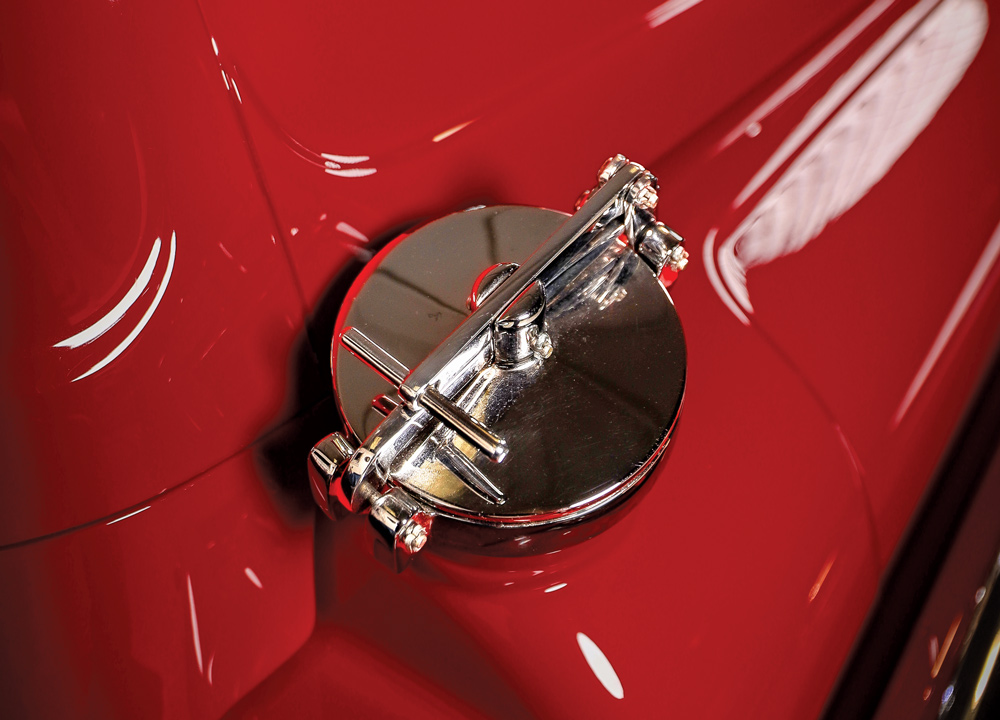
Chrome fuel filler cap on the rear of the 1932 Ford Roadster
Black leather seats with riveted aluminum frames in the 1932 Ford Roadster’s interior
Today, the 1932 Ford highboy roadster remains highly sought-after as a collector car or weekend doughnut chaser. Its timeless design, powerful performance, and storied history make it a true icon of the hot rod scene, loved by enthusiasts of all ages. With its sleek lines, high ride attitude, and legendary reputation, the 1932 Ford highboy roadster will always hold a special place in the hearts of car lovers worldwide. Bill can be very proud of what he has done as it reminds us of what we once envisioned we would be driving when we grew up.
Modern Rodding
VOLUME 5 • ISSUE 49 • 2024