


 Dode Martin in the blown Chevy-powered Dragmaster in the near lane versus Tommy Ivo in the injected Buick dragster.
 Historian Greg Sharp
here is a major airport right down the street from my house, but more importantly it is also home to the earliest days of drag racing and a place where hot rodders would hang out. The John Wayne Airport (formerly known as the Orange County Airport) was originally the Santa Ana Airport, with its history based in the Army Air Corps before the start of World War II.
The original Santa Ana Airport, established in 1928, holds a significant place in aviation history as one of the first municipal airports in the country. It served early aviators and was a central hub for mail service.
During World War II, the Santa Ana Airport became a vital military training base, contributing significantly to aviation development as various aircraft were tested there. Postwar, civilian aviation surged, but by the late 1940s and early 1950s the airport could not support increasing air traffic, leading to its closure in 1953 and subsequent redevelopment into South Coast Plaza.
Additionally, the airport gained fame as an early hub for drag racing. This environment laid the foundation for organized drag racing, which evolved into the NHRA, a structured sport by the early 1950s, and influenced hot rodding for years.
The earliest drag racing pioneers began in Santa Ana, California, in Orange County. Art Chrisman, Don Yates, Calvin Rice, Joaquin Arnett, Geroge “Ollie” Morris, and many others began their journey in our lifelong hobby on a dusty airstrip.
The story goes that the dragstrip began with $1,000 of start-up money. From this point, spectators and racers were charged $0.50 to be present, with 10 percent going to the airport’s ownership. There were early versions of timing clocks, a pit area, a concession stand, wooden bleachers (lots of slivers), and restrooms (being generous with this description).
I drive past this “birthplace” almost daily, and it always brings back memories I have or memories I have “stolen” from others. Overall, the Santa Ana Airport embodies a unique intersection of aviation and automotive history, marking a significant legacy in transportation and car culture in California.
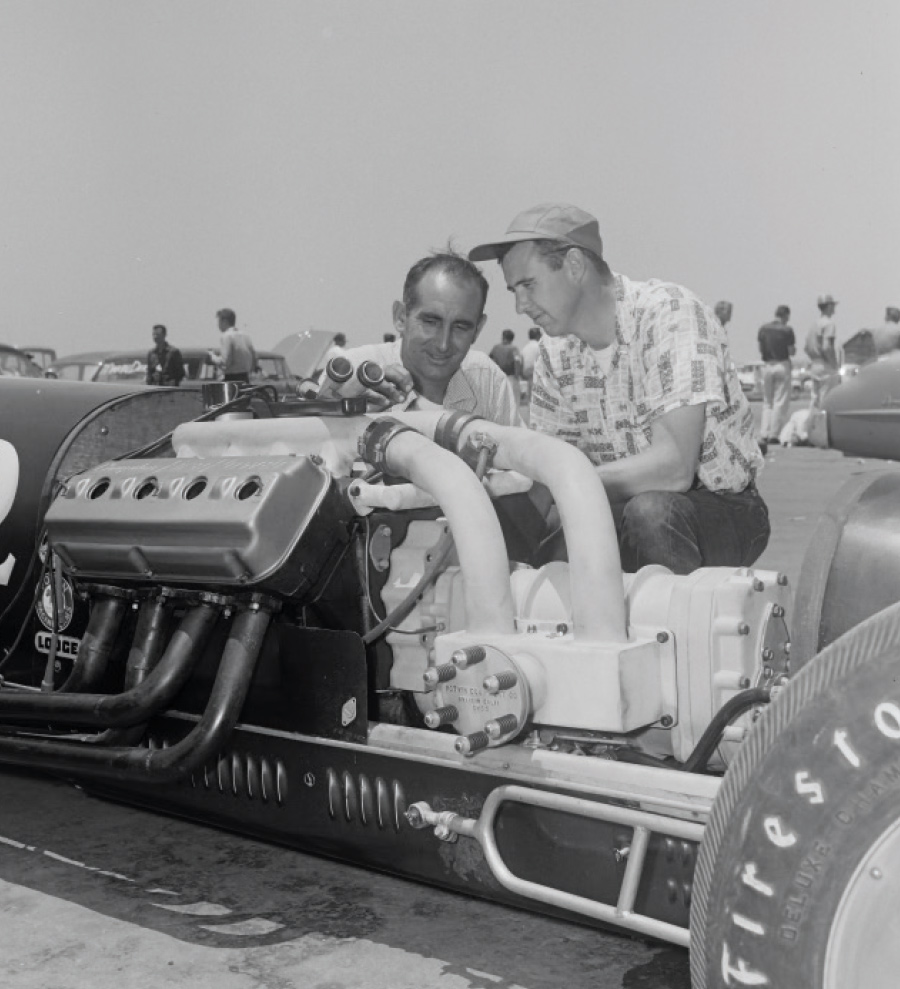 Kenny Lindley’s (left) “Miss Fire” dragster that set top speed of the 1956 NHRA Nationals at 159.01 mph with Bob Alsenz driving.
 The first iteration of the Howard Cams Twin Bears dragster. Howard’s son Jerry is on the right wearing the Howard T-shirt. Glen Ward was the first driver.
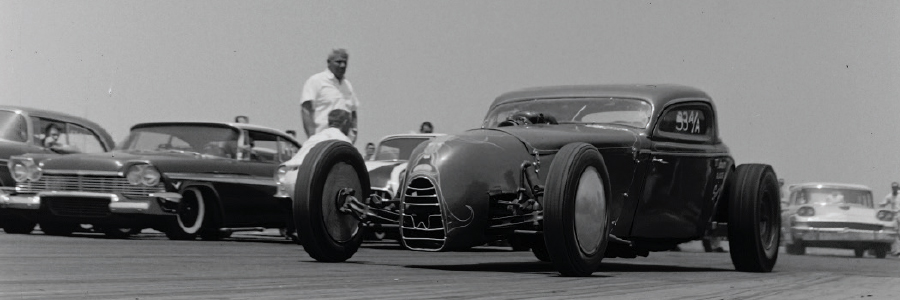 Bill Coburn’s “Coburn Glaze” competition coupe.
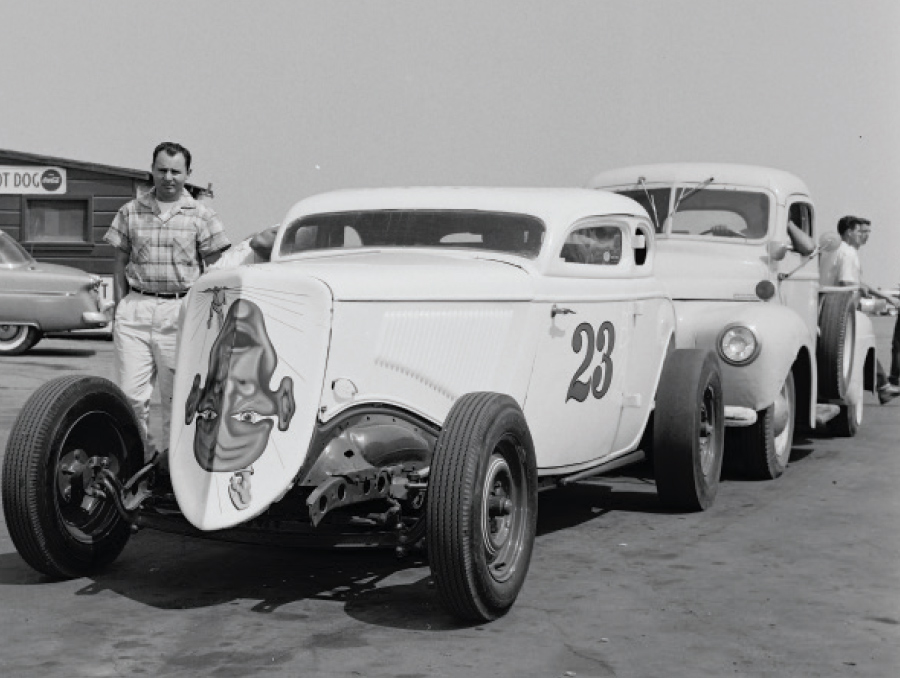 The Drifters of Redondo Beach Chrysler-powered B/Altered 1934 five-window coupe.