
Modern Rodding TECH

InTheGarageMedia.com
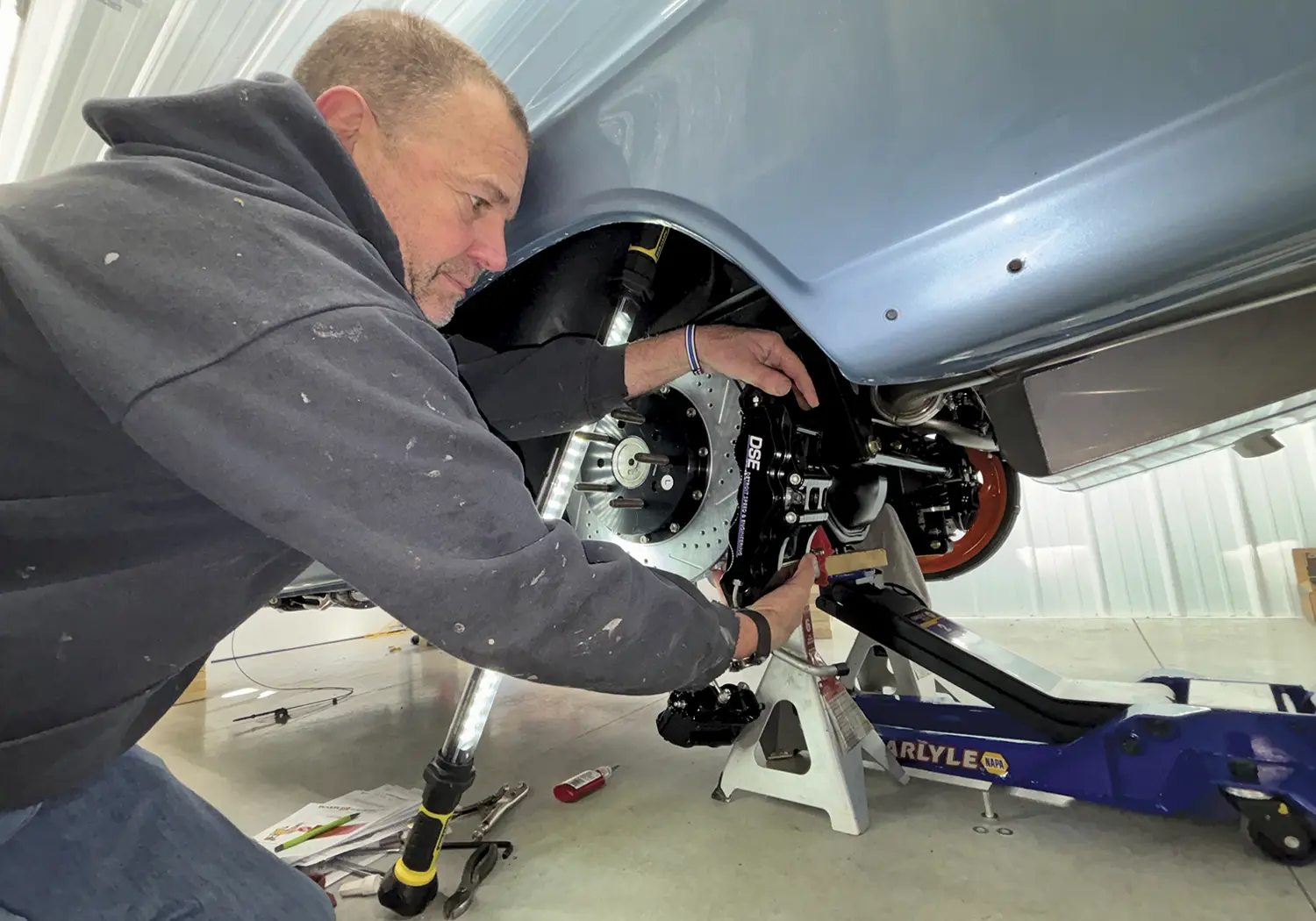
hot rod mechanic John McLeod kneels at the base of a lifted his ’67 Nova, wrapping up the rear brake installation

1. John McLeod is a diehard hot rodder who slips away from his executive duties at Classic Instruments as often as possible to get his hands dirty working on one of his projects. Here, he wraps up the rear brake installation on his ’67 Nova.

Making the Whoa Match the Go
Installing DSE/Baer Extreme Brake Systems
By Ron Ceridono
H

ot rodders old enough to have survived the ’60s can probably recall when a car with 300-plus horsepower was impressive. Take the popular ’67 Chevy Nova as an example—it could be had with the L79 Turbo Fire 327ci small-block that was rated at 325 hp. Coupled with a four-speed transmission, it was a formidable package. These little Chevys had plenty of go. However, the whoa department was a little less impressive with the standard drum brakes. In base form, Chevrolet equipped Nova with 9.5×2.5 drum brakes up front and 9.5×2 drums in the rear. Those who opted for the J52 disc brake options got 11-inch rotors up front with the standard drums in the rear. Certainly, it is better than four-corner drums, but it is certainly not up to what we expect today.

As we said, 300-plus horsepower was respectable in 1967, but as painful as it is for the Modern Rodding staff who were kids back then to admit (namely Brennan), that was 57 years ago. Today, horsepower is much easier to come by, and what could be cooler than wrapping classic vintage sheetmetal around a contemporary high-performance engine? As a case in point, we offer John McLeod’s (director of Classic Instruments and Detroit Speed & Engineering) ’67 Nova with a 435ci small-block that makes 650 hp, which is more than enough to make it go. Now all the little Chevy needed were brakes to bring it to a stop.

McLeod had already equipped the Nova with a Detroit Speed & Engineering (DSE) front subframe and QuadraLink rear suspension to make it handle. To make it stop as it should, he picked DSE’s new Baer/DSE brake packages to add to both ends. Up front, the Nova has been equipped with a Baer/DSE Extreme+ brake package with an XTR six-piston caliper upgrade. The XTR calipers take the 6S caliper, which is machined from a U.S.-sourced, one-piece 2618 aluminum forging for ultimate rigidity. They are then treated to some extra machine work to make them lighter without sacrificing strength. Other benefits of the XTR caliper are two-piece pistons with an aluminum main body and stainless steel caps and a bolt-in bridge, allowing you to replace pads without removing the caliper.

To promote an even pad wear, the caliper’s pairs of pistons are staggered in diameter—there are two 1.625-, two 1.375-, and two 1.1875-inch—for a total piston area of 4.667 square inches. Both the standard 6S forged monoblock calipers and the upgraded XTR calipers have dust and weather seals and use the popular D1247 pads. The standard two-piece rotors supplied with the Extreme+ front brake kit are 14 inches in diameter with 15-inch rotors optional (both are 1.25 inches wide). All Baer/DSE systems feature directionally vaned (curved vane) rotors; all high-performance rotors are slotted, drilled, and zinc plated.

Peeking under the rear of the Nova now would reveal a Baer/DSE 14-inch Extreme+ system, also with XTR calipers. Like the front, 14-inch two-piece rotors are standard, with 15 inches being optional. Clamping on the drilled-and-slotted rotors are six-piston calipers with smaller staggered pairs of pistons—two 1.875-, two 1.125-, and two 1.00-inch—for a total piston area of 2.887 square inches. For a parking brake, the Extreme+ kit includes a Banksia system. An extremely simple design, this drum-in-hat style paring brake has just nine parts compared to the 30 in the conventional designs.

When it comes to choosing a master cylinder, Baer/DSE offers three bore sizes to choose from: 15/16-inch can with manual brakes, 1-inch for power brakes, and 1-1/8 for hydro boost–equipped brakes. Rick Elam, the product specialist at Baer/DSE, suggests using a vacuum booster, typically a 9-inch dual-diaphragm, if space permits, but cautions that 15-16 inches of manifold vacuum at application is necessary for proper operation. Elam also suggests that despite the caliper piston area being optimized from front to rear, an adjustable proportioning valve is recommended to help fine-tune brake bias.

Take a tip from McLeod’s Nova: if your car has a high-performance engine, it also needs high-performance brakes. Baer/DSE can provide what you need to ensure your car has the whoa to match the go.
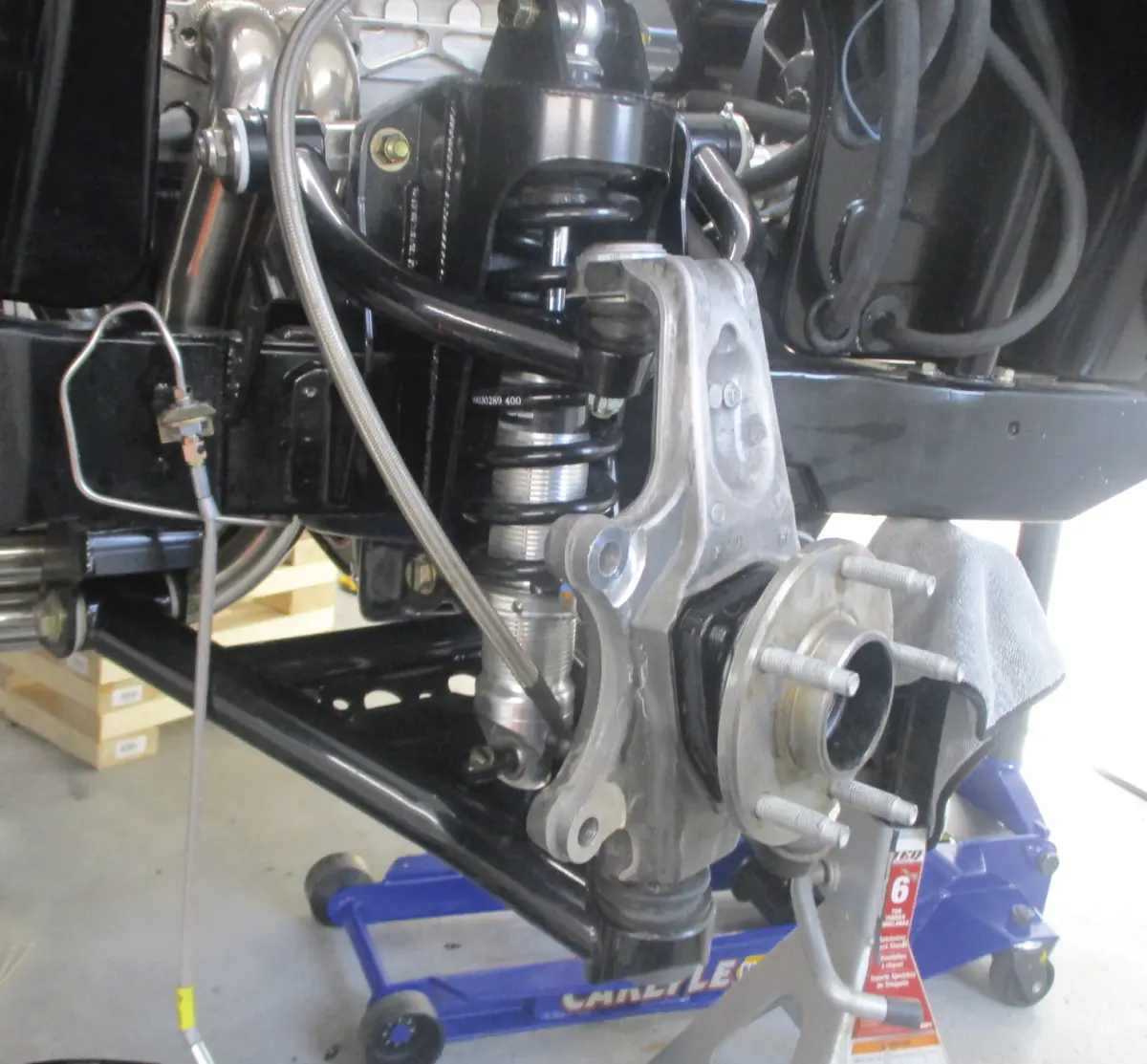
McLeod’s Nova with its original equipment, DSE’s front clip with coilovers and Corvette-style spindles and hubs
2. McLeod’s Nova had been equipped with DSE’s front clip with coilovers and Corvette-style spindles and hubs. Although the Extreme+ brake kit shown is for this style of suspension, Baer/DSE offers a variety of similar brake kits for standard spindles.
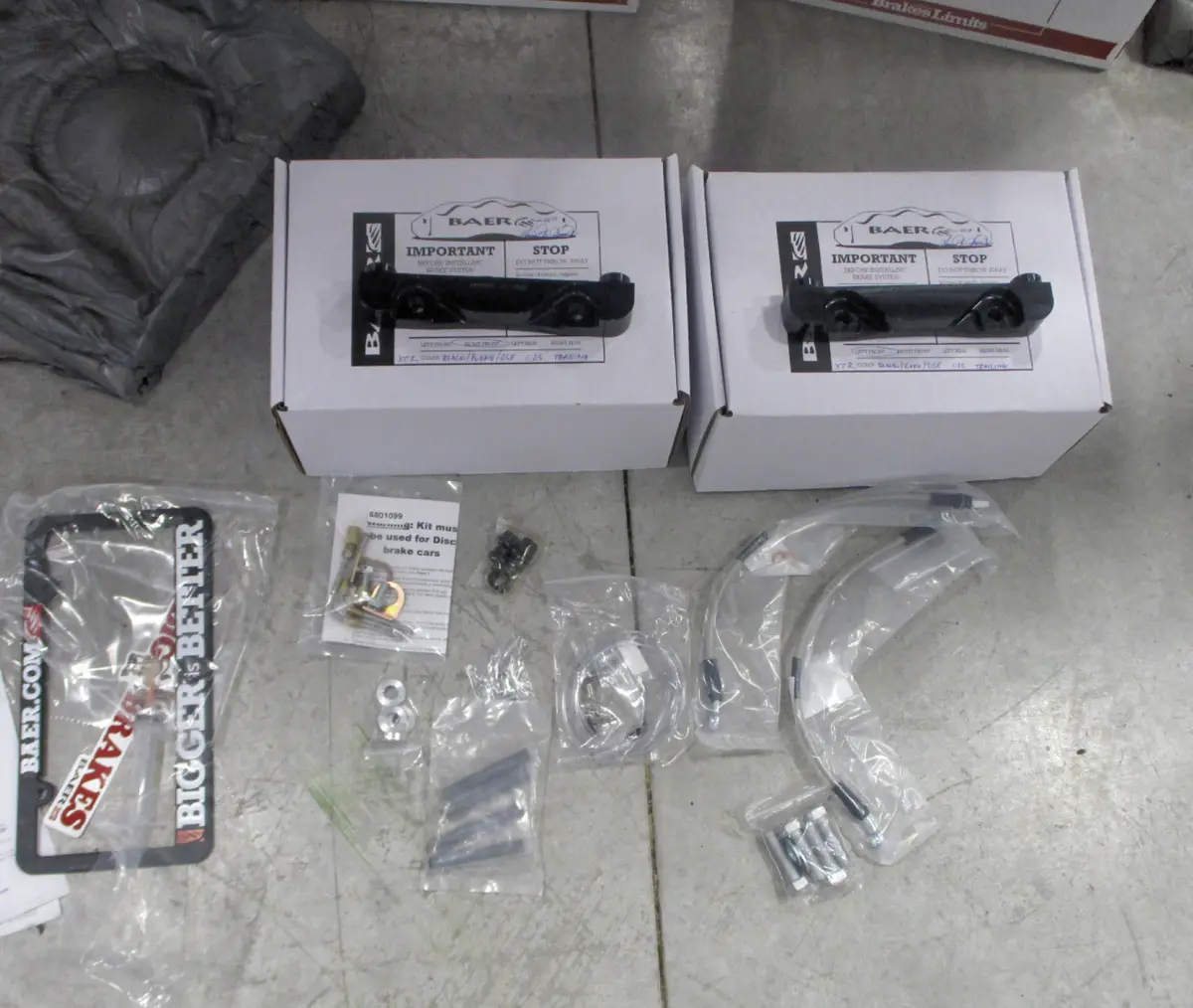
top view of the Baer/DSE Extreme+ front brake kit and all its included parts, including mounting brackets, braided brake hoses, and detailed instructions
3. Along with the precision mounting brackets (top), the Baer/DSE Extreme+ front brake kit includes all the necessary hardware, braided brake hoses, and detailed instructions.
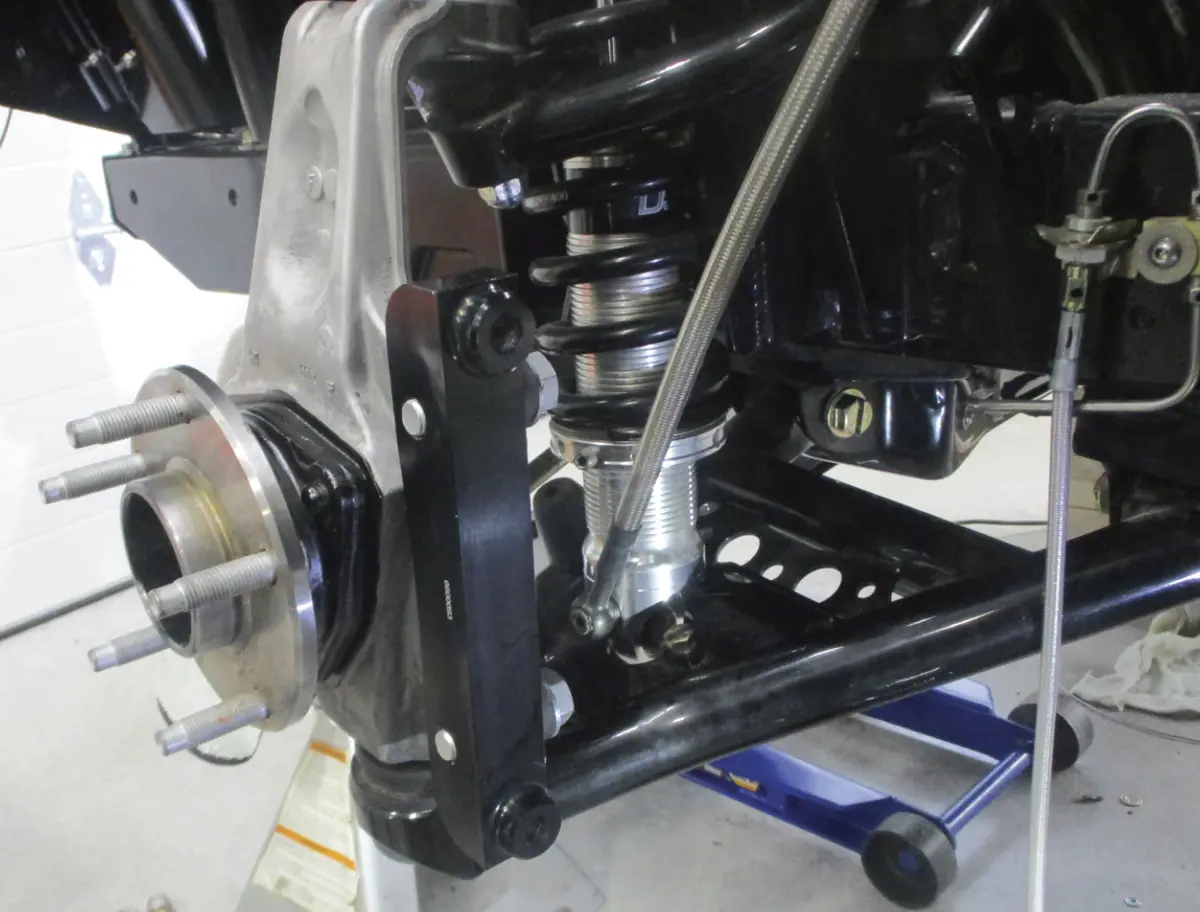
close view of a wheel hub including a view of the strut
4. The front caliper brackets attach to the outboard side spindle uprights with two Grade 8 bolts. A thread locker is applied to the threads and the bolts are torqued to 120 lb-ft.
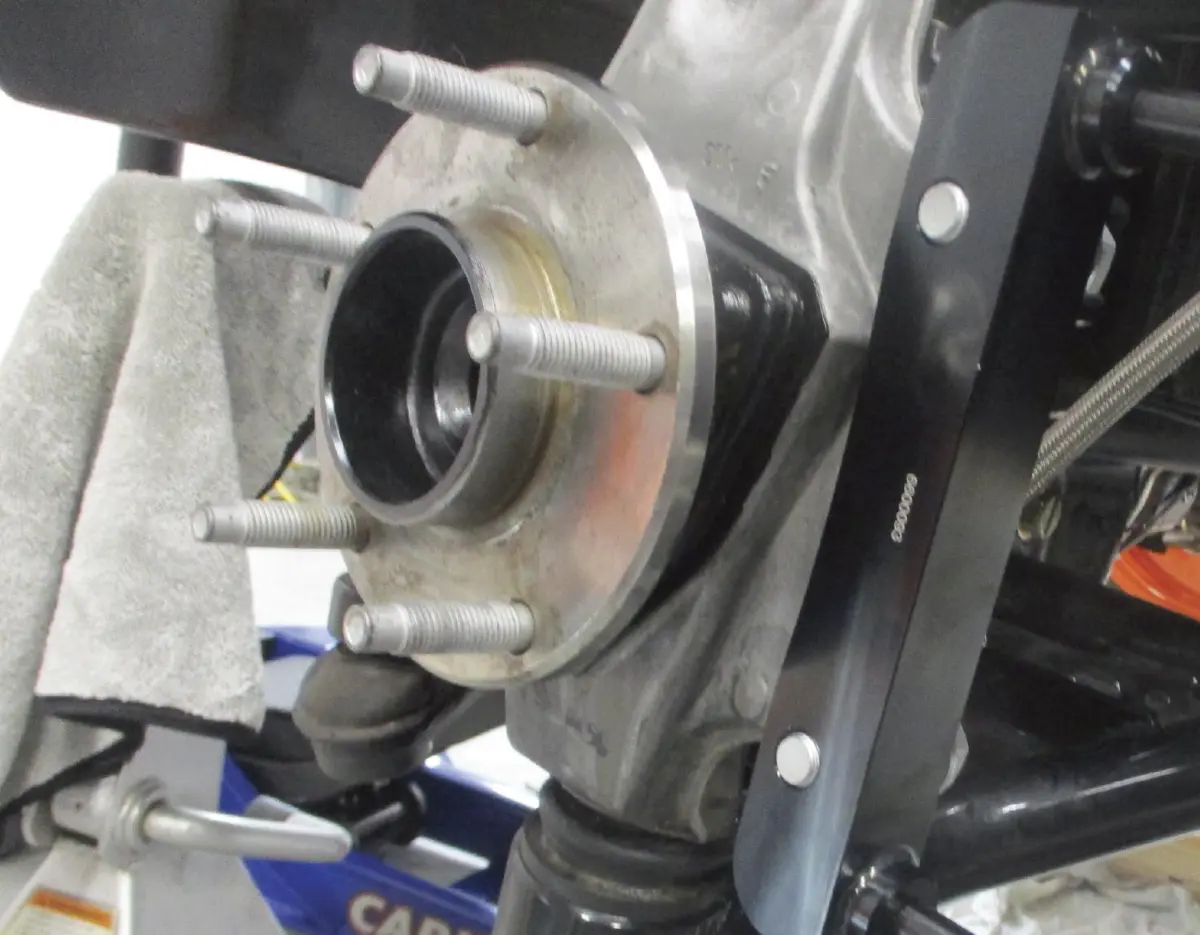
closer view of a wheel hub
5. A pair of studs are installed in the bracket to mount the caliper. Depending on the diameter of the rotor, spacers on the mounting studs may be required—14-inch rotors require 0.250 shims and 15-inch rotors use 0.500 spacers.
angled view of a wheel hub with the rotor disc installed and the rotor cooling vanes visible
6. In between the friction surfaces, Baer/DSE rotors have curved cooling vanes that act like a pump when rotating, pulling air into the center of the rotor and pumping it out the outer edges.
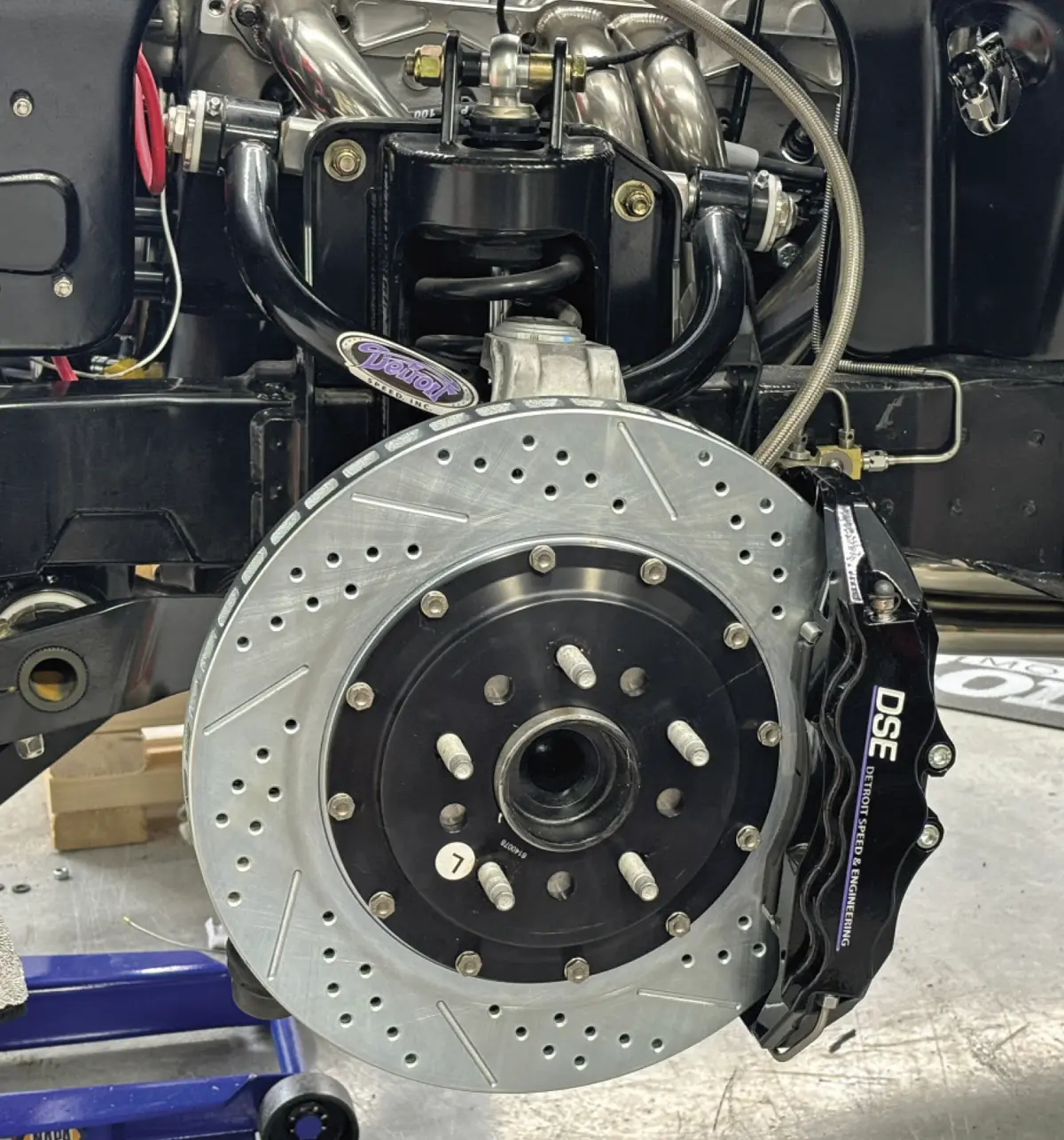
front view of a wheel hub and rotor with the front caliper and pad installed
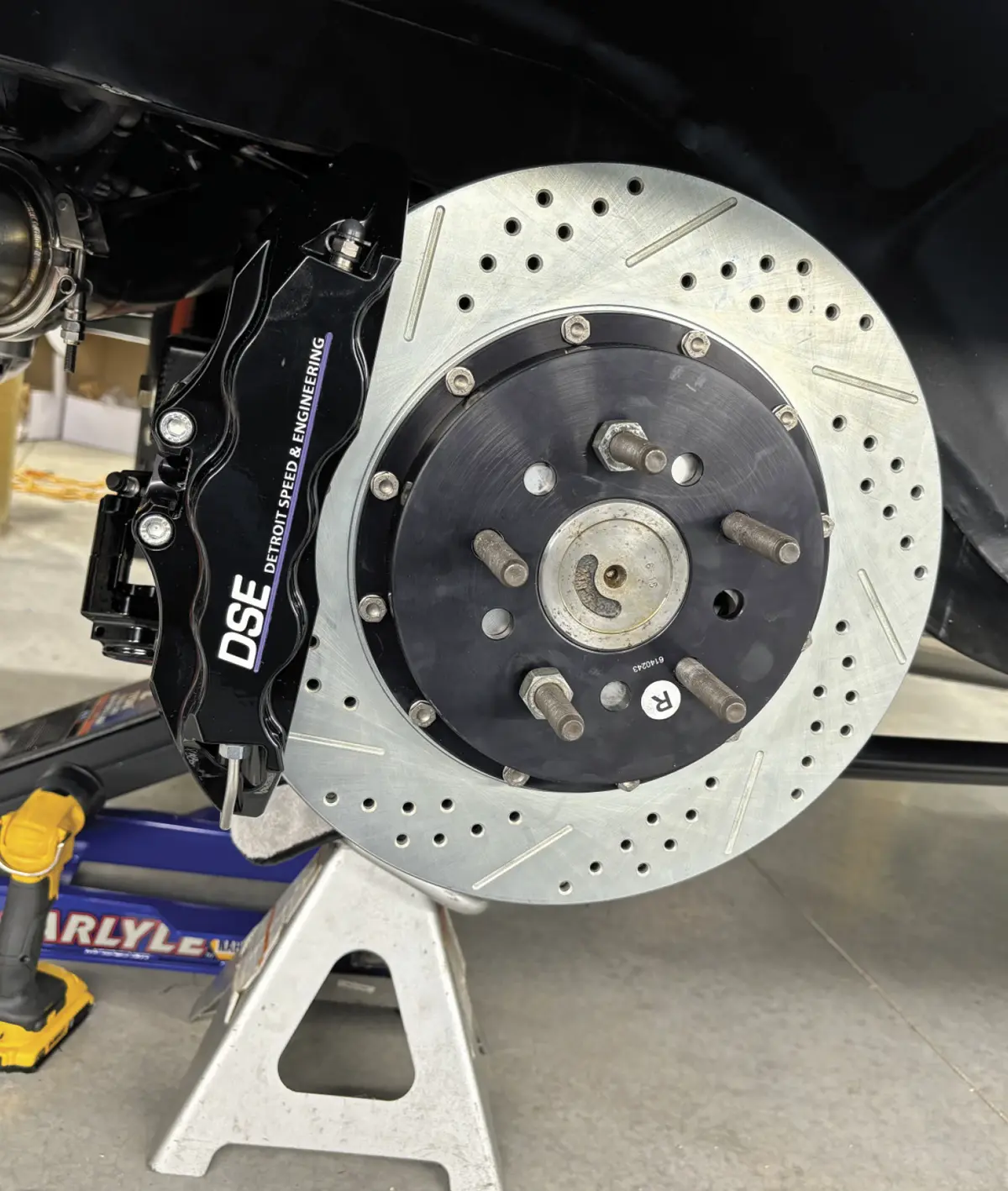
7. With pads in place, the front calipers are installed with the bleeder screws pointed up—the supplied ARP washers and 12-point nuts and torque to 75 lb-ft. To ensure the rotors are installed correctly, the direction of rotation is indicated on the rotor hat with either an arrow, an “L” for left or an “R” for right.
zoomed in view of the brake hoses
8. To prevent fluid leaks, the supplied braided brake hoses use banjo fittings on the caliper ends with copper washers. Banjo fittings were designed for high-pressure hydraulic fluid transfer applications and are common in OE applications.
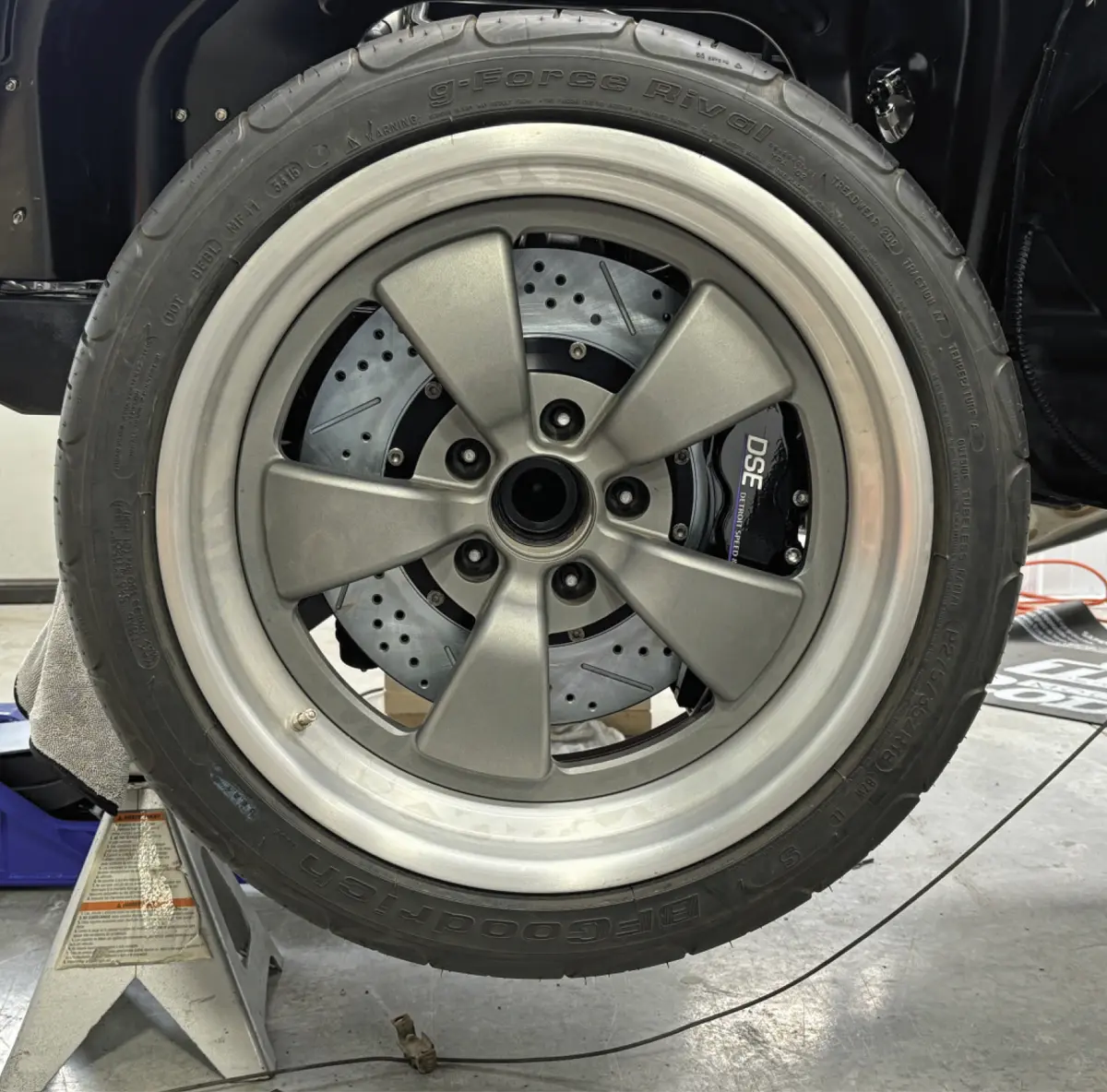
front view of a wheel placed on the wheel hub assembly to check for clearance
9. Although wheel designs vary, typically, 18-inch wheels will be required with 14-inch rotors, and 19-inch wheels with 15-inch rotors. It’s always wise to check clearances as the wrong offset wheel could contact the caliper. The best bet is to use Baer/DSE’s template to verify wheel fitment.
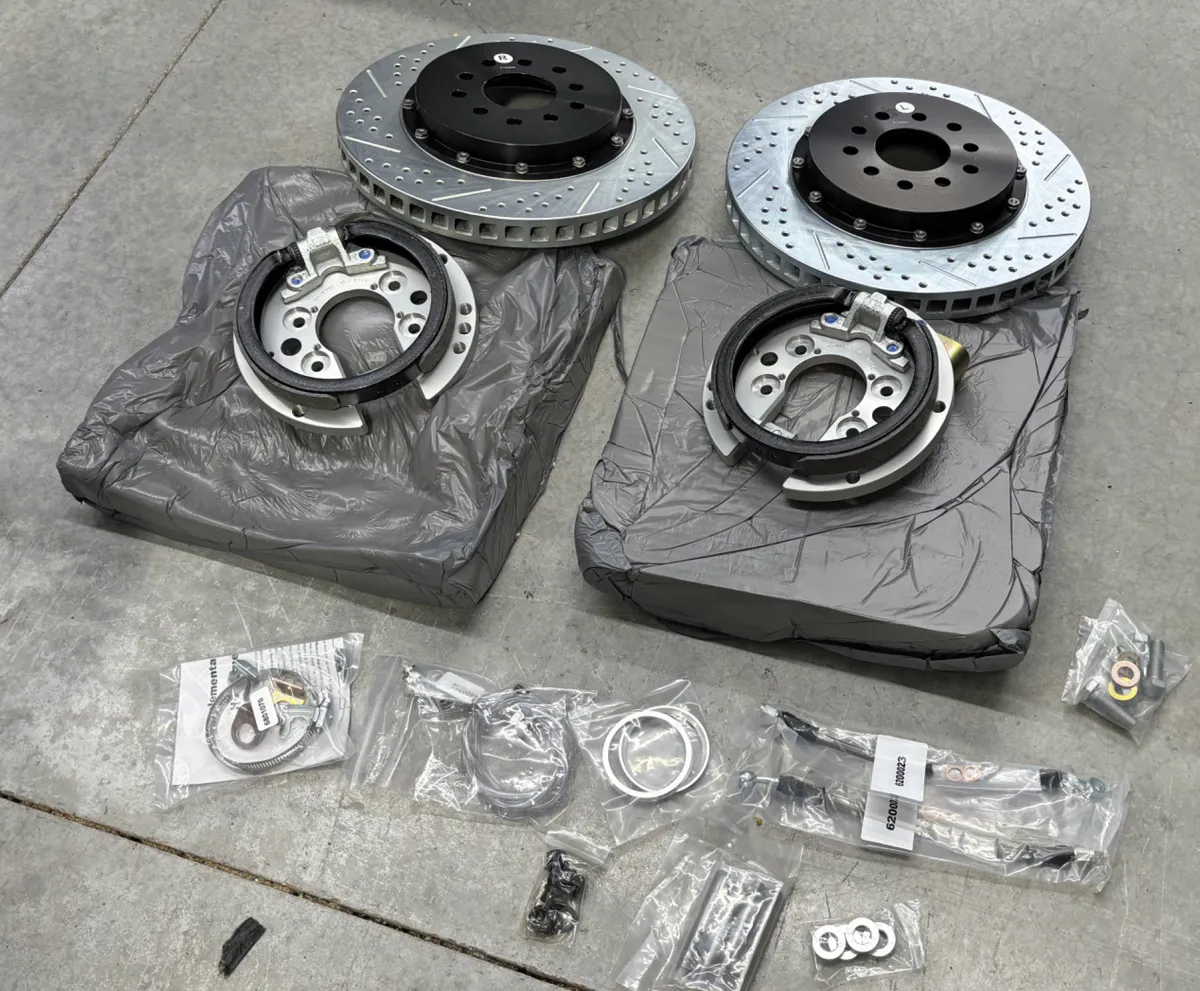
top view of the rear Extreme+ brake kit rotors and their accompanying assembly
10. The rear Extreme+ brake kit includes 14-inch rotors mounted to hats incorporating drums for the internal expanding parking brake.
Baer/DSE’s unique backing plate installed behind the wheel hub
11. Baer/DSE’s unique backing plate does double duty as it mounts the parking brake assembly and the caliper.
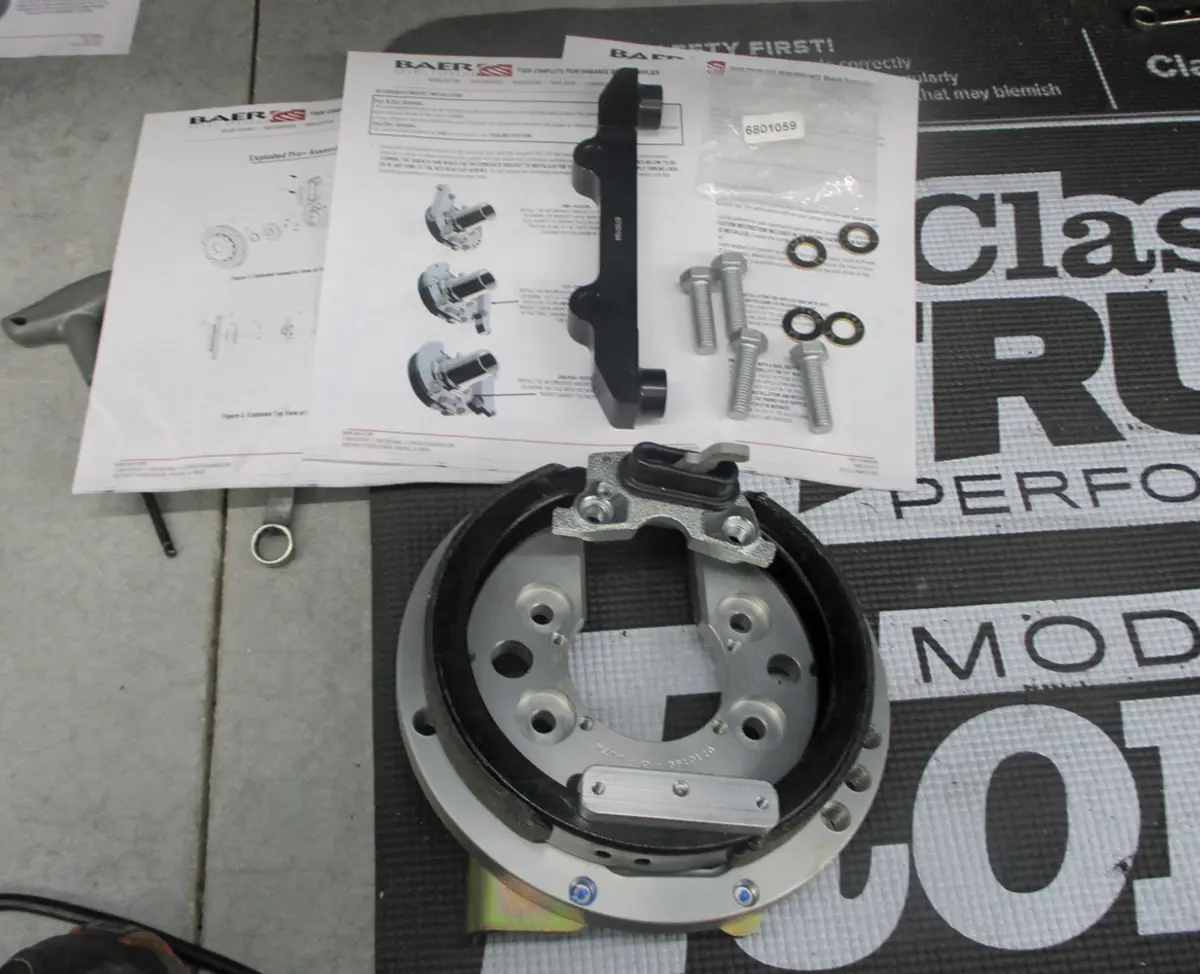
top view of the Banksia mechanical parking brakes beside the included instructions
12. Simple but highly effective, the Banksia mechanical parking brakes are cable-operated. When the actuator lever is pulled the shoes expand and contact the drums.
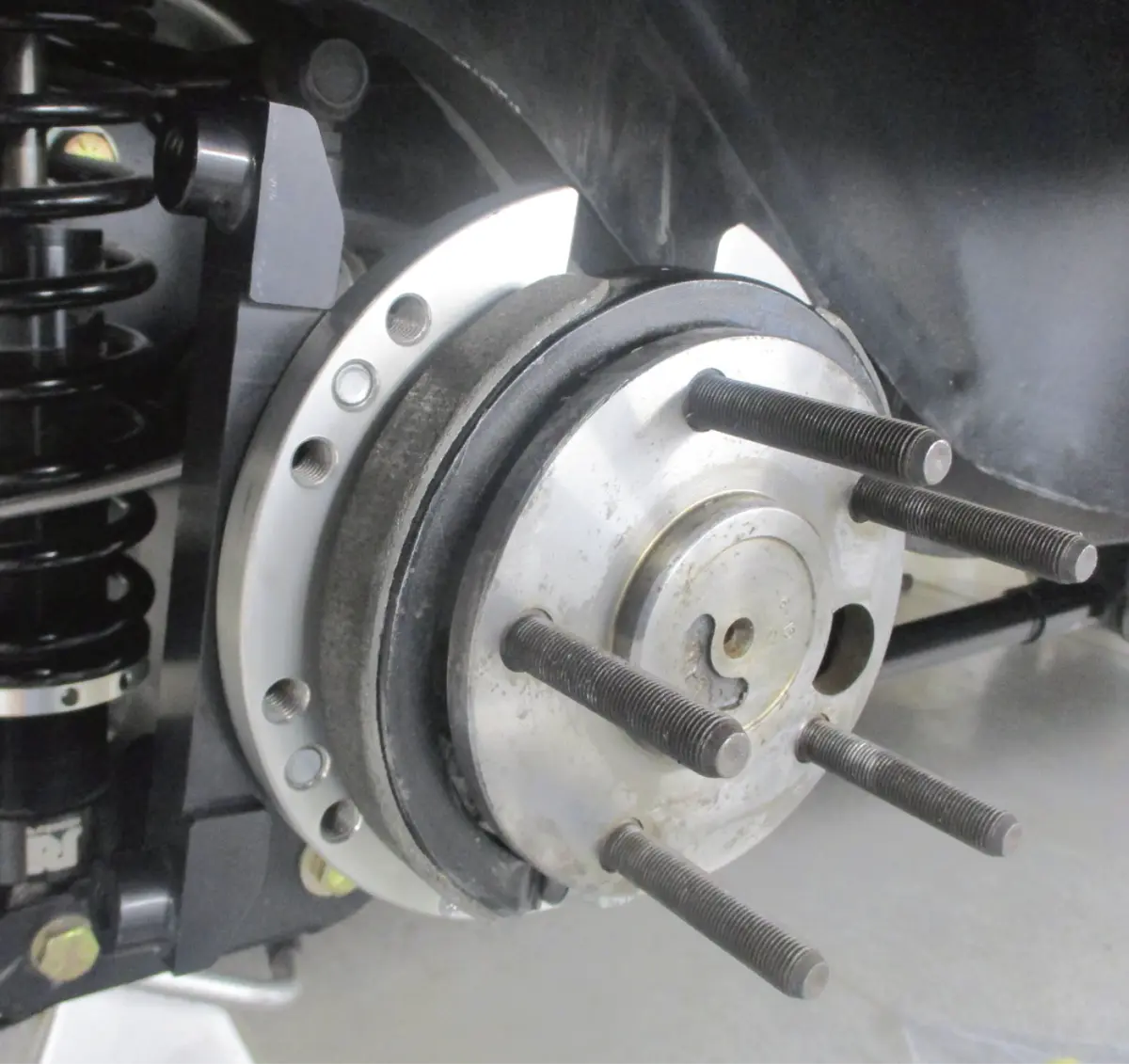
the parking brake bracket installed on the wheel hub
13. The parking brake bracket is designed to have an actuator below the axle. The caliper can be mounted in front of the axle or behind, as it is in this case.
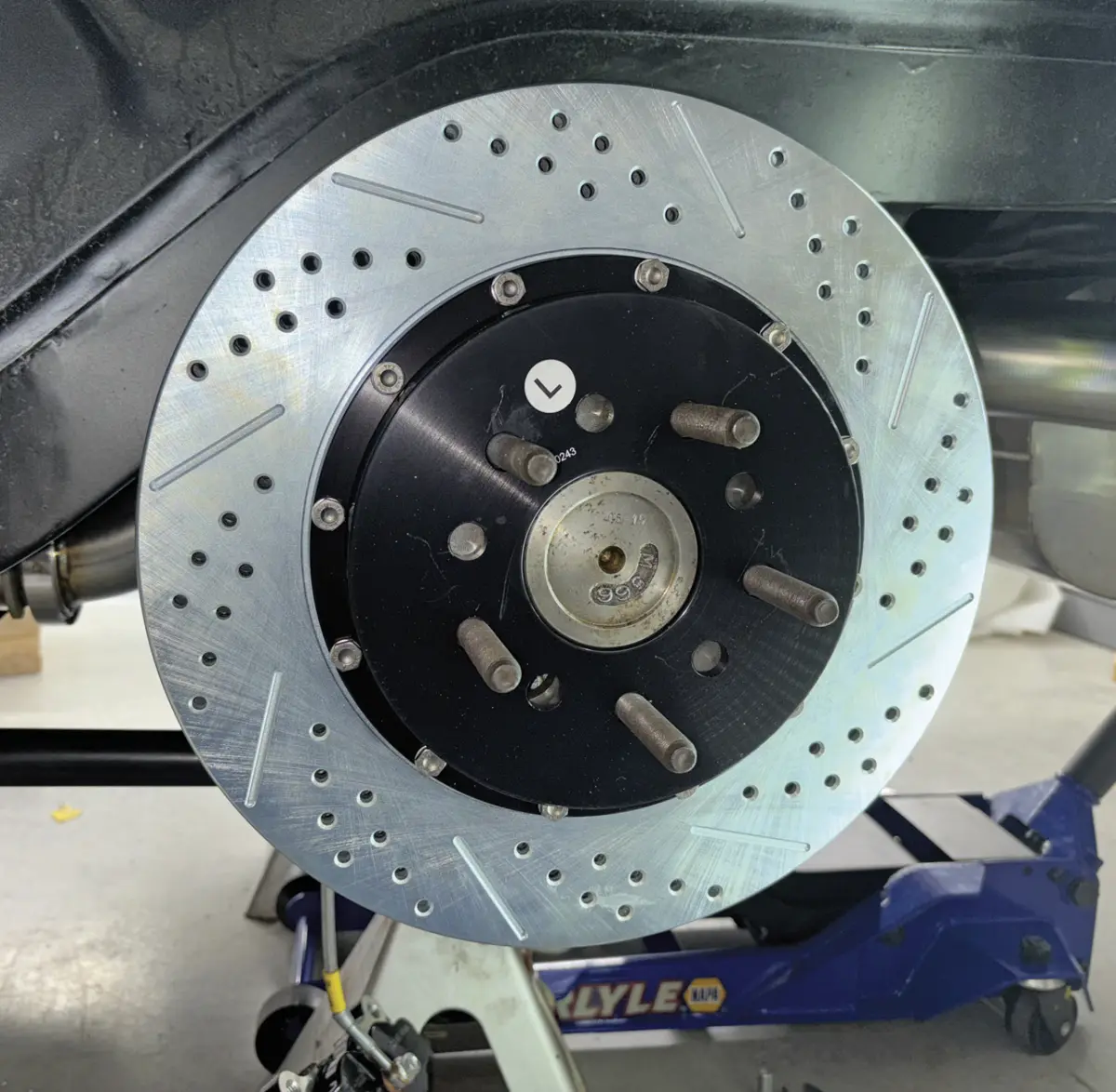
close up of the 14-inch rear rotor in place labeled with an "L" sticker
14. This is the 14-inch rear rotor in place. Note the “L” indicating it goes on the left side of the car and the orientation of the holes and slots in the friction surface (the front of the car is to the left).
close up of the rear six-piston calipers and rotor in place labeled with an "R" sticker
15. The rear six-piston calipers have smaller pistons than those up front for brake balance. Standard caliper colors are red, silver, and black, with many other custom colors available. Note the orientation of the holes and slots in the rightside rotor (the front of the car is to the right).
one of the gaps from the rotor to the caliper is measured
16. Rear brake systems are designed specifically for the axle assemblies being used. However, the calipers may have to be shimmed to center them on the rotor due to the manufacturer’s variations. The gaps from the rotor to the caliper are measured in four places: top, inside, outside, and bottom, both inside and out. All gaps should be within 0.005 inch.
SOURCE
Modern Rodding

VOLUME 5 • ISSUE 44 • 2024