

 Photography by Jessica Roach
here are more intricate details to MeKenzie Murphy’s Triple Crown of Rodding–winning 1932 Ford roadster than meets the eye. The good news for the DIY guy is these refinements require investing more labor than spending money. The truth is it takes more than just one step beyond normal preparation to mold a frame and smooth an engine in a show car for show-winning results, but “One Step Beyond” sounded like a cool title. Whether it’s stacking up points on a judging sheet or taking a judge’s trained eye to decide whether a car is a First Place winner, the intricate details add up.
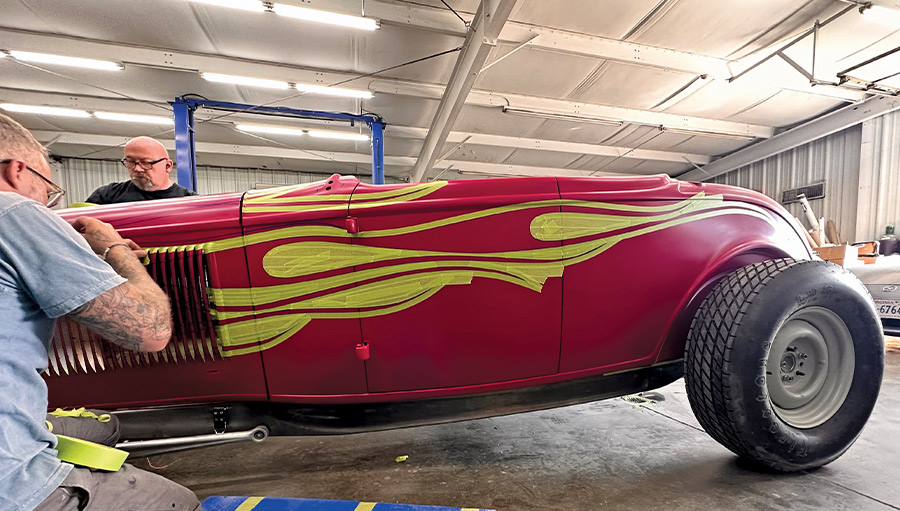
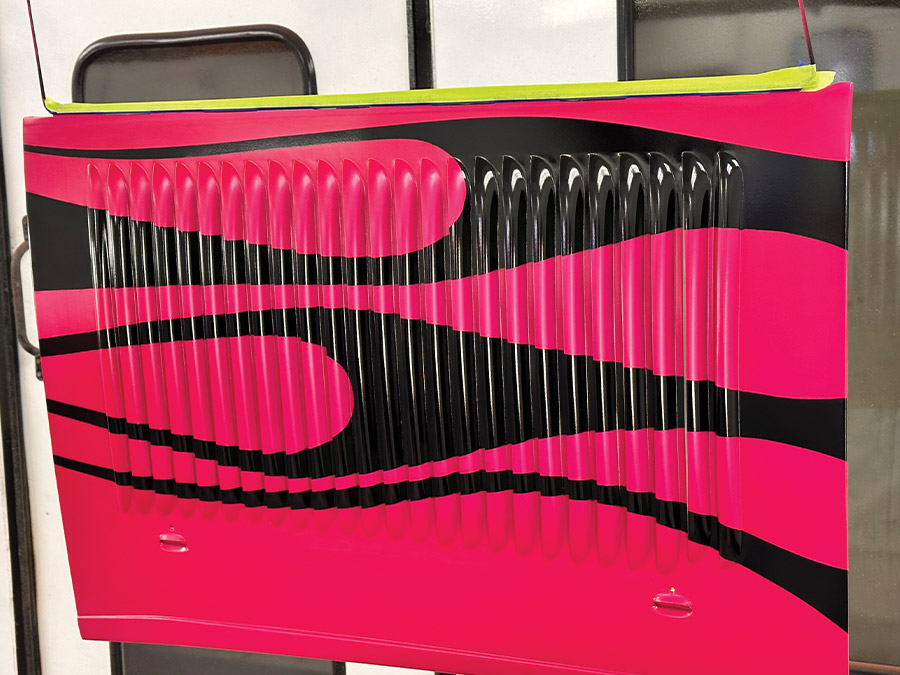
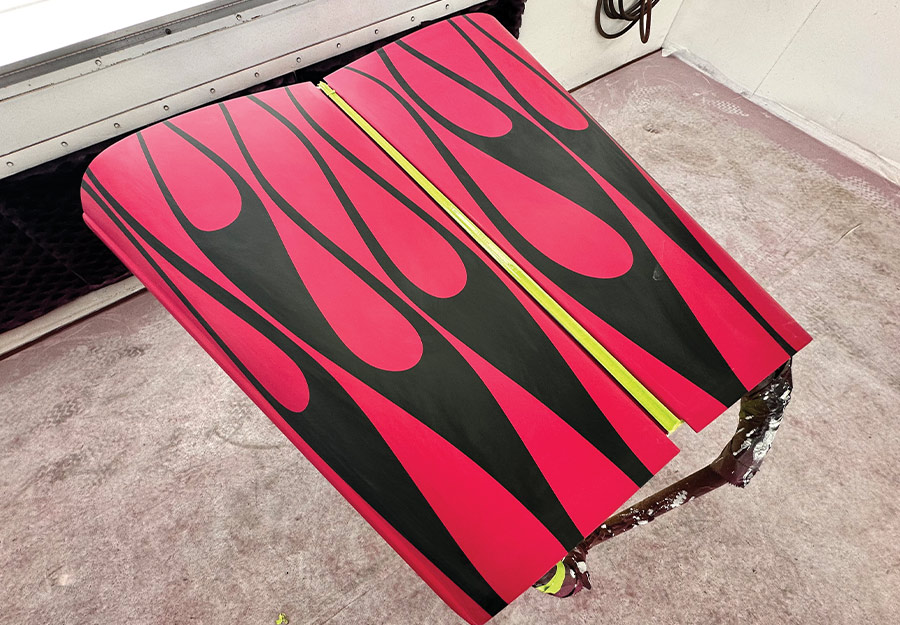
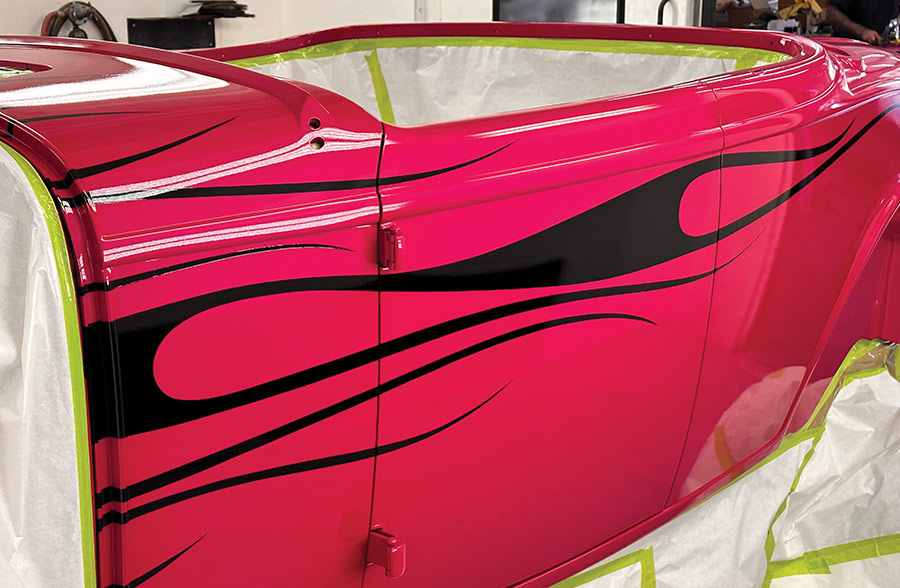
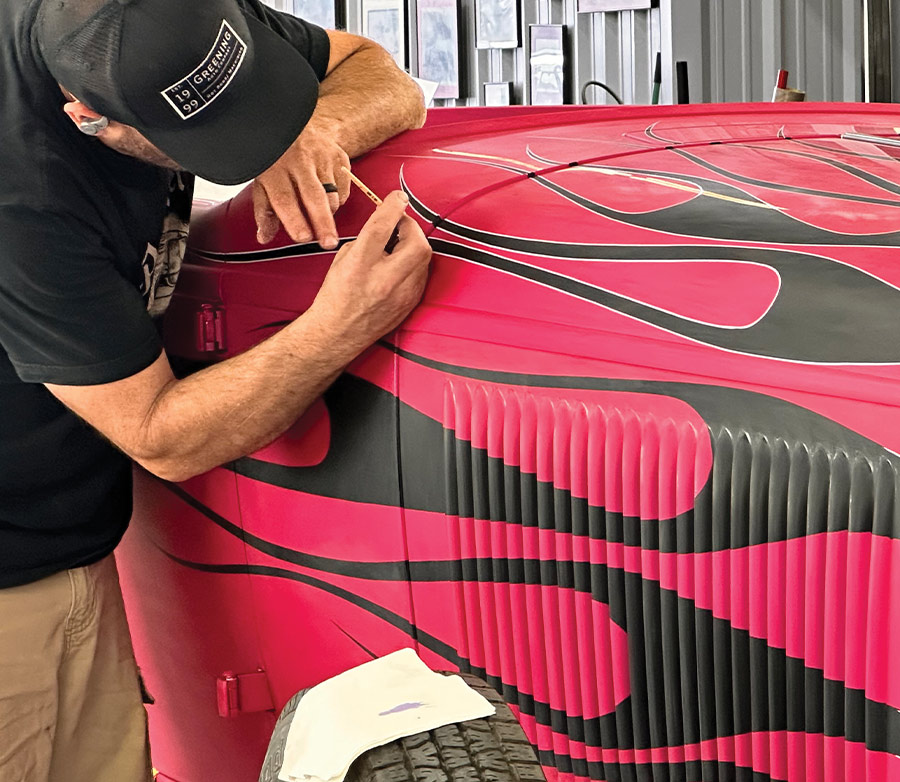
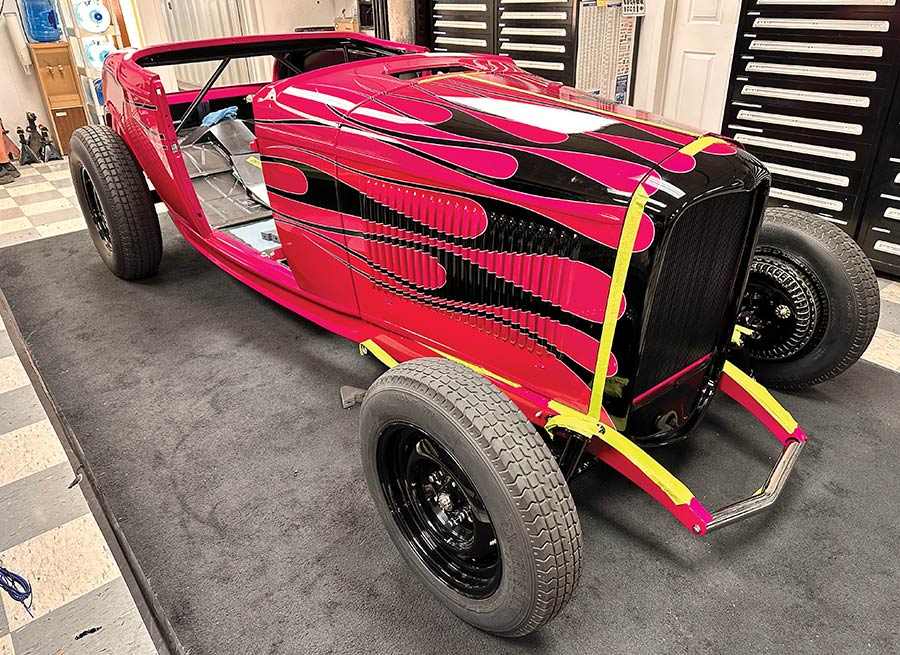
The first thing a custom painter will appreciate when seeing Murphy’s 1932 Ford roadster in person is how perfectly aligned the flames pass over the louvers on the hood sides, maintaining a perfect flow. For a photographer, it’s how intensely the 1932’s candy pearlescent Magenta paint pops and lights up a photograph. For a ’32 Ford aficionado, it’s the front view looking face onto the black radiator shell that looks like a stock ’32 and then at three-quarter view bursts into black flames engulfing most of the body, ignoring the difficulty of flaming louvers in favor of a flowing design.
The debut of 19-year-old Murphy’s Johnson’s Hot Rod Shop–built 1932 Ford roadster was in Pomona, California, as an America’s Most Beautiful Roadster contender at the 2024 Grand National Roadster Show, and it was a favorite for many showgoers. From Pomona, Murphy’s ’32 went to the 2nd Annual Triple Crown of Rodding in Nashville where it took the Best Street Rod Award and garnered the Modern Rodding Dec. ’24 cover.
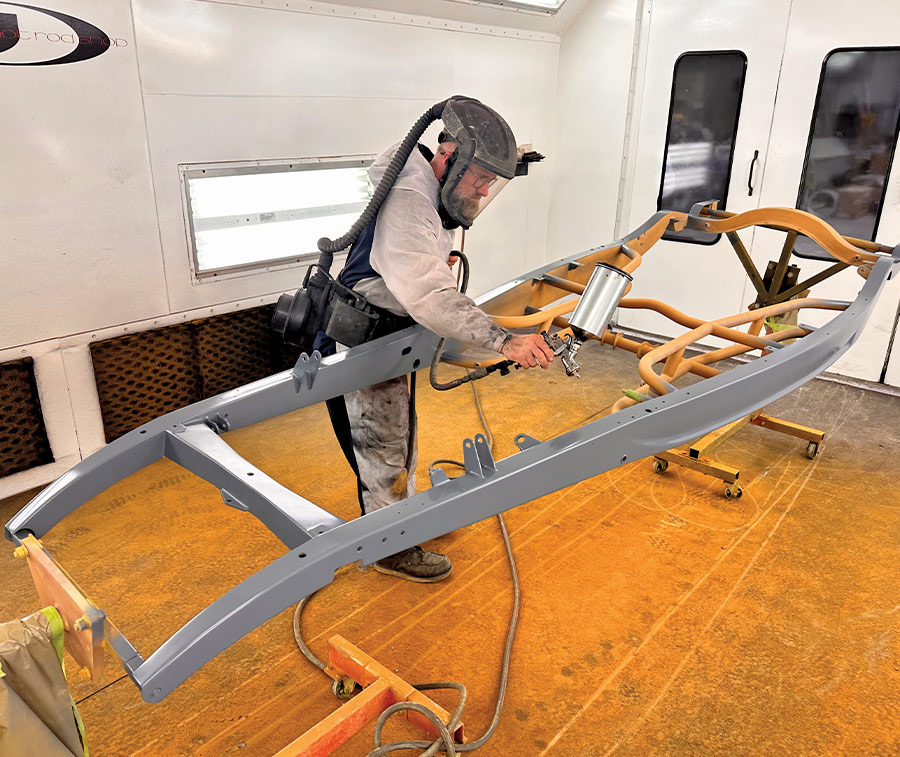
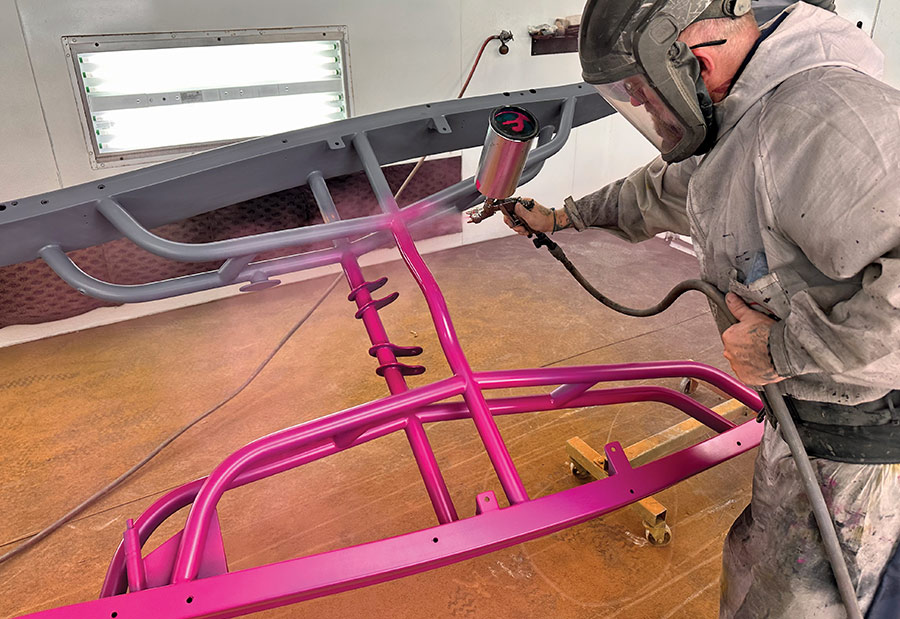
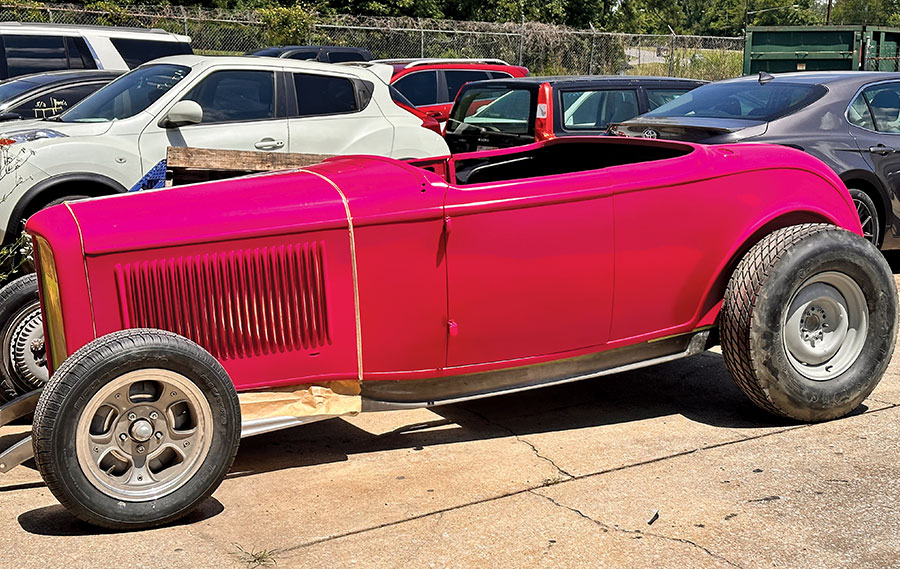
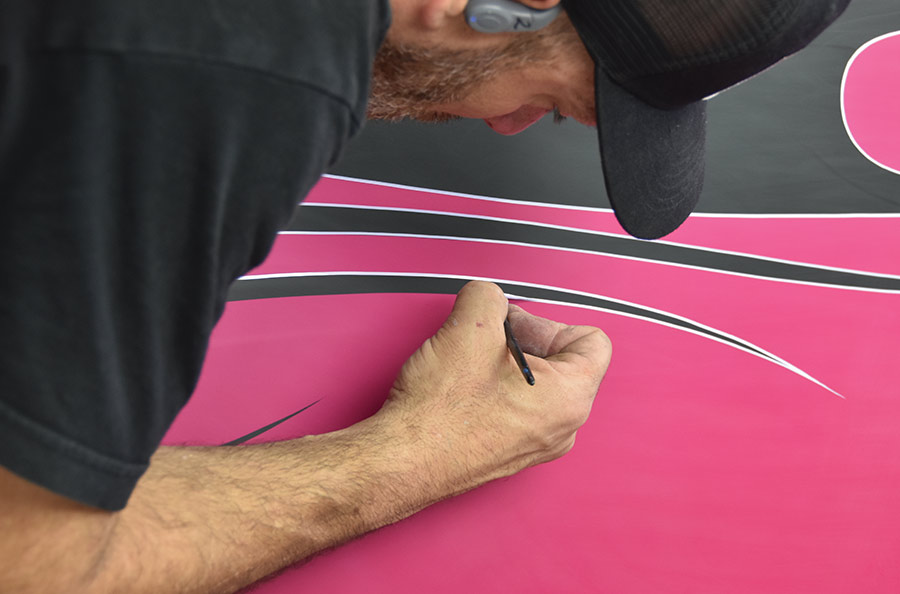
It’s been almost two decades since pinstriper/custom painter Josh Shaw laid his trademark “Ohio-style” flames in pearlescent pink on Murphy’s baby stroller. It was Gary Ragle of Ragle Design, knowing Shaw would be laying flames on the ’32, who penned the concept illustration for Johnson’s Hot Rod Shop engulfed in Shaw’s Ohio-style flames. It was Murphy’s input, desiring a nostalgic look back to her pink flamed stroller, that the magenta color emerged. It wasn’t a snap decision to choose a vibrant shade of pink. Johnson’s Hot Rod Shop had numerous spray-outs to decide on Magenta by custom mixing Axalta’s candy pearlescent pink. The steps to achieving the stunning candy pearl pink color are described step-by-step in the captions.
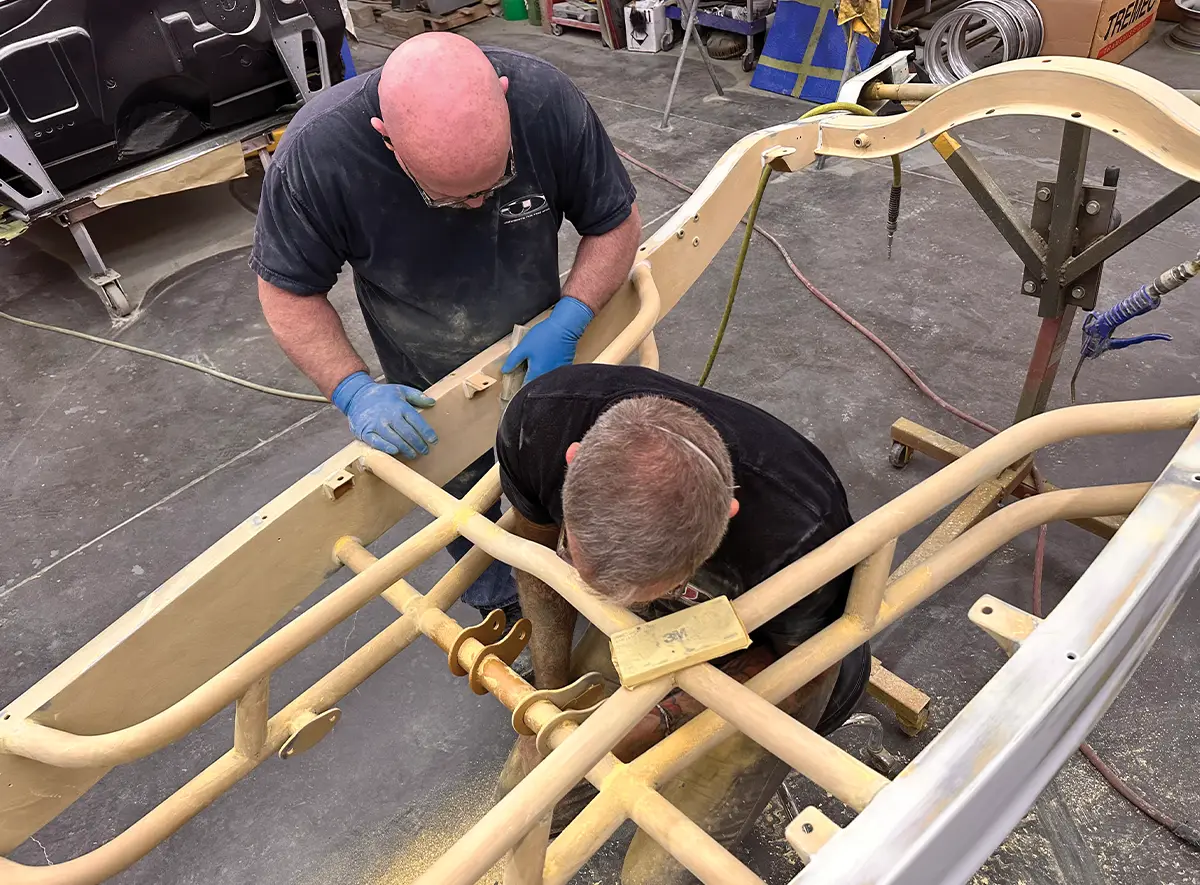
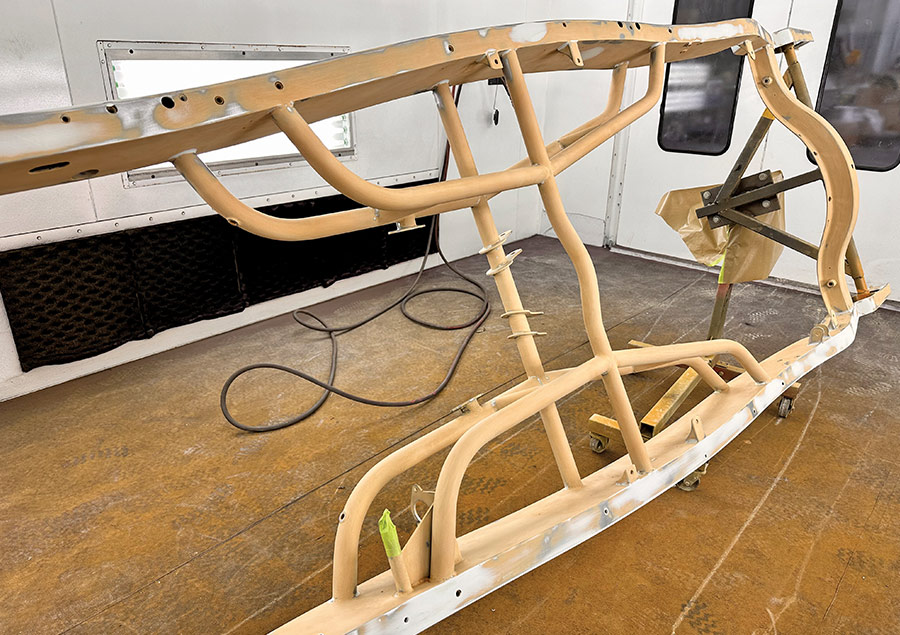
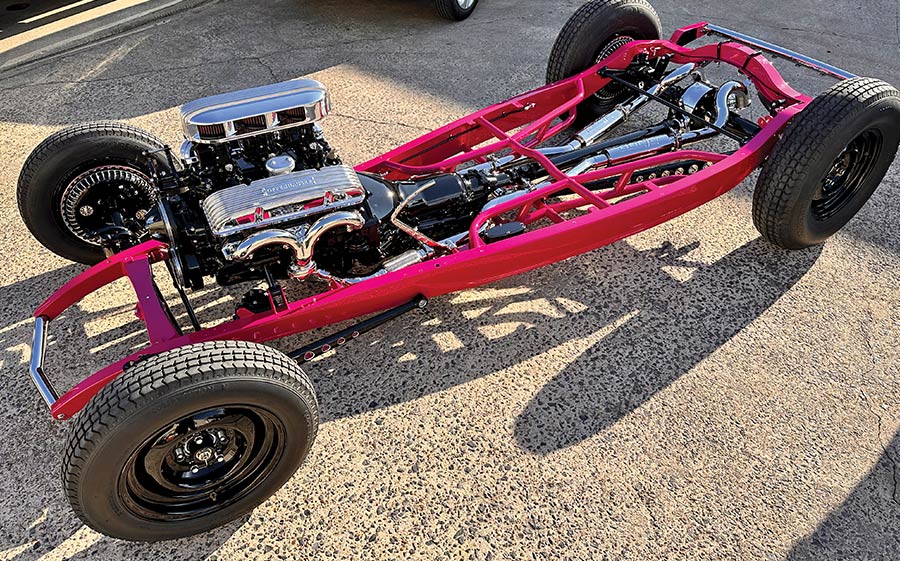
Molding the frame and smoothing the engine, trans, rearend, and suspension are where many hours of intensive labor are spent preparing the frame. The bare metal was sanded with 80-grit; any high spots in the welds were ground low before the welded joints were molded and the framerails skim-coated with Spies Spray Polyester and block sanded perfectly flat.
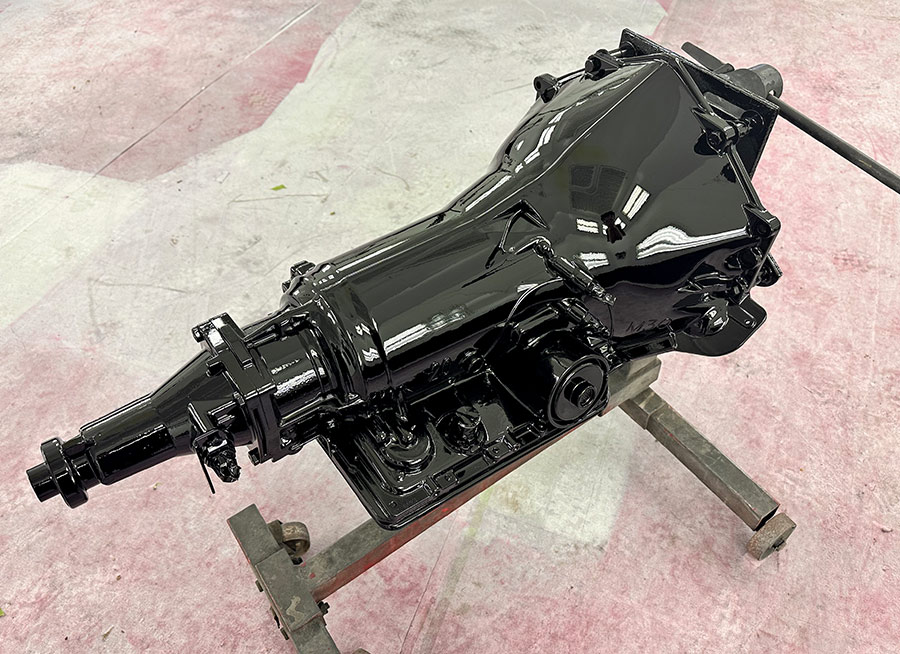
Smoothing the engine and associated components to look slick as black porcelain took grinding and sanding, blocking heavy coats of primer, and shooting a black basecoat buried in clear, which was then color-sanded and rubbed. The final stages of custom painting the 1932’s body and related parts beyond what is discussed here were cutting and buffing the paint. (Cutting and buffing paint is covered step by step in issue # 34 of Modern Rodding.)
There are different degrees of painting a car, from an Earl Scheib $29.95 “splash job” to prepping a car in an extreme manner. Johnson’s Hot Shop (specifically Greg Chalcraft and Scott Falotico) prepared Murphy’s ’32 Ford highboy. All it takes is developing an eye for detail and a willingness to spend hours working to obtain it.












 SOURCES