
Modern Rodding Tech
InTheGarageMedia.com
Crafting a Custom Hood Scoop typography
Custom 1971 Plymouth with a raw metal finish, aggressive stance, and polished five-spoke wheels
1. Now you can appreciate what it takes to make a custom scoop like this, which follows the styling cues of the original Duster.
Crafting a Custom Hood Scoop typography
Performance and Aesthetics on the 1971 Plymouth Duster
By Ron Covell Photography by BBT Fabrications
T

here are many reasons why a car might need a hood scoop. You may require additional cool air inside the engine compartment. Sometimes, the engine has an induction system that rises above the hood line.

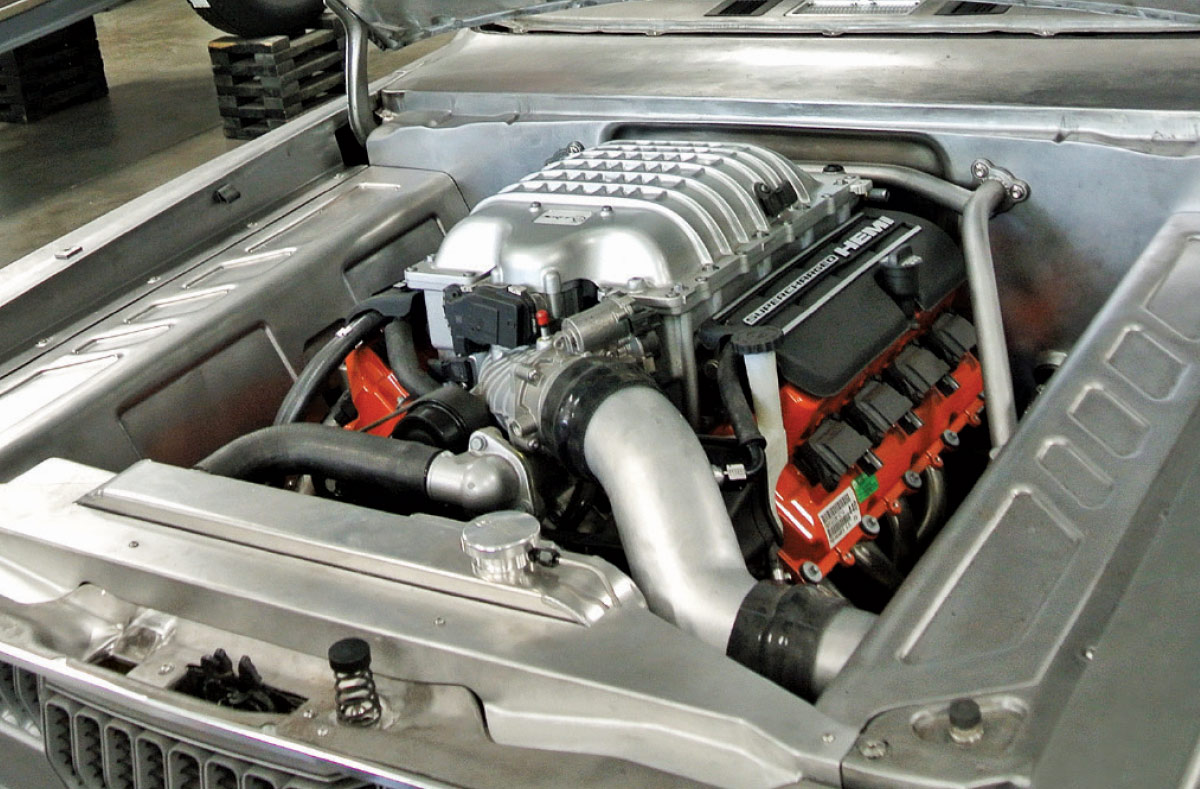
On this 1971 Plymouth Duster project being built at BBT Fabrications, they installed a Dodge Hellcat engine, and the blower was taller than the hood. In this article, we’ll show how a scoop can be made for virtually any hood, and you can modify the construction details to suit your particular car.

One of the goals of this project was to retain the flavor of the original car, which has a nice raised “plateau” going down the center of the hood. They decided to reverse this detail in the scoop, making a valley but keeping the width and taper the same as the original hood. The car has a chamfered detail at the top of the front fender and door, and the sides of the scoop were positioned at an angle that complements that feature. Details like this go a long way toward making a scoop look like it belongs to a particular car, and it is important to give these styling cues sufficient thought before any metal is cut.

With the rough design in mind, it was time to delineate the shapes and dimensions of the scoop. BBT uses a set of metal sweeps to check contours for sheetmetal panels. After trying several different radii, they settled on a 32-inch radius curve, which established the angle for the leading and trailing edges of the scoop.

Having a target to aim for, the center valley of the scoop was the first part to be formed. A piece of aluminum sheetmetal was cut to the correct length and tapered, and the edges were folded with a bending brake. Next, the panel was contoured to match the curvature of the sweep.

Next, an aluminum sheet was cut to make the raised sections that fit next to the center valley. These were domed very slightly and contoured to match the sweep.

The sides of the scoop were formed next, taking care to match the angle of the chamfer at the top of the fenders. Once properly shaped, these pieces were joined to the center panels.

To ease the complexity of fabrication, the rear corners of the scoop were formed as separate pieces. These were fitted into place, and the rear wall of the scoop was made to bridge the gap between them.

Last, a mounting flange was added to the bottom of the scoop, taking care to match the contour of the hood, both front-to-back and right-to-left.

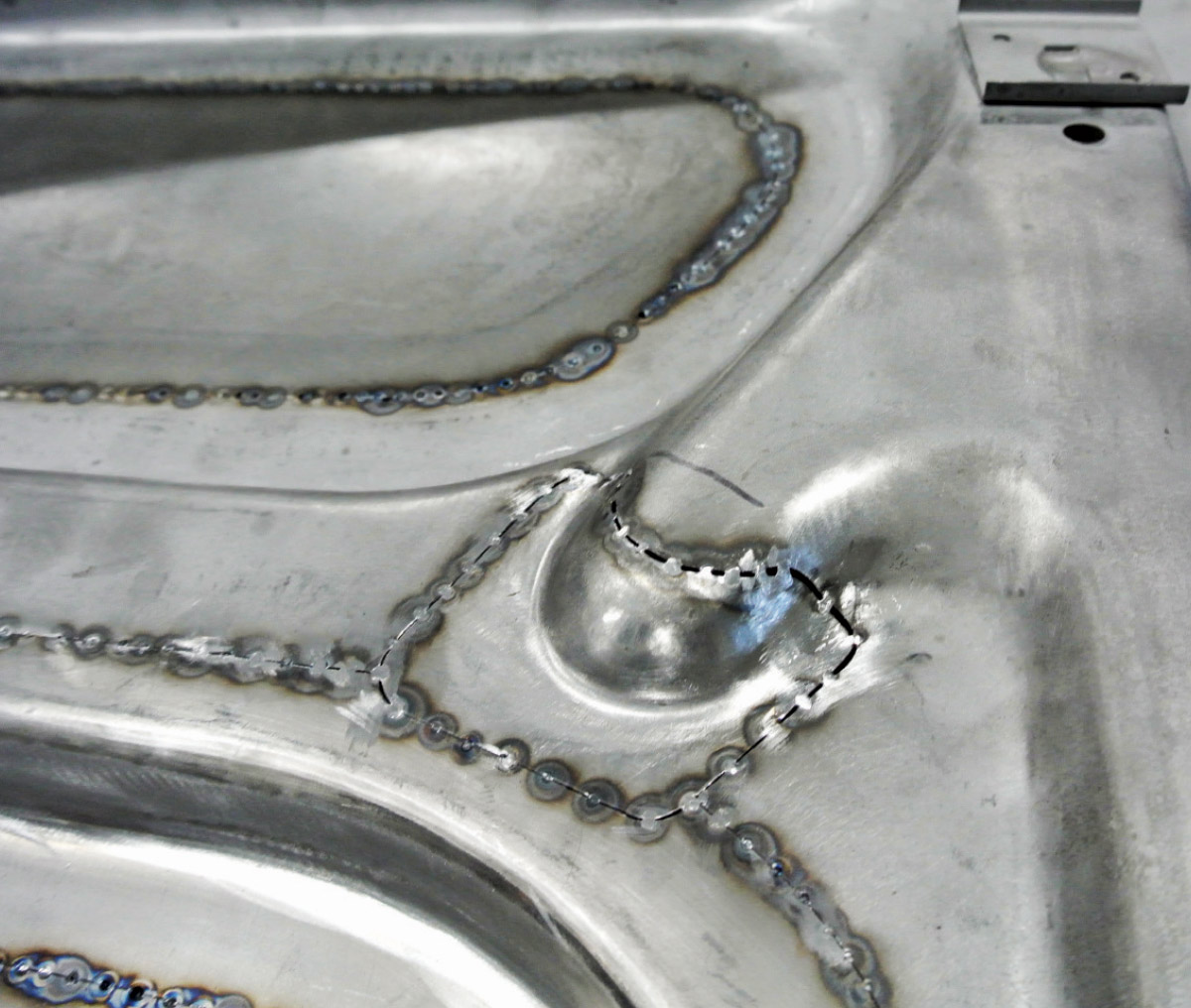
Reworking the inner hood panel, which was separated from the hood top to facilitate fabrication, required a lot of effort. The photos detail these extensive modifications, with the goal of making the panel appear factory designed.

There are many great ideas here, which could help you with a current (or future) project.
Supercharged HEMI engine under the hood of the custom 1971 Plymouth with clean fabrication
2. This 1971 Plymouth Duster has been fitted with a Dodge Hellcat engine. It fits the engine compartment reasonably well, but the supercharger protrudes above the hood line. A custom-built scoop will provide the needed space while adding some style.
Underside of a fabricated hood showing intricate structural design for the 1971 Plymouth build
3. The first step is cutting away the hood’s inner structure where the opening will be. Lines are drawn to guide the cutting.
Modified hood structure with a clean cutout for improved engine clearance and airflow
4. A die grinder with an abrasive cutoff wheel quickly cuts the structure away.
Close-up of rust repair and outlined markings on the 1971 Plymouth hood metalwork
5. Now, the hood skin is marked for cutting. Careful measurements are required here, so the opening is no larger than necessary.
Custom hood showing supercharger intake wrapped in protective blue film during fitting
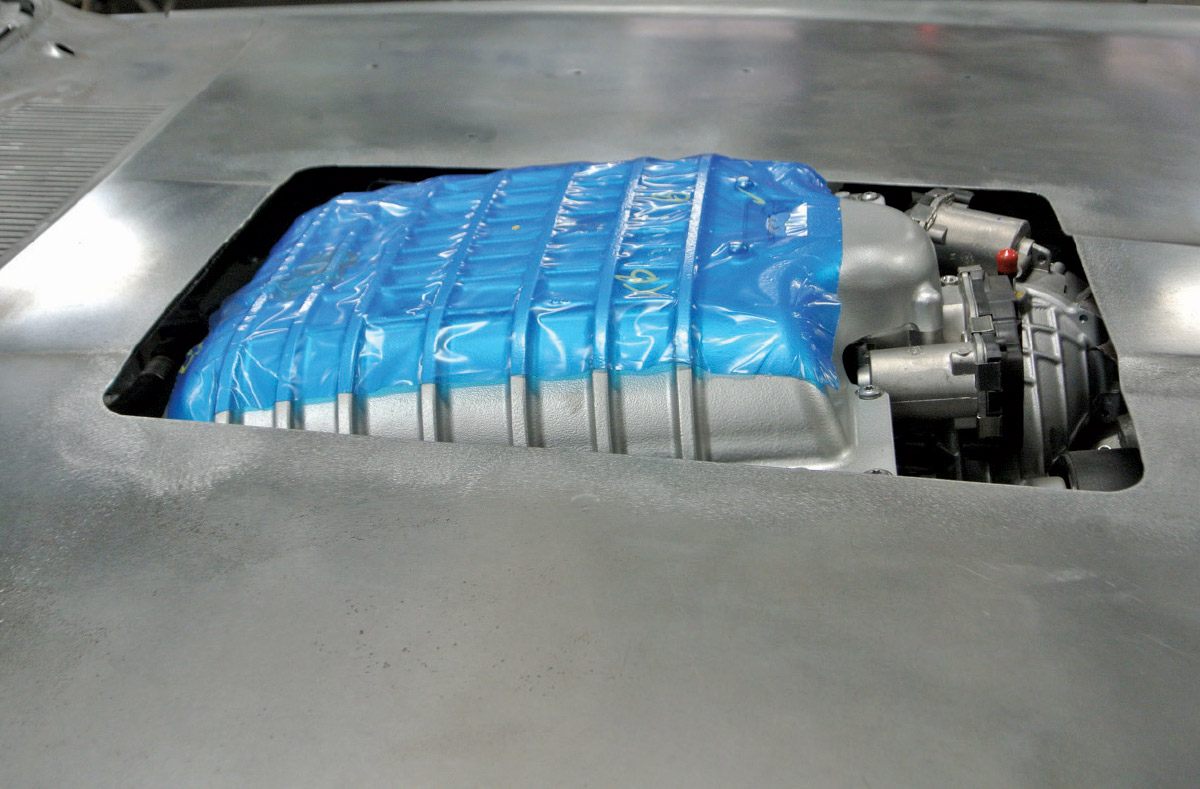
6. With the hood placed back on the car, the opening can be checked against the supercharger. Everything is looking good so far.
Rear view of a 1971 Plymouth hood, highlighting smooth metal fabrication and structural braces
7. A 32-inch radius sweep was chosen to set the contour for the center of the new scoop. Spacers were selected to provide the proper clearance.
Custom-fabricated metal strip designed for the hood or body of the 1971 Plymouth project
8. A piece of aluminum was bent in a brake, forming flanges on both sides of the scoop center. Then, the panel was arched to a 32-inch radius.
Close-up of a smoothed, brushed metal section, possibly a panel or trim piece for the build
9. Two additional aluminum pieces were shaped and then welded to the center portion, creating the raised areas of the valley in the center of the scoop.
Handcrafted hood panels showing brushed aluminum texture for the 1971 Plymouth custom project
10. The sloped outer pieces are added, the three centerpieces are formed, and the metal is smoothed.
Brushed metal hood scoop design fitted on a custom project for added engine clearance and ventilation
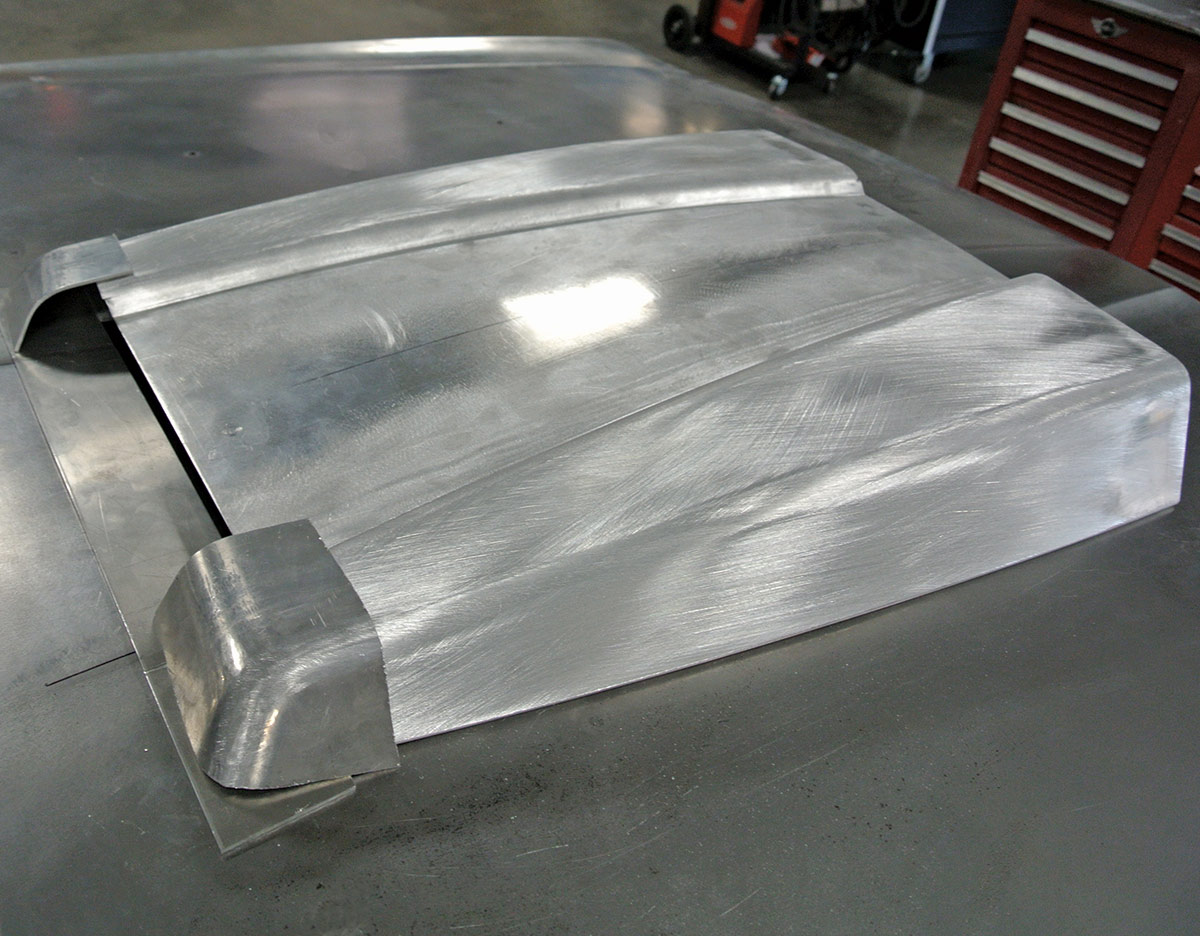
11. Each rear corner was formed from two pieces of metal. They are fitted to the center of the scoop, and you can see the flat piece of metal that will become the mounting flange on the rear edge.
Smoothly fabricated hood scoop with defined edges and a clean brushed finish for a classic car build
12. After much careful fitting and welding, the rear of the scoop is nearly finished. Note that the rear edge has the same contour as the hood, so they will fit together without gaps.
Partially constructed hood panel showcasing raw metal and shaping work with visible contour lines
13. The underside shows how the scoop’s mounting flanges blend in perfectly with the sides and back.
Completed hood scoop with refined curves and seamless integration into the hood panel design
14. After the final sanding, you can appreciate the metal forming quality and superb fit against the hood.
Side profile of a hood scoop showing functional clearance for high-performance engine components
15. The front edges of the scoop are rounded, strengthening the edge and giving it a more finished look.
Underside view of the hood showing clamped structural support during fabrication for added rigidity
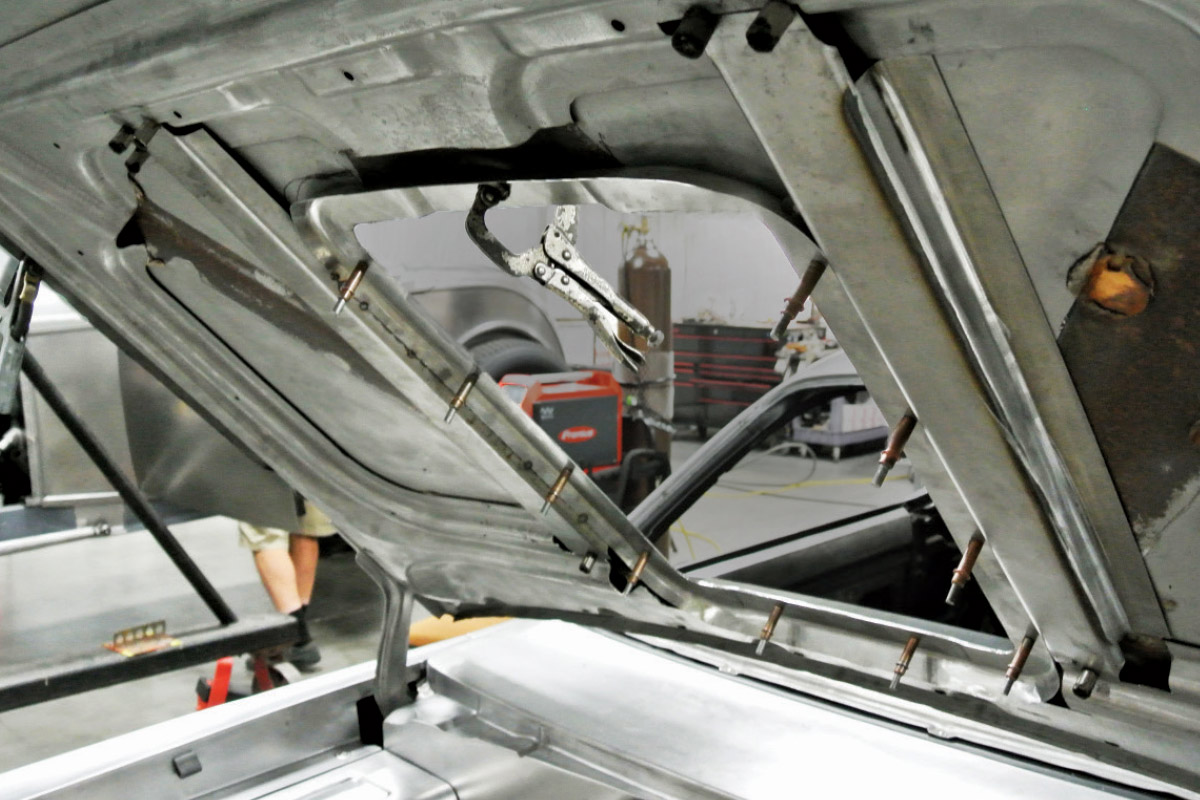
16. The inner hood panel was extensively modified. Here, sections of steel channel are being fitted to stiffen the edges of the scoop opening.
Custom weld work reinforcing the hood's lower framework with carefully aligned support pieces
17. Great care was taken to blend the shapes of the original inner structure with the reinforced edge of the new opening.
Close-up of a repaired and welded section of the hood’s structural frame, ensuring durability
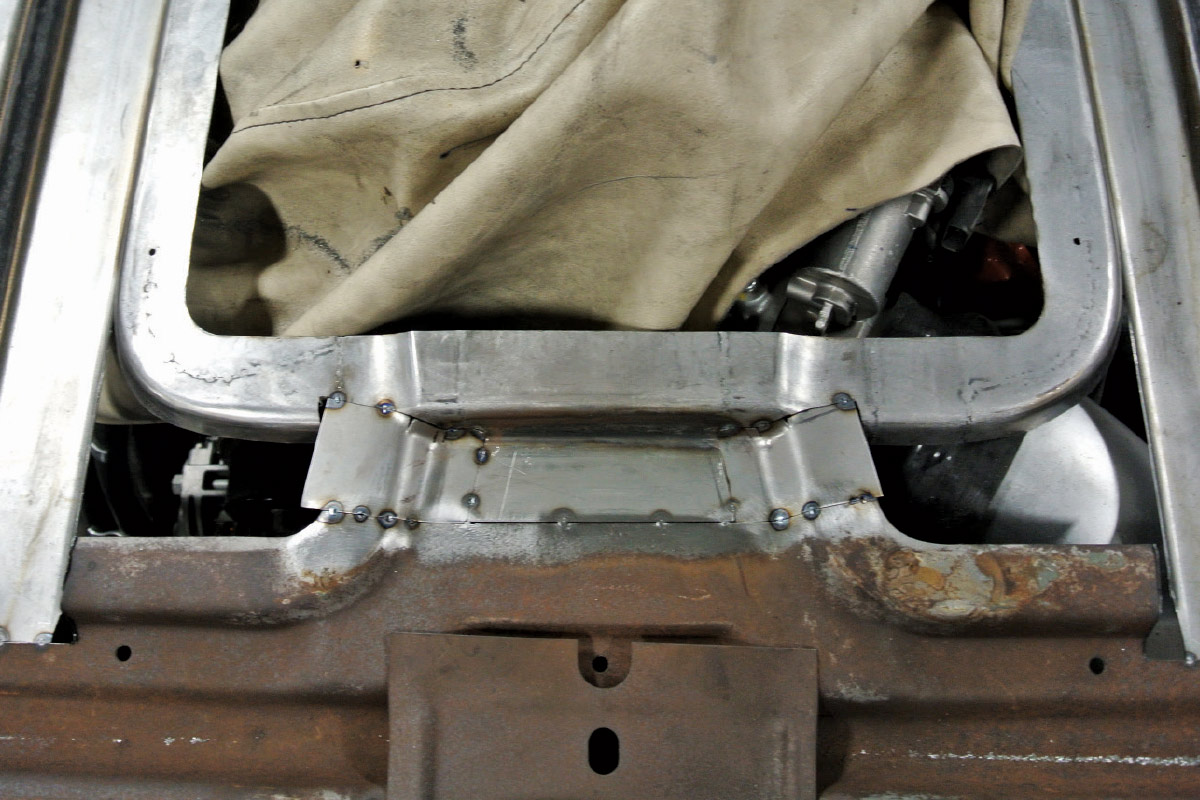
18. Any uneven areas were smoothed with custom-made filler panels, and the large open areas of the original inner structure were filled in with new metal.
Full hood panel with detailed weld seams and cutout designed for compatibility with a custom engine setup
19. Compare this with photo #3; you will see how extensively the inner hood panel has been reworked. This attention to detail has been lavished on every area of this high-end build.
Final hood installation with an aggressive forward-facing scoop integrated into a polished metal design
20. With the hood top rejoined to the inner structure, the scoop is mounted to check the fit. It’s perfect in every way.
Custom fabricated hood scoop vent featuring a perforated metal grille for improved airflow and a sleek retro-modern aesthetic
21. A piece of perforated metal is used as a grille for the scoop, and outlined with a carefully fitted bezel.
SOURCE
Modern Rodding
VOLUME 6 • ISSUE 54 • 2025