
Modern Rodding Tech
InTheGarageMedia.com
1965 Ford Mustang interior stripped, technician cutting and repairing damaged floor pan for restoration
1. Tate Radford took the first step to save this 1965 Mustang Fastback by removing a butchered floor that had been poorly repaired.
Mustang Makeover typography in red
Part 1: Installing Replacement Sheetmetal From Golden Star Classic Auto Parts
By Ron CeridonoPhotography by Tate Radford
W

hen Colin and Sue Radford found this forlorn 1965 fastback Mustang it was obvious that major repairs were needed—being able to see the ground through the floor was one of the first indications of the problems to be dealt with. But the Radfords are not easily discouraged, and they knew everything needed to fix the Ford was available from Golden Star Classic Auto Parts. Based in Texas, Golden Star offers an array of high-quality replacement components for classic cars and trucks from GM, Ford, and Chrysler.

There was a time when making repairs to the damaged floor of a project car prompted all sorts of questionable creativity. Over the years, we’ve seen repairs made with license plates, road signs, galvanized sheetmetal, and odd bits of salvaged body parts. Often, these crude repairs were secured over gaping rust holes with a handful of sheetmetal screws. In this case, the previous owner had attempted to make repairs with actual patch panels, but they were installed so poorly that the only way to make things right was to remove the entire floor and start over.

For unitized construction cars like the Mustang, the lack of a separate frame means the entire body becomes a load-bearing structure. While various supports all add strength, the doorsills, floor, and even the roof are all critical components when it comes to maintaining the rigidity of the body. That means replacing the floor is not only a cosmetic improvement, it’s also a structural repair.

The Radfords’ grandson, Tate, began the repair process by removing the floor from the toeboards to the back seat supports. With the floor out of the way, the floor-to-firewall supports were also removed. These simple yet critical pieces tie the car’s floor to the subframes that mount the front suspension.

Reconstruction of the fastback began with installing Golden Star’s replacement floorpan to firewall supports (PN FP20-64FF). Next came the complete floorpan (PN FP20-64) (these floors fit coupes and fastbacks; convertible floors are also available). The integral transmission/driveshaft tunnel and stamped indentations make the sheetmetal extremely rigid and duplicate those features found on the factory floors. The complete floorpan included front seat platforms that mount the seats and reinforce the floor structure.

Once the floor-to-firewall supports and the entire floor was replaced, the last step was to add a leftside floorpan to the firewall patch panel (PN LH FP20-641L) to replace the previously poorly executed replacement. Only the driver side panel was replaced as the passenger side sheetmetal was solid.

When Ford introduced the fastback version of the Mustang in 1965, body style 63A (09), a little over 77,000 were sold. While there is slightly more than the number of convertibles produced that year (roughly 73,000), fastback production dropped in the bucket compared to the over 409,000 coupes sold. The following year, fastback sales dropped to less than 36,000, the lowest production of all models manufactured in 1966 (coupe sales reached almost 500,000, and slightly more than 72,000 convertibles went to buyers).

Given the probable survival rate of early Mustang fastbacks, it makes sense to save one if possible, and thanks to Golden Star it can be done effectively. With new floor and supports installed, the Mustang’s foundation was solid again and it was no longer possible to see the ground inside the car. Next time, we’ll focus on repairing more of the abuse our ponycar has endured by replacing the quarter-panels. We will reveal a few tricks to make the job easier.

1965 Ford Mustang body elevated on jack stands, stripped exterior prepared for floor pan replacement
2. Thanks to Golden Star Classic Auto Parts all the quality replacement sheetmetal necessary to make this Mustang as good as new is available. We’re starting with the floor, but more sheetmetal surgery will come.
Severe rust damage on 1965 Ford Mustang floor pan with exposed wiring and corroded edges
3. We’ve speculated that a replacement shifter installation hole might have been done with a chainsaw, but we could be wrong.
Close-up of 1965 Ford Mustang rusted floor pan and cut-out section during repair
4. A previous owner had attempted to match the Mustang’s floor with little attention to fitting the replacement sheetmetal. That resulted in a number of gaps that could not be welded.
Partially installed patch panel on 1965 Ford Mustang, visible welds and restoration in progress
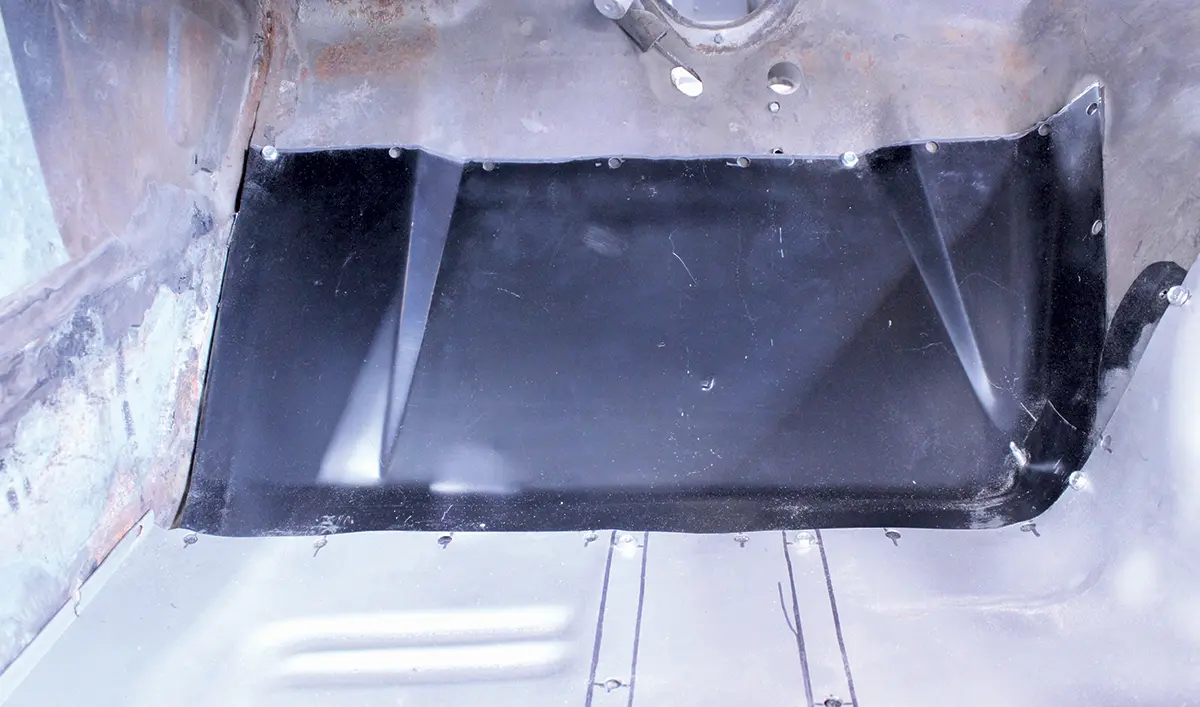
5. We filed this repair under “What was he thinking?” Another huge hole to be filled; to the left is the damaged floor support that also needed to be replaced.
Underbody view of 1965 Ford Mustang, freshly welded and coated floor pan patch
6. Sadly, the welds made were on par with the rest of the work that was done.
Completed floor pan welding on 1965 Ford Mustang, detailed seams and solid black finish
7. In a case like this, a botched repair cannot be saved; the only option is to start over.
Firewall section of 1965 Ford Mustang stripped and primed, ready for reassembly
8. The floorpan to firewall supports was visible with the floor removed. These supports are critical to maintaining the strength of the unitized body.
Front suspension of 1965 Ford Mustang, spring and control arm exposed for restoration
9. This is the left floorpan to firewall support (arrow); tie the floor to the subframe that the front suspension attaches to. These supports are often rusted or damaged from impact.
Stripped interior framework of 1965 Ford Mustang showing removed floor pan and structural preparation
10. Viewed from inside the passenger compartment, the right floorpan to firewall support can be seen (arrow).
Dashboard and floor pan of 1965 Ford Mustang stripped, showing extensive restoration work in progress
11. With the floorpan removed, the toeboards that extend from the floor to the firewall and the front of the transmission tunnel remain. Note the ends of the floorpan to firewall supports have been cut off.
Close-up of 1965 Ford Mustang frame rail during rust repair and metal patching
12. The floorpan supports are inverted U-shaped channels that slip over the front subframes and are spot welded in place.
Rusted section of 1965 Ford Mustang frame rail prepared for reinforcement and repair
13. Here, the spot welds have been cut so the remaining portion of the floor support can be removed.
Newly welded frame rail repair on 1965 Ford Mustang, showcasing precise restoration progress
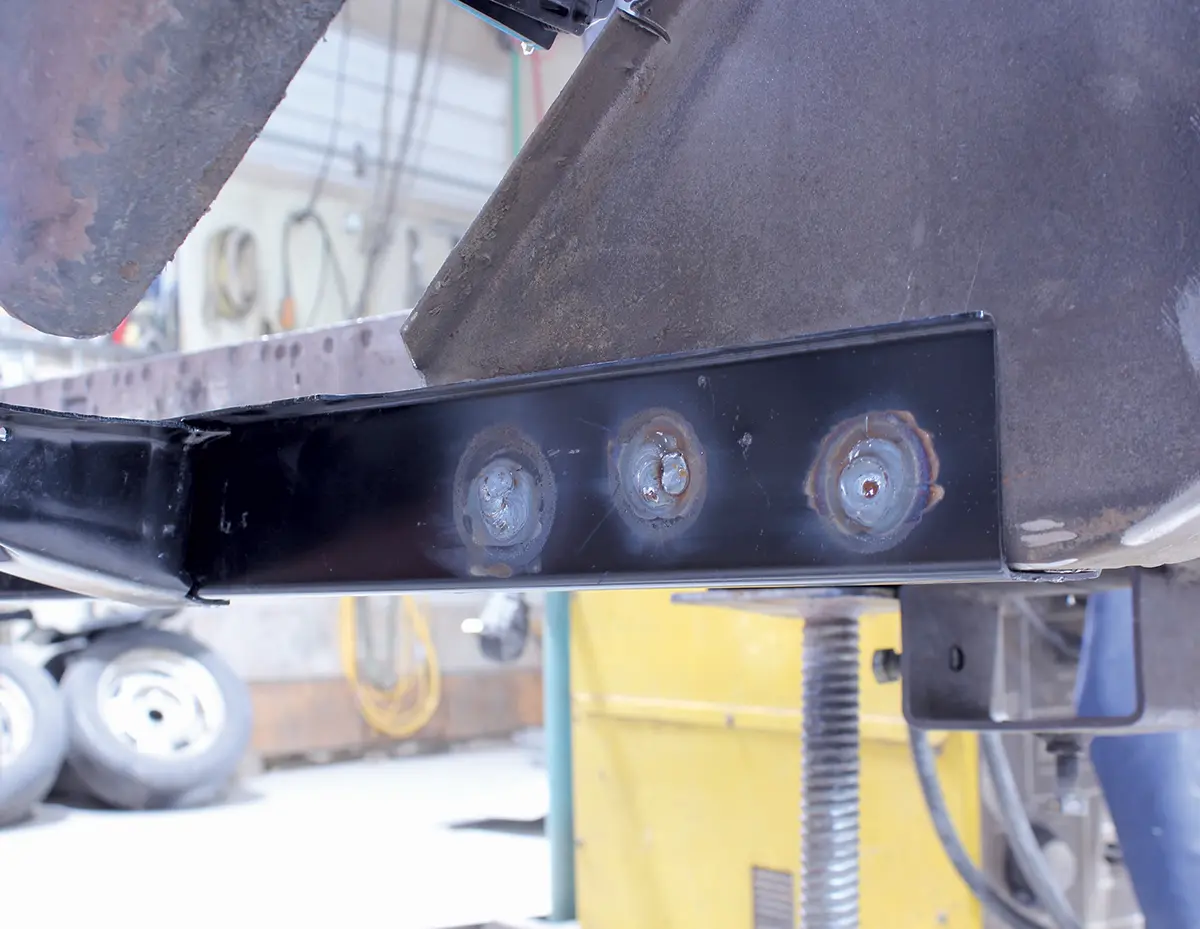
14. With the supports removed, the subframes were cleaned with an abrasive disc to accept rosette welds.
Replacement frame rails for 1965 Ford Mustang, ready for installation in restoration project
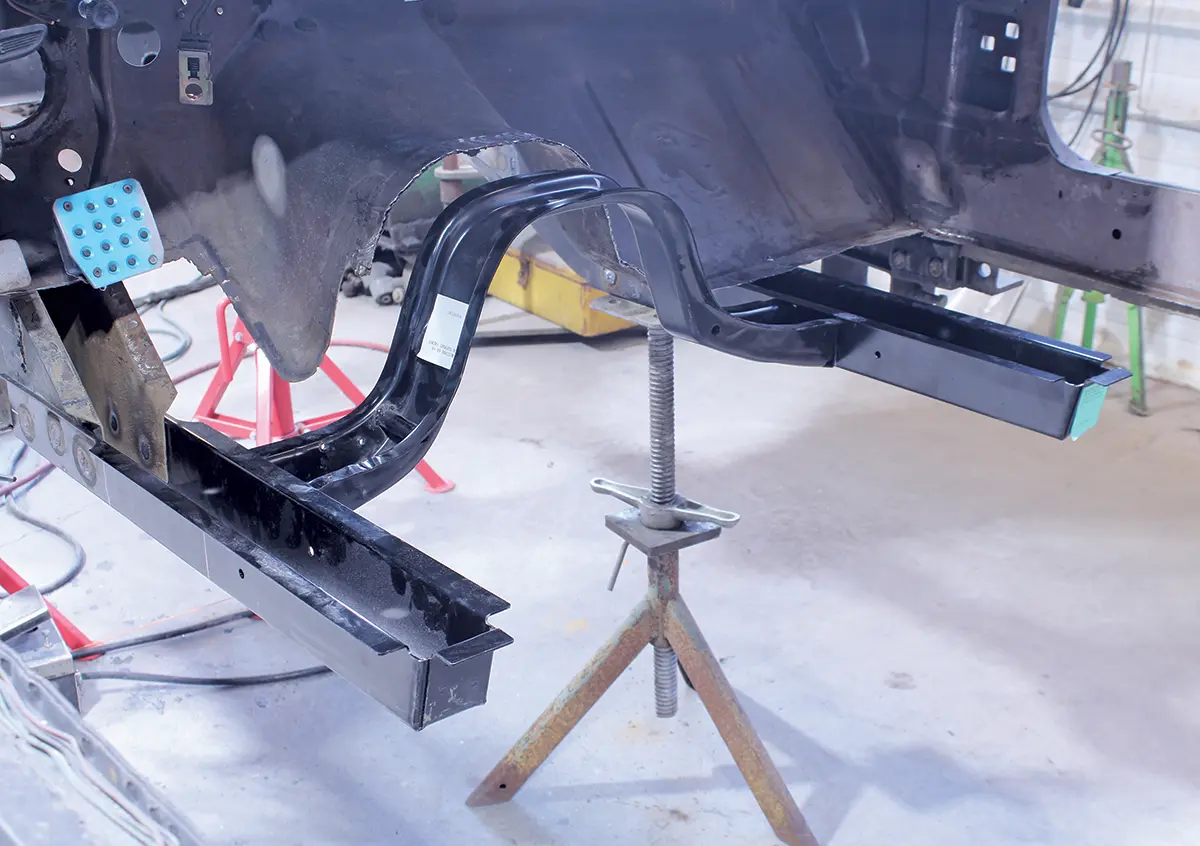
15. The Golden Star floorpan-to-subframe supports are exact duplicates of the factory components. The front portions slip over the subframe and are welded in place while the flanges will weld to the floorpan.
Prepared replacement frame rail section for 1965 Ford Mustang, drilled and shaped for fitting
16. Before installation, holes for rosette welds were drilled into the new floorpan supports. The areas around the holes were ground clean to ensure good weld penetration.
Installed replacement frame rail on 1965 Ford Mustang, secured with welds for structural integrity
17. The left floor support has been positioned and welded in place.
Rear cross brace for 1965 Ford Mustang restoration, showcasing an OEM replacement part
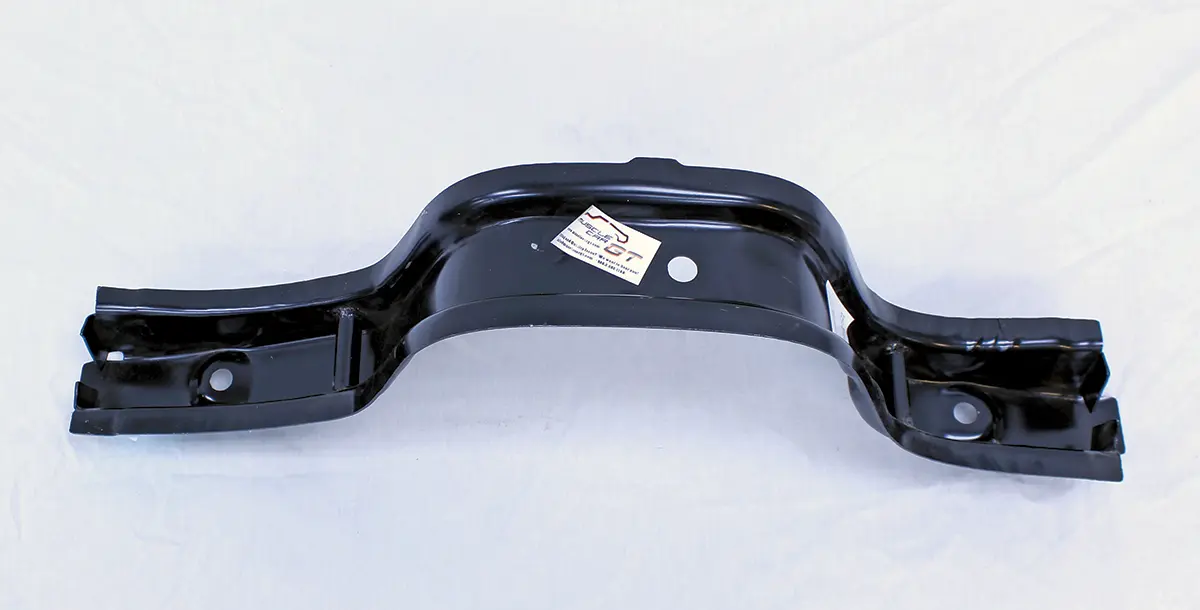
18. This is the Golden Star replacement front floor support.
Newly installed frame rail and cross brace assembly on 1965 Ford Mustang, aligned for final adjustments
19. The front floor support also ties the floor supports together.
Rear floor pan of 1965 Ford Mustang stripped, exposing rust and old repairs for restoration
20. Surprisingly, the Mustang’s rear subframes and floor supports were in excellent shape, so the decision was made to leave them intact.
New floor pan for 1965 Ford Mustang prepared for installation with primed finish
21. This is Golden Star’s complete replacement floor for the 1964-1968 Mustang. For our application, we trimmed the rear portions (arrows) to overlap the edge of the factory floor.
Floor pan fitted in 1965 Ford Mustang interior, aligned for welding and securing
22. Golden Star’s replacement floor is treated with a weld-through primer. Note the holes for rosette welds that will attach the floor to the body’s sills.
Detailed view of patch panel installation in the 1965 Ford Mustang firewall area
23. On the driver side, a Golden Star floor-to-firewall panel replaced the poorly done previous repair.
Close-up of patch panel seam alignment on 1965 Ford Mustang floor pan
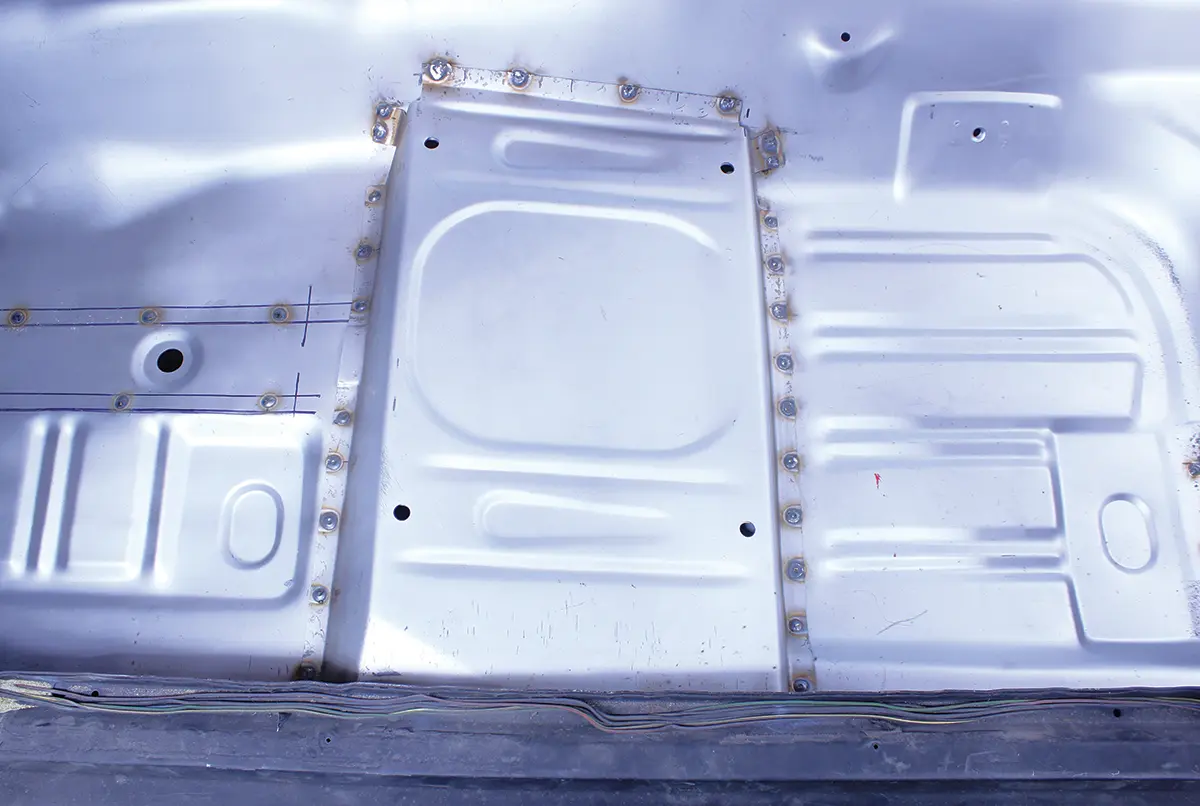
24. Where necessary, screws were used to pull the sheetmetal panels together. Once the adjacent holes were welded, the screws were removed and those holes were also welded.
Completed floor pan installation in 1965 Ford Mustang interior, ready for final sealing
25. Here, the method of joining the rear of the replacement floor to the body can be seen. Note the holes for rosette welds that tie the floor to the body shell.
Full interior view of 1965 Ford Mustang with newly installed floor pan secured in place
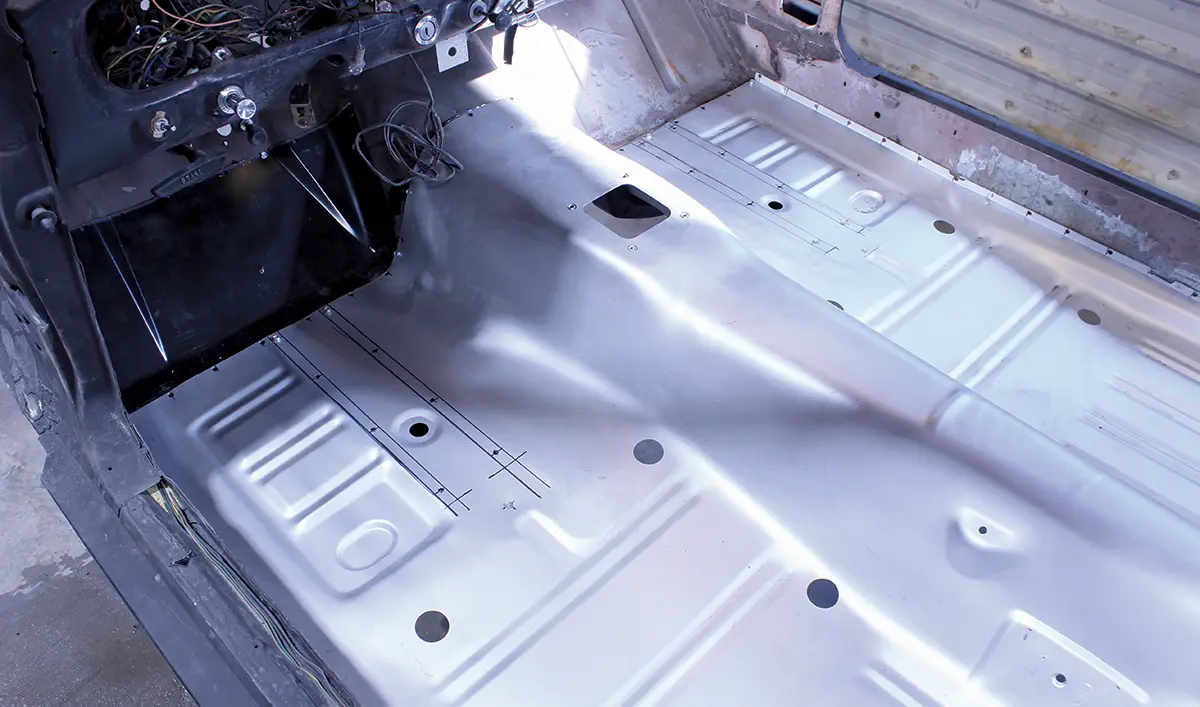
26. Golden Star’s research and development pays off; the replacement floor fits perfectly.
Replacement seat riser panels and accessories for 1965 Ford Mustang restoration project
27. The replacement floorpan includes front seat platforms with seat brackets and plugs for drain and access holes.
Worker preparing seat riser panel for installation in 1965 Ford Mustang restoration
28. Colin Radford used punched holes in the seat pans for more rosette welds.
Installed seat riser panel on 1965 Ford Mustang floor pan, secured with welds
29. The seat pans are welded to the transmission tunnel, floorpan, and sills for strength; they add considerable rigidity to the floor and the body shell.
Fully installed floor pan and seat riser assembly in restored 1965 Ford Mustang
30. The Golden Star replacement not only looks like the factory floor but also restores the integrity of the body’s unit construction.
SOURCES
Modern Rodding
VOLUME 6 • ISSUE 54 • 2025