

Modern Rodding FEATURE
InTheGarageMedia.com
"Mighty Lowe"
The Master of Metal Builds One for Himself
By Dale Moreau Photography by the Author
D

onn Lowe started out hammering on metal at a young age in Connecticut in the ’60s. It was a mecca of customs and hot rods and there were plenty of Mercs and other makes that needed chopping. Donn quickly learned the best way to do that to where the final look was perfect.

Down the road a bit he moved to Oregon to enlighten the rodders out there on the proper way to truly build beautiful customs and hot rods. Along the way he built a few of his own that ended up in some of the finest garages in the land. One of the customs he built for customer Doug Beattie, of Vancouver, Washington, was a ’40 Ford called the “Futurama Forty.” That gorgeous coupe garnered top awards at the Grand National Roadster Show, Portland Roadster Show, and several others.
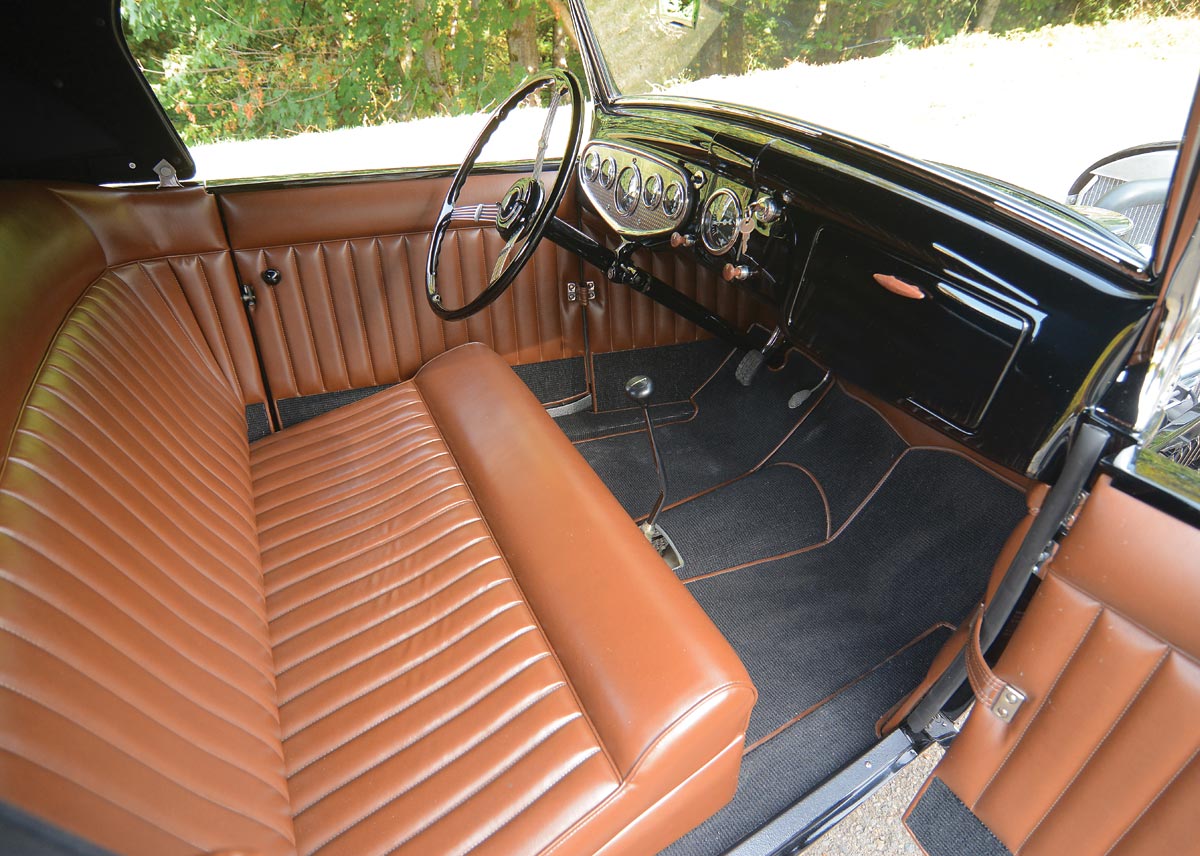
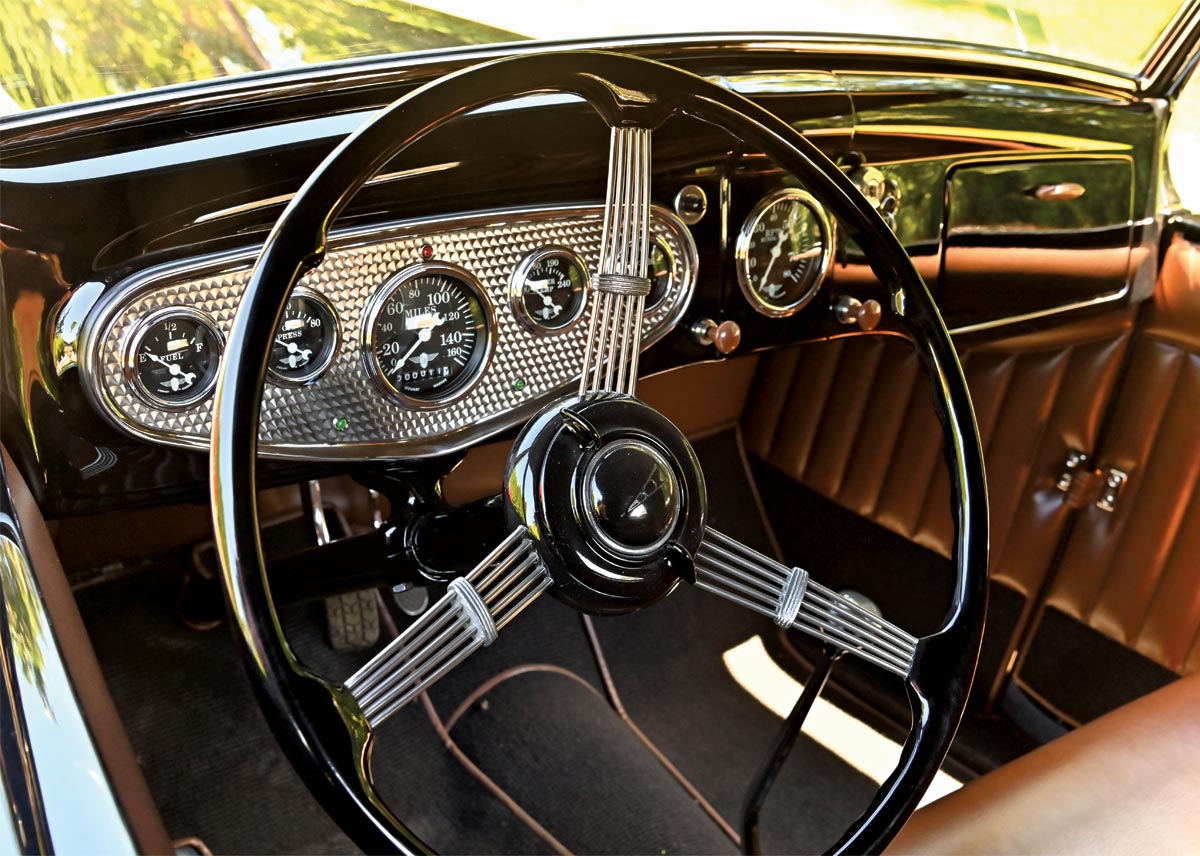
For himself, all Donn started with was a ’29 Ford cowl. The windshield posts and frame were chopped 3 inches and laid back. Then the 4-inch lengthened flush doors were fabricated to fit the handmade body panels, including the quarter-panels and rear body panels. The Brookville pickup bed was then shortened and a handmade aluminum tonneau was added. Next Donn made the hood and front fenders. Note how the fenders are attached. Not only functional but beautiful at the same time. He then modified the rear original A fenders to fit the style he had in mind for the overall appearance. An original Model A grill shell was modified to fit the look of the car. A ’36 Ford dash was shortened to fit the cab and Stewart-Warner gauges tell all the stories. Headlights are Arrow and the rear are LEDs. The juice is supplied by a Powermaster alternator and was wired by Bob Belozer.
Saddle brown leather interior
Black steel dash and machined aluminum gauge cluster cowl
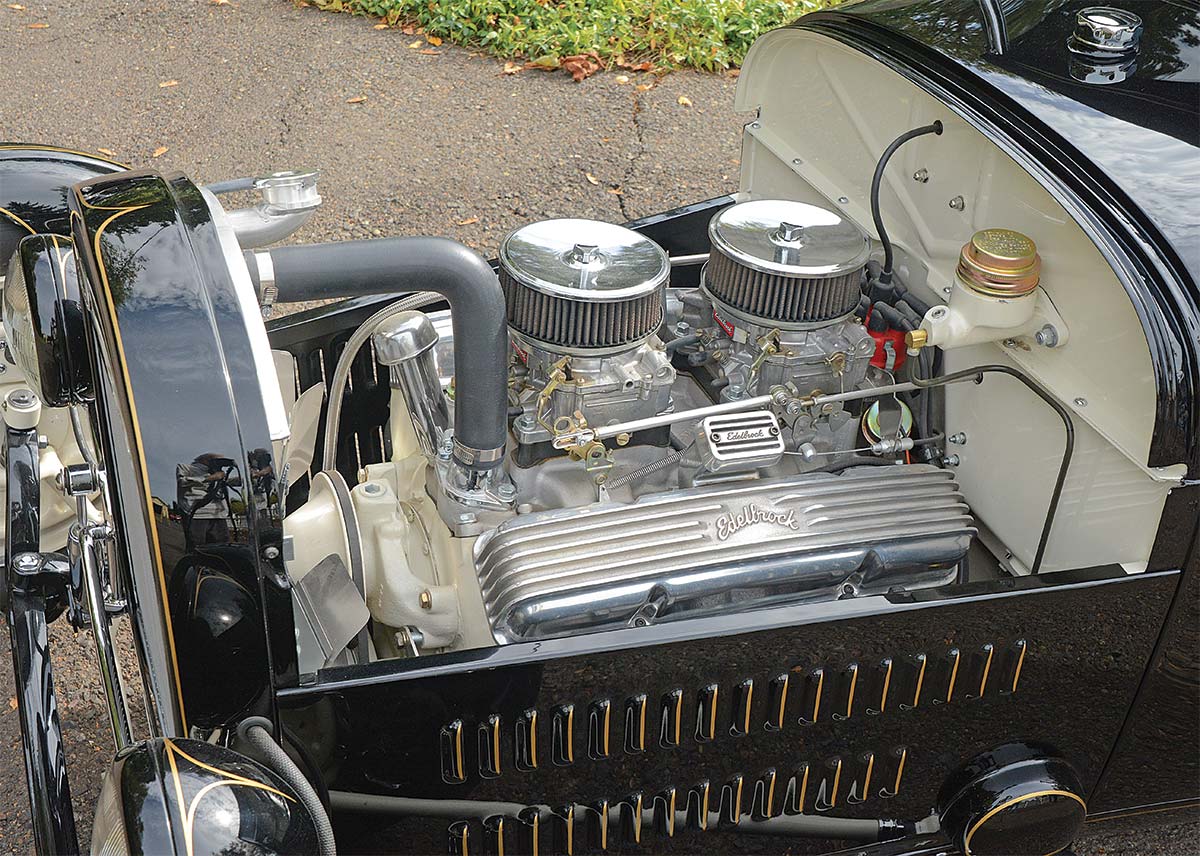
Exposed engine with dual carbs
The framerails follow the contour of the body front to rear. Then they roll under to simulate a bellypan ending up with a 112-inch wheelbase. Model A front and rear crossmembers were used with the rest of the frame in various sizes of rectangular tubing. The front suspension is a transverse spring made up by Oregon Spring. The Magnum 3-inch drop axle and custom dropped steering are fitted with ’48 Ford brakes. Bounce is controlled by Pete and Jakes tube shocks. A 9-inch Ford with 3.50 ring-and-pinion hides in the back with a shop-built four-link, a Model A Ford rear spring, and ’48 Ford brakes.
Side view of '29 Ford Truckster
A ’36 Ford steering wheel connects to a ’56 Ford F-100 steering column and steering box with ’56 Ford hanging pedals. Speedway supplied the 10-gallon aluminum gas tank. Go power comes from a stock ’57 Chevy 283 capped off with an Offenhauser dual four-barrel manifold with Edelbrock carbs. This is bolted to a GM 350 transmission and cooled by a Griffin radiator. Rolling stock consists of early Ford 16-inch wheels riding on Excelsior/Coker 500×16 tires in the front and 700×16 radials in the rear.
Steering and suspension linkages on front driver side wheel
Wheel and drum assembly on front wheel
Donn Lowe's standing next to '29 Ford
Massaging of the metal and glossy black paint is the fine work of Terry Morris down in Wilsonville, Oregon. Mitch Kim dragged his striping brush across the smooth surface of the car to cap off the design. Master stitcher Mickey McVey in Nevada did the tuck and roll. Donn then built the 3-inch chopped top irons and bed cover. They were covered with black Hartz cloth, and the headliner finished in black suede by Jim Valenzuela in Eugene, Oregon.

Considering the many roadster pickups seen today, it is a real challenge to build one that shows some originality. Donn Lowe’s shows the talent and creativity that it takes to stand out in the crowd.
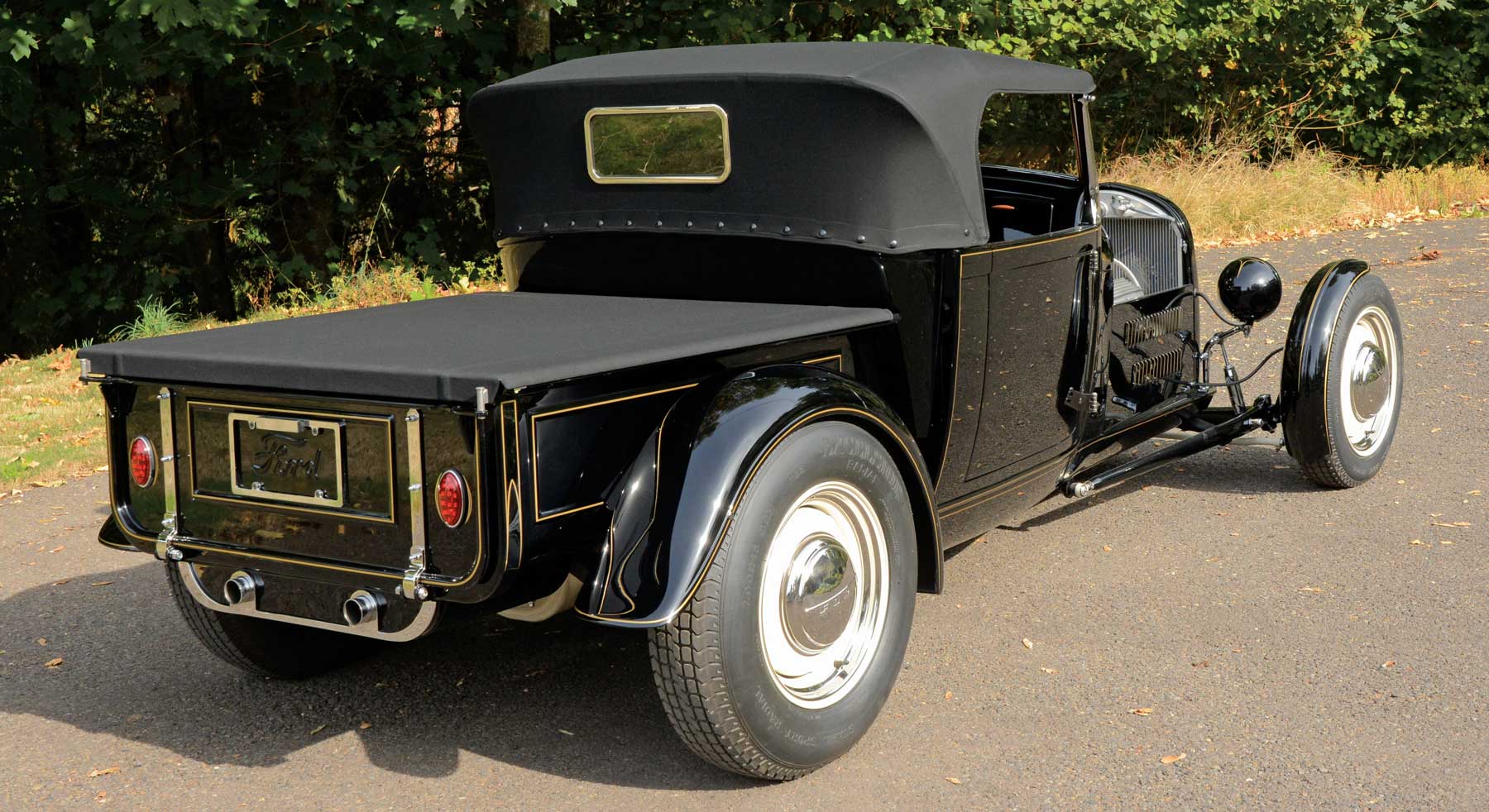
Rear view of '29 Ford with, gold pinstriping on fender edges and raised trim on bed
Modern Rodding
VOLUME 4 • ISSUE 30 • 2023