


Photography by NotStock Photography
Illustration by E. Black Design Co.
t’s often repeated: Corvettes are factory hot rods and will forever hold a place in automotive history. This is remarkably accurate for the 1963 Corvette coupe, famously known as the “split-window.” Casey Shires, from Texas, and his father have been longtime Corvette enthusiasts, with a special fondness for the 1963 split-window, a unique, one-year-only design. However, while maintaining its classic aesthetics, the split-window needed to incorporate modern performance and personal features to fulfill Casey’s dreams.


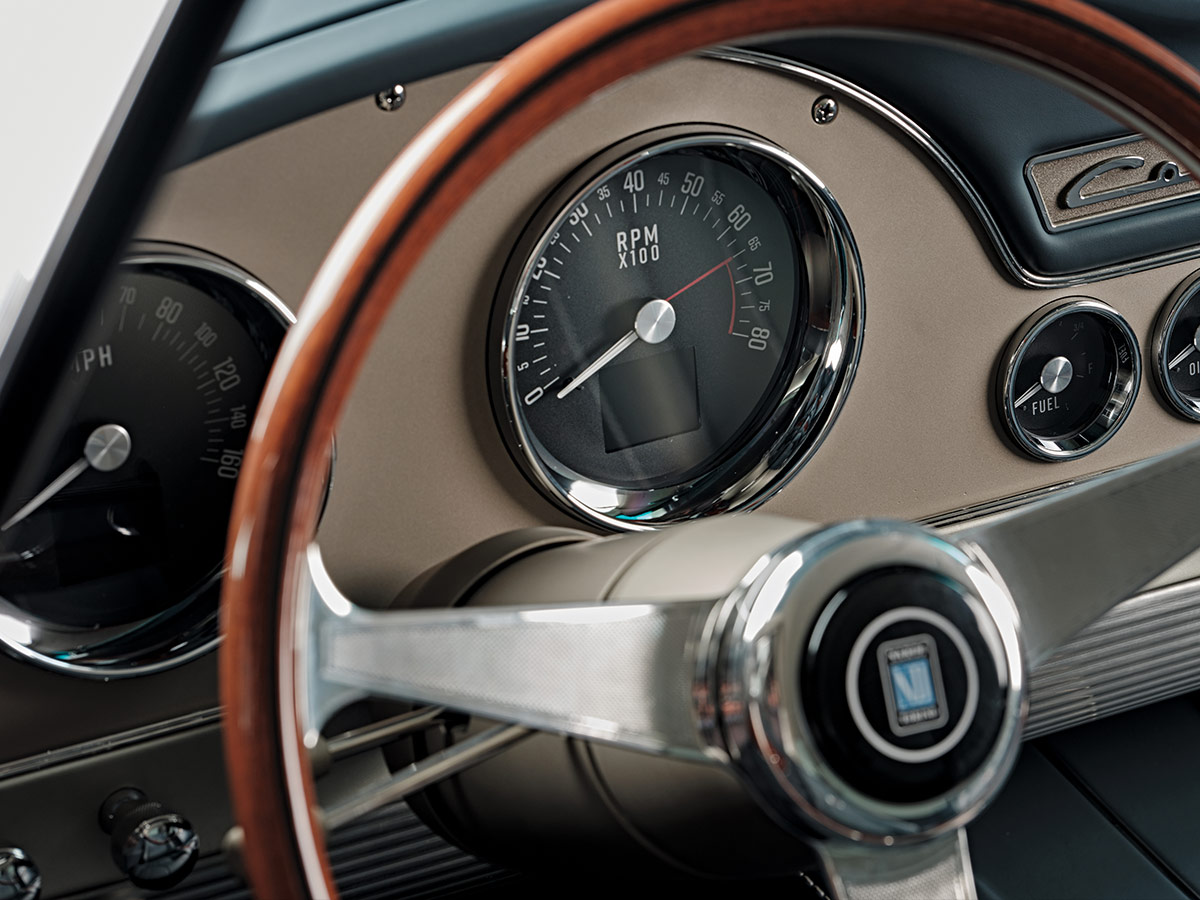
A quick look inside won’t do justice to the extent of the interior modifications. Although changed, the interior still maintains the classic C2 Corvette appearance. The dashboard is a custom-built piece by Casey Bieth, made from aluminum and stainless steel, now featuring a tailor-made variation of the Dakota Digital HDX-2024 gauges. The billet aluminum housings have been chrome-plated after being sized to fit aftermarket openings measuring 4-5/8 inches and 2-1/16 inches in diameter. The instruments drop in from the front of the dash; the front bezel’s outer diameter measures 5 inches for the speedometer and tachometer and 2-5/16 inches for the smaller gauges, all requiring approximately 2-1/4 inches of depth. Other interior features include the Ididit tilt steering column, a Nardi three-spoke sporty wheel, and a Vintage Air A/C system. The necessary wiring is based on an American Autowire system that HRG’s own Gene Anderson installed. The custom front bucket seats were made by Chuck Rowland, who also managed the upholstery featuring Navy Blue leather on the seats, doors, and kick panels. The carpeting is made of blue German wool. The headliner is a unique one-piece fiberglass shell covered in cream-colored leather, complete with custom LED light strips.

This 1963 Corvette, designed with a European flair, is built on a Roadster Shop chassis inspired by their Fast Track series, featuring independent rear suspension. The front suspension from Roadster Shop utilizes Corvette C7 front spindles, Fox coilover shocks, a 1-1/4-inch sway bar, and a power rack-and-pinion steering system. The IRS (centersection is based on a Ford 9-inch) sits in the rear, again equipped with a Fox coilover shock system and a 1-1/8-inch sway bar. The braking system is based on a Baer master cylinder, paired with Corvette factory pedals that channel stopping power to the 14-inch drilled-and-slotted rotors with six-piston calipers at both the front and the rear.
The 555G2 features ample Nitto rubber at the corners, measuring 245/40R18 in the front and 315/40R18 in the rear. Black and Smith collaborated once more to design the one-off wheels manufactured by TJ at Atomic Machine. Although the wheels have an early Corvette knock-off appearance, they also possess a distinctly modern look. (Kelsey Hayes supplied the original and authentic ribbed, knockoff 15×6 aluminum wheels. By 1967, the knock-off spinner was banned by federal mandate, so the aluminum wheels were bolted on with a center cap instead of a spinner.)


If you were out and about over the past few summers, you may have spotted this stunning 1963 Corvette split-window, which took home a truckload of awards. The split-window was a Top Five finalist for Columbus’ 2023 PPG Street Machine of the Year. It also achieved a Top Five finalist position for the 2023 BASF America’s Most Beautiful award in Fort Worth (this award was renamed the BASF Goodguys Most Bitchin’ in 2024). Additionally, the car earned HRG the Goodguys 2023 Chevrolet Performance GM Iron Builder of the Year award. Moreover, it has earned a Chip Foose Design Award, a Big Oak Garage Pick, and a CPP Top 10 Triple Crown of Rodding award. Many appreciate how this iconic Corvette design was treated during its transformation; “know when to stop.”
