

Modern Rodding TECH
InTheGarageMedia.com
 Photography by The Author
ometimes, Ole Henry had a tough time with change. In the Ford world, if something worked well, he was known to stick with it. Mechanical brakes and wood-framed bodies are two examples that come to mind. Today we’ll deal with the latter of those two.
Our project car is a ’36 Ford phaeton that remained largely a wood-framed body with stamped steel panels nailed over the wood frame. The inner door panels were stapled and nailed into place, using a unique trim that provided a covered slot to hide the fasteners.
For our project car, we wanted a vintage feel, a look that may have been possible in the ’30s-50s. Our lack of sewing also prompted this simplistic design. All the materials used in this project were available prior to the ’60s.
The first challenge was figuring out how to mount the panels to the wood frame doors. Chrome or stainless steel bevel-head upholstery screws and washers would have been period correct and the easy way to mount the panels. That was way too easy… we decided we wanted blind fasteners in the way of modern plastic upholstery door panel clips. It was still a relatively easy process that required some careful measuring, marking, and proper hole sizes. With panels shaped, the next problem is securing them to the wood frame.
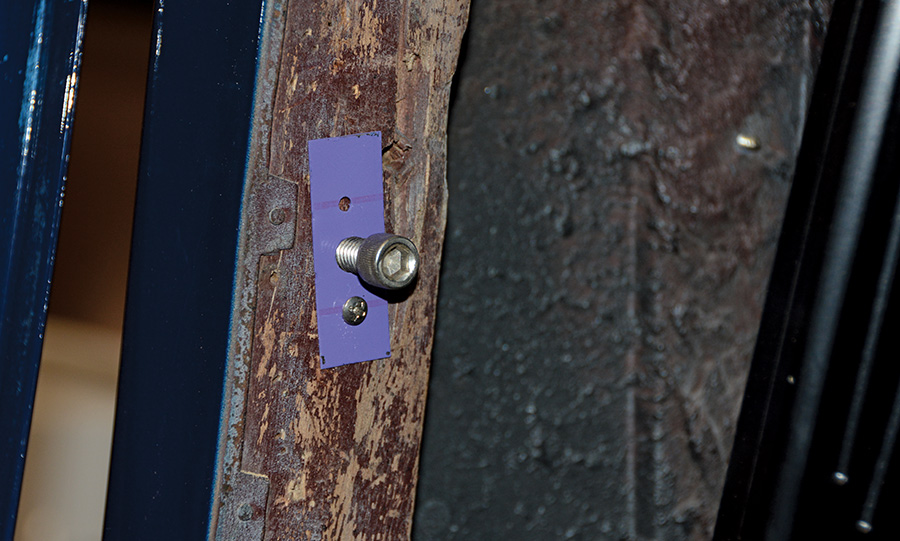
We have seen simple holes drilled into the wood frame to receive the plastic panel clips. While this works OK for one or two times, after test-fitting the panel several times, that 86-year-old wood allows the hole to grow and the clips lose their grip. Our longtime hot rod pal Lance Sorchik helped us find the solution. As per his suggestion, we made 22-GA sheetmetal receivers to go over the holes we had drilled in the wood. Once again, careful measuring is imperative, and stay away from any vintage wood that appears cracked or otherwise compromised. Also, avoid things like door latches and hinges. Since our phaeton is a four-door, we quickly realized we would require many of these receiver plates. To that end, we took a piece of 22-gauge sheetmetal and laid out holes to be drilled. We did all the drilling before shearing the individual plates. This is much easier than making one plate at a time.
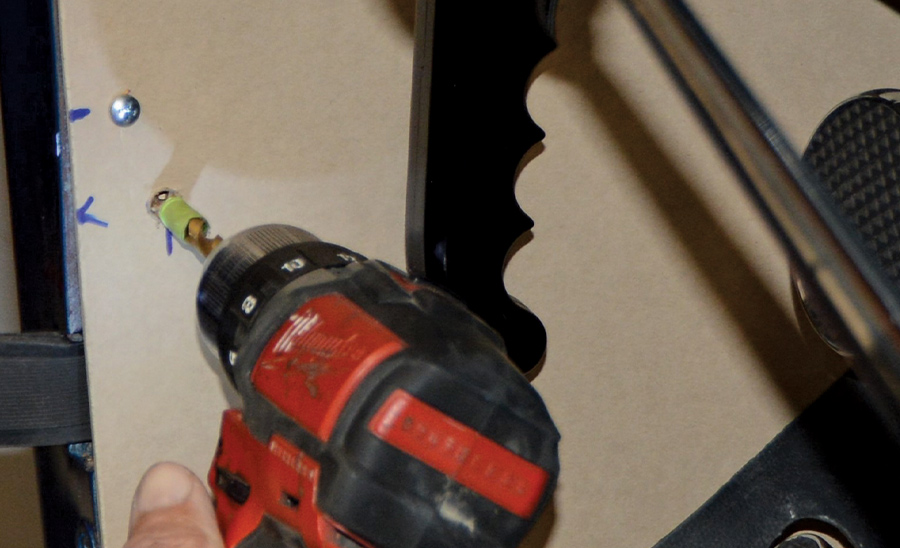
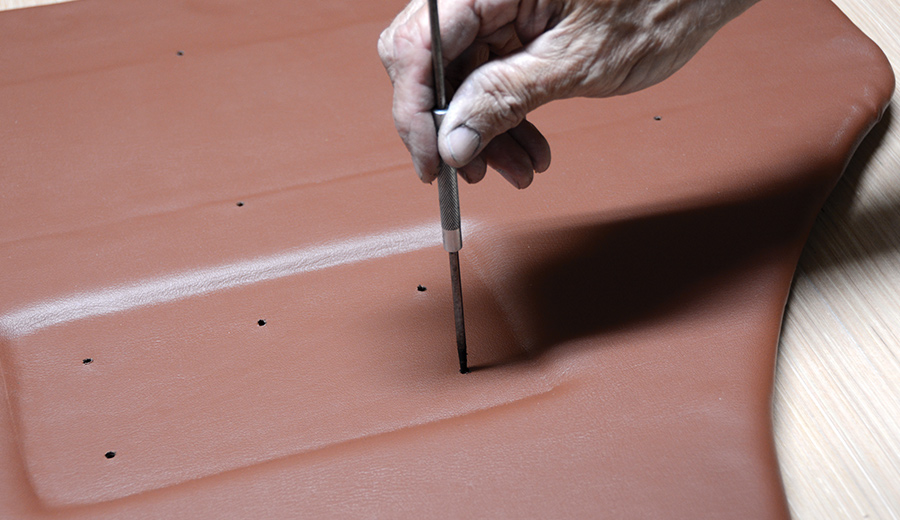
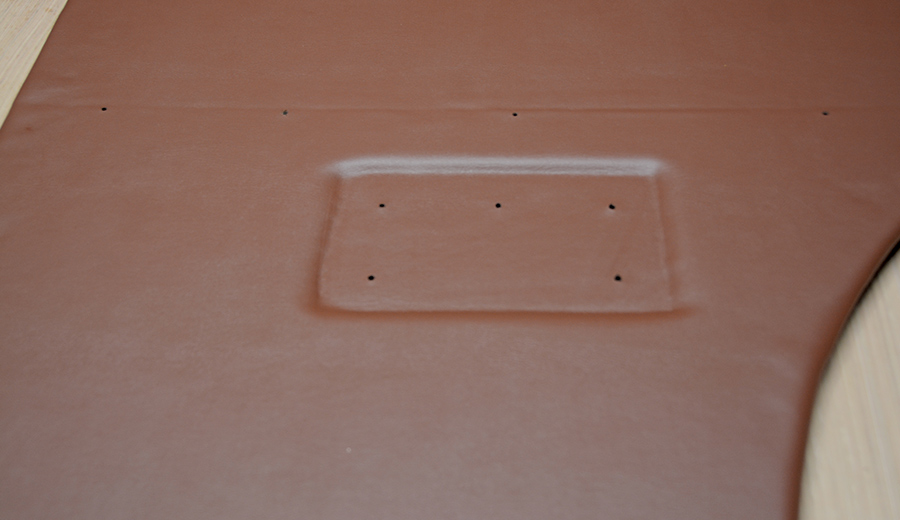
With the mounting problem solved, we went about carefully cutting the door panels from the upholstery panel board. We took a page from Ole Henry’s playbook when we selected this material, after all, it worked well for at least 86 years. After precise panel fit, we marked the desired location for the panel clip holes and drilled them to the proper size for the clips. Next, we used small screws to hold the new panels firmly in place over the wood-frame doors. A transfer punch was used to center punch each hole location in the wood. We then removed the panel and set about first drilling a 1/8-inch pilot hole on each center punch mark. Next, we drilled the clip with the proper size receiving holes in the wood. Be careful not to drill these holes too deep as precious finished sheetmetal is behind the wood. We are reluctant to specify the hole size since panel clips of different sizes are available. Find the specified hole size for your clip and practice on a piece of scrap wood to ensure the clips grip well. Likewise, drill and test the sheetmetal hole-to-clip fit on a piece of scrap metal, and finally, mount one of your clips to scrap wood for the final grip test.
With the holes drilled in the wood, it was time to mount the sheetmetal receivers precisely over the hole. We used a short bolt threaded into the wood to precisely align the sheetmetal hole with the wood hole. A tiny pilot hole is drilled for each #4 screw before fastening the sheetmetal in place. After each hole has a sheetmetal cover, test-fit the door panel. If you work carefully, the panel should fit perfectly. After the proper fit is achieved, you can remove the panel and begin the actual upholstery.
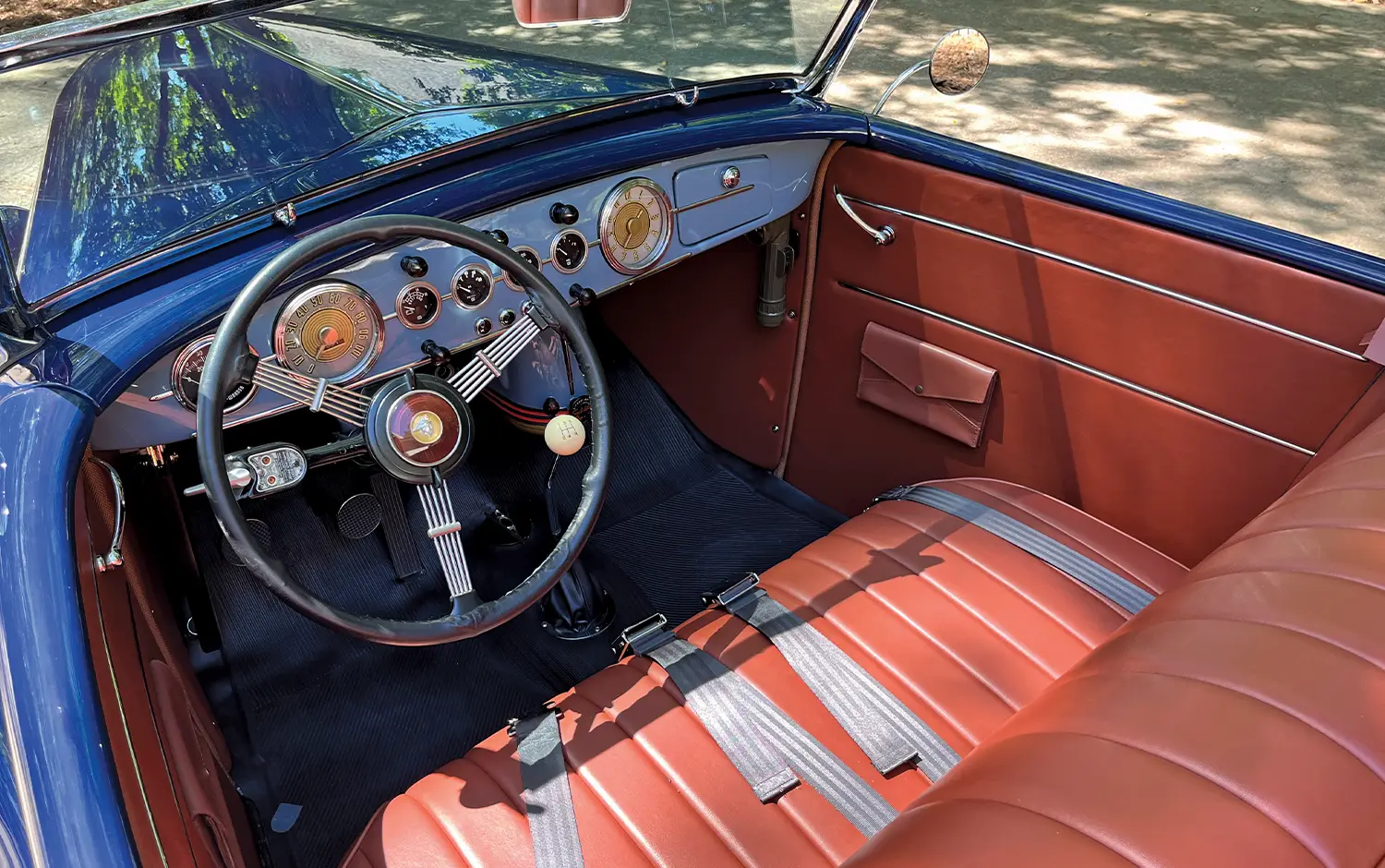
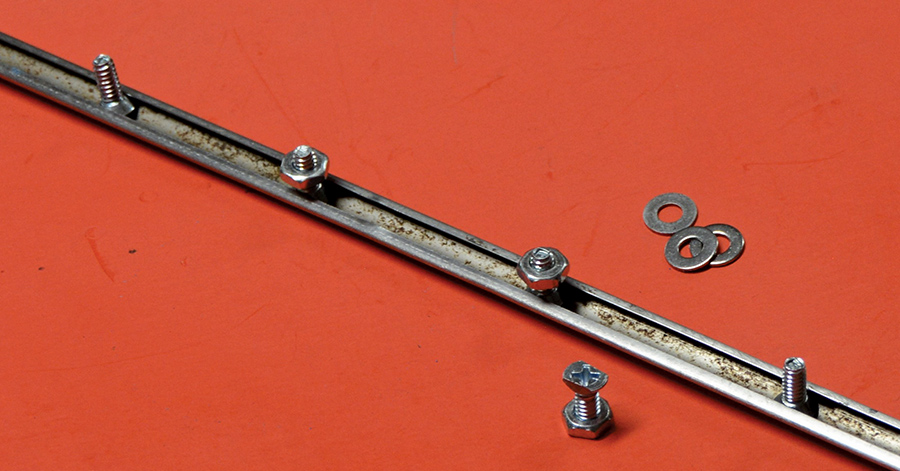
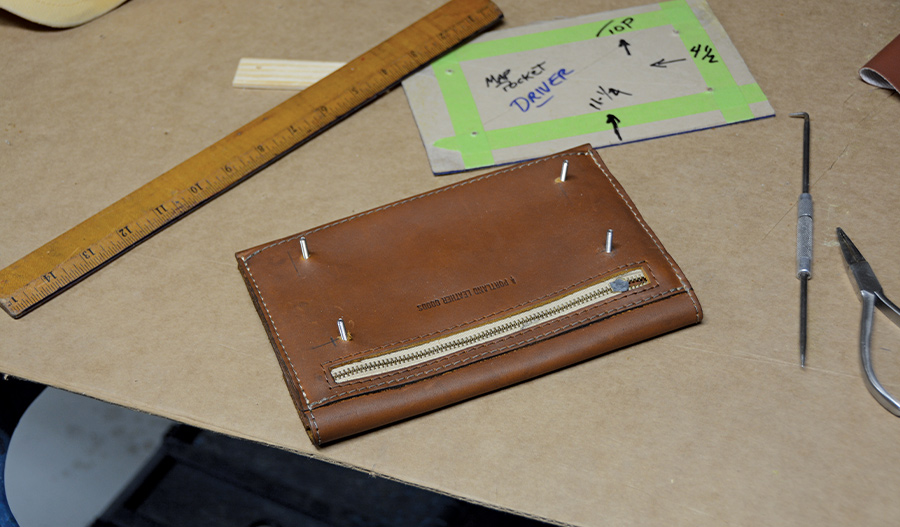
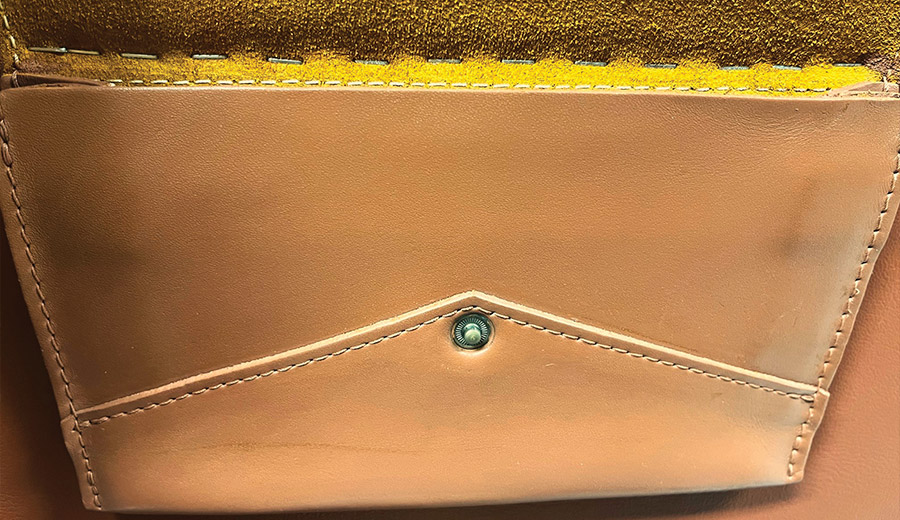
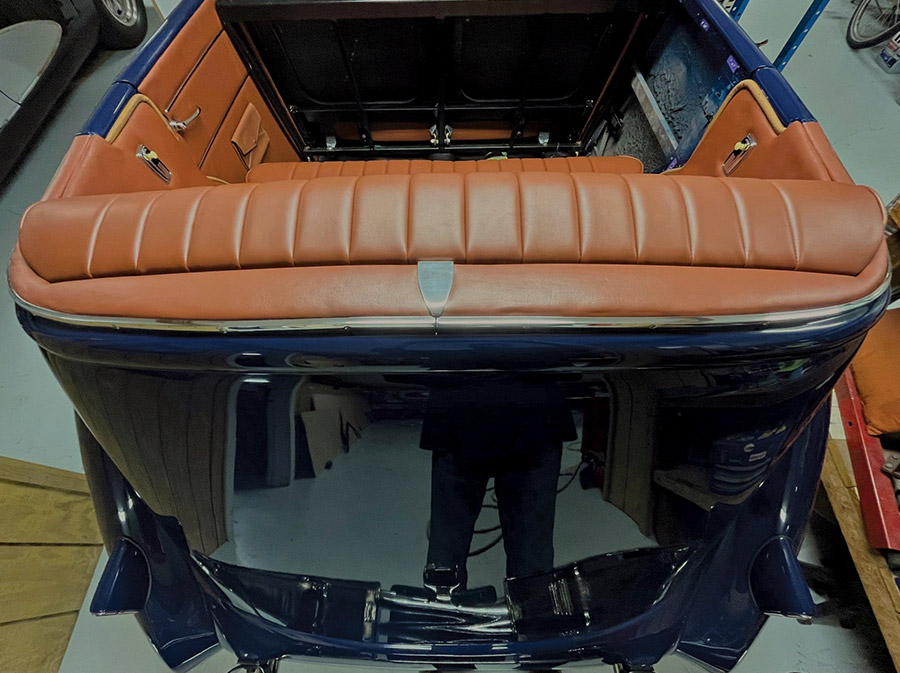
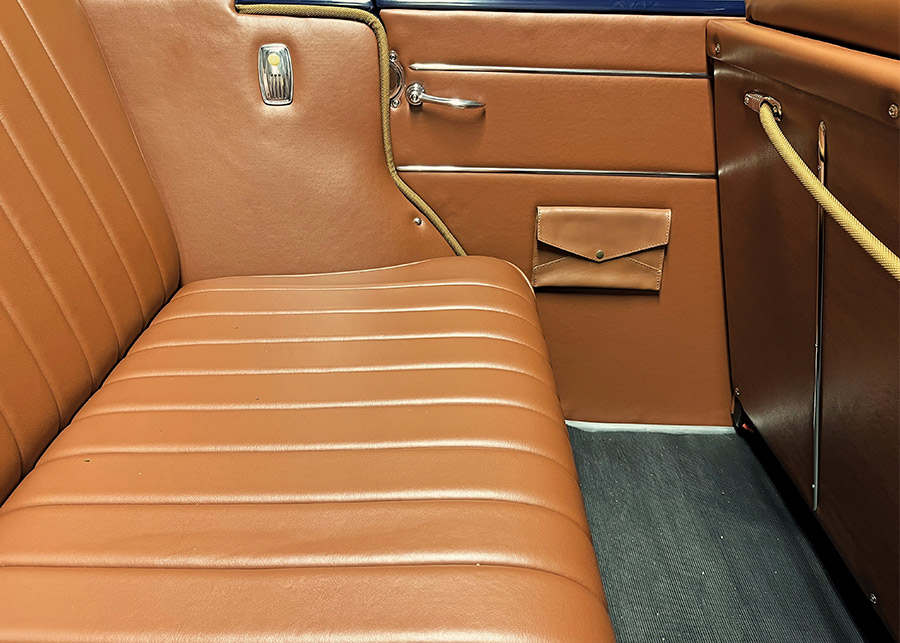
Our design approach was simple. We wanted more than just a smooth door panel. Since we don’t sew, that meant using ’35 Ford stainless steel hood trim in combination with a map pocket that is actually a small, leather lady’s purse. Vintage wind lacing and stock door handles complete the look. We were pleased with the vintage flavor of the door panels and the way they blended with the 4-inch pleated seats. We also added a grab rope to the back of the front seat and some vintage ashtrays to add interest to the interior. Rubber floormats complete the period-perfect statement.










 SOURCES