


 Photography by Luke Munnell
he name Gary Stell Jr. may sound familiar, especially to those who recently read the article on page 16 about a stunning 1951 Mercury custom. In this issue, we highlight not just one but two of Gary’s exceptional vehicles: his flawless 1951 Mercury custom and his visually appealing mild custom 1955 Chevy. Both cars were crafted with the expertise of Ron Cambra and his staff from Cambra Speed Shop (CSS).
Under the hood of these impressive machines lies a Mast Motorsports V-8 engine. Although it resembles an injected Hemi, it is actually an LS 427 Black Label developed by Mast Motorsports. This all-aluminum block and head configuration delivers an astonishing yet street-friendly 750 hp from 427 ci. It features diamond alloy pistons boasting a formidable 10:1 compression ratio and a Mast custom grind cam. ARP head studs secure the reworked aluminum heads, and the valve covers—though reminiscent of a Hemi—are custom pieces crafted by George Lawrence of Greening Auto Company (GAC) in collaboration with CSS.
The 1955 Chevy sits on a rear suspension derived from a Roadster Shop IRS, now narrowed by 4 inches on each side. The rear also features 4.11 gears and 31-spline axles. Mated to the LS motor is a Chevy transmission from Hughes, which includes a Hughes 2,800-stall speed converter and a Lokar shifter. A custom trans cooler from CSS was also designed alongside the integrated driveshaft from Drivelines Incorporated. The frame design originates from Roadster Shop and was modified to be narrower at both the front and rear. CSS then fabricated a custom stainless steel 17-gallon fuel tank.
The IFS system utilizes components from Roadster Shop, including QA1 adjustable shocks, a Roadster Shop front sway bar, and front spindles. The steering system includes a power steering rack-and-pinion from Roadster Shop that connects to an Ididit steering column. Wilwood brakes installed on the Chevy feature 14-inch drilled-and-slotted rotors paired with four-piston calipers. Notably, the master cylinder is cleverly housed under the front fender and actuated by a custom bellcrank assembly crafted by the CSS team.


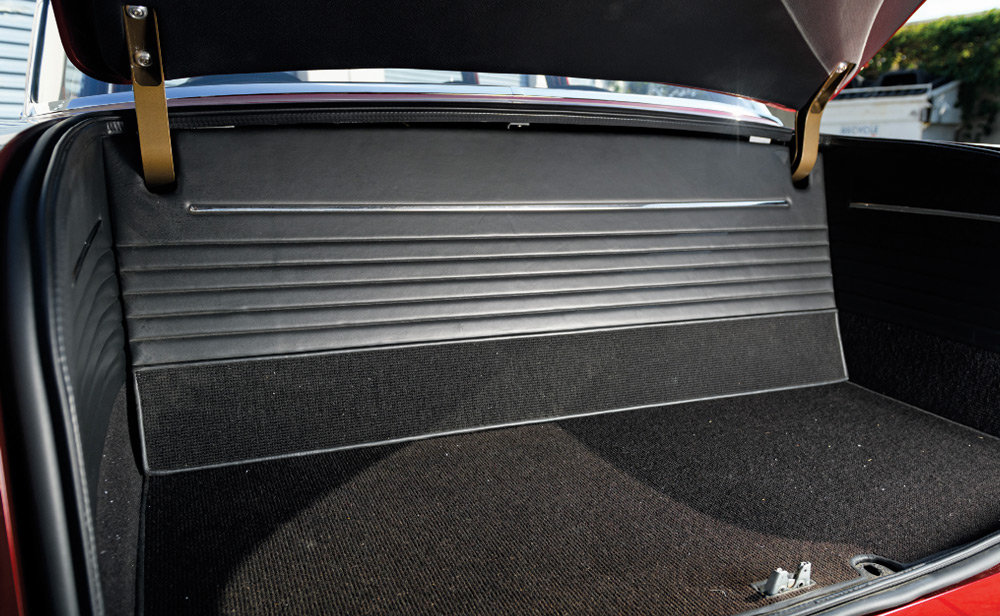

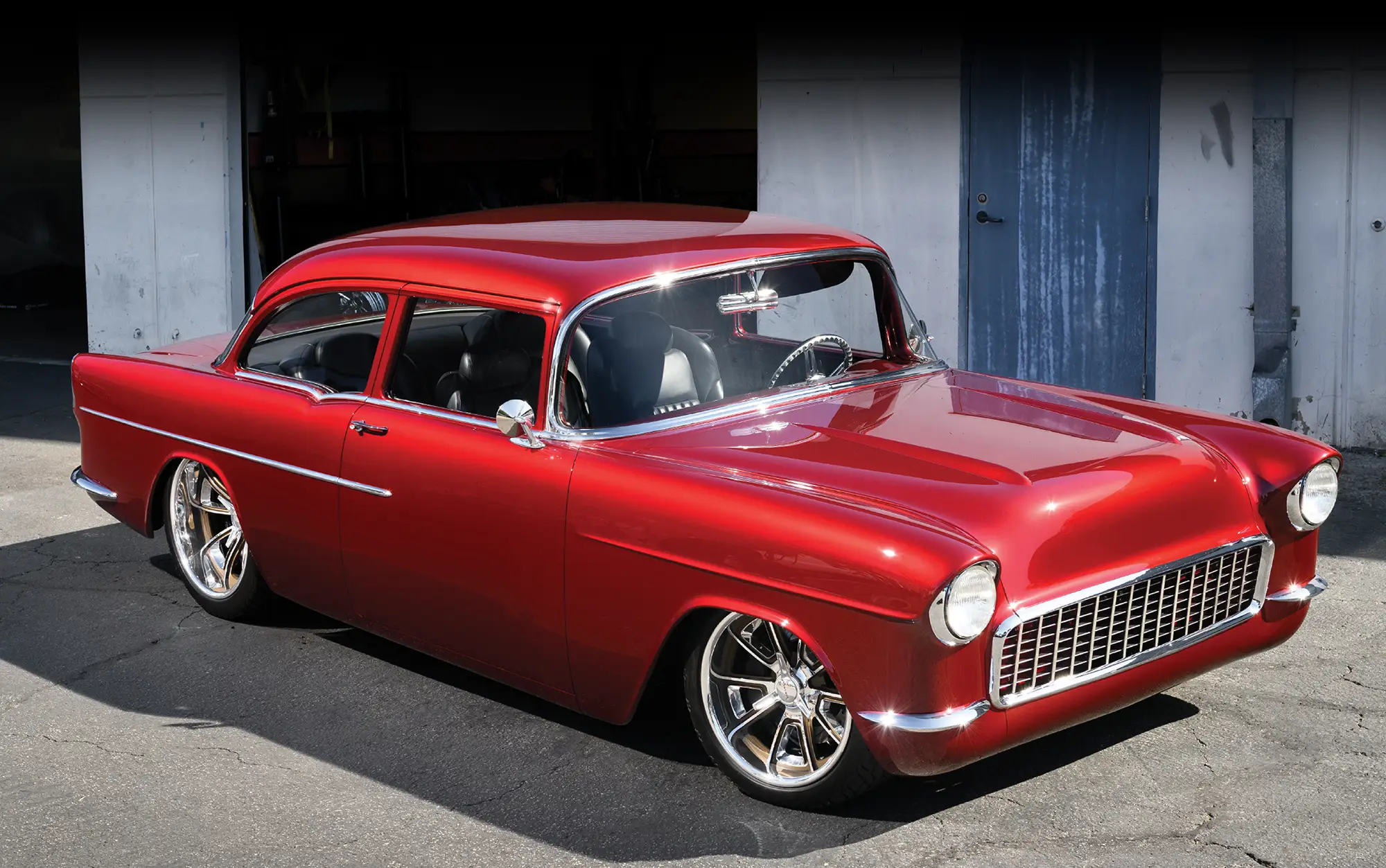
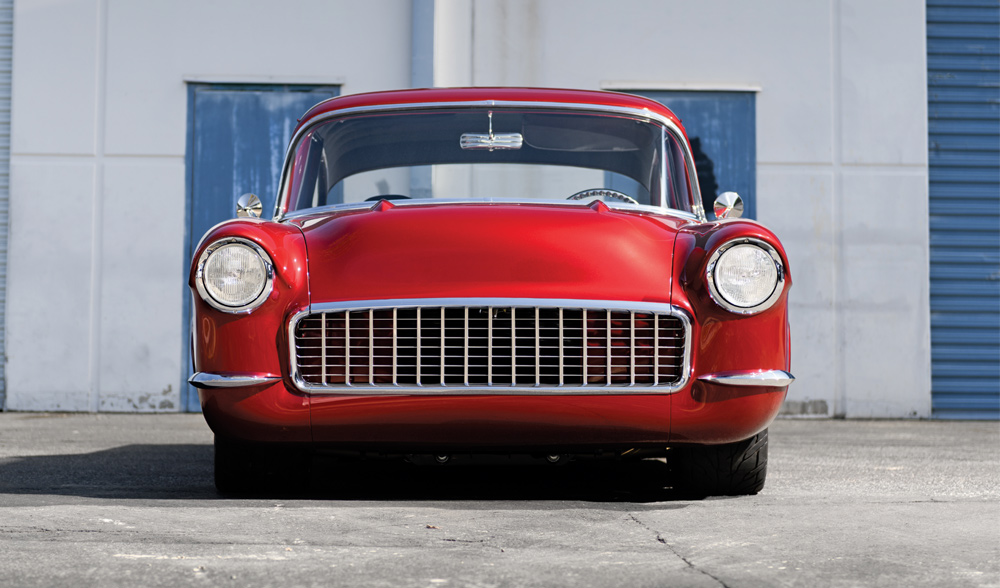
The body of this 1955 Chevy 210 Post car is entirely steel, showcasing several sheetmetal modifications. Among these alterations, Rick Kersh of CSS expertly angled the B-pillars and crafted a rolled front and custom rear body design, thereby eliminating the need for splash pans. The wheel openings have been enlarged to match the wheel’s radius and rubber profile. (A Chevy 210 Post refers to what was originally called the “Styleline DeLuxe” 2100 model, available in earlier years and still retaining the B-pillar.) Note the custom bumper treatment in the front and rear; it is clearly a custom touch and a significant departure from what we are accustomed to seeing on Tri-Five Chevys. For fans of the 1955 Chevy, you will immediately notice that the driver side gas filler door is no longer present. The filler is now integrated into the taillight assembly, reminiscent of a 1956 or 1957 Chevy. CSS executed the body- and paintwork in collaboration with Hitoshi. Paul Stoll from PPG meticulously mixed the unique PPG Roxanne Red color with a hint of pearl, resulting in a stunning finish.



In conclusion, Gary Stell Jr.’s 1951 Mercury custom and 1955 Chevy exemplify automotive craftsmanship and highlight the industry’s collaborative efforts of talented specialists and craftsmen.