



 Photography by THE AUTHOR
reating something truly unique is one of the many elements of hot rodding distinguishing it from the rest of the automotive hobby where much of the concentration focuses on restoration and preservation. When it comes to styling, there’s plenty to be recognized from the early years when builders on the East Coast claimed their own look by channeling their cars while maintaining both chopped and un-chopped roof lines. The dramatic ’32 Ford channeled roadster laid out across our pages belonging to Keith Goettlich of Berkley, Massachusetts, celebrates its East Coast heritage with a nod to tradition.
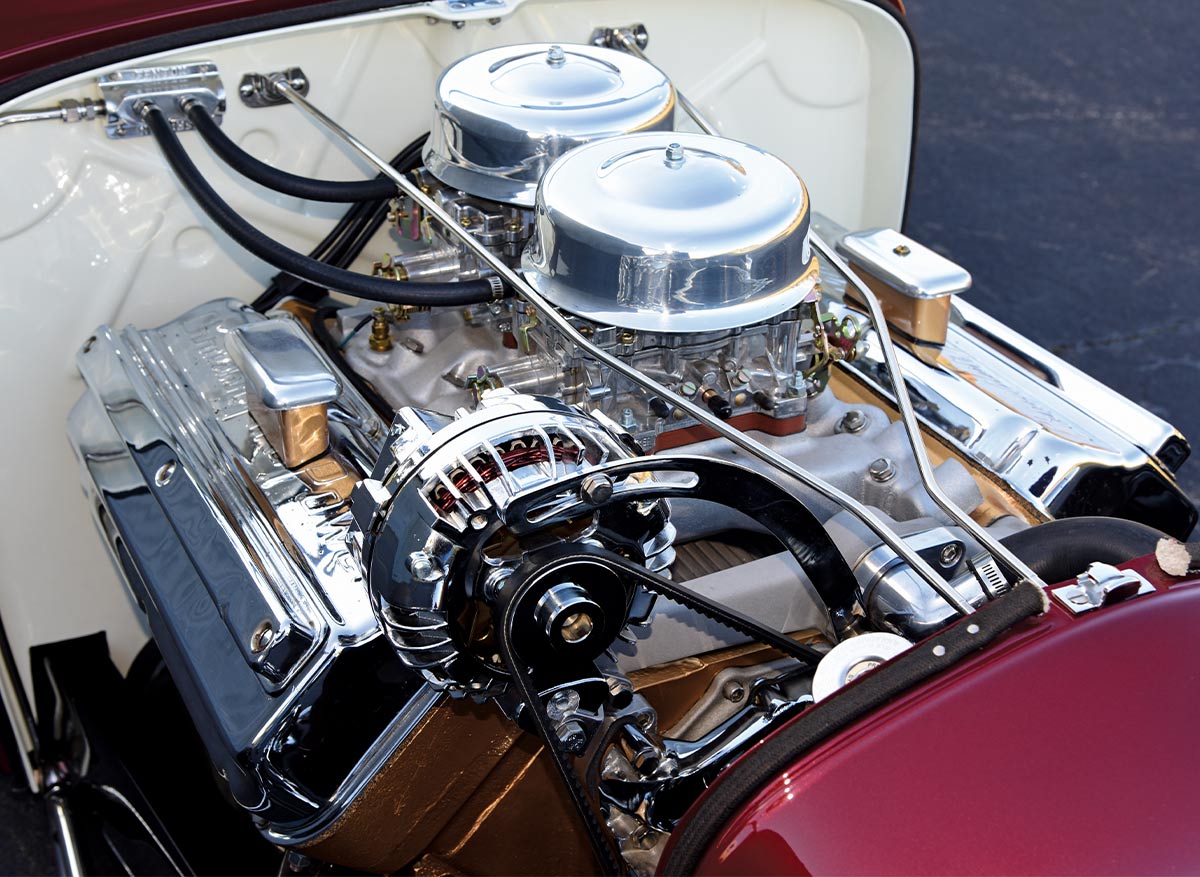
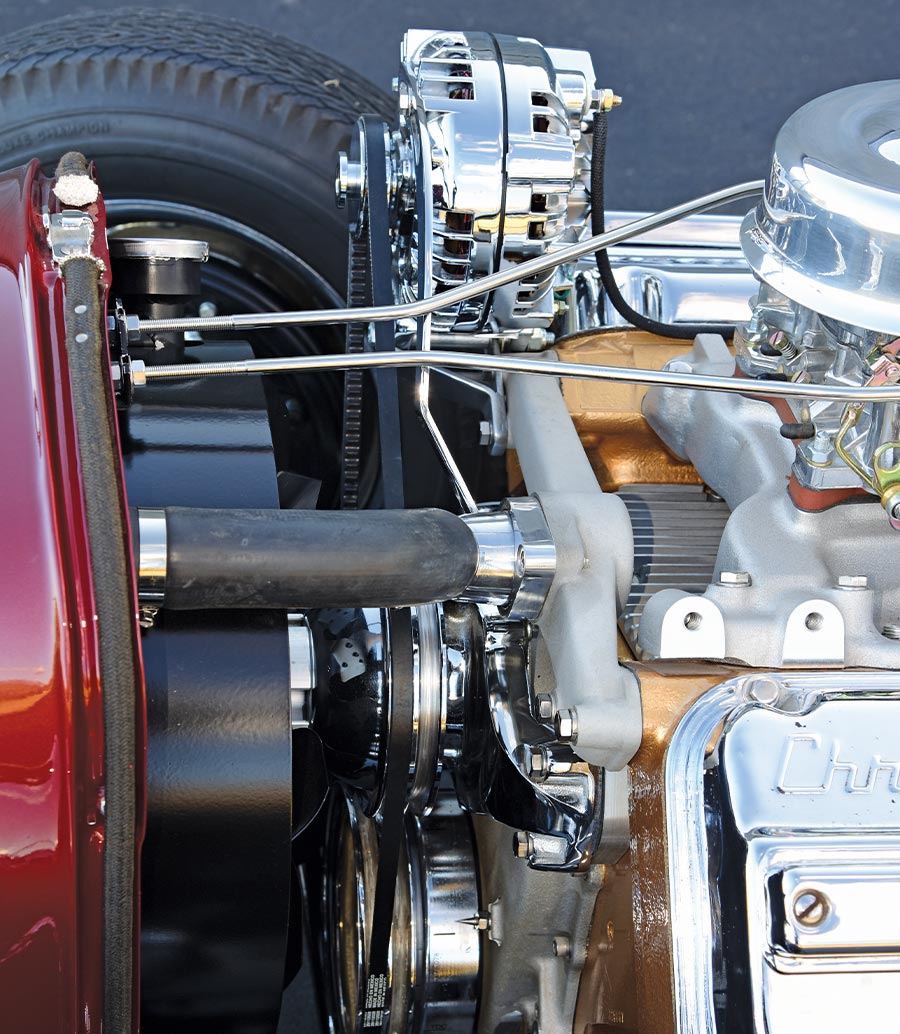
There’s something to be said about the home builder when it comes to designing, fabricating, and turning out a noteworthy hot rod that’s ready to hit the street and start laying down the miles. Over the decades, there have been plenty of wicked rides rolling out of Keith’s home shop, including a heavily chopped-and-channeled ’33 Ford pickup followed by an equally hammered ’31 Ford sedan and eventually a Westergard-styled ’37 Chevy tail dragger. One of the most unique features of all was that they were all powered by his signature 401ci dual-quad Nailhead V-8, apart from his small-block Chevy-powered ’37 Ford drag truck that consistently ran in the 8s on the quarter-mile.
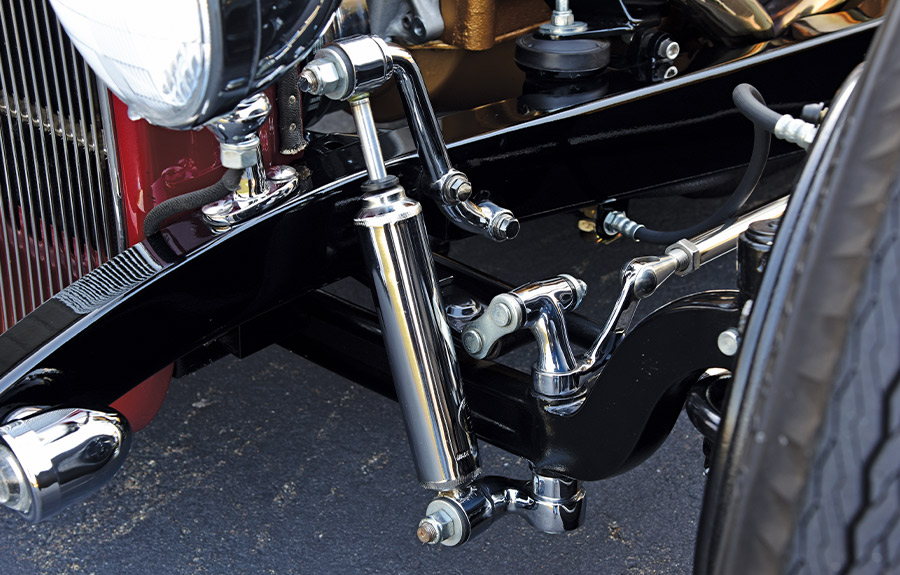
Knowing the stance he was chasing, Keith got the project going by first designing a perimeter frame, starting with a fresh set of ’32 Ford framerails from Brookville Roadster. To maintain a vintage look forward of the firewall, he measured, cut, and boxed the Brookville sections and continued rearward using 2×3-inch rectangular tubing from the firewall back. The front frame section was then Z’d 3 inches to get the right ride height, moving rearward to a massive 14-1/2-inch kick. It’s all tied together with a 1-inch lowered ’32 Ford front crossmember from Brookville Roadster matched to a custom centersection and rear crossmember. Out back, a vintage ’65 Ford 9-inch rear was filled with 2.73:1 gears turning stock axles. It’s suspended in place by a combination of Chassis Engineering ladder bars matched to a custom owner-fabbed Panhard bar and QA1 adjustable coilover shocks. Up front it’s all business thanks to a 4-inch dropped-and-filled Super Bell axle with matching ’37-41 Ford spindles anchored in place by Speedway Motors polished stainless hairpins linked to a reverse-eye POSIES Super Slide spring and chrome PRO Shocks. When it’s time to drop anchor, a Corvette dual master moves fluid through stainless lines to ’40 Ford front drums and ’65 Ford Bronco drums out back. Bringing it all to the street, you’ll find a set of dazzling Wheel Vintiques 16-Series Gennie chrome reverse wheels sized 15×5 at each corner capped with Firestone/Coker wide whitewalls sized 5.60-15 front and 7.10-15 rear, respectively.
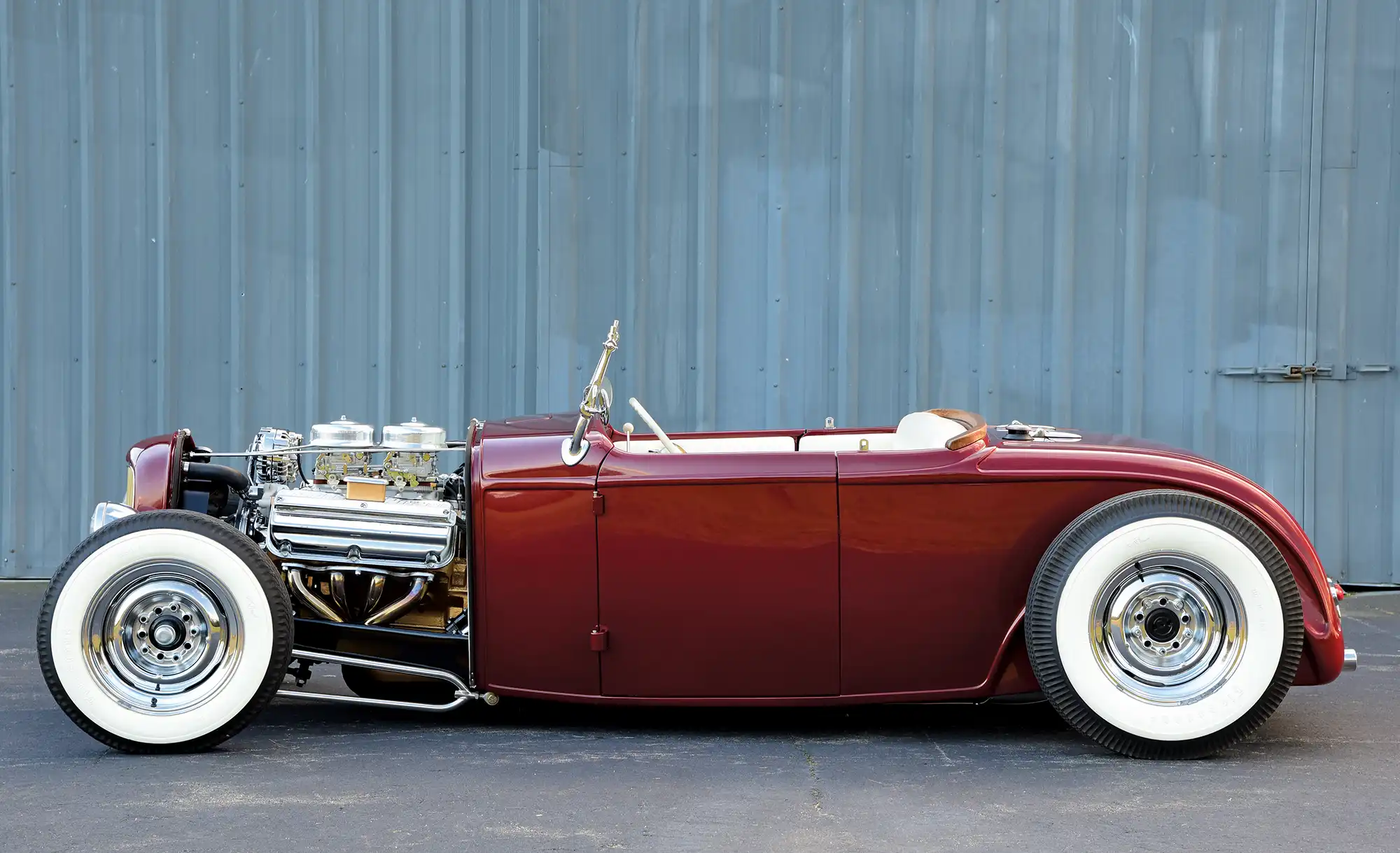
When it came to the body, the swap meet–sourced ’glass shell was a clean start, leaving Keith free to start outlining the updates he had planned. Starting up front, he added a Brookville Roadster steel cowl with a working vent, then fabricating a steel floor, transmission tunnel, and bracing. He followed, adding a Speedway Motors 2-inch chopped windshield kit, wooden tack strip, and custom rear roll pan with exhaust cutouts. Other neat details include Deitz-style headlights, ’49 Ford taillights, and trunk hinges, all from the Early Ford Store. From there, he blocked the body to perfection while setting all the gaps to prepare it for paint. The team at Ted’s Automotive in Marion then laid down the vibe with a mile-deep coating of Axalta Cinnamon metallic gloss.
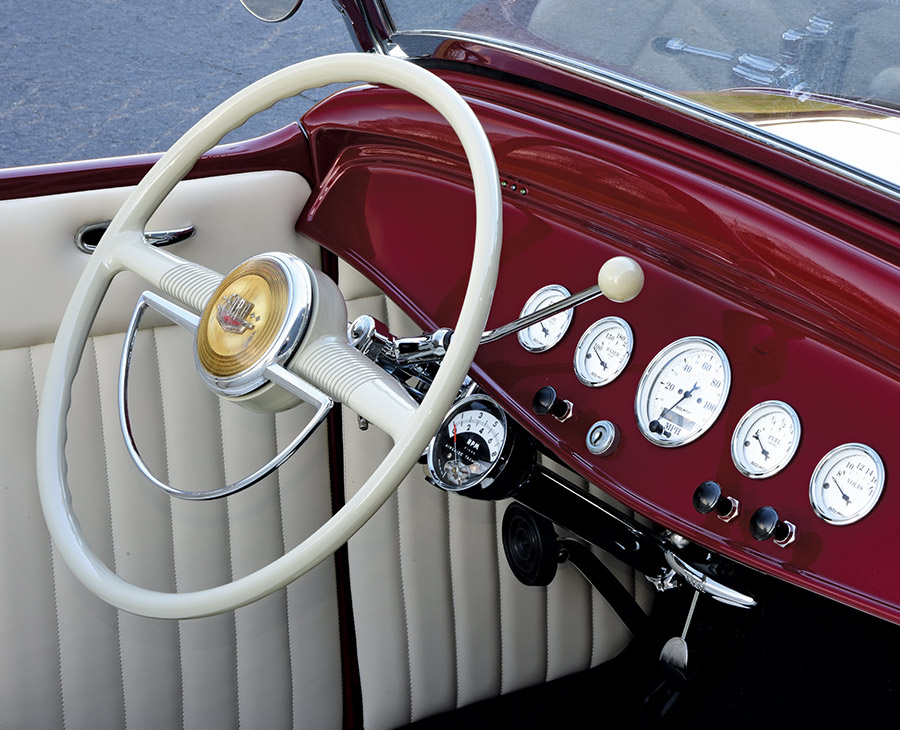
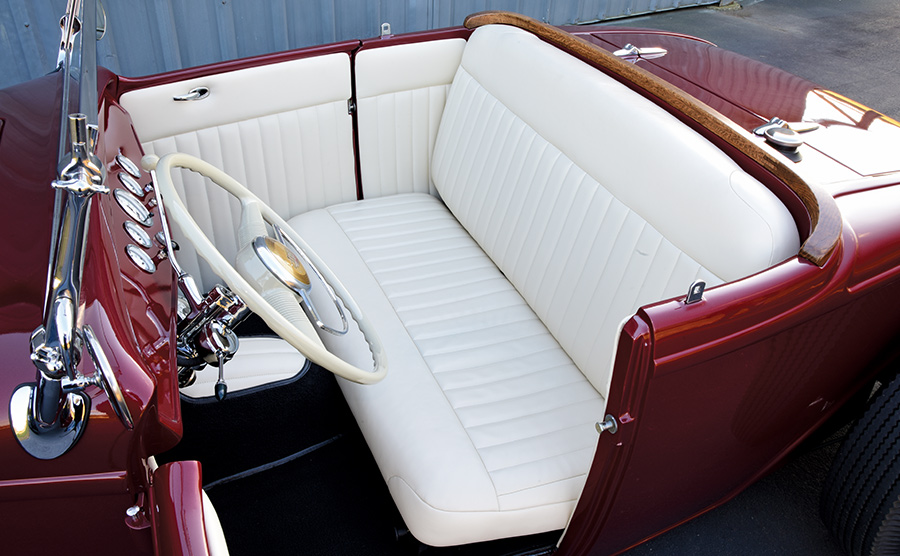
To bring a classic feel to the interior, the Deuce dash was filled with Old-Tyme White II dials from Auto Meter to monitor the vitals, accented by a vintage Airguide tach to catch the revs. A ’49 Ford steering wheel mounted to a modified matching column with shifter carves the course while adding a distinctive allure to the experience. It’s all connected thanks to an EZ Wiring kit installed by Keith. To add a perfect ’50s-era groove to the interior, Doug Dwelly Jr. of Dartmouth stitched up a winning combination of ivory vinyl pleats covering the custom bench seat and all related panels accented by black loop carpeting. The roadster has already been racking up the miles across the highways and back roads of New England, and to us, that’s the perfect way to honor tradition.


VOLUME 5 • ISSUE 46 • 2024