

 Photography by NotStock Photography
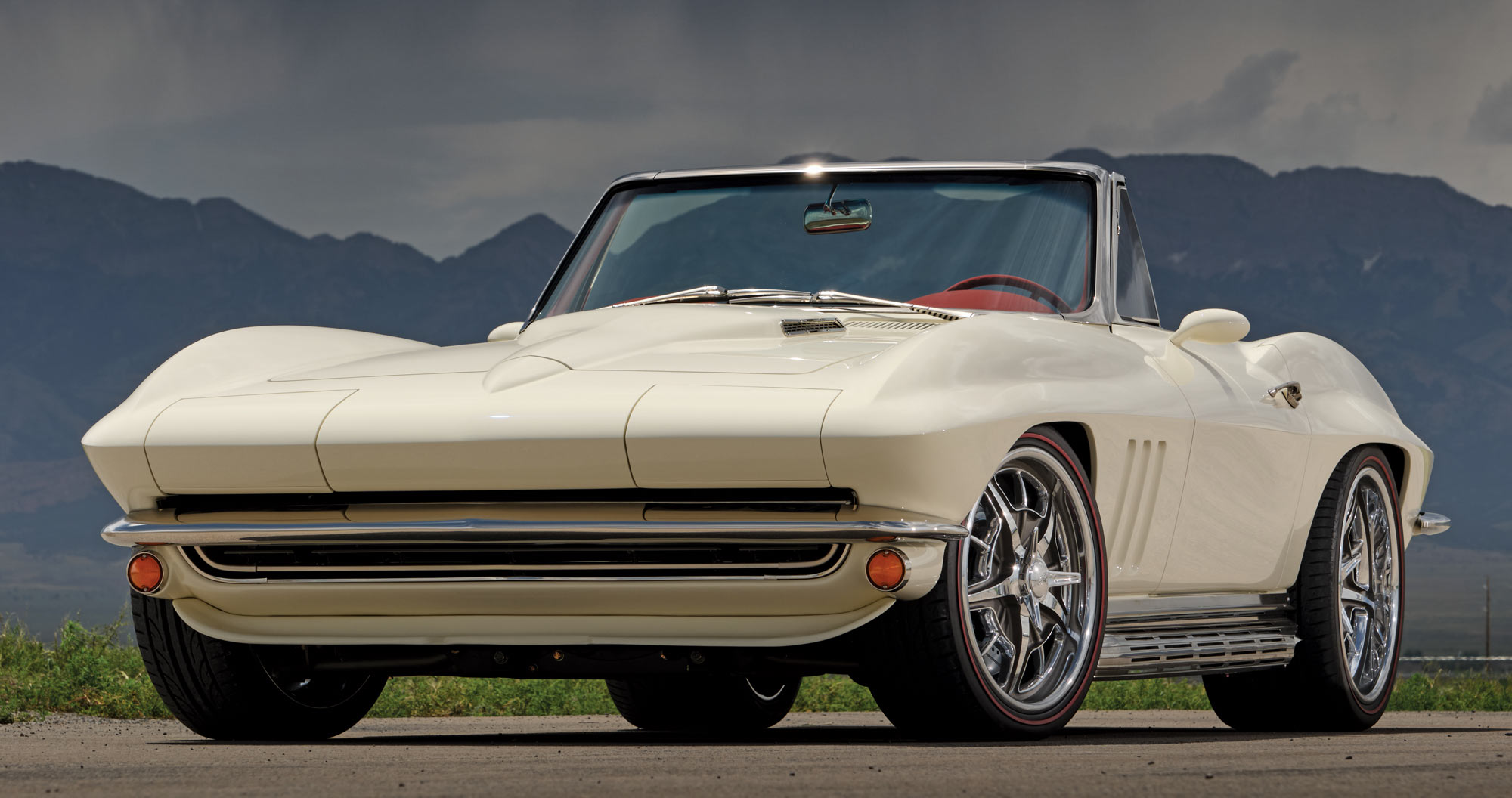
orvettes will always be viewed as the ultimate “factory hot rod.” Since its inception, the Corvette nameplate has been synonymous with performance. One only has to look at how many hot rods built in the late ’50s-70s featured early Corvette performance parts. Later-model Corvettes are still the standard-bearer for the ultimate engine performance with the LS and then LT V-8s, followed by all manner of suspension items that have now found their way underneath our hot rods. Alex Short of Utah’s ’66 Corvette convertible features what you would expect, plus additional later-model Corvette performance via powertrain and suspension enhancements.

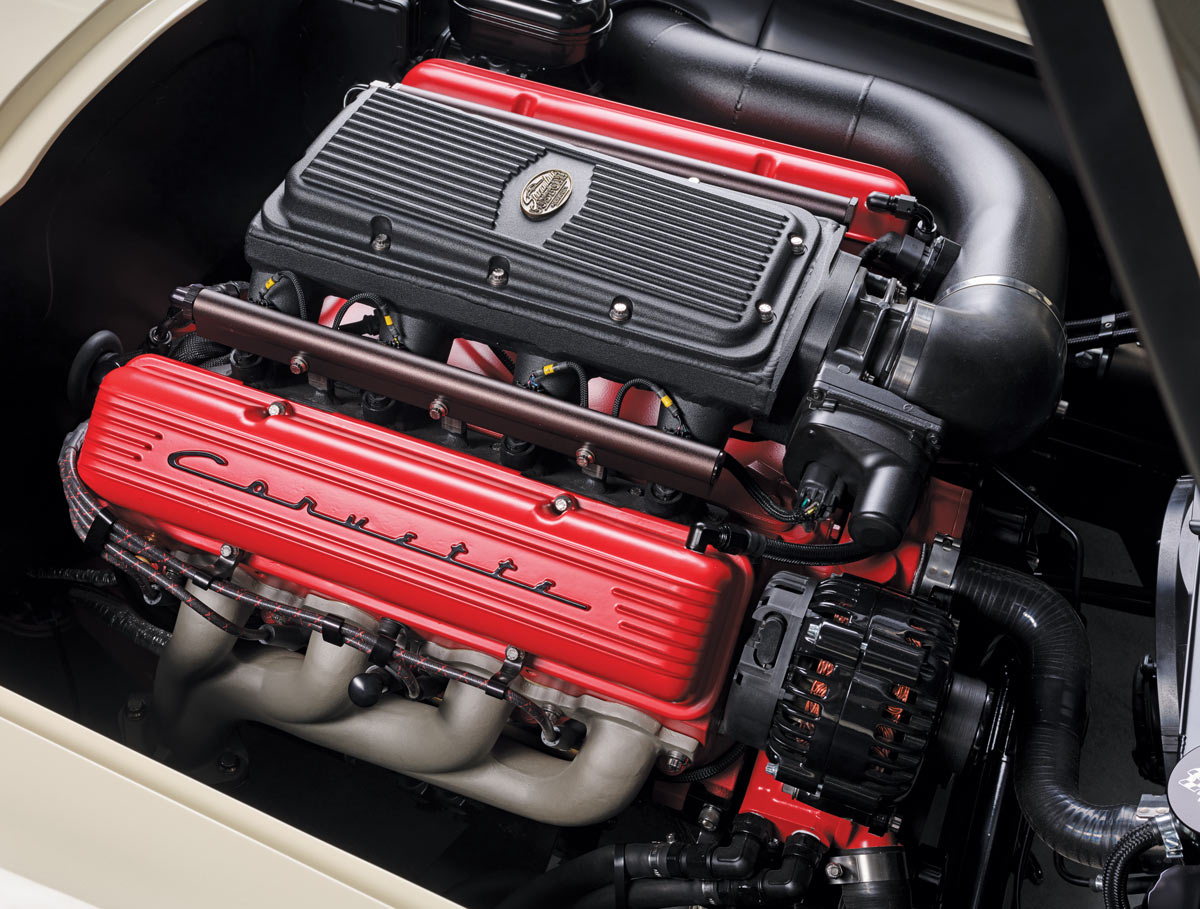
While at Streamline Custom Designs (SCD), a number of custom items were fabricated, such as the front and rear chin spoiler, front and rear bumpers, and a rear roll pan. Included in the mix is the Corvette big-block hood, providing the several inches of clearance required for the modified LS3 (6.2L) Corvette V-8 connected to a 4L70E trans. Note the custom sheetmetal intake manifold for the factory EFI topped with an LS Classics by Lokar big-box Rochester FI lid topped with the SCD logo; it adds amazing detail and is a packing plus. From here, the early 327 (seven-fin) valve covers (utilizing Delmo Speed Shop adapters), Lokar Performance vintage plug wires, and smooth cast 2-1/2-inch manifolds leading out to Billy Boat stainless steel side pipes are all in service. A Drive Junky serpentine belt system is also used. The cool air pick-up and filtering is a neat combination of an SCD-fabricated cold air tubing duct that grabs fresh air from a custom air dam located within three of the driver side body gills.
We realize that at first glance you may want to refer to this as a “white” Corvette, but that would not give the Corvette its due. The color is just a “bit outside” white as it is truly identified as Monroe Blonde (an SCD custom mix) of a PPG Envirobase paint. Before applying this distinctive color, SCD also performed all the necessary prep, including the bodywork.
Lying below this amazing-looking, ’66 Corvette is a Roadster Shop Fast Track chassis based on 10-gauge boxed framerails. The Fast Track chassis is designed for performance and utilizes C7 spindles (modern Corvette performance) teamed with Penske double-adjustable coilover shocks, a 1-1/4-inch splined sway bar, large-diameter control arms, 1-5/8-inch lower control arms, and 1-1/4-inch upper control arms. The rear is the Roadster Shop optional IRS with a 3.70 ring-and-pinion and Penske double-adjustable coilover shocks. Also included is a center crossmember with adjustable/dropout transmission mount and exhaust ports capable of handling 3-inch exhaust.

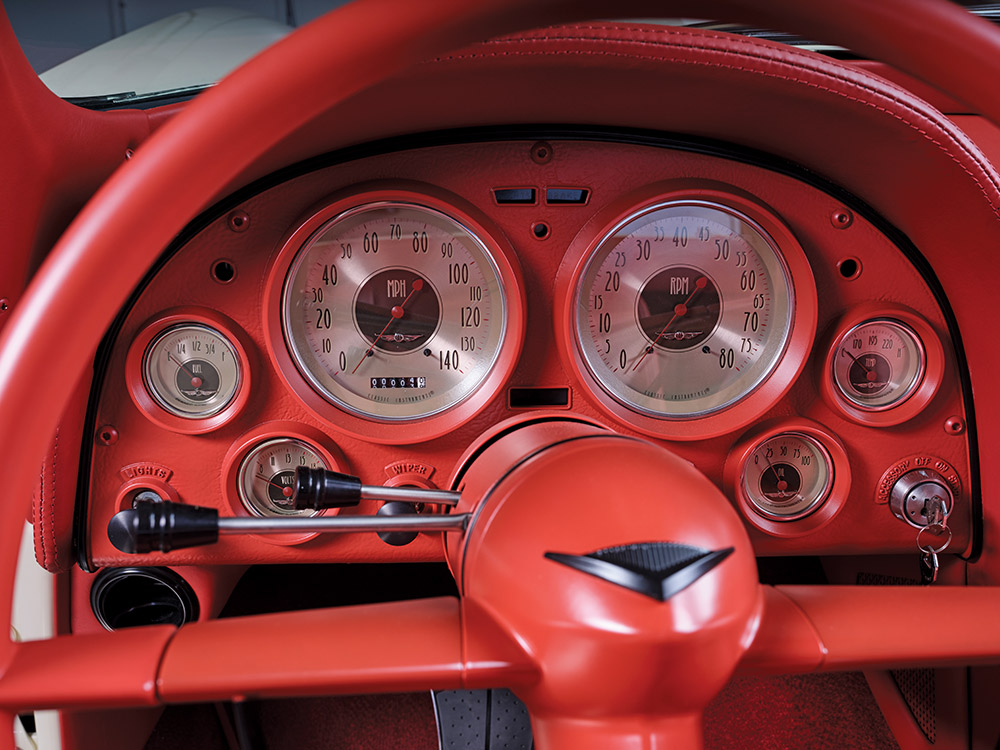
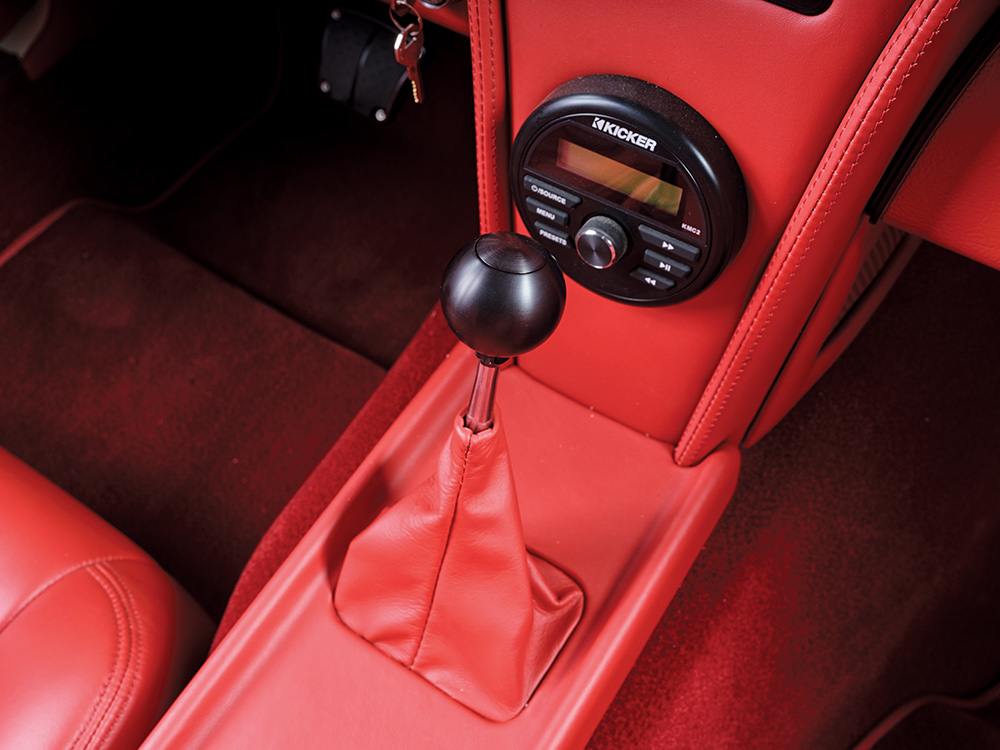
To enjoy maximum engine performance and road handling, one must be comfortable. Alex has enriched the C2 interior to rival any modern-day performance car with plenty of today’s components. The factory dash features significant modifications while retaining the dual cove look but is now wrapped in red leather. Encased in the traditional-appearing C2 dash are Classic Instruments brushed nickel gauges. The gauges, the Restomod Air A/C, and the remainder of the Corvette electrics are brought to life by an American Autowire kit positioned by the staff at Streamline. More interior appointments include a Flaming River column topped with a Speedway Motors modified Corvette ’53-54 wheel. The seating is a pair of Procar by Scat buckets modified by Seams Impossible in Hydes Leather brick-colored skins resting on red carpeting. Seatbelt Solutions supplied a pair of ’belts.
The ’66 Corvette, being part of the C2 family, has retained its popularity and will most likely do so for some time to come. And we can see why.