

 Photography by THE AUTHOR
he echoes of engines and the glossy pages of car magazines had always surrounded Lonny Moore. His father, Lynn, had spent a lifetime admiring classic cars, nurturing a particular fascination for the Henry ’32 Ford roadster. This passion wasn’t just a hobby, it was a legacy waiting to be passed down.


Lynn’s visit to Lonny’s house shortly after was nostalgic, filled with old stories and thumb-worn magazines featuring dazzling arrays of classic cars. Among these was an article about Steve Moal’s own ’32 Ford roadster, a car that Lynn had admired for years. Handing over these relics, Lynn shared his lifelong dream of owning a true Henry ’32 roadster—only, in his vision, it was always black, not the vibrant blue that now sat in Lonny’s garage.
Taking his father’s preference to heart, Lonny faced a dilemma. The roadster was already a beauty, a symphony of engineering and history on wheels, yet it wasn’t the black beacon of the past that his father had dreamed of. The decision was made; Lonny embarked on a meticulous restoration project.
The car was completely dismantled, a process that revealed every curve and contour of its historic frame. Lonny’s own shop, Moore’s Collision, became the revival ground. Butch Dysart, a master of metalwork, tackled the frame, ensuring every inch met their exacting standards. Lonny himself took over the finishing touches, sculpting the body lines back to their original glory before any paint touched the metal.
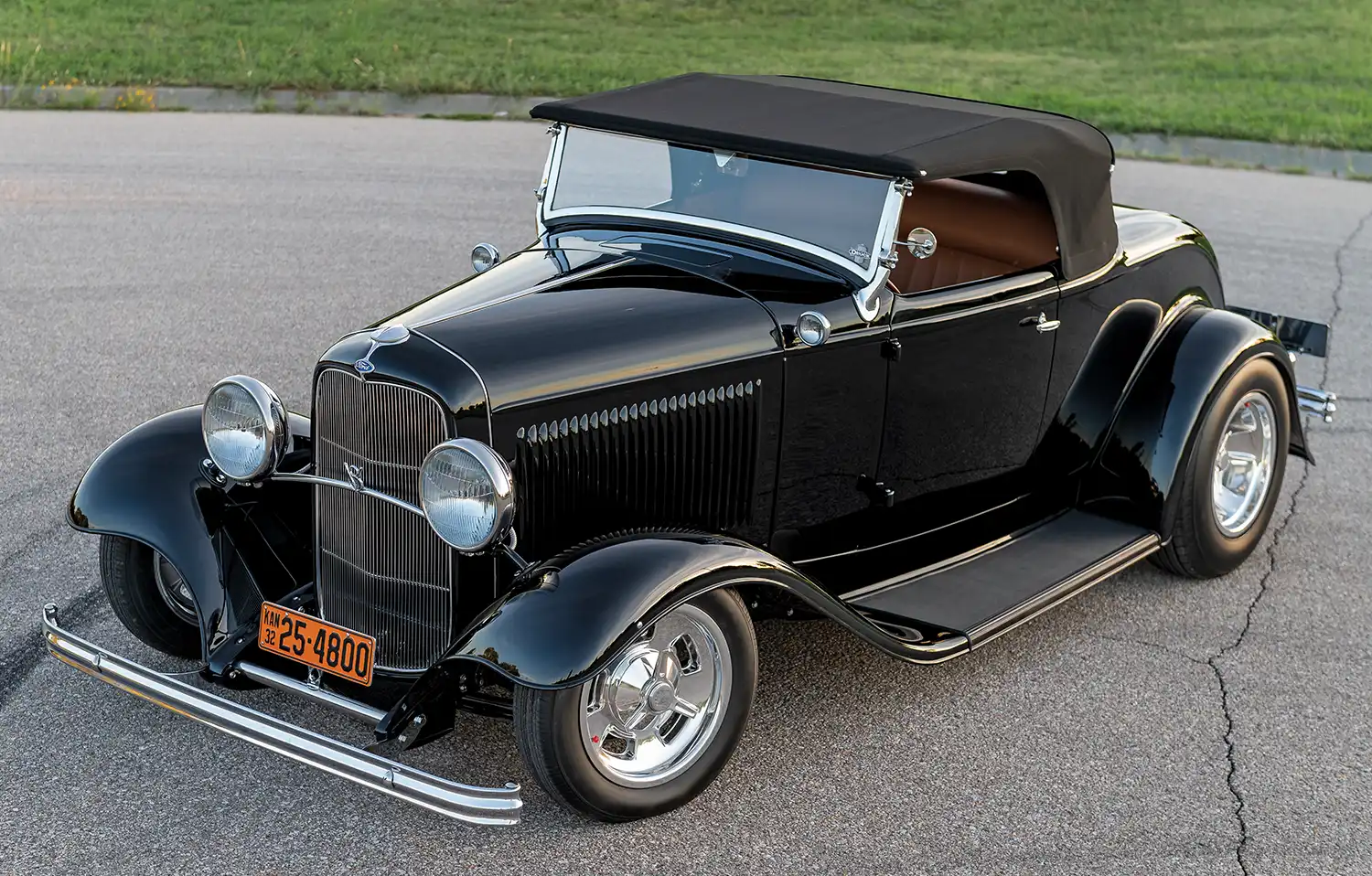
The choice of paint was deliberate, an homage to the classic era: Axalta 9900G single-stage black for its depth and intensity, followed by Axalta ’39 Lincoln Zephyr Green on the chassis and other components, blending traditional aesthetics with modern resilience.
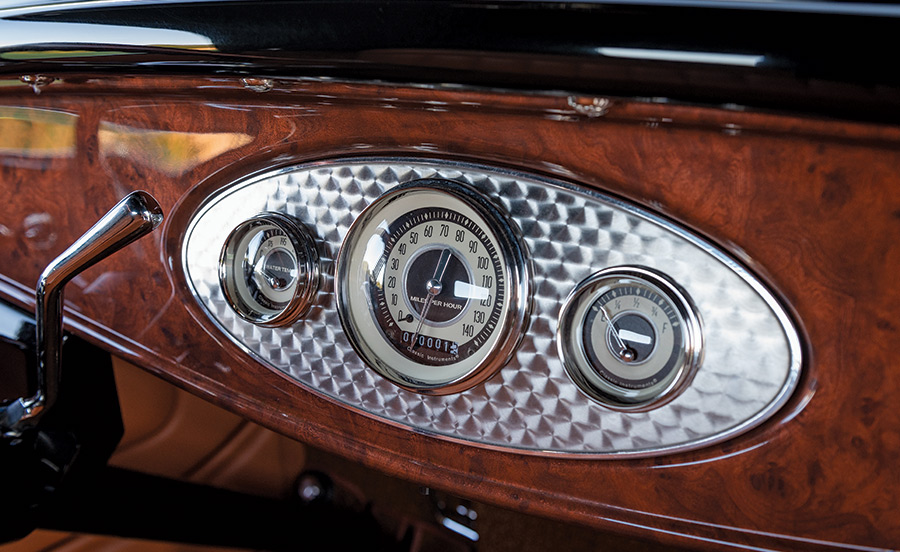
As the paint set, the Deuce roadster slowly transformed back into the masterpiece it once was—only now does it bear the personal stamp of the Moore family. The final touch was the interior. At Downey Interiors, Scott worked his magic, selecting Mercedes Haartz cloth and leather that complemented the luxurious and historic feel Lonny aimed for. This wasn’t just a car; it was a piece of art, a nod to both past and present. Scott then installed a Classic Instruments Maine Line Cluster gauge on the dashboard to give that classic look. The Juliano’s Banjo steering wheel was then mated up to the GM tilt steering column.


The day Lynn saw the restored Ford roadster, his eyes lit up with a mix of pride and nostalgia. The car not only represented a shared passion but had become a bridge between generations, a story of familial bonds strengthened through shared dreams and craftsmanship.
When Lonny took Lynn for a ride in the newly restored Ford roadster, the purr of the engine was more than just mechanical, it was a heartbeat, resonant with decades of history and love for the open road. The black paint gleamed under the sun, a shadow turned into an elegant silhouette racing against time. Lynn’s dream had been realized, not just in the color of the car but in the shared journey it represented.
In that moment, with the wind whipping past and the road stretching endlessly before them, father and son shared more than just a ride; they shared a legacy, reborn and restored, just like the ’32 Ford roadster.