
Modern Rodding TECH

InTheGarageMedia.com

1. Our goal was to take out the old Chevy rearend and install an upgraded 9-inch complete with a Heidts four-link suspension to modernize the ride of our ’56 Chevy wagon.
LEAF REMOVAL
We Upgrade a Tri-Five Chevy With Heidts’ Four-Link Rear Suspension
By Tommy Lee Byrd Photography by Brian Brennan
L

eaf springs are commonplace in the old car world. We’ve relied on them for more than 100 years but they’re not always the ideal platform for performance. In the case of this ’56 Chevrolet Nomad project car, it had a nice stance and already had a selection of aftermarket components, but the owner wanted to make big improvements. He commissioned Hot Rods by Dean (HRBD) to revitalize the suspension with a Heidts four-link rear suspension kit (PN RC-151-K).

The new suspension eliminates the leaf springs in favor of an adjustable four-link system, coilovers, and a sway bar. Additional options include a new 9-inch rearend housing, complete with pre-installed brackets. In addition to the rearend and suspension upgrades, this Nomad also received 12-inch Wilwood disc brakes and four-piston calipers, a huge upgrade from the original drum brakes.

The install process is intense for the casual car enthusiast. It’s not what we’d consider the average weekend project. You’ll need cutting tools, a good MIG welder, and a wide selection of hand tools to get the job done. Luckily, Heidts has taken the guesswork out of it and handled most of the challenging fabrication work.

Follow along as we follow Cody Barenz of HRBD as he installs the Heidts triangulated four-link rear suspension and gives this Nomad improved handling and ride quality. This classic Chevy is ready for the road once again!
tri five chevy heidts four link rear suspension
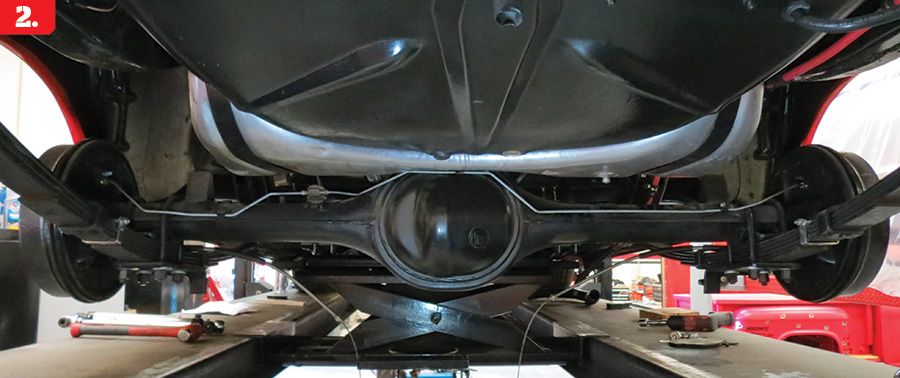
2. The starting point for this project is a mildly modified ’56 Chevrolet Nomad. The rear suspension has been upgraded with an aftermarket shock crossmember and QA1 shocks, but everything else is stock.
A picture of car parts
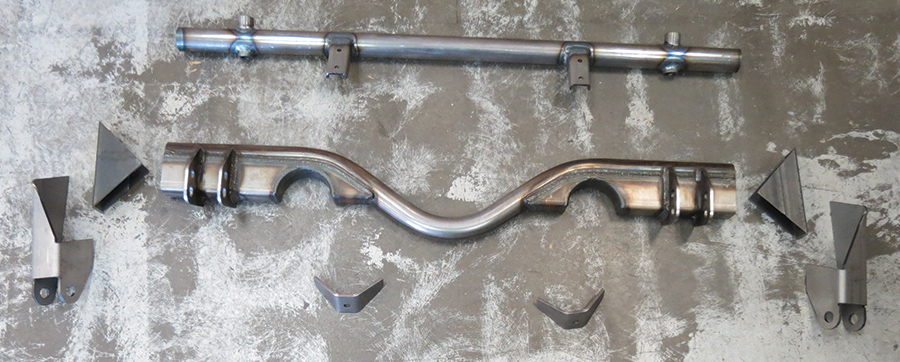
3. To upgrade the rear suspension, Hot Rods by Dean (HRBD) is installing a Heidts ’55-57 triangulated four-link kit (PN RC-151-K). The heart of the kit is the main crossmember, but you’ll see that it also comes with additional bracketry and a new shock crossmember.
 tri five chevy heidts four link rear suspension
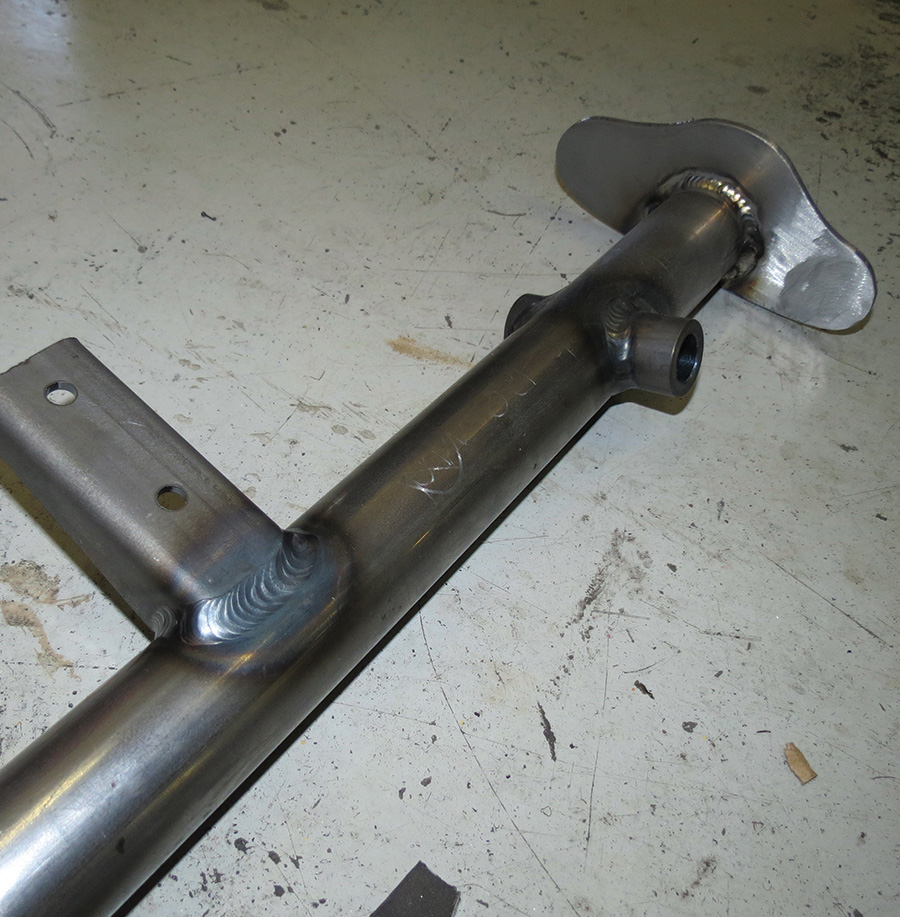
4. The main crossmember is comprised of round tubing, with extra strength coming from the rectangular tubing that is spliced in. The four-link brackets are pre-welded and feature two mounting locations.
A picture of a measuring tape measuring a car suspension
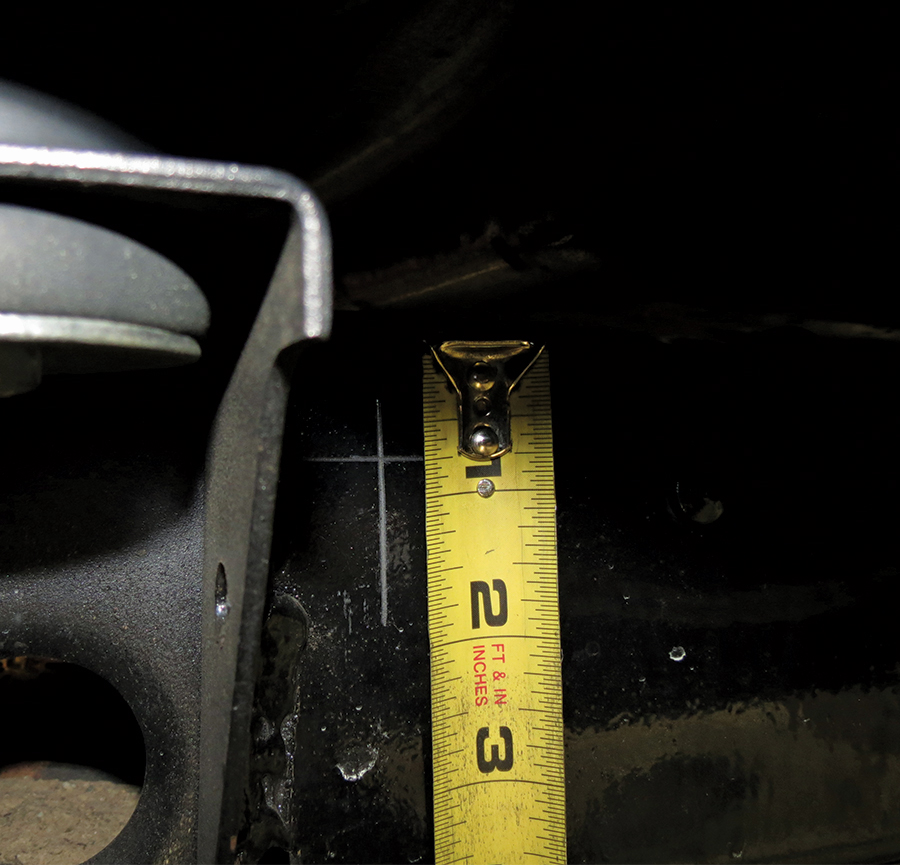
5. Before getting started, a few measurements are taken on the frame. According to the Heidts instructions, the crossmember is positioned 1 inch forward of the body mount and 5/8 inch from the top of the framerail.
Chevy Rear Suspension

6. HRBD cut off the existing exhaust system to provide adequate room for the new rear suspension system. Notice the crossmember has provisions for exhaust. You may need to trim a little off the sides of the crossmember for proper fitment between the framerails.
A picture of a square measuring the rear suspension
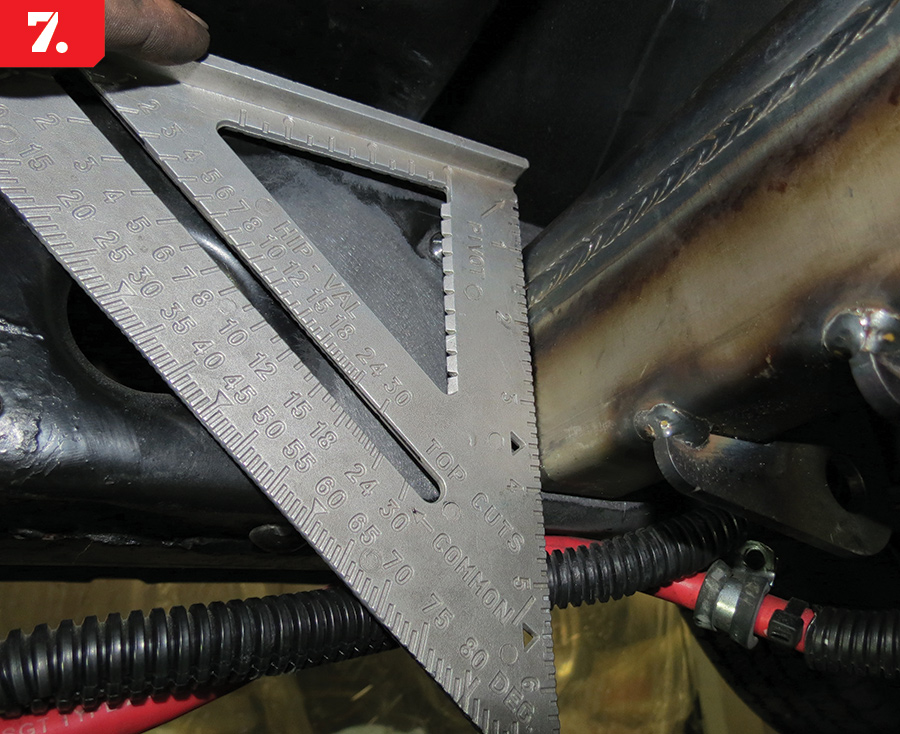
7. It’s important that the crossmember is installed squarely between the framerails. Simple tools and tape measures are sufficient for the task.
chevy rear suspension
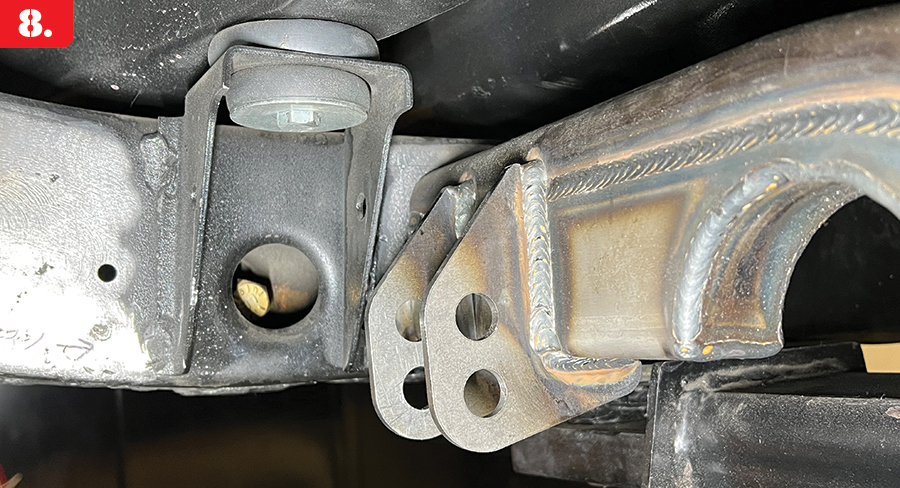
8. Jackstands or blocks can be used to prop up the crossmember. Notice the positioning, just ahead of the body mount and 5/8 inch down from the top of the framerail. The crossmember can now be tack-welded into place.
A picture of a rear suspension
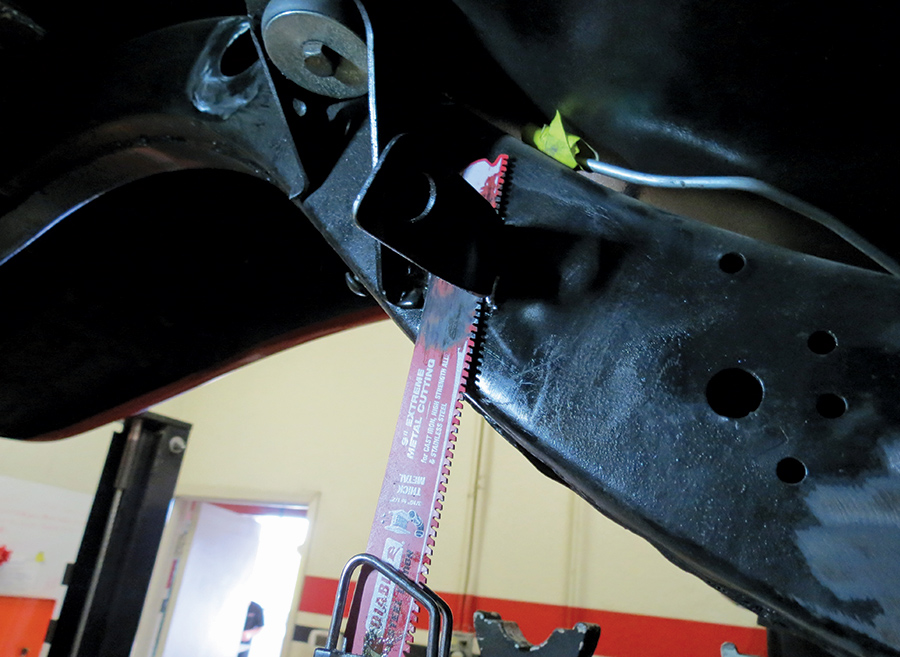
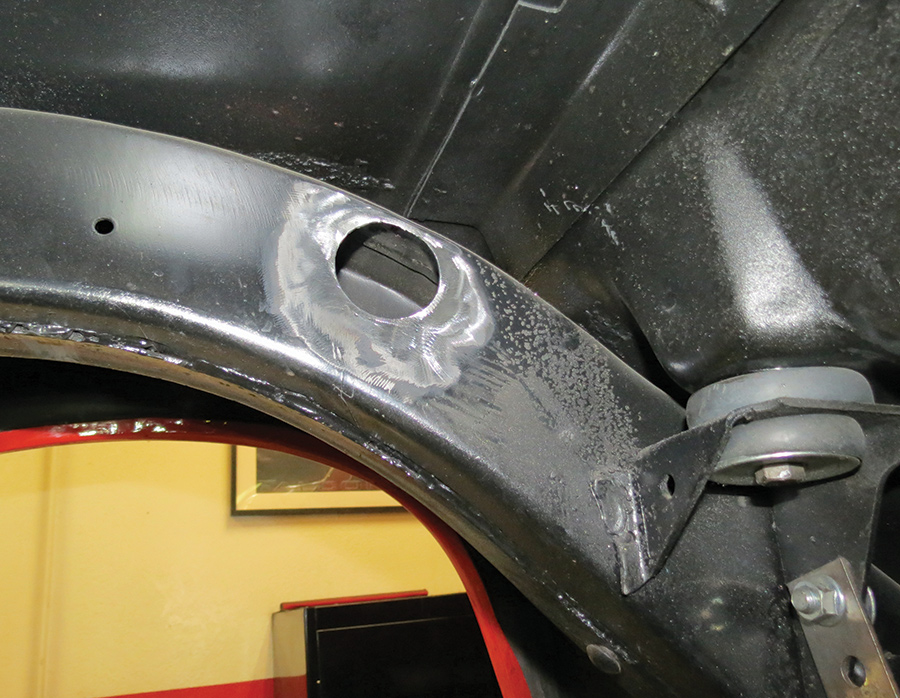
9. With the main crossmember test-fitted, it’s time to start modifying the framerails in preparation for the additional brackets. The kick-up area of the rear framerails needs to be smooth, as that is where the upper four-link brackets are located.
A picture of a rear suspension
10. Additionally, the existing shock crossmember is removed, in preparation for the Heidts unit, which is included in the kit.
Picture of a rear suspension
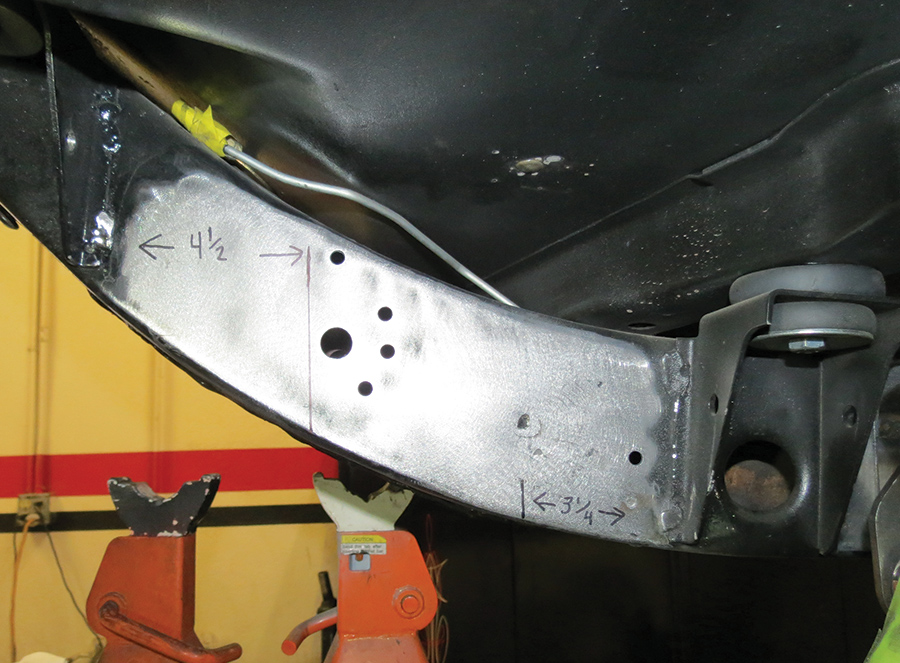
11. After smoothing the inner framerail, it was time for more measurements and markings to position the triangulated four-link brackets. The Heidts instructions call for 3-1/4 inches back from the “front” body mount and 4-1/2 inches ahead of the “rear” body mount.
A picture of being under a chevy suspension
12. Heidts offers the four-link rear suspension kit with many options, including a custom 9-inch rearend housing that’s available in 56-, 58-, and 60-inch widths.
A picture of car suspension
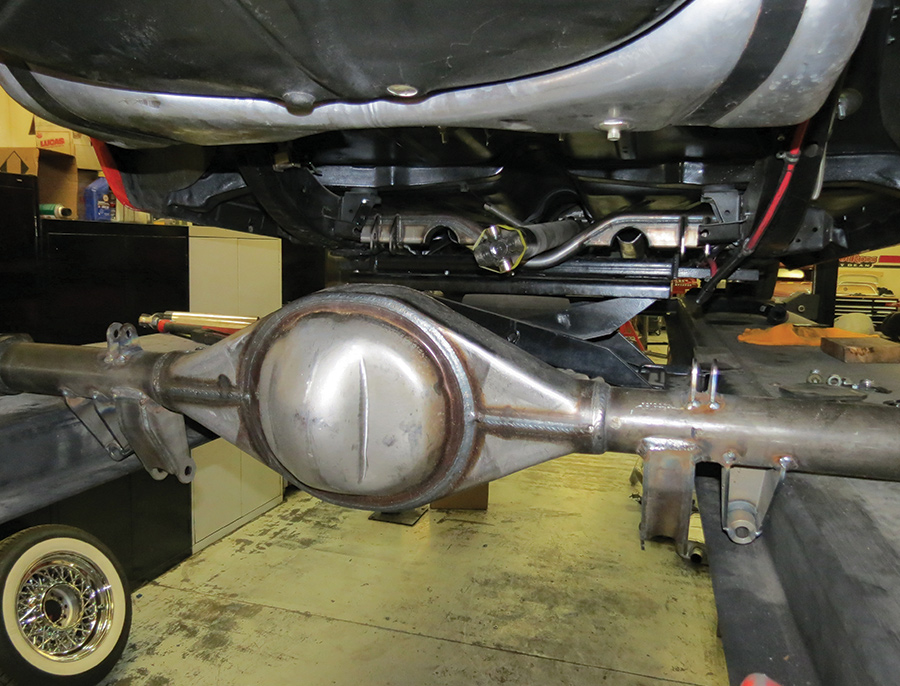
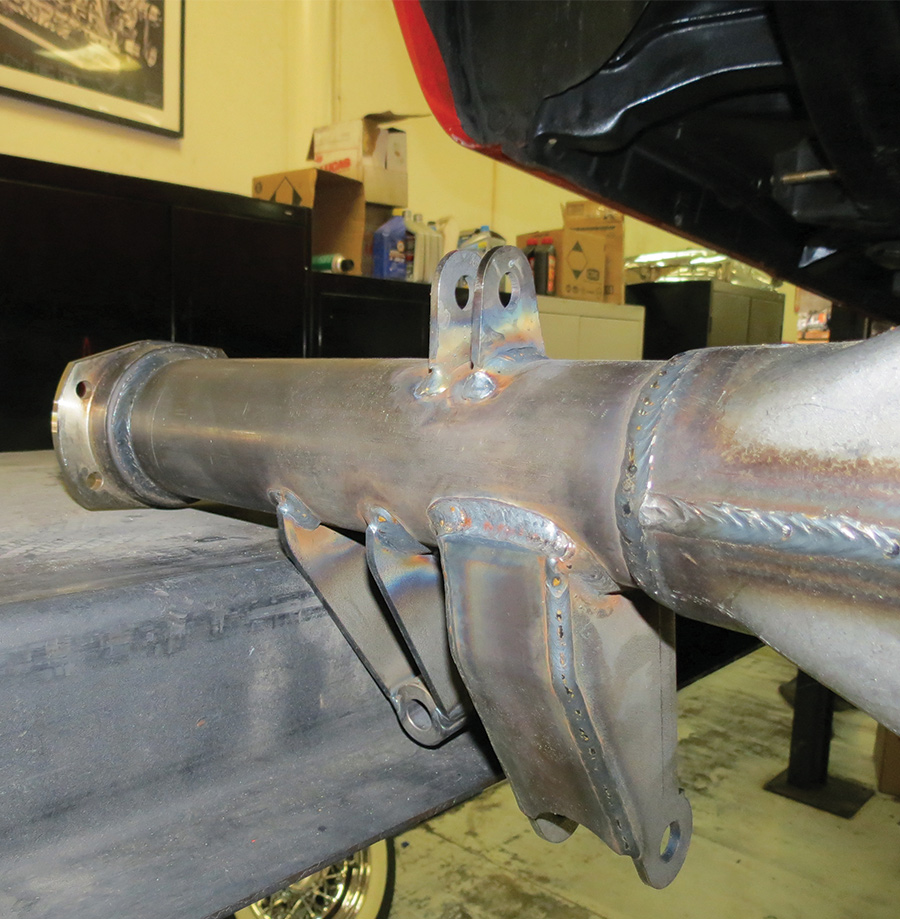
13. The beauty of adding the rearend housing to the order is the pre-welded brackets. This saves a lot of time, as it already has the upper and lower four-link brackets, the coilover brackets, and sway bar brackets welded.
picture of mechanical tools
14. Heidts offers the standard kit with painted bars, but we stepped up to the polished stainless steel bars. The bars are adjustable on one end, allowing for ample fine-tuning.
A picture of the bottom of the car
15. The 9-inch rearend housing is mocked up using jackstands, and then the lower link bars are loosely installed. It’s a good idea to wrap the bars in tape to prevent damage during mockup.
A picture of a side view of a chevy
16. With the lower bars bolted into place, you can step back and make sure the rearend housing is centered in the wheelwell. The bars are adjustable, but if there is a major discrepancy, it might be time to re-check the location of the crossmember.
A man measuring a four link bracket
17. Here Cody Barenz from HRBD uses a straightedge and measuring tape, as you’ll need to take some baseline measurements to determine the proper location for the triangulated four-link bracket. Heidts calls for 4-5/16 inches from the center of the upper hole on the main crossmember to the center of the hole on the triangulated bracket.
A picture of a ruler and a measuring tape measuring a rear suspension
18. The baseline measurements allowed the guys at HRBD to tack-weld the triangulated brackets into place. Now, with the straightedge lined up with the upper hole on the main crossmember, you’ll see the measurement of 4-5/16 inches.
A picture of a side view of a rear suspension
19. With the triangulated brackets tack-welded, the upper link bars can be loosely bolted into place. Using jackstands, you can move the rearend housing to your estimated ride height.
A picture of a rear suspended
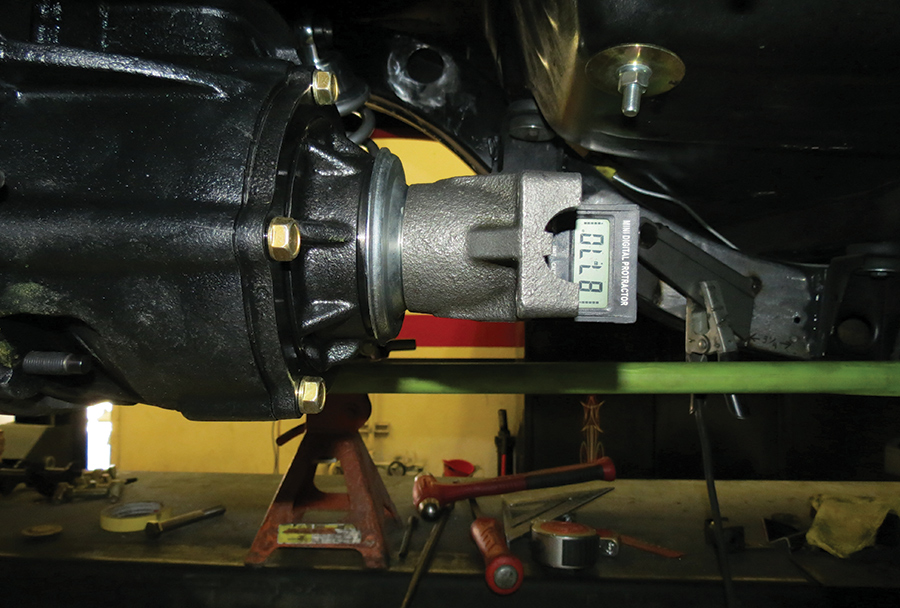
20. This Mini Digital Protractor is handy for checking pinion angle, and it’s showing we have about 2.30 degrees of negative pinion angle (pointing downward). Heidts calls for -2 degrees, so we can adjust the upper bars slightly and get the angle dialed in perfectly.
Picture of a rear suspension
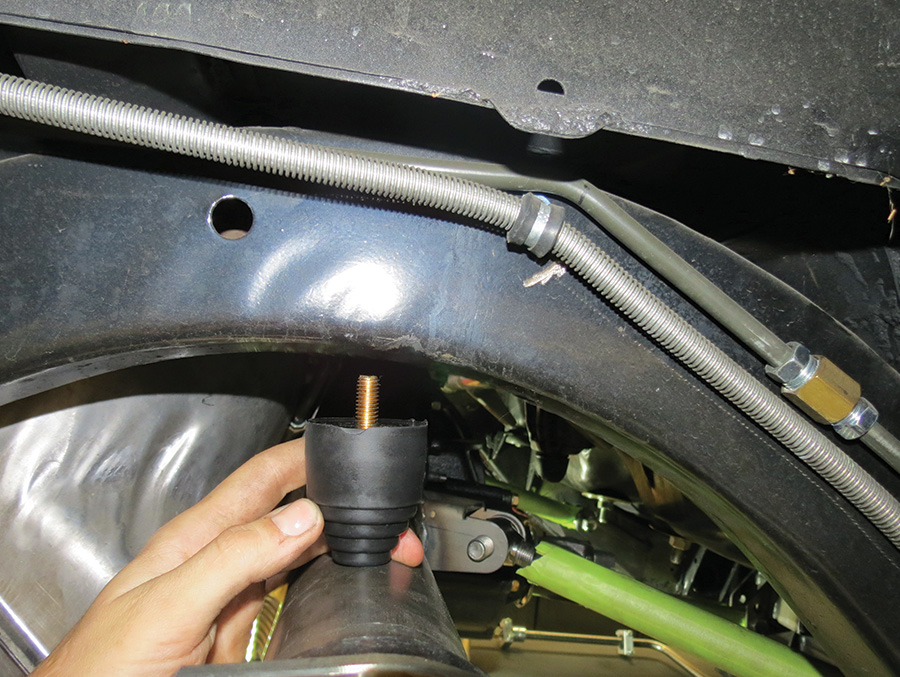
21. While the rearend is at the proposed ride height, it’s also a good time to mark the proper location for the supplied bumpstops. Brackets are provided and should be welded to the inner framerail. Then the bumpstop is threaded into the bracket.
Picture of a car part
22. The Heidts coilover shock crossmember features custom plates that attach to the framerails. This one also features brackets for the optional rear sway bar.
A picture of a chevy rear suspension
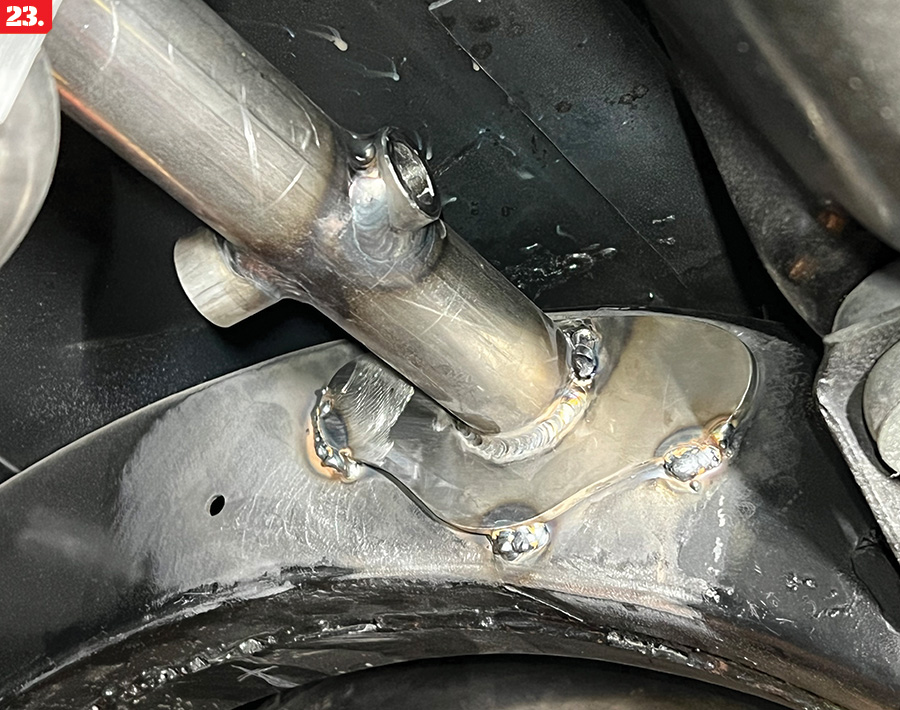
23. The coilover shock crossmember is now partially welded to the framerails. It’s important to mock up the coilovers and sway bar before final welding.
A picture of a car part
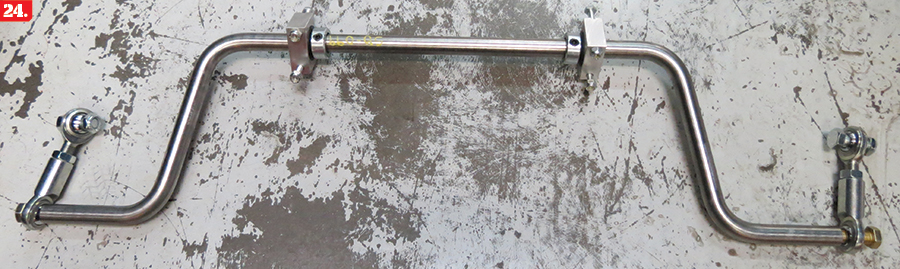
24. A rear sway bar is a suggested upgrade, as it stabilizes the rear suspension even more. Heidts offers it as an upgrade in the kit, and it’s a simple install.
Picture of being under a car
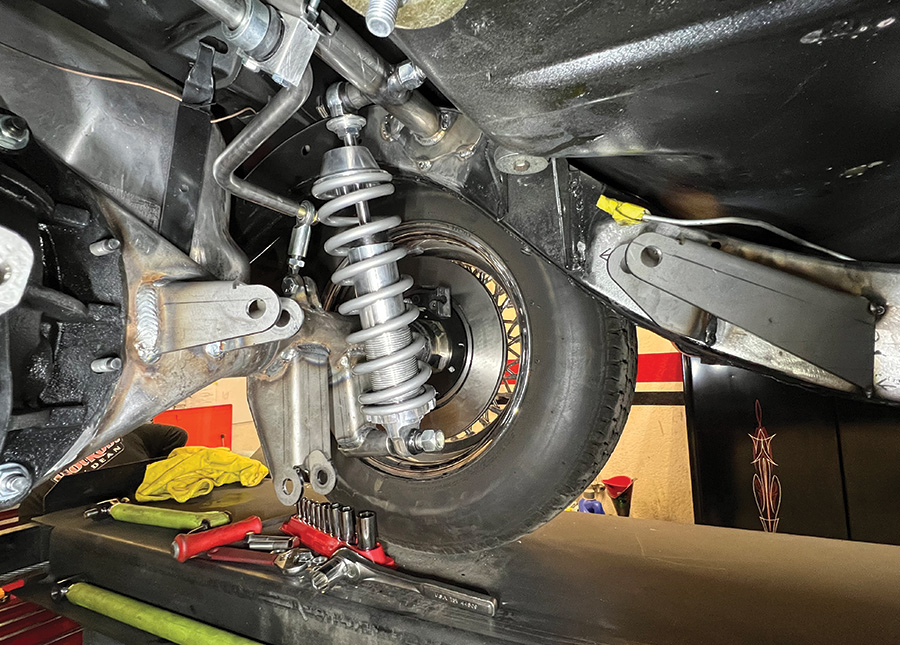
25. The Heidts kit also comes with every necessary nut and bolt to complete the install. The coilover is loosely bolted into place, as is the sway bar for mockup purposes.
a picture of a cross member
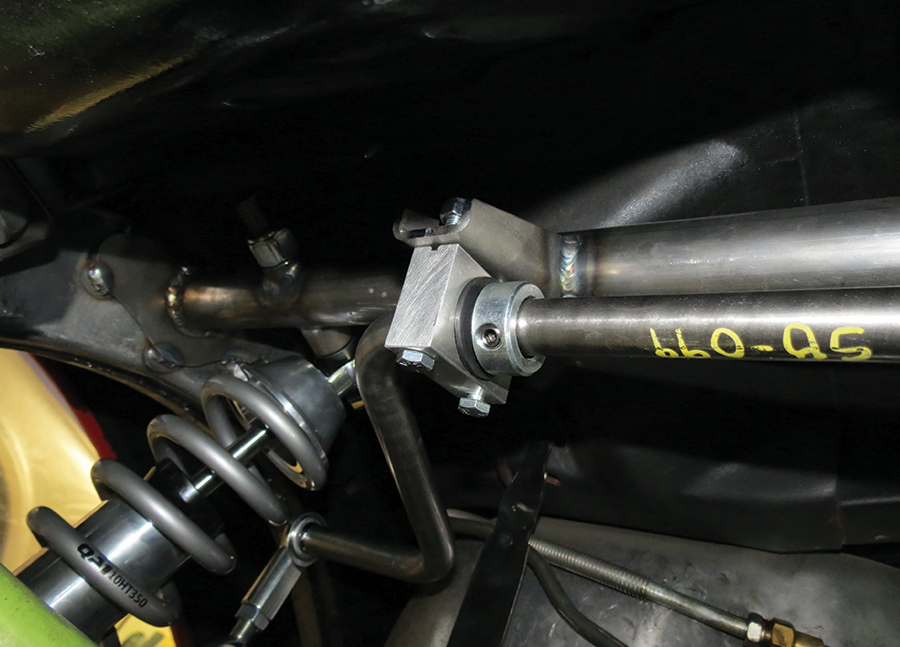
26. The sway bar bolts to the coilover crossmember using the supplied hardware and the supplied mounting block, bushing, and collar.
A picture of a car suspension
27. Heim joints are used on the sway bar endlinks, offering plenty of adjustability. Heidts suggests threading the ends all the way inward and then back them out approximately 3/8 inch. Only mount one side and wait until the car is resting on flat ground to connect the other side.
A picture of disc breaks
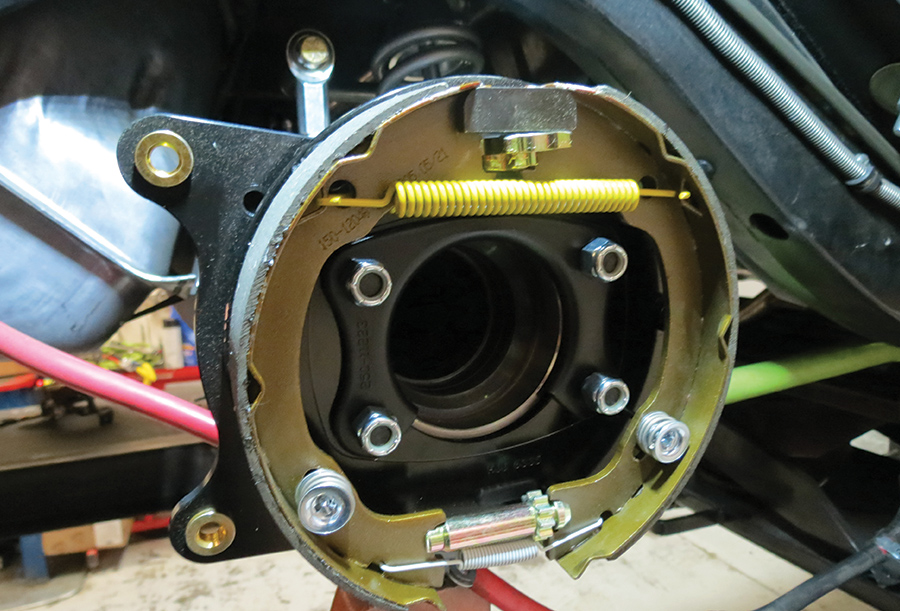
28. Another option on the Heidts kit is Wilwood disc brakes. It’s a simple bolt-on kit (PN 140-10511) designed for Big Ford rearend housings. It features an internal parking brake, seen here.
A picture of a retainer bracket
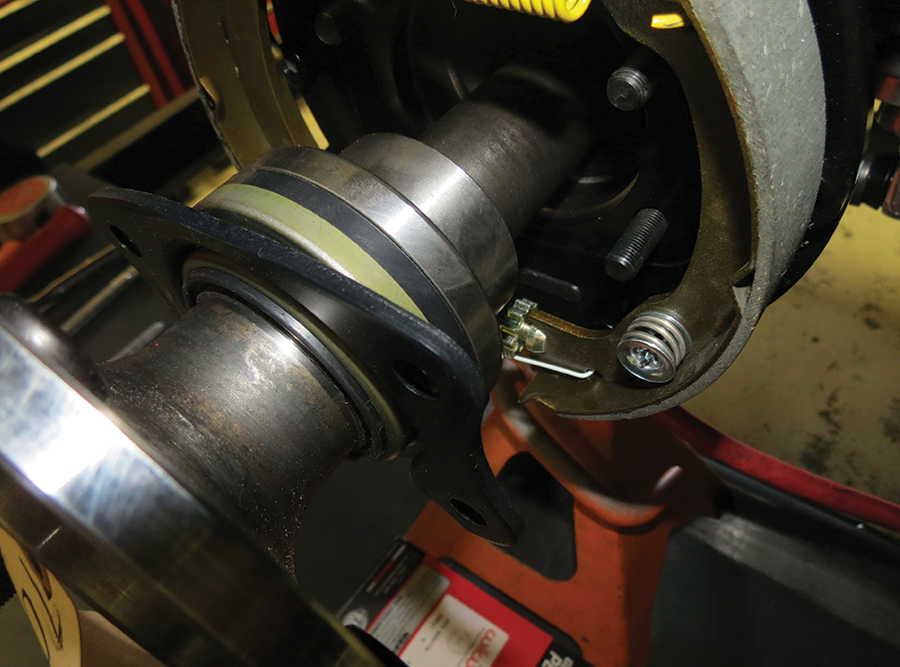
29. Wilwood’s retainer bracket is responsible for holding the backing plate and axle in place. It bolts to the Ford housing with the provided hardware.
 A picture of a rotor registration
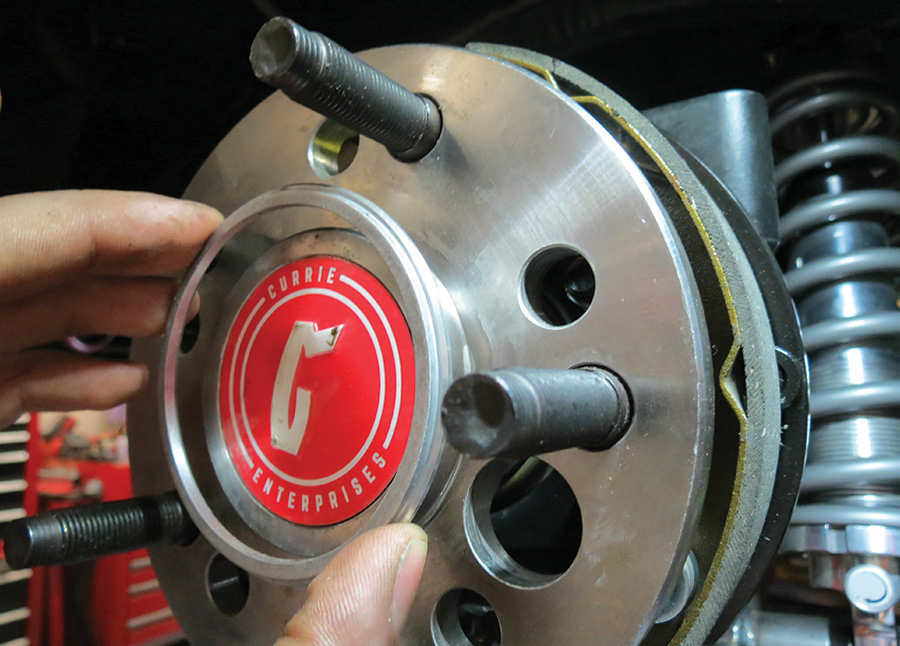
30. This rotor registration adapter slides onto the axle flange with the smaller side facing toward the brake rotor.
A picture of a vented rotors
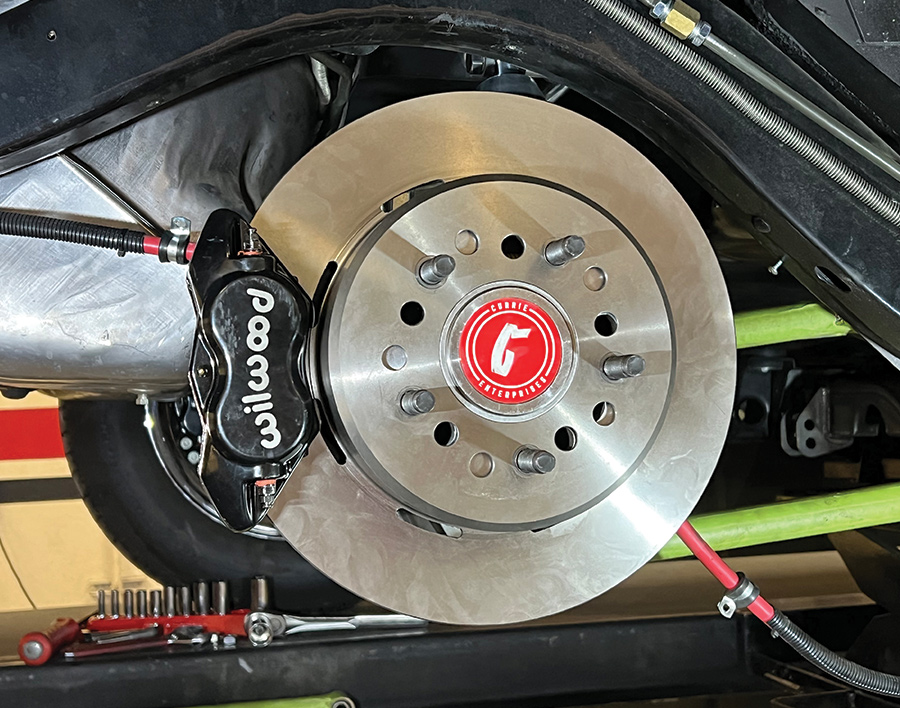
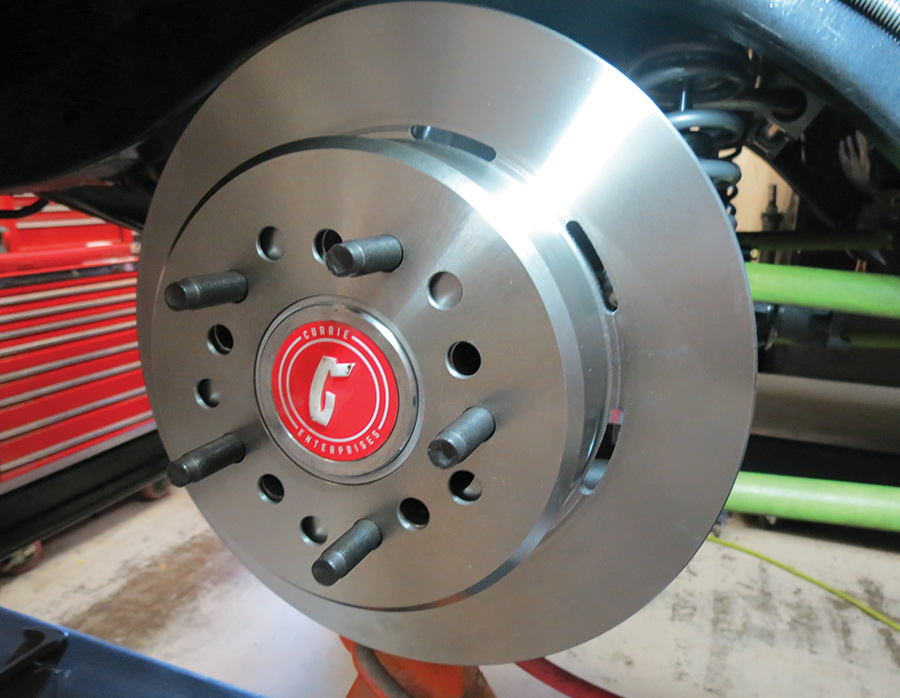
31. The Wilwood 12.19-inch vented rotors are drilled with multiple wheel bolt patterns, so align the proper holes and studs to slide the rotor into place.
A picture of a wilwood four piston caliper
32. Finally, the Wilwood four-piston calipers are bolted to the supplied brackets. The brake system is completed with new hard lines and flex hose. As with any brake system modifications, the system will need to be bled.
A full picture of the car suspension
33. With the suspension system bolted up, it’s time to completely disassemble it for final welding and paintwork. Once those tasks are completed, the parts are bolted together again for a final time. From there, final adjustments to ride height, pinion angle, and sway bar can be made to dial in this new Heidts rear suspension.
Heidts
(800) 841-8188
heidts.com
Hot Rods By Dean
(800) 362-9709
hotrodsbydean.com
Wilwood disc Brakes
(800) 388-1188
wilwood.com
Modern Rodding

VOLUME 4 • ISSUE 28 • 2023