

 Photography by Michael Christensen
here are homebuilt and shop-built hot rods, and the debate over which one is more “hot rod” will always persist. Before you is an excellent example of what can happen when one hot rodder’s talents are so broad that he can do everything himself at a level that exceeds the traditional homebuilt and shop-built hot rod. Steve Moal, of Moal Coachbuilders in Oakland, California, is a remarkable homebuilder and professional shop owner. Let’s take a look at his personal ride, a classic-style 1932 Ford highboy roadster with just the right amount of personal touches and incredible engineering. It is the ninth in a line of “Roadchamp 32s.”

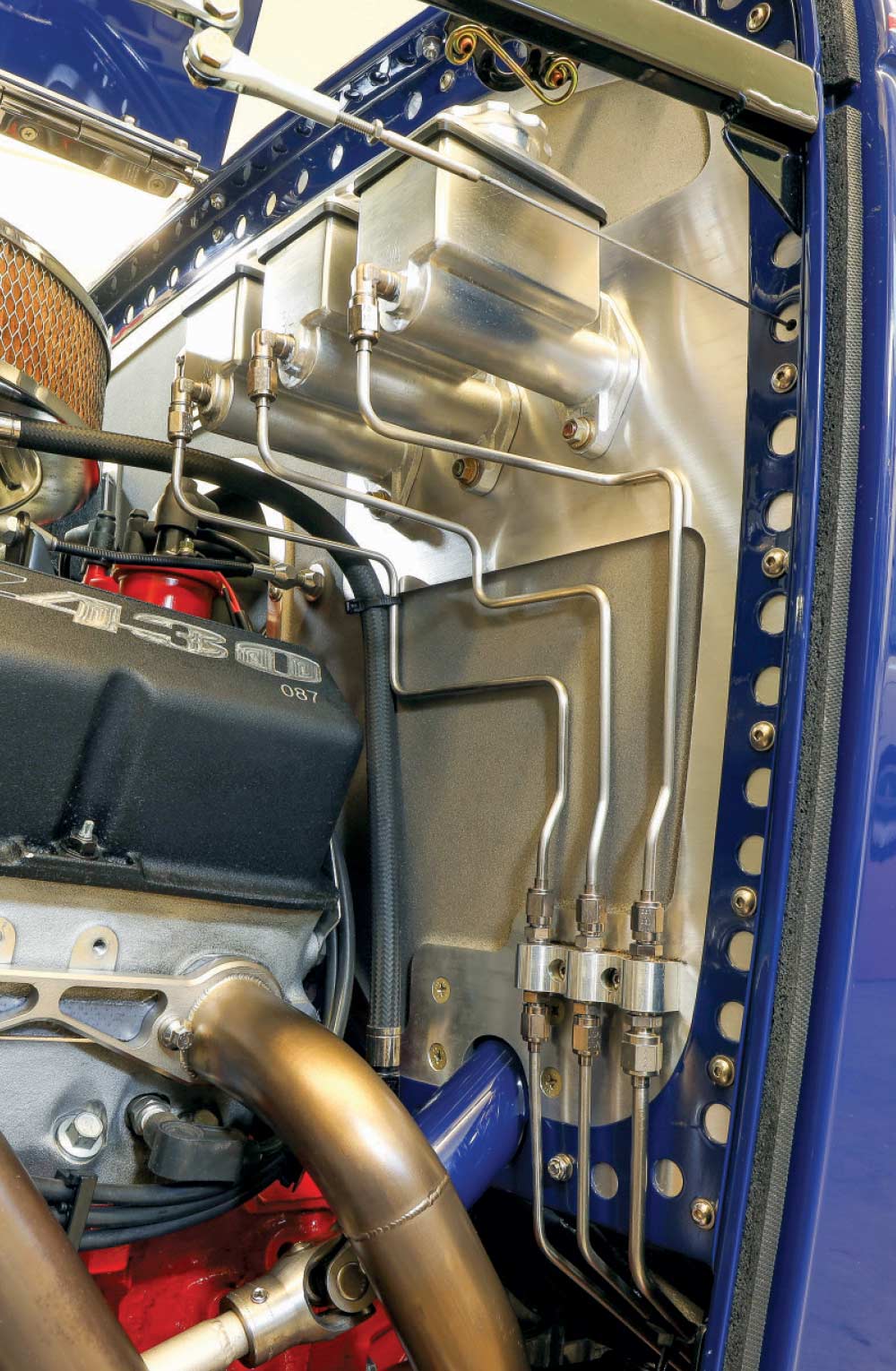
The chassis is constructed around a Super Bell drilled-and-polished aluminum 4-inch drop I-beam axle, featuring a Moal-based torsion bar suspension at both the front and rear. The spindles are early Ford “round” units, while the shocks are from QA1, paired with a 12:1 quick-steer power box and an Ididit steering column (more on that later). The rear suspension employs more Moal craftsmanship, with a four-link plus torsion-bar setup, QA1 shocks, and a Panhard bar. Braking is managed by the omnipresent Wilwood disc brake system, with 12-inch front and 11-inch rear rotors, Dynalite four-piston calipers, and vented rotors. The Moal Roadchamp “hanging” pedal system operates the brake and clutch pedals with hydraulics supplied by Wilwood reservoirs—one for the front brakes, one for the rear brakes, and another for the clutch. The rearend is based on a Moal custom-built Ford 9-inch with 3.73 gears and Currie axles. The ET Wheels are 6.5×15 in the front and 10×17 in the rear, mounted with Goodyear RSA tires, measuring 185/60R15 in the front and P255/60R17 in the rear.

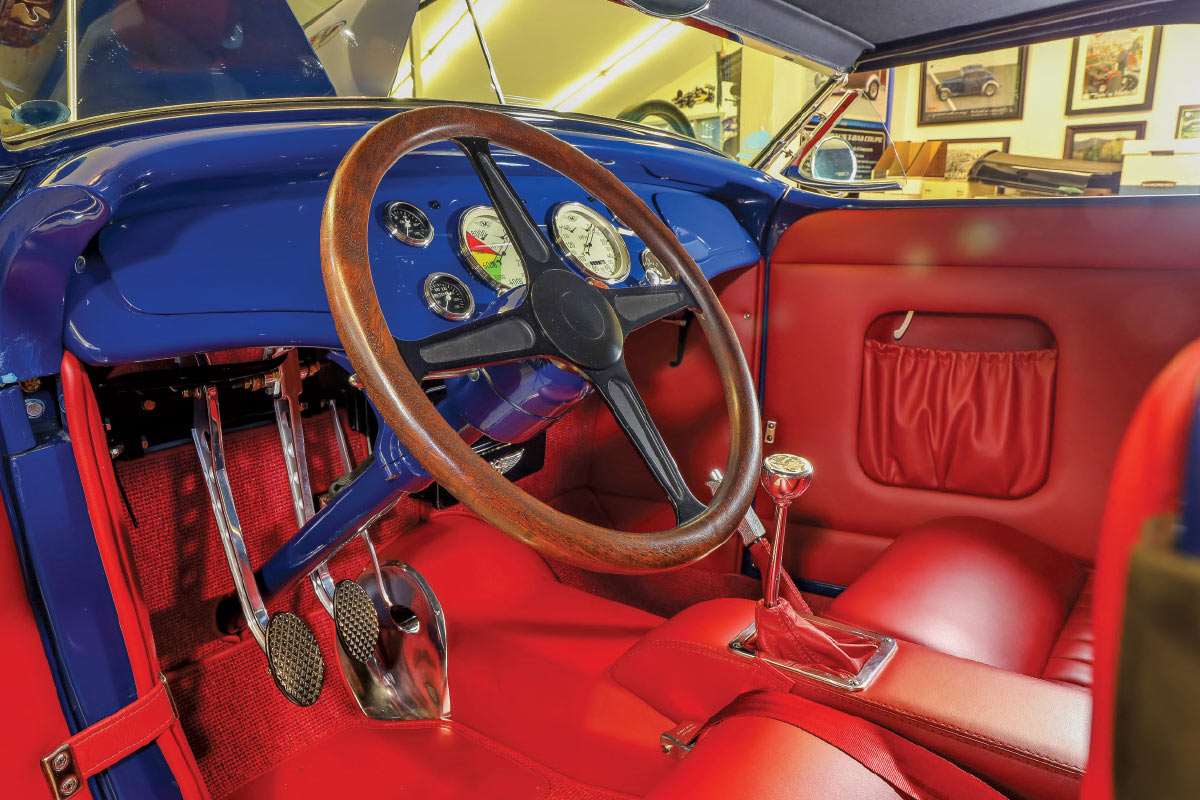

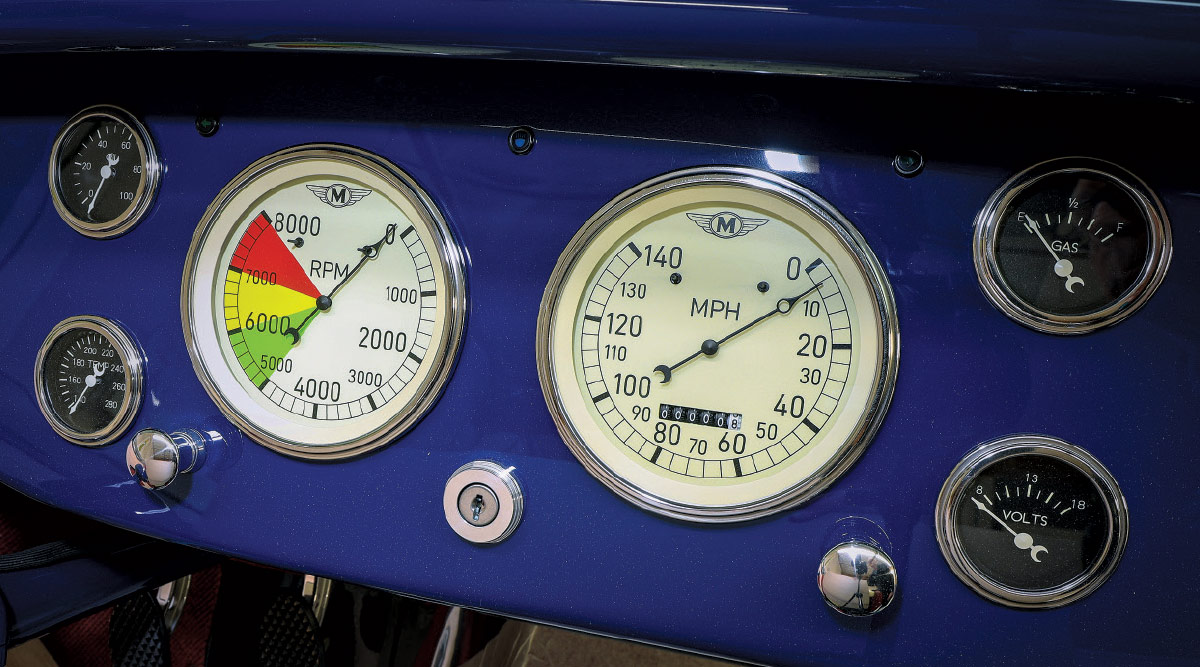
The interior features a bench seat with a center divider that also surrounds the shifter, covered in red leather and equipped with aircraft-style seatbelts, all crafted by Sid Chavers of Sid Chavers Fine Auto Upholstery. The Moal-built dashboard includes two gloveboxes and custom instrumentation from Classic Instruments’ custom shop. The oil, water, gas, and volt gauges have a traditional hot-rod style (black face with white lettering), but the speedometer and tachometer stand out. (Where did Steve come up with this gauge layout? He was influenced by the 1930s vintage Auto Union Grand Prix race cars that had a similar-looking gauge face. These same cars influenced the custom grille with holes drilled into the vertical bars, hundreds of them, giving the roadster its unique forward appearance.) The speedometer (140 mph) and tachometer (8,000 rpm) rotate clockwise but note where the “0” mark is positioned (upper right, 1 o’clock)—it’s different from what we’re used to. Additionally, while tachometers typically have a “redline,” this one features an interesting transition from “green” to “yellow” and finally to “red.” Bringing the 1932 Ford roadster’s electrics to bear is a wiring system handled while at Moal’s shop. The Ididit steering column is topped with a custom Moal four-spoke wooden wheel—ala Sprint Car style.



Additionally, he drives his Deuce highboy roadster over 10,000 miles each year. We don’t have room to list all the major builds from Moal Coachbuilders. Still, it’s fair to say that if you’re a dedicated hot rod magazine reader, you’ve seen many of his cars on the covers and inside feature stories of multiple national magazines. These cars have won awards from coast to coast and are admired and appreciated across the Atlantic. Can’t wait to see the next Roadchamp.