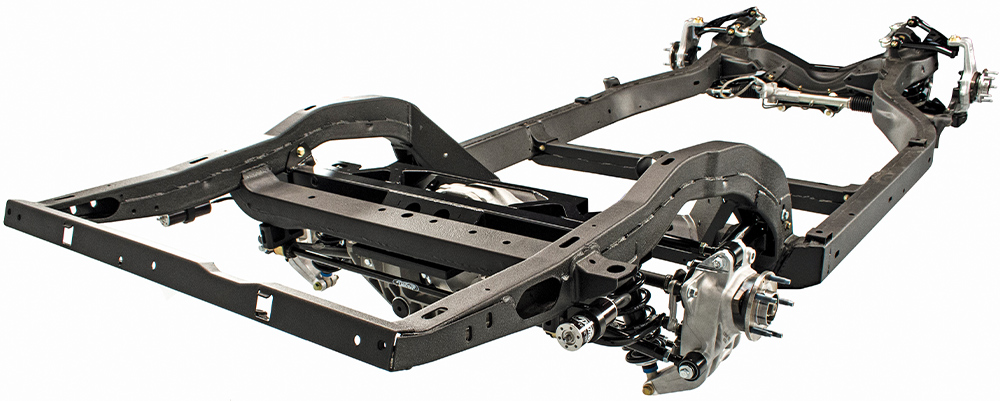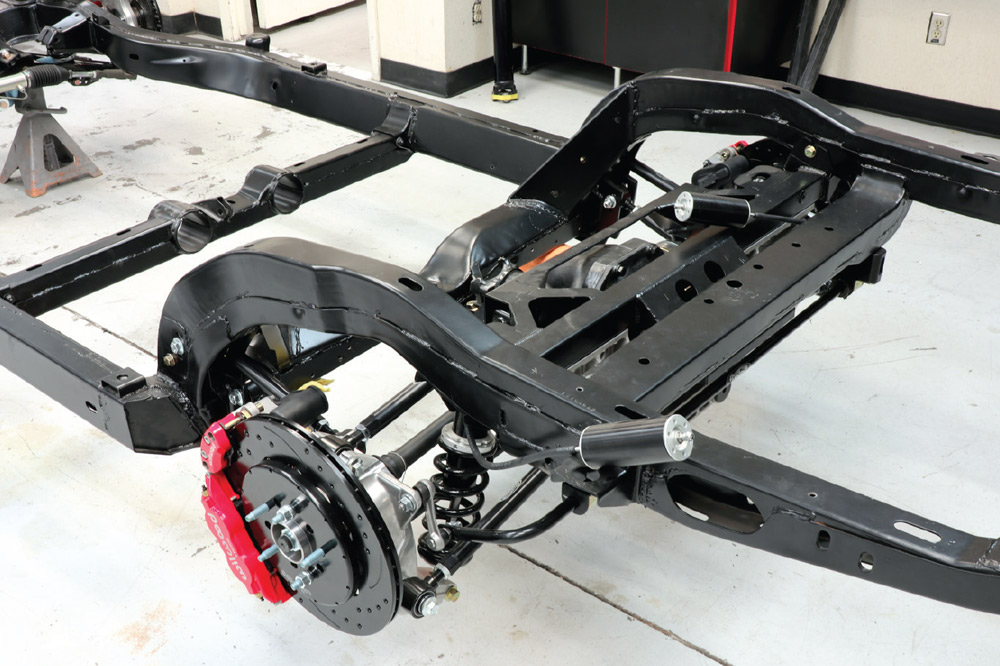


1. The Detroit Speed DECALink for our C3 Corvette (1971) supplies a substantial number of components, and to this you will need to add your third member as well as braking and the appropriate lines.

Part 2: We Complete Our C3 Corvette’s Suspension Upgrades With Detroit Speed’s DECALink IRS
 Photography by Brian Brennan
e’re back in Phoenix at Hot Rods by Dean for the next part of our C3 Corvette project: the rear suspension and brakes. In our last visit, we installed Detroit Speed’s SpeedRay coilover front suspension and rack-and-pinion steering systems, along with a big set of Wilwood brakes. We’ve returned to both companies for the rear, with Detroit Speed’s DECALink independent rear suspension and matching rear Wilwood brakes, including an electronic parking brake.
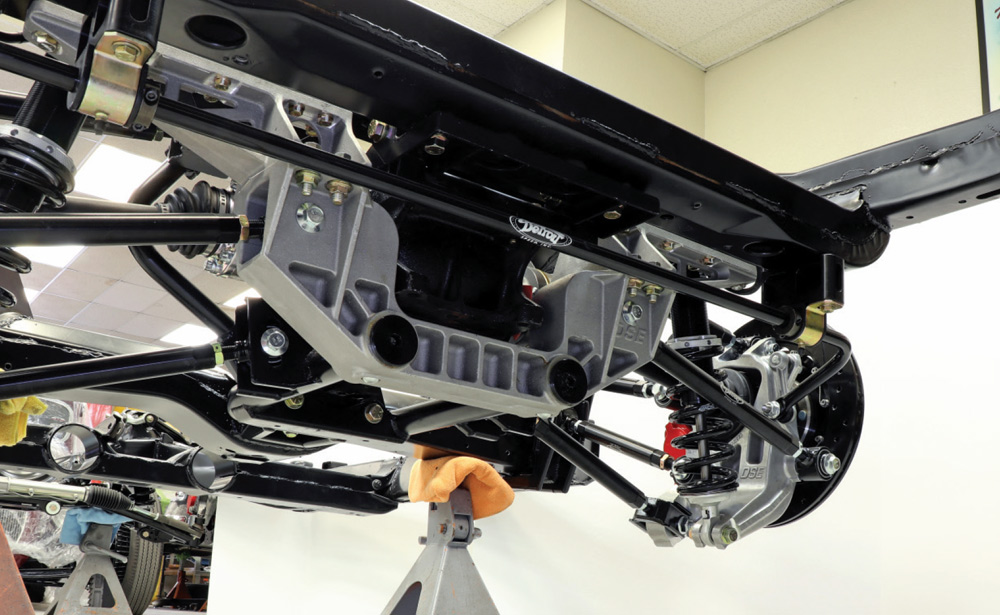
The suspension is the core of the issue, and like the frontend conversion, replacing the C2/C3’s transverse leaf springs and three-link axle positioning with the DECALink’s 10-point independent design and unique geometry promises major improvements not only in cornering and handling but also in ride comfort. This is because all the lateral and trailing links, as well as the toe links, can be adjusted, making camber and toe adjustments relatively straightforward. Even the rear antisquat geometry and roll-center height are adjustable—and in the case of our project system, it features double-adjustable coilovers, too.
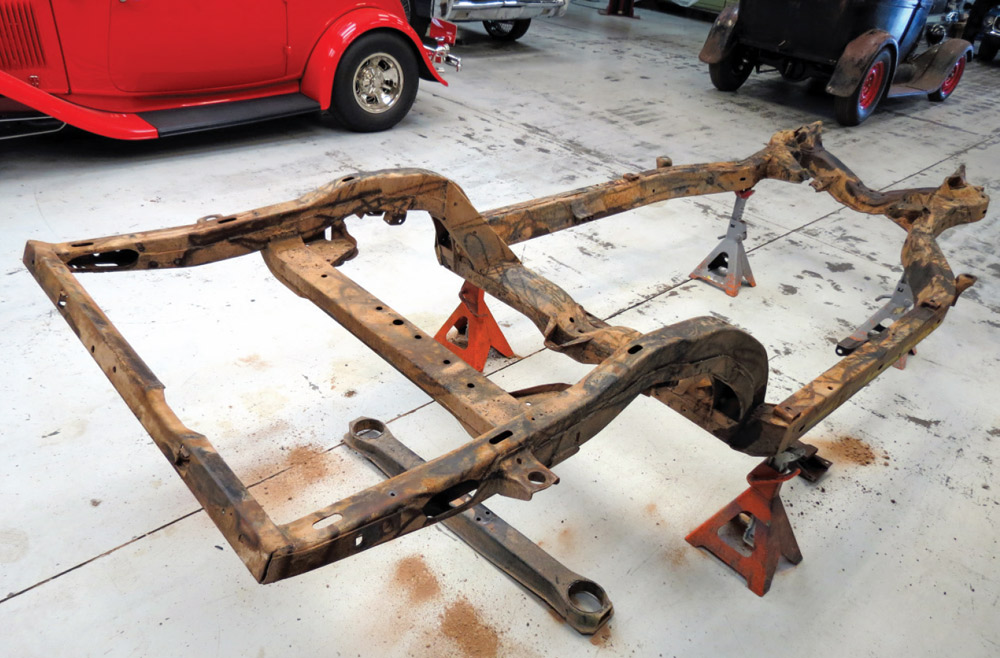
Another important note: In the stock rear suspension design, used from 1963-82, the large, thick half-shafts—connected via U-joints at both ends—effectively acted as upper control links, which worked well enough in corners but not so much for comfort. That has all changed with the DECALink setup, as the 10-link design relieves the half-shafts of that burden. There are no U-joints anymore, since CV joints provide a greater range of motion.
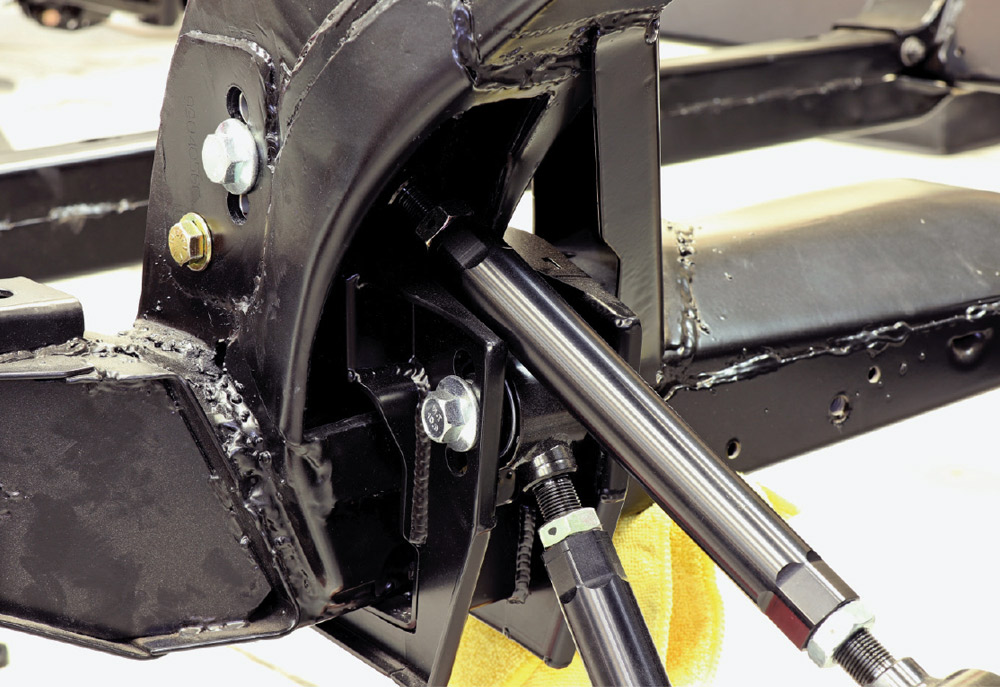
It all contributes to a customized driving experience that better balances performance and comfort. The last time we visited Detroit Speed’s website, there were six versions of the DECALink, differentiated by the type of damper and the strength of the axle shafts. Regardless of the specifications, it’s important to note that installation involves a fair amount of cutting and welding, which includes a steel upper mount, a lower aluminum cradle, and mounting plates for the trailing arms and more.
In short, it’s a project suited for more experienced DIYers or one best left to the professionals, which was our choice. Also, Detroit Speed says the system can be installed with the body in place, but from what we’ve seen of the installation, that seems like a masochistic endeavor. Given the access needed for some of the cutting and welding, it’s much, much easier to do with the body off the frame. Trust us on that.
A few more notes: The DECALink system fits C2 and C3 models, but when used with a C2, a couple of clearance holes must be drilled in the body. Additionally, the rearend centersection can be reused on 1965-79 models, but there were differences in the 1980-82 models that make their centersections incompatible. Fortunately, sourcing an earlier-model centersection is easy. The crossmember for a 1968-79 model will also be needed with that swap.
We still have a long way to go on our Corvette project, but with the front and rear suspension completed, our restored and modernized chassis is ready to accept the powertrain, and we can’t wait to get started. Stay tuned!