

 Photography by Tate Radford
ince the beginning of hot rodding (or roughly the same length of time Brennan has been involved), most enthusiasts have focused on improving their vehicle’s performance. Their typical goals include more powerful engines, better suspension, and improved brakes. For Colin Radford of Radford Auto, these are also his goals and the reasons behind the modifications to his 1965 Ford Mustang fastback. So far, we’ve followed the installation of the new front suspension from Classic Performance Products. Last month, we showed how he assembled a completely new fabricated 9-inch rear axle assembly from JEGS. This time, we caught up with Colin as the ponycar’s rearend received all-new suspension components.
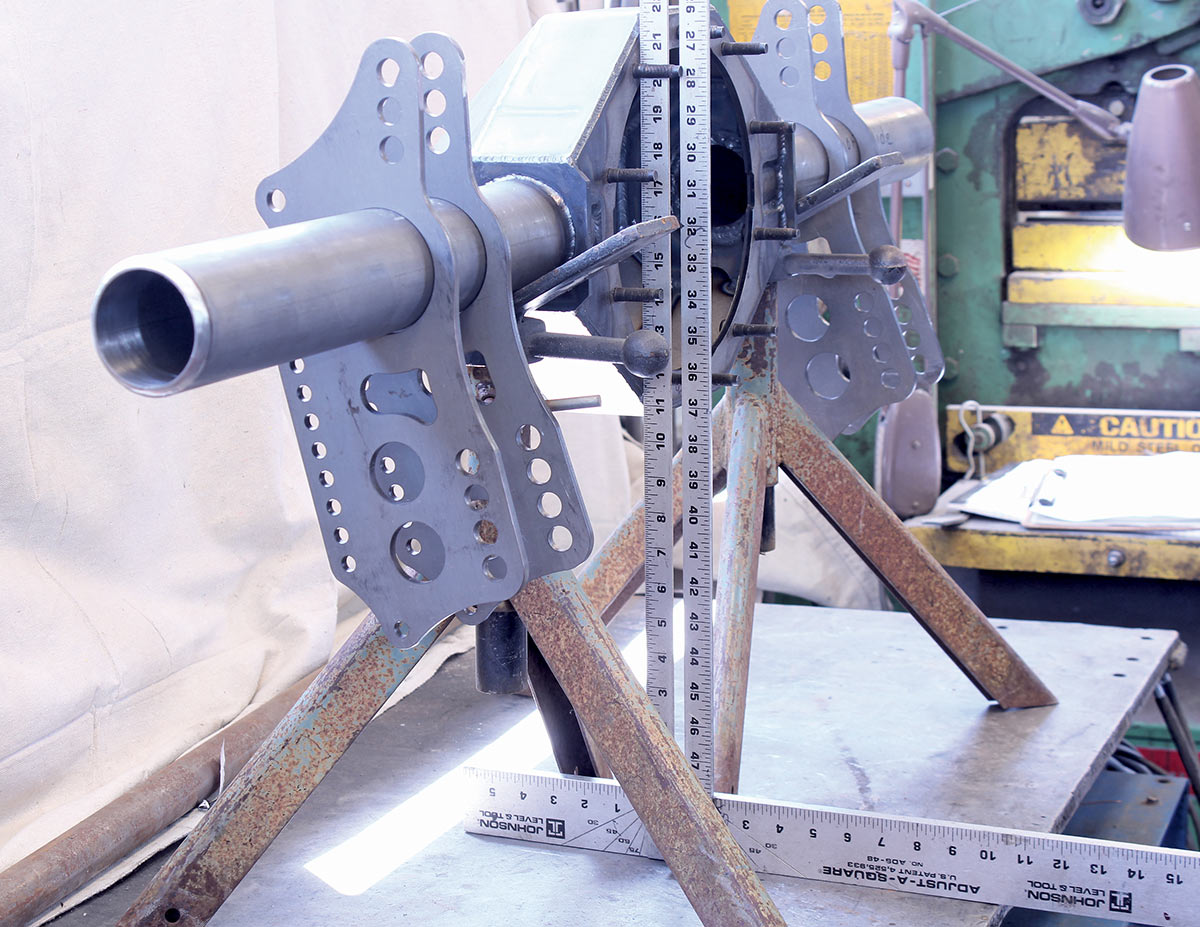
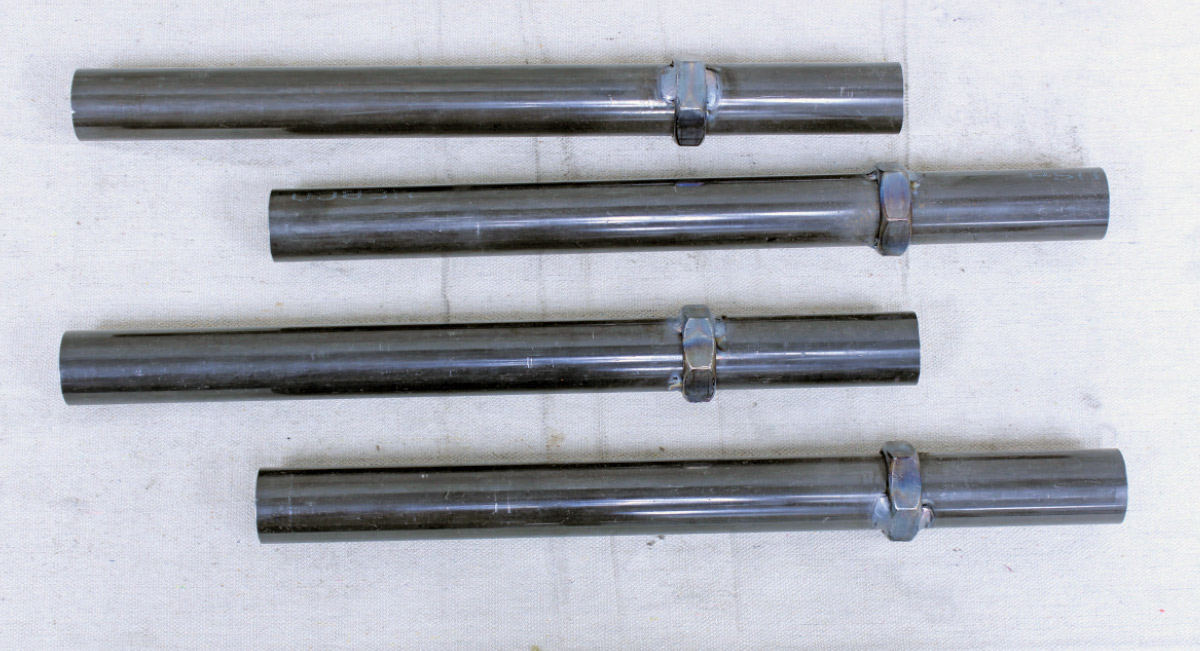
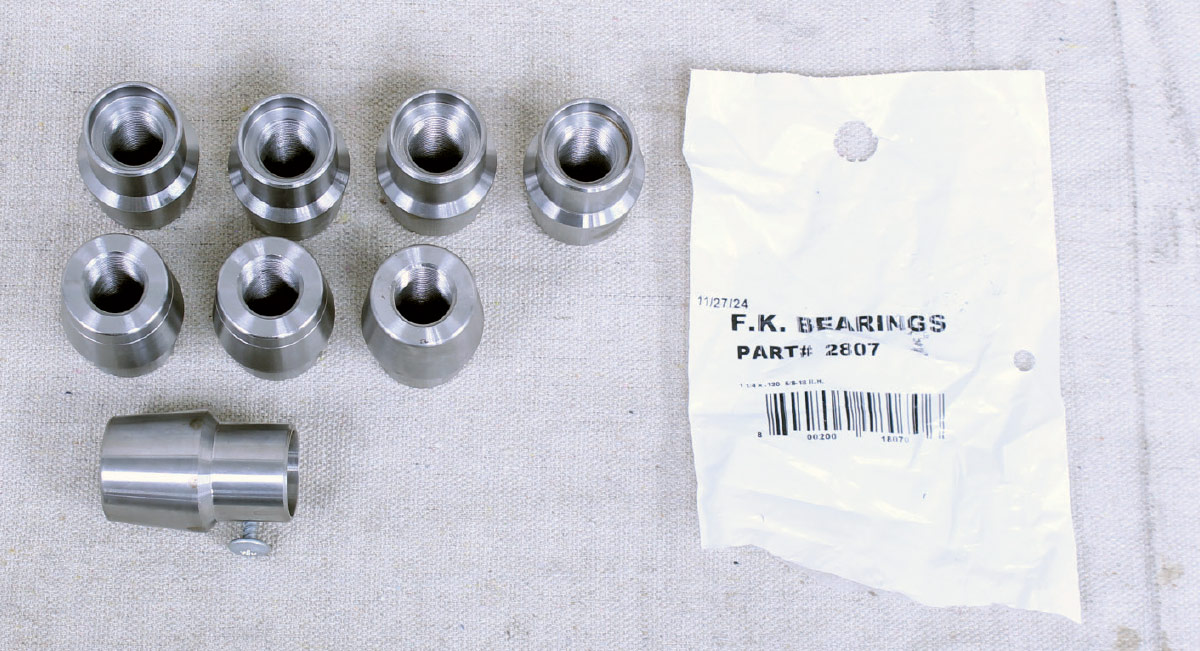
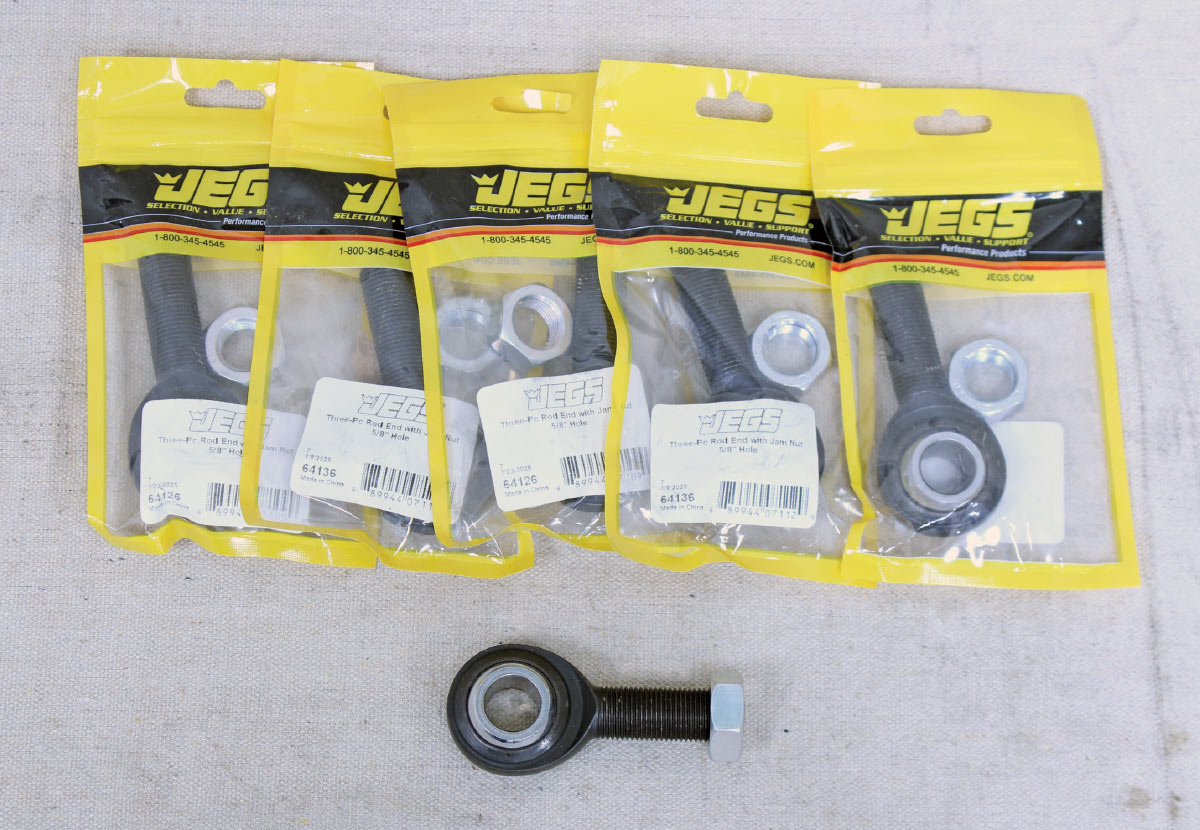
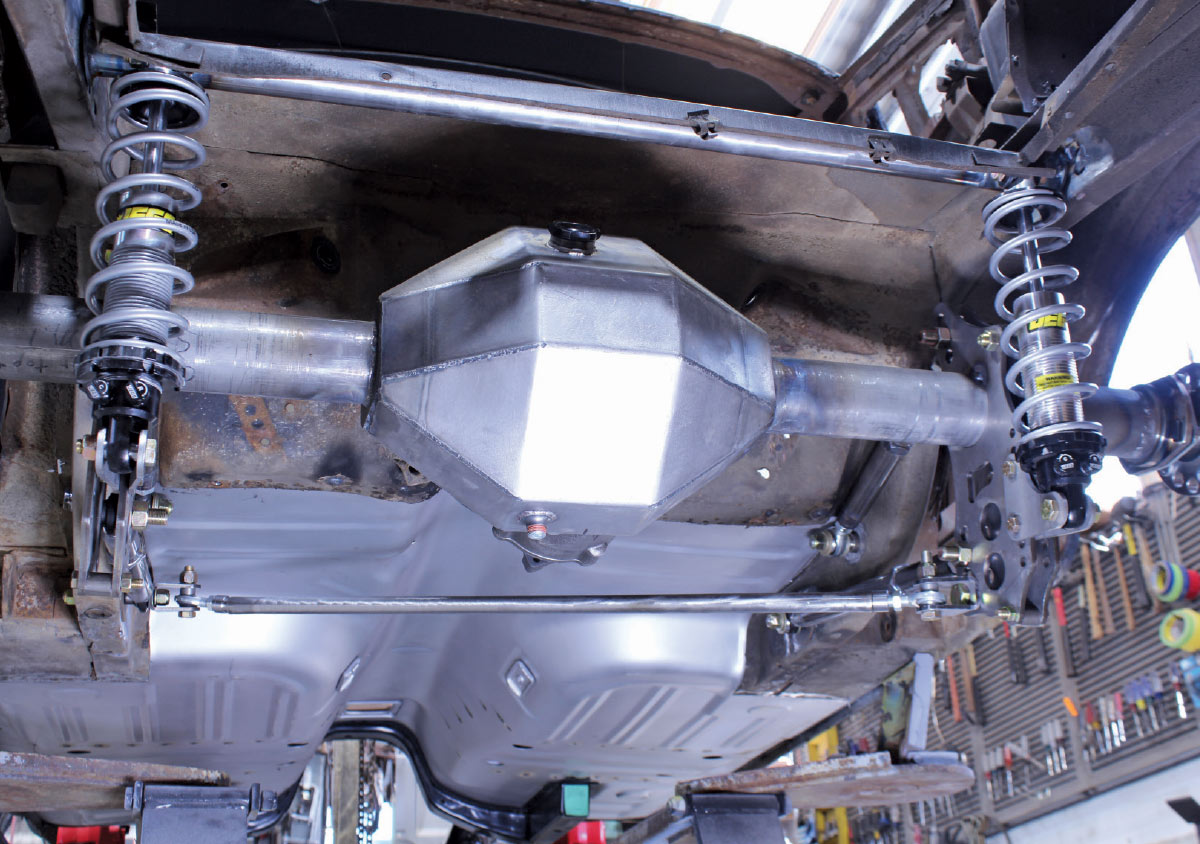
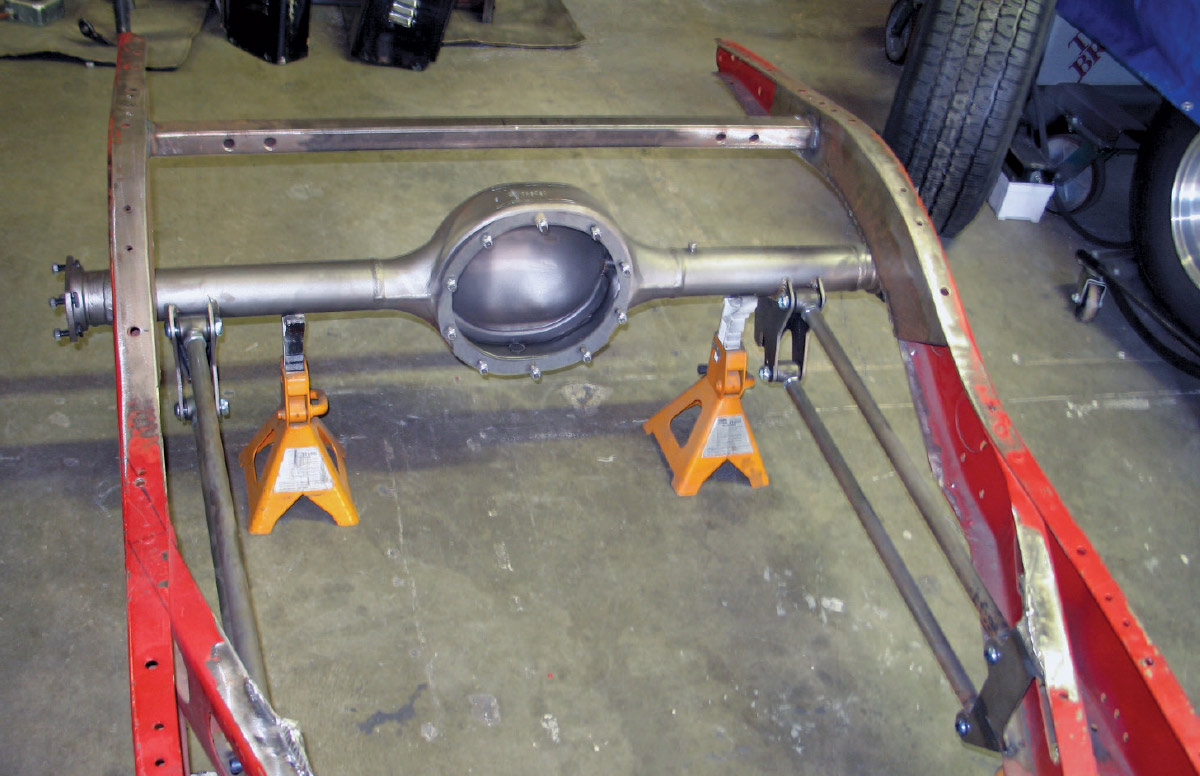
To replace the original springs and shock absorbers, Colin chose a four-link suspension kit from JEGS (PN 555-64650) with coilover shocks. Designed for rearend housings with 3-inch axle tubes, these four-link kits come with 1/4-inch-thick housing and frame brackets, four-link bars, threaded inserts made from 4130 chromoly steel, and 5/8-inch rod ends. The axle brackets also serve to mount coilovers and are drilled to accept an antiroll bar.
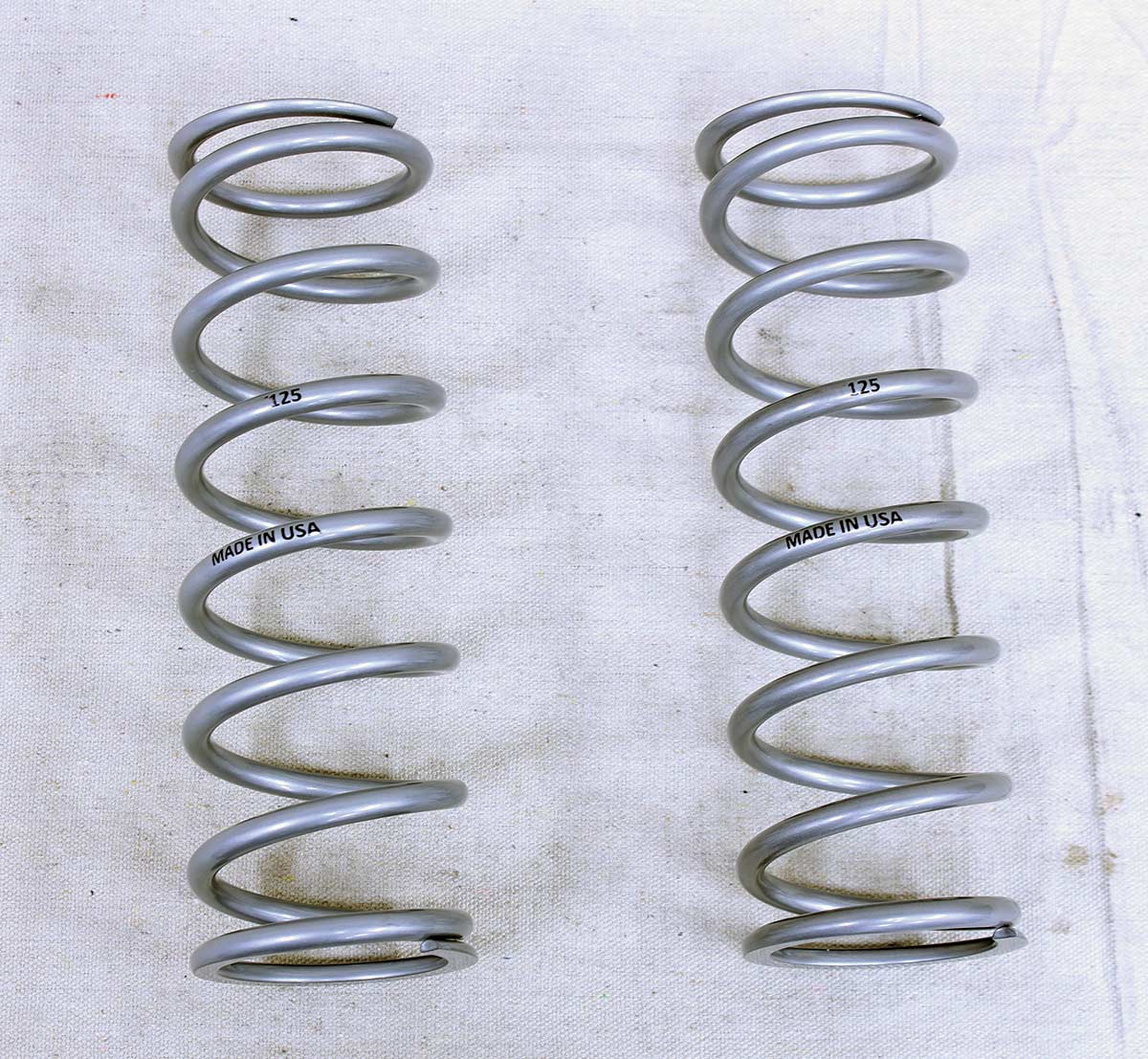
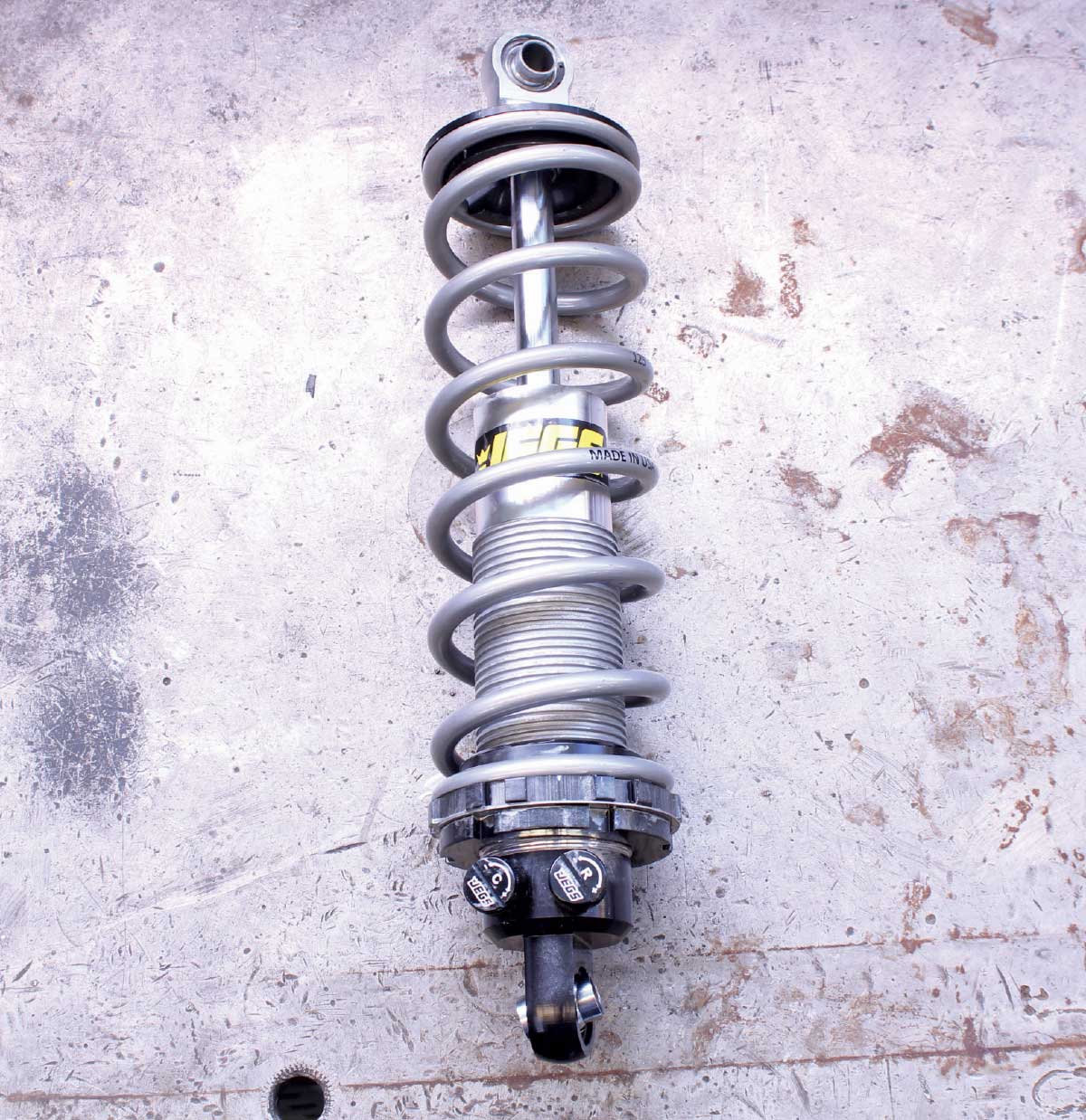
Replacing the factory leaf springs are JEGS aluminum coilovers (PN 555-64900K1). They have a compressed length of 10-1/8 inches and an extended length of 14 inches. For precise suspension tuning, the double-adjustable shocks offer 18 compression and 18 rebound adjustment positions, providing 324 valving options. Rated at 125 lb/in, the included silicon steel springs (PN 555-64952) are silver powdercoated.
One advantage of a four-link over a conventional four-bar system is its adjustability. By altering the attachment points of a four-link suspension, its behavior, particularly during launch from a standing start, can be changed. Another advantage is that when compared to ladder bars, four-links allow the car to turn without compromising traction, as ladder bars can bind the suspension when the car leans in a corner.
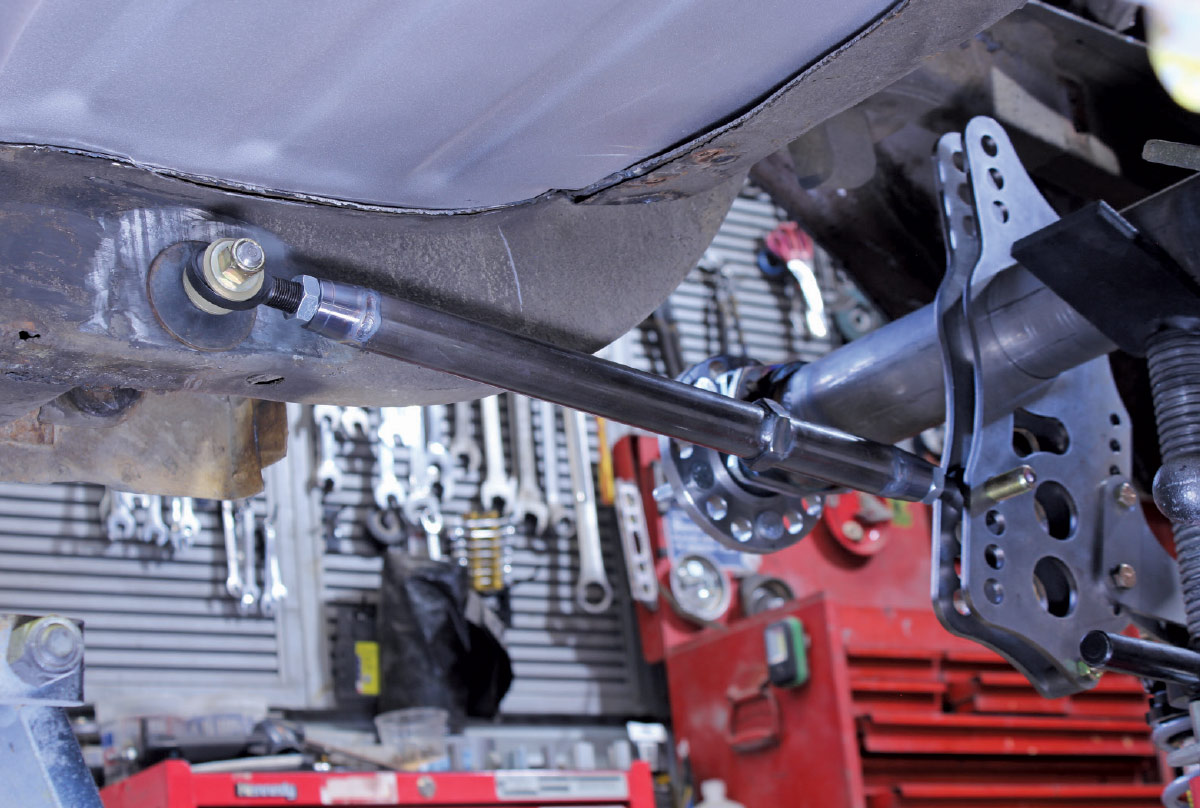
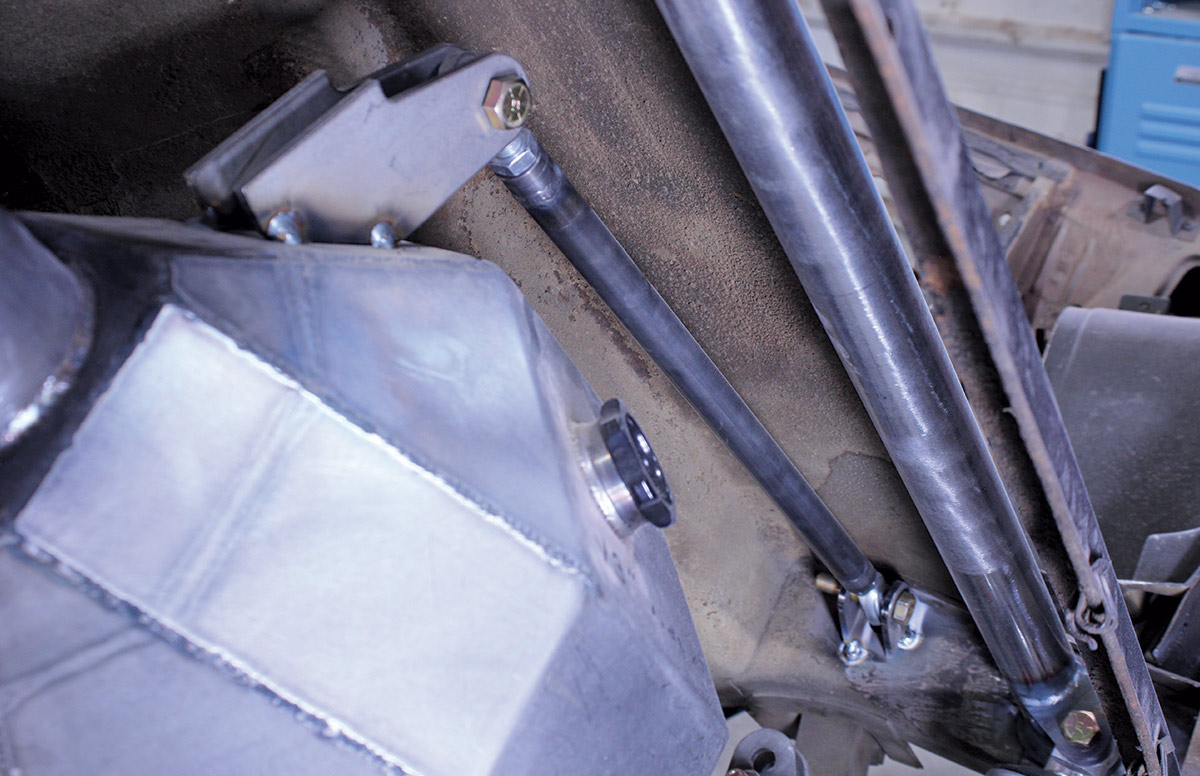
Something that four-bars (other than the triangulated design), four-links, and ladder bars have in common is the need for some sort of lateral locator to keep the rearend centered under the car. One option is a lateral locator that runs from the rear of one lower four-link to the front of the lower link on the opposite side of the car.
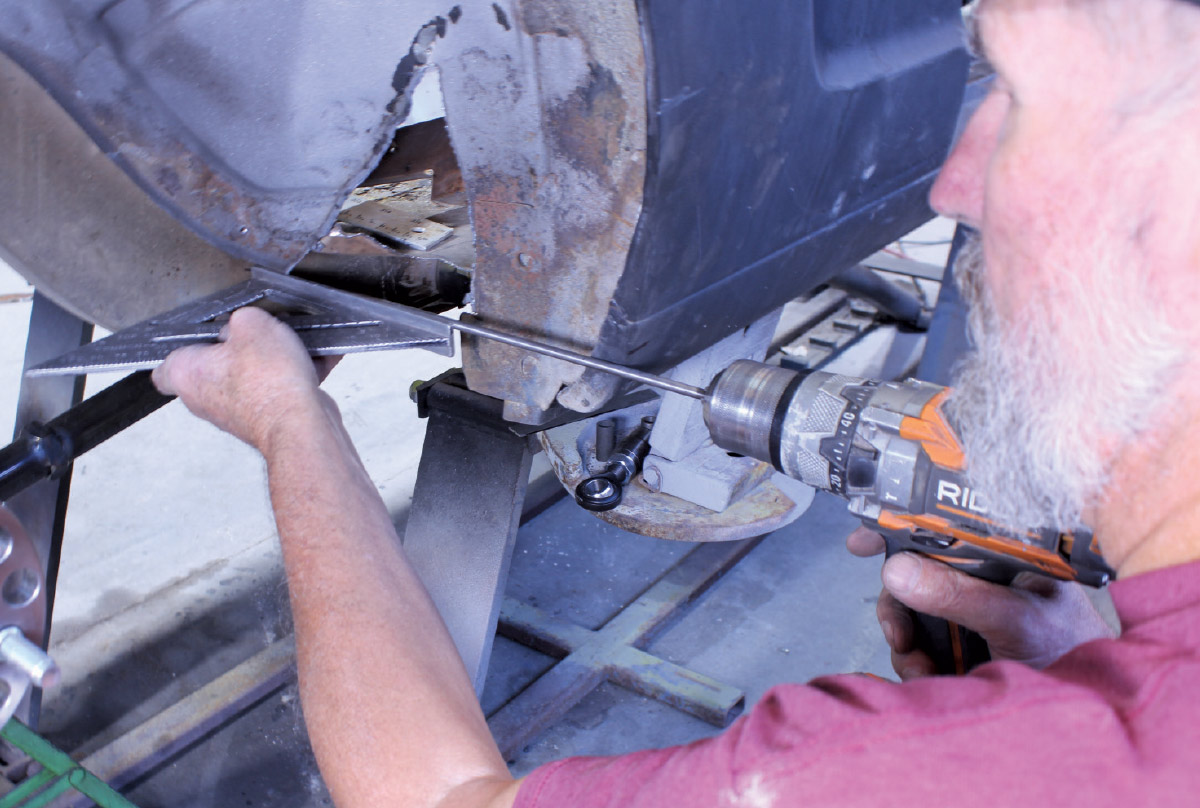
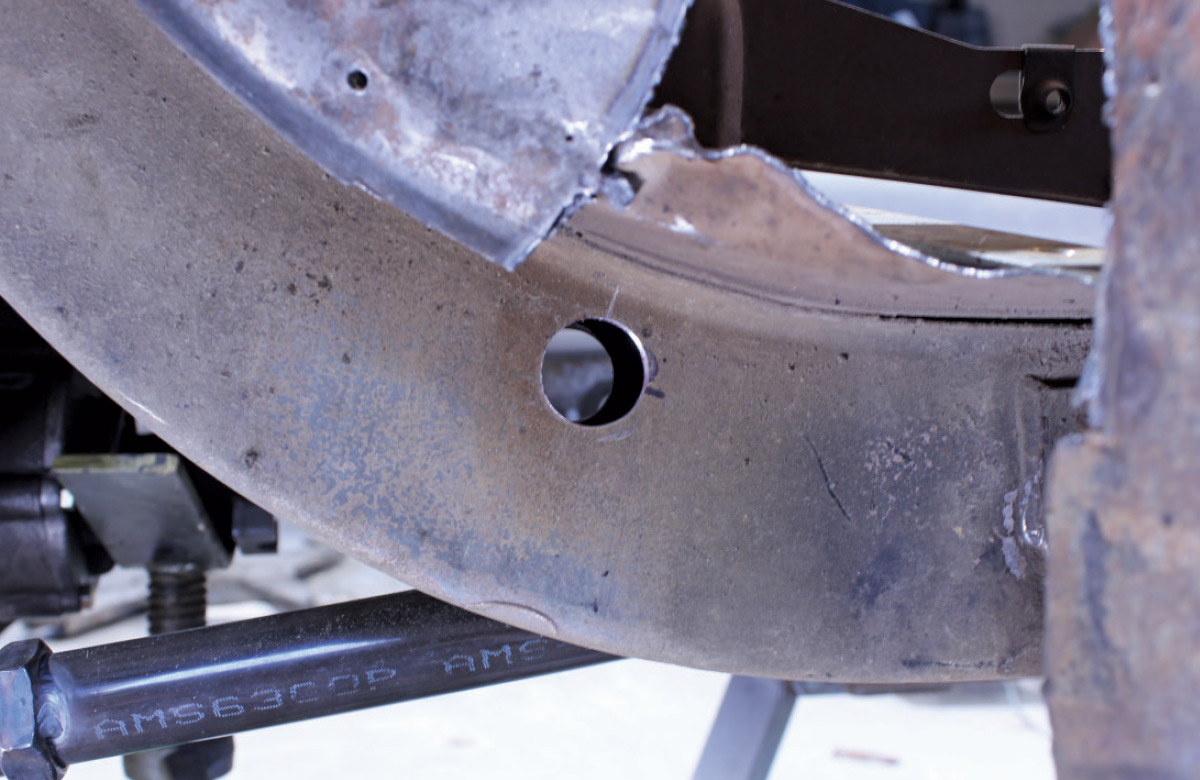
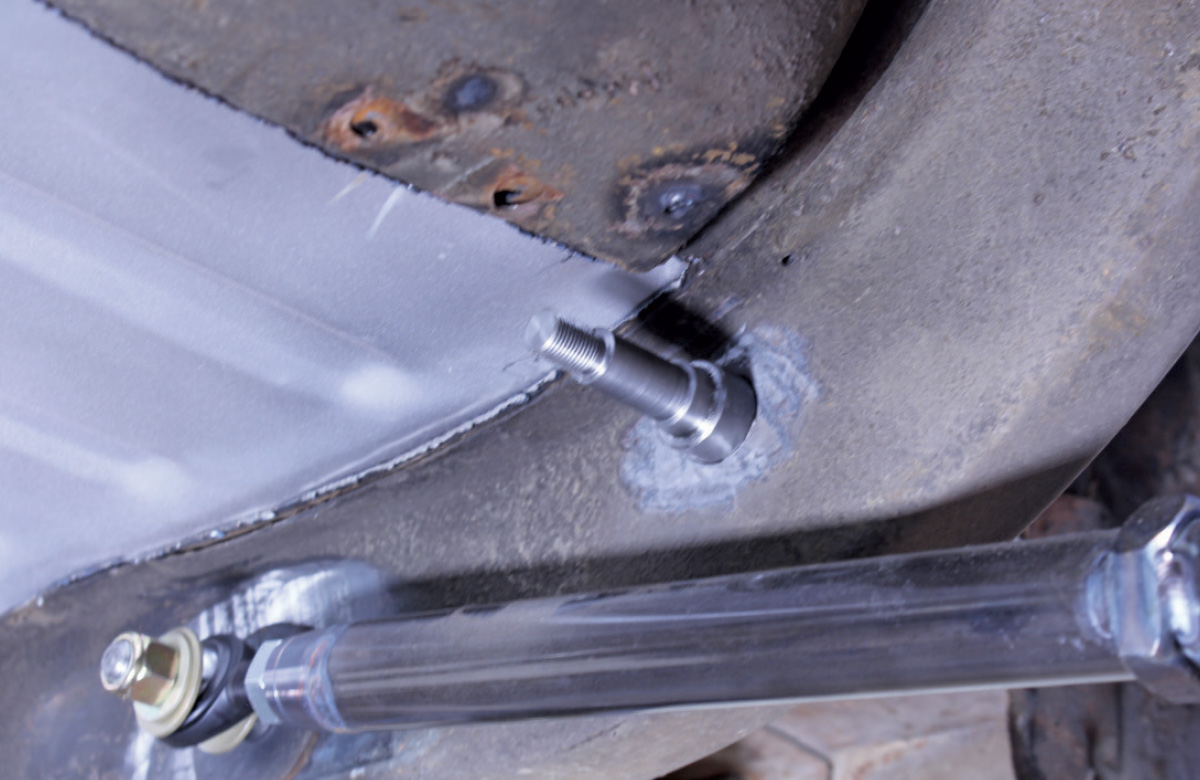
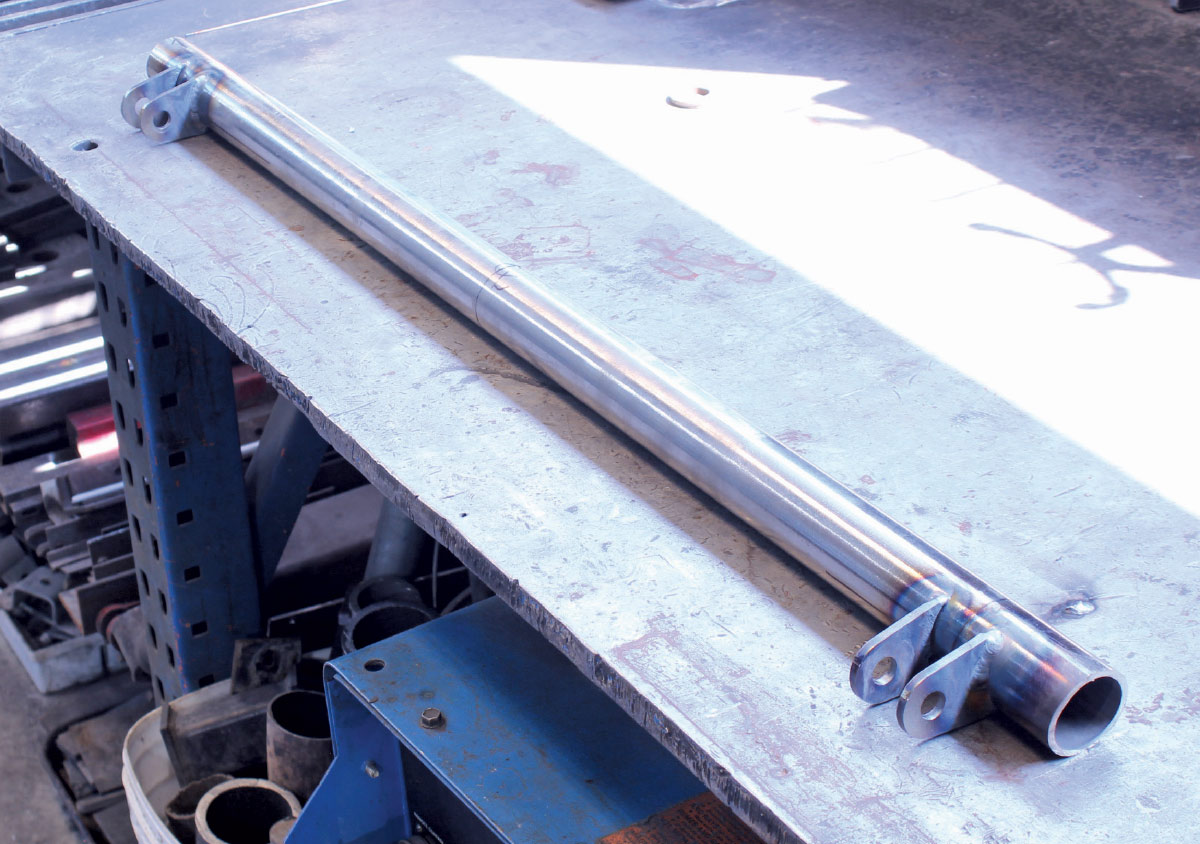
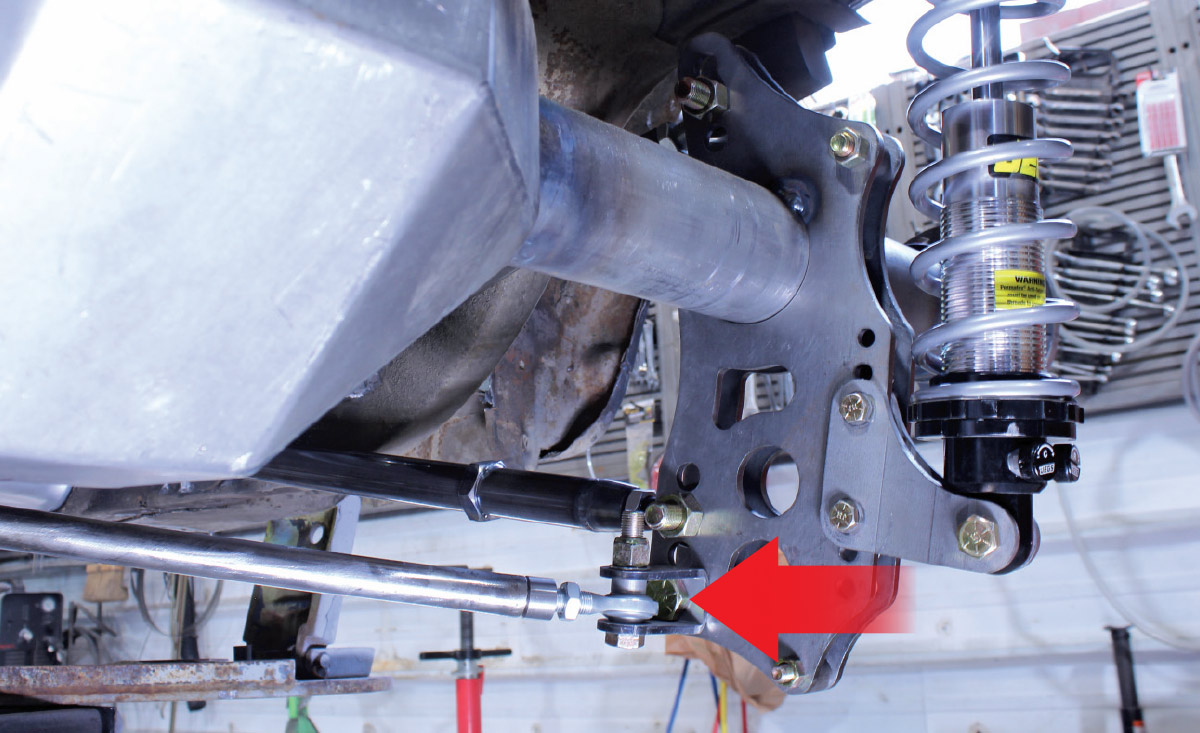
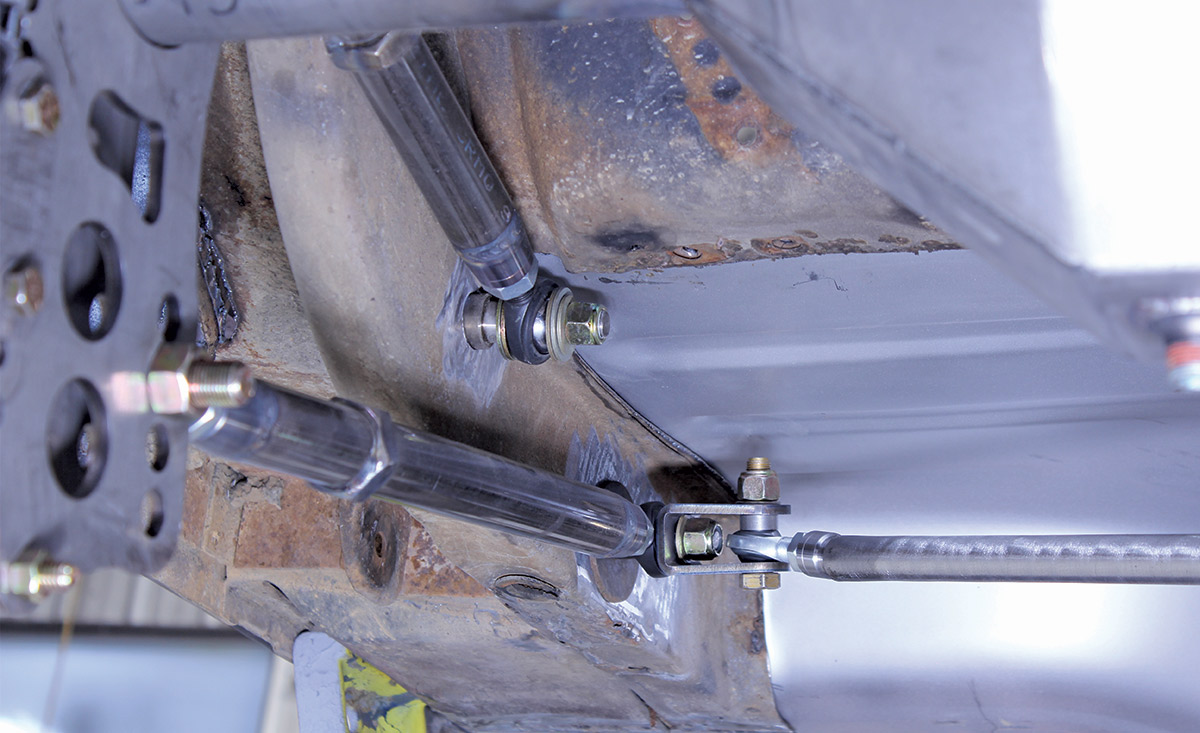
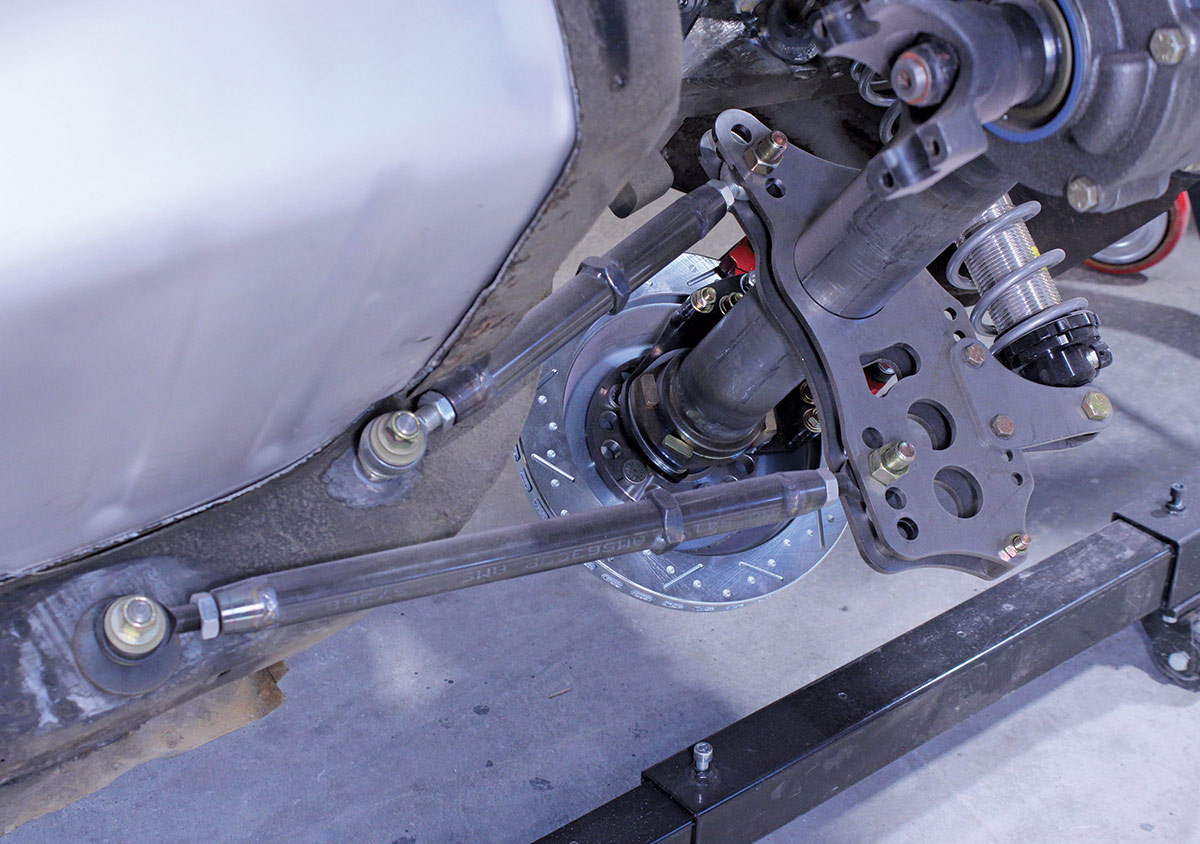
Originally, Colin installed a lateral link under the Mustang, but there was an issue with the driveshaft clearance. This locator style should be attached to the pivot points of the lower links; however, in this case, the rear connection point had to be lowered to clear the driveshaft. So, rather than compromising the performance of the lateral link, Colin did what most hot rodders would do—he cut it up and made it into a Panhard bar. Problem solved: the driveshaft issue was resolved, and the rearend was laterally located.
With the suspension on both ends taken care of, there are still some goals Colin plans to achieve: more power with a built FE Ford V-8 and disc brakes on both ends. But those are for another time …