



 Photography by Chadly Johnson
t the dawn of hot rodding, there was only one way for a rodder to source a body to build a hot rod from to find a genuine, factory-made, real steel body. The majority of early hot rods, not counting the oddball marques, were built using genuine Ford bodies. However, as the years passed and many old Fords found their demise battered beyond recognition racing on a circle track, the herd thinned out. Thinned out to the point that a “genie” body by itself began commanding top dollar.
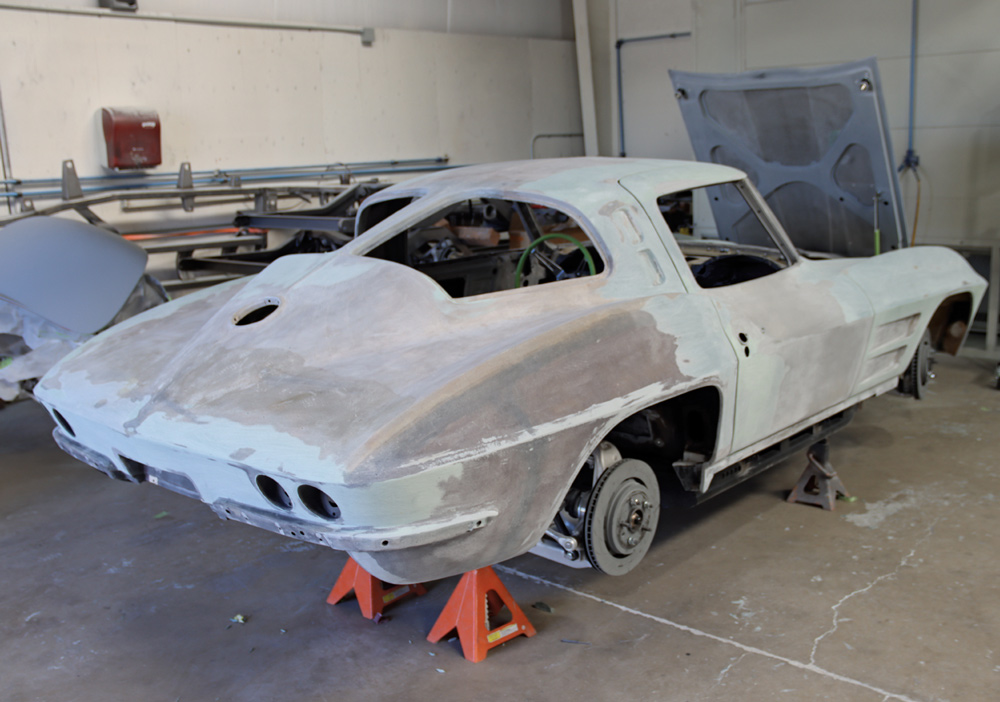
Hot rodders have always been an imaginative bunch and found inspiration from the Chevrolet Corvette, popping out fiberglass replica bodies ranging from T-buckets to Deuce roadsters to fill the void. The demand for fiberglass bodies proved strong enough to justify the expense of evolving and tooling up to stamp out and reproduce steel bodies. That said, there’s still a place in the market for fiberglass vintage Ford bodies and a plethora of ’glass bodies, ranging from 1956 Ford F-100 cabs to a wide spread of Corvette generations available. The vehicle featured in our story is a 1963 split-window Corvette, but the steps to repairing, bodywork, and repainting any laminated fiberglass body are the same.
A little about Corvette history: The Corvette was not the first American-made sportscar manufactured using a fiberglass body, but the first fiberglass body introduced to the market by a major automobile manufacturer. Life for the fiberglass-bodied Corvette began in 1952 with Harley Earl’s excursion to Costa Mesa, California. Earl witnessed firsthand how the Glasspar boat company laminated fiberglass to produce its Glasspar G2 sports car. Earl shared his findings with General Motors brass and the decision was made to manufacture the Corvette body out of fiberglass. In 1954, Corvette production moved to St. Louis, and of the 3,640 1954 Corvettes made that year, only four were painted black. You could get any color you wanted for the Corvette when it first appeared at Chevy dealers in 1953, as long as it was white—Polo White, to be exact. And it wasn’t a random decision that the first 300 Corvettes built in Flint, Michigan, at Chevrolet’s factory were only available in white; white is the most forgiving color when it comes to disappearing ripples and flaws in the bodywork.
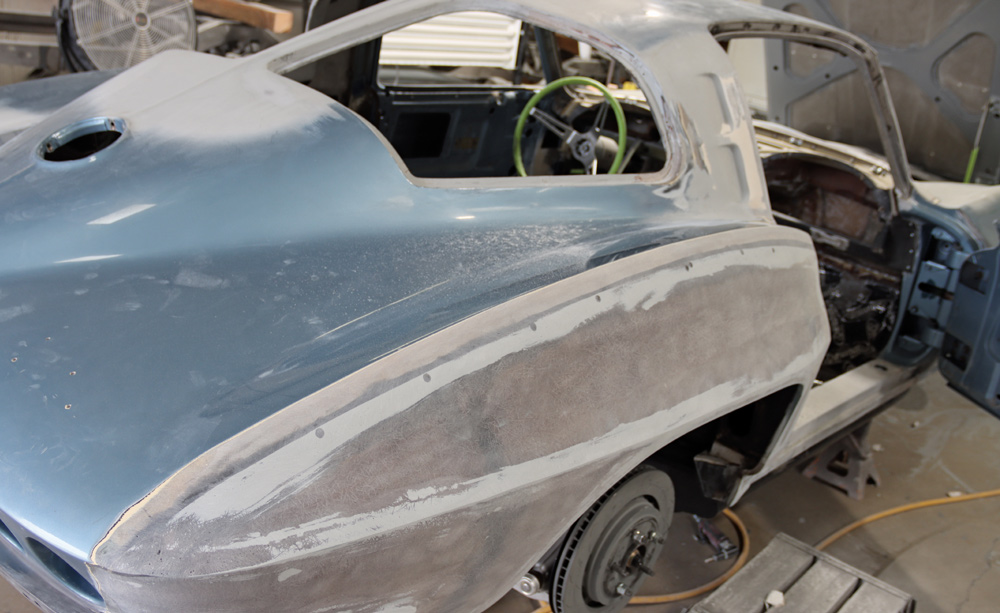
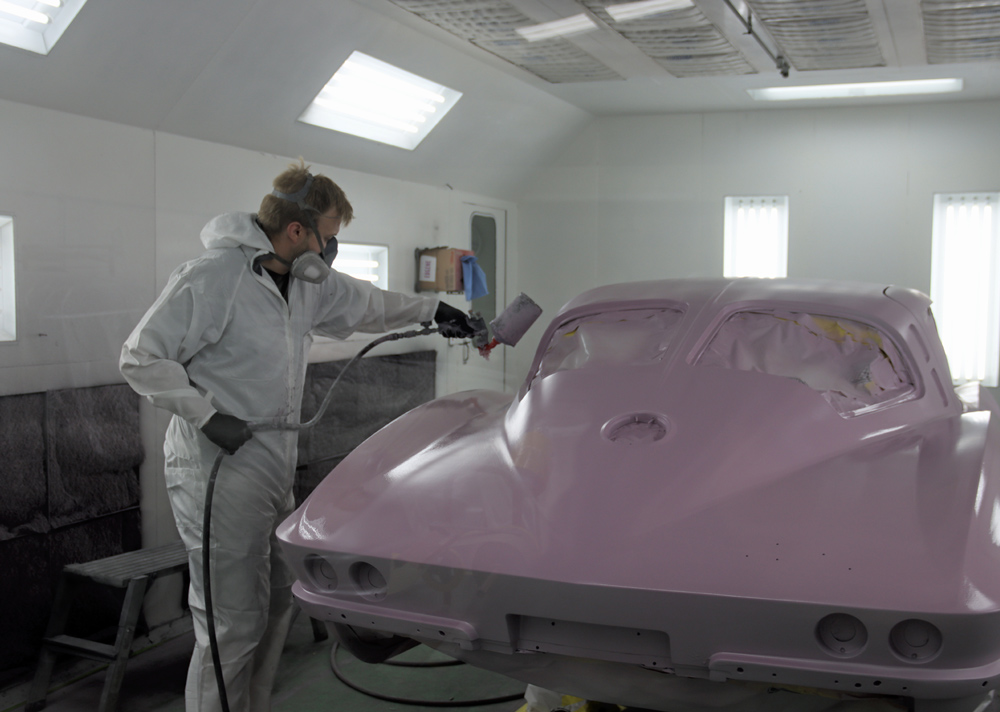
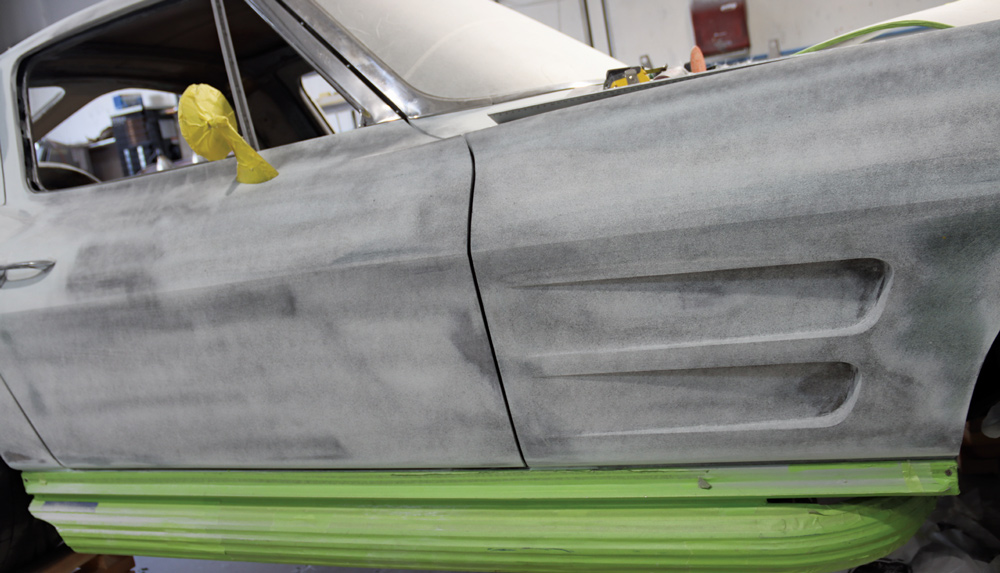
We found our subject vehicle, a 1963 split-window Corvette, undergoing bodywork and paint at Metalworks Speed Shop in Eugene, Oregon. This Sting Ray is done in a restomod style, and the edges have been sharpened compared to a stock 1963 Sting Ray. The good news about working with fiberglass is that it’s easy to sand down and shape, but the bad news is that it’ll likely make you itch or possibly even cause a bad allergenic reaction. In recent times, the terminology has changed slightly from doing bodywork and paint to now calling it fit and finish, however, the process is pretty much the same as when Chevrolet debuted the Corvette on June 30, 1953, and continued manufacturing a laminated fiberglass-bodied car until 1973 when SMC (Sheet Molding Compound) was introduced.









 SOURCE