


 Photography by Luke Munnell
n the world of hot rodding, every build has a story, but few transformations can match the journey of the 1936 Ford that rolled into Hollywood Hot Rods—a true automotive phoenix rising from the ashes of an “ugly duckling.” When Troy Ladd laid eyes on the donor car, it was buried under a thick coat of black primer, adorned with outdated 17-inch billet wheels that seemed more fitting for a crime scene than a classic hot rod. Skulls, spikes, and other tacky embellishments screamed for attention. At the same time, the interior displayed a seemingly random selection of faux ostrich and alligator vinyl, punctuated by a dashboard that looked more like a toy than a work of art. The dashboard was an outrageously flat piece of red plexiglass housing an “improper” collection of gauges—definitely not what you’d expect from a classic build. Powered by a Dodge engine (a 318, as Ladd remembers), this was one beast of a car with many miles to go before it could earn the title of “custom.”
However, Ladd saw chaos beyond the surface. In the world of hot rodding, potential often lies beneath layers of neglect and misguided modifications, and this 1936 Ford was no exception. At Hollywood Hot Rods, the sleek flanks of the body would soon become the canvas for an exquisite restoration that blended tradition with modern craftsmanship without losing sight of its roots.
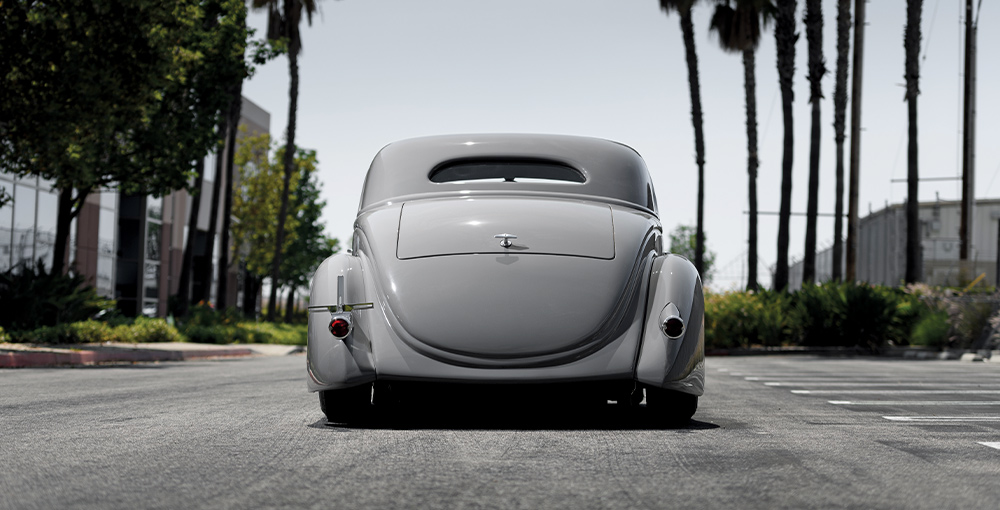
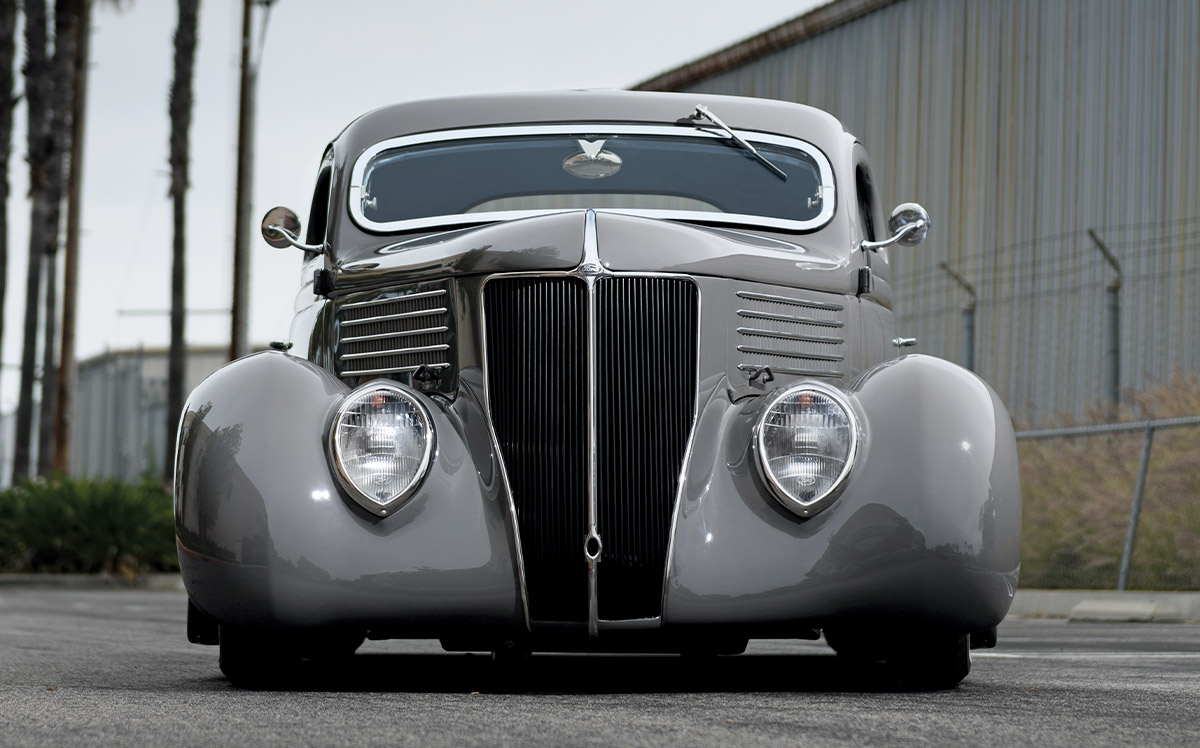
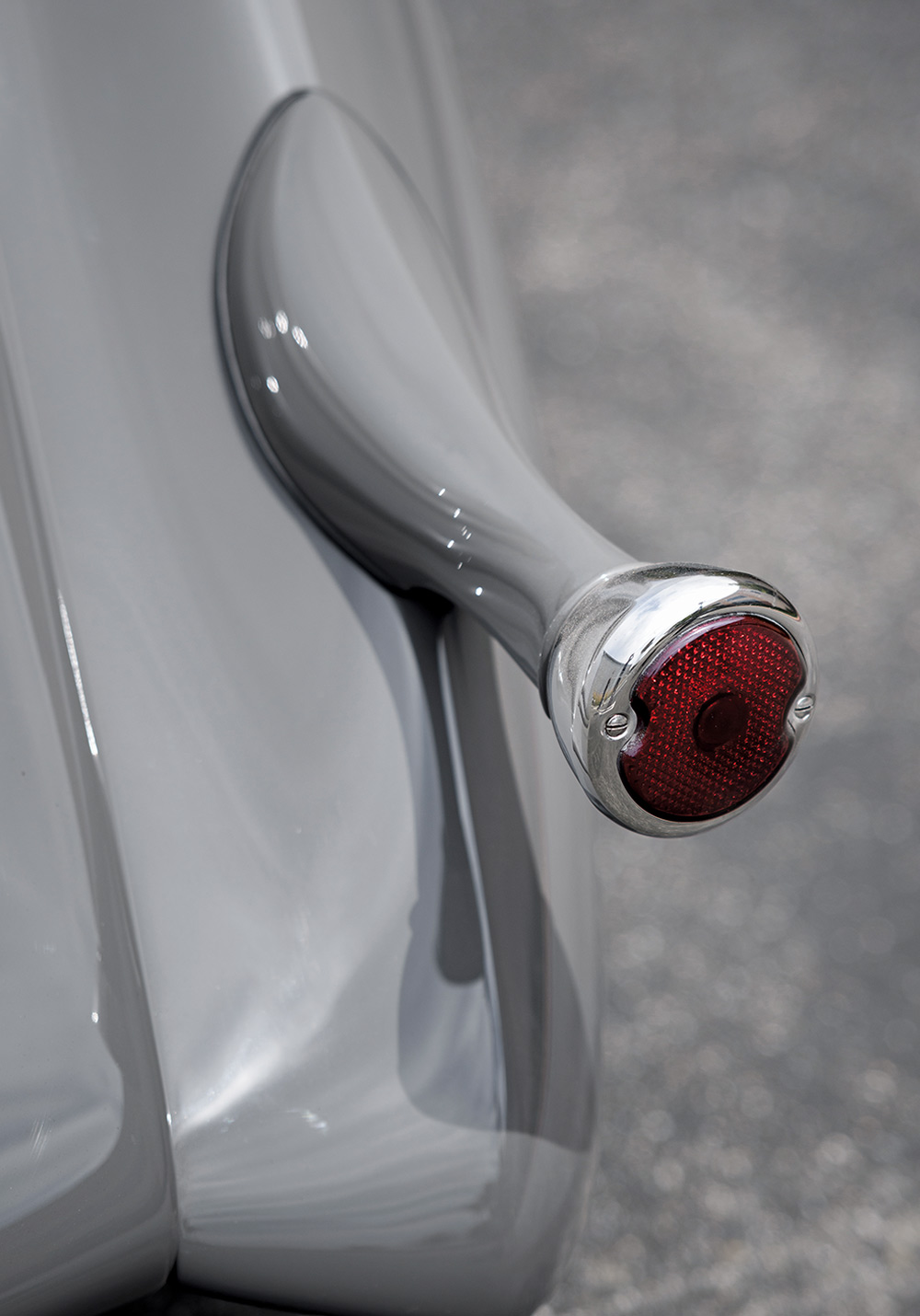
The foundation of this custom build is a 1936 Ford three-window coupe body, which has undergone an impressive top chop and features 1937 Ford headlights along with additional trim. Extensive bodywork was completed at Platinum Black, a Huntington Beach, California, shop renowned for specializing in hot rods, customs, and classic vehicles. Following the bodywork, the coupe was finished in striking Lead Foot Gray paint.
First off, the interior was a focal point of the project. Gone were the distressing skull imprints and brash vinyl. Instead, an original 1936 dash was sourced and integrated with Classic Instruments gauges to provide a clean, vintage look while ensuring modern reliability. Outdated wiring that looked like a rat’s nest was stripped away and replaced with a fresh wiring harness from American Autowire, meticulously installed to lay the foundation for a functional cockpit.
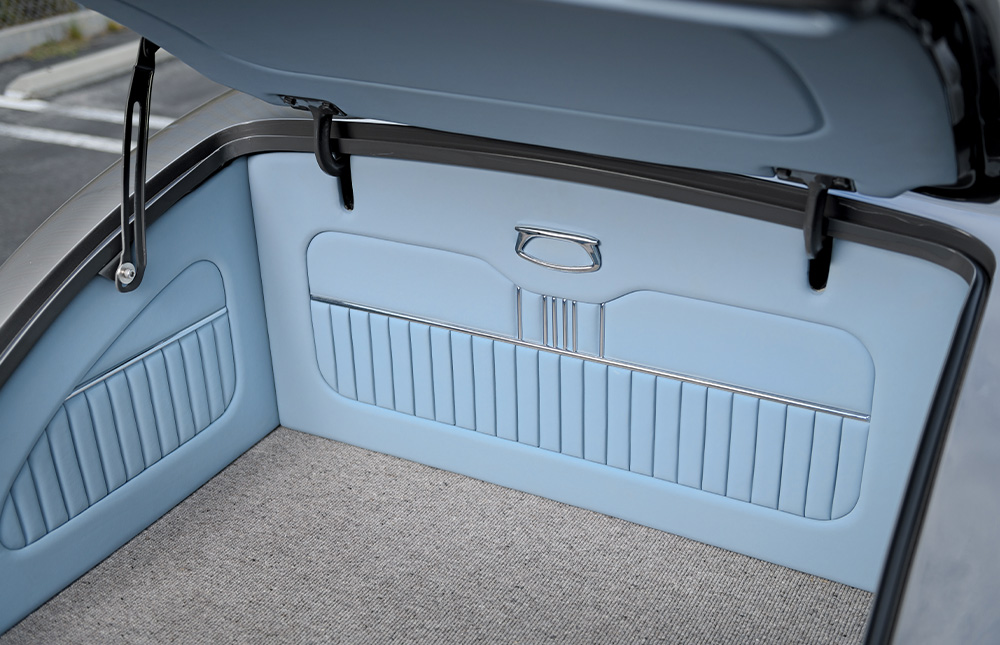
Mark Lopez from Elegance Auto Interiors took over the upholstery work, channeling his talents to create a stunning front bench seat framework sourced from Wiseguys. The choice of a light blue suede headliner added an air of sophistication while grounding the aesthetic in classic sensibilities. With the upholstery material bearing the distinct lineage of Rolls-Royce, this interior was no ordinary transformation. It was a marriage between tradition and modern luxury.
“I didn’t envision this interior at first,” Ladd admits, reflecting on his original intentions. “But I really love it now.” The striking contrast that light blue leather creates against the classic body adds depth and personality to the car, making it stand out at any show while retaining a traditional hot rod feel. There’s no rear seat in this hot rod—what would be the point? This build is all about driving, not hauling the family!

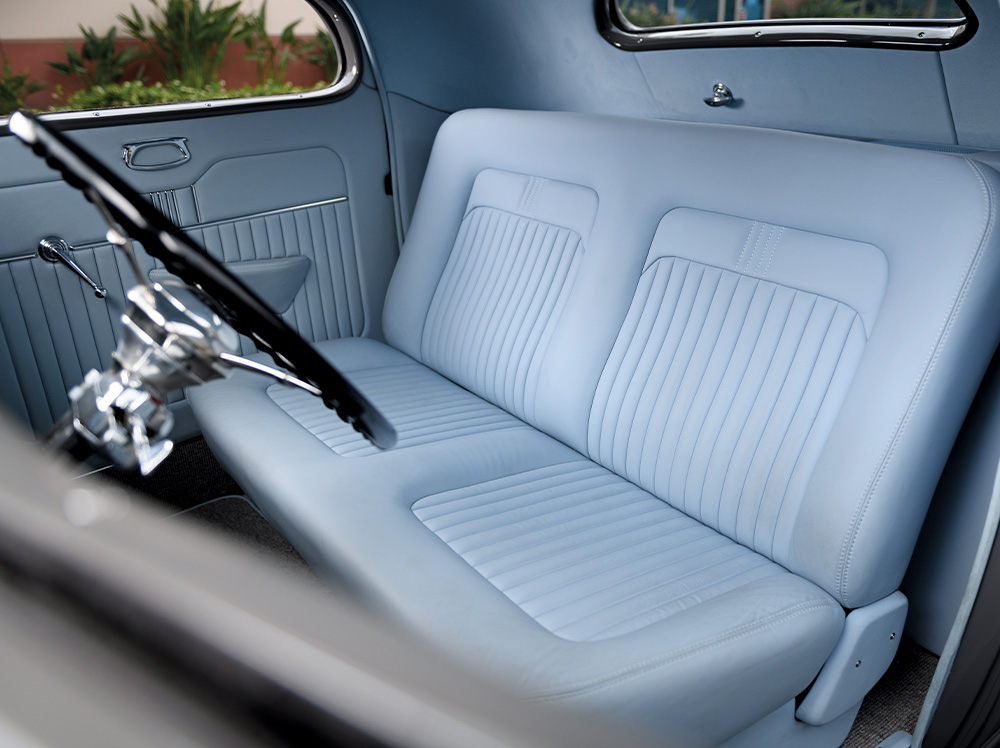
The steering wheel, an original 1935 Ford Banjo-style piece that perfectly captures the era’s spirit, was the cherry on top of this enjoyable project. This hot rod is an homage to those who came before, celebrating a time when craftsmanship and passion drove the automotive world.
The heart of this stunning 1936 Ford custom three-window coupe is a powerful 383ci small-block Chevy engine, expertly crafted by the specialists at BluePrint Engines. This engine is more than just impressive in size; it is carefully tuned to deliver an exhilarating 436 hp and 443 lb-ft of torque.
BluePrint Engines’ high-flow aluminum cylinder heads are at the core of this small-block marvel, specifically designed to optimize airflow and enhance overall performance. These cylinder heads work seamlessly with a 10:1 compression ratio, facilitating efficient combustion that translates into substantial power. The engine is equipped with a hydraulic roller cam that boasts 0.544 inch of lift on the intake side and 0.555 inch on the exhaust, along with a duration of 230 degrees on the intake and 236 degrees on the exhaust at 0.050 inch—features that ensure exceptional performance.
The engine efficiently expels spent gases through a set of Speedway Motors Ram Horn chrome exhausts, which connect to 2-1/2-inch tube headers leading back to a pair of mufflers. The V-8 engine is paired with a TCI 700-R4 transmission, featuring a 2,200-stall speed converter and an auxiliary transmission cooler to maintain optimal temperatures.
The chassis is based on a stock 1936 Ford frame that was boxed at Hollywood Hot Rods. From here, the solid front axle was replaced with an IFS based on tubular A-arms, airbags, rack-and-pinion steering, disc brakes, and a front sway bar. Regarding disc brakes and airbags, the rear suspension also employs these hot rod add-ons, as well as a four-bar setup and a Panhard bar. A Wilwood master cylinder operates the disc brake system, and additional corner items are included, such as the 15-inch steel wheels with stainless trim rings and Ford V-8 caps. The rolling stock consists of Coker 5.60s and 8.20s.
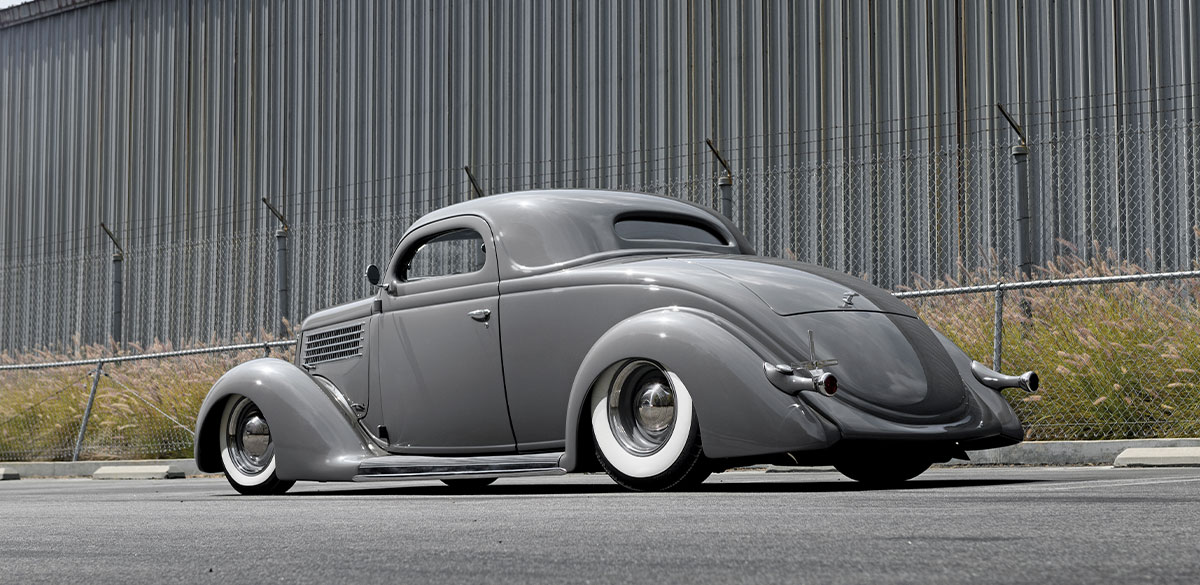

The 1936 Ford custom is a testament to the vibrant culture of hot rodding in every curve of the body and every leather-covered inch of the interior. It serves as a reminder that true artistry can breathe new life into even the most neglected creations, paving the way for the next generation of enthusiasts who will cherish and continue this extraordinary journey. In the world of hot rods, the only constant is change, and this car proves that anything is possible with vision and craftsmanship.