
Modern Rodding FEATURE
InTheGarageMedia.com
1932 Ford Coupe hot rod chopped roof glossy black paint wide whitewall tires vintage stance
The Artist Within
The Artist Within
Arnie Chupp’s 1932 Ford Coupe is a Perfect Example
By Dale MoreauPhotography by THE AUTHOR
W

hen you turn into Arnie Chupp’s driveway in Oregon, which is more of a country road, you are instantly surrounded by gardens and trees. Further on, there are small ponds and a bridge over a creek that would make the Gardens of Versailles jealous. Arnie carries on that artistry in many mediums, from painting to sculpture. His 1932 Ford chopped-and-channeled coupe, Oldsmobile-powered, is just another of his artistic endeavors.
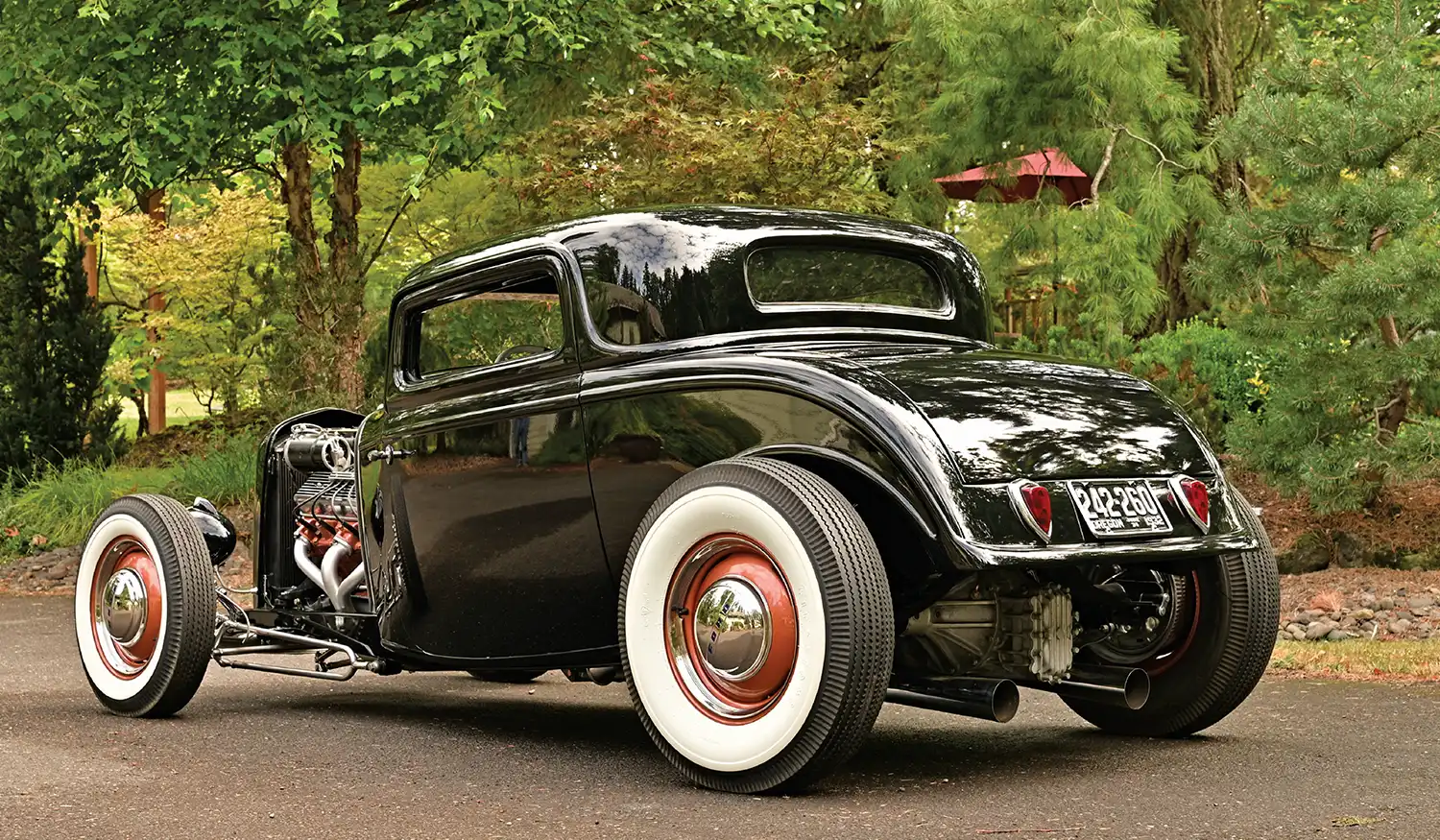
1932 Ford Coupe rear three-quarter view chopped roof whitewall tires and polished hubcaps aggressive stance
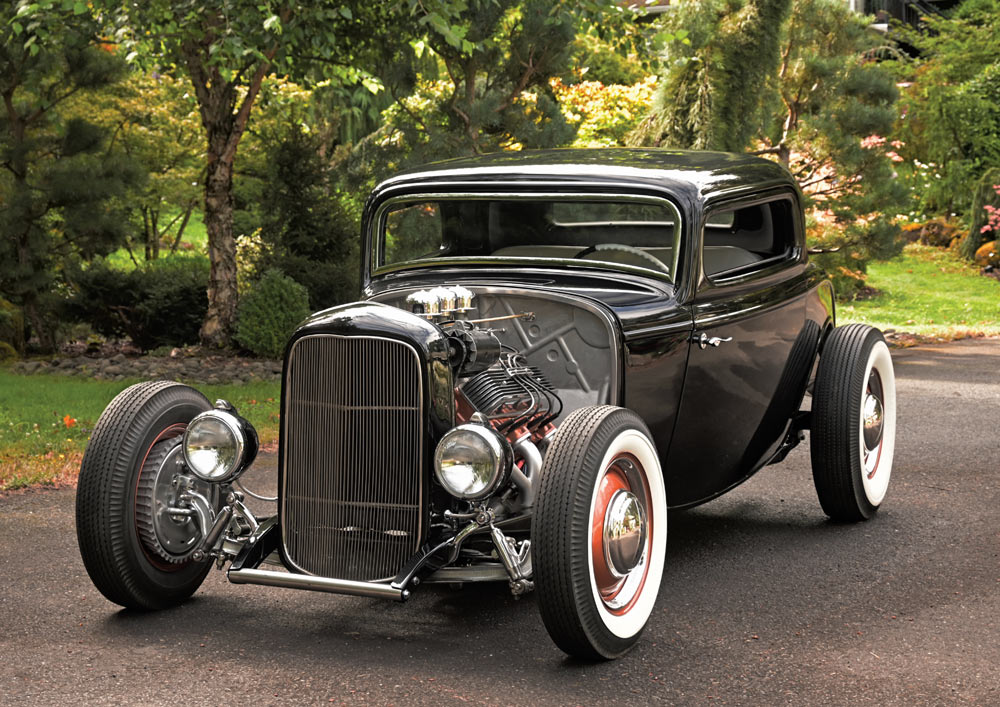
1932 Ford Coupe front view vertical grille exposed flathead engine and chrome accents classic design
Arnie likes the look of channeled hot rods but prefers not to sit on the floor. Starting with repro ASC framerails, he moved the frame into the transmission tunnel like an X-frame. That makes the tunnel higher, but the floor is at its correct height. He ended up with the stock interior space but with the body channeled 3-1/2 inches. This meant that the brake, clutch, heater, coil, cowl vent mechanism, and fuse panel all had to fit under the dash. He also kicked up the rear to accommodate the 301 Halibrand rearend. Arnie did not want all those fittings to show under the hood on the firewall. Making a pattern from a pristine original 1932 firewall, he sent it to a foundry to be cast out of aluminum. It is 3/4-inch thick and weighs 60 pounds. He mounted the above items with “blind” holes, resulting in a clean firewall.

The front utilizes a 4-inch drop axle with early Ford repro spindles and shocks, Wilson Welding drum brakes, and a Wilwood master cylinder. Steering is done through a 525 GM manual steering box.

Out back, he installed Ford Model A springs and Ford Galaxy brakes and made the rear sway bar. The chassis rolls on 16-inch 1940 Ford wheels with 16-inch Coker 550 bias-ply tires on the front and 700 Coker bias-ply on the rear.
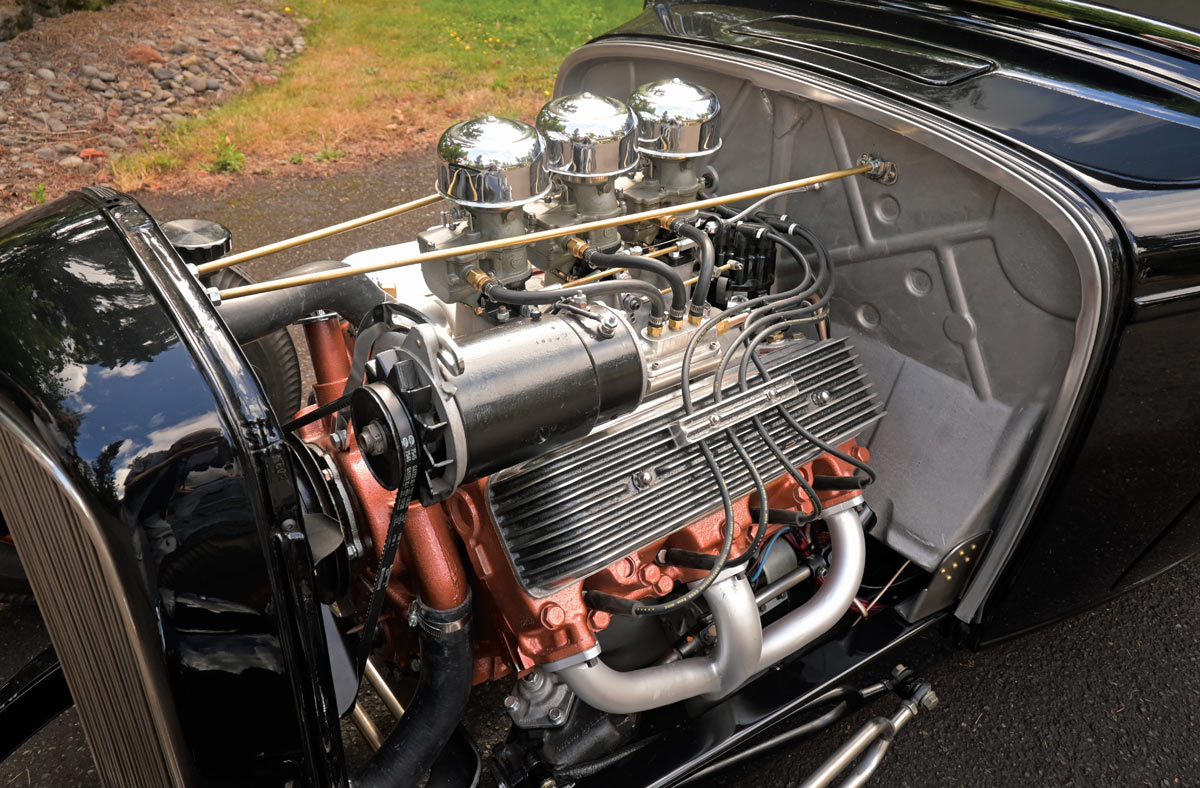
1932 Ford Coupe flathead V8 with triple Stromberg carburetors polished air cleaners detailed fuel and ignition system
Go power comes from a traditional 1949 Oldsmobile V-8 engine with a stock displacement of 303 ci. It is loaded with an Edelbrock Tri-Power intake manifold with a trio of Ford 97 carburetors and fired by a GM dual-point distributor. Arnie fabricated the headers out of 1-7/8-inch tubing and had them ceramic coated. They were then bolted to a dual exhaust system of 2-1/4-inch stainless steel with Flowmaster mufflers. A GM five-speed does the rowing connected to the Halibrand 301 quick-change with limited-slip differential and Dutchman axles.

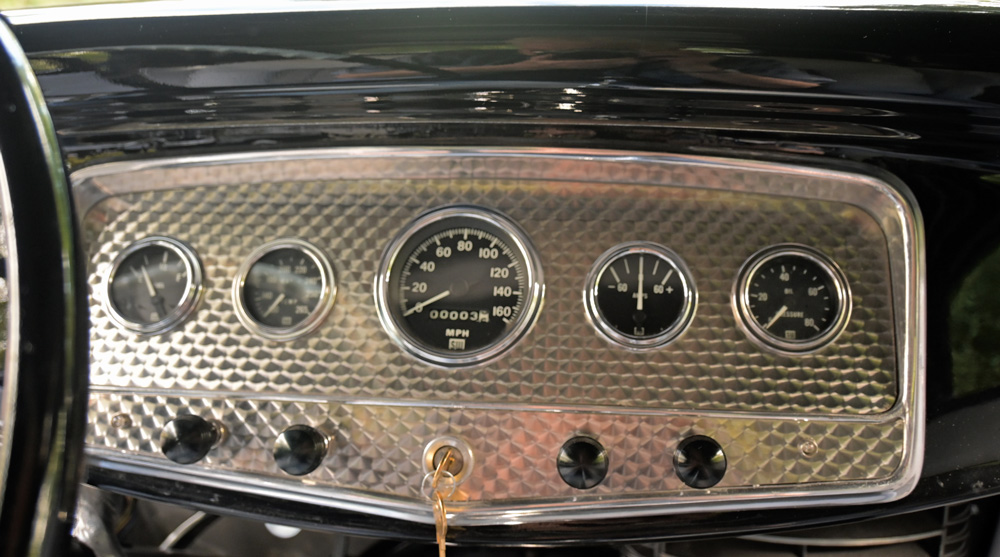
Starting with a 1932 Ford three-window–style Harwood body (2-inch chop from Harwood), Arnie and Hansen’s Body Shop added a steel Deuce Ford cowl vent and lowered the reveal on the rear 1-1/4 inches to accommodate the rear license plate. Then they moved the bulkhead back and stretched the dash a bit to fit the SO-CAL Speed Shop gauge cluster filled with Stewart-Warner gauges and finished up by raising the trans tunnel 3-1/4 inches. The rich Ford U-Tech black finish is also thanks to Hansen’s.
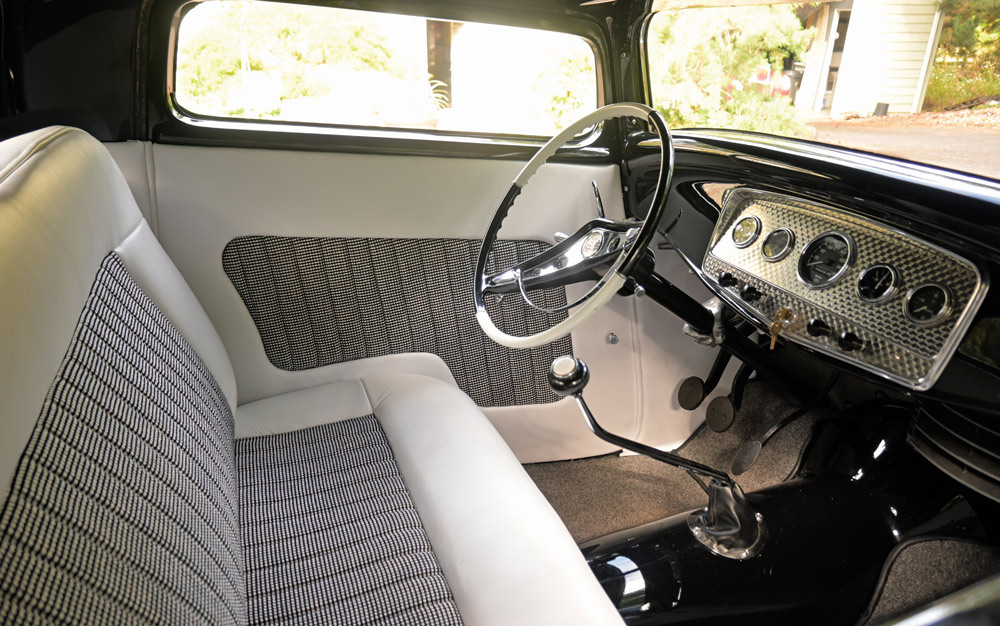
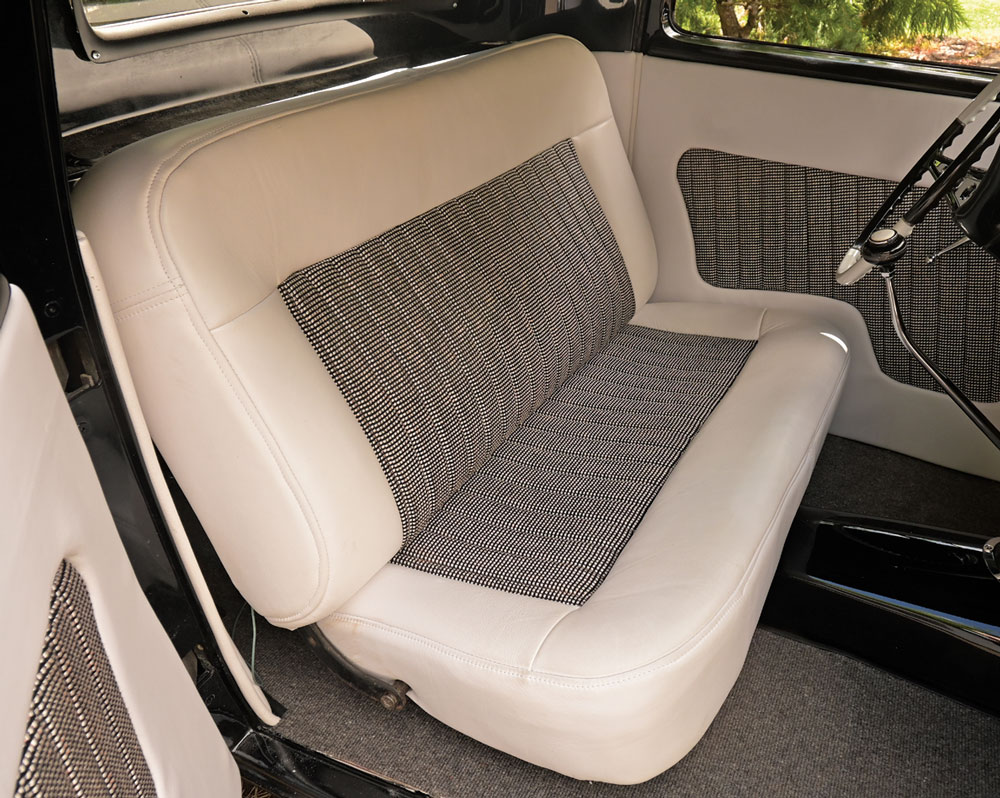
1932 Ford Coupe interior with white and black houndstooth bench seat and matching door panel upholstery
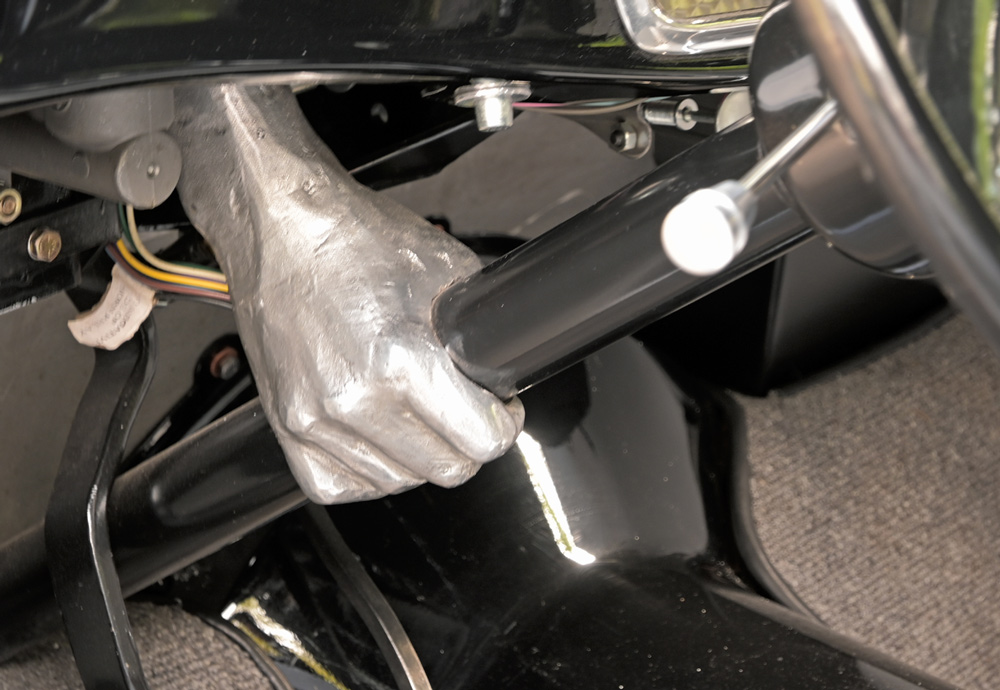
1932 Ford hot rod custom steering column with sculpted hand-shaped mount and black-and-white steering wheel
1932 Ford Coupe dashboard featuring engine-turned aluminum insert with classic gauges and a white steering wheel
1932 Ford Coupe dashboard showing detailed classic gauge cluster with speedometer, oil pressure, and temperature readings
Arnie’s buddy Roger Klick did a slick job of wiring, so they finally heard the sweet sounds of that Olds engine and had heat in the cabin with the original Eureka water heater.

Inside the steering column is a very nice unit by LimeWorks, topped off by a 1959 Impala steering wheel. The crowning glory of this is the column drop. Arnie sculpted it from his wife’s hand and then had it cast in metal. Another one of Arnie’s talents is a stitcher. He made the seat frame in his shop and then sewed the white leather and 1957 Imperial cloth inserts.

Art and technology by Arnie worked hand in hand to create one more way to decorate a 1932 Ford. After all this time, you would think you had seen it all. Well, join the crowd blown away by this one.

Modern Rodding
VOLUME 6 • ISSUE 53 • 2025