
Modern Rodding Tech
InTheGarageMedia.com
Weekend Warrior
What Pro Hot Rod Builders Do in Their Spare Time
A partially restored Chevrolet Nova body shell mounted on stands while two mechanics work on the chassis in a shop.
1. The Hot Rods By Dean crew is spending what little spare time they have transforming this 1972 Chevy Nova from a tired former race car to a competitive race car with parts from JEGS.
By Ron Ceridono Photography by Brian Brennan
D

ean Livermore and the crew at Hot Rods By Dean (HRBD) have built some of the most well-known, award-winning hot rods in the country. So, what do these guys do in their spare time? They build a drag race car to have fun with on the weekends.

Starting with a moderately rough 1972 Chevy Nova that was a former race car, the HRBD team thumbed through the JEGS Performance Parts catalog to find the needed parts to update the chassis—first up was the rear suspension. Since the Nova used monoleaf springs, something would have to be done to control the axle wrap and wheel hop these suspensions are susceptible to. The cure for what ails these suspensions came in the form of Calvert Racing’s split monoleaf springs (PN 294-230-45) and their CalTracs Traction Bar Kit (PN 294-2380K1).

The Calvert Racing split monoleaf springs are unique as they have overlapping spring halves. With this two-piece design, it’s possible to have different spring rates or arc forward of the rear axle as well as behind it. As a result, it’s also possible to keep the front half of the spring soft so that it will work better with the CalTracs. The split monoleaf springs are available in various ride height options; they come in pairs and include heavy-duty spring clamps. Considerably lighter than factory leaf springs (especially multileaf designs), overall weight reduction can be as much as 45 pounds when making the switch from multi-leaf springs to the split monoleaf design.

When launching a car from a standstill, anyone who has broken loose the tires on a leaf spring suspension car has probably experienced moderate-to-severe wheel hop. Essentially, what happens is that the axle housing tries to rotate in the opposite direction of the wheels. As the axle housing twists, it causes the springs to warp or deform until they can’t go any further—they snap back and the cycle repeats. This process results in the tires hopping, which leads to a loss of traction, potential axle breakage, and possible driveline component failure.

There are several ways to combat individual traction issues, like axle wrap, wheel hop, and tire spin in leaf spring cars, including spring clamps, ladder bars, and traction bars; all are somewhat effective. However, the patented CalTracs solve all these problems at once. As the Calvert Racing team explains, CalTracs use a bar that runs from the rear axle to a triangular-shaped bracket mounted on the front leaf spring eye. The lower hole in this triangle bracket connects to the bar from the axle, the center hole aligns with the leaf spring eyelet, and the top hole has a pin that rides on top of the leaf spring pack. When you accelerate, the axle housing tries to rotate, pushing the lower bar (the Calvert Force Transfer Link) forward. The pivot at the front leaf spring eye then causes the pin on top of the springs to push downward onto the spring pack. This not only eliminates axle wrap but also creates downward force on the entire axle assembly, pressing the tires onto the pavement for better traction. CalTracs are easy to install, affordable, and effective.

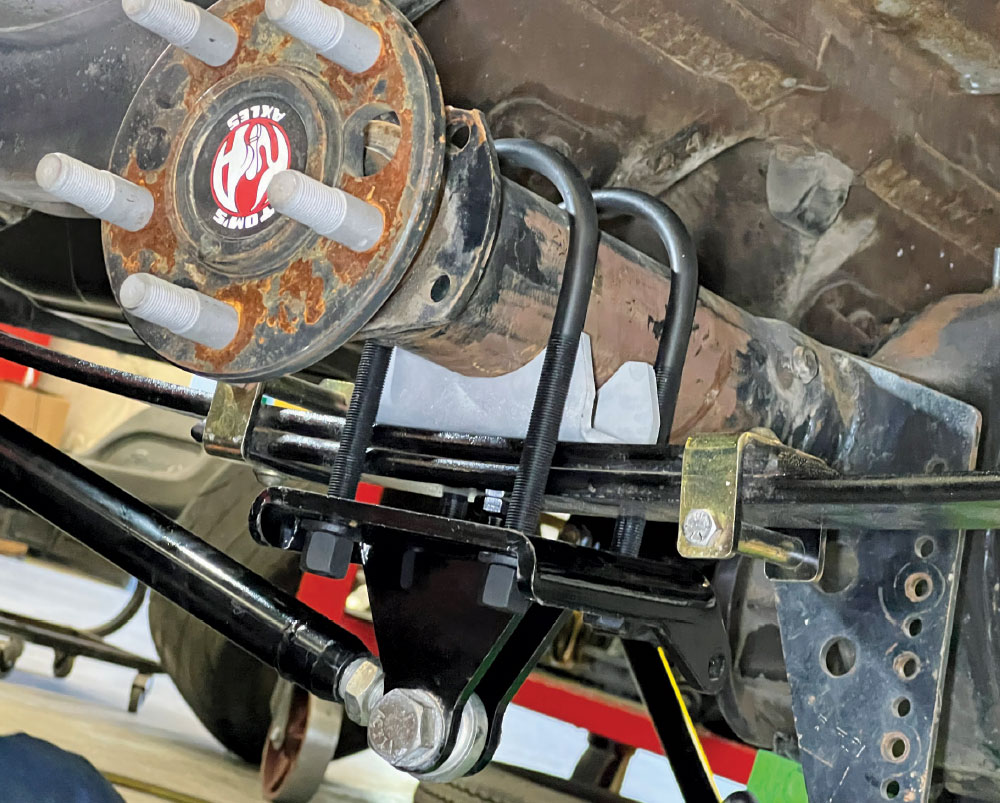
As part of the rear suspension update, the GM rear axle was replaced with a Ford 9-inch. This required different U-bolts and axle plates for the CalTracs than those used by the stock Nova setup. HRBD chose to modify the hole in the Nova’s plates due to time constraints; however, Calvert Racing can supply the correct versions for almost any application. To complete the rear suspension upgrades, HRBD added Calvert Racing’s adjustable universal shocks (PN 294-CR22116) with loop mounts on both ends, as the upper shock mounts were modified from the original. In stock configuration, Novas use shocks with crossbar upper mounts (PN 294-CR32150).

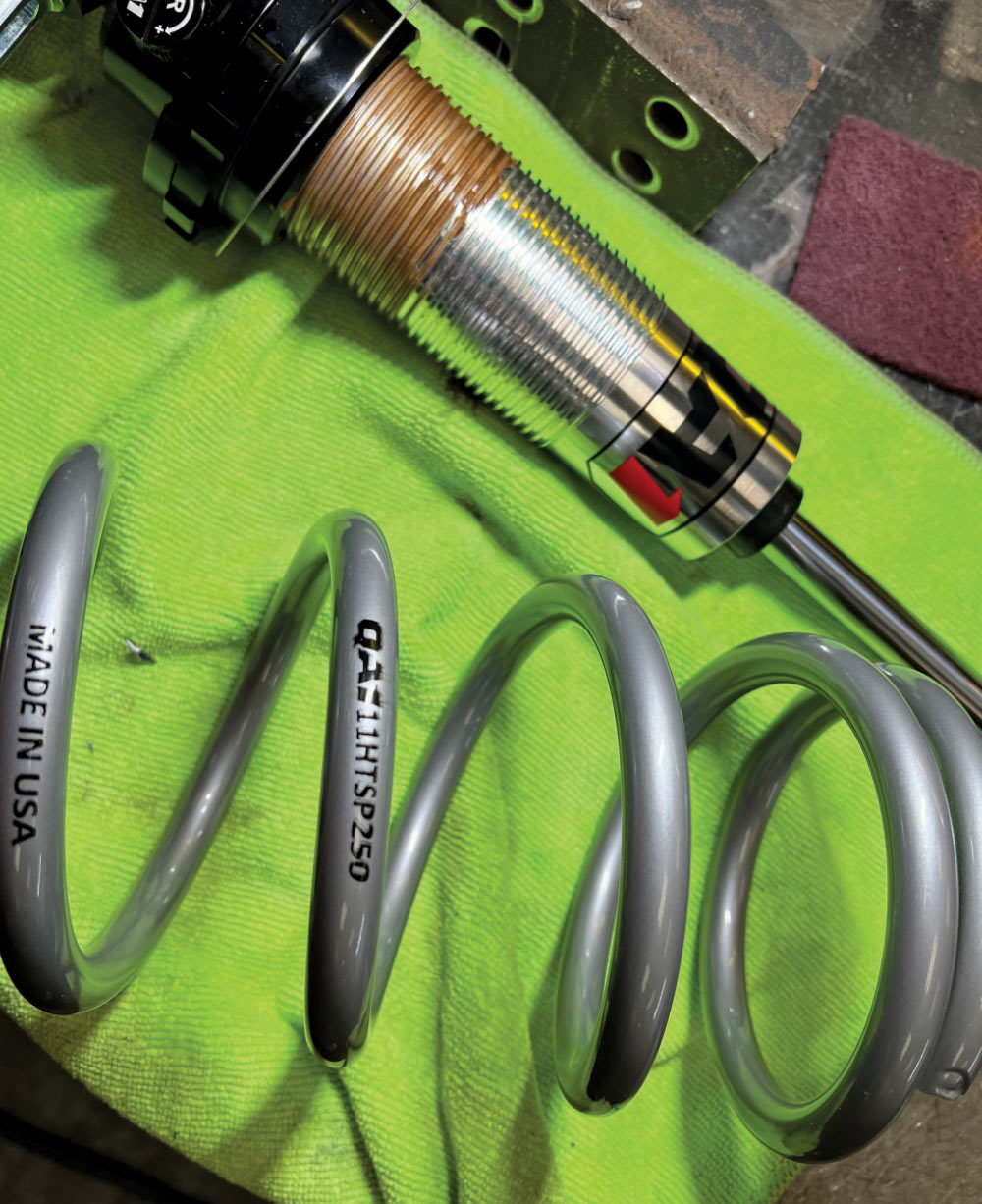
First, more parts from JEGS were added to the Nova, including a new Saginaw 525 manual steering box (PN 153-920010) and QA1’s Pro Front coilover system with double-adjustable shock absorbers (PN 122-GD401-11250A). These shock absorbers feature 18 rebound settings on one knob and 18 compression settings on the other, offering 324 valving options for the ultimate in front suspension tuning.

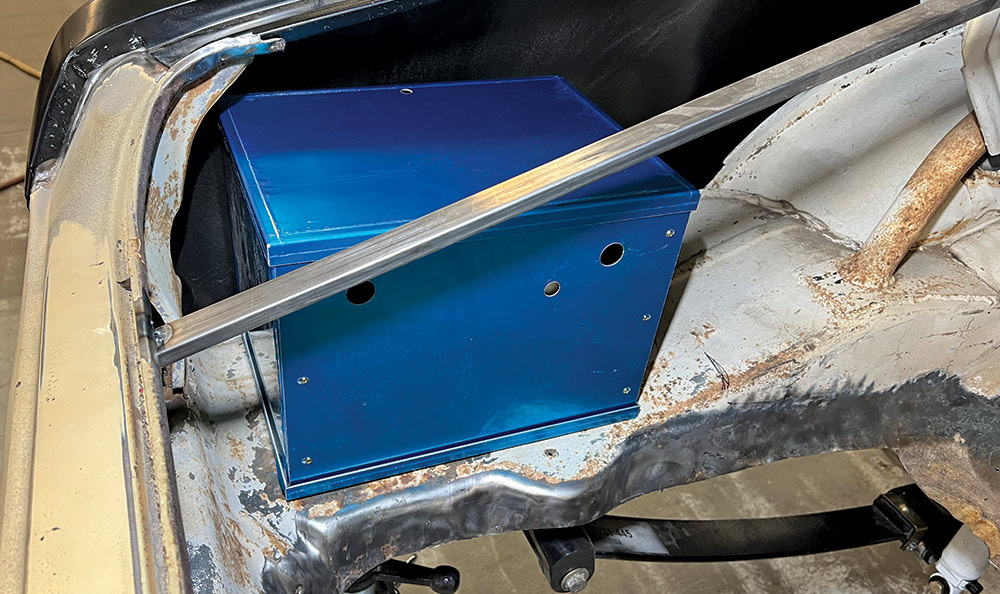
Along with the suspension improvements, a JEGS battery box was added to the trunk. Made from 0.060-inch aluminum, the battery box kit (PN 555-10235) includes 16 feet of positive battery cable, 3 feet of negative cable, a battery hold-down, mounting hardware, vent tube fitting, and tube.

A work in progress powered by a big-inch small-block, HRBD’s Nova isn’t intended to be a show car but a weekend warrior that’s safe and dependable, at least as much as a race car can be. Above all, it’s built for fun by a bunch of guys who love hot rods in all their forms, even weekend warriors.
Close-up view of a vehicle's rear axle assembly with U-bolts and control arms
2. Along with a Ford 9-inch axle assembly, the stock Nova rear suspension has been updated with Calvert Racing’s split monoleaf springs.
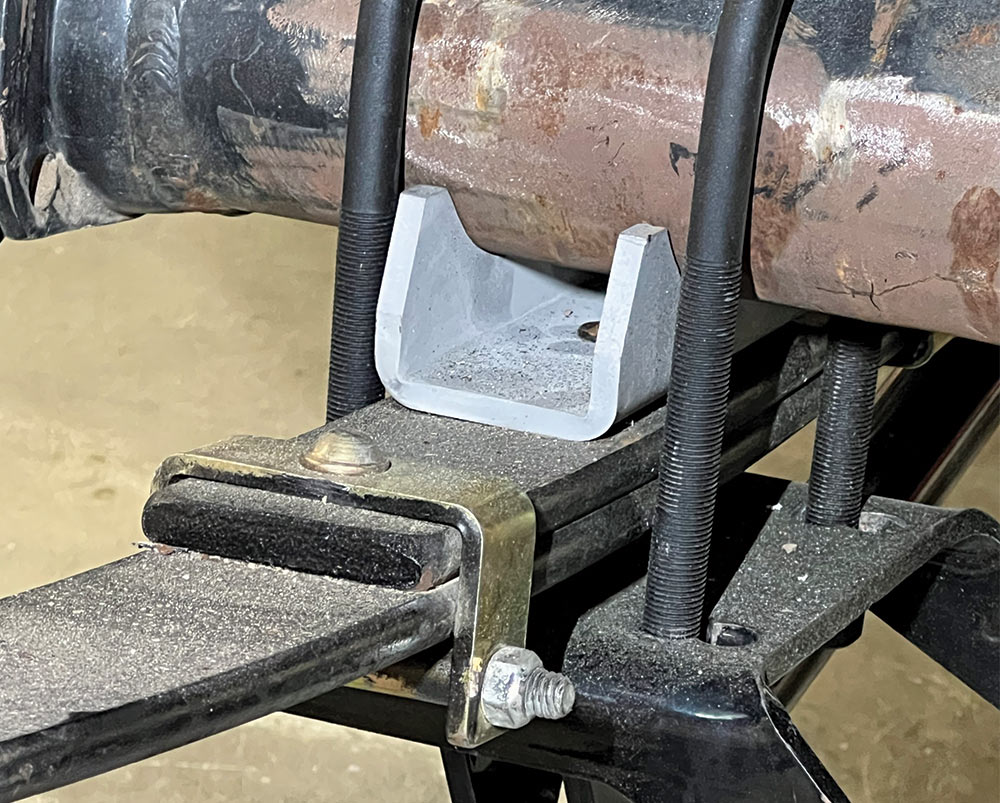
Close-up of a vehicle's suspension showing a gray metal spacer block resting on a leaf spring assembly secured by two large U-bolts.
3. Calvert monoleaf springs consist of two overlapping halves held together by heavy-duty U-shaped alignment clamps with Grade 8 hardware.
A vehicle undercarriage showing a black suspension link or control arm bolted to the frame with a urethane bushing.
4. The monoleaf front spring eye bushings are made of solid aluminum, while at the rear, urethane bushings are used with stock shackles.
Under-vehicle shot showing a new black suspension system installed, featuring the "CalTracs" logo, with a mechanic working underneath on a creeper.
5. Those with various leaf spring suspensions on cars and trucks can trust Calvert Racing’s CalTracs traction bars to eliminate wheel hop and greatly increase traction. Made primarily for drag racing, they also work well for street driving.
A vehicle's undercarriage showing a black suspension bracket and control arm securely bolted with large silver hardware and U-bolts.
6. The CalTracs’ lower bars and spring plates attach to the rearend housing using U-bolts. Notice the monoleaves overlap beneath the spring mount.
Side view of a car body lifted on a jack stand.
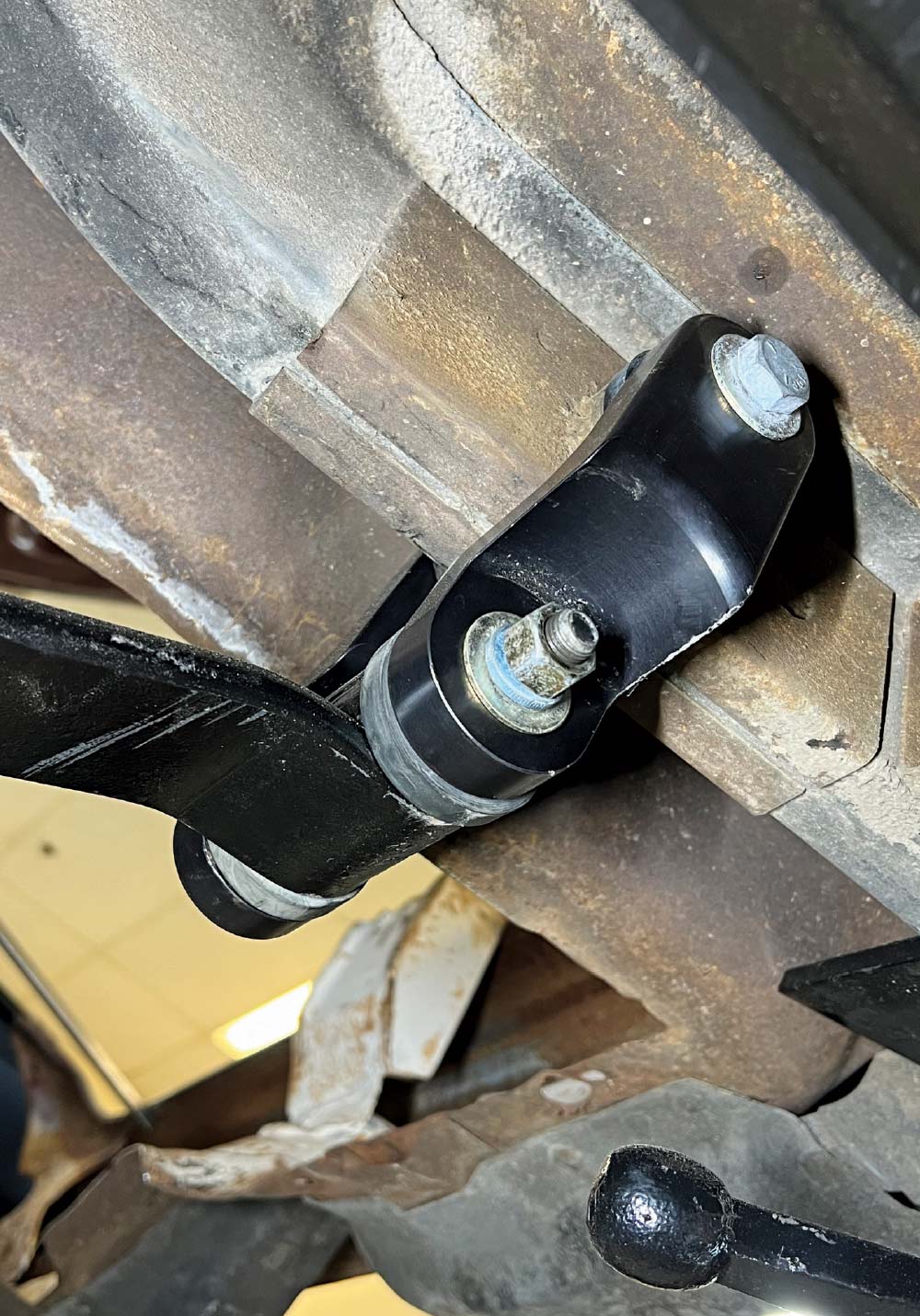
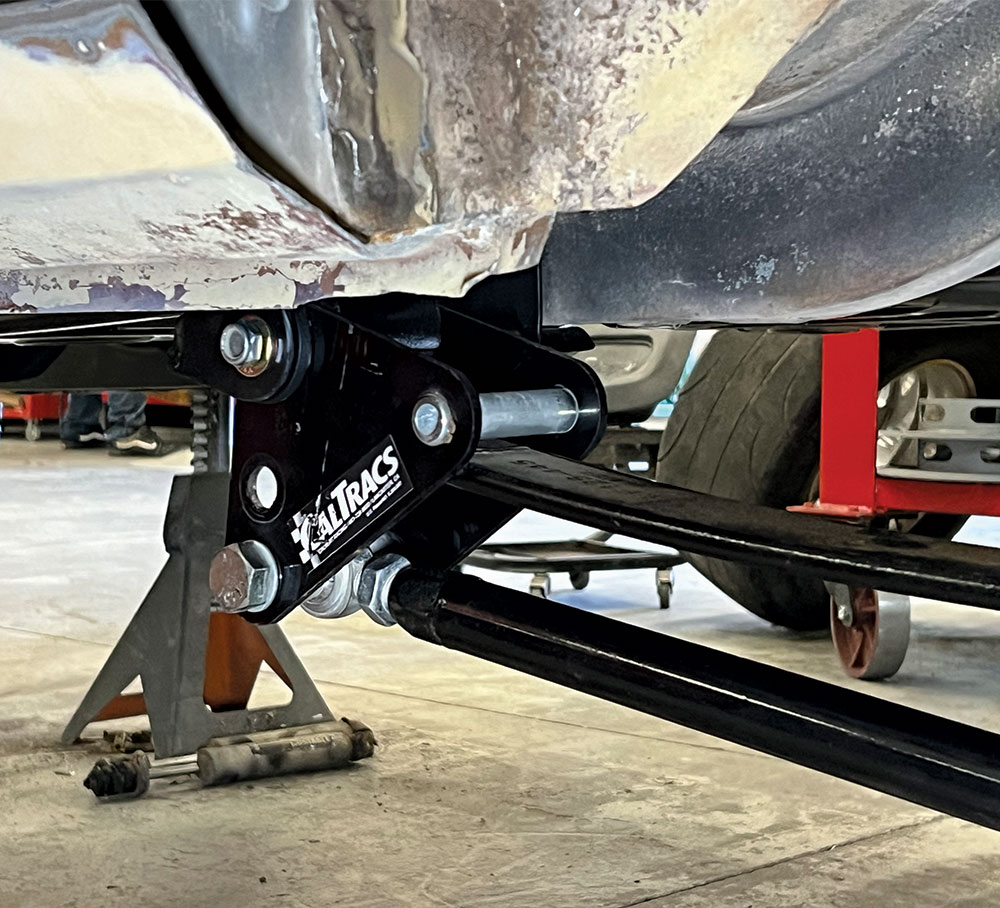
7. At the forward end of the CalTrac transfer link is the pivot assembly. It rotates to press against the spring pack, thereby preventing the axle housing from the rotation that causes axle hop.
Isolated studio shot of a black CalTracs traction bar system assembly with a leaf spring and a gray axle mount on a white background.
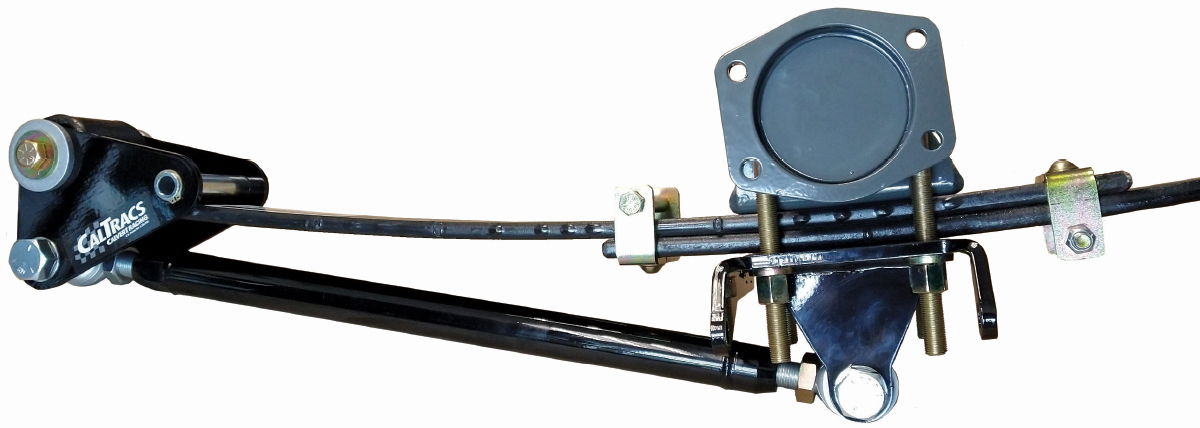
8. The CalTracs Drag Profile traction bar kit has one mounting hole on the axle brackets, while the pivot plates have two to allow chassis tuning.
Isolated studio shot of a black CalTracs traction bar system assembly with a leaf spring and a gray axle mount on a white background.
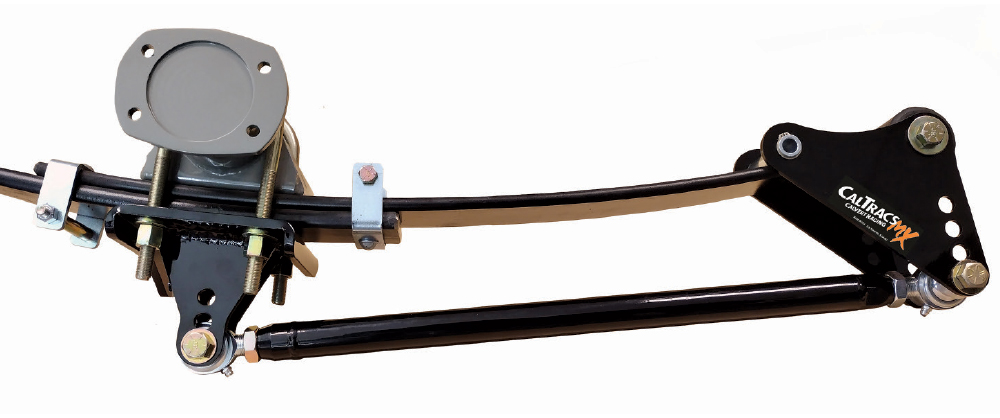
9. For serious competition applications, Calvert Racing offers the CalTracs MX series, which provides 12 tuning configurations—three positions at the axle brackets and four at the pivot plates.
Isolated studio shot of a black CalTracs traction bar system assembly with a leaf spring and a gray axle mount on a white background.
10. CalTracs Low Pro traction bars offer an extra 1-1/2 inches of ground clearance. The pivot plates and axle plates each feature one attachment hole for the lower link.
Two white Calvert Racing CR Series Adjustable shocks displayed on a surface alongside a set of metal mounting bushings.
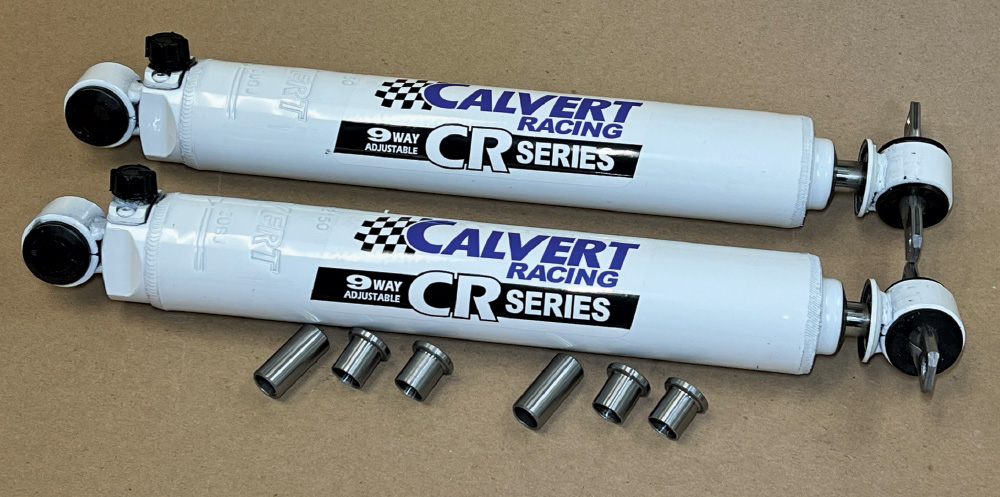
11. HRBD also opted for a pair of JEGS Calvert Racing’s adjustable shocks for its Nova. They are made in the USA and feature nine settings for compression and rebound damping.
Close-up of a white adjustable shock absorber showing the black plastic 9-way adjustment knob on the body and mounting eyelet.
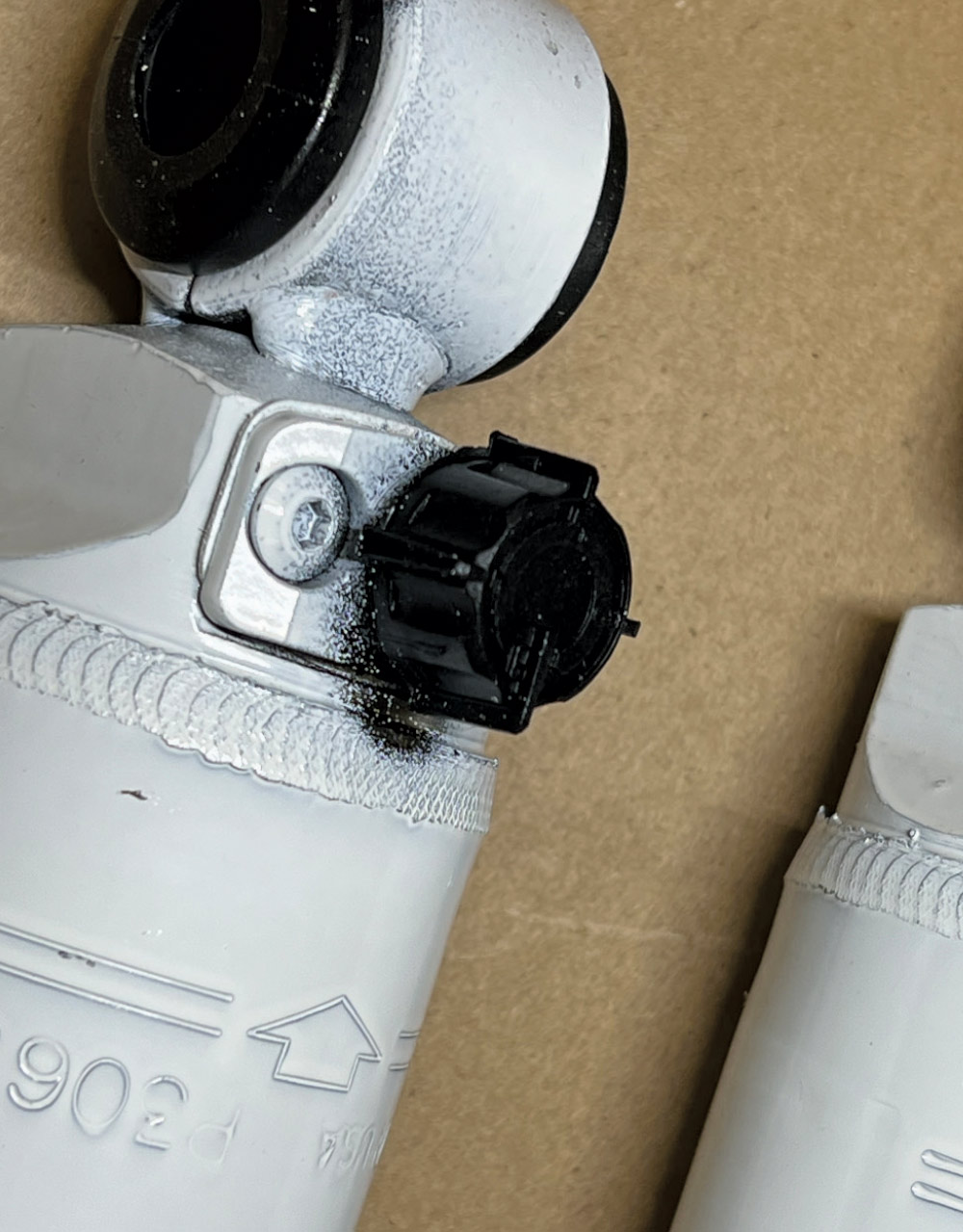
12. For easy access, the damping adjustment dial is located at the bottom of the shock absorber’s body. Turning the dial clockwise increases the resistance on rebound/extension. Setting 1 is the softest setting, and Setting 9 is the stiffest, most-aggressive setting.
Under-vehicle shot showing installed white Calvert Racing CR Series adjustable shocks and suspension bars.
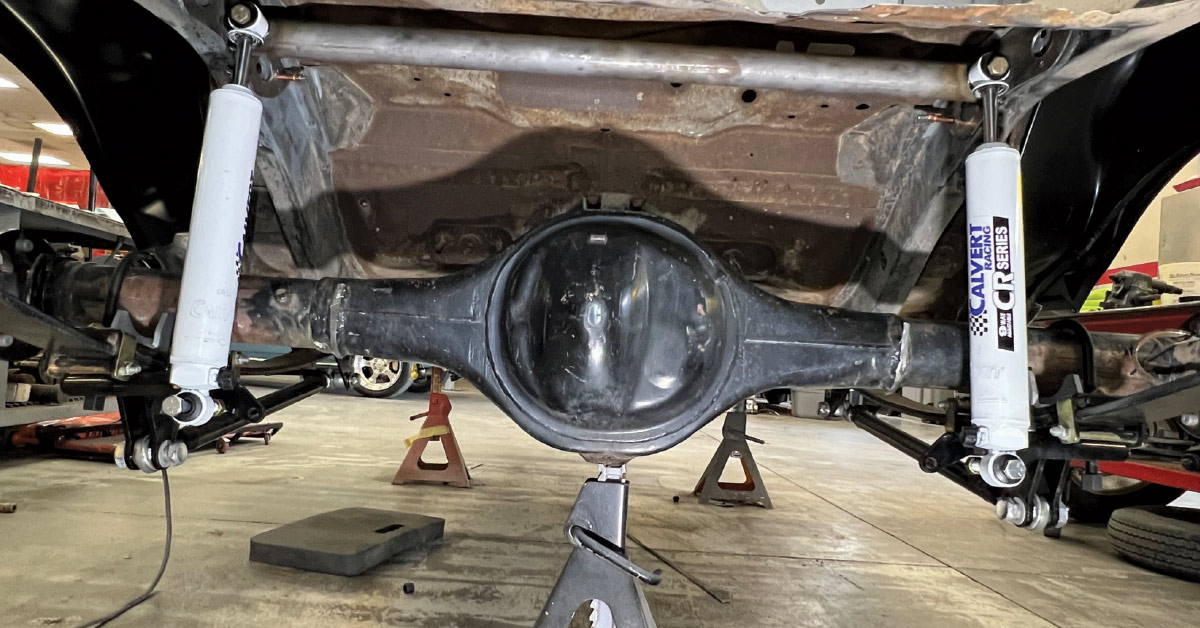
13. In the stock configuration, Nova shocks have a crossbar mount at the top. In this case, loop mounts were required due to the custom upper shock mount.
Close-up view of a vehicle's steering system, showing the black power steering box.
14. To make sure the Nova goes in a straight line, the worn-out original Saginaw manual steering box was replaced with a new one from Borgeson (PN 153-920040).
QA1 adjustable coilover shock absorber, showing the black body, silver mounting eyelet, and the 'C' (Compression) and 'R' (Rebound) adjustment knobs.
15. For a variety of chassis tuning options, the QA1 front coilovers have separate adjustments that offer 18 options each for compression and rebound damping.
Close-up of a threaded coilover shock body where a brush is applying a thick layer of brown anti-seize compound to the threads.
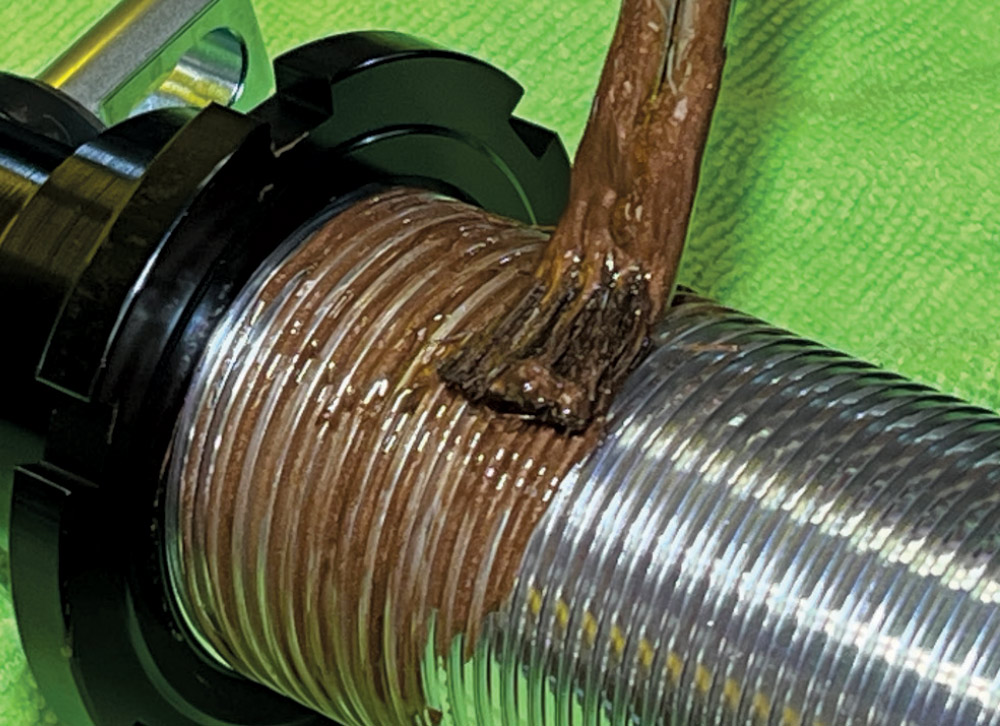
16. Prior to installing the springs, the shock bodies are coated with antiseize compound to prevent galling of the adjuster’s threads.
A QA1 adjustable coilover shock body with black adjustment knobs for Compression ('C') and Rebound ('R') next to the metallic threaded section.
17. The threaded collar on the shock bodies allows the spring’s preload to be adjusted. At the bottom of the threaded section is the lock nut that secures the preload adjustment.
A threaded coilover shock body resting on a bright green cloth.
18. The advantage of the coilover conversion is that, with compression and rebound damping adjustments and spring preload adjustments for establishing ride height, spring rates can be optimized by replacing the coils. In this case, 250-pound springs were used.
A vehicle's front suspension during restoration, showing new black upper and lower control arms and a coilover shock assembly mounted on the frame.
19. As the Nova had already been equipped with tubular control arms, they were retained. With the stock coil springs and shocks removed, the QA1 coilovers fit in the frame pockets they once occupied.
A vehicle's front suspension showing a coilover shock and spring assembly installed within the control arms, with adjustable mount hardware.
20. At the bottom, the coilovers connect to the lower control arms in the same location as the original shocks—reinforcement rings are added to the control arms for extra strength.
spring pocket
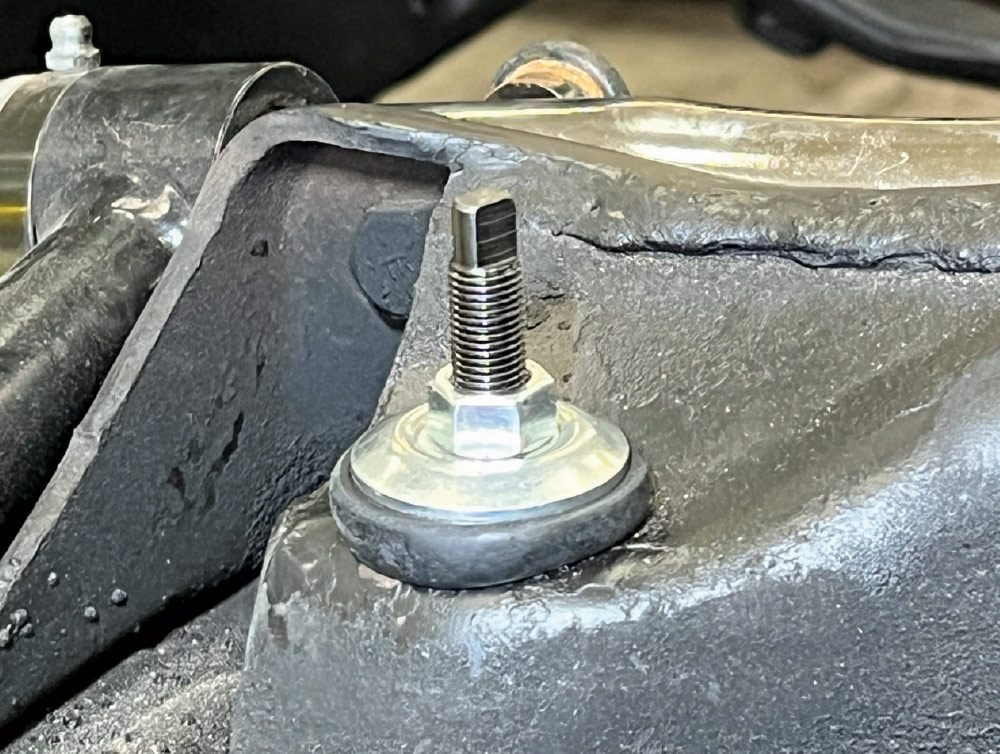
21. At the top, the coilover spring seats into the original coil spring pockets, while the shock studs are attached to the frame with rubber bushings.
bright metallic blue battery box
22. The battery has been relocated from the engine compartment to the left side of the trunk in an aluminum box. The temporary steel tube brace was installed during body repairs.
A silver battery disconnect switch with brass terminals and an "ON/OFF" label from JEGS, on a dark surface
23. To comply with NHRA safety rules, a shut-off switch must disconnect the battery from the entire electrical system.
Rear view of a Nova body shell in primer, showing the tail panel area where the external battery disconnect switch is mounted below the trunk lid.
24. Since the battery disconnect switch needs to be installed at the rear of the vehicle and accessible from outside, it was mounted in the panel below the trunk lid.
SOURCES
Modern Rodding
VOLUME 6 • ISSUE 63 • 2025