


 At the Mecum Kissimmee auction in January 2025, a 1966 Ford 427 SOHC Cammer from the Richard V. Munz Collection brought $123,999. It came ready to run on its own “run stand.”
  Many a hot rodder has placed a Ford 727 SOHC Cammer in a Blue Oval, a setup Ford had never installed (but would have liked to), such as this Holley dual four-barrel setup that easily pumped out 657 hp at 7,500 rpm back in the day.
SOHC Cammer:
The Most Impressive V-8 From the ’60s—and Still Is
 Photography Courtesy of Mecum Auctions
ord’s best-known mid-1960s DOHC V-8 was never meant for Main Street. It was built for the pinnacle of racing; the Ford 427 SOHC Cammer was a racing-bred monster developed in the early 1960s as Ford’s purpose-built answer to the era’s escalating performance wars.
The “Cammer,” as it was often called in automotive circles, paired a 4.230-inch bore with a 3.400-inch stroke for 427 ci of displacement. Rather than following Ford’s familiar pushrod formula, it used DOHC, four valves per cylinder, and high compression, typically 12:1 or more in race trim, along with single- or two-barrel carburetors to create an engine engineered for sustained high-rpm performance. The result was one of the most exotic powerplants ever to wear a Ford Blue Oval, widely associated with output in the 600hp range in period competition form, though exact figures varied by tune and application. It wasn’t unheard of during its heyday to hear (in speech and on the track) about 9,000-rpm runs and 800-plus horsepower, especially when using Hilborn mechanical fuel injection and running on something “more” than pump gas. It’s been reported that somewhere between 750 and 1,500 of these amazing V-8s were produced by Ford. The valve covers would soon become instantly recognizable, and to this day, any hot rodder can spot them from a distance and immediately know “what’s up.”
Factory-backed for NASCAR in 1963-64, the Cammer was quickly outlawed there, but it found a natural home in drag racing, where it became a favored powerplant for Ford-backed contenders in the hugely popular NHRA A/FX class. It was never offered in a production street car, which only sharpened its identity as a pure competition engine rather than a showroom performance option.
The Ford 427 SOHC Cammer became legendary in NHRA drag racing when driven by the likes of Mickey Thompson’s pair of Mustang Funny Cars; the “Blue” car driven by Danny Ongais and the “Red” car driven by Pat Foster. The cars were built by Pat Foster and Lil’ John Buttera. (There’s a name that hot rodders should recognize.) It wasn’t unusual for these two cars to meet in the finals, with the Ongais car racking an incredible, near-perfect win-loss record. The cars ran consistently in the high 6s (6.96, a Blue car best) at speeds around 200 mph (207 mph, a Blue car best). The Blue car won 11 of its first 12 national events.
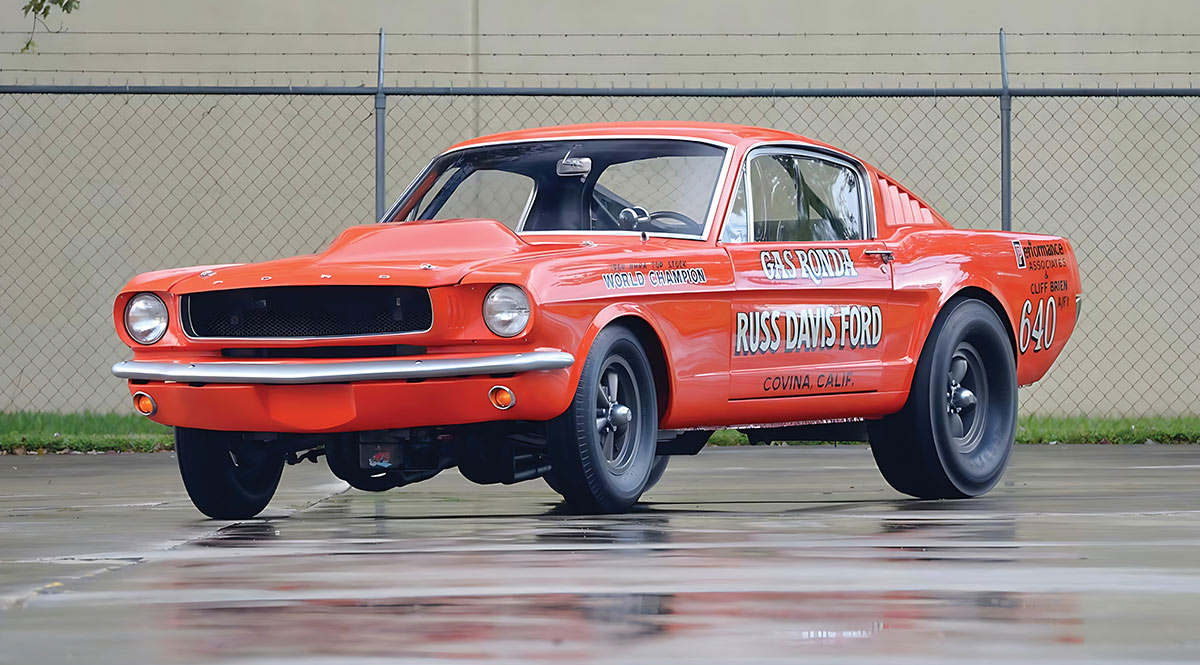 This is the second Gas Rhonda Mustang sponsored by Russ Davies Ford, as the first one was totaled.
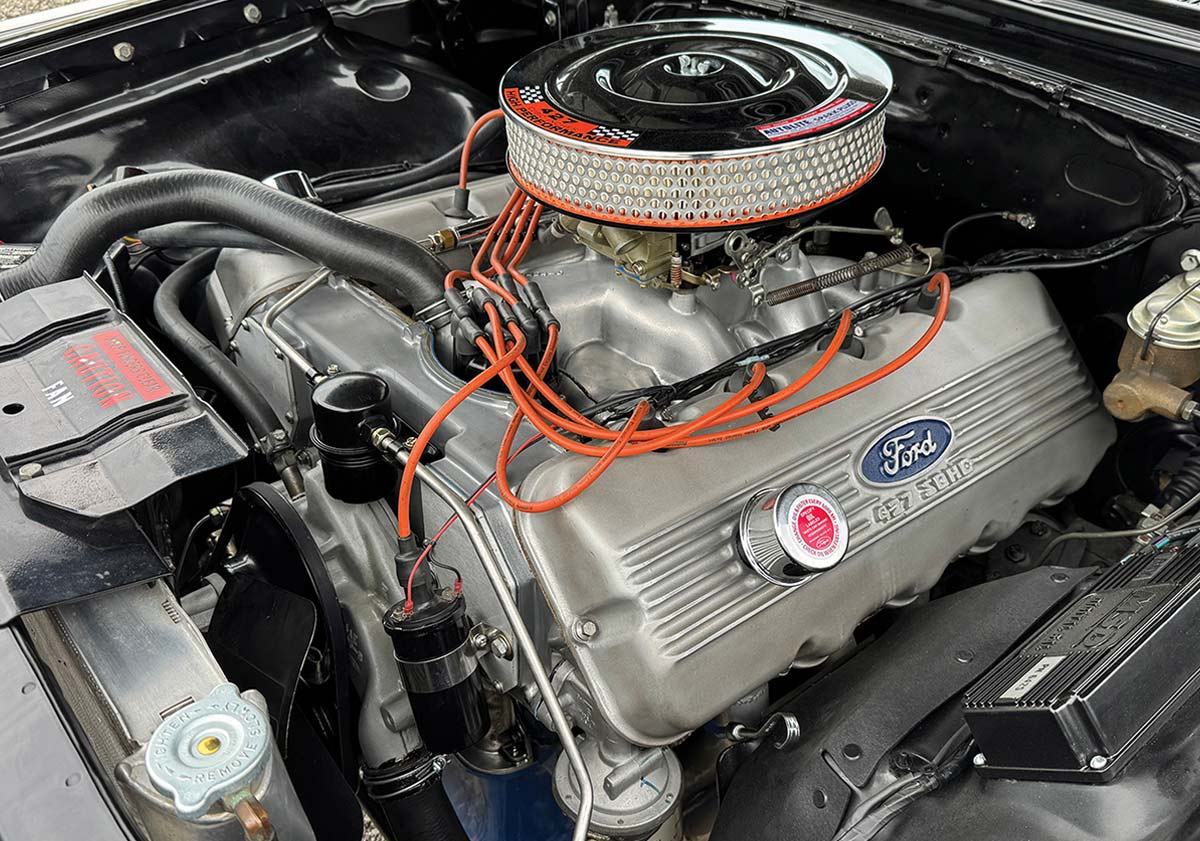 The single four-barrel Ford 727 SOHC Cammer was no slouch with a recognized output of 615 hp at 7,000 rpm.
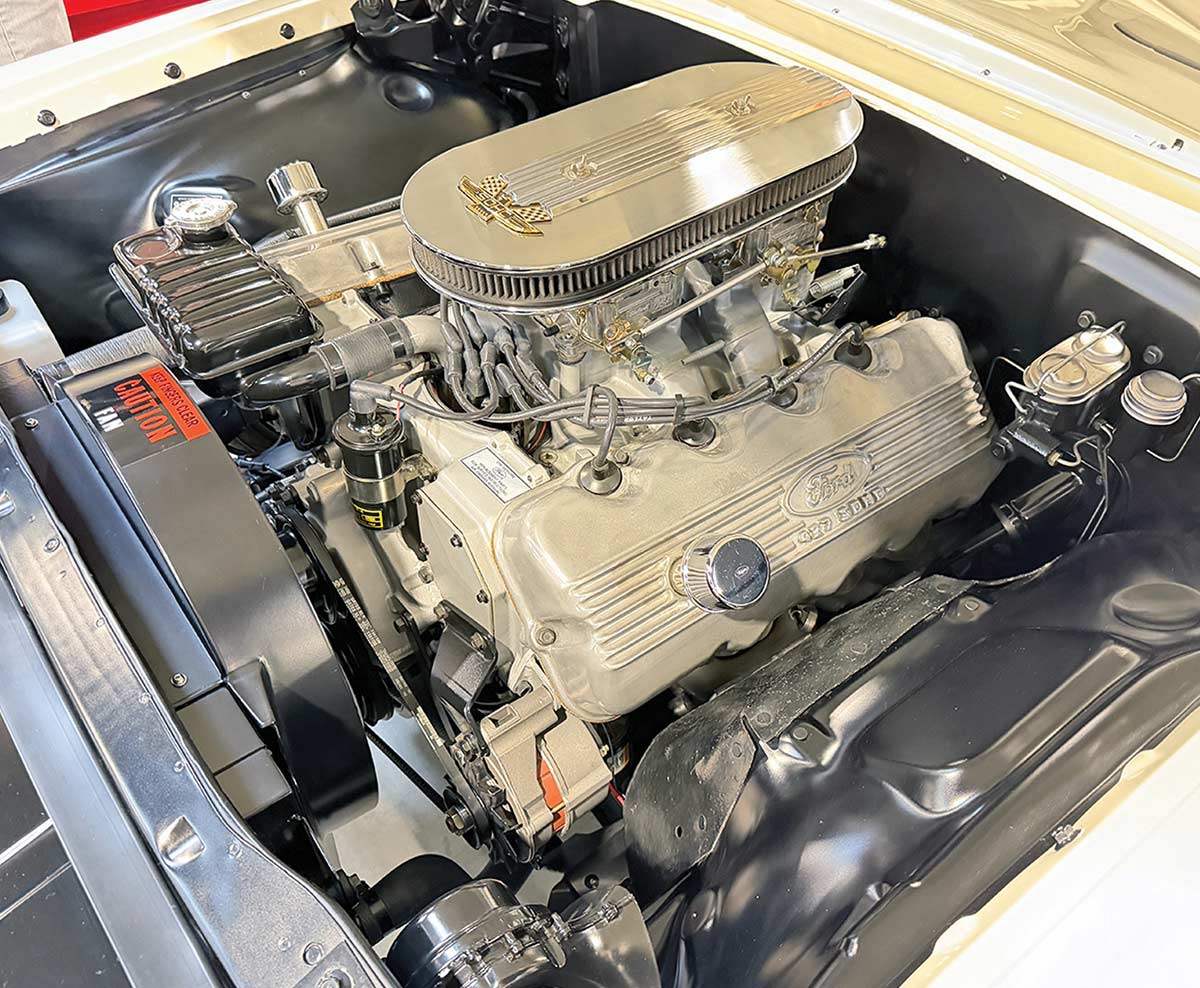 This 1964 Ford Galaxie is in the Matranga Collection and features an Edelbrock dual four-carb-equipped Ford 427 SOHC Cammer. It makes for one heck of a street-driven hot rod.
In the door-slammer ranks, there was the blindly fast Mustang “shoed” by Gas Ronda in his nearly unbeatable Russ Davis 1965 Mustang Fastback. It was 1 of 11 Mustangs that Holeman and Moody pulled the 289s and dropped in the Ford 427 SOHC Cammer. These ran in a stock class. Ronda’s first car experienced a mechanical failure that totaled it. Ronda received a second car from Ford, which went on to achieve an incredible winning record, running in the 10.30s. The second car had a fiberglass nose and doors and was campaigned for one season. The third car was all fiberglass, stretched by about 18 inches, and was one of the best in the emerging Funny Car class.
That distinction matters because Ford’s actual production performance legend of the era was the 427 FE, a brutally effective pushrod V-8 that powered some of the company’s most memorable street and competition machines. The Cammer, by contrast, was the moonshot, the advanced valvetrain headline-grabber, and the engine that showed how far Ford was willing to go when the mission was winning rather than mass production. For enthusiasts looking back on the period, the 427 Cammer remains the defining Ford SOHC V-8 of the 1960s, not because it was common but because it was extraordinary.