


 PHOTOGRAPHY BY HAROLD CLAY
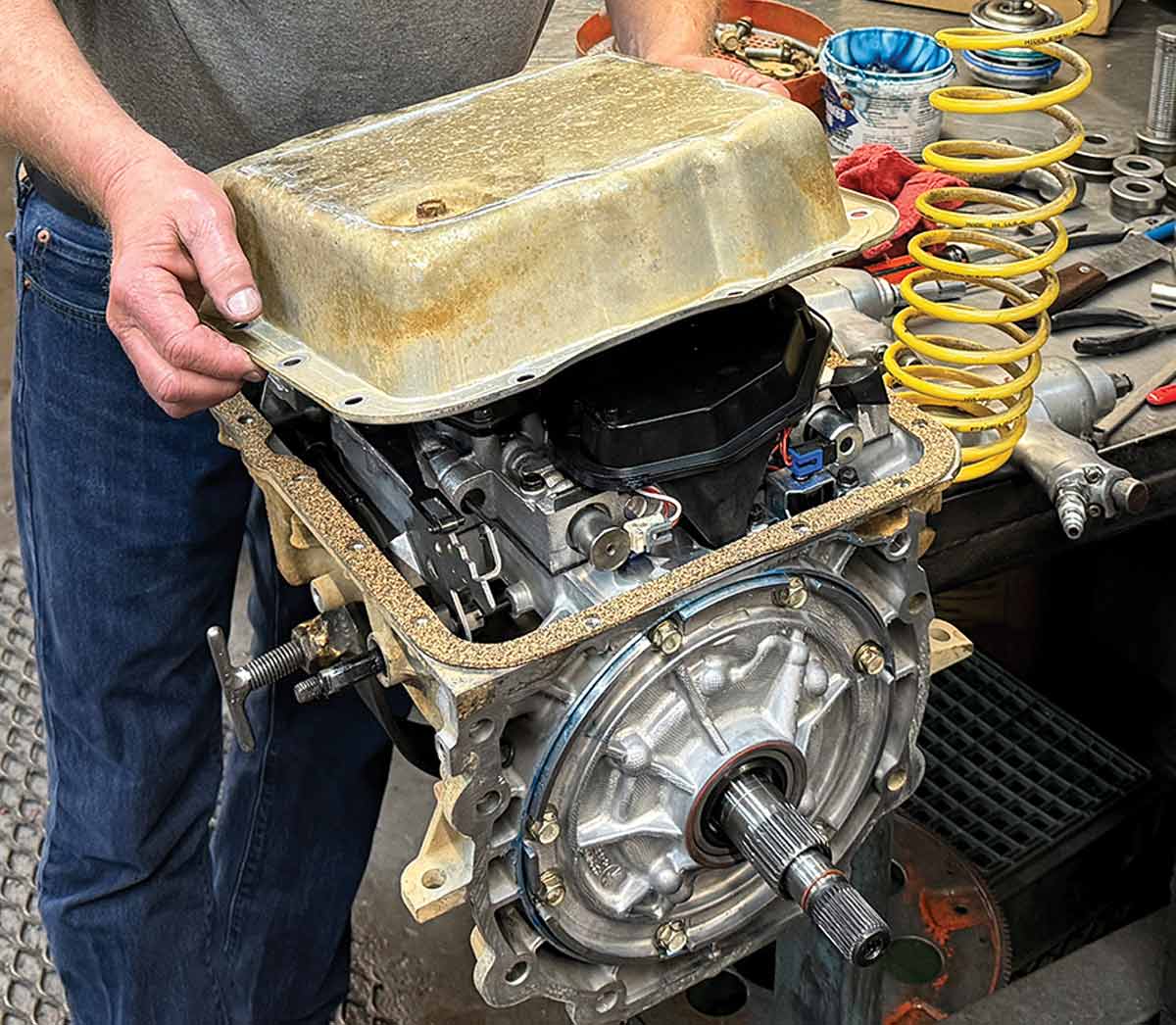
hen Harold Clay of Harold’s Hot Rods needed a 4L60E transmission rebuild for his personal project, he turned to fellow Enid, Oklahoma, resident Kevin Booker of Booker’s Transmissions for a GM 4L60E. Booker has decades of experience building transmissions and is well known for his high-performance drag-racing units. As well as he understands the modifications needed for a transmission to withstand the pounding it takes on a dragstrip, he also understands that a transmission with head-snapping shifts on the street can be a real pain in the neck, literally. For that reason, his focus for a transmission like this example, destined for a high-performance street application, is to eliminate any trouble-prone parts, make the shifts firm but not harsh, and ensure a long service life.
General Motors 4L60E is an electronically controlled version of the Turbo-Hydramatic 700-R4. The designation 4L60E stands for a four-speed, longitudinally positioned, 60-product-series electronically controlled transmission. While the 60 designation is often taken to stand for gross vehicle weight rating (GVWR), GM rates the transmission to handle 8,600 pounds. Basically, all the numbers, 60, 70, and so on, are relative ratings; the larger the number, the more torque capacity the transmission has.
Unlike the GM 700-R4, which used a throttle valve (TV) cable to control hydraulic pressure and shift points, the 4L60E is controlled by an ECU (electronic control unit) that operates solenoids in the valvebody to cause shifts. While that may seem more complicated than a TV cable, many 700-R4 failures were caused by misadjusted cables—electronic controls eliminate that issue. Although shifting is handled differently, the 4L60E has the same gear ratios as the 700-R4—First 3.06, Second 1.62, Third 1.00, Fourth 0.70—along with a lock-up torque converter.
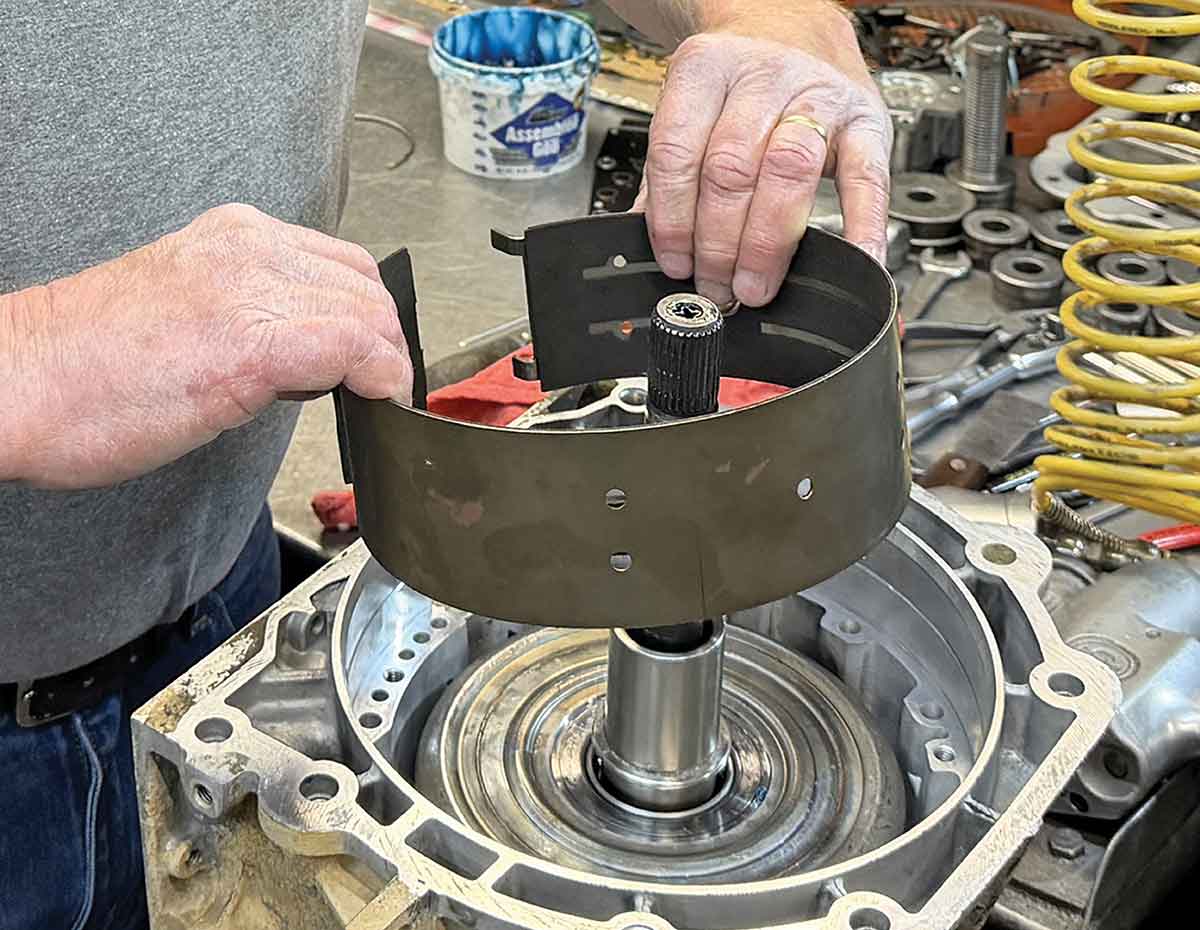
Like all automatic transmissions, the 4L60E has a torque converter to connect the engine to the transmission. The various forward gear ratios, as well as Reverse, are provided by planetary gearsets that consist of a sun gear in the center, planet gears that rotate around it, and a ring gear that surrounds the planet gear assembly. Which gearset is engaged is determined by the clutches and bands that hold one element of the planetary gearset stationary. Which clutch or band is applied, and in what combination, is controlled by the valvebody. In simple terms, the strength of an automatic transmission depends not only on how stout the mechanical components are, but also on how well the bands and clutches hold the planetary gears. When an automatic transmission is said to be “slipping,” it’s just that—the clutches or bands are not holding elements of the planetary gearset as they should.
In simple terms, one way to enhance a 4L60E transmission rebuild (or “beef up” the transmission) is to apply more pressure to the bands and clutches and adjust the timing of the components that receive hydraulic pressure with a shift kit. The problem is that it’s often thought that if a little is good, a whole bunch is better, so some builders make modifications that are better suited to racing than to driving on the street. Booker’s approach to non-competition applications is to make the shifts firm and replace any trouble-prone components to ensure a long service life.
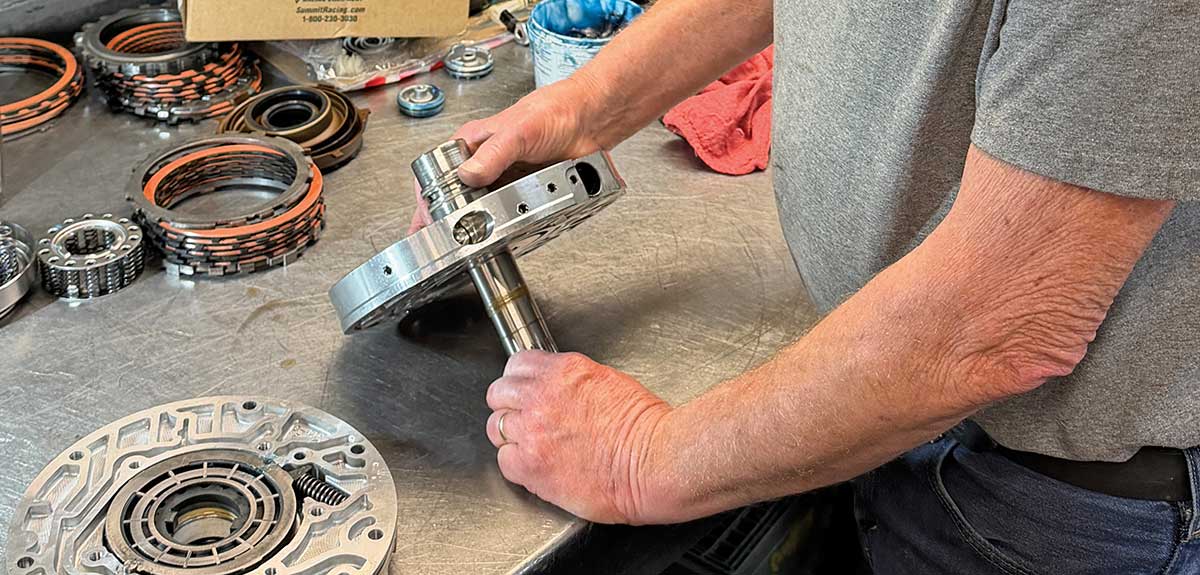
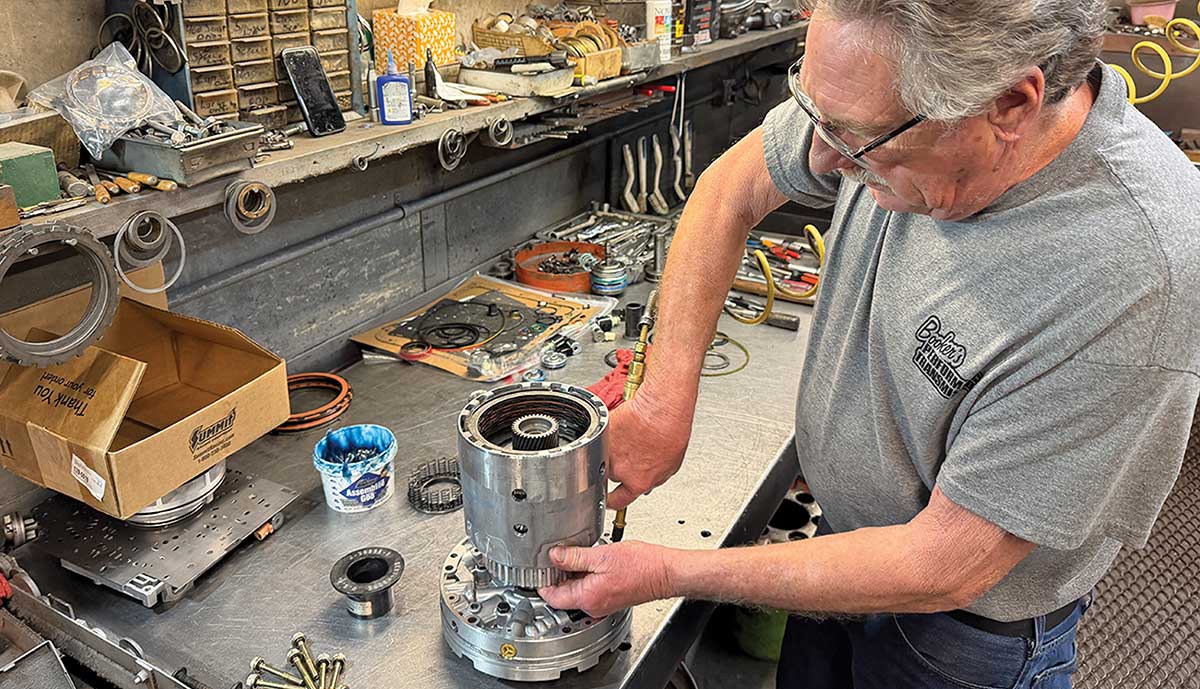
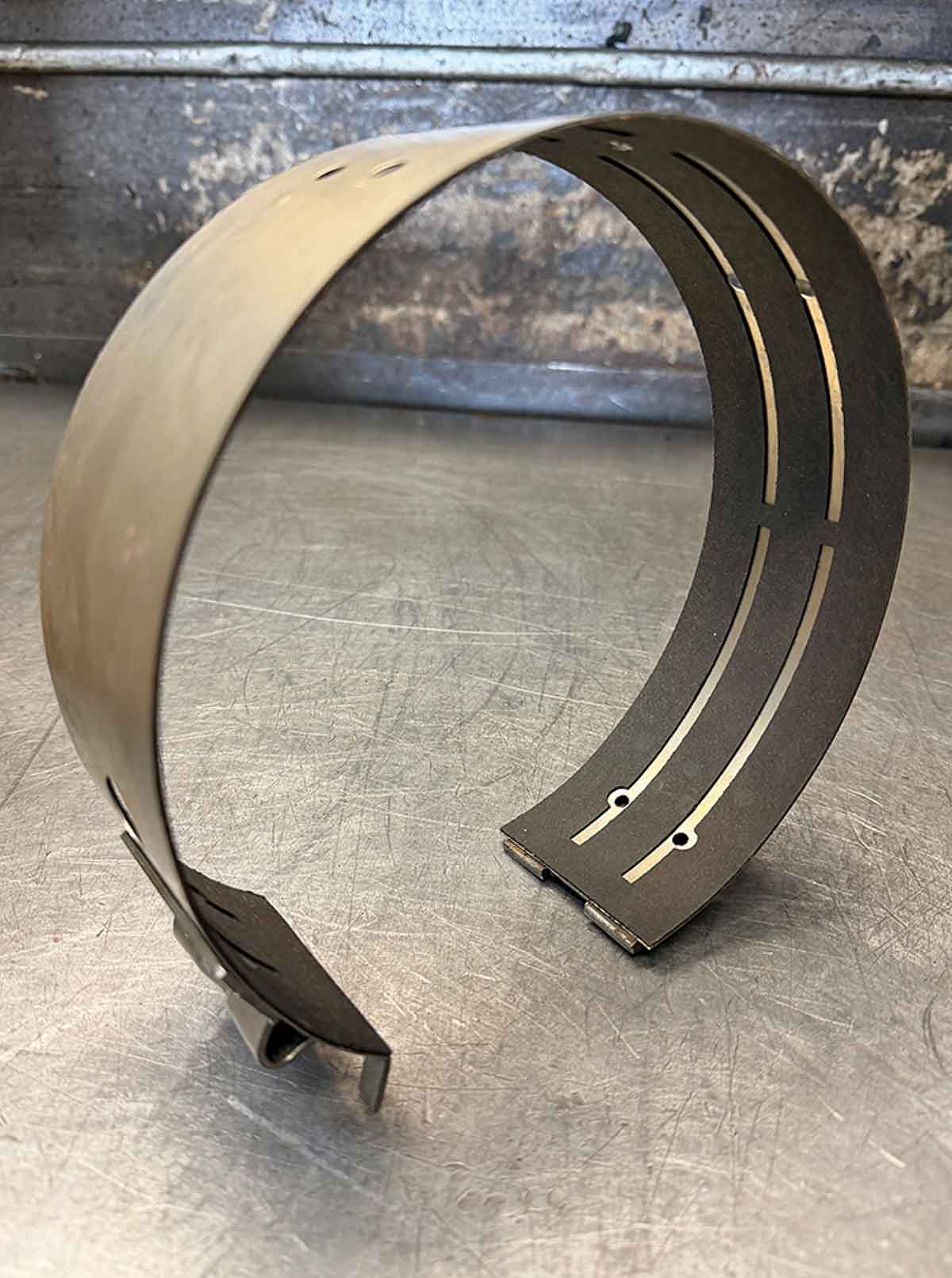
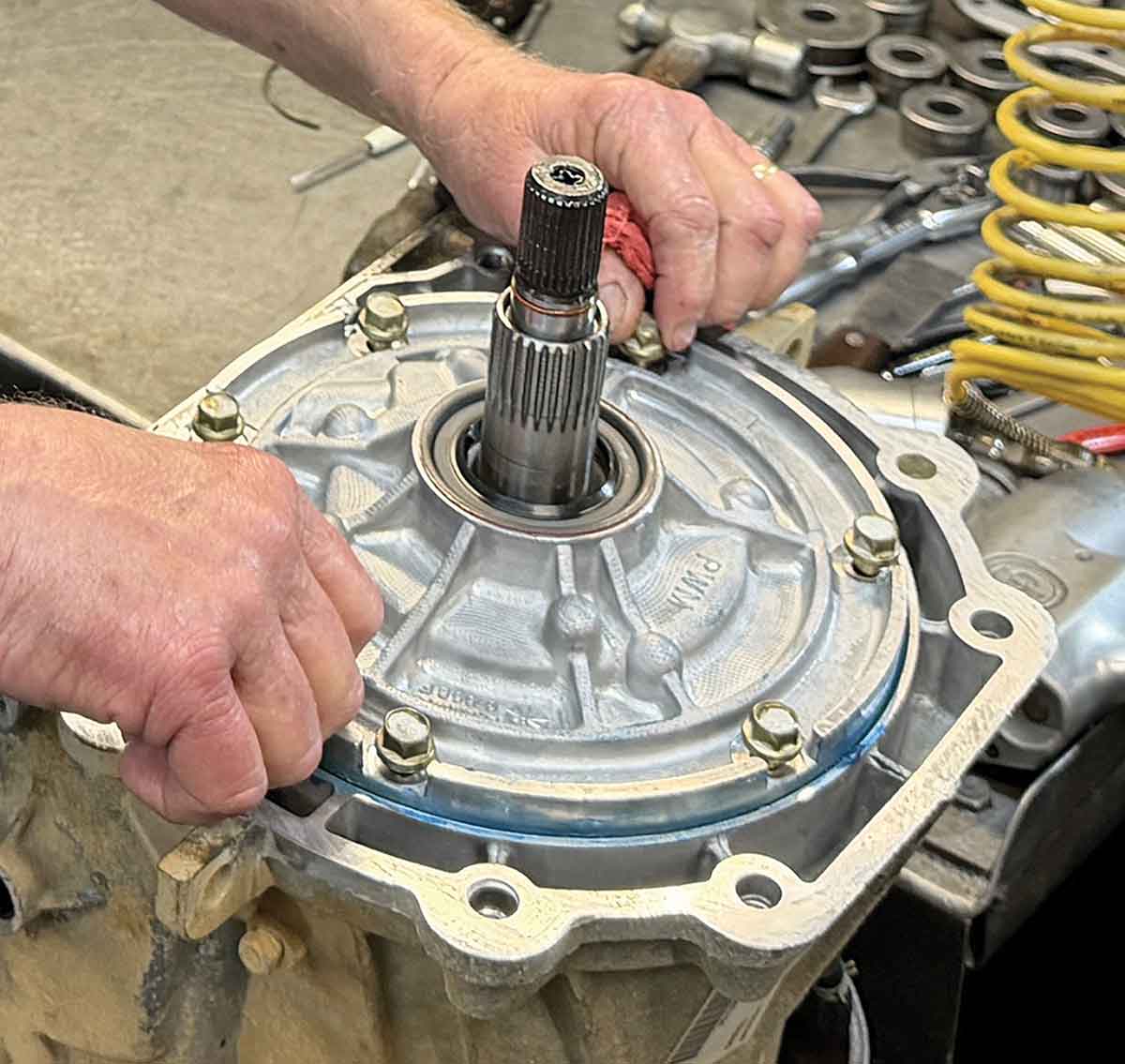
For the 4L60E transmission rebuild shown here, Booker used a Summit rebuild kit that included Alto Red clutches, Kolene premium steels, a high-performance band, a high-performance transmission filter, a bushing kit, oil seals, gaskets, and lip seals.
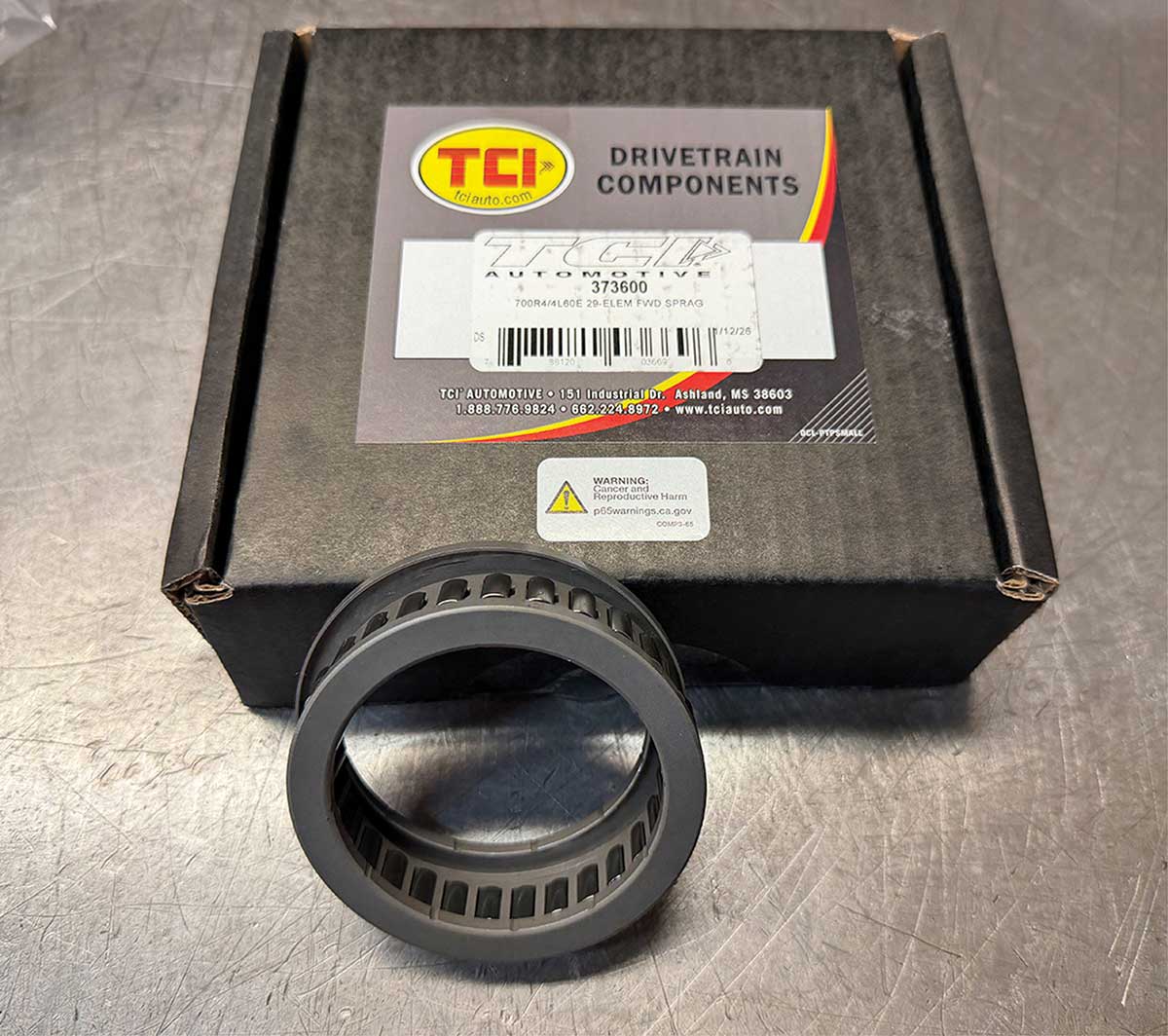
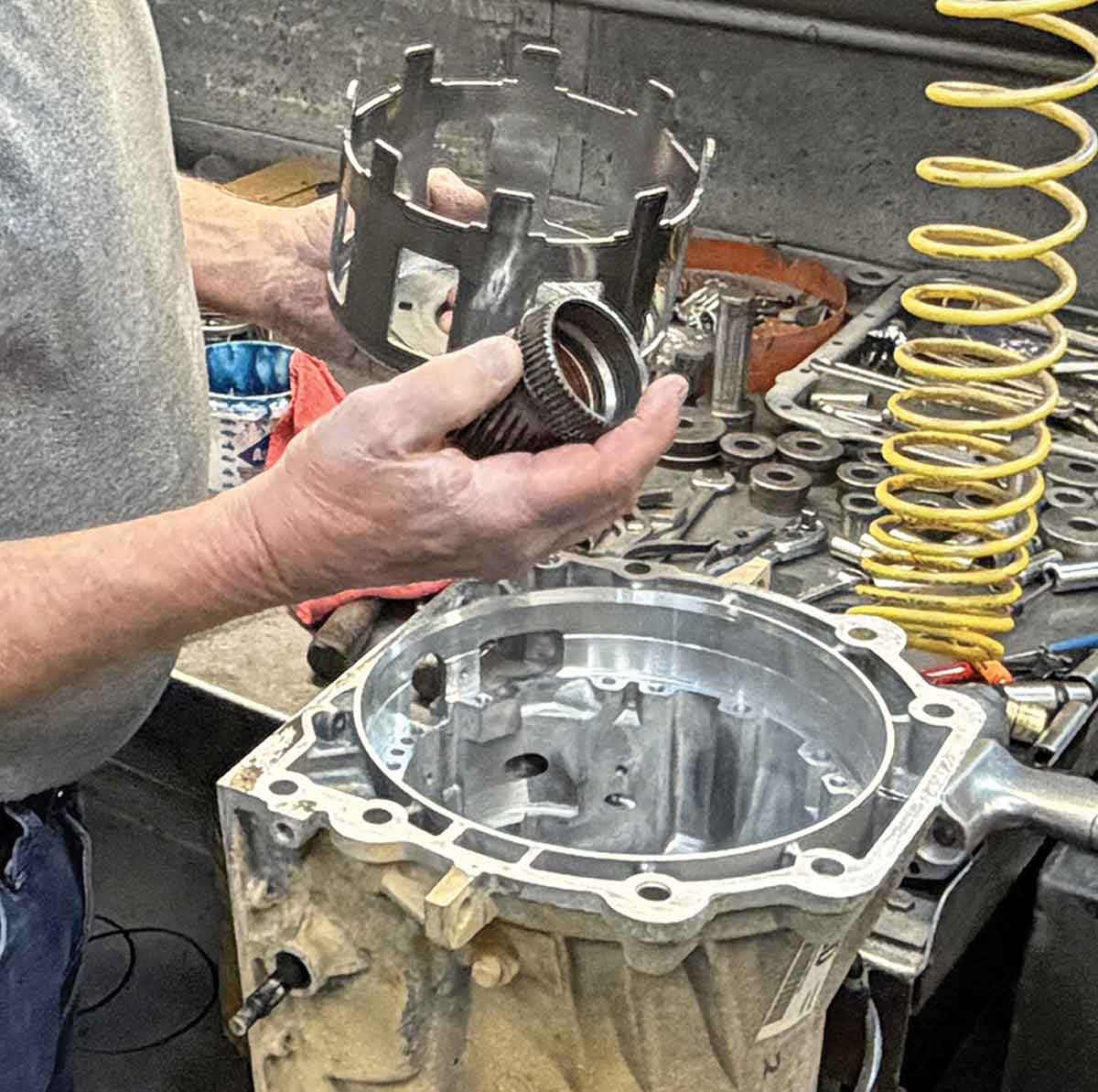
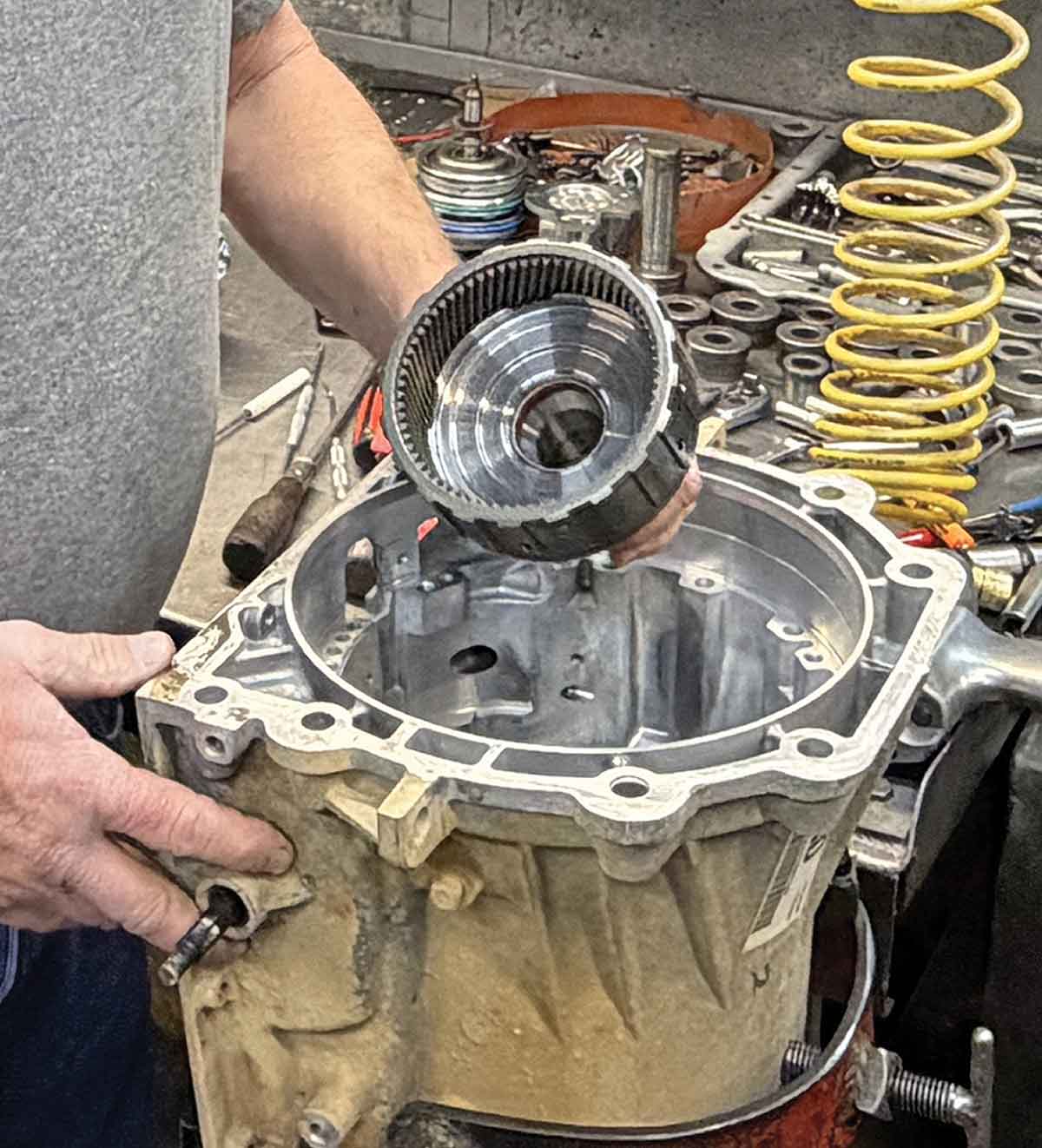
For improved reliability, Booker replaced the stock, trouble-prone sun shell with a heavy-duty version from Summit, along with a TCI forward sprag and the roller clutch. The front sprag is a one-way clutch that holds in First, Second, and Third gears and freewheels in overdrive—failure of the sprag will prevent the car from moving in overdrive. The low roller clutch holds in First gear in overdrive. If it fails, there will be no takeoff in overdrive.
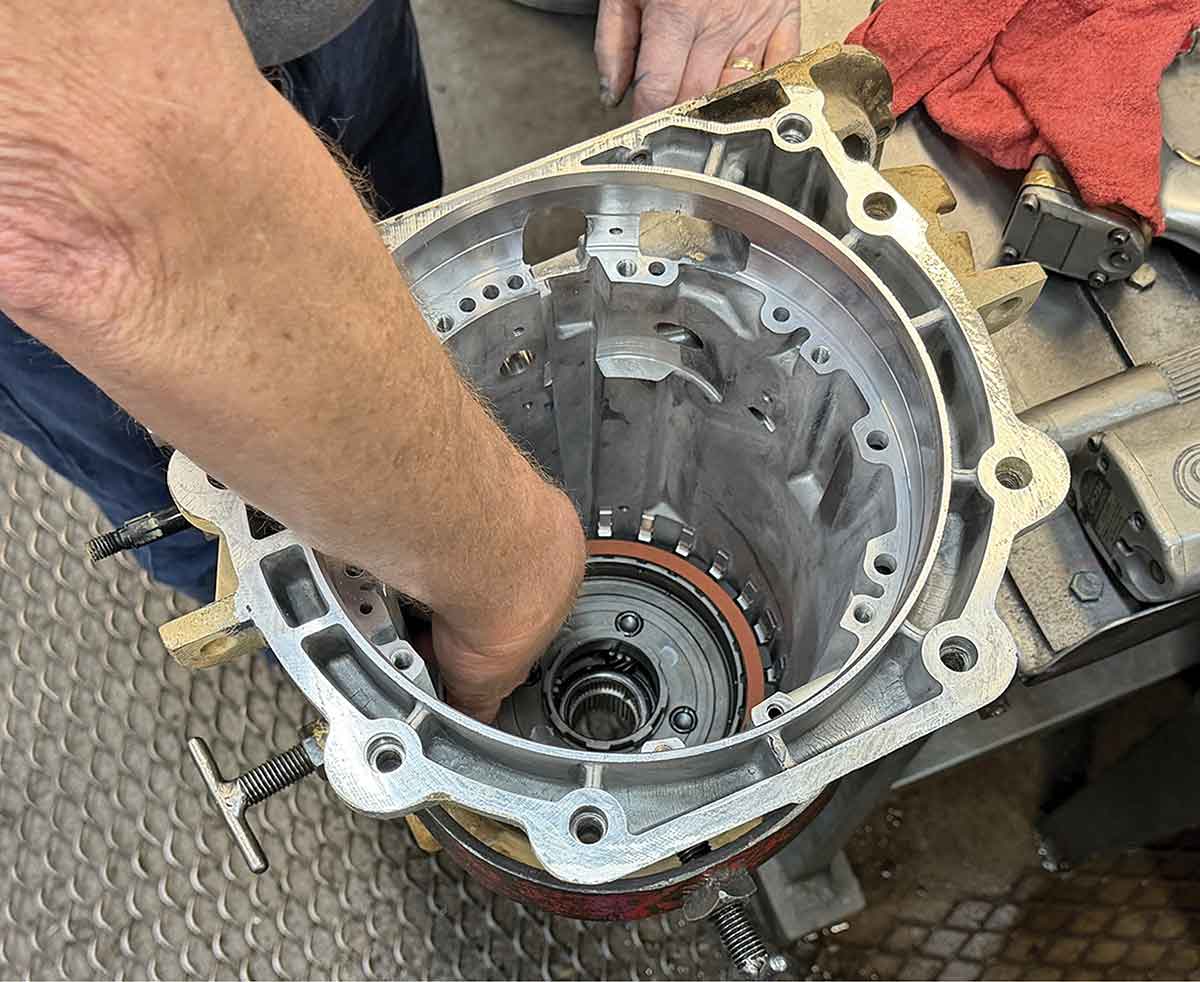
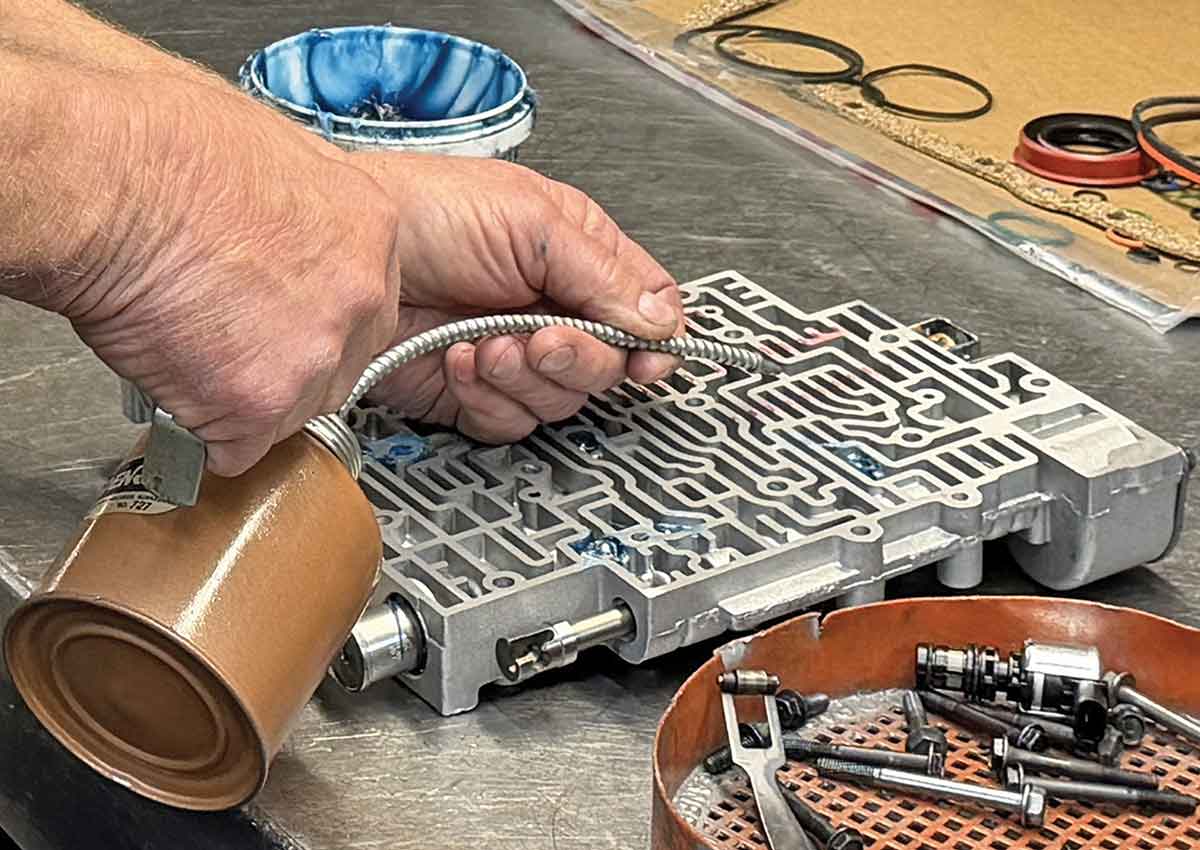
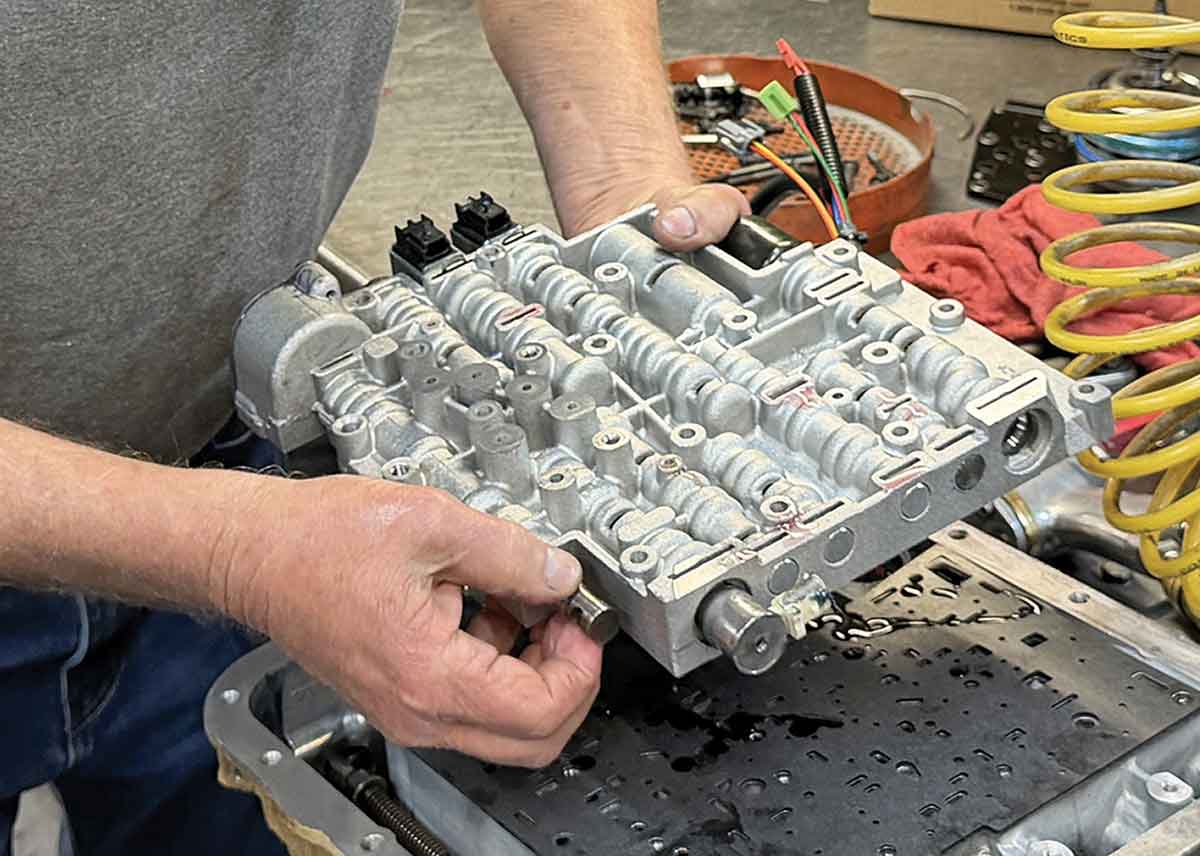
To improve shift quality, Booker installed a Corvette servo. This component increases hydraulic pressure, providing firmer 1-2 and 2-3 gear changes and reducing slippage under heavy loads. However, the Corvette servo does not affect the shift into Fourth, which is generally a soft, lazy gear change. To make the shift into Fourth feel as firm as the lower gears, Booker drills a hole in the separator plate to increase hydraulic pressure to the circuit controlling the gear change.
Two more components Booker replaces are the accumulator pistons. These pistons build hydraulic pressure and cushion gear shifts. The stock accumulator pistons are made of plastic; the replacements are made of aluminum.
The final update to this transmission was the addition of a TCI Breakaway torque converter. These TCI Breakaway torque converters provide approximately 1,000 rpm more stall speed than stock—2,200-2,600 rpm depending on gear ratios and vehicle weight. These converters feature furnace-brazed fins, needle bearings, and a flame-hardened hub—the same found on their street/strip converters.
While many hot rodders believe a performance transmission has to bang into each gear hard enough to chirp the tires on every shift, that’s not only unnecessary but also annoying. Booker knows what it takes to build a reliable, long-lasting performance transmission for the street with firm but not harsh shifts—and that’s exactly what Clay wanted and got.