


 Photography by THE AUTHOR
f all the iterations of Pontiac’s V-8 engine family, the 428ci version doesn’t get much attention. That’s not without reason, as the 389, 400, and 455 mills were admittedly the “hot ones” to borrow a classic Pontiac tagline.
The 428 also had a relatively short shelf life, produced only for the 1967-69 model years, which means they are quite rare finds these days. While rated at up to 390 hp, they were designed to deliver low-end torque for the heavier fullsize cars and weren’t installed in the GTO or Firebird. However, numerous dealer-sponsored swaps to the larger engine were made in the traditional muscle cars.
At its core, the 428 was a bored-out 421 with the same 4.000-inch stroke. It was replaced by the 455 in 1970, which increased the bore slightly and added a 4.210-inch stroke. The relative abundance of 455-core engines and the more conventional 400-inch Pontiac engines make purpose-built performance versions of the 428 quite rare. However, the interchangeable parts within the Pontiac V-8 family make building one easier and relatively more affordable. By that, constructing one is costlier than a Chevy engine, but not in the same league as the Boss 429 or Street Hemi.
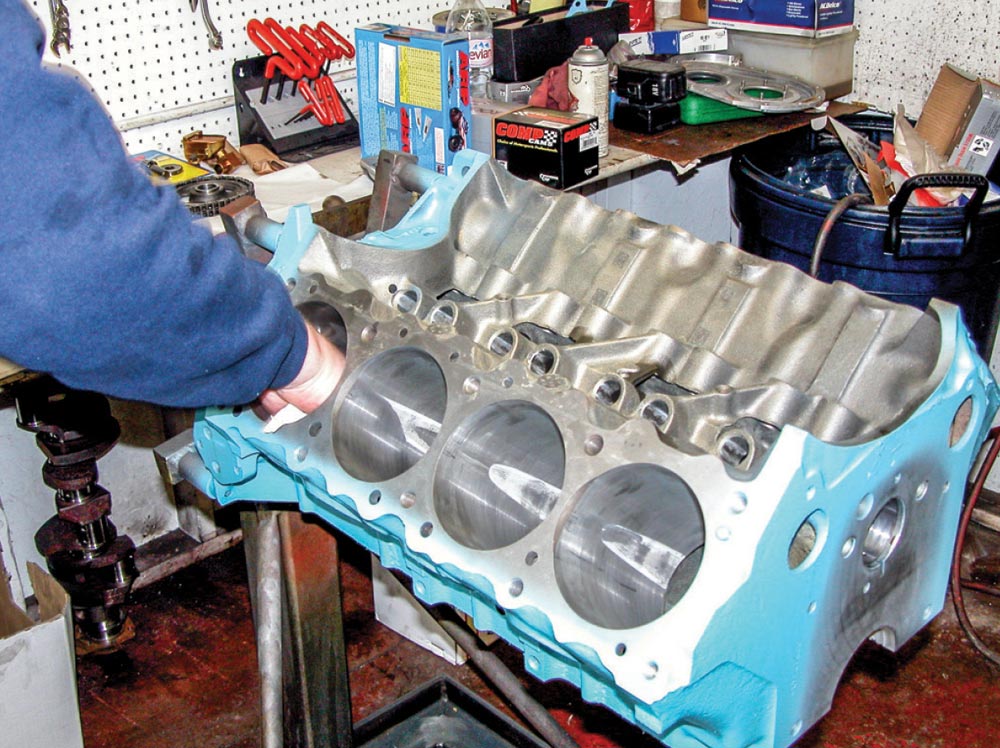
Locating a buildable 428 is probably the biggest challenge these days, but luck was on the side of Todd Ryden, who knew someone with a 428 block he no longer needed. That set in motion the plans to use it as the foundation for a restomod engine that would power Ryden’s 1965 Tempest. However, achieving that power goal through natural aspiration would require more than a simple camshaft swap and touching the heads, so a plan was devised to bore and stroke the engine to enhance its cylinder volume and, consequently, its airflow capability.
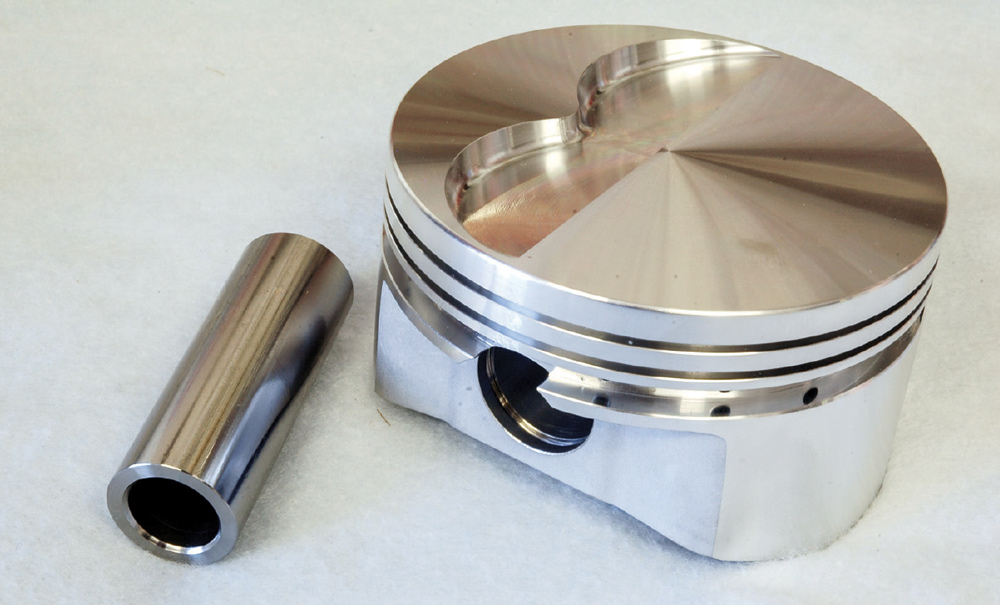
A 0.060-inch overbore, and a long 4.250-inch stroke will deliver a 467ci displacement, complemented by a set of Edelbrock aluminum heads patterned after the original Ram Air IV design and a Comp Cams camshaft with over 0.500-inch lift and a relatively tight lobe separation angle. This setup provides enough valve overlap to give the engine an authoritative rumble at idle.
The big-inch Poncho would also serve as the basis for a side-by-side shootout between Pontiac’s classic Tri-power induction system and a tried-and-true four-barrel carburetor. It’s no secret that a well-tuned single four-barrel will generally outmuscle the six-barrel setup of the Tri-power, but we wanted to see for ourselves with this big-inch displacement—and Ryden was up for the comparison test.
“No matter what the results, the Tri-power will still end up as the induction system of choice,” Ryden says. “This engine isn’t about maximum power. I want some eyeball appeal to go with it.”
Agreed. Style counts for a street driver, and the Tri-power setup draws the eyeballs on Saturday morning at the local cars-and-coffee meetup.
Regardless of the induction system, it’s worth noting that whether in its stock displacement or the stroker setup of this project, the 428 not only makes a solid starting point for a strong street engine, but most of the parts, including the rotating assembly, are interchangeable with Pontiac’s 455 engine. For this build, most of the parts were sourced from Summit Racing Equipment.
So, how did the stroker 467 perform? After priming the assembled engine, it was started, brought up to 2,400 rpm, and held there for about 20 minutes to break in the cam and lifters. After that, the engine was powered through a number of light loads and rpm to season all the mechanical pieces and help seat the rings. Here’s a quick look at some of the finer points behind the dyno setup:
 A set of 1.75-inch Hedman Husler headers were used for testing
An MSD distributor was used, and the springs were swapped. MSD assembles their distributors with heavy—and therefore slow—springs. A change to the lightest springs brought the advance in quickly (full advance by 1,800 rpm). Also, before installing the distributor, the gear was coated thoroughly with the supplied break-in lube
After the initial break-in, the spark plugs and valve covers were pulled for inspections—and then given the go-ahead for full-power pulls.
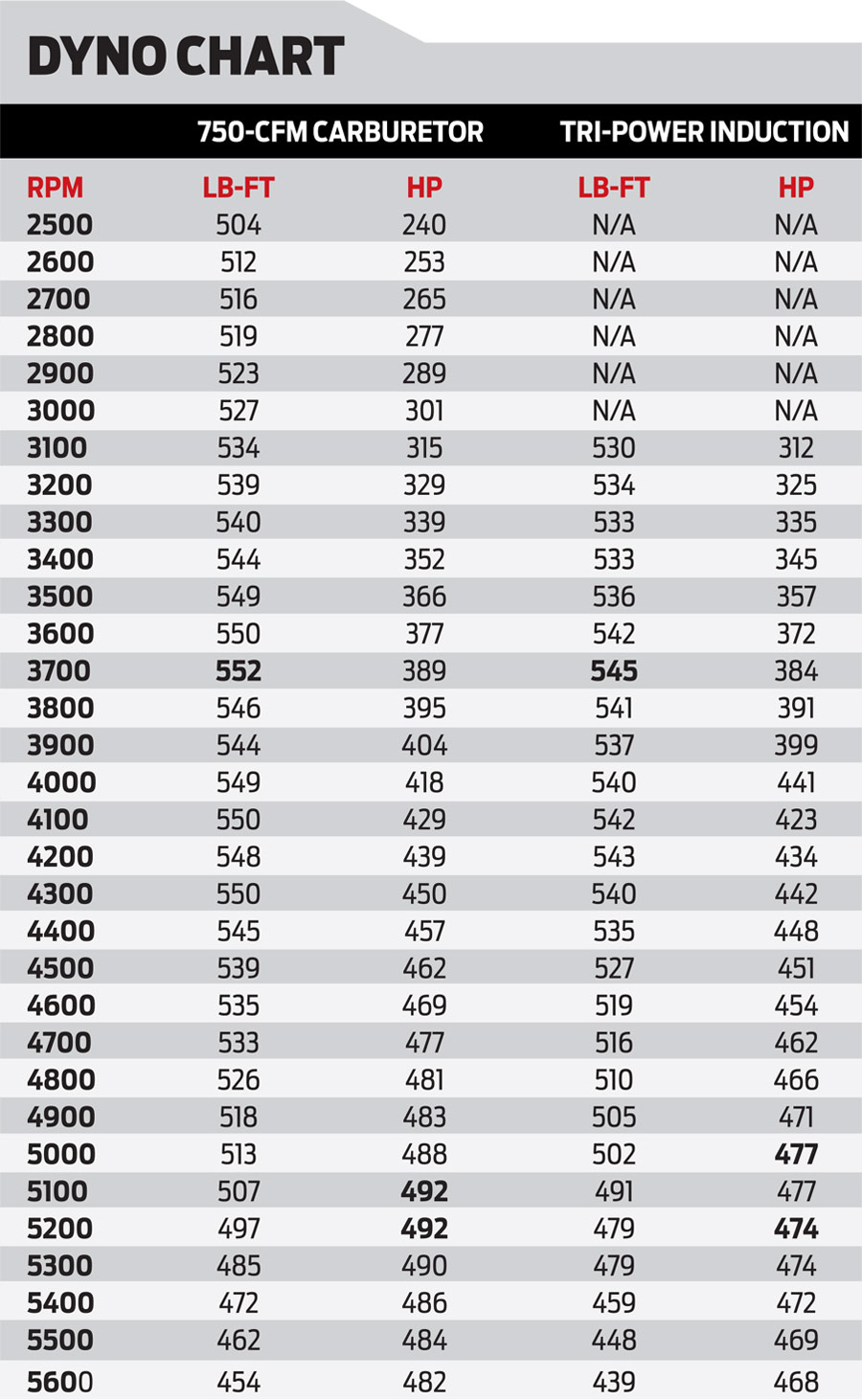
With the engine tuned, warmed up, and put against the water brake, the first couple of pulls netted about 470 hp. Not bad, but fiddling with carb jetting and timing, which ended up with 38 degrees of total advance, raised max power to 492 horses with the 750-cfm Holley four-barrel carburetor. The 500hp goal had not quite been achieved, but the stroked 428 also cranked out more than 550 lb-ft of torque, so there was little to complain about.
As expected, the Tri-power system came in with less maximum power and torque than the four-barrel: 477 hp and 545 lb-ft. It was still a respectable showing, and the 15 or so horses sacrificed in the name of style won’t be missed with all that torque on tap.
Ultimately, Ryden got exactly what he sought—an undeniably powerful engine with plenty of visual appeal. He also proved Pontiac power remains alive and well.





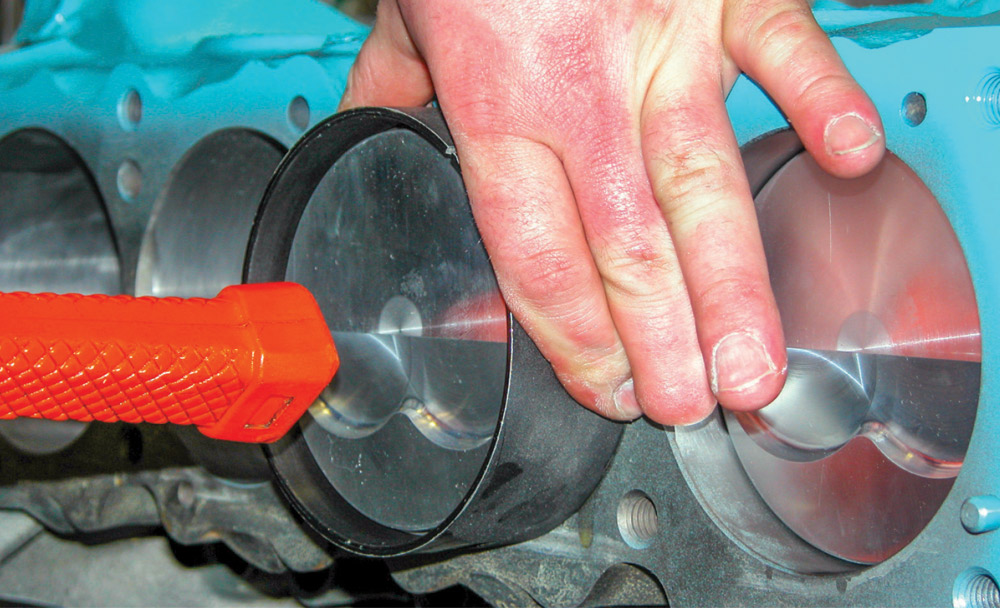


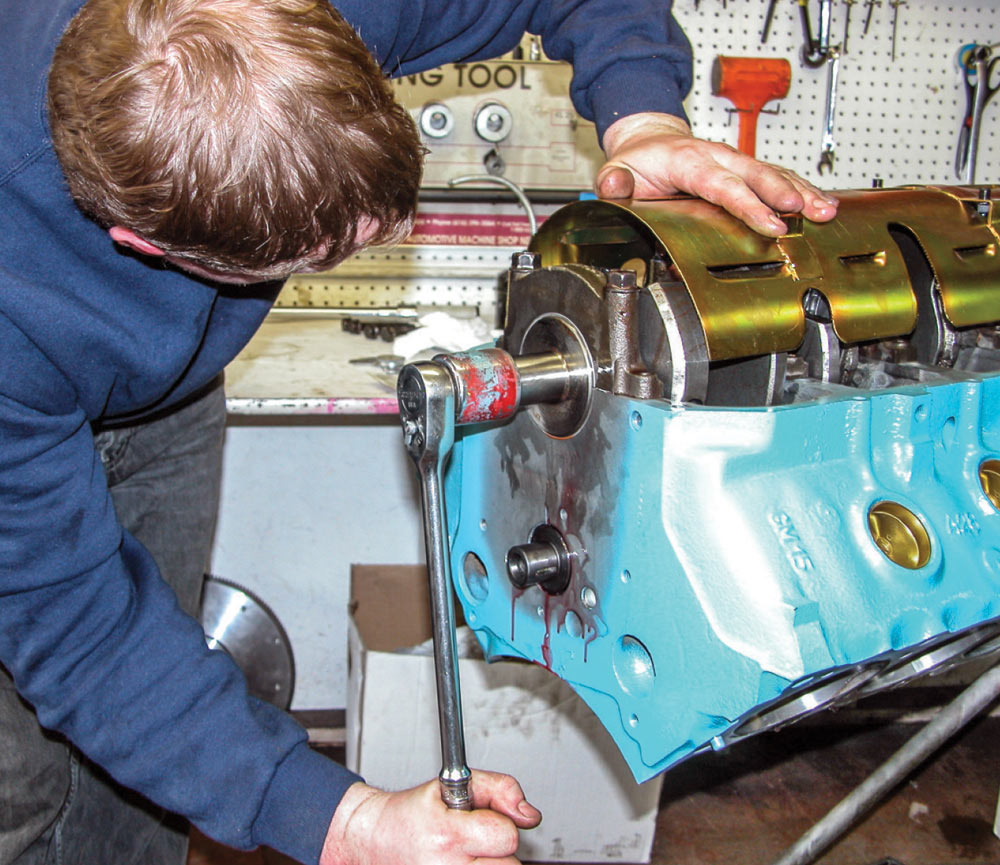

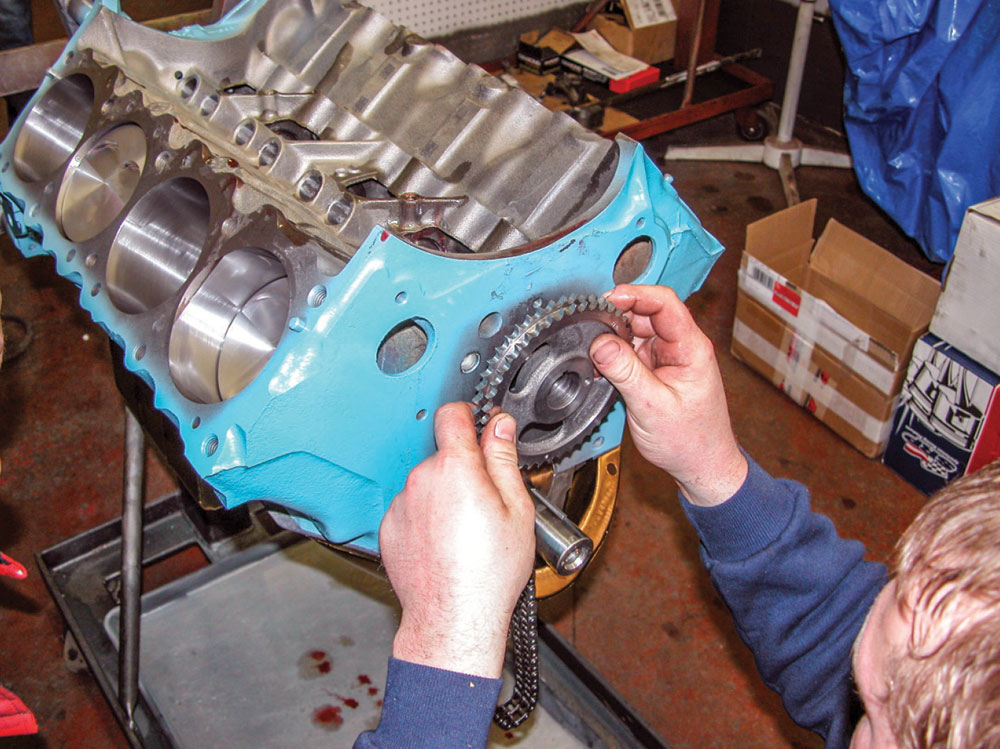

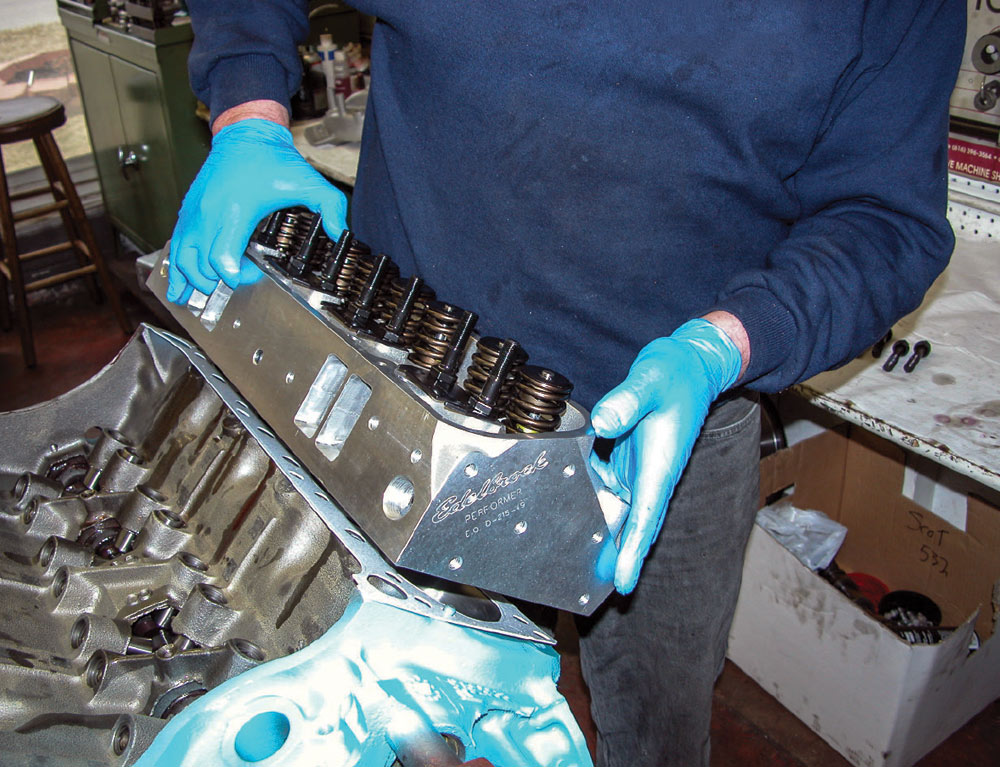
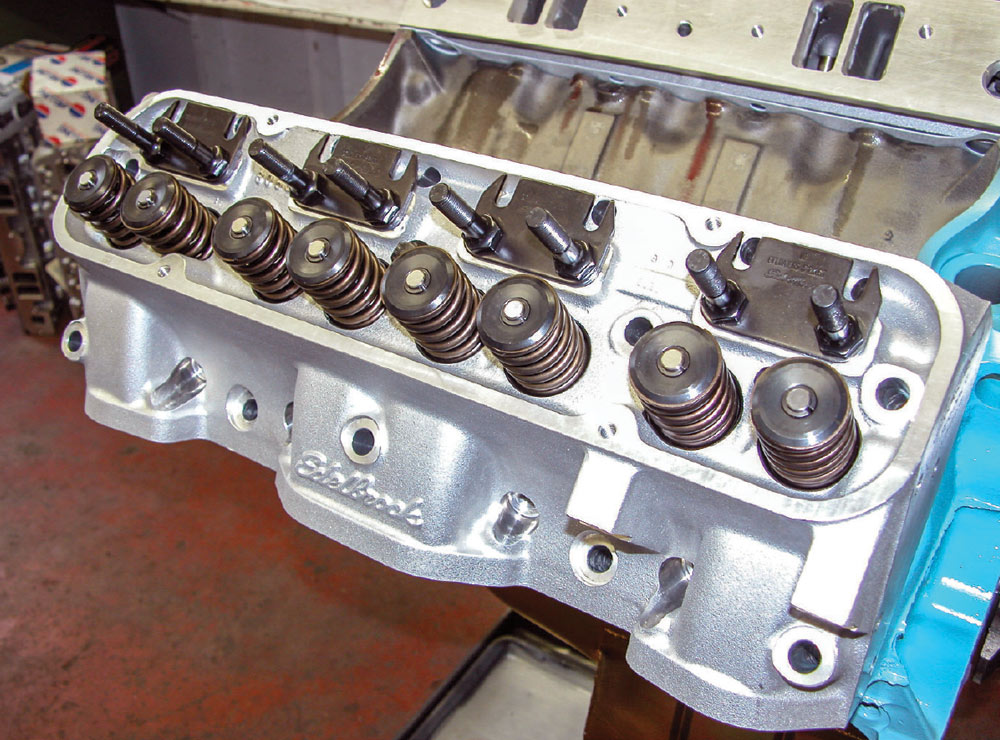
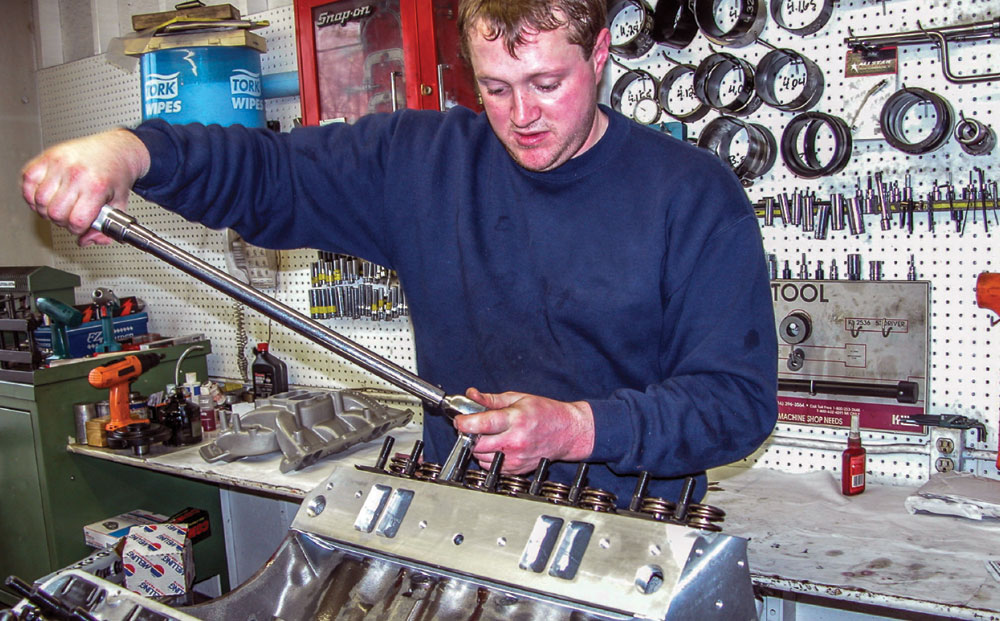
20. When installing the heads, the upper row of a set of ARP bolts was set to 105 lb-ft and the lower bolts were torqued to 95 lb-ft—all achieved in three even increments. It is always a good idea to re-torque the heads after initial start-up.
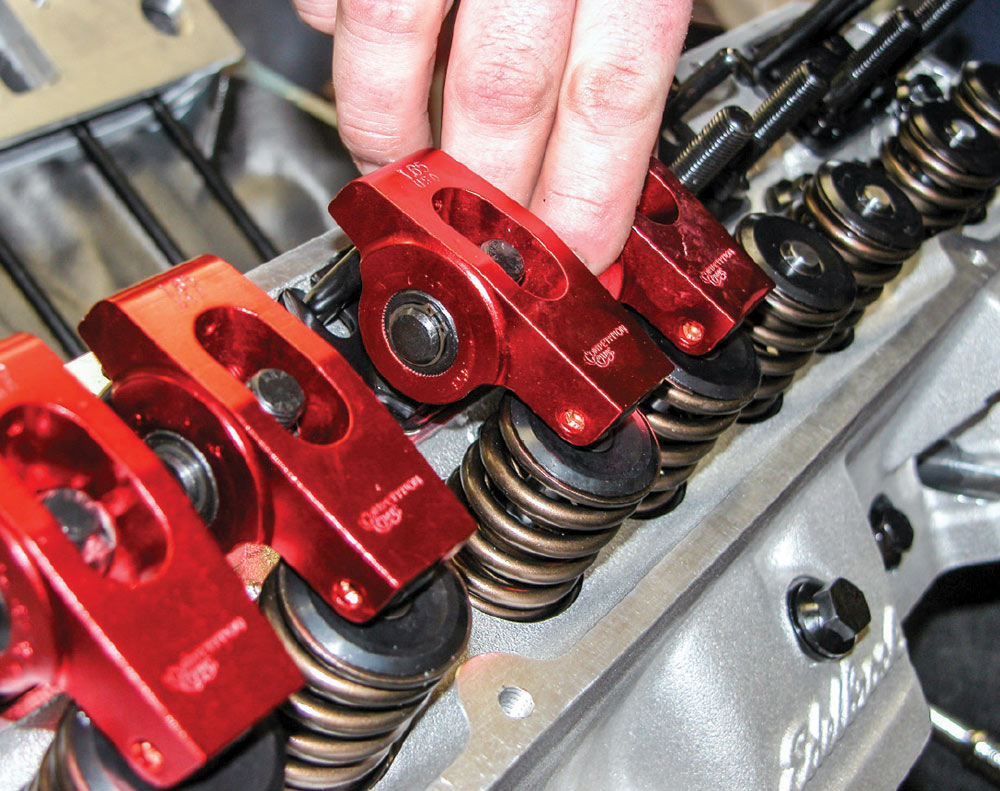

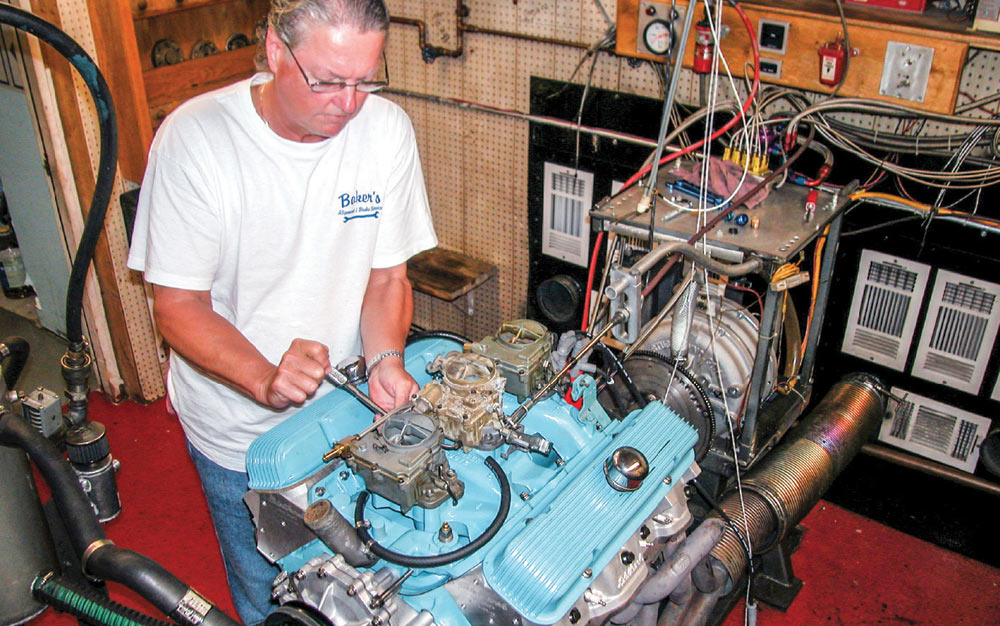


25. As expected, the four-barrel induction system delivered greater peak horsepower and torque: 492 hp and 552 lb-ft compared to the Tri-power. However, this engine wasn’t built for horsepower at all costs, and the Tri-power’s more than respectable performance will provide excellent street capability.
 SOURCES