
Modern Rodding Tech
InTheGarageMedia.com
More Fuelish Pleasures
Part 1: FiTech’s Throttle Body EFI & Updates You Can Make
FiTech Go EFI 4 throttle body with 600 HP capability, shown on original packaging
1. FiTech provides everything you need to convert to electronic fuel injection in one box—and it’s not much more complicated than installing a carburetor.
By Ron Ceridono Photography by THE AUTHOR
A

lthough the hobby we all know and love is steeped in tradition, hot rodding has always embraced technology. Early examples include aluminum heads for Flathead Fords; today, it’s electronic fuel injection systems like those offered by FiTech.

We cannot often conduct long-term testing on hot rod components, but we’ve accumulated nearly 50,000 trouble-free miles using a FiTech throttle body system. So, when it was time to select an induction system for a new project, we again chose the same system we used earlier: a Go EFI 4 600hp system. Although this system is rated for up to 600 hp, it is appropriate for engines producing 200 hp and above.

As often happens, FiTech has refined its products over the years, so we decided to check out the changes that have been made. From a functional standpoint, FiTech got it right from the beginning; the new systems are still self-tuning, and installation remains simple. After basic engine information is entered into the handheld controller, it establishes parameters for air/fuel ratios at idle, cruise, and wide-open throttle. In simple terms, the self-learning function involves the electronic control unit (ECU) using feedback from various sensors to adjust and maintain the air/fuel mixture under all conditions.

Efi sensors are:

Manifold Absolute Pressure (MAP) for altitude compensation and load correction

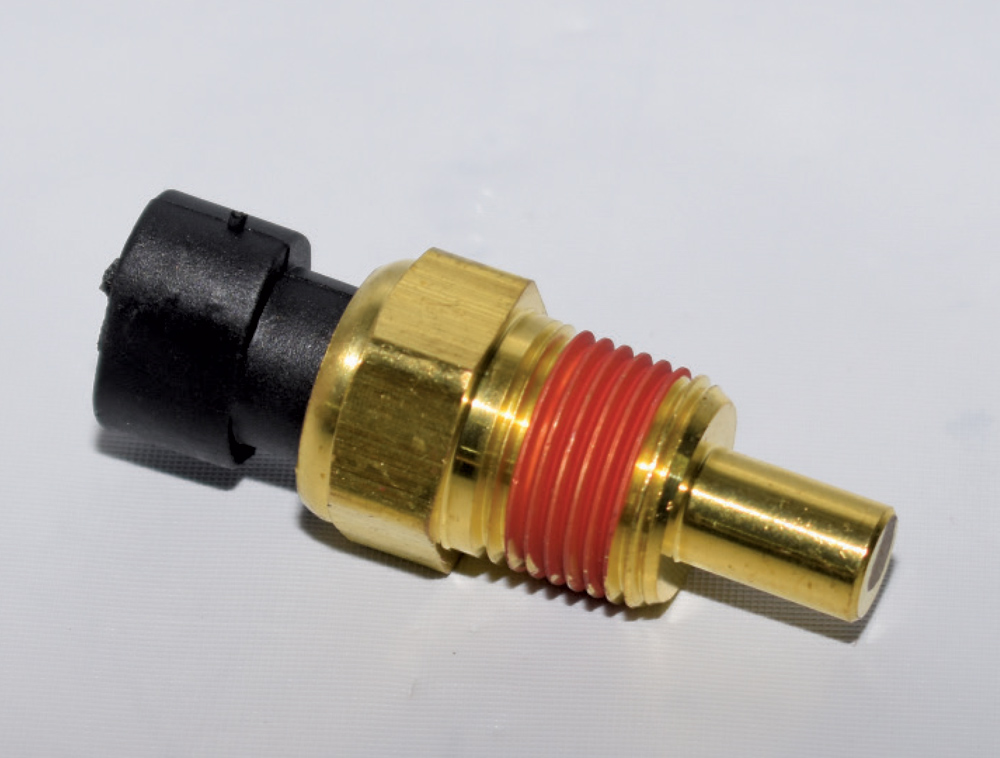
Coolant Sensor (CTS) monitors operating temperature for fuel adjustments (think of it as the choke)

Throttle Position Sensor (TPS) feedback for fuel control

Idle Air Control (IAC) bypasses air to maintain a consistent idle speed

Inlet Air Temp (IAT) compensates for changes in air density due to air temperature

The Oxygen Sensor monitors the amount of oxygen in the exhaust to indicate how rich or lean the fuel mixture is

Besides the oxygen sensor and CTS, all other sensors are housed in the throttle body

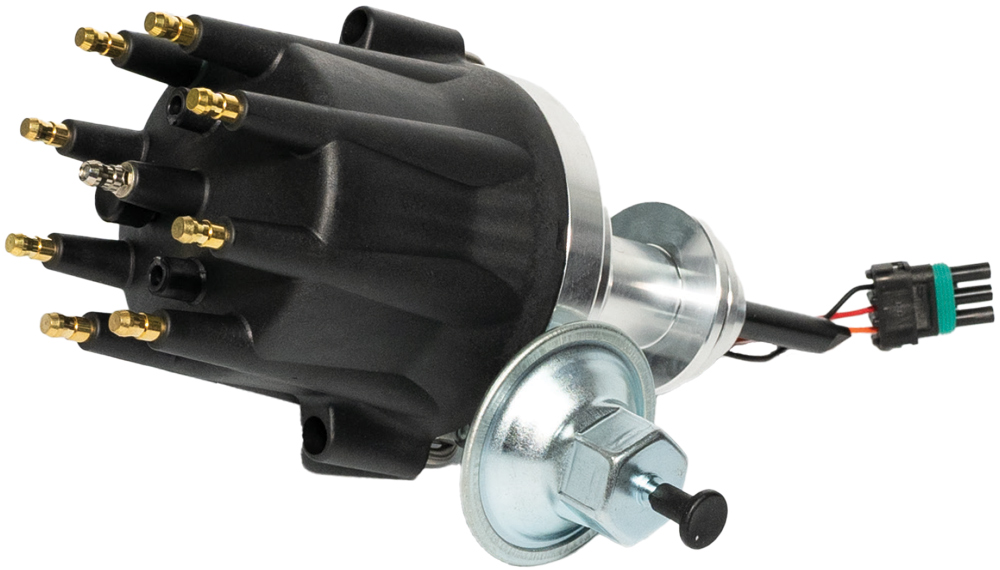
Although there are minor differences in the throttle bodies (as noted in the captions), the installation procedure remains the same, as do the mechanical requirements. The engine must be in good condition; EFI won’t cure mechanical shortcomings. The exhaust system must be free from leaks, as these will disrupt the oxygen sensor’s readings, leading to improper air/fuel ratios. Likewise, intake manifold leaks create similar problems. The charging system must be capable of maintaining the correct battery voltage and the system must be properly grounded. Another consideration is the ignition system. Point-controlled systems and Mopar electronic ignitions with the typical rectangular controller and dual-element ballast resistor will not provide the correct tach signal to the FiTech ECU. However, FiTech now offers a line of replacement distributors that solve both problems.

Due to FiTech’s refinements over the years, there are four versions of ECUs and handheld devices. However, rather than making previous systems obsolete, FiTech offers updated software that can be easily installed in the handheld controller via a home computer.

To make software system updates, the original version of the system must be identified. This is done through the configuration of the handheld display. The older, smaller handhelds may have nothing around the joystick, while the later, larger handhelds may have four triangles on the right edge or may feature a plain surface with two dots. Once the handheld is identified, FiTech can supply the appropriate software updates, which is critical. Loading the wrong software into the handheld can permanently damage it, void the warranty, and require the purchase of a replacement.

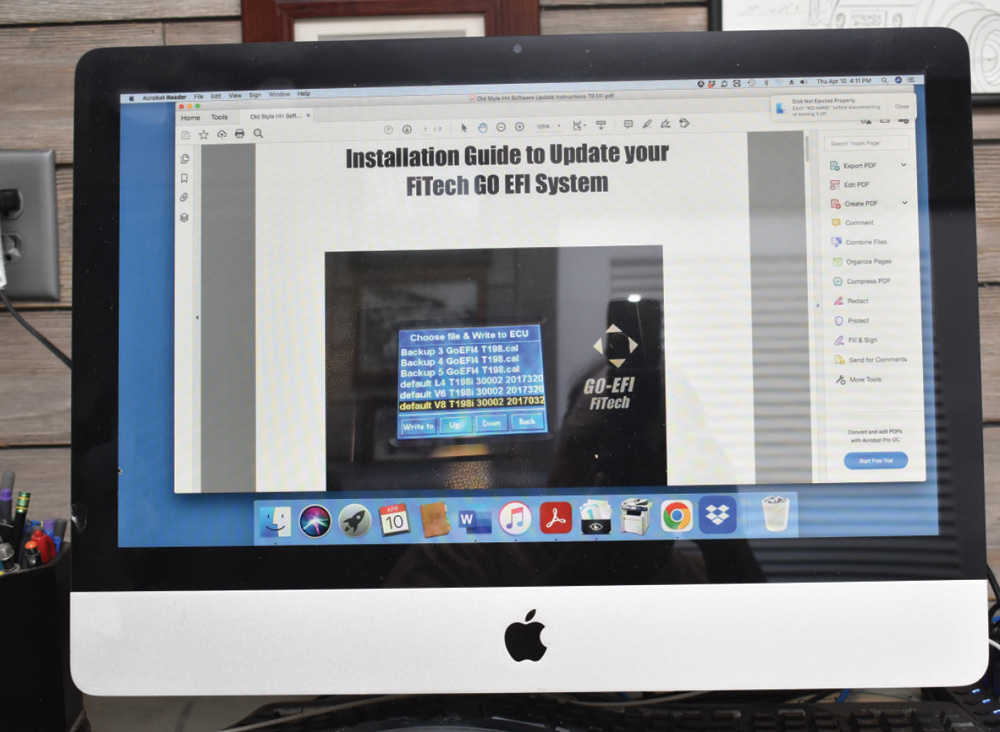
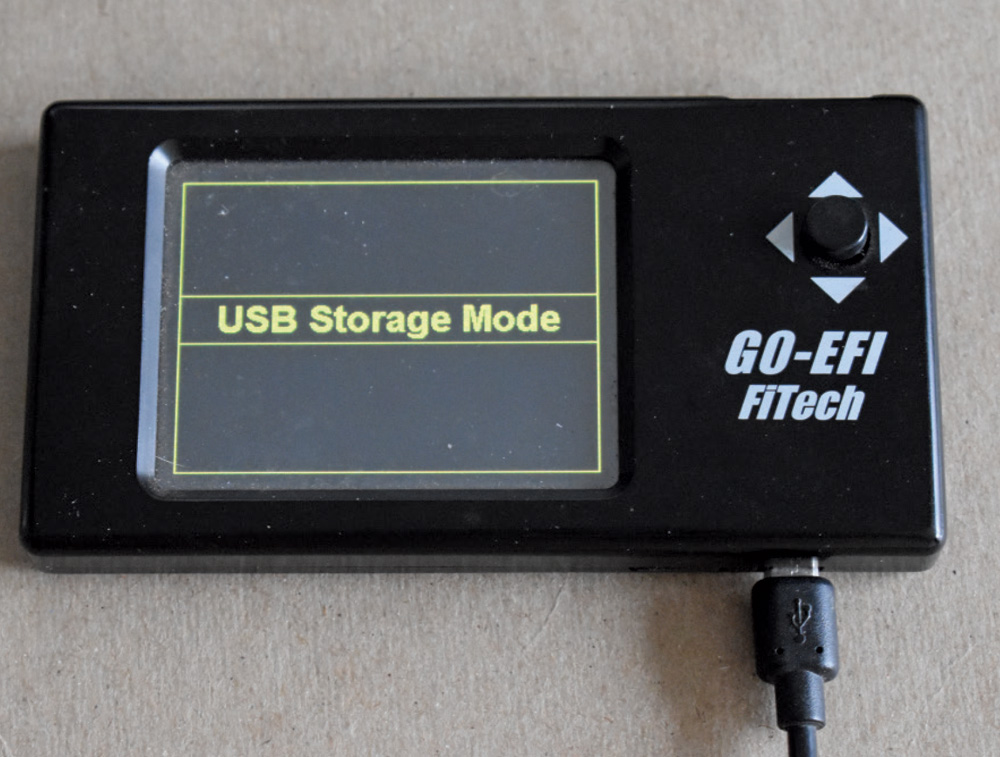
Once the handheld is identified, a FiTech representative will provide the appropriate updated software file. After downloading the update to a desktop computer, the handheld is connected to the computer. Following the instructions on the computer screen, the original software is removed from the handheld, and the new version can be installed. Once the handheld is reinstalled, the ECU in the throttle body will operate on the new system. (FiTech has a complete video showing the update process.)

In subsequent installments of Modern Rodding, we will present more “fuelish pleasures,” such as the complete bumper-to-bumper procedure for installing a FiTech fuel injection system, along with tips on tuning, maintenance, troubleshooting, and additional information.
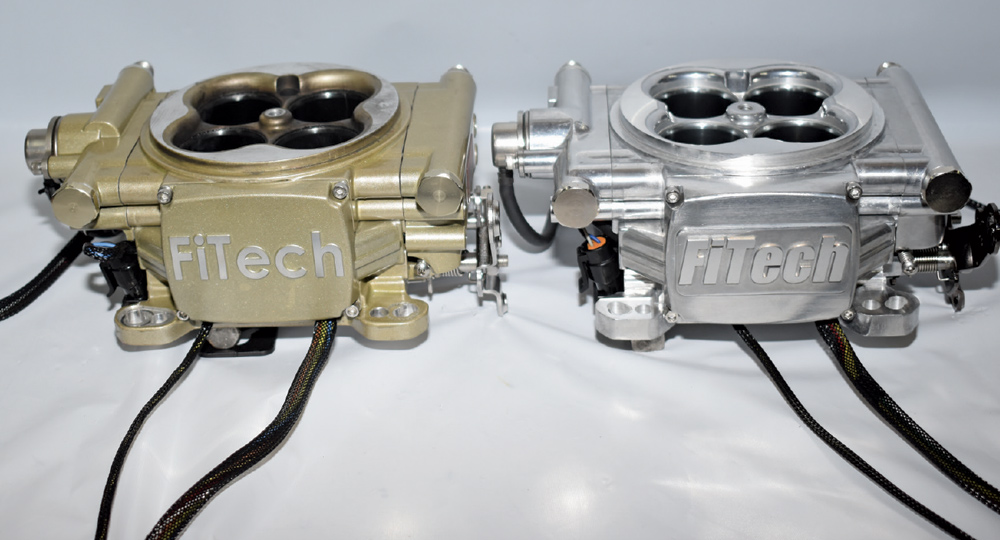
Side-by-side comparison of matte gold and polished aluminum FiTech EFI throttle bodies
2. Over the year, FiTech has made subtle changes to the throttle body design; the latest version is on the right.
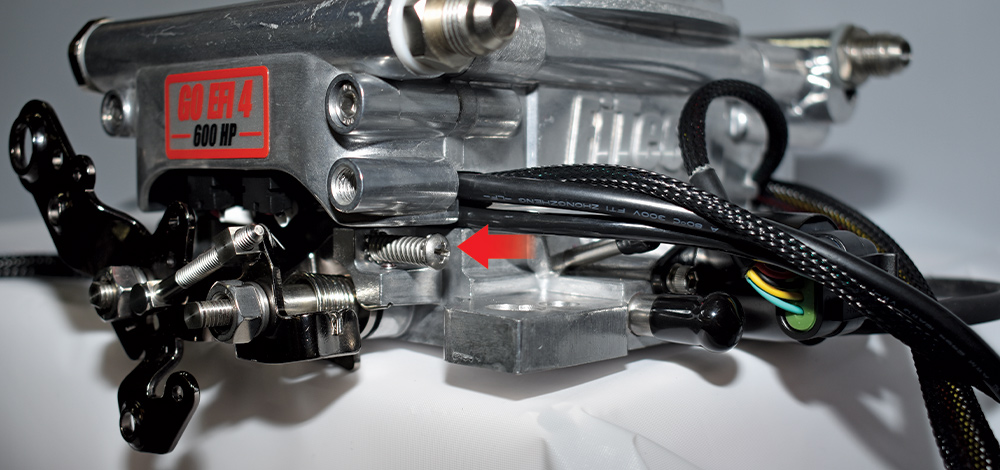
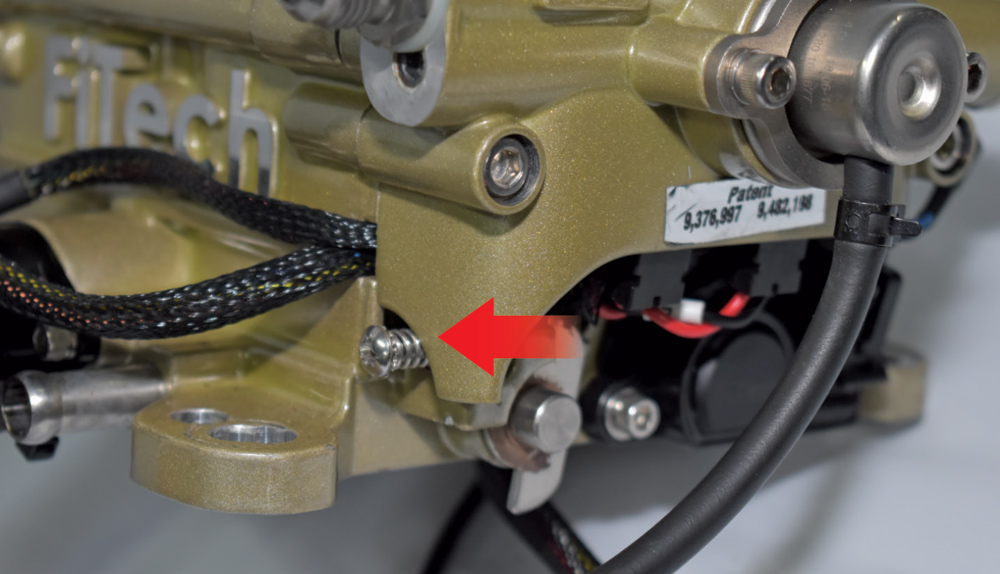
Close-up of FiTech throttle linkage and wiring harness on gold anodized EFI unit
3. One of the changes made is the location of the secondary throttle stop; in the early design, it was located on the right rear side of the throttle body (arrow).
Rear view of polished FiTech Go EFI 4 showing dual fuel inlet ports and throttle linkage
4. On the late-style throttle body, the secondary throttle stop is positioned on the left rear side (indicated by the arrow), making it easier to access.
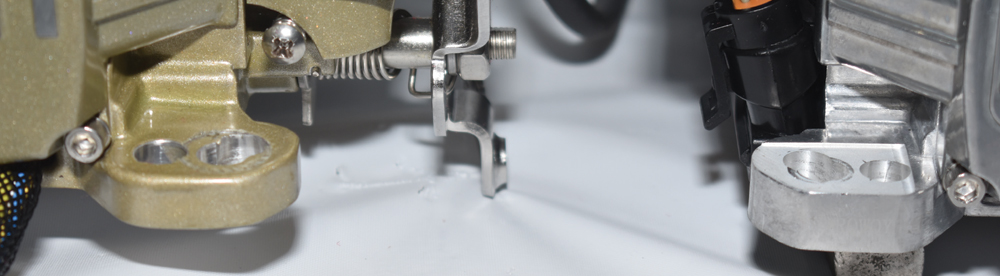
Mounting base comparison of gold and aluminum FiTech throttle bodies with bolt hole spacing
5. Here, the difference in thickness of the mounting flanges can be seen; the new version on the right is slightly thicker.
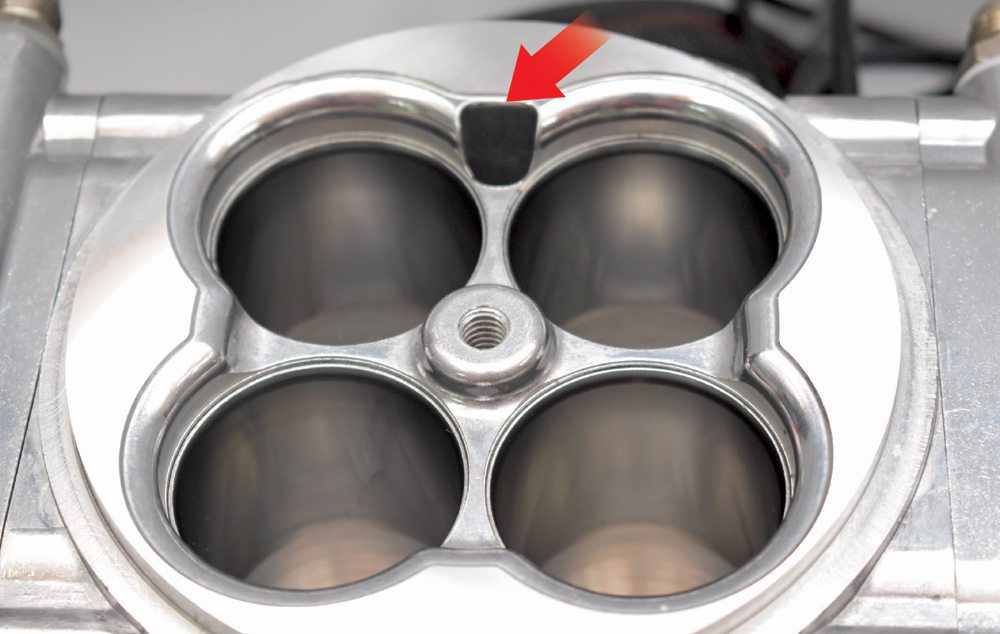
Top view of polished EFI throttle body revealing four venturis with smooth bore finish
6. To accommodate larger displacement engines, the size of the idle bypass opening (arrow) has been increased.
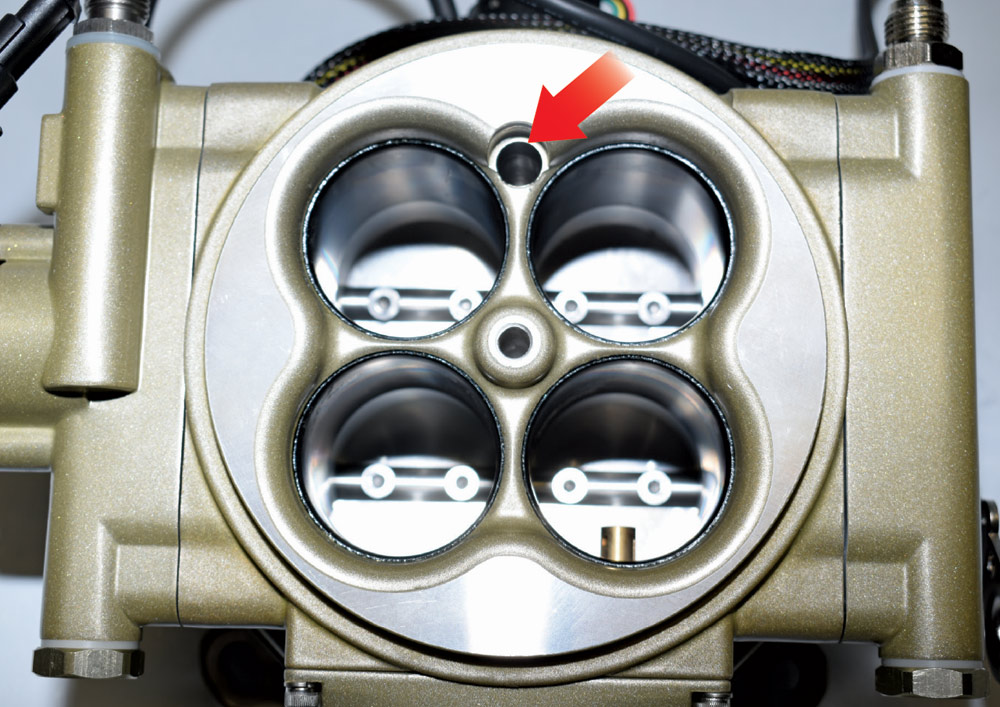
Top view of gold FiTech throttle body showing injectors inside venturis for atomization
7. In comparison, this is the idle bypass in earlier throttle bodies (arrow). On large displacement engines, the smaller bypass required the throttle valves to be opened further at idle.
Open FiTech fuse and relay box showing labeled fuses for pump and ignition circuits
8. FiTech throttle body EFI systems now include a remote-mounted relay and fuse block. In earlier systems, the fuses were in the wiring harness, while the relays were mounted in the throttle body ECU.
FiTech handheld tuners for EFI calibration and diagnostics
9. A noticeable change has occurred in the handheld displays; the earlier versions featured small screens.
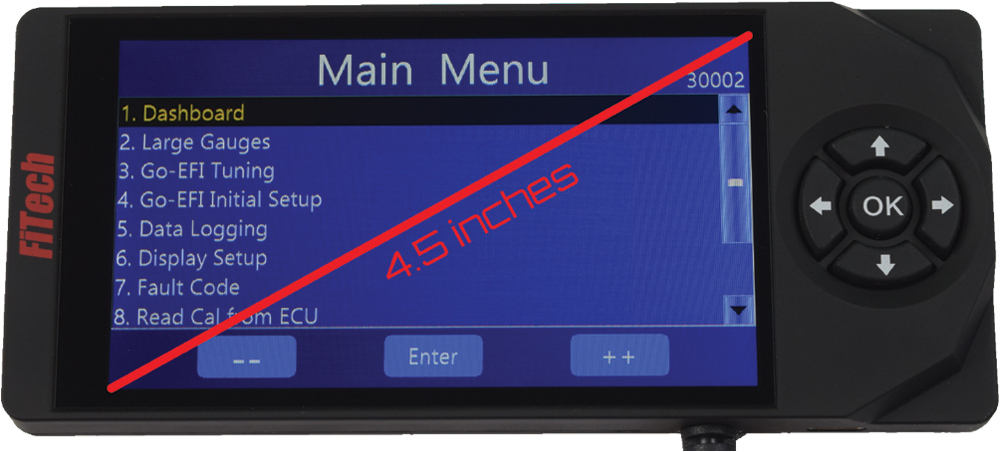
FiTech 4.5-inch touchscreen controller displays main EFI tuning menu for on-the-fly calibration
10. The new handheld screens are larger and easier to read; however, their function remains the same as that of the earlier design.
Top view of FiTech Go EFI throttle body showing four-bore layout and integrated wiring
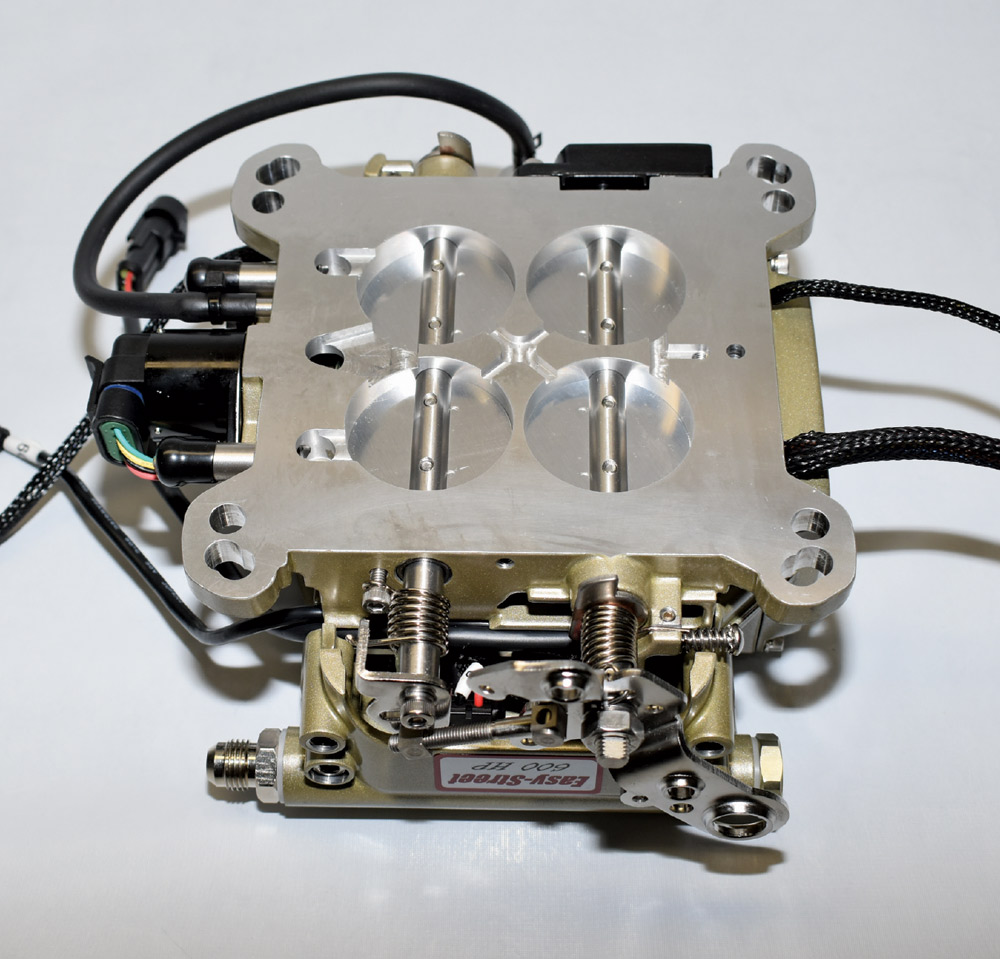
11. Unlike a four-barrel carburetor, all four butterflies in a FiTech throttle body operate simultaneously, and there are four fuel injectors—one for each throttle valve.
Close-up of FiTech EFI fuel injector with part number visible on matte black body
12. Electronic fuel injectors are rated by the pounds of fuel they flow per hour. FiTech fuel injectors have 36-, 55-, 62-, and 80-lb/hr ratings.
FiTech throttle body side showing TPS sensor and labeled return fuel port
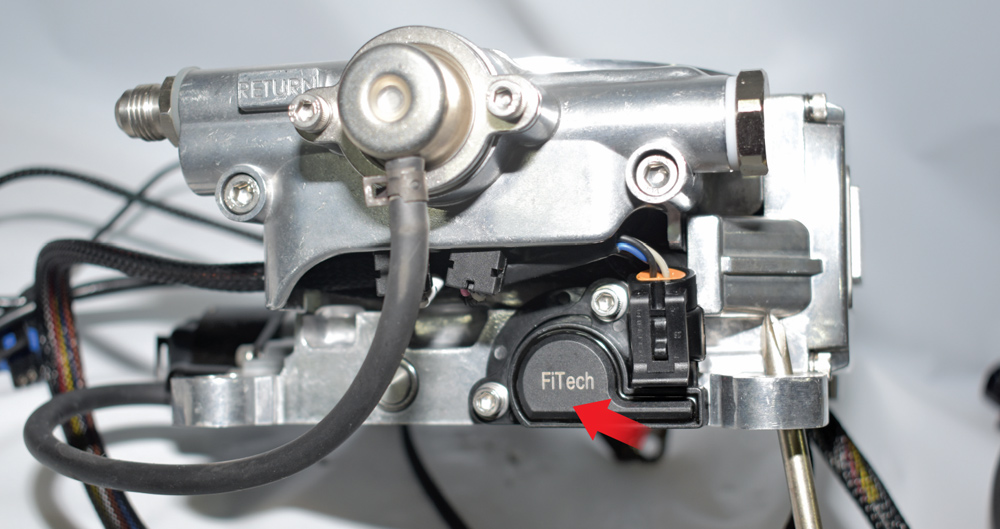
13. The TPS sensor (arrow) is located on the right side of the throttle body. The round housing with socket head screws is the integrated fuel pressure regulator.
FiTech Go EFI throttle body with visible injectors and dual fuel rail fittings
14. At the back of the throttle body is the IAC, which adjusts engine speed by moving its plunger in and out of the idle air passage as needed.
Bosch-style wideband O2 sensor for FiTech EFI systems, essential for airfuel tuning
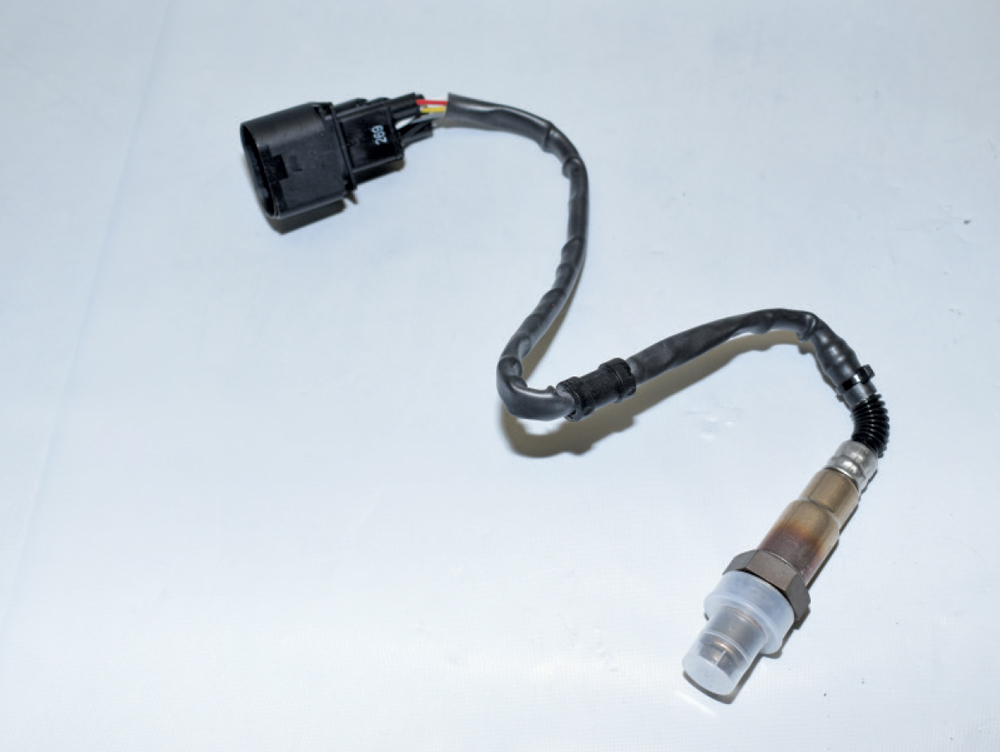
15. The oxygen sensor is installed in the exhaust system to supply the ECU with the information necessary for self-learning and maintaining the established air/fuel ratios during idle, cruising, and wide-open throttle.
Brass FiTech coolant temperature sensor with red thread sealant for accurate engine monitoring
16. This is the CTS, which monitors operating temperature for fuel and spark adjustments. It is one of only two FiTech sensors not mounted to the throttle body; the other is the oxygen sensor.
Black-cap electronic distributor with vacuum advance for FiTech timing control integration
17. To operate the FiTech EFI, an rpm/trigger reference must be obtained from the coil’s negative post for non-CDI applications or from a CDI ignition systems tachometer output source. Mopars will require a replacement distributor available from FiTech.
Installation guide on screen for updating FiTech Go EFI firmware using included software
18. For software updates, FiTech will provide the necessary downloads for a home computer.
FiTech handheld tuner in USB Storage Mode for firmwaredata transfer to and from PC
19. With the handheld connected to the computer, the old software is replaced by a new version. The new software must correspond with the appropriate version of the handheld display.
SOURCE
Modern Rodding
VOLUME 6 • ISSUE 59 • 2025