




 Photography Courtesy of THE MCR Staff
t’s no secret that few untouched E-bodies remain spared from nature’s wrath. Barn finds emerge now and then, but the vast majority of restorable ones are ready for a second go-around. This is beneficial in many ways, as it has prevented them from being parted out and scrapped. However, the downside of many of these cars is that their original restoration was often more akin to collision repair rather than an accurate restoration; the aim of the work was to make them look good but not necessarily correct. Often, correcting them would have required significantly more time, effort, and skill than was available for what might have been seen as minimal additional benefit.
Muscle Car Restorations (MCR) frequently encounters this situation in their restoration work. Previously repaired areas must now be redone to restore them to factory specifications. Naturally, the rest of the body hasn’t remained unchanged. Sections that may have been perfectly fine during the initial restoration may now require repair.
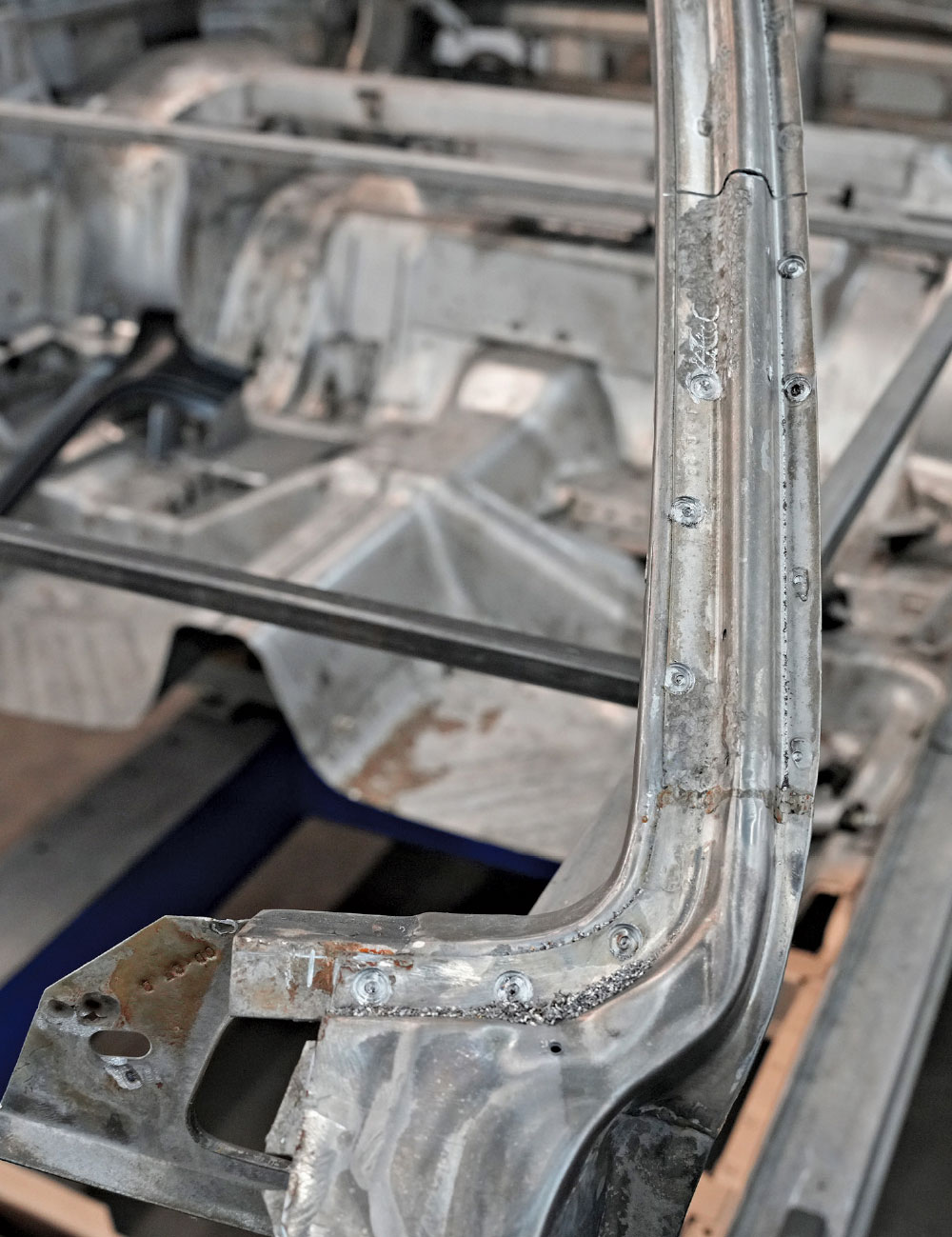
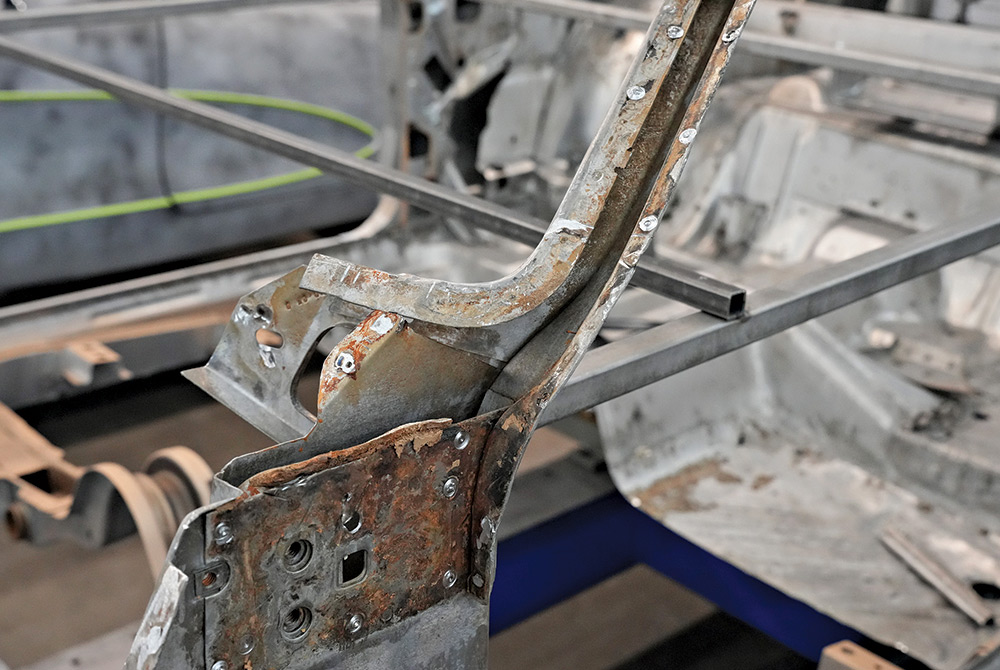
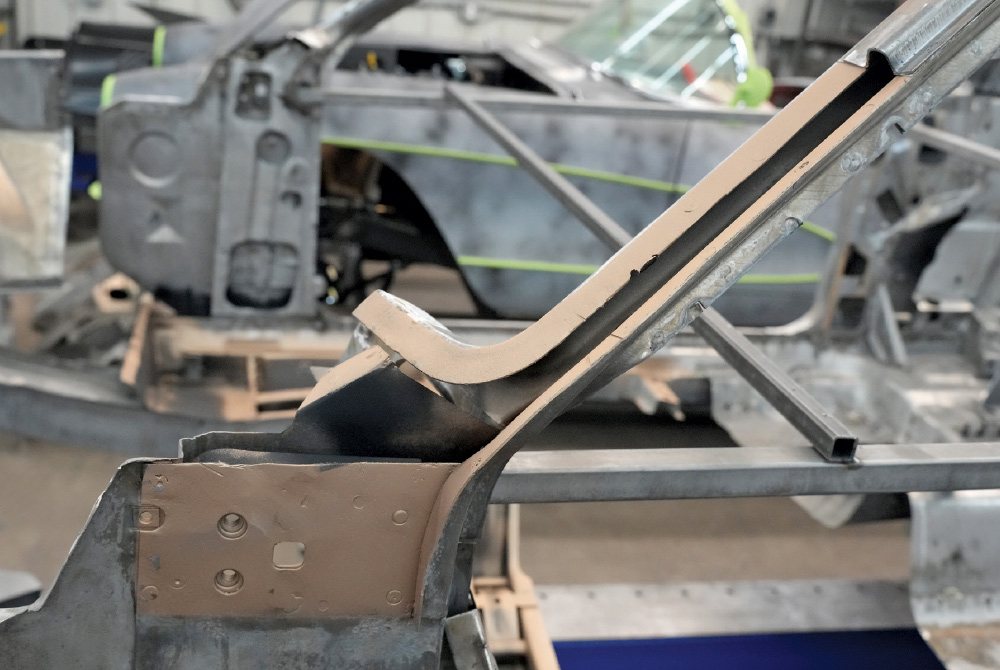
A good example of this is the 1971 Challenger convertible. The driver side lower A-pillar had been replaced; the lower corner was welded over part of the old one and then butt-welded to the top cowl to make it appear flush and part of the cowl, which it is not. The firewall and cowl are supposed to sit atop the A-pillar corner, with all three then spot-welded together. This repair served its purpose, was mostly hidden, and was likely undetectable to an untrained eye, but it is incorrect.
MCR is also helping in this case by replacing the firewall and cowl, which makes access to the A-pillar corner considerably easier. This repair could have been done without replacing those parts; it would have been slightly trickier. Perhaps that’s why the previous repair was executed as it was.
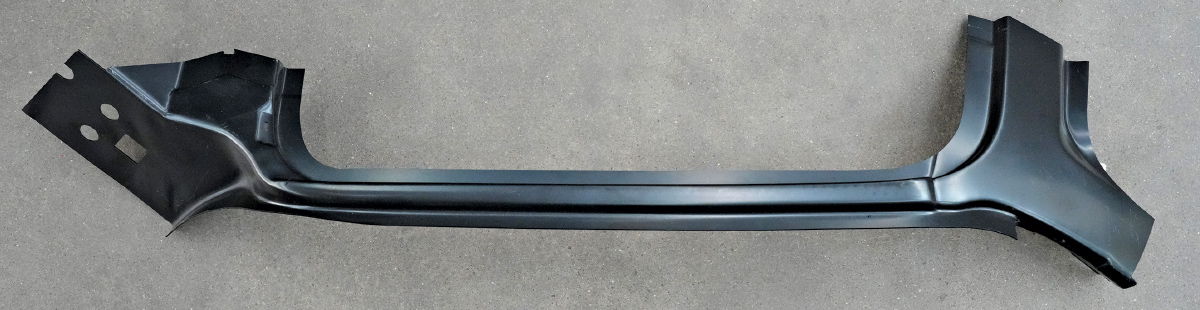
This project also highlights another common restoration issue: the difference between hardtop and convertible models. Some parts specific to convertibles are currently unavailable, so the same components of the hardtop versions are spliced onto the convertible section.
Since convertible A-pillars are unavailable and the top corner of this one (the part that differs from hardtops) is in good condition, MCR acquired a hardtop version from Auto Metal Direct and spliced in only the area that needed replacement.
This is a common practice with MCR: retaining as much of the original sheetmetal as-is reasonably possible. Only replacing the damaged portions of a panel can minimize the amount of the body shell that needs to be disturbed.
In this case, that’s truly the only feasible method for carrying out this repair.







 SOURCES