
Modern Rodding TECH
BY RON COVELL Photography by Chris Gray
side view of the '30 Ford chopped-and-channeled sedan
1. The ’30 Ford chopped-and-channeled sedan is beginning to take shape as this profile shot exemplifies.
Building a ’30 Ford Channeled Sedan
Part 2: Sheetmetal Modifications
T

he last article examined the outstanding chassis Roadster Shop built for Gerry Kerna’s ’30 Ford Model A Sedan. This time, we’ll look at the equally impressive body modifications by Roadster Shop.

While the sedan has a traditional look, there has been a lot of attention paid to every detail, and a great deal of careful work was put into getting the proportions just right and sculpting the sheetmetal panels to a very high level of precision.

Most of the roof above the windows was in such poor condition that it made sense to replace it with new metal. The original driprails were removed and a beautifully shaped bodyline was made to replace them, giving the roof a much smoother look.

Model As were manufactured with a composite fabric roof insert. Roadster Shop put a lot of work into making a custom-formed steel roof insert with proportions more like a ’32. Rather than simply welding the roof insert into place, it was carefully fitted to the flanged opening made in the new roof panels, adding a unique feature to the car’s styling.

The panel above the rear window and the windshield visor were extended a few inches toward the center of the roof, giving the insert better proportions.

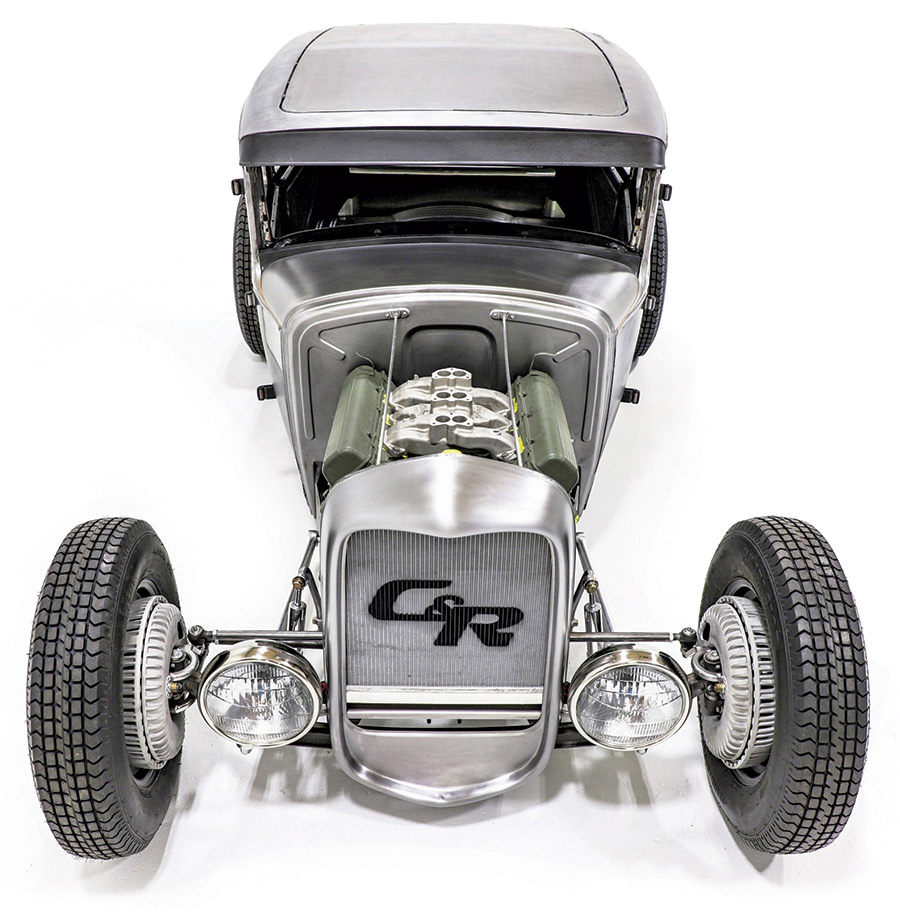
A Brookville Roadster grille shell was fitted to the front of the car, centered over the front axle. The shell was chopped 1-1/2 inches to give the hood top the correct slope and a custom C&R aluminum radiator was ordered to fit. The careful layout of the chassis ’rails, keeping them low to the ground, allows the bottom edge of the hood sides to be nearly level, avoiding the awkward ‘uphill toward the front’ look that many fenderless sedans have.

Much work went into refining the smallest details, such as smoothing the vertical seams on the rear body panel and blending the visor seamlessly into the surrounding sheetmetal.

After Roadster Shop had completed all these modifications, the car was shipped to Creative Rod & Kustom in Pennsylvania for the finishing touches. We’ll look at some of their work in the next installment.

new Brookville Roadster cowl fitted to the body of '30 Ford
2. A new Brookville Roadster cowl was fitted to the body, and the substantial factory gap was neatly filled by TIG brazing.
view of the original wooden windshield header in poor condition
3. The original wooden windshield header was in such poor condition that it will be replaced with a steel reinforcement.
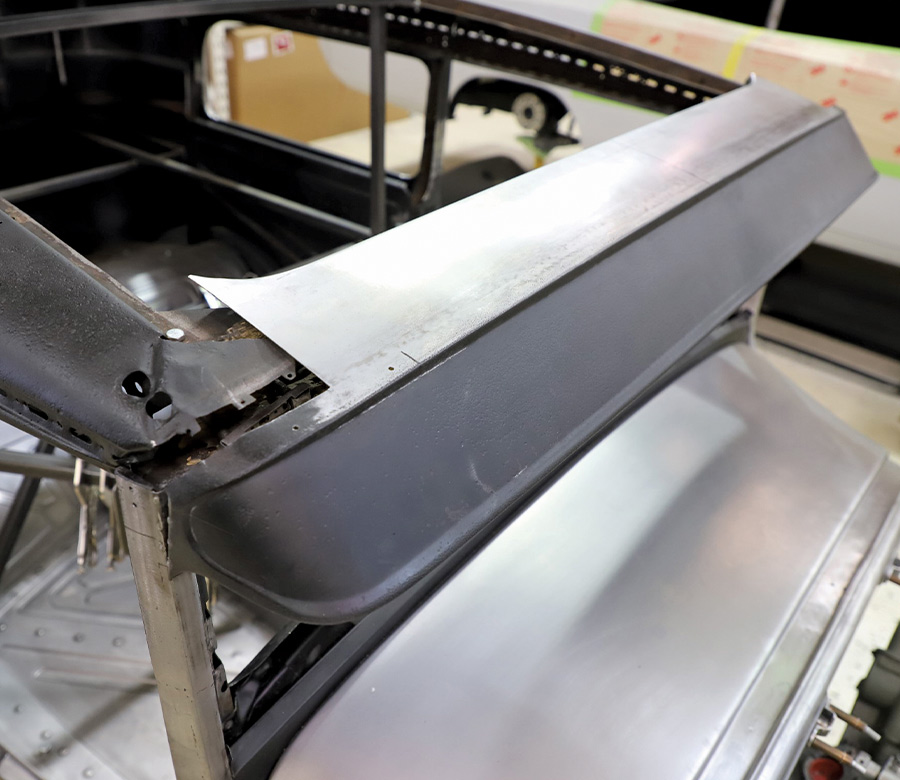
wide flange added to the rear edge of visor
4. The original visor will be reused. A wide flange is being added to the rear edge to match the custom ’32-style roof insert that Roadster Shop will shape.
pattern sheets laid over upper roof sections
5. The upper roof sections were in poor shape, with rust and distortion. Patterns were made to shape new metal to replace these sections, eliminating the driprails.
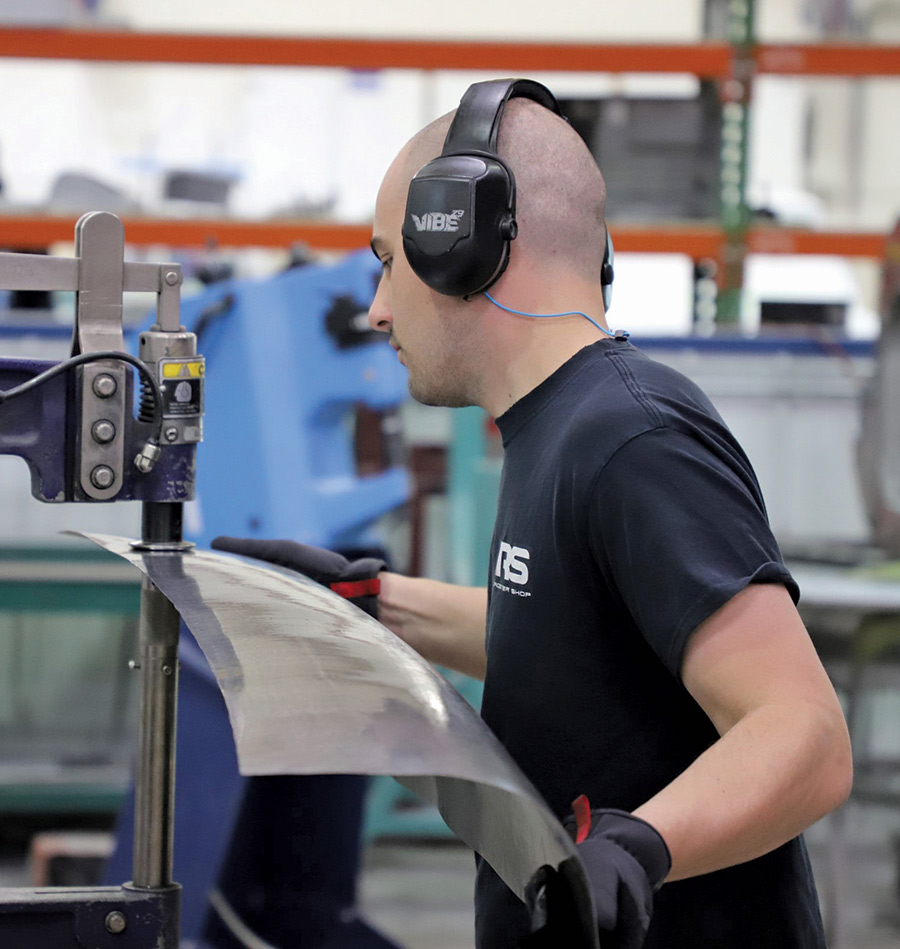
person using a Yoder power hammer to contour a steel sheet into the shape of the roof panel
6. The replacement roof panels were made from 18-gauge steel. These were shaped on a Yoder power hammer and the contours were refined with a ProLine planishing hammer.
replacement roof panels being held in place with Clecos
7. The replacement roof panels are temporarily held in place with Clecos to test the fit.
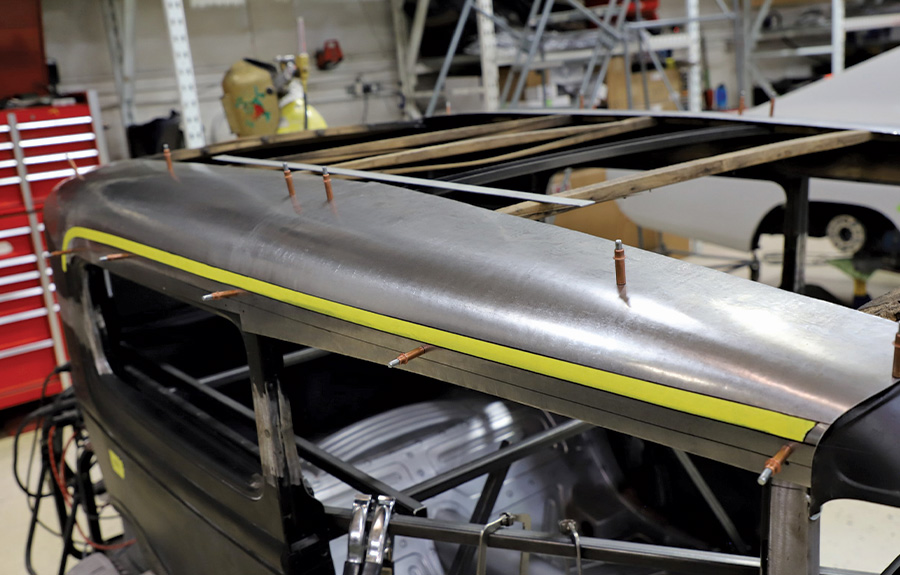
masking tape on the replacement roof panel
8. Masking tape is used to lay out a bead on these panels, which will follow the contours of the original driprails.
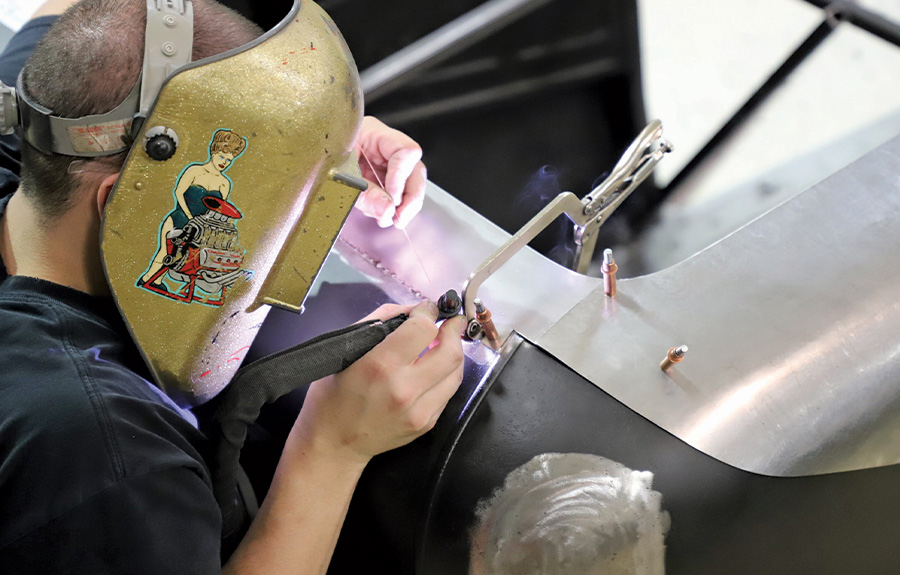
person wearing a welding helmet adding a metal strip to the panel above the rear window
9. A metal strip is added to the panel above the rear window, extending to meet the rear edge of the custom-made roof insert.
new roof sections welded in place
10. After careful fitting, the new roof sections are TIG welded into place.
view of the rear of the roof after being meticulously metalfinished
11. Here’s how the rear of the roof looks after being meticulously metalfinished.
view of the new roof panels from the front
12. A view from the front shows how perfectly the new panels blend with the original body.
windshield header area being aligned and strengthened with square steel tubing
13. The windshield header area is being aligned here and strengthened with square steel tubing.
new steel closeout panel fabricated from 18-gauge steel
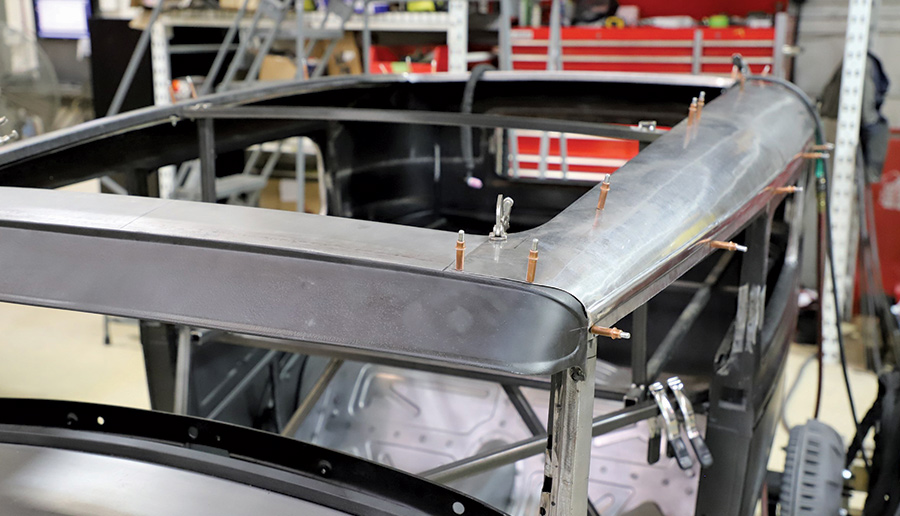
14. A new steel closeout panel was fabricated from 18-gauge steel to fit under the original visor. It is reinforced with a bead at the top.
visor held with Clecos and clamps
15. Here, the visor is held with Clecos and clamps in preparation for trimming and welding.
Basil Havez (left) and Mike Wood (right) carrying the roof insert panel together
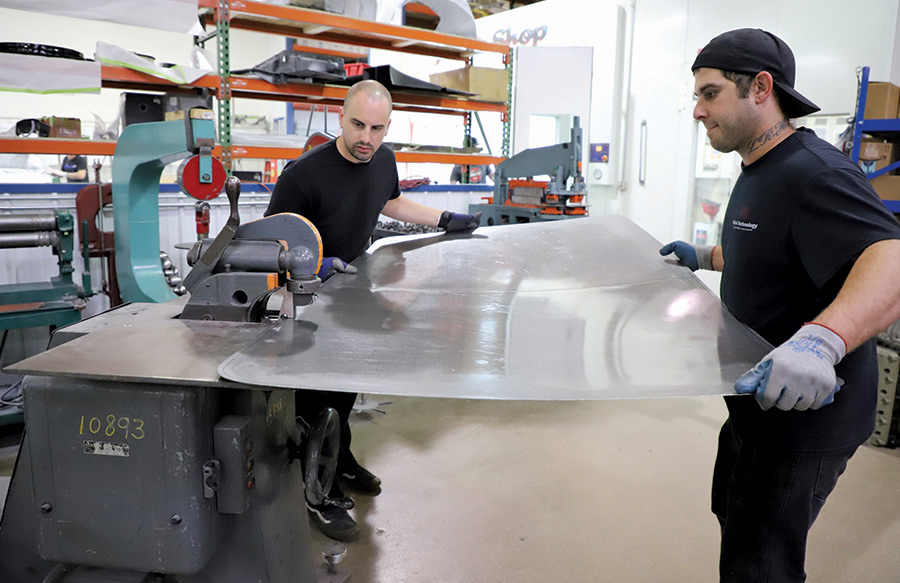
16. The roof insert was shaped on a Yoder power hammer. Panels this size are definitely a two-person operation. Basil Havez (left) and Mike Wood (right) were the main people performing the body modifications.
roof insert is being test-fitted against the body
17. The roof insert is being test-fitted against the body. Many small tweaks and adjustments were needed to dial in the fit perfectly.
ERCO Machine being used to turn a 1/2-inch flange around the panel’s perimeter
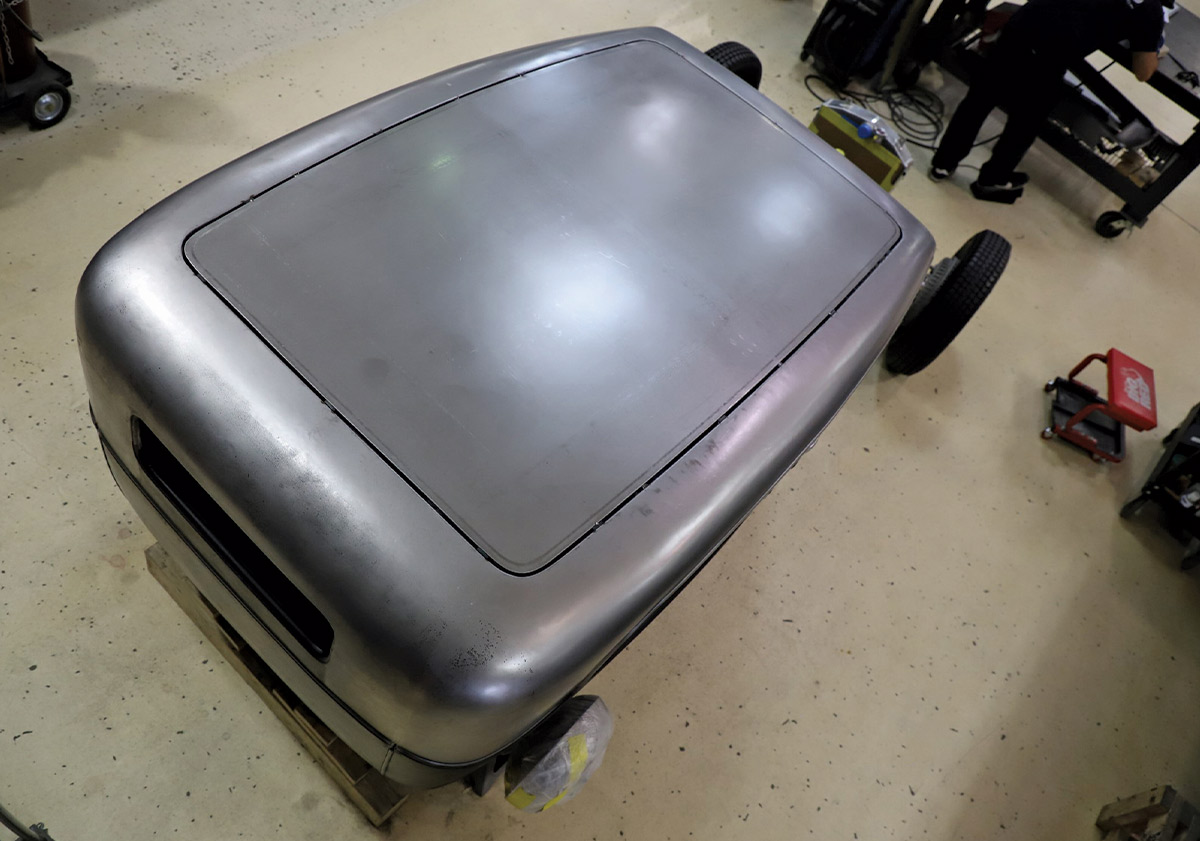
18. Once the fit of the roof insert was perfected, an ERCO Machine was used to turn a 1/2-inch flange around the panel’s perimeter. This insert will be a separate panel, and the uniform gap around the edge will become a tasteful design feature.
top view of the installed roof panel
19. A top view shows how precisely the insert fits into the roof.
view of the flanges on the roof insert from inside the '30 Ford
20. From the inside, you can see how the flanges on the roof insert align with the flanges made around the roof opening.
filled vertical beads on the rear body panel
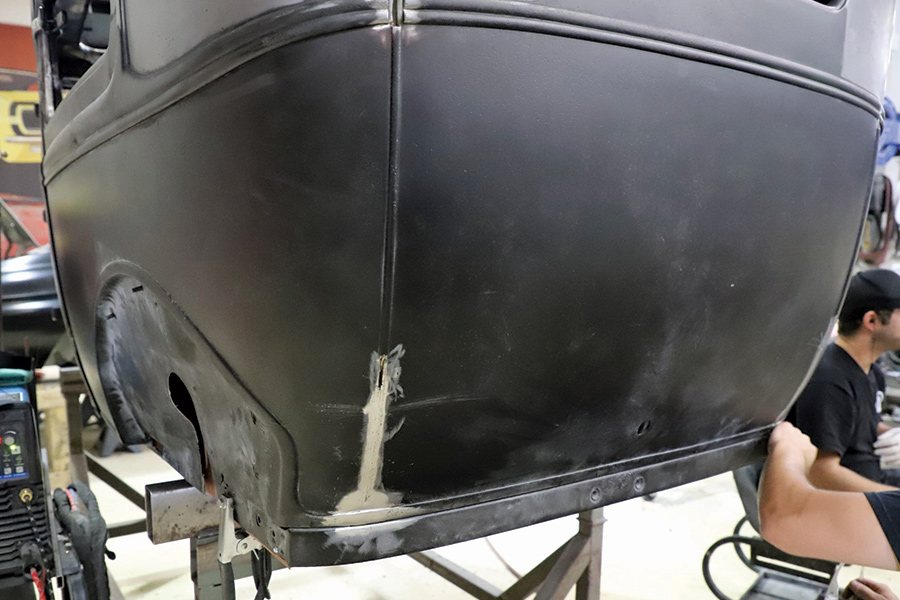
21. The vertical beads on the rear body panel were removed in sections and filled.
view of the beads completely removed and metalfinished
22. Here, the beads are completely removed and metalfinished.
view of the front of the '30 Ford with a Brookville Roadster grille shell
23. A Brookville Roadster grille shell was chopped 1-1/2 inches and fitted to the front of the car. This sets the hood at the perfect angle.
front 3/4 view of '30 Ford
24. A front 3/4 view shows how spot-on this hot rod’s stance and proportions are. It’s a traditional design built with 21st century technology and precision.
SOURCE
Modern Rodding
VOLUME 5 • ISSUE 47 • 2024