

Parting Shot
InTheGarageMedia.com
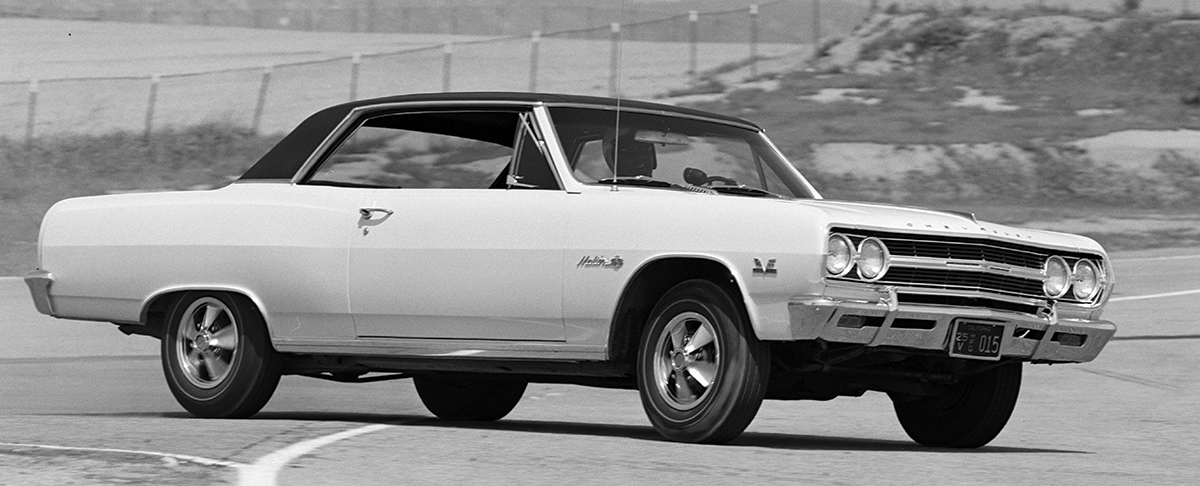
 Of the 201 396-/375-horse produced Malibus it has been documented that very few reached private hands. Initially, these cars were used for magazine testing, some for drag racing, and some for corporate use. It wouldn’t be until a year later that the Chevelle SS would be introduced. You and I could get our hands on one of these big-block Malibus and many hot rodders did and enjoyed the power.
get that things change. It’s part of a normal day; from sunrise to sunset, there is a lot that we come to take for granted, but we must also prepare ourselves for change. Any of us who have been around for any length of time in hot rodding live by change … most of which is of our own doing. But here is one change that I would imagine will “cut to the quick” for many of us.
Come the last quarter of 2024 (November), Chevy lovers’ beloved model will cease to exist. The Malibu, introduced in 1964, has undergone a few stops and starts, but is now leaving the lineup for good. What started in 1964 continued until 1983, then it suffered a hiatus until 1997 when it was reintroduced and produced until 2024. Over 10 million Malibus rolled off the assembly line during its lifetime. While the Malibu at one time was a trim level designation for the Chevelle, it became its own model in 1978. Also, what began as a rear-wheel-drive muscle car by 1997 had become a front-wheel-drive mode of transportation.
For years, GM has shifted away from cars in favor of SUVs and pickups as they are more popular and profitable. The Malibu is the last Chevy car offered in the U.S. besides the Corvette. Remember, the Camaro exited last year.
The Malibu’s current Kansas City manufacturing plant will be converted to produce more electric vehicles—the Chevy Bolt beginning in 2025. I know that sucks, but there is some good and bad with this, but right now it’s just bad for us.
Over the past 70 years, the Malibu began as a muscle car and one of us hasn’t dreamed about owning a big-block version. My dream revolved around a ’65, with the early 396 rated at a subdued 375 hp. Chevy only produced 201 highly desirable Malibus, number 201 being the lone convertible. Yet all the 201 cars did feature a boxed convertible frame—added stiffness. (Did you realize they were all painted red, white, or black?)
The end of the Malibu marks the end of an era that will not be repeated, but it has left us with lots of great memories and plenty of vintage tin to resurrect and put back onto the streets. Maybe someday I will get that big-block–powered Malibu, or should I say Chevelle. Whatever it brings it makes me dream, and that’s a good thing.
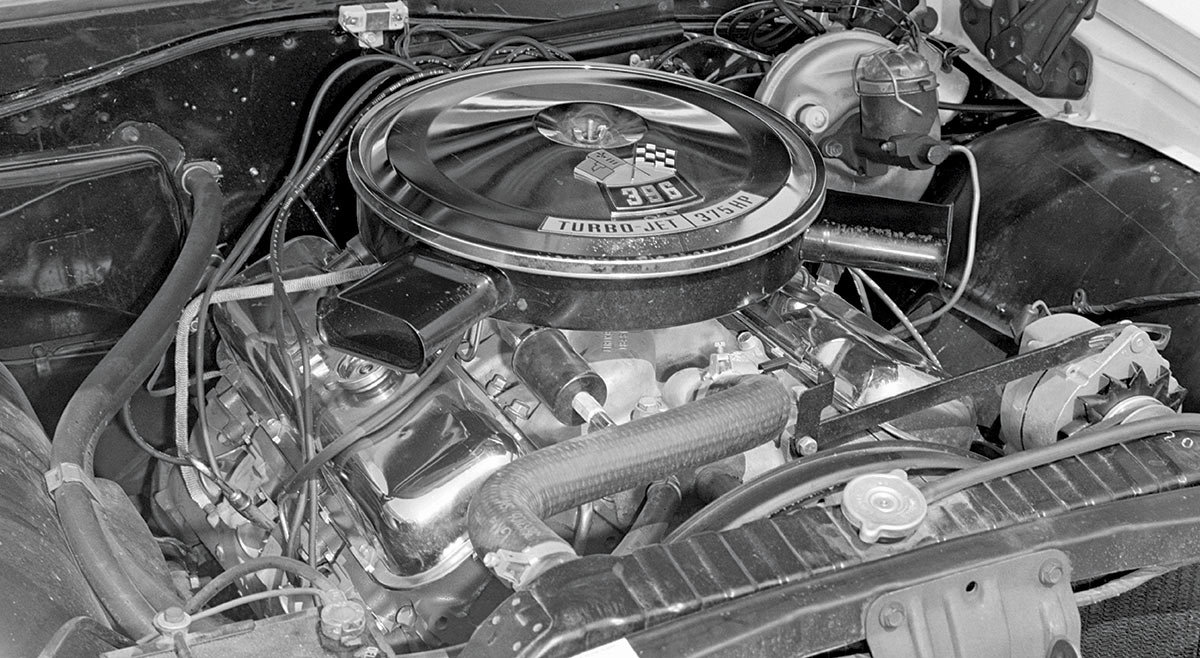 Featuring a chrome air cleaner and valve covers, the most powerful 396 ever, with its undervalued 375 hp (most believe 425 would be more truthful) and 415 lb-ft of torque, it was magical then and highly prized today. The V-8 featured 11 to 1 compression, larger intake valves, a high lift and long duration cam, and a Holley 780-cfm four-barrel. Resting behind the 396 was a four-speed Muncie wide ratio, moving the power to a 12-bolt rear equipped with Posi and 3.31 gears.