


 Photography by Michael Christensen
n my conversation with Howard “Mike” Michels from Stockton, California, he shares a fascinating story about how his lifelong dream transformed into the 1932 Ford Tudor sedan you see before you. It all started back in those high school days. “As a freshman, filled with dreams, I purchased my first car: a 1949 Ford convertible, a 5-year-old beauty that set me back just $125. To afford that purchase, I saved every penny from my work on the farm driving tractors, irrigating fields, and dealing with the inevitable muck that comes with barn duties,” Mike says. Each dollar felt like a hard-fought victory, and he felt like he could conquer the world behind the wheel.
Mike started with the frame—ASC framerails that would act as the backbone of the build. The foundation was laid precisely under the skilled hands of Squeak Bell from The Kiwi Konnection. The front and rear crossmembers were installed, and he made the decision to lengthen the frame by 2 inches at the firewall. By “Z” cutting the frame to leave the top rail in place for the body mount holes, the bottom portion slid forward 2 inches to maintain the reveal in relation to the future fenders. The gap was filled with a section of frame donated by Jon Hall. Mike completed the boxing and installed a CE center X-member, converting it into a large K-member for a fully powdercoated frame. The rear spreader bar is a solid steel shaft salvaged from an old ring roller. He then welded all the necessary brackets and mounts, including a TCI sway bar. The front axle is an original 1932, lowered by Industrial Chassis. He drilled the holes, tapered them at the outer ends, and sent them out for chroming. Next, he employed split 1932 wishbones, a Durant monoleaf spring, Aldan tube shocks, Borgeson-Vega cross steering, and Lincoln/Buick brakes to finish the front suspension. Ted Ingersoll bent the chromoly tie rod and draglink. Super Bell discs have replaced the Lincoln brakes and a Speedway 1-inch bore master cylinder.

But then came the body. Mike still remembers his dread as sandblasting revealed a horror he could barely believe. The bottom 6 inches of the body were crumbled by rust, a dire reminder that beauty can often be skin deep. Don Brazil stepped in at that point, skillfully running the repairs using Brookville Roadster Subrails as a starting point, welding patch panels, and even fabricating new components when necessary. When he returned the restored sections, a simple note read, “Some assembly required,” burying the reality of what lay ahead under a layer of irony.
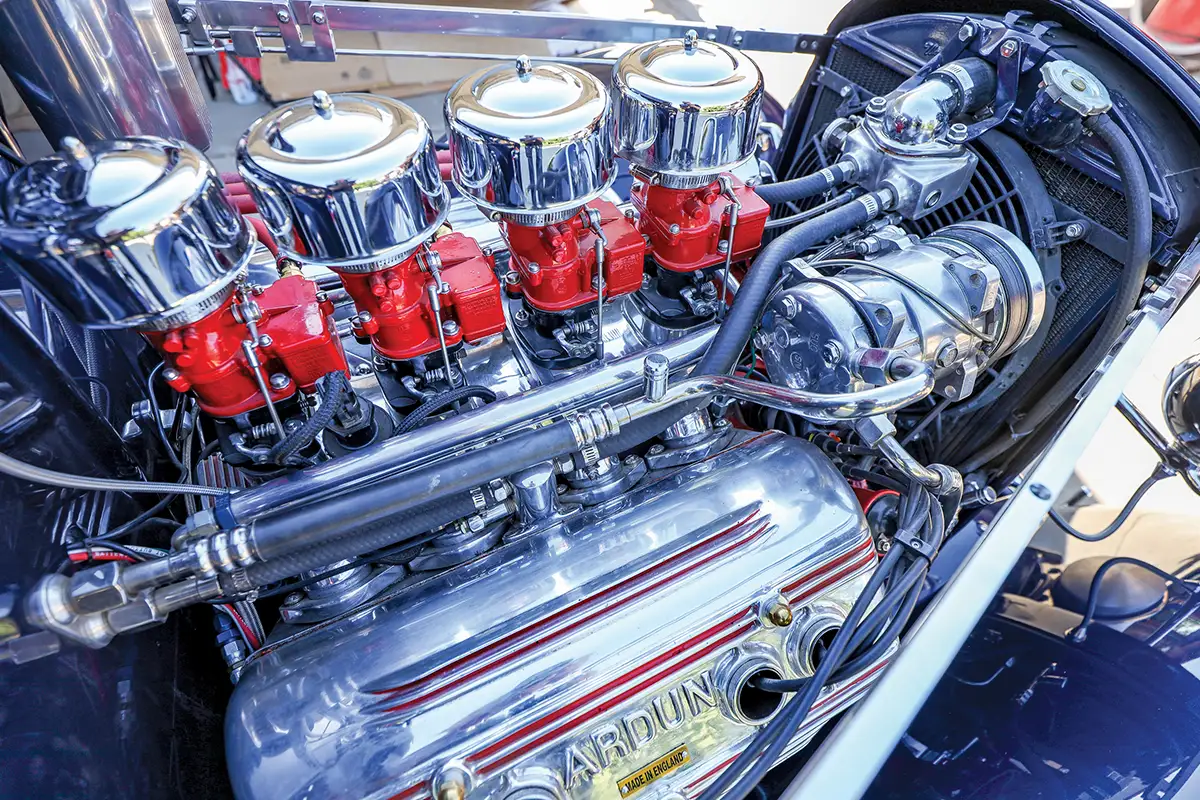
Guy Rouchenet then took over, adjusted all the margins, extended the front fenders to fit the frame due to the frame’s lengthening, bobbed the rears, and aligned the bottoms of the fenders with the running boards. He crafted the sleek front framehorn covers and the rear license plate box from this point. Next, he rolled the edges of the opening in the side panels of the Rootlieb-fabricated hood to accommodate the ARDUN valve covers. Larry Westervelt punched the 2-inch louvers in the top hood and interior kick panels. Dan Fink double-opening hinges were used.

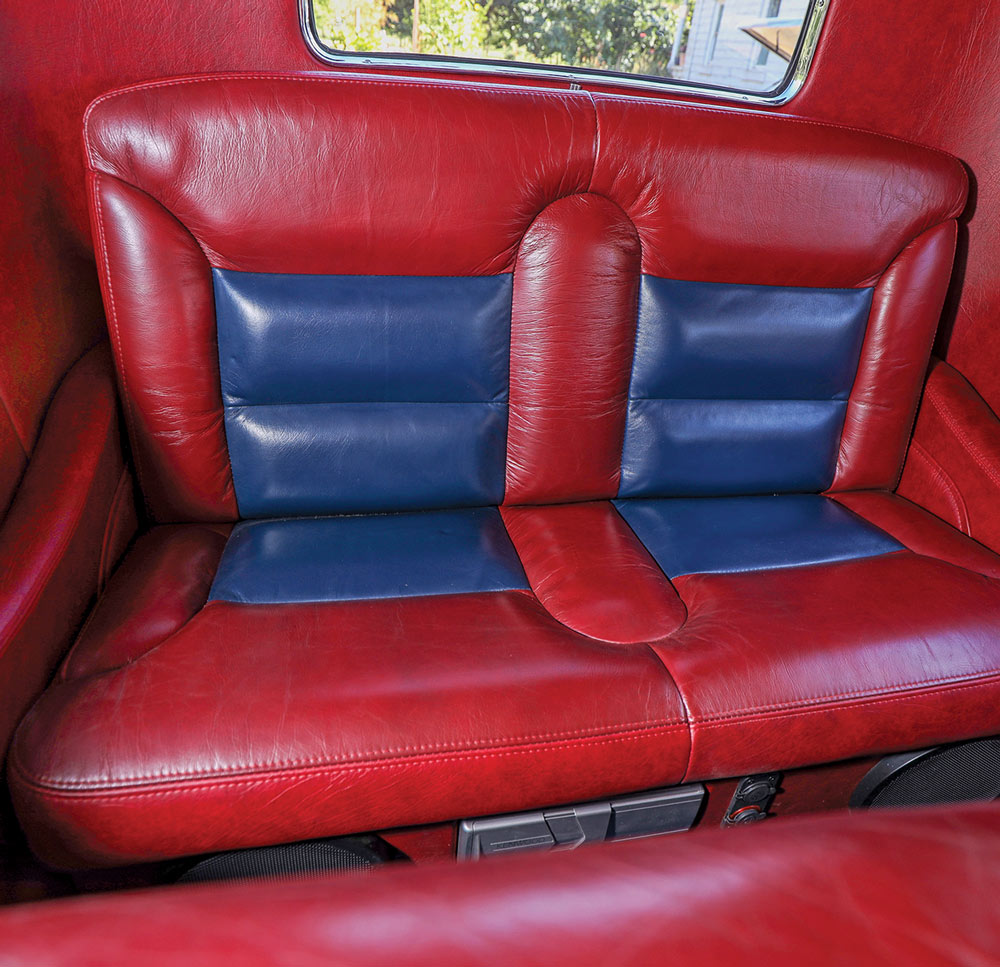
One sunny afternoon, we began the painstaking transformation process. Mike had already created a one-piece headliner shell, although it was a tricky fit that required two pieces instead and was covered in Oxblood-colored vinyl. Ron Mangus, another upholstery master, would wrap the 1940 Ford banjo-style steering wheel in luxurious navy blue leather while addressing the wiring and finishing touches. The original ashtrays and sunvisors returned to the vehicle, each honoring the history he cherished.
Mike replaced all the interior wood with a kit from Bogus Bob. Unfortunately, it didn’t fit properly, which was frustrating and required many adjustments. Bob Pundt donated the correct door latch mechanism. Pundt and Mike bought a pair of reproduction running boards from a limited production run. The top features 1-inch Styrofoam bats placed between the bows for insulation, topped with 1/8-inch plywood molded to create the compound curve of the top. On top of this is a custom-cut one-piece Koolmat, followed by 1/8-inch closed-cell foam, and finally, the original-style vinyl top. Mike shaped the reproduction tack strips using a buck he had made for his five-window. The radio and Sirius antennas are concealed beneath the top. The entire body is sound-deadened with Dynamat and insulated with Koolmat.

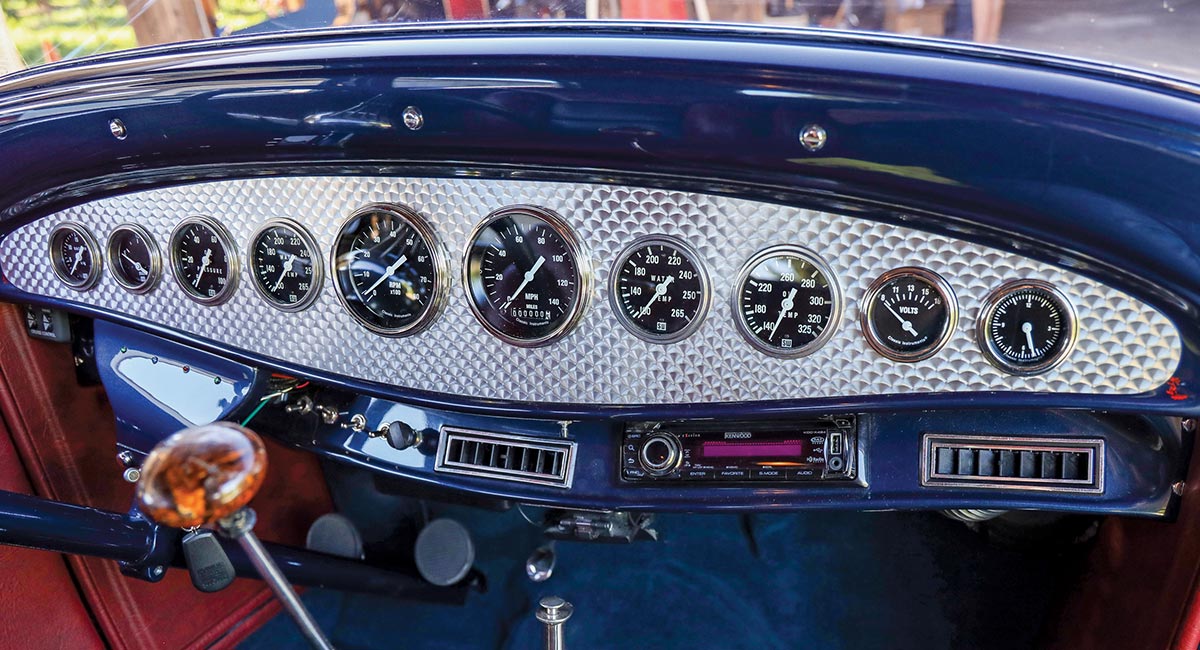
Mike embraced technology by integrating a sound system that felt nearly futuristic, powered by a 600-watt amplifier. With the Pioneer head unit at the helm—offering Sirius radio, CD access, Bluetooth, and subwoofers tucked into the rear seat riser—he created a space that blended nostalgia with modern comfort. Old Air provided heat and A/C, ensuring that style came with comfort. The original dashboard features Classic Instruments electric and Stewart-Warner mechanical gauges. Other interior features include cruise control, an alarm, electric wipers, and a power cowl vent. Polished stainless fasteners gleamed throughout, each a testament to the labor of love involved.
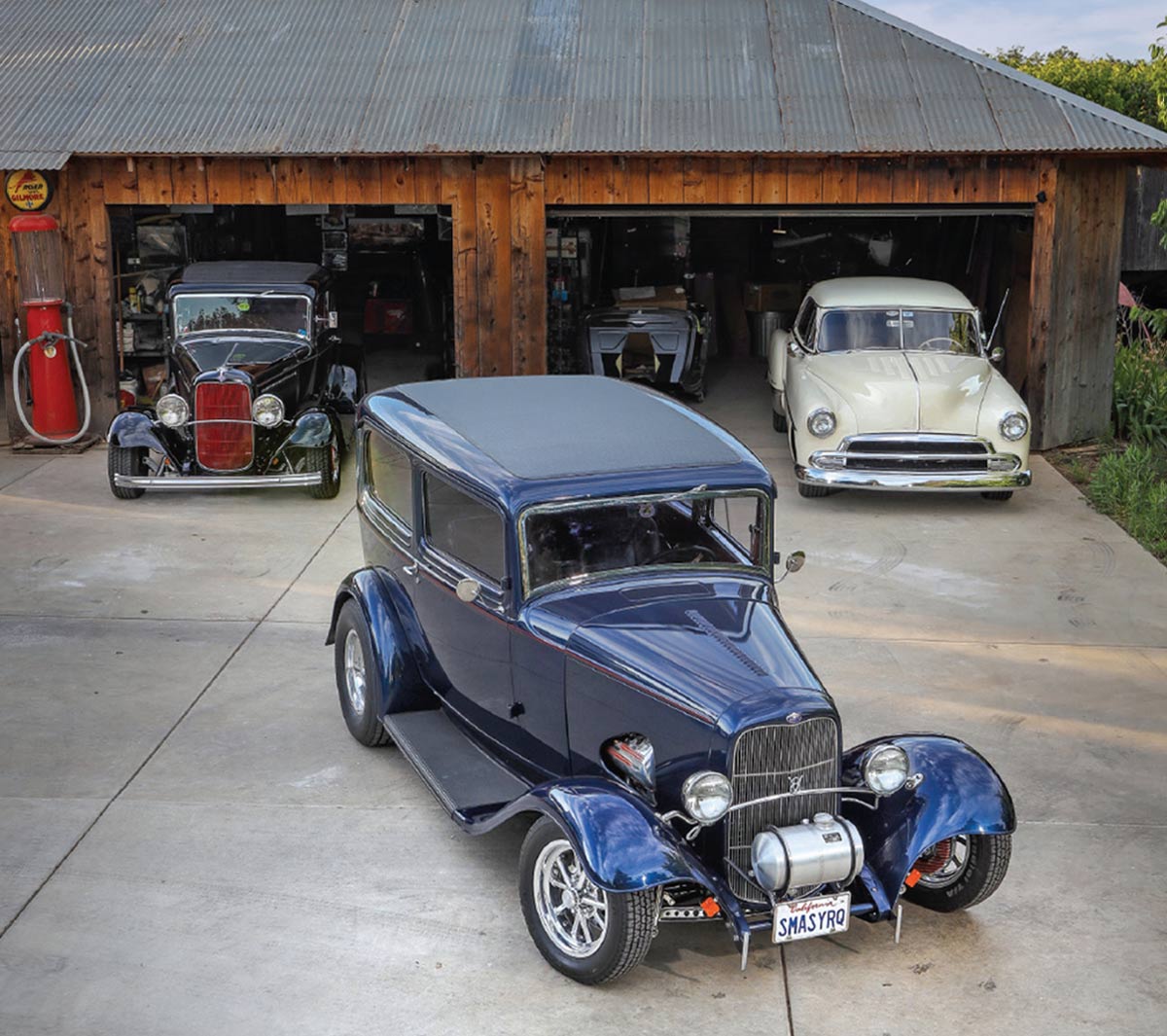
Mike was enveloped in a cocoon of creativity as the car began to take shape, harmonizing the old with the new. The Midnight Blue paint was applied using PPG’s Shop Line basecoat/clearcoat. Mike upgraded his painting equipment to a 3M Accuspray system to achieve the smoothest finish possible. Herb Martinez laid down the stripes; also note the valve covers. With a hint of pride, he shares the story that he painted it all in his barn, pouring his heart and sweat into each stroke.
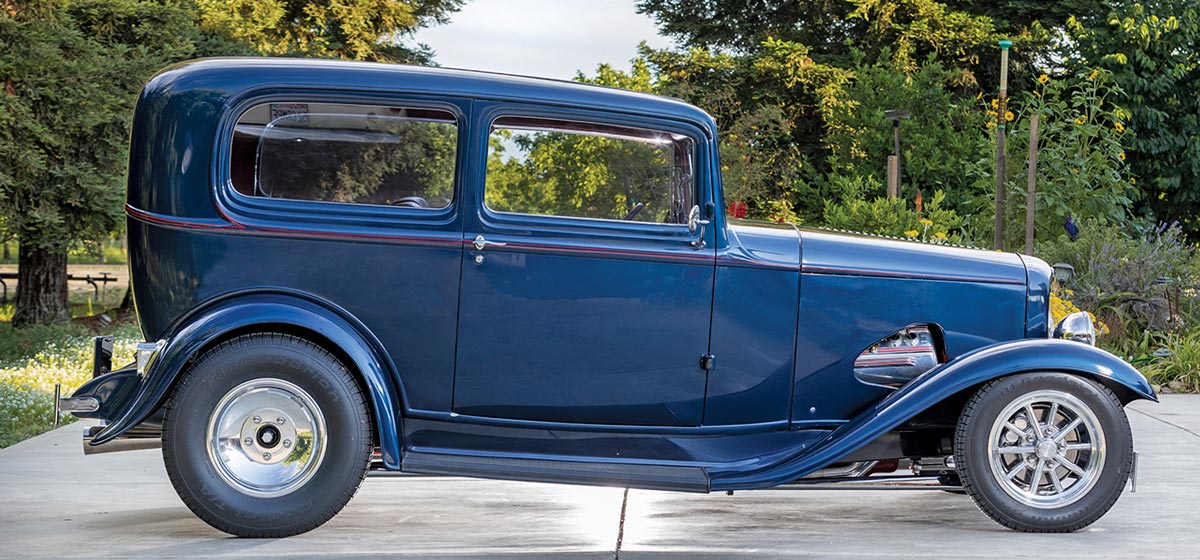
Mike explains, “As I take it out for a drive, the engine purring beneath the hood, I feel the character of every part—the frame, the interior, the paint—come alive like a symphony of steel and artistry. I can almost hear echoes of that sweet rock and roll from my teenage years, resonating through the chassis of what I built, a dream sculpted into reality.” He also takes the time to acknowledge his machinist, the late Bob Skibo, without whom this project couldn’t have happened.